
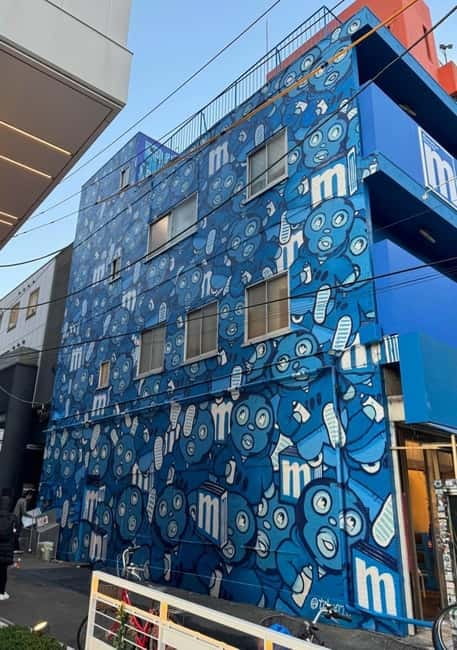
REVIEW · WALKING TOURS
Graffiti in Tokyo Walking Tour: Shibuya and Harajuku
Tokyo’s graffiti scene rewards slow looking. A tag tucked beside a shop, a sticker on a utility box, or a painted wall down a side street can disappear into the city unless someone points it out. This two-hour walk with Elena Calderon, an art curator and graffiti researcher, takes you beyond Shibuya’s famous crossing and into the street art around Shibuya and Harajuku.
I like two things here. First, Elena brings more than directions: she explains the artists, crews, symbols, and Japanese setting behind the work. Second, the walk takes you to less obvious streets and art spaces that are easy to miss on your own. The main consideration is simple: graffiti is often concealed, temporary, or illegal, so this is an observation tour rather than a promise of giant murals at every stop.
In This Review
- Key points at a glance
- Why this Tokyo graffiti walk feels different
- Meeting at Manhattan Records in Shibuya
- Reading tags, throw-ups, stickers, and murals
- Shibuya beyond the famous crossing
- A short but useful look at Harajuku
- Galleries, studios, and useful follow-up ideas
- What the $38 price buys you
- Practical advice for the walk
- Who will get the most from Elena’s tour
- Should you book this Tokyo graffiti walk?
- FAQ
- Where does the tour meet?
- How long does the tour last?
- Which neighborhoods does the tour visit?
- Who guides the tour?
- In which languages is the tour offered?
- What kind of art will I see?
- Are meals and drinks included?
- Are gallery or museum entrance fees included?
- What should I bring?
- Can I cancel or pay later?
Key points at a glance
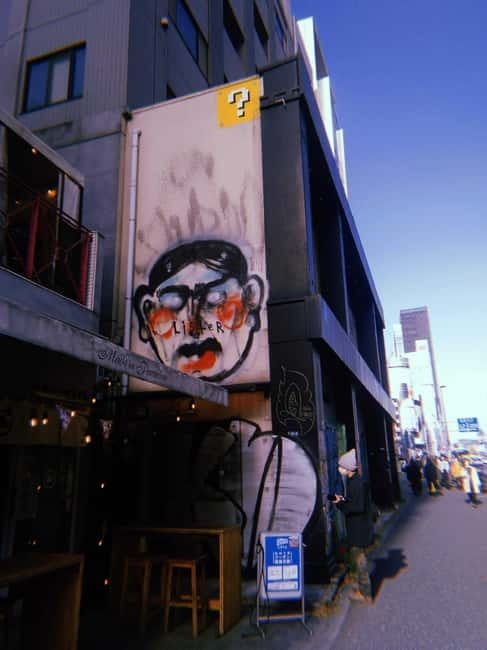
- Start at Manhattan Records in Shibuya: A fitting meeting point for a tour rooted in music, youth culture, and street expression.
- Look beyond large murals: Elena points out tags, throw-ups, stickers, smaller pieces, galleries, and work that blends into the city.
- Hear the Japanese context: The tour explains why graffiti is less visible in Japan and how artists work around strict local rules.
- Walk through Shibuya and Harajuku: You get familiar districts from a different angle, with side streets replacing the usual sightseeing route.
- Pay $38 for two hours: The price is fair if you value specialist guidance and would otherwise spend time hunting for scattered pieces.
- Bring practical gear: Wear comfortable shoes, carry water and a camera, and have some cash with you.
Why this Tokyo graffiti walk feels different
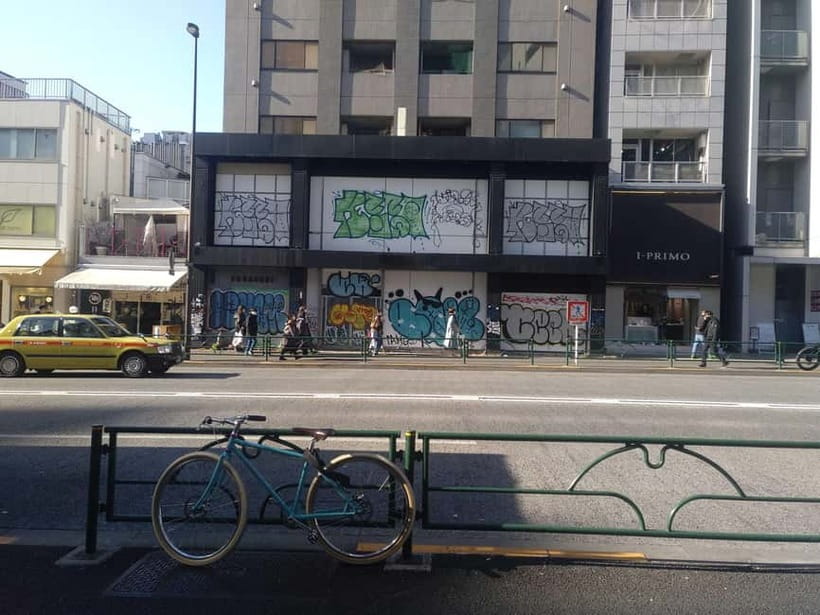
Shibuya is one of Tokyo’s most heavily photographed districts, yet this tour asks you to look at it differently. Instead of focusing on the crossing, fashion stores, and bright signs, you follow the marks that appear at the edges of ordinary city life.
That change in attention is the real point. You may pass a piece without noticing it if you do not know what to look for. Elena can draw your eye to a small tag, a sticker layered over older stickers, or a painted work that carries meaning beyond its size. The experience is less about collecting postcard views and more about learning to read the city.
I especially like the contrast between Tokyo’s polished public image and its less formal art culture. Graffiti does not usually sit openly on every major wall here. Some work appears in legal spaces, while other pieces are placed discreetly and may vanish quickly. That makes Elena’s local research useful, since the art is not always easy to locate through a standard guidebook.
The tour is also a good choice if you have already visited Shibuya or Harajuku. You will still recognize the districts, but the route should lead you into corners you might otherwise pass by. Several parts of the walk are designed around discovery, not famous landmarks.
More Walking Tours in Tokyo
- Tokyo Tsukiji Fish Market Food and Culture Walking Tour
★ 5.0 · 3,184 reviews - Tokyo: Imperial Palace and Shogun Historical Walking Tour
★ 5.0 · 2,251 reviews - Tokyo: Shinjuku Local Bar and Izakaya Guided Walking Tour
★ 4.9 · 1,794 reviews
Meeting at Manhattan Records in Shibuya
The stated meeting point is Manhattan Records, a record shop in Shibuya. That choice makes sense for an outing about graffiti and urban culture. Music, fashion, dance, and street art have long shared the same creative neighborhoods, and a record shop feels more connected to that world than a generic hotel lobby.
The activity information also identifies the Kifune Building as the starting and ending location. Because both names appear in the details, I would confirm the precise meeting instructions before setting out. This is particularly important in Shibuya, where several blocks can contain similarly named buildings and crowded streets can make a short walk feel longer.
You are responsible for reaching the meeting point, and transportation is not included. Plan enough time to arrive without rushing. The tour lasts two hours, and a late start could matter if the group is following a set route through both districts.
Reading tags, throw-ups, stickers, and murals
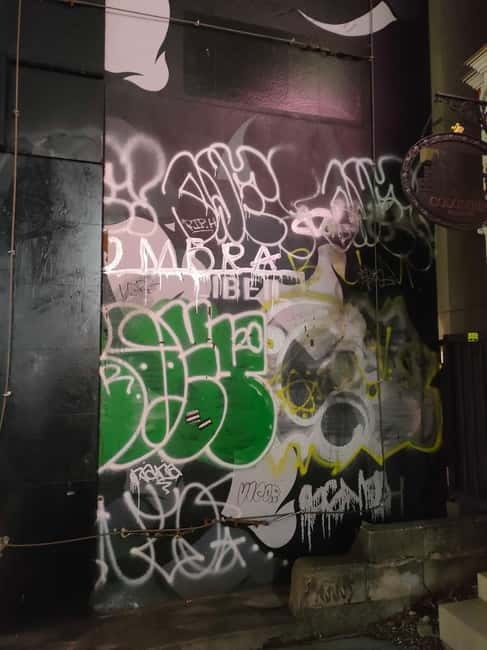
This is not simply a walk from one large painting to another. The tour covers several forms of graffiti and street art, including tags, throw-ups, stickers, and larger murals.
A tag may look quick and cryptic to an untrained eye. On the tour, you learn to treat it as a signature, a repeated style, or part of a wider exchange between artists. A throw-up is larger and more developed than a simple tag, but still built for speed. Stickers can be even easier to miss, appearing on poles, signs, shutters, and other small surfaces.
Murals give you more to look at, but the smaller marks may tell you just as much about how the scene works. I like that this experience does not limit street art to the biggest or most polished work. It encourages you to notice layers, placement, repetition, and the relationship between a piece and the surrounding street.
Some work may be by local artists, while some pieces come from international artists. The goal is not just to identify a name. Elena connects the art to the people and crews behind it, giving you a clearer sense of how Tokyo fits into a wider graffiti culture.
You should also keep your camera ready, but remember that not every piece will be easy to photograph. Tight alleys, passing pedestrians, parked bicycles, and changing light can make a quick snapshot tricky. A camera is listed as something to bring, and you may want to note locations you would like to revisit after the walk.
Shibuya beyond the famous crossing
The Shibuya portion makes up the main body of the guided experience. You are not coming here for another introduction to Tokyo’s best-known crossing. Instead, you move through the city with your attention directed toward lesser-seen art and the spaces around it.
This is where an expert guide adds real value. On your own, you might walk the same streets and notice only a few obvious pieces. Elena has spent more than 10 years researching graffiti and works as an art curator, so she can explain what you are seeing rather than simply point at a wall.
The route may include legal walls and more discreet street spots. The exact pieces can change, since graffiti is painted over, removed, altered, or covered by construction. That uncertainty is part of the subject. You are looking at a living part of the city, not a museum display with permanent labels.
I would expect the discussion to be as important as the walking. The experience includes background on graffiti in Japanese culture, along with information about artists, art studios, exhibitions, and galleries. If you are new to graffiti, Elena’s explanations can help you understand the visual language. If you already follow street art, you can use the walk to find artists and places you may want to explore later.
Several people who joined the walk found Elena easy to understand, flexible, and enthusiastic. That matters in a topic with plenty of specialist terms. A guide can know a great deal and still make a poor teacher, but the supplied feedback points to Elena’s ability to share her interest clearly.
Same city, a completely different kind of day:
- Mt Fuji and Hakone 1-Day Bus Tour Return by Bullet Train
★ 5.0 · 26,383 reviews - 1-Day Tokyo Bus Tour
★ 5.0 · 14,250 reviews - Tokyo: TOKYO SKYTREE® Admission ticket
★ 4.5 · 11,192 reviews - Tokyo: teamLab Planets TOKYO Digital Art Museum Entry Ticket
★ 4.6 · 9,779 reviews
A short but useful look at Harajuku
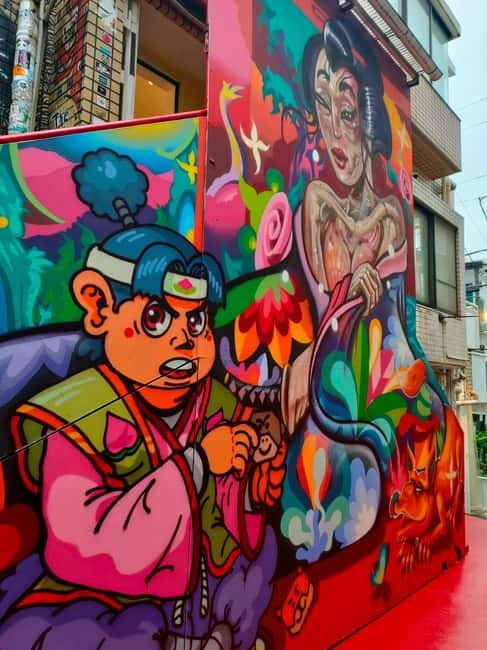
The itinerary includes a 10-minute visit to Harajuku. That is not enough time for a full neighborhood tour, so you should see this as a brief extension of the street art route rather than a complete introduction to Harajuku.
Still, the change in setting adds variety. Harajuku is associated with youth fashion, independent shops, and creative subcultures, making it a natural partner to Shibuya for this subject. You get a second district and another chance to see how street art fits into a different urban setting.
The short stop also helps set expectations. If you want a long Harajuku walk, time for shopping, or visits to major attractions, plan those separately. This experience is tightly focused on graffiti and related art, not on covering every famous sight in either neighborhood.
After Harajuku, the route returns to the listed finishing point at the Kifune Building. Since the details name both Manhattan Records and the Kifune Building, confirm where the guide expects the group to meet and finish.
Galleries, studios, and useful follow-up ideas
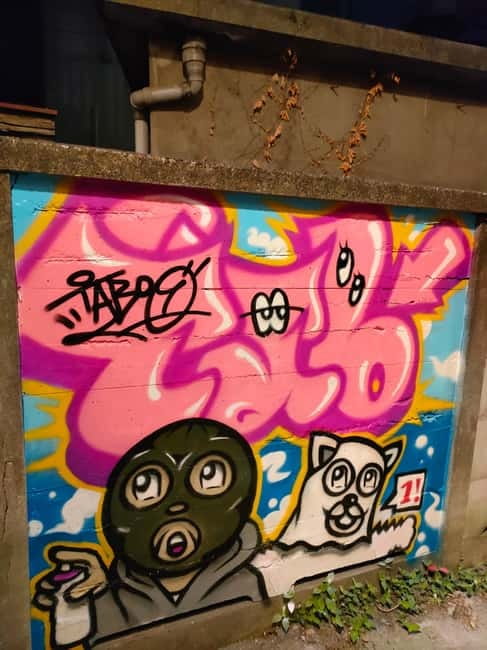
One welcome feature is the connection to galleries, art studios, and exhibitions. The walk does not stop at street pieces alone. Elena can also offer information about top art galleries, and the activity includes discounts at certain art galleries and restaurants along the tour.
Most gallery and museum entrances are free of charge, but entry fees are not included when a venue charges. The same applies to food and drinks. I would treat the discounts as a bonus rather than build them into the basic price calculation, since the exact places and savings are not specified.
This gallery connection makes the tour more useful for anyone who wants to keep exploring after the two hours. A street piece may catch your eye, but a gallery can give you more time with an artist’s work. One particularly practical benefit is the chance to ask Elena about murals or pieces you want to photograph later. Bring a phone or notebook if you want to record names and locations.
One bit of constructive advice: the experience could be even stronger with a simple digital reference, such as a tablet showing extra images or artist information. You can compensate by taking notes as you walk. The tour’s value is in Elena’s explanations and route, but a written follow-up list would help you continue independently.
What the $38 price buys you
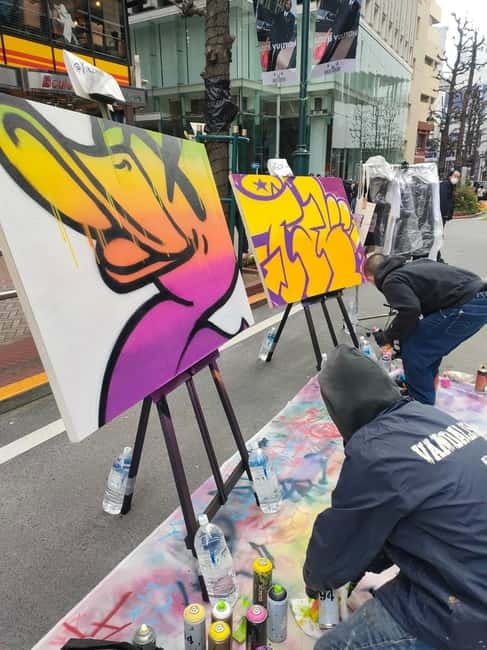
At $38 per person, this is priced above a general neighborhood stroll but below many longer specialist tours. The fair question is not whether you could walk around Shibuya for free. You certainly can. The question is how much time you would spend finding the art and understanding it without guidance.
For me, the price works best if you have a genuine interest in graffiti, street art, urban culture, or photography. Elena’s experience gives you access to places and details that are hard to locate by casual wandering. The included art and restaurant discounts may add value, though I would not assume you will use them.
The two-hour length is another advantage. It fits neatly into a Tokyo day and leaves room for shopping, museums, food, or another neighborhood. At the same time, two hours is not long enough for every street art area in Shibuya and Harajuku. If you want a broad citywide survey, this tour may feel narrow.
Some participants spent closer to two and a half hours on the walk, but the official duration is two hours. Allow a little flexibility in your schedule, especially if you have a timed reservation afterward.
Practical advice for the walk
Wear comfortable shoes. This is a walking experience through city streets, and the most useful stops may be scattered rather than grouped beside one station.
Bring water, a camera, and cash. Meals and drinks are not included, and cash may be useful for purchases or food during the day. The tour does not include transportation to the meeting point, so plan your route in advance.
Tokyo weather can change with the season. Be ready for sun, rain, heat, or cooler conditions, and dress for walking rather than simply for taking photos. The activity is not suitable for people with mobility impairments, babies under one year, or people over 95. If uneven or extended walking is difficult for you, ask for full route details before booking.
The rules are straightforward: no smoking, alcohol, drugs, or littering. Respect local laws, private property, and the fact that some graffiti may be illegal. The tour is there to help you understand the art, not to encourage you to paint or place stickers yourself.
Free cancellation is available up to 24 hours before the start time, and you can reserve now and pay later. Those policies are useful if your Tokyo schedule is still shifting, but check the booking conditions at the time you reserve.
Who will get the most from Elena’s tour
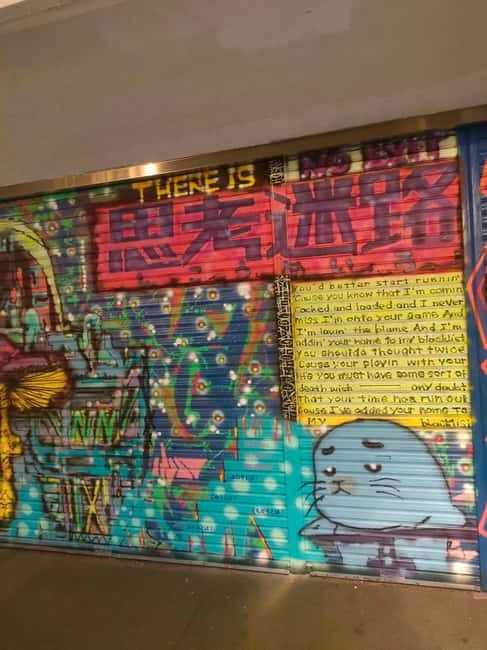
I would recommend this walk most strongly to:
- People who already enjoy graffiti, murals, stickers, or street photography
- Visitors who want an alternative view of familiar Tokyo districts
- Art students, photographers, designers, and anyone curious about creative subcultures
- Repeat Tokyo visitors who have already seen the main Shibuya sights
- Families with older children who can manage a two-hour walking route
- Anyone who prefers a focused specialist tour over a broad city introduction
You do not need to know graffiti terms before joining. Elena explains the subject for newcomers, while her background gives experienced art fans plenty to consider.
This may not suit you if you want grand historic buildings, major museum collections, or a relaxed ride between sights. It also may disappoint if your only goal is to photograph huge, permanent murals. Tokyo’s graffiti is often smaller, less obvious, and subject to change.
Should you book this Tokyo graffiti walk?
Book it if you want to see Shibuya and Harajuku through the eyes of someone who has spent years tracking the city’s graffiti and artists. Elena’s specialist background is the main reason to choose this experience, and the strongest part is learning how to notice work you would probably miss alone.
The $38 cost is reasonable for a focused two-hour tour with an expert guide, access to less familiar locations, and leads to galleries and studios. Just keep your expectations grounded: this is not a guaranteed mural parade, and the Harajuku portion is brief.
I would choose this tour early in a Tokyo visit if street art is a priority, since Elena may point you toward galleries, studios, and pieces you can revisit. Bring shoes suited to walking, confirm the exact meeting address, and leave a little time afterward in case you want to photograph a location again.
FAQ
Where does the tour meet?
The listed meeting point is Manhattan Records shop in Shibuya. The activity details also name the Kifune Building as the starting and ending location, so confirm the exact instructions before arrival.
How long does the tour last?
The stated duration is two hours. One participant spent about two and a half hours on the walk, so leaving a little flexibility afterward is sensible.
Which neighborhoods does the tour visit?
The walk focuses on Shibuya and Harajuku. The itinerary gives Harajuku a 10-minute visit and returns to the listed finish at the Kifune Building.
Who guides the tour?
The guide is Elena Calderon of Totemo. She is described as an art curator and graffiti researcher with more than 10 years of experience.
In which languages is the tour offered?
Live guiding is available in English and Spanish.
What kind of art will I see?
The tour includes tags, throw-ups, stickers, murals, legal walls, and more discreet street pieces. It also includes information about artists, galleries, art studios, and exhibitions.
Are meals and drinks included?
No. Meals and drinks are not included, so bring water and plan separately for food.
Are gallery or museum entrance fees included?
No. Entrance fees are not included, although most of the galleries and museums connected with the tour are free of charge.
What should I bring?
Wear comfortable shoes and bring a camera, water, and cash. You should also be prepared for changing weather.
Can I cancel or pay later?
You can cancel up to 24 hours before the activity for a full refund. The reserve-now, pay-later option lets you book without paying immediately.
Just added around Tokyo
- Tokyo: Customizable Private Guided Walking Tour★ 4.5 · 129 reviews
- Private Harajuku Omotesando Architecture Tour★ 4.9 · 18 reviews
- Tokyo: Guided Helicopter Ride★ 4.9 · 24 reviews
- Tokyo: Guided Walking Tour of Tsukiji Market with Lunch★ 4.4 · 24 reviews
- Tokyo: Private Personalized Local Food Tour★ 4.5 · 101 reviews
- Tokyo GINZA: KONPARU Japanese Cabaret Show with Drink★ 4.8 · 38 reviews
- Tokyo: Guided Walking Tour of Tsukiji Market with Breakfast★ 4.4 · 134 reviews
- Tokyo: Gotokuji Cat Temple, Shinjuku Cat Cafe & 3D Cat Tour★ 4.9 · 38 reviews
Walking Tours, compared.
Kyoto Geisha Walking Tour: Gion District & Hidden Gems
Read our review →
Tokyo Tsukiji Fish Market Food and Culture Walking Tour
Read our review →
Gion Magical Night Walking Tour with Geisha Trivia
Read our review →
Imperial Palace and Shogun Historical Walking Tour
Read our review →
Gion Geisha District Walking Tour – Stories of Geisha
Read our review →
Asakusa Walking Tour with Sensoji Temple Visit
Read our review →
Kyoto Gion Geisha District Walking Tour – The Stories of Geisha
Read our review →Browse the lists this tour appears in