
REVIEW · FOOD MARKET TOURS
Flavors of Japan Food Tour in Tokyo
Japan’s food culture comes into focus one small bite at a time on this Nihonbashi food walk. You move through shops tied to different regions and traditions, tasting dashi, pickles, tamagoyaki, fish cakes, eel sushi, wagashi, and tea before sitting down to a full washoku lunch.
I like the compact group, capped at 10 people, and the way the tour connects food to places such as a 300-year-old knife shop, a long-established fruit shop, Coredo Muromachi, and a traditional tea store. I also like the lunch choice, which includes options such as soba, tempura, sashimi, grilled fish, chicken, and sukiyaki.
The main consideration is the price: $209 per person is a serious spend for three hours. It makes better sense if you value a guide, several tastings, and a full lunch, but less sense if you mainly want to browse Nihonbashi on your own.
In This Review
- Key points at a glance
- Why this Tokyo food tour is different
- Meeting in Nihonbashi and starting at Coredo
- Seven food stops, with Japan in small bites
- Historic shops and Nihonbashi landmarks
- Lunch is the tour’s biggest value test
- Finishing at Depachika
- Timing, group size, and practical details
- Who will get the most from this experience
- Is the $209 price fair?
- Should you book the Nihonbashi food walk?
- FAQ
- Where does the Flavors of Japan Food Tour begin?
- What time does the tour start?
- How long is the tour?
- What food is included?
- What lunch choices are available?
- Are vegetarian and vegan choices available?
- Is transportation or hotel pickup included?
Key points at a glance
- Seven food stops and several historic shops: The route gives you a broad introduction to Japanese ingredients, sweets, tea, and regional specialties.
- A full Japanese lunch is included: Choose from several set meals, including soba, tempura, sashimi, grilled fish, chicken, or sukiyaki.
- Small groups keep the walk personal: The maximum is 10 people, useful in narrow shops and during tastings.
- Nihonbashi adds cultural context: Coredo Muromachi, Fukutoku Shrine, Nihonbashi Bridge, and nearby department-store food halls shape the route.
- Dietary choices are available: The tour is listed as pescetarian, vegetarian, and vegan friendly, with your lunch choice made at booking.
- The tour ends near Depachika shopping: After lunch, your guide points you toward an underground department-store food market, then you continue independently.
Why this Tokyo food tour is different
Many Tokyo food walks focus on one neighborhood or one meal. This one works more like a short introduction to the building blocks of Japanese cooking.
You sample ingredients and dishes from several parts of Japan, then learn how they fit into everyday meals. Dashi shows you the quiet base behind soups and sauces. Pickles bring in preservation and texture. Tamagoyaki gives you a taste of careful egg cookery. Wagashi and green tea show the formal, artistic side of Japanese food.
That range is the real point. You are not simply stopping for a bowl of noodles and calling it Japanese cuisine. You are given small pieces of a larger picture, then served lunch so you can see how those pieces work together.
The route takes place around Nihonbashi, a practical choice for this kind of outing. The area brings together department stores, specialty food shops, shrines, bridges, and historic commercial streets. It also makes the tour useful at the beginning of a Tokyo stay, since you can use what you learn when ordering meals later.
The experience is conducted in English with a local guide. No guide names are provided, so you should not book this expecting a particular host. The group size is limited to 10, which should make it easier to ask questions and keep track of the tastings.
More Food Market Tours in Tokyo
- Tokyo: Shinjuku Food Tour (13 Dishes at 4 Local Eateries)
★ 5.0 · 6,603 reviews - Tokyo Tsukiji Fish Market Food and Culture Walking Tour
★ 5.0 · 3,184 reviews - Tokyo: Shinjuku Food Tour (15 Dishes and 4 Eateries)
★ 4.9 · 2,033 reviews
Meeting in Nihonbashi and starting at Coredo
The meeting point is the Starbucks Coffee in the Nihombashi Suruga Building, near Coredo Muromachi 1 and Coredo Muromachi 2. The listed start time is 10:30 a.m., although the route description also refers to a 10 a.m. meeting. I would check your confirmation carefully so you arrive at the correct time.
This is a central Tokyo meeting point, but Nihonbashi has several large buildings and busy streets. Give yourself extra time, especially if you are arriving by train or navigating from another part of the city. The tour does not include hotel pickup, and transport to the meeting point is your responsibility.
The first portion introduces the neighborhood and the idea behind the walk: Japanese food changes from region to region, and specialty shops often preserve one narrow tradition for generations. Coredo Muromachi provides a modern setting for that introduction, but the food stops lead you into older patterns of Japanese shopping and eating.
You should wear comfortable shoes. The route is on foot, and the three-hour schedule includes multiple stops, tastings, explanations, and lunch.
Seven food stops, with Japan in small bites
The route visits seven food stops, while the full description refers to nine shops along the way. That difference may reflect the way the food stops and sightseeing stops are counted. Shops and stops can also change because of restaurant schedules, holidays, weather, and other conditions.
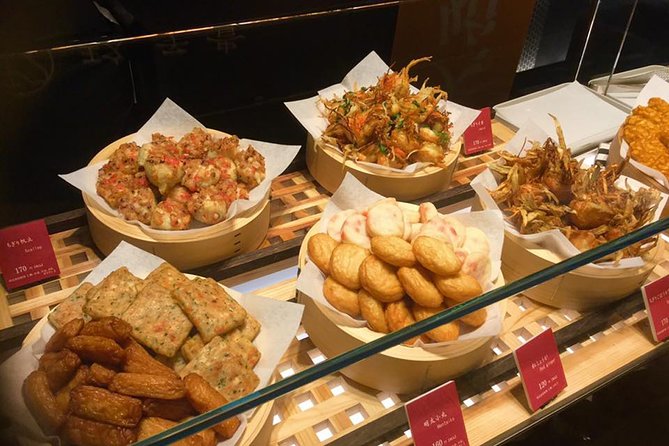
The food itself is the strongest part of the outing. Portions are designed for tasting, so you get variety rather than one oversized serving. That is helpful in Tokyo, where menus can be long and unfamiliar, and where a single meal rarely explains the full range of Japanese cooking.
Here is what the listed tastings mean for you:
- Dashi: This soup stock is one of the basic flavors behind Japanese cooking. Tasting it directly helps you notice the savory foundation that can otherwise disappear into soup, noodles, sauces, and simmered dishes.
- Regional snacks: These give you a quick sense of how ingredients and flavors shift between Japanese regions. The exact snacks can vary, but the focus is on local and seasonal foods.
- Satsuma imo: These fried sweet potatoes add a simple, familiar flavor to the route and show how a basic ingredient can become a popular regional snack.
- Tsukemono: Japanese pickled vegetables bring sharpness, salt, and crunch. They also explain why a small side dish can matter so much beside rice or a larger meal.
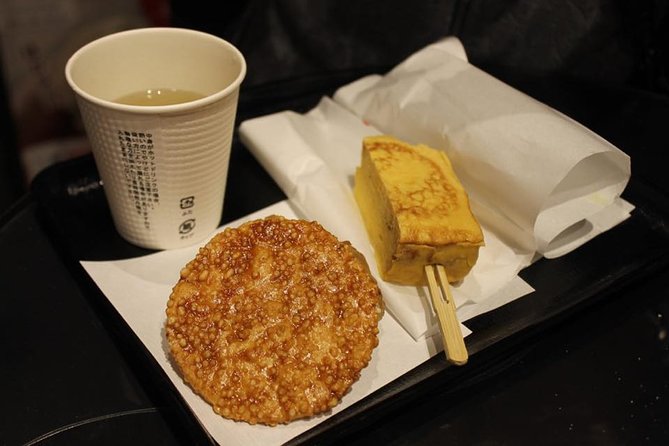
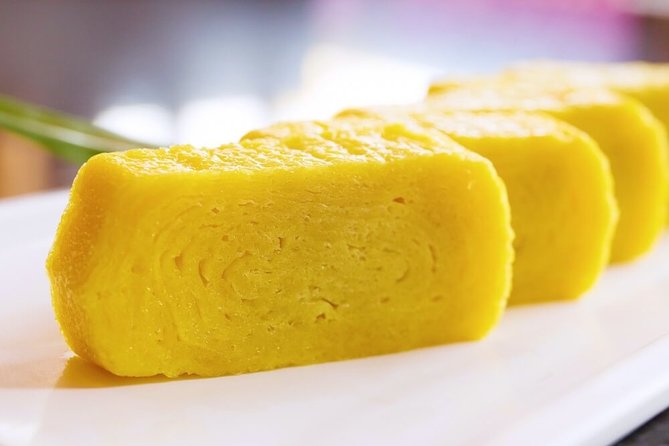
- Tamagoyaki: This Japanese egg roll is more than a plain omelet. It is a chance to taste the sweet-savory balance often found in Japanese cooking.
- Kagoshima fish cakes: These bring southern regional character to the tasting list and give you a seafood-based specialty beyond the better-known sushi and sashimi.
- Eel sushi: Eel offers a different sushi experience, with a distinctive texture and seasoning compared with raw fish.
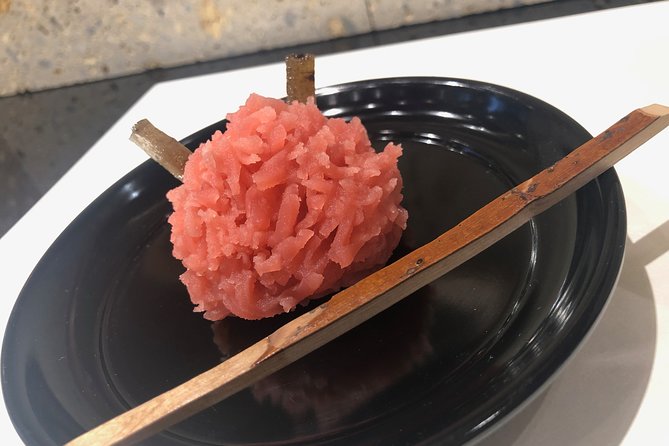
- Wagashi: These artistic Japanese sweets are often made to pair with tea. The tour includes seeing how they are made, not just eating the finished piece.
- Green tea: Tea appears as both a drink and a cultural subject. You get to compare it with the sweets and learn why the pairing matters.
This progression works well for someone who has eaten Japanese food but still feels unsure about what makes it distinct. You get vocabulary, flavors, and examples you can recognize later.
The drawback is that tasting several foods in a short period can feel quick. You will not receive a long workshop on every ingredient. If you want extended cooking instruction or a hands-on class, this is not that kind of activity. It is a guided survey, with enough food to teach you and a lunch at the end.
Historic shops and Nihonbashi landmarks
The walking route is not limited to food counters. You visit a fruit shop described as Japan’s oldest, a knife shop with 300 years of history, and a distinctive tea shop. These stops help explain how Japanese food culture depends on specialist merchants.
The knife shop is especially useful in context. Japanese cooking places importance on preparation, cutting, and presentation, and a long-running knife store gives you a look at the tools behind that care. You may not need to buy a knife, but the stop adds meaning to all the finely cut food you taste later.
The fruit shop shows another side of Japanese food culture. Fruit can be treated as a special food and a gift, rather than simply a casual snack. The tea shop brings the route back to drinks and sweets, tying green tea to wagashi and to the slower side of Japanese hospitality.
The route also includes Nihonbashi landmarks such as Fukutoku Shrine, Nihonbashi Bridge, Nihonbashi Takashimaya, and Suitengu Shrine. The description does not promise a full sightseeing tour at each one, so think of them as points along a food-focused walk rather than major guided visits.
That balance is good for a first visit. You get neighborhood context without spending the whole morning in a lecture about architecture or history. If your main goal is shrine sightseeing, choose a dedicated cultural tour instead.
Same city, a completely different kind of day:
- Mt Fuji and Hakone 1-Day Bus Tour Return by Bullet Train
★ 5.0 · 26,383 reviews - 1-Day Tokyo Bus Tour
★ 5.0 · 14,250 reviews - Tokyo: TOKYO SKYTREE® Admission ticket
★ 4.5 · 11,192 reviews - Tokyo: teamLab Planets TOKYO Digital Art Museum Entry Ticket
★ 4.6 · 9,779 reviews
Lunch is the tour’s biggest value test
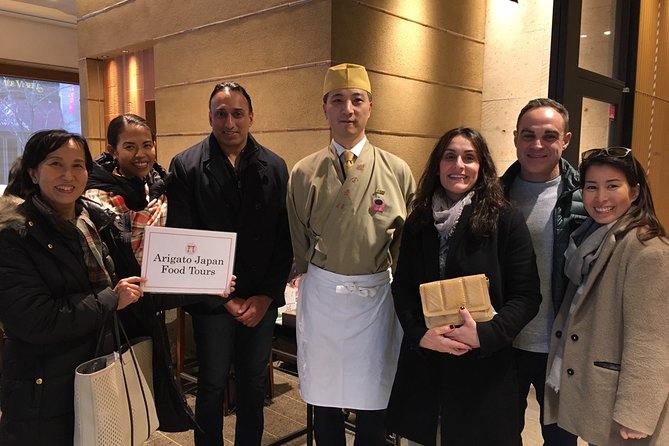
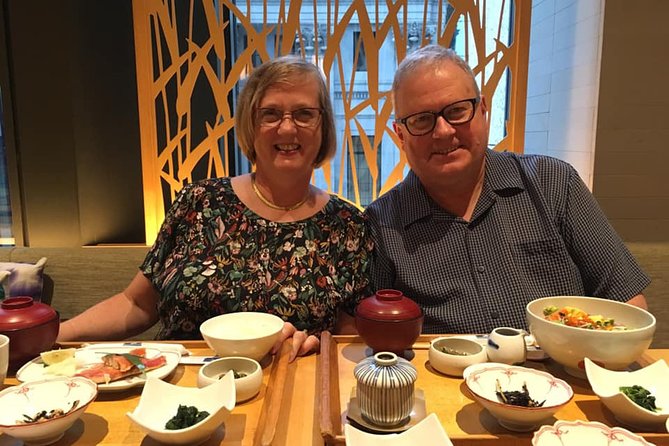
Your final tasting is a full washoku lunch with the group and guide. This is where the tour shifts from grazing to sitting down and talking through what you have tried.
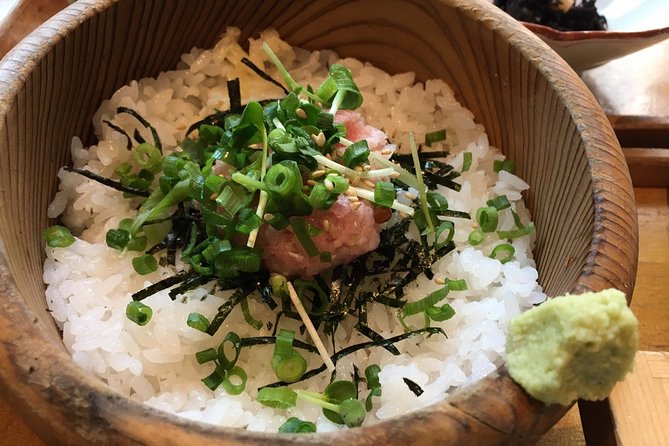
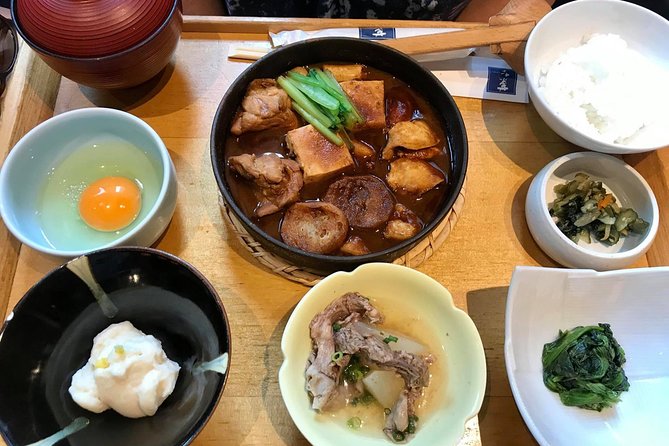
Lunch choices include soba, tempura and sashimi sets, grilled fish, chicken, and sukiyaki. You select your lunch when booking, which matters if you have dietary needs or a strong preference. Pescetarian, vegetarian, and vegan options are listed as available, but you should make your choice clearly at booking rather than waiting until the day.
The meal gives the earlier tastings a useful frame. After trying dashi, pickles, egg, seafood, and sweets, you can connect those flavors to a complete Japanese meal. It also means you should arrive hungry but not starving. The snacks come before lunch, and the steady pace of tasting can add up.
One drink is included. Additional drinks and food are not, so the $209 price should be judged against the included meal, tastings, guide, and small group, not against lunch alone.
For some people, this will feel like good value. You receive a full meal plus multiple specialty tastings, and the guide handles the language and ordering details. For others, the price may be too high for a three-hour walk, especially if they are comfortable choosing restaurants and shopping independently.
Finishing at Depachika
After lunch, the group continues to an underground department-store food market known as a Depachika. Your guide points out where to look for good after-lunch snacks, then the organized portion of the tour ends in the Nihonbashi area.
This is a smart finish because a Depachika can be confusing on your own. These food halls bring together boxed meals, sweets, snacks, produce, and specialty products, but the choices can be overwhelming. A short orientation helps you decide what to buy for later.
The end point is not hotel drop-off. You are free to keep exploring from Nihonbashi, making this a useful activity for a day when you want to continue shopping or sightseeing nearby. Plan your next stop before lunch, since the tour does not provide a final transfer.
Timing, group size, and practical details
The tour lasts about three hours and has a maximum of 10 people. That is small enough to make questions possible and large enough to create a social group without requiring a full-day commitment.
It is family-friendly, though children must be accompanied by an adult. A copy of passport information is required for children age 10 and above. Most people can take part, and the route is near public transportation.
The tour is listed as suitable for rainy days, but the cancellation terms also say it requires good weather. If poor weather causes cancellation, you are offered another date or a full refund. Since the route can change for weather, restaurant schedules, public holidays, or other unexpected issues, do not treat every shop and dish as guaranteed.
Free cancellation is available until 24 hours before the start time. Changes made inside that window are not accepted, and the charge is not refunded if you cancel too late. The operator may also cancel if the minimum number of people is not reached, in which case you receive another option or a full refund.
A mobile ticket is included, so you do not need to collect paper tickets. Transportation costs, hotel pickup, hotel drop-off, extra drinks, and extra food are not included.
Who will get the most from this experience
I would recommend this tour most strongly to you if you are visiting Tokyo for the first time and want a food orientation before making your own restaurant choices. It is also a good fit if you enjoy small tastings, specialty shops, and neighborhood walks more than a single long restaurant meal.
The tour suits people who want help with Japanese menus. The food sampling gives you a working vocabulary, and the guide can explain ingredients that might otherwise remain mysterious. The full lunch makes the morning feel substantial rather than like a series of tiny samples.
It is also useful for families with older children who are willing to try unfamiliar food. The food is varied, and the route gives children several different textures and flavors to consider. The passport requirement for children age 10 and above is an important booking detail.
Vegetarians, vegans, and pescetarians can consider it, since those options are listed. Still, because the exact shops and dishes may change, you should confirm your requirements when choosing lunch and booking.
I would hesitate if you want a cooking class, a late-night food crawl, or a very cheap introduction to Japanese food. Three hours is enough for a strong overview, but not enough for a detailed lesson in every dish or region.
Is the $209 price fair?
The price is high for a short activity, but the inclusions are substantial. You get a local English-speaking guide, food at seven stops, one drink, a full Japanese lunch, and a small group capped at 10 people.
The value depends on how much assistance you want. If you would otherwise spend the morning wandering through specialty shops, trying to understand labels, and choosing lunch without context, the guide can save time and reduce uncertainty. The tour also takes you to places that are easy to pass without understanding their role.
If you are already comfortable in Tokyo, speak some Japanese, and enjoy planning food stops yourself, you may prefer to spend $209 across several independent meals. You would lose the organized explanation and the access to a planned sequence of tastings, but you would gain flexibility.
The strong rating of 4.8 from 39 ratings and a recommendation rate of 92 percent support the idea that the format works well for its intended audience. Those figures do not erase the price, but they do indicate a consistently well-liked experience.
Should you book the Nihonbashi food walk?
Book it if you want a guided crash course in Japanese cuisine, especially at the start of your Tokyo stay. The combination of regional samples, historic food shops, tea, wagashi, and a full lunch gives you practical knowledge you can use for the rest of your trip.
Skip it if the cost feels out of proportion to three hours or if you prefer to make your own food discoveries. Also check the start time, lunch choice, dietary needs, and possible route changes before paying.
For the right person, this is not just lunch with a few samples attached. It is a compact introduction to how Japanese flavors, ingredients, shops, and meals fit together, with Nihonbashi providing the setting.
FAQ
Where does the Flavors of Japan Food Tour begin?
It begins at Starbucks Coffee in the Nihombashi Suruga Building, at 1-chome 7-1 Nihombashimuromachi, Chuo City, Tokyo. The meeting area is between Coredo Muromachi 1 and Coredo Muromachi 2.
What time does the tour start?
The meeting information lists a 10:30 a.m. start. The route description also refers to meeting at 10 a.m., so check your booking confirmation for the exact time.
How long is the tour?
The walking food tour lasts about three hours.
What food is included?
Included tastings can feature dashi, regional snacks, satsuma imo, tsukemono, tamagoyaki, Kagoshima fish cakes, eel sushi, wagashi, and green tea. The exact stops and dishes can change.
What lunch choices are available?
Lunch choices include soba, tempura and sashimi sets, grilled fish, chicken, and sukiyaki. You select your lunch when booking.
Are vegetarian and vegan choices available?
The tour is listed as pescetarian, vegetarian, and vegan friendly. State your needs when booking and select the suitable lunch option.
Is transportation or hotel pickup included?
No. Hotel pickup and drop-off are not included, and you pay your own transportation costs. The tour ends in the Nihonbashi area after the Depachika visit.
More Food in Tokyo
- Tokyo Night Foodie Tour in Shinjuku – Seasonal Sushi, Wagyu Beef
★ 5.0 · 1,161 reviews - Tokyo: Tsukiji Fish Market Food and Culture Walking Tour
★ 4.7 · 757 reviews - Tsukiji Fish Market: Street Food & Culture Walking Tour
★ 5.0 · 669 reviews - Tsukiji Fish Market Small-Group Food Walking Tour
★ 5.0 · 621 reviews
More Food & Drink in Tokyo
- Best of Shinjuku: Izakaya Food Tour (4 Stops, 14+ Tastings)
★ 5.0 · 1,863 reviews - Tokyo: Tsukiji Fish Market Food and Walking tour
★ 5.0 · 1,724 reviews - Eat and Drink Like a Local: Tokyo Ueno Food Tour-Taverns&Ramen
★ 5.0 · 957 reviews - Tokyo: Shibuya Food Tour (13 dishes and 4 Eateries)
★ 5.0 · 770 reviews
Just added around Tokyo
- Private Memorable Tokyo Tour with English Speaking Driver★ 5.0 · 30 reviews
- Private Tokyo Custom Full-Day Tour by Chartered Vehicle★ 5.0 · 16 reviews
- Private Sightseeing to Mt Fuji and Hakone with English Driver★ 5.0 · 51 reviews
- Tokyo Photography Masterclass – Private Photography Lesson★ 5.0 · 25 reviews
- Private Mt. Fuji Day Trip from Tokyo with English-Speaking Driver★ 5.0 · 33 reviews
- 4 Day Tour – Mount. Fuji, Tokyo, Hakone, Kamakura and Yokohama★ 5.0 · 19 reviews
- Private Unforgettable Mt Fuji Tour with English Speaking Driver★ 5.0 · 142 reviews
- Private Tokyo Food Tour – A Journey Through Time Through Food★ 5.0 · 36 reviews
Food Market Tours, compared.
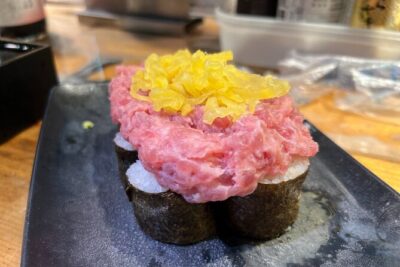
Shinjuku Food Tour (13 Dishes at 4 Local Eateries)
Read our review →
Tokyo Tsukiji Fish Market Food and Culture Walking Tour
Read our review →
Shinsekai Food Tour with 13-15 Dishes at 5 Eateries
Read our review →
Osaka Food Tour: 13 Dishes at 5 Local Eateries
Read our review →
Shinjuku Food Tour (15 Dishes and 4 Eateries)
Read our review →
Best of Shinjuku: Izakaya Food Tour (4 Stops, 14+ Tastings)
Read our review →
Hungry Osaka Street Food Tour:15 Tastings & 3 Drinks with a Local
Read our review →
Browse the lists this tour appears in