
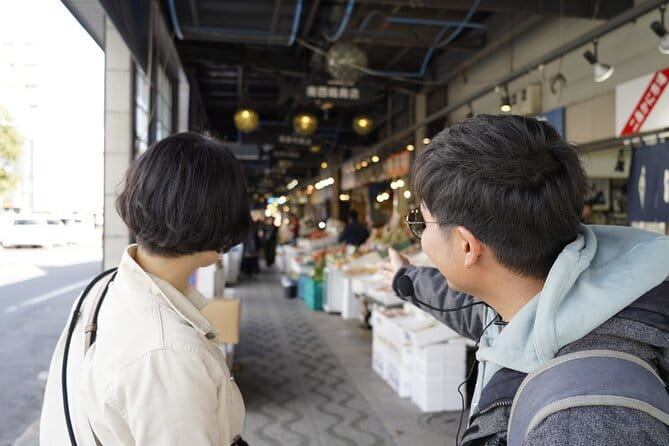
REVIEW · MARKETS
Authentic Sapporo: Nijo Market Seafood Lunch & Local History Tour
Sapporo’s story comes together nicely on this 2.5-hour walking tour, which links its early civic buildings to a seafood lunch at Nijo Market. You get the Clock Tower, City Hall, Odori Park, Sosei Bridge, a local shrine, and a 90-meter view from Sapporo TV Tower, all before sitting down for sushi or donburi.
I like two things here: the small group of no more than eight keeps the walk personal, and the market lunch gives the history a practical finish. Guides such as Tomoaki, Tom, Okie, and Iku have been praised for clear explanations and useful advice about other places to eat and visit. The main catch is weather. This is an outdoor walk, and snowy roads can be slippery and very cold.
In This Review
- Key points at a glance
- Why this Sapporo walk works well
- Meeting the guide at the Clock Tower
- City Hall and the open space of Odori Park
- The 90-meter view from Sapporo TV Tower
- Sosei Bridge and the early city
- A short visit to Hokkaido Shrine Ton-gu
- Seafood lunch at Nijo Market
- What the small group and guide add
- Snow, shoes, and the pace of the walk
- Who will get the most from this tour
- Should you book the Nijo Market history tour?
- FAQ
- Where does the tour start?
- Where does the tour finish?
- How long does the tour last?
- Is the Sapporo TV Tower ticket included?
- Is lunch included?
- How many people can join the tour?
Key points at a glance
- A compact route through Sapporo’s early story: See the Clock Tower, City Hall, Odori Park, and Sosei Bridge in one morning.
- TV Tower access is included: The 90-meter observation deck gives you a useful 360-degree view of the city.
- Seafood lunch finishes the tour: Choose sushi or donburi at a restaurant inside Nijo Market.
- A small group makes questions easy: The maximum is eight people, with an English or Japanese live guide.
- Winter clothing matters: Wear insulated layers, a warm hat, and sturdy shoes, especially in snowy weather.
- The tour ends at lunch: Your guide may not sit with you for the meal, so expect the final restaurant portion to be partly independent.
Why this Sapporo walk works well
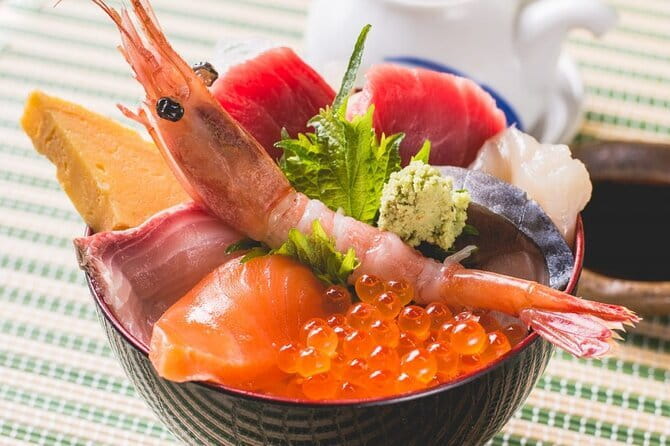
I see this tour as a good introduction to central Sapporo, especially if you want more than a meal and a few photographs. The route shows how the city developed, then adds a shrine and a market to give the morning some local texture.
At $63.20 per person, the price is fair if you value a live guide and the TV Tower admission. Your seafood lunch is included, along with tax and insurance, so you are not paying the tour price and then adding the main meal afterward.
The value is less convincing if you already know central Sapporo well or prefer to explore at your own pace. The route is short, but it packs in several stops. You will get context and direction rather than long visits at every place.
The group limit helps. With eight people or fewer, you can ask about Sapporo’s history, food, religion, or the best places to continue afterward. The guides have also offered restaurant and sightseeing suggestions, which can be useful early in a Hokkaido stay.
A few more Sapporo trips to weigh up
- Mountain Bike Tour from Sapporo Including Hoheikyo Onsen and Lunch
★ 4.5 · 35 reviews - Authentic Sapporo: Nijo Market Seafood Lunch & History Tour
★ 4.8 · 20 reviews - Sapporo: Furano Lavender & Biei Blue Pond Tour with Lunch
★ 4.6 · 13 reviews
Meeting the guide at the Clock Tower
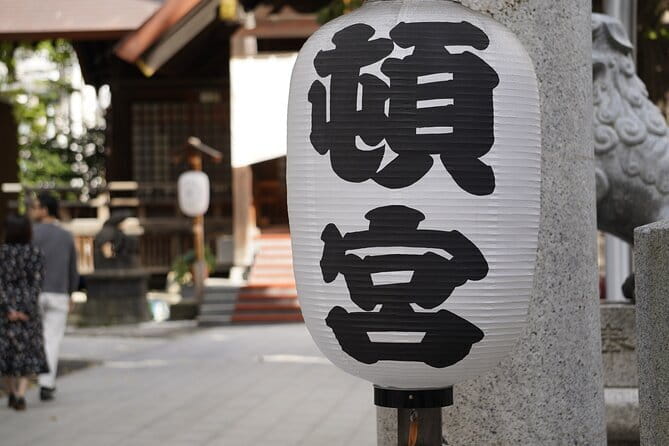
The tour begins at 10:00 a.m. outside the Sapporo Clock Tower, at 2 Chome Kita 1 Jonishi in Chuo Ward. This is a sensible meeting place because the building is one of the city’s clearest symbols and one of the first stops.
You spend about 20 minutes learning about Sapporo’s early period. The bell still rings, and the guide points out how the building connects to the city’s beginnings. Admission to the Clock Tower is not included, so you should not assume that the tour enters the building.
That detail matters if you want a full museum visit. The scheduled stop is more about orientation and storytelling, while the tour keeps moving toward the other sights. You can always return later if you want more time inside.
The opening explanation also sets the tone for the morning. Rather than treating Sapporo as a modern grid of broad streets and office blocks, the guide helps you see the decisions and people behind its development.
City Hall and the open space of Odori Park
The next stop is Sapporo City Hall, where you spend about 15 minutes learning about an important figure involved in the city’s development. The supplied details do not name that person, so the exact focus may depend on your guide.
This is a brief stop, but it gives the walking route a civic angle. Sapporo’s public buildings and planned streets are easier to understand when you know something about the people who shaped them.
The route also passes through Odori Park. This broad central park is a place to watch local life rather than simply tick off a monument. You may see people taking a break, walking across town, or enjoying the open space.
There is no stated time for the Odori Park portion, so do not expect a long park visit. Think of it as part of the walk between major stops. If you want extended time in the park, return after the tour.
The 90-meter view from Sapporo TV Tower
Sapporo TV Tower is one of the most useful stops on the route because the observation deck gives you a 360-degree view from 90 meters above the ground. Admission is included, which improves the tour’s value.
I like this stop for a practical reason: a view from above helps you understand Sapporo’s orderly central layout. After walking through streets and parks, you can see how the city fits together instead of relying on a map.
You receive about 30 minutes here. That is enough for photographs and a good look around, though it is not a long observation-deck visit. One person specifically noted that the tower was unexpected, so the stop may be easy to overlook when you first read the schedule.
Weather can affect what you see. On a clear day, the view should be the stronger part of this stop. In snow or low cloud, the deck may be less rewarding, even though the ticket remains included.
Same city, a completely different kind of day:
- Sapporo Bar Hopping Food Tour
★ 5.0 · 232 reviews - Hokkaido Seasonal: Lake Toya & Noboribetsu Jigokudani Valley
★ 4.7 · 173 reviews - Sapporo Private Tour with a Local – Highlights & Hidden Gems
★ 5.0 · 91 reviews - Sapporo: Sumo Show Experience with Japanese food & Photo
★ 4.9 · 81 reviews
Sosei Bridge and the early city
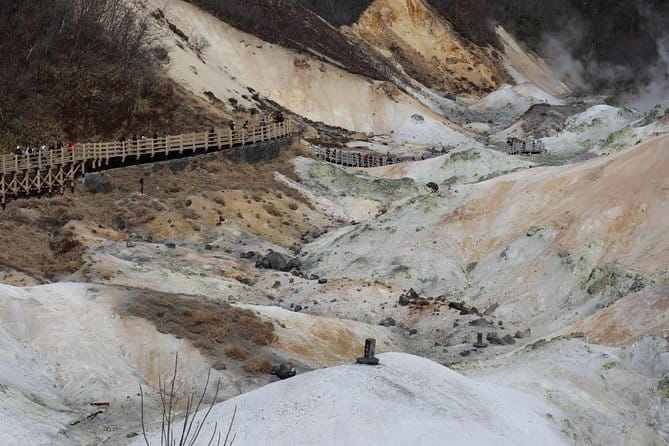
Sosei Bridge gets about 20 minutes and offers one of the more unusual parts of the morning. It is described as Sapporo’s oldest bridge, with stories tied to the city’s early years.
This stop is valuable because it shifts attention away from the famous central sights. The Clock Tower and TV Tower are easy to find on your own. A guide adds more value at a place whose importance is not obvious from a quick look.
The route’s theme becomes clear here. You are not only being shown attractive places. You are being told how ordinary infrastructure, waterways, bridges, and civic buildings helped Sapporo grow.
The bridge stop may appeal most to people who like local details and urban history. If you mainly want food, you may find the explanation longer than necessary. The good news is that the tour keeps each stop short, so the historical sections do not take over the entire morning.
A short visit to Hokkaido Shrine Ton-gu
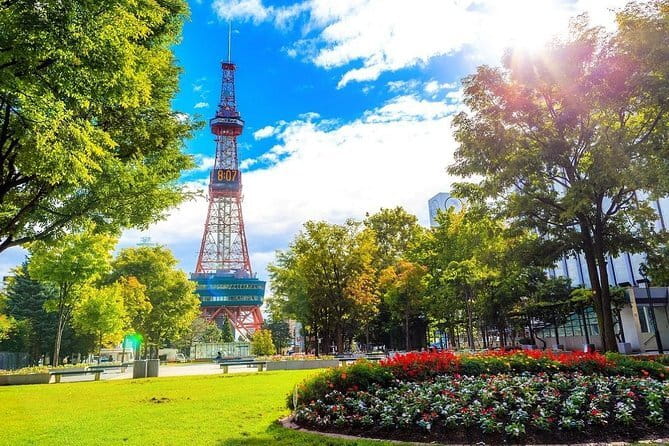
The itinerary names Hokkaido Shrine Ton-gu as a community shrine where you learn about local religion. The stop lasts about 15 minutes and is presented as a place used and valued by local people, rather than a major sightseeing attraction.
That makes it a useful contrast with the city center. You get a glimpse of a religious space within the daily life of Sapporo, with the guide explaining customs and meaning in a short, approachable way.
Because the visit is brief, you should not expect a full shrine tour or a long period for quiet reflection. The value comes from the explanation and the change of pace before the market.
The name appears in the supplied details as Hokkaido Jingu Tonguu, Hokkaido Shrine Ton-gu, and Hokkaido Jingu Ton-gu. If you are navigating independently, check the exact meeting instructions from the operator so you do not confuse this stop with another Hokkaido shrine.
Seafood lunch at Nijo Market
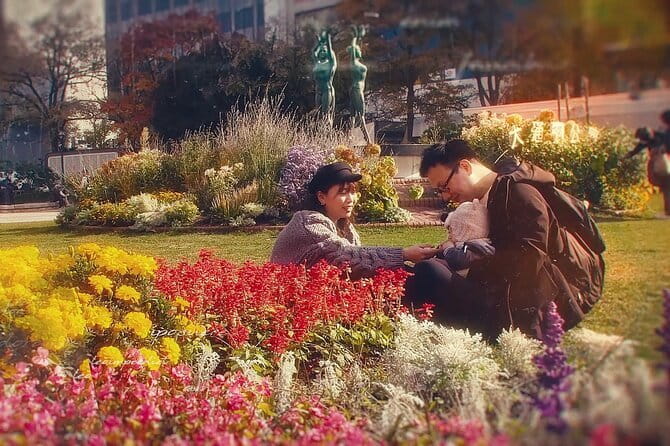
The tour finishes at Nijo Market, once known as the people’s kitchen of Sapporo. Here you explore the fish market and eat a fresh seafood lunch at a local restaurant.
The meal is listed as sushi or donburi, so you should have a choice between prepared sushi and a bowl topped with seafood. The details do not specify the restaurant or the exact menu, and seafood allergies are a clear concern. This tour is not recommended if you have allergies to fish, shellfish, or related seafood.
Nijo Market is a strong ending because it connects the morning’s stories to something you can taste. Hokkaido is famous for seafood, and the meal gives you a direct way to experience that reputation without arranging a restaurant on your own.
There is one important practical point: the guide may not join you for lunch. The guide brings you to the restaurant, but the meal can become an independent part of the experience. If you hoped to keep asking questions over lunch, adjust your expectations.
The tour ends at Nijo Market after you arrive at the restaurant. That is convenient if you want to continue shopping or eating in the market, but it also means you are responsible for planning your next move from there.
What the small group and guide add
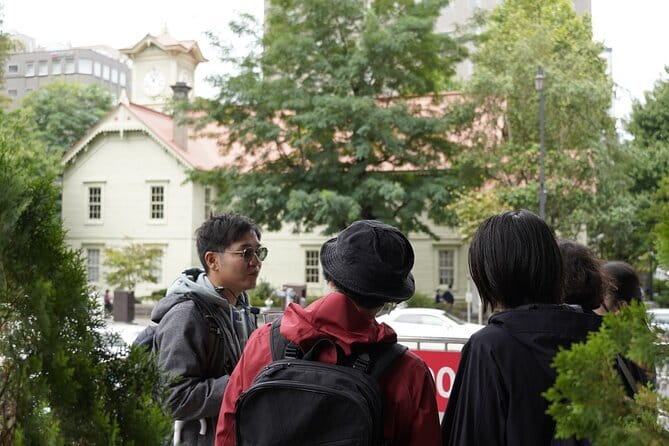
The maximum group size is eight, with an English or Japanese live guide. For a walking tour that moves between six main stops, this is a comfortable size.
A smaller group helps in several ways. You can hear explanations more easily near busy streets, ask for clarification, and keep the walk moving without the delays of a large coach group. There is no private transportation, so the experience is entirely based on walking between the central sights.
Several guide names appear in the tour details. Tomoaki has been described as friendly and strong on Sapporo’s history, while Tom was noted for patience and clear information. Okie led a snowy walk with a trainee, and Iku has also guided the experience. The exact guide is not guaranteed, but the range of names suggests that your experience may vary slightly in tone and emphasis.
A good guide matters here because the buildings themselves can be seen without help. The real service is explaining why they matter, answering questions, and suggesting places to visit after the tour.
Snow, shoes, and the pace of the walk
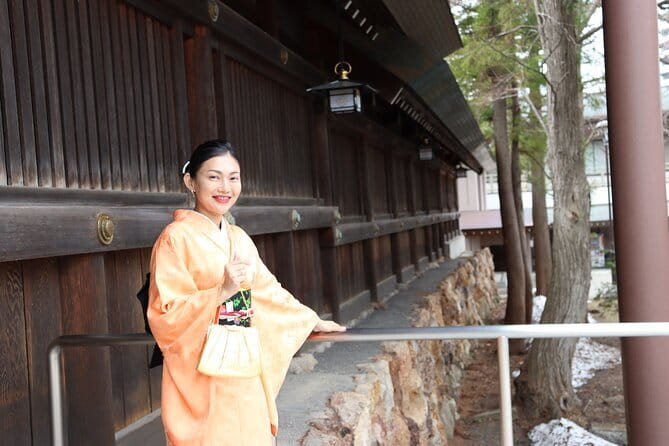
Sapporo can be severely cold in winter. One account of the tour describes steady snow, freezing conditions, slippery roads, and the need for insulated clothing, a hat, sturdy snow shoes, and an umbrella.
That advice should be taken seriously. Even though the walking route is not described as strenuous, icy or snowy streets can make a short walk tiring. Wear shoes with reliable grip and dress for standing outdoors at each stop.
In warmer months, you might find a place to refill a bottle, but bottled water is not included. You can buy a drink from a store or vending machine. Coffee and tea are also not included, although Kotobuki Coffee is introduced during the tour.
The experience requires good weather. If poor weather causes cancellation, you are offered another date or a full refund. You can also cancel for a full refund up to 24 hours before the 10:00 a.m. start time. Changes or cancellations inside that window are not accepted.
Who will get the most from this tour
I would recommend this tour to first-time visitors who want a quick sense of Sapporo’s center before exploring on their own. It suits people who enjoy walking, short historical explanations, city views, and a planned local meal.
It is also a good fit if you want a small group rather than a large bus. The route has enough variety to keep the morning moving: civic history, park space, a tower, a bridge, a shrine, and a market.
Food lovers should pay close attention to the lunch arrangement. Seafood is central to the meal, and the tour is not suitable for people with fish or shellfish allergies. If you do not eat seafood for other reasons, the provided details do not promise an alternative.
You may want something else if you dislike fixed routes or need a slow pace. The tour covers several stops in 150 minutes, and some places receive only 15 or 20 minutes. It is an introduction, not a full museum or shrine visit.
Should you book the Nijo Market history tour?
Book it if you want one compact morning that combines Sapporo’s past, a city view, and Hokkaido seafood. The included TV Tower ticket and lunch make the $63.20 price reasonable, especially for a small group with an English or Japanese guide.
I would be especially inclined to book early in your Sapporo stay. The route gives you basic orientation, and guide suggestions about other sights and restaurants can help shape the rest of your visit.
Skip it if you want a private experience, a long market lunch with your guide, or a tour that runs regardless of weather. Also skip it if seafood allergies make the included meal unsafe.
For most first-time visitors who can manage a winter walk and enjoy a clear, efficient introduction, this is a practical choice. Just wear proper shoes, arrive ready for the weather, and remember that the final lunch may be on your own with the guide no longer at the table.
FAQ
Where does the tour start?
The tour starts at the Sapporo Clock Tower, 2 Chome Kita 1 Jonishi, Chuo Ward, Sapporo. The start time is 10:00 a.m.
Where does the tour finish?
The tour finishes at Nijo Market after you arrive at the restaurant for lunch.
How long does the tour last?
The tour lasts approximately 2 hours and 30 minutes.
Is the Sapporo TV Tower ticket included?
Yes. The tour includes admission to the Sapporo TV Tower observation deck, which is 90 meters high and offers 360-degree views.
Is lunch included?
Yes. A seafood lunch at Nijo Market is included. The meal is listed as sushi or donburi, and the guide may not join you for lunch.
How many people can join the tour?
The tour has a maximum of eight participants. It includes an English or Japanese live guide.
More Historical Tours in Sapporo
- World Heritage Shirakawa-go and Experience Tours from Kanazawa
★ 5.0 · 4,049 reviews - Tokyo: Imperial Palace and Shogun Historical Walking Tour
★ 5.0 · 2,251 reviews - World Heritage Kyoto & Nara Uji Authentic Matcha Experience
★ 5.0 · 1,573 reviews - Kyoto Gion: 2-Hour Geisha Culture & History Walking Tour
★ 5.0 · 1,186 reviews
More Shopping Tours in Sapporo
- Private Market Tour and Cooking Class with Kanae, a Sapporo Local
★ 5.0 · 29 reviews - Tokyo Tsukiji Fish Market Food and Culture Walking Tour
★ 5.0 · 3,184 reviews - Tokyo: Tsukiji Fish Market Food and Walking tour
★ 5.0 · 1,724 reviews - Tokyo: Tsukiji Fish Market Guided Walking Tour
★ 4.9 · 1,397 reviews
Just added around Sapporo
- Snowshoe Hike Tour from Sapporo include hotel p/up & drop off★ 5.0 · 16 reviews
- Wagashi traditional japanese sweets class★ 5.0 · 49 reviews
- Full Day Private Skiing / Snowboarding Tour in Sapporo★ 5.0 · 30 reviews
- Snowshoeing and Onsen Adventures in a Winter Wonderland -Sapporo.★ 5.0 · 30 reviews
- Sapporo Sumo Show Experience with Japanese Food and Photo★ 4.5 · 38 reviews
- Sapporo 4hr Private Tour with Government Licensed Guide★ 5.0 · 42 reviews
- Sapporo 6hr Private Tour with Government Licensed Guide★ 5.0 · 57 reviews
- Hokkaido Asahiyama Zoo Ningle Terrace Day trip★ 5.0 · 14 reviews
Markets, compared.

Tokyo Tsukiji Fish Market Food and Culture Walking Tour
Read our review →
Nishiki Market Brunch Walking Tour (7 Tastings + Brunch)
Read our review →
Tsukiji Fish Market Guided Tour and Sushi Making with Pro Chef
Read our review →Tsukiji Fish Market Food and Culture Walking Tour
Read our review →
Tsukiji Fish Market: Street Food & Culture Walking Tour
Read our review →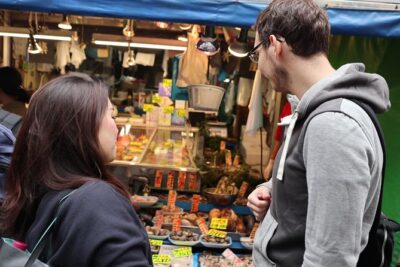
Tsukiji Fish Market Small-Group Food Walking Tour
Read our review →Browse the lists this tour appears in