
REVIEW · WALKING TOURS
Akihabara Anime & Game Adventure Walking Tour (Group or Private)
Akihabara’s real trick is not finding things to do. It is sorting the anime shops, retro arcades, capsule machines, maid cafes, and electronics into something you can understand before your eyes glaze over. This small-group walk gives you a local guide, a short route, and a first look at the neighborhood’s stranger corners.
I like two things right away: the group is capped at seven, and the maid cafe entry and one drink are included. Guides such as Ryo, Seina, Ai, and Yuki have been praised for answering questions and adjusting the walk to suit families, anime fans, and retro-gaming fans. The main catch is value. If you already know Akihabara well, several stops may feel like places you could find on your own.
In This Review
- Key points at a glance
- Akihabara in three hours: what this tour is really for
- Meeting at the Electric Town Gate
- Super Potato and the appeal of old games
- Akiba Cultures Zone and the shop-to-shop rhythm
- Gachapon Hall and fifteen minutes of small surprises
- Heaven’s Gate: the maid cafe hour
- Taito Station and the arcade stop
- The final fifteen minutes: cosplay and odd corners
- What the guides add, and where the experience can fall short
- Who gets the best value from $90.86
- Should you book the Akihabara Anime and Game Adventure?
- FAQ
- How long does the Akihabara Anime and Game Adventure Walking Tour last?
- Where does the tour meet?
- Where does the tour end?
- How many people can join the group?
- Is the maid cafe included in the price?
- Is a photo booth included?
- Can the tour accommodate food allergies or dietary restrictions?
- What happens if bad weather cancels the tour?
Key points at a glance
- Super Potato sets the tone: Start with vintage Japanese games and hardware in one of Akihabara’s best-known retro shops.
- The maid cafe is the centerpiece: Entry and one drink are included, while food, extra drinks, and the ¥1,430 live performance cost more.
- A small group keeps things personal: The tour accepts no more than seven people, with private bookings also available.
- You get more than anime stores: The route includes gachapon machines, arcades, purikura, mysterious vending machines, and cosplay-related sights.
- Your guide can save time: The neighborhood is crowded and packed with narrow, multi-floor shops, so a local escort helps you focus.
- Heat matters in summer: Tokyo’s summer can be hot and humid, so bring water and wear a hat.
Akihabara in three hours: what this tour is really for
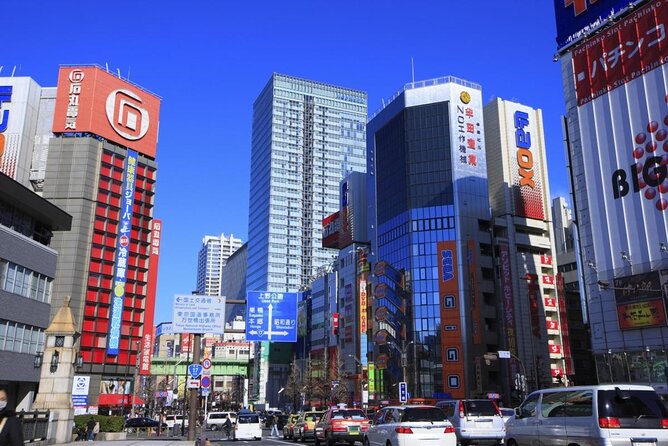
This is an introduction to Akihabara, not a serious shopping expedition or a specialist lecture on Japanese popular culture. You walk from the JR Akihabara area into the Electric Town district, stopping at selected shops and attractions before spending about an hour at a maid cafe.
I see the tour as a useful orientation for a first visit. Akihabara can feel like a maze of signs, staircases, themed shops, and crowded sidewalks. A guide helps you decide what deserves your time and explains enough of the local customs to make the experience less confusing.
The tour is listed at $90.86 per person. That is not cheap for a three-hour walk, especially if your main goal is simply to browse shops. The price makes more sense if you want the maid cafe arranged for you, a guide who can translate or explain what is happening, and a quick route through several parts of the district.
The current score is 4.8 out of 5 from 404 ratings, with 96 percent recommending it. That strong overall result comes with a useful warning: the experience depends heavily on the guide and on your own interest in Akihabara’s subculture.
More Walking Tours in Tokyo
- Tokyo Tsukiji Fish Market Food and Culture Walking Tour
★ 5.0 · 3,184 reviews - Tokyo: Imperial Palace and Shogun Historical Walking Tour
★ 5.0 · 2,251 reviews - Tokyo: Shinjuku Local Bar and Izakaya Guided Walking Tour
★ 4.9 · 1,794 reviews
Meeting at the Electric Town Gate

The meeting point is in front of the Travel Service Center, at 1 Chome-17 Sotokanda, outside the ticket office by the Electric Town Gate of JR Akihabara Station. This detail matters because Akihabara Station has several exits, and the wrong side can put you in an entirely different part of the neighborhood.
Arrive early and look for the guide rather than rushing out of the station at the last minute. The meeting instructions identify the ticket office outside the Electric Town Gate, and the tour ends back at the same meeting point.
The group limit of seven is a real advantage. You are not being herded behind a large flag, and it is easier to ask for a particular kind of anime shop or retro game stop. A private option may suit you better if you want more control over the pace, but the supplied details do not promise a completely custom route for every private booking.
Super Potato and the appeal of old games
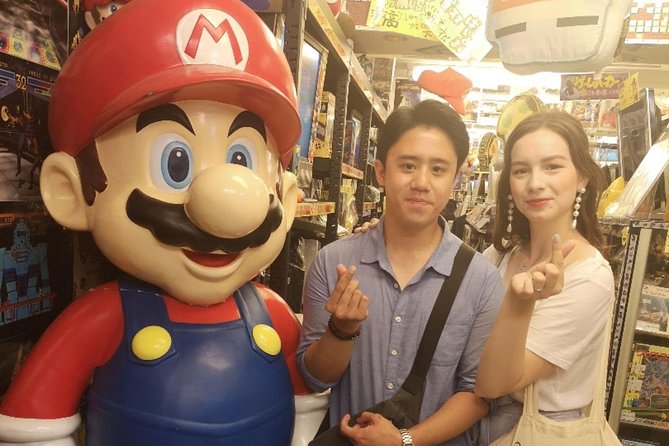
The first stop is Super Potato, a retro video game shop that acts as an immediate introduction to Akiba. The store is aimed at people who remember the rise of Japanese console gaming, but you do not need to be an expert to enjoy the display of older games and technology.
This is one of the strongest stops for anyone interested in Nintendo-era games, vintage arcade culture, or the physical history of gaming. Several guides have been praised for finding original Nintendo titles, older machines, and less obvious shops. A guide can also help explain what you are looking at, rather than leaving you to decode rows of Japanese packaging.
Allow about 30 minutes here. That is long enough for a quick look, but not enough for a serious search if you are hunting a particular cartridge or console. Prices and stock are not included in the tour details, so treat this as a browsing stop rather than a guaranteed shopping opportunity.
If you are not a gamer, Super Potato may be more interesting as a glimpse into Japan’s collector culture than as a place to buy something. You might enjoy the nostalgia, but you should not expect the entire walk to revolve around modern anime releases.
Akiba Cultures Zone and the shop-to-shop rhythm
Next comes Akiba Cultures Zone, where the focus shifts toward idols, anime goods, figures, maid cafes, and other parts of Akihabara’s subculture. The building gives you a concentrated look at the kind of retail that defines the area.
The benefit here is speed. Instead of spending half a day entering every building at random, you get a selected taste of the district. Families have appreciated this approach because it cuts down the time spent searching for stores that match a child’s interest.
The drawback is that a short stop can feel thin if you want detailed background about anime, manga, or the development of Electric Town. Some participants have found the tour too focused on being directed into shops, with too little explanation. I would set your expectations carefully: this is a guided introduction with cultural context, not a museum tour.
Akihabara’s stores often occupy several floors, reached by narrow stairways and packed with merchandise. That can be exciting if you like browsing, but tiring if you dislike crowded shops or have mobility concerns. The activity says most people can participate, but it does not promise special accessibility arrangements. Contact the operator before booking if you need specific assistance.
Same city, a completely different kind of day:
- Mt Fuji and Hakone 1-Day Bus Tour Return by Bullet Train
★ 5.0 · 26,383 reviews - 1-Day Tokyo Bus Tour
★ 5.0 · 14,250 reviews - Tokyo: TOKYO SKYTREE® Admission ticket
★ 4.5 · 11,192 reviews - Tokyo: teamLab Planets TOKYO Digital Art Museum Entry Ticket
★ 4.6 · 9,779 reviews
Gachapon Hall and fifteen minutes of small surprises
Gachapon Hall is the shortest stop, at about 15 minutes. Gachapon machines sell small capsule toys, and this location is presented as a major spot for both classic and current releases.
The attraction is simple and hands-on. You can look for unusual designs, try a machine, or watch how many different themes fit into one room. It works well for children and adults who enjoy small souvenirs without committing to a large purchase.
The time limit keeps the tour moving, but it also means you may not have much time to search for a specific capsule. Any purchases are your responsibility, and the tour does not state that tokens or capsules are included.
This stop also shows why a guide can be useful. Akihabara is full of small amusements that are easy to pass without understanding. A short explanation gives the machines a place in the wider culture of the neighborhood.
Heaven’s Gate: the maid cafe hour

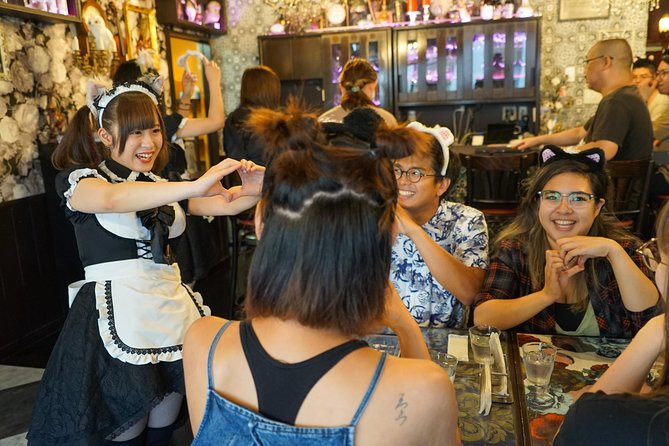
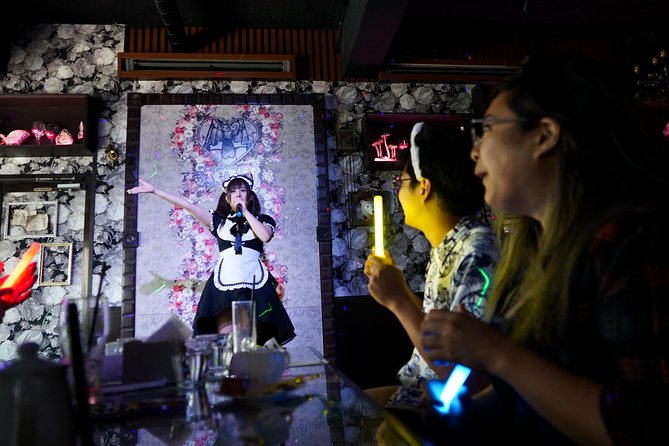
The maid cafe is the main event and takes about one hour. Entry and one drink are included, which removes the biggest uncertainty for a first visit. You can expect a staged, playful setting with maids, themed greetings, and simple participation rather than a quiet cafe break.
For many people, this is the part they could not easily arrange alone. A guide can explain the etiquette, help with ordering, and translate the small rituals that may otherwise feel confusing. Guides including Taka have been praised for assisting with reservations and translation, while others have helped nervous first-timers settle into the format.
The experience is not for everyone. Some people find maid cafes charming and funny, while others find the performance awkward, childish, or underwhelming. It is best approached as a piece of Akihabara pop culture, not as a normal coffee shop.
One drink is included. Additional drinks and food cost extra, and the maids’ live performance costs ¥1,430 per person. Ask about any added charges before ordering. The operator also says it cannot guarantee allergy-free food or meet every dietary restriction because meals are prepared in kitchens it does not control. If food safety is a concern, tell the guide early and do not assume substitutions will be available.
A Polaroid photo with a maid is available for purchase. The included Japanese photo booth, or purikura, is separate and gives you a more casual way to leave with a souvenir. The tour details do not promise that every maid cafe will be the same, since the venue may change depending on circumstances.
Taito Station and the arcade stop
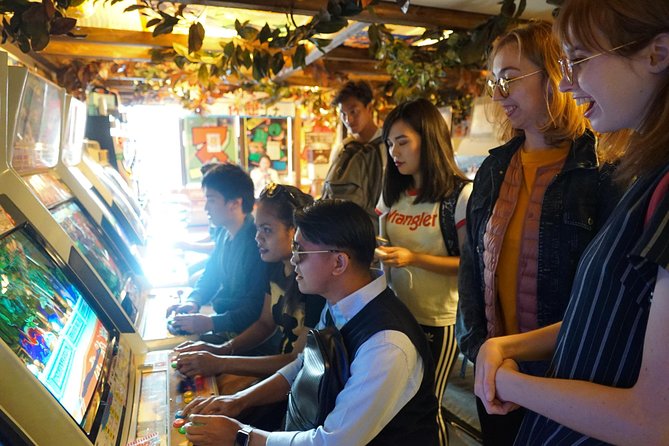
After the cafe, the walk continues to Taito Station Akihabara, marked by its large Space Invaders sign. It is only about a three-minute walk from Akihabara Station and offers another look at the district’s arcade culture.
The stop lasts about 25 minutes. That is enough time to see the atmosphere and play a little, though it is not a full arcade session. Some people have especially enjoyed older arcade machines and classic fighting games, while others have found the gaming portion modest.
This is a good place for a guide to tailor the experience. If you like retro fighting games, rhythm games, or prize machines, say so at the start. The route does not guarantee a particular machine or game, so do not book solely to play one title.
For families, the arcade can be an easy change of pace after several shops. For a serious gamer, it may feel too brief. I would think of it as one sample of Akihabara’s arcade life, not the tour’s main gaming block.
The final fifteen minutes: cosplay and odd corners

The last part of the route returns to the streets of Akihabara for cosplay-related sights and unusual vending machines. The description is intentionally broad, since this portion can change with what is happening in the area.
That flexibility is useful. Akihabara is not only a row of famous stores. Its street-level oddities, bright signs, themed displays, and vending machines help explain why the area feels so different from other Tokyo shopping districts.
It is also the least predictable part of the tour. If you want a fixed list of landmarks, this may seem vague. If you enjoy following a local through whatever catches the eye, it can be a pleasant finish.
The tour ends at the original meeting point. Plan your next activity from there rather than assuming you will finish near another Tokyo station or district.
What the guides add, and where the experience can fall short
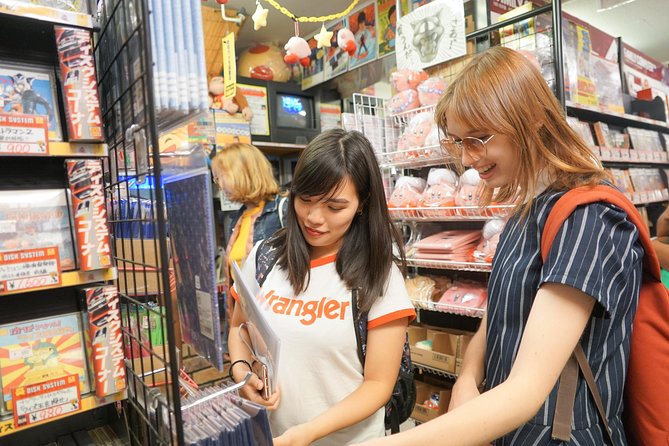
The best version of this tour is guide-led and flexible. Ai has been praised for anime trivia, Yuki for shaping the route around specific interests, Ryo for finding anime shops and vintage arcades, and Seina for her energy and help with first-time visitors. Other guides, including Naoki, Kenji, Taka, and Tommy, have been singled out for friendliness, local explanations, translation, or family care.
That range tells you something important: the guide is not a minor detail. A strong guide can turn a series of shops into a story about gaming, idols, collecting, and changing neighborhoods. A weaker guide can make the same route feel like a walk between stores.
You should tell the guide what you want at the beginning. Mention anime, manga, retro games, arcades, figures, family needs, or specific shopping goals. The tour works best when the guide has a clear sense of what will hold your attention.
There have also been serious complaints about poor communication at the meeting point, limited accommodation for a disability, unauthorized photos, and unprofessional comments. These are not small matters. Ask permission before any photos are taken, make mobility needs clear in advance, and confirm the exact meeting location before the start time.
Who gets the best value from $90.86
I think the price is easiest to justify for a first-time visitor who wants the maid cafe experience but does not want to work out the system alone. The included entry and drink have clear value, and the guide can reduce the time spent wandering through stores that do not match your interests.
The tour is also a good fit for families with an anime or gaming fan in the group. One parent may not care about every figure or arcade cabinet, but the route gives everyone a manageable introduction. The small group makes it easier to ask for breaks and explanations.
You may not get your money’s worth if you are already familiar with Akihabara, prefer independent exploration, or want long shopping sessions. The stop times are short, and the route includes only a sample of the district. You can visit Electric Town on your own for free, then spend your budget directly on games, food, or collectibles.
Remember the extra costs. Food, additional drinks, live performances, and Polaroid photos are not part of the base price. Bring water in summer, wear a hat, and expect the walk to involve busy streets and stairs inside some shops.
Free cancellation is available up to 24 hours before the start time. Changes made inside that window are not accepted, and poor weather can lead to a new date or a full refund.
Should you book the Akihabara Anime and Game Adventure?
Book it if you want a structured first look at Akihabara, enjoy retro games or anime retail, and are curious about a maid cafe but would rather have someone explain the process. The small group, included cafe entry, purikura, and guide support make it more useful than a simple shopping walk.
Skip it if you already know the area or want a serious collector’s itinerary. You may prefer to explore independently, especially if you want to spend an hour in one shop rather than 30 minutes in several.
My practical advice is to book early in your Tokyo stay. Use the walk to learn the neighborhood, note the shops that interest you, and return later with more time. That makes the $90.86 easier to defend, and it lets the tour serve as an orientation rather than your only Akihabara visit.
FAQ
How long does the Akihabara Anime and Game Adventure Walking Tour last?
The experience is scheduled for approximately three hours. The route includes several short shop and arcade stops plus about one hour at a maid cafe.
Where does the tour meet?
You meet in front of the Travel Service Center at 1 Chome-17 Sotokanda, outside the ticket office by the Electric Town Gate of JR Akihabara Station.
Where does the tour end?
The activity ends back at the meeting point.
How many people can join the group?
The tour has a maximum of seven participants. A private booking option is also available.
Is the maid cafe included in the price?
Maid cafe entry and one drink are included. Extra food and drinks cost more, and the maids’ live performance costs ¥1,430 per person.
Is a photo booth included?
Yes. A Japanese photo booth, known as purikura, is included. A Polaroid photo with a maid is available for an additional purchase.
Can the tour accommodate food allergies or dietary restrictions?
The operator cannot guarantee allergy-free meals or meet every dietary restriction because the food is prepared in kitchens it does not control. Substitutions may not always be possible.
What happens if bad weather cancels the tour?
If the activity is canceled because of poor weather, you can choose another date or receive a full refund. For your own cancellation, cancel at least 24 hours before the start time for a full refund.
Just added around Tokyo
- Tokyo: Customizable Private Guided Walking Tour★ 4.5 · 129 reviews
- Private Harajuku Omotesando Architecture Tour★ 4.9 · 18 reviews
- Tokyo: Guided Helicopter Ride★ 4.9 · 24 reviews
- Tokyo: Guided Walking Tour of Tsukiji Market with Lunch★ 4.4 · 24 reviews
- Tokyo: Private Personalized Local Food Tour★ 4.5 · 101 reviews
- Tokyo GINZA: KONPARU Japanese Cabaret Show with Drink★ 4.8 · 38 reviews
- Tokyo: Guided Walking Tour of Tsukiji Market with Breakfast★ 4.4 · 134 reviews
- Tokyo: Gotokuji Cat Temple, Shinjuku Cat Cafe & 3D Cat Tour★ 4.9 · 38 reviews
Walking Tours, compared.
Kyoto Geisha Walking Tour: Gion District & Hidden Gems
Read our review →
Tokyo Tsukiji Fish Market Food and Culture Walking Tour
Read our review →
Gion Magical Night Walking Tour with Geisha Trivia
Read our review →
Imperial Palace and Shogun Historical Walking Tour
Read our review →
Gion Geisha District Walking Tour – Stories of Geisha
Read our review →
Asakusa Walking Tour with Sensoji Temple Visit
Read our review →
Kyoto Gion Geisha District Walking Tour – The Stories of Geisha
Read our review →Browse the lists this tour appears in