
REVIEW · KIMONO & CULTURE EXPERIENCES
1-Day Togakushi Tour: Soba making, Ninja Town, and Hidden Shrines
Togakushi’s best surprise is that lunch becomes part of the adventure. You make buckwheat noodles with local artisans, then eat what you made before heading into a ninja house full of false doors and tricky exits. I love that the food is not just served to you, and I like the way the day joins Shinto legends with a playful look at ninja life.
The tradeoff is the walking. You will spend much of the day outdoors, often on forest paths, and the route does not reach the Okusha, or Upper Shrine. Instead, you get extra time along the great cedar avenue, a fine choice for most people but a limitation if visiting the upper shrine is your main goal.
In This Review
- Key points to know before you book
- Why Togakushi makes a strong day trip from Nagano
- Meeting at Nagano Station and riding into the mountains
- Tonkururin: a soba lesson that earns its lunch
- Chusha Shrine and the walk through sacred forest
- The Togakushi Ninja Museum and its deceptive house
- The Zuishimon Gate and the giant cedar avenue
- What the $166.85 price really includes
- Who will enjoy this day, and who should reconsider
- Booking details that affect your decision
- Should you book the Togakushi day trip?
- FAQ
- Where does the tour start?
- What time should I meet the guide?
- How does the tour reach Togakushi?
- Is lunch included?
- Does the tour visit the Upper Shrine?
- How much walking is involved?
- Can children join the tour?
- What happens if I need to cancel?
Key points to know before you book
- Make and eat your own soba: The two-hour Tonkururin visit includes instruction from soba artisans and lunch made from your noodles.
- The Ninja Trick House is hands-on: You solve physical puzzles and find your way through a maze of deceptive rooms.
- Togakushi is tied to Japanese creation myths: Your guide explains why these wooded mountains have drawn Shinto worshippers and ascetics for at least 1,000 years.
- The cedar avenue is the grand finale: You walk from the Ninja Museum through the Zuishimon Gate toward the Upper Shrine area, but do not reach Okusha.
- Plan for a cool, active day: The tour includes public buses, forest trails, uneven ground, and about 8 hours outside Nagano City.
- The $166.85 price covers the main pieces: Your guide, transportation, lunch, and Ninja Museum admission are included.
Why Togakushi makes a strong day trip from Nagano
Togakushi gives you a side of Nagano that is hard to find in the city. This is a mountain village of sacred woods, old shrine paths, local buckwheat noodles, and stories about warriors who relied on secrecy rather than open battle.
The setting matters. Togakushi has been considered sacred for at least a thousand years, and its story connects with Japanese creation myths. As you walk, your guide explains the religious traditions and local legends, so the shrines feel like more than attractive stops for photographs.
I like the mix of activities here. You are not asked to spend eight hours simply looking at temples or walking in silence. You cook, eat, ride buses, visit a shrine, test your wits in a ninja house, and finish beneath enormous cedars.
That variety also helps with the physical demands. The walking is broken into sections of roughly 30 minutes, though the full day still requires a moderate level of fitness. Good shoes are essential. A waterproof jacket or umbrella is also sensible, since Togakushi can be cooler than Nagano City even in summer and the weather can change quickly.
More kimono & culture experiences in Nagano:
- Matsumoto Castle Tour & Samurai Experience
★ 4.9 · 128 reviews - Matsumoto Castle Tour & Samurai Experience
★ 5.0 · 69 reviews - Kyoto Geisha Walking Tour: Gion District & Hidden Gems
★ 4.7 · 3,273 reviews
Meeting at Nagano Station and riding into the mountains
The meeting point is inside Nagano Station, in front of the information board and video monitors directly across from the Shinkansen ticket gates. The stated meetup time is 9:15 a.m., while the tour start is listed as 9:30 a.m., so I would arrive early and look for the English-speaking guide rather than hurry through the station.
Transportation from Nagano to Togakushi and between the stops is included. The first journey uses a public bus, which gives you a practical look at how locals reach the mountain area. You do not need to arrange a separate bus fare or figure out the route on your own.
The group can have up to 20 people, with at least two required for the tour to operate. A group of 20 is not tiny, but having a guide manage the bus connections and keep the schedule moving is useful on a full day like this.
The tour returns to Nagano Station at about 5:30 p.m. That makes it possible to use this as a day trip while staying in Nagano, though I would avoid scheduling a tight evening train immediately afterward. Public transport and mountain roads can add small delays.
Tonkururin: a soba lesson that earns its lunch
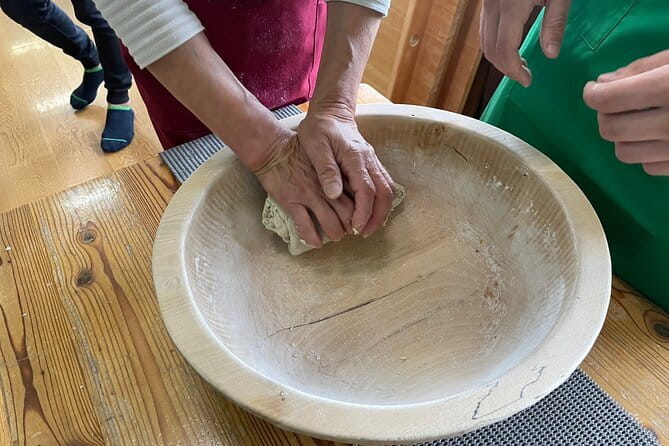
The first major stop is Tonkururin, where your soba-making session lasts about two hours. With help from the guide and the museum’s soba artisans, you start from the beginning rather than simply watching a demonstration.
That hands-on element is the heart of the meal. Buckwheat noodles are strongly linked with Togakushi, and making them gives you a better sense of the skill behind a dish that can look simple when it arrives in a restaurant bowl.
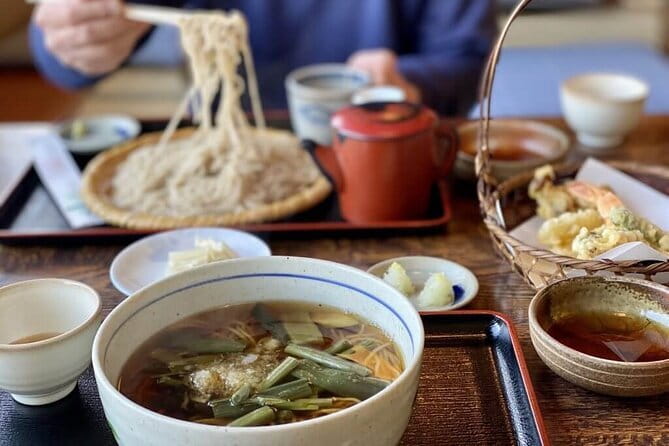
After the lesson, you eat your own noodles in the museum restaurant area. Lunch is included, and the meal is one of the clearest ways this tour delivers value. You get an activity, a local specialty, and a proper midday break in one stop.
Do not expect a quick snack between attractions. Two hours is a substantial portion of the day, and that is a good thing if you enjoy food experiences. If you prefer to rush from shrine to shrine, the pace may feel slow.
Tell the operator about dietary requirements when booking. The meal centers on buckwheat noodles, and the supplied information does not promise substitute dishes for every need, so it is best to raise questions in advance.
Chusha Shrine and the walk through sacred forest
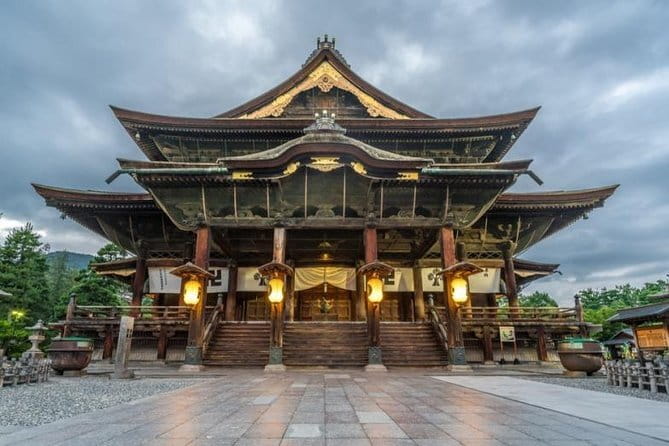
After lunch, the route continues toward the Togakushi Ninja Museum, with a short stop at Togakushi Chusha, or Middle Shrine. The Chusha visit is scheduled for about 30 minutes, enough for a look at the shrine and an explanation from your guide rather than an extended independent visit.
The walk between parts of the itinerary is important. The route through the forest lets your guide explain Shinto beliefs, mountain ascetics, plant life, and the myths linked with Togakushi. One review describes learning about the plants in the park as well as Shinto traditions, which points to the kind of detail that can make this walk more rewarding than a simple transfer.
The paths are maintained, but the ground is uneven in places. You may walk through forest sections for up to 30 minutes at a time, so leave fashion shoes in your hotel. Children can take part, but they need to manage the walking or be carried for those stretches.
The scenery changes with the weather. Expect cool air, tall trees, and a more rural feel than in Nagano. Bring layers even in warm months, and keep rain protection handy.
A few more Nagano trips to weigh up
- 1-Day Snow Monkeys, Zenko-ji Temple & Sake in Nagano
★ 5.0 · 1,020 reviews - Nagano: Snow Monkeys, Zenkoji Temple & Sake Day Trip
★ 4.9 · 833 reviews - From Tokyo: Snow Monkey 1 Day Tour with Beef Sukiyaki Lunch
★ 4.6 · 295 reviews - 1-Day Tour from Nagano and Matsumoto Kamikochi & Matsumoto Castle
★ 5.0 · 105 reviews
The Togakushi Ninja Museum and its deceptive house
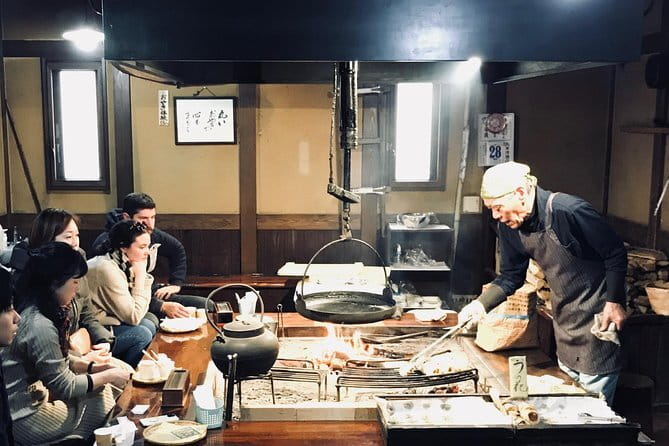
The Ninja Museum gives the day its most playful turn. Togakushi is associated with the Togakure school of ninja, founded in these mountains in the 12th century. The area’s remote position and natural defenses helped create the setting for a school linked with espionage, deception, and covert movement.
Your guide takes you into the museum and then gives you time to explore. The most memorable part is the Ninja Trick House, also called the Ninja House, a maze of hidden routes and misleading rooms where you must work out how to escape.
This is not just a display behind glass. You use your eyes, hands, and patience. The puzzles suit children, but adults should not assume they will breeze through them. A room designed to fool you can be surprisingly stubborn.
The full Ninja Museum stop lasts about two hours. That allows time for the guided portion, the trick house, and other exhibits if the schedule permits. The exact balance can change, since the day must also allow for buses and the final cedar walk.
I appreciate the contrast with the shrine visit. Chusha asks you to slow down and consider sacred tradition. The Ninja House asks you to push a wall that may not be a wall at all. Together, the two stops show different sides of Togakushi without making the day feel repetitive.
The Zuishimon Gate and the giant cedar avenue
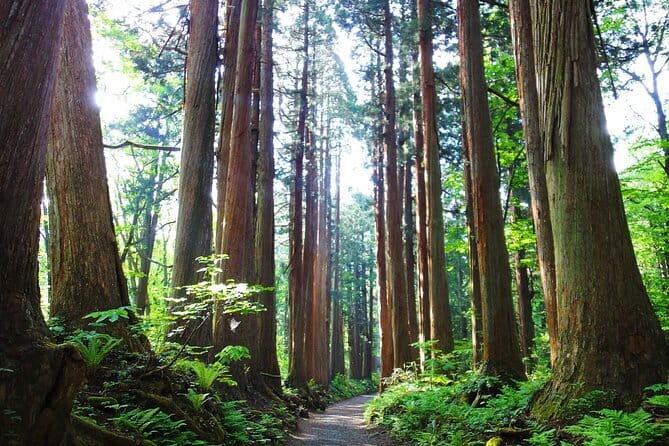
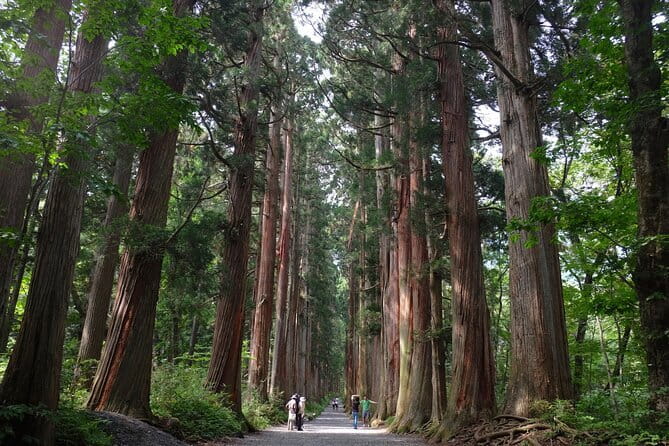
From the Ninja Museum, you walk with the guide toward the Zuishimon Gate and along Togakushi’s famous cedar avenue. This final section takes about 1 hour and 45 minutes, making it the longest single walking block on the schedule.
The cedars are the visual high point of the day. Their scale gives the route a solemn, almost otherworldly feel, especially after the lively puzzles at the Ninja Museum. Your guide can put the path into religious context, which helps explain why the approach to the shrines has such weight.
A key point needs to be clear: this tour does not go all the way to Okusha, the Upper Shrine. Time limits and the difficulty of completing the full route mean you spend extended time on the cedar avenue instead.
If you have already visited Okusha or mainly want the forest approach, this arrangement works well. If reaching the Upper Shrine is your top priority, you should choose a different plan or ask before booking. The tour gives you the atmosphere of the approach, not a complete upper-shrine visit.
The final walk is also where footwear and weather matter most. Uneven ground, cool temperatures, and changing conditions can make the route tiring. I would carry water and keep your hands free for balance and photographs.
What the $166.85 price really includes
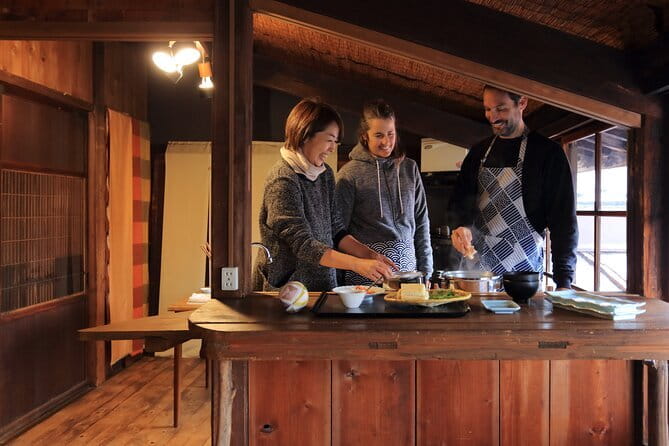
At $166.85 per person, this is not the cheapest way to see Togakushi. The cost becomes easier to judge once you count what is bundled into the day: an English-speaking guide, bus transportation from Nagano and between activities, soba instruction, your handmade noodle lunch, Ninja Museum admission, and guided visits at the listed attractions.
You are paying for more than entry tickets. The guide handles the practical flow of a remote day trip and provides context for the myths, Shinto traditions, plants, and ninja history. That matters because Togakushi’s meaning is not always obvious from a shrine gate or forest path alone.
The handmade lunch is another strong value point. You are not paying separately for a meal after spending money on a cooking class. It also gives the morning a clear purpose and breaks up the walking.
The price does not include your Shinkansen ticket to Nagano, accommodation, or extra snacks and drinks. If you are already based in Nagano, the calculation is more attractive. If you are making a special rail trip only for this excursion, add those train costs before deciding.
The tour has a 100 percent recommendation rate from 18 recorded ratings, which is a positive signal, though the small number means I would still focus on the route and fitness requirements rather than book on the score alone.
Who will enjoy this day, and who should reconsider

I would choose this tour if you want several kinds of experience in one day. It suits couples, families with walking-capable children, first-time visitors to Nagano, and anyone who prefers an organized mountain outing over working out buses and admissions alone.
It is especially good for people who enjoy food, folklore, and active sightseeing in equal measure. The day never stays with one subject for too long, and the shift from soba to shrine to ninja puzzles keeps younger family members interested.
You should think twice if you have limited mobility. The tour is not suitable for people with mobility impairments, and there is a considerable amount of walking on forest trails and uneven ground.
It may also be a poor fit if your only goal is Okusha. The cedar avenue is beautiful and meaningful, but it is not the same as reaching the Upper Shrine. Be honest about that priority before paying.
Pack comfortable shoes or boots, seasonal clothing, rain protection, water, and perhaps a small snack. Extra food and drinks are not included, and the day spends a lot of time outside.
Booking details that affect your decision
The experience is commonly booked about 34 days ahead, so I would not leave it until the last minute if your Nagano dates are fixed. Confirmation is provided at booking, but all activities remain subject to availability, and the schedule can be adjusted if a partner venue cannot confirm a particular activity.
Free cancellation is available up to 24 hours before the local start time for a full refund. Changes or cancellations inside that 24-hour window are not accepted for a refund.
The mobile ticket makes arrival simpler, but the meeting point still deserves attention. Go inside Nagano Station, find the information board and video monitors across from the Shinkansen ticket gates, and be ready by 9:15 a.m.
Should you book the Togakushi day trip?
Book it if you want a full, active day that combines handmade soba, sacred forest paths, and ninja puzzles without arranging the details yourself. The best parts are the meal you prepare, the guide’s explanations during the walks, and the final cedar avenue.
Skip it if you need an easy-access outing, dislike public buses and forest walking, or must visit Okusha itself. For everyone else, the $166.85 cost is reasonable because it covers transport, lunch, entry, and a guide across a remote mountain route that would take more effort to plan independently.
FAQ
Where does the tour start?
It starts inside Nagano Station, in front of the Information Board and video monitors directly across from the Shinkansen or Bullet Train ticket gates.
What time should I meet the guide?
The meetup time is 9:15 a.m., while the listed tour start time is 9:30 a.m. Arrive by 9:15 a.m. so you have time to find the guide.
How does the tour reach Togakushi?
The tour uses public buses from Nagano and includes transportation fees from Nagano to Togakushi and between the activities and attractions.
Is lunch included?
Yes. Lunch includes the soba noodles you make during the hands-on session at Tonkururin. Additional snacks and drinks are not included.
Does the tour visit the Upper Shrine?
The tour walks through the Zuishimon Gate and along the giant cedar avenue toward Okusha, or Upper Shrine, but does not go all the way to Okusha because of time and walking demands.
How much walking is involved?
There is a significant amount of walking, including forest trails and uneven ground. The route is generally broken into walking periods of about 30 minutes, and you should have moderate fitness and wear good shoes.
Can children join the tour?
Yes, the tour is suitable for children who can walk or be carried for up to 30 minutes at a time. The Ninja Trick House is designed to appeal to adults as well as children.
What happens if I need to cancel?
You can cancel at least 24 hours before the local start time for a full refund. Cancellations or changes made less than 24 hours before the start are not accepted for a refund.
Just added around Nagano
- Wasabi Farm Walking Tour & Lunch★ 4.5 · 20 reviews
- 1-Day Tateyama-Kurobe Tour: Walking on the ‘Roof of Japan’★ 5.0 · 20 reviews
- Snow Monkeys, Hokusai & Sake: A Perfect Day in Nagano★ 5.0 · 19 reviews
- Ski or Snowboard Lesson in Shiga Kogen (4Hours)★ 5.0 · 34 reviews
- Snow Monkey Park & Miso Production Day Tour from Nagano★ 5.0 · 18 reviews
- Snow Monkey Park, Soba Lunch and Shibu Onsen Tour★ 5.0 · 12 reviews
- Nagano Private Two Day Tour★ 5.0 · 29 reviews
- Nagano Spring: 1-Day Cherry Blossoms & Snow Monkeys Guided Tour★ 5.0 · 31 reviews
Kimono & Culture Experiences, compared.

Kyoto Geisha Walking Tour: Gion District & Hidden Gems
Read our review →
Gion Magical Night Walking Tour with Geisha Trivia
Read our review →
Gion Geisha District Walking Tour – Stories of Geisha
Read our review →
Best of Kyoto: Gion, Geisha, Pagodas & Cobblestones
Read our review →
Kyoto Gion Geisha District Walking Tour – The Stories of Geisha
Read our review →
Browse the lists this tour appears in