

REVIEW · KIMONO & CULTURE EXPERIENCES
Matsumoto Castle Tour & Samurai Experience
Matsumoto Castle gives this experience a fine setting: you walk through one of Japan’s oldest surviving original castles, then learn basic sword movements in samurai clothing. I like the strong two-part design. The castle supplies the history, while the one-hour lesson turns that history into something you can feel in your hands.
I also like the personal touch. Guides such as Shin, Matt, Naomi, Tim, and Colin have been praised for clear explanations and good pacing, while the sword instructors are patient and encouraging. The main drawback is physical: the castle’s stairs are steep and narrow, and you must remove your shoes inside. It can also be cold underfoot in winter.
In This Review
- Key points
- Why Matsumoto is the right place for a samurai lesson
- Meeting your guide at Matsumoto Station
- Entering Matsumoto Castle’s original wooden tower
- The steep stairs are part of the deal
- Dressing as a samurai and choosing a practice sword
- Learning basic katana technique from a sword master
- What the guide adds to the castle experience
- Is $88 a fair price?
- Timing, comfort, and practical planning
- Who will enjoy this three-hour experience?
- Should you book the Matsumoto Castle and Samurai Experience?
- FAQ
- Where does the Matsumoto Castle and Samurai Experience begin?
- How long does the experience last?
- Is the tour conducted in English?
- What is included in the price?
- Do I need to bring a samurai outfit or sword?
- Is the experience suitable for wheelchair users?
Key points
- A 400-year-old National Treasure: Matsumoto Castle has the oldest original five-tiered, six-story castle tower still in Japan.
- A two-hour castle visit: Learn about samurai lords, city planning, social classes, and defensive design, not just the castle’s appearance.
- A one-hour katana lesson: Dress in samurai clothing and practice basic attacking and defensive stances with a rented sword.
- English-speaking guidance: Guides including Shin, Matt, Naomi, Tim, and Colin have been praised for history, clear translation, and flexible pacing.
- A small-group feel is possible: Some departures have felt almost private, though group size is not fixed.
- Best for active history fans: The castle involves steep, narrow stairs, so this is not suited to wheelchair users or people with mobility limits.
Why Matsumoto is the right place for a samurai lesson
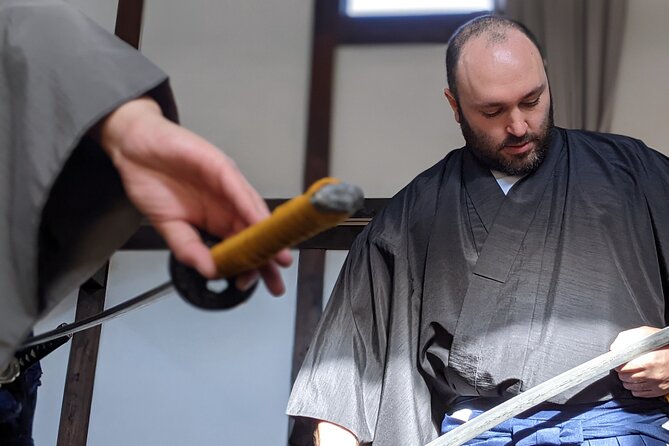
Japan has plenty of samurai-themed activities. Matsumoto makes a particularly sensible choice because the city still has its original feudal castle at its center. You are not learning sword movements in a generic studio and then trying to imagine the setting. You first see the place where samurai lords lived, planned defenses, and governed the surrounding town.
Matsumoto Castle dates from 1593 to 1594. It is one of only five castles in Japan designated a National Treasure, and its main tower is the oldest original five-tiered, six-story castle tower still standing in the country. That age matters. Many famous Japanese castles were rebuilt, sometimes in concrete, while Matsumoto’s tower preserves its original wooden structure.
The experience works because the two activities answer different questions. The castle tour explains how samurai power operated. The sword class shows one small part of the discipline and physical skill associated with that world. You will not become a historical warrior in an hour, but you will gain a better sense of the training, posture, and control behind the image.
More Garden & Palace Tours in Nagano
- 1-Day Tour from Nagano and Matsumoto Kamikochi & Matsumoto Castle
★ 5.0 · 105 reviews - Full-Day Tour: Matsumoto Castle & Kamikochi Alpine Valley
★ 4.8 · 78 reviews - Matsumoto Castle Tour & Samurai Experience
★ 5.0 · 69 reviews
Meeting your guide at Matsumoto Station
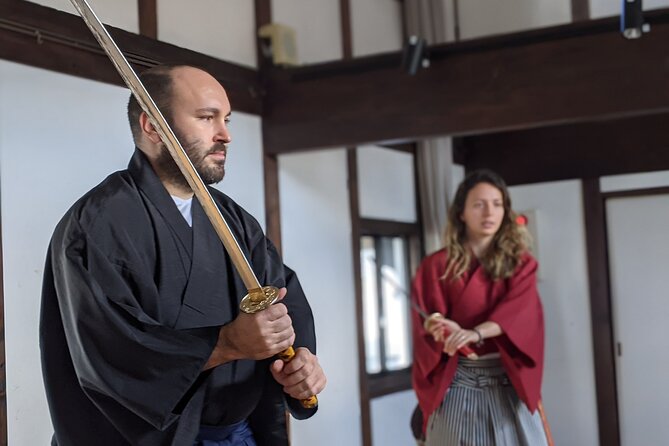
The meeting point is at Matsumoto Station, at the front of the JR Line ticket office near the Starbucks inside the station on the second floor. This is a useful arrangement if you arrive by train, but do not rush through the station without checking the floor and meeting-point details carefully.
From the station, your guide walks with you toward the castle. The short route is more than a transfer. Guides have used the walk to explain Matsumoto’s development, local landmarks, and the way the modern city relates to its feudal past. That early context helps you read the castle as part of a town, rather than as an isolated photo stop.
The guide is a major part of the experience. Names reported for different departures include Shin, Naomi, Matt, Tim, Colin, Sayuko, Tom, Shim, and Kai. You cannot choose a particular guide from the supplied information, but the pattern is clear: the tour depends heavily on a guide who can answer questions and adjust the pace.
Some guides have handled mixed interests well, moving from castle architecture to wider Japanese culture and back again. Tim, in particular, was praised for reading the group’s mood and adjusting the visit. Other guides have helped with translation during the sword lesson. If your group enjoys asking questions, this format should give you more than a silent walk behind a flag.
Entering Matsumoto Castle’s original wooden tower
Plan on roughly two hours at Matsumoto Castle. The visit covers the grounds and the interior, with time to understand the building’s purpose rather than simply admire its black-and-white exterior.
The castle is often called the Crow Castle because of its dark appearance, though that nickname is not the main reason to visit. The real draw is the preserved structure. Inside, you see a castle designed for defense, movement, surveillance, and control. Its wooden floors and old interior give the visit a different feel from reconstructed castles with polished galleries and modern displays.
Your guide explains the Matsumoto samurai lords and the growth of Matsumoto City. You also learn about social classes, residential areas, and defensive strategies. These details answer practical questions that a self-guided visit may leave open: who lived where, how the town was organized, and why the castle was built in this particular way.
I especially like the explanation of defensive planning. A castle is not only a handsome tower. Its layout reflects fear of attack, the need to control access, and the status of the people who lived within its walls. Once you understand those points, small features around the castle make more sense.
The visit is also a lesson in how much you can miss when walking alone. One visitor noted that they had passed key areas earlier in the day without knowing their importance. A guide gives those places a story and helps you notice what deserves your attention.
The steep stairs are part of the deal
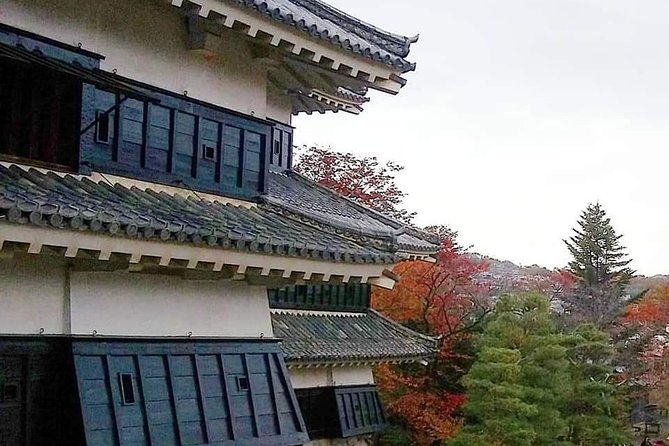
Matsumoto Castle is not an easy building to climb. The stairs to the top are steep and narrow, and busy periods can create slow-moving sections inside the tower. You need reasonable balance and confidence on stairs.
This is not a smooth museum visit. The structure remains close to its original form, which is precisely why the interior is interesting, but that also means fewer modern conveniences. You should not expect the same type of exhibits, broad stairways, or spacious circulation found at a rebuilt attraction such as Osaka Castle.
Shoes must be removed inside the castle. This is normal for a historic Japanese wooden building, but it can be a practical nuisance. In January, one family found the floors extremely cold for children. If you visit in winter, bring warm socks, and consider an extra pair for young children.
Crowds affect the timing. The stated schedule allows about two hours for the castle, but the actual visit may finish earlier or later. Weekends, holidays, and busy seasons are the main variables. A guide can help keep the group moving, but no guide can remove the narrow staircases or the queues created by heavy foot traffic.
Because of the stairs, this experience is not suitable for wheelchair users or people with mobility impairments. If you have a temporary injury, ask yourself honestly if repeated steep climbs will spoil the day. The castle is the heart of the tour, so there is no easy way to skip its most demanding section and still receive the full experience.
More kimono & culture experiences in Nagano:
- Kyoto Geisha Walking Tour: Gion District & Hidden Gems
★ 4.7 · 3,273 reviews - Kyoto: Gion Magical Night Walking Tour with Geisha Trivia
★ 4.9 · 2,393 reviews - Kyoto: Gion Geisha District Walking Tour – Stories of Geisha
★ 4.7 · 2,187 reviews - Best of Kyoto: Gion, Geisha, Pagodas & Cobblestones
★ 4.9 · 2,058 reviews
Dressing as a samurai and choosing a practice sword
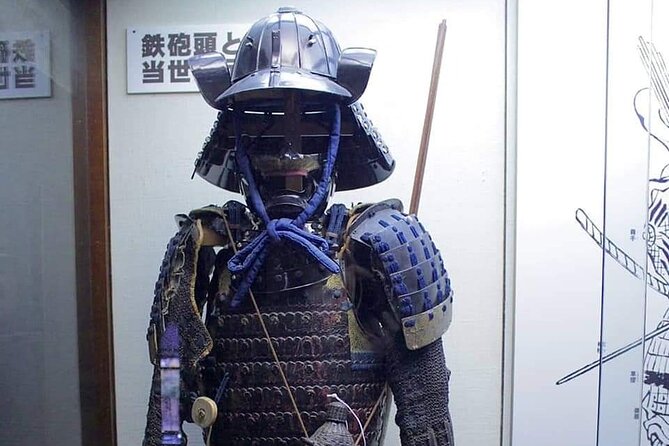
After the castle, the tour moves to the one-hour samurai activity. The change of pace is welcome. You go from listening and climbing to standing, moving, and taking part.
The activity begins with samurai clothing. You then select a sword for the lesson. The outfit makes the session more memorable and gives you the chance to take photographs that feel connected to the setting, rather than simply posing beside a display. Guides have often taken photos and videos during the class, though you should not treat professional photography as a separate included service.
The sword used here is part of a supervised practice activity. The instructor teaches basic attacking and defensive stances, along with how to hold and use the sword. The focus is on learning a few controlled movements, not on free combat or an advanced martial arts course.
That distinction is important. If you already train in kenjutsu or expect a long technical lesson, one hour will feel introductory. If you want a safe, accessible way to learn the basics and understand the discipline behind samurai sword work, the length is about right.
Learning basic katana technique from a sword master
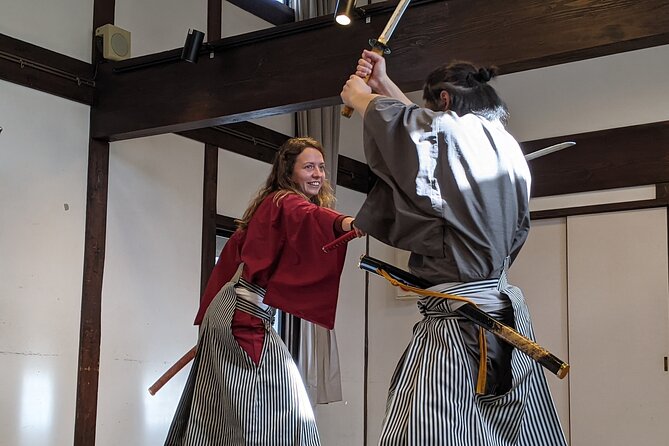
The sword master is the highlight for many people on this tour. Instructors such as Kae, Kei, Kai, Kanga, and other masters have been praised for patience, enthusiasm, humor, and clear demonstrations.
Language can be part of the lesson. The English-speaking guide may translate for the Japanese instructor, and that arrangement has worked well for groups with limited Japanese. One instructor was described as having broken English, but the guide’s translation kept the lesson understandable. The key point is that you are not left to guess what to do.
You begin with posture and basic stances. The instructor shows how to position your body, how to hold the sword, and how to make controlled attacking and defensive motions. These simple exercises reveal how awkward the movements feel at first. That awkwardness is useful. It gives you a small respect for the balance, timing, and repetition needed to make the techniques look graceful.
The class is playful without losing its cultural purpose. The instructors encourage you to have fun, but the activity also explains why the sword became such a strong symbol of the samurai. You are learning a few movements, not claiming to recreate a full historical fight.
Families can enjoy this part especially well. Teenagers aged 14 and 16 were included in one group, and children found the sword class more exciting than simply looking at old rooms. Still, the instructor’s directions must be followed closely. Parents should be prepared to supervise younger children and make sure the activity remains controlled.
What the guide adds to the castle experience
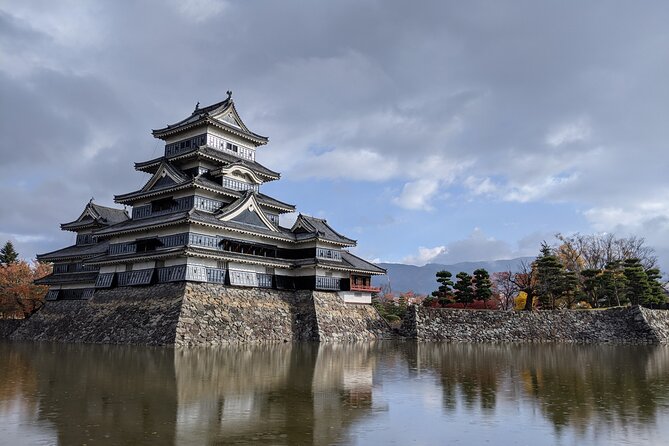
The castle is worth seeing on its own, but the guide changes the quality of the visit. A good guide connects the building to Matsumoto’s people, city plan, and feudal politics. The strongest departures have included detailed answers about samurai life, Japanese culture, and local history without turning the walk into a lecture.
Matt has been praised for going into fine detail while keeping a pleasant pace. Shin has been noted for explaining both the castle and Matsumoto’s past in a small group. Naomi has been described as patient and accommodating, and Colin received praise for allowing enough time to take in each part of the visit.
You may not receive the same guide, so I would not book based on any one name. I would book because the format allows a live English guide to respond to your questions. That is particularly useful if you have already read about Japanese castles and want to ask about specific features.
Small groups are another possible advantage. Some departures have felt almost private, with only three people. Group size is not guaranteed, but a smaller party gives the guide more room to answer questions and helps the sword instructor give each person attention.
Is $88 a fair price?
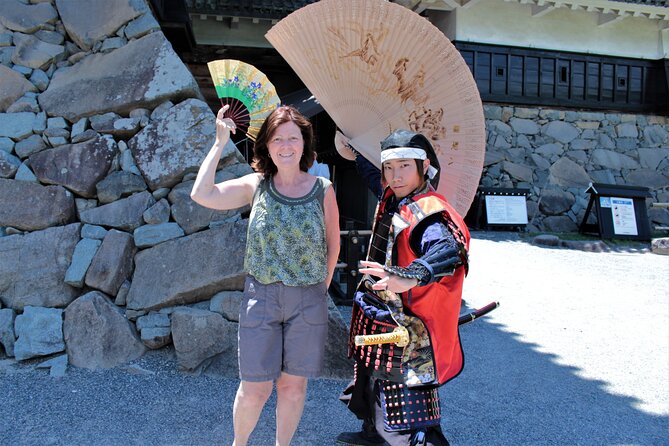
At $88 per person, this is not the cheapest way to see Matsumoto Castle. You are paying for more than admission, though. The price includes an English-speaking guide, castle entry, the samurai activity, and rental of the samurai clothing and sword.
The value depends on how you would otherwise spend your morning. If you only want to photograph the castle exterior, a guided three-hour tour will be more than you need. If you want historical context and a hands-on activity that would be difficult to arrange independently, the price is easier to justify.
The two-hour castle visit gives you time to see the interior rather than sprint through it. The one-hour sword activity then adds something distinct, not just another lecture. That combination is the main reason the tour earns its price.
I also consider the guide’s time important. You are not only buying tickets. You are buying help with the castle’s layout, explanations of defensive features, translation during the sword lesson, and a smoother transition between the two activities. For first-time visitors to Matsumoto, that can prevent a lot of guesswork.
The value is strongest for people who want a focused half-day experience. It is less compelling if you prefer wandering alone, dislike fixed schedules, or already have a strong background in Matsumoto Castle and samurai history.
Timing, comfort, and practical planning
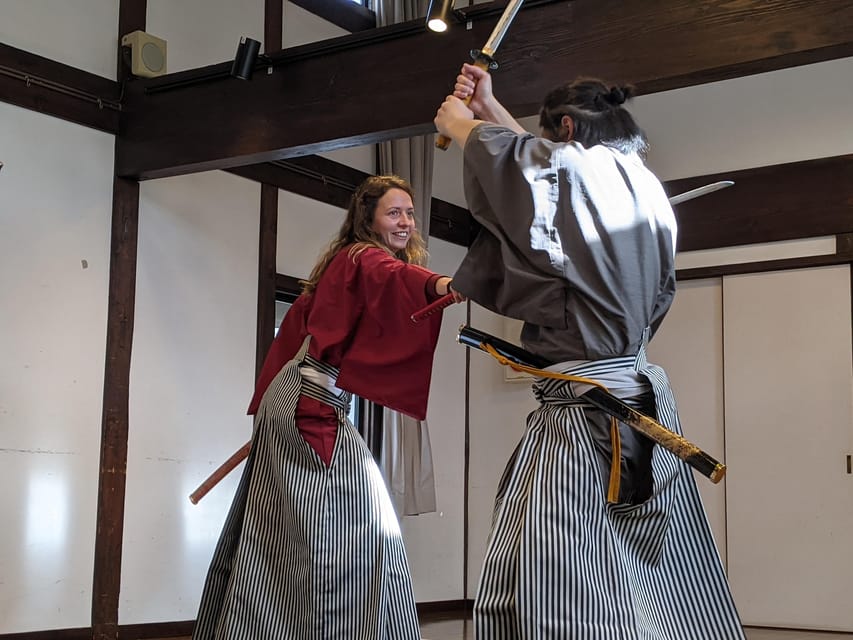
The total duration is listed as three hours, with about two hours at the castle and one hour for the samurai activity. Treat that as a useful guide rather than a guarantee. Castle queues and weekend crowds can make the day end earlier or later.
Wear comfortable clothing that allows movement during the sword lesson. The castle portion requires repeated stair climbing, while the activity asks you to stand and practice controlled motions. Shoes that are easy to remove will save a little fuss at the entrance.
Bring warm socks in cold weather. The castle’s bare floors can be chilly, especially for children. In warmer months, the main concern is not the interior temperature but having enough energy for the climb and the activity that follows.
The tour does not include meals, snacks, souvenirs, or insurance. Keep those costs separate. You also have no need to carry a costume or sword, since both are provided for the activity.
Cancellation is flexible: you can cancel up to 24 hours before the start for a full refund. You can also reserve now and pay later, which helps if you are still arranging train times around a wider Japan itinerary.
Who will enjoy this three-hour experience?
I would recommend this tour most strongly to:
- First-time visitors who want a clear introduction to Matsumoto
- Families with older children or teenagers
- People interested in samurai culture but without martial arts experience
- History fans who want explanations of castle design and city planning
- Visitors who value a small-group feel and the chance to ask questions
- Anyone who wants photographs in samurai clothing as part of the activity
I would be more cautious if you have difficulty with steep stairs, dislike removing shoes, or want a quiet, self-guided museum visit. The castle is old in the best sense, but that means the interior is physically demanding and not designed around modern access.
The sword lesson is introductory. It is excellent for trying something new, but it will not replace a serious martial arts class. Go in expecting a well-guided cultural activity with basic technique, not a full course in historical combat.
Should you book the Matsumoto Castle and Samurai Experience?
Yes, if you want Matsumoto’s castle to mean more than a photograph. The tour joins an exceptional original castle with a lively, hands-on lesson, and the transition from history to practice gives the morning a clear shape.
The best reason to book is the combination. The castle alone supplies atmosphere and architecture. The sword class alone might feel like a costume activity. Together, they explain the setting first and then let you respond to it physically.
Choose a day when you can handle steep, narrow stairs and allow some flexibility around the three-hour schedule. Bring warm socks in winter, meet your guide carefully at the JR ticket office area, and treat the $88 cost as payment for context, admission, equipment, instruction, and convenience.
If that sounds like your kind of morning, this is one of the more satisfying ways to meet Matsumoto’s samurai past.
FAQ
Where does the Matsumoto Castle and Samurai Experience begin?
The meeting point is at Matsumoto Station, at the front of the JR Line ticket office near the Starbucks inside the station on the second floor.
How long does the experience last?
The scheduled duration is three hours. The castle portion is estimated at two hours, followed by about one hour for the samurai experience. The end time may change depending on castle crowds, especially on weekends and holidays.
Is the tour conducted in English?
Yes. The tour includes a live English-speaking guide.
What is included in the price?
The $88 price includes an English-speaking guide, admission to Matsumoto Castle, admission to the samurai activity, and rental of samurai clothing and swords during the lesson.
Do I need to bring a samurai outfit or sword?
No. Samurai outfits and practice swords are provided during the activity.
Is the experience suitable for wheelchair users?
No. The experience is not suitable for wheelchair users or people with mobility impairments because Matsumoto Castle has steep and narrow stairs.
Just added around Nagano
- Nagano: 1-Day Ski Tour Package from Nagano Station★ 4.9 · 35 reviews
- Nagano Sake Tasting Walking Tour★ 5.0 · 17 reviews
- Nagano: Snow Monkeys & Togakushi Shrine Two-Spot in-One Day★ 4.9 · 35 reviews
- Nagano: Tateyama-Kurobe Guided Walking Tour★ 5.0 · 16 reviews
- Snow Monkeys & Best of Nagano: Togakushi, Zenko-ji and more★ 4.9 · 36 reviews
- From Nagano: Tateyama-Kurobe Alpine Route★ 4.8 · 45 reviews
- Food & Cultural Walking Tour around Zenkoji temple in Nagano★ 5.0 · 16 reviews
- 1 Day Tour: Snow Monkeys & Snow Fun in Shiga Kogen★ 5.0 · 52 reviews
Kimono & Culture Experiences, compared.
Kyoto Geisha Walking Tour: Gion District & Hidden Gems
Read our review →
Gion Magical Night Walking Tour with Geisha Trivia
Read our review →
Gion Geisha District Walking Tour – Stories of Geisha
Read our review →
Best of Kyoto: Gion, Geisha, Pagodas & Cobblestones
Read our review →
Kyoto Gion Geisha District Walking Tour – The Stories of Geisha
Read our review →
Browse the lists this tour appears in