
REVIEW · SUMO EXPERIENCES
Ultimate Sumo Tournament: Tokyo, Osaka, Nagoya, Fukuoka
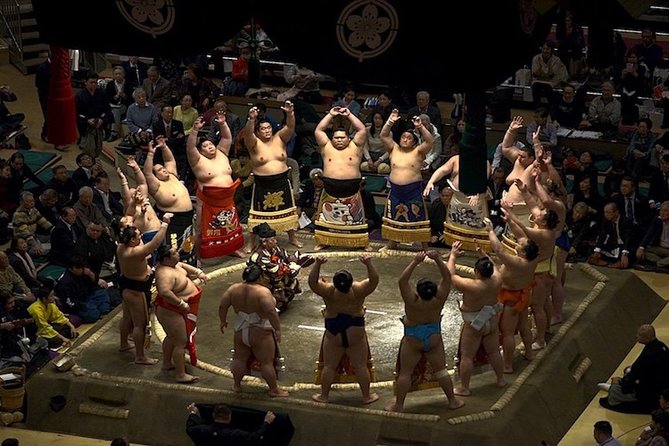
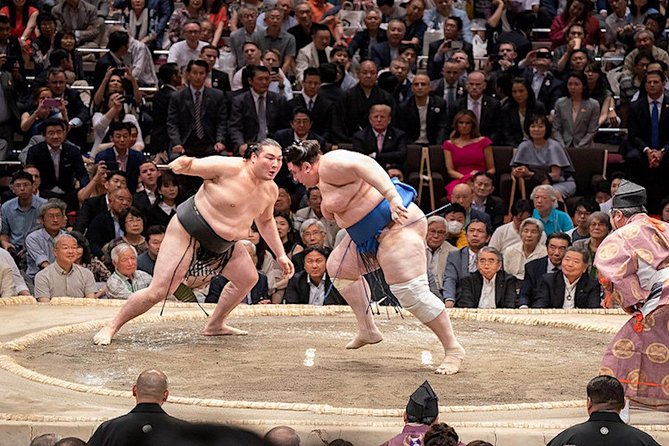
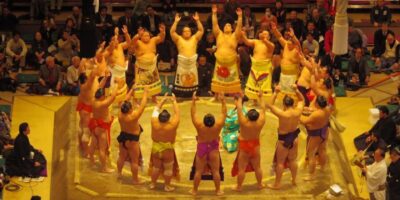
Watching a sumo tournament gives you far more than a sports match. The wrestlers’ entrance, salt throwing, drumbeats, referee calls, and sudden bursts of force make the arena feel like a living piece of Japan. I especially like the reserved seat and the English commentary, since sumo can be baffling when you first see it.
The optional chanko dinner adds a fitting second act, and guides such as Hiro, Miyoko, Taku, Yumi, and Shunsuke have earned praise for explaining the sport with warmth and detail. The main drawback is timing: tickets are scarce, seats vary by package, and the tour may not give you a full tournament day from beginning to end.
In This Review
- Key points to know before booking
- Why a sumo tournament is worth your time
- Choosing the right tournament city
- Tokyo at Ryogoku Kokugikan
- Osaka at EDION Arena Osaka
- Nagoya at IG Arena
- Fukuoka at Fukuoka Kokusai Center
- What happens during the four-hour arena visit
- Understanding what you are watching
- Adding chanko hot pot after the tournament
- The off-season morning stable option
- Price, group size, and ticket value
- Who should book this sumo experience
- Should you book it?
- FAQ
- How long does the tournament experience last?
- Which Japanese cities offer the tournament tour?
- When are the official sumo tournaments held?
- What kind of seats are included?
- Is transportation included?
- Is food included?
- Can I request a vegetarian chanko meal?
- What happens during the off-season stable visit?
Key points to know before booking
- Six official tournaments each year: Tokyo hosts January, May, and September, with Osaka in March, Nagoya in July, and Fukuoka in November.
- A four-hour arena visit: You watch the main bouts with a guide, rather than spending the entire day at the venue.
- Standard seats are on the second floor: B or C chair seats are used for the group option, while private tours offer S or A seats closer to the ring.
- Audio headsets help inside the arena: You can hear explanations about wrestlers, techniques, rankings, and rituals over the crowd.
- Dinner is optional: Chanko hot pot comes without drinks, with a vegetarian request available if made in advance.
- Off-season dates are different: The morning stable option near Warabi includes practice and chanko lunch, but not a tournament ticket.
Why a sumo tournament is worth your time
Sumo is easy to underestimate. At first, you may see two large men crouch, slap their thighs, throw salt, and then collide for only a few seconds. The drama comes from everything around that collision: rank, ritual, posture, technique, discipline, and the pressure of winning inside a tiny ring.
A guide gives you the missing context. You learn why the wrestlers perform certain movements, how the rankings work, and what to watch before the bout begins. A banzuke ranking sheet helps you place each wrestler in the wider hierarchy, while the pamphlet gives you a useful reference for names and basic information.
I like this format because it leaves room for you to enjoy the spectacle. The guide does not need to talk through every second. The best experience comes when commentary explains the important parts, then lets you watch the action and listen to the arena.
Several guides have made a strong impression through clear, friendly presentation. Hiro has been praised for detailed commentary during each bout and for helping with meal arrangements afterward. Miyoko and Myoko are noted for their enthusiasm and background on sumo’s traditions. Taku, Yumi, Izumi, Junka, Shunsuke, Seizo, and Duke have also led tours with different styles, from play-by-play explanations to broader cultural background.
Guide quality can vary from one date to another. One disappointing account describes a guide who provided only basic information and did not explain much of what was happening. That is worth keeping in mind if you expect a lecture throughout the afternoon. This is a guided visit to a live sporting event, not a formal classroom session.
More Sumo Experiences in Tokyo
- Tokyo: Sumo Show and Dining Experience
★ 4.8 · 2,742 reviews - the SUMO show
★ 5.0 · 1,960 reviews - Tokyo Shinjuku Sumo Show & Experience with Photo
★ 5.0 · 1,750 reviews
Choosing the right tournament city
You do not visit all four arenas in one day. You choose the city and date that match your Japan itinerary and the official sumo calendar.
Tokyo at Ryogoku Kokugikan
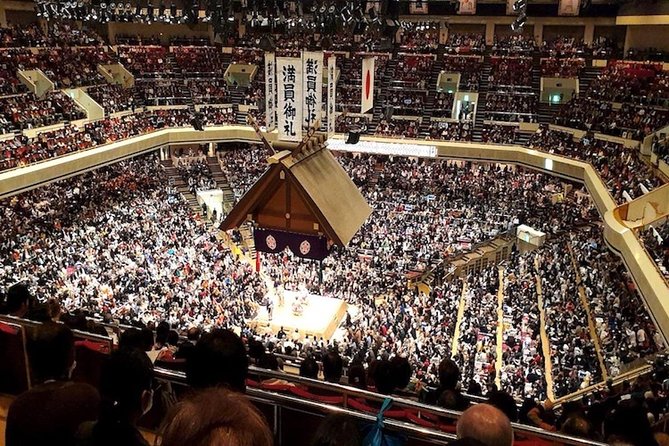
Tokyo’s Ryogoku Kokugikan is the natural choice for many visitors. It is in Ryogoku, the area most closely associated with sumo, and the venue includes the Sumo Museum. The tour begins at 2:00 pm, with the exact meeting point sent by email at least one week before the date.
The Tokyo option is available during the January, May, and September tournaments. You can expect an arena introduction, explanations from your guide, time at your seat, and help understanding the bouts. There may be a wait before seating, since the group must wait for matches to finish before entering. The museum can also become crowded, and your guide may ask you to visit it independently rather than move through it as a large group.
The arena may feel warm, so dress lightly. Food and drinks are available inside, including an appealing soft-serve ice cream stand on the second floor, but outside food and drinks are not allowed.
Osaka at EDION Arena Osaka
Osaka hosts the March tournament. The EDION Arena option follows the same basic four-hour format, with a guide explaining the event and helping you get settled in your reserved section.
This choice makes sense if your trip already includes Osaka or Kyoto. It saves you from building a separate Tokyo journey around sumo and lets you experience the tournament in a different part of Japan. The tour does not include hotel pickup or transportation, so you must make your own way to the meeting point.
Same city, a completely different kind of day:
- Mt Fuji and Hakone 1-Day Bus Tour Return by Bullet Train
★ 5.0 · 26,383 reviews - 1-Day Tokyo Bus Tour
★ 5.0 · 14,250 reviews - Tokyo: TOKYO SKYTREE® Admission ticket
★ 4.5 · 11,192 reviews - Tokyo: teamLab Planets TOKYO Digital Art Museum Entry Ticket
★ 4.6 · 9,779 reviews
Nagoya at IG Arena
Nagoya hosts the July tournament. The four-hour visit at IG Arena is a practical choice for anyone passing through central Japan during the summer basho.
The core benefit remains the same: you get a ticket and an English-speaking guide who helps you follow the rituals, wrestlers, and match structure. The package details list standard group seats and closer seats for private tours, so check the exact option before paying.
Fukuoka at Fukuoka Kokusai Center
Fukuoka hosts the November tournament, the final official basho of the year. The Fukuoka Kokusai Center gives you a chance to combine sumo with a Kyushu itinerary rather than returning to Tokyo for the event.
The year-end tournament can be a good fit if you are visiting Fukuoka in November. As with the other cities, the booking covers the reserved seat and guided experience, but not your transportation to the venue or food unless you choose the dinner option.
What happens during the four-hour arena visit
The meeting time is listed as 2:00 pm. Your exact meeting point arrives by email at least one week before the tour, so do not rely on simply walking to the stadium and finding the group.
After meeting your guide, you may receive a short introduction to the venue and sumo. The guide can explain the stadium layout, the role of the Sumo Association, the ranking system, and the basic rules before the bouts become intense.
The supplied audio headset is one of the most useful parts of the package. A sumo arena is not quiet, and a normal speaking voice can disappear under cheers and announcements. With the headset, you can hear the guide while watching the action. One practical warning: the headset volume may be loud even at its lowest setting, so bring an earplug or volume-dampening earbud if your ears are sensitive.
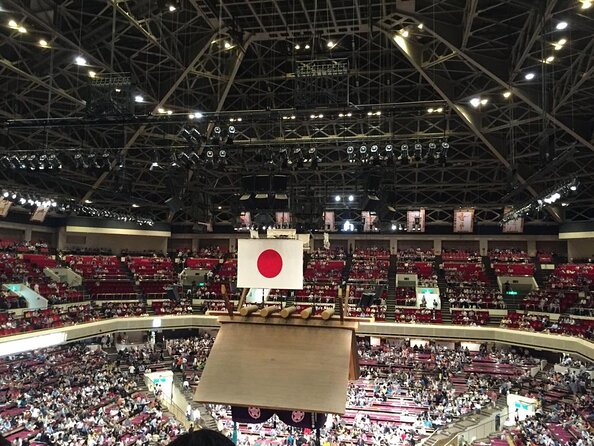
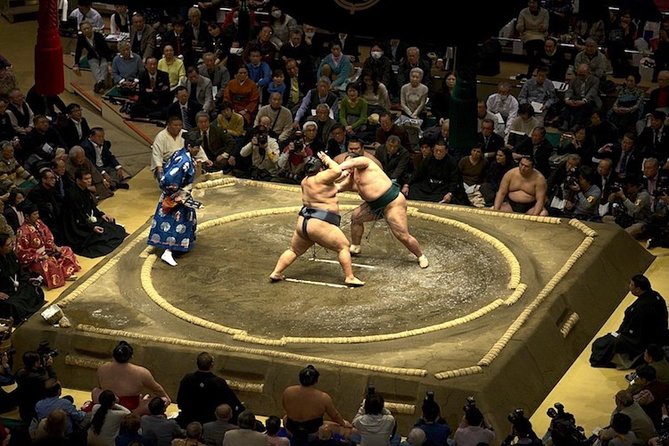
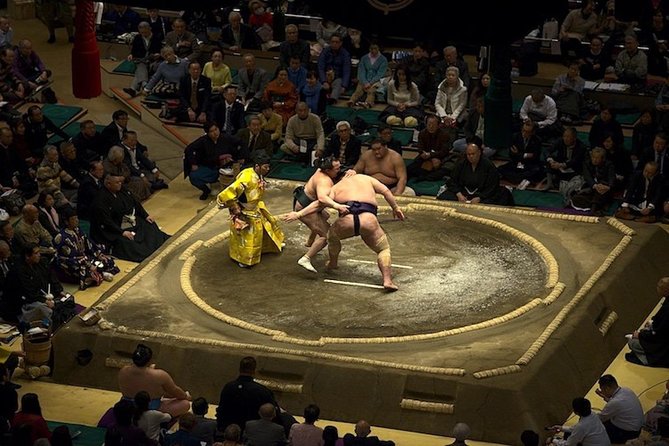
Standard group seating places up to 20 people together in second-floor B chair seats, generally in rows 7 through 11, or in C chair seats. These are not ringside positions, but they give you a broad view of the dohyo and the arena. Private tours include S or A seats, which are closer to the ring and better suited to anyone who values proximity over price.
You will see all of the top-division Makuuchi bouts and roughly half of the Juryo bouts, according to the tour information. That is enough to catch the most important action without asking you to sit through every earlier match.
There is also free time to buy food, drinks, and souvenirs. Use it wisely. The tour is not a constant guided walk, and the guide may not be beside you for every minute. You are there to enjoy the tournament at your own pace as well as learn from the commentary.
Understanding what you are watching
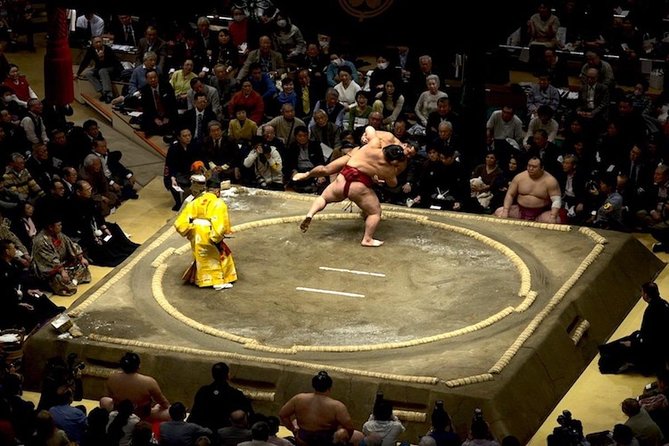
Sumo has strict rules, but the match itself can move very fast. A bout ends when one wrestler touches the ground with a body part other than the soles of his feet, or steps outside the ring. That basic rule is easy to grasp, but the pre-match ritual takes longer and carries much of the sport’s meaning.
Your guide can point out the salt purification, the powerful foot stamping, the crouching stares, and the referee’s role. You also learn to notice different wrestling styles and techniques. A smaller wrestler may rely on speed, balance, or a well-timed throw, while a larger wrestler may use force and forward pressure.
The banzuke chart is especially helpful when you want to know who is competing at the highest rank. Guides can also explain a wrestler’s age, form, ranking, and position within the tournament. That information turns a series of short collisions into a developing contest.
I recommend arriving ready to ask questions. If you know nothing about sumo, say so. The strongest guides, including Hiro, Yumi, and Shunsuke, have been praised for making the sport accessible to first-time viewers. If you already follow sumo, ask about techniques, rankings, and the wrestlers’ styles.
Adding chanko hot pot after the tournament
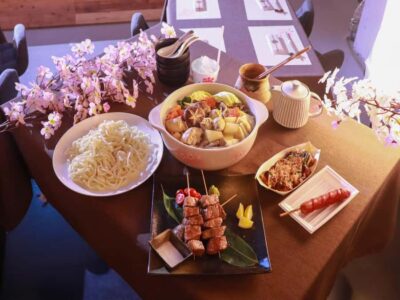
Chanko nabe is the traditional hot pot associated with sumo wrestlers. It usually contains chicken stock, vegetables, and other ingredients, and it is designed to feed many hungry people at once. The dish originated around Ryogoku, making it a logical meal after a Tokyo tournament.
The dinner is an add-on selected during checkout. Drinks are not included, and the standard meal is chanko hot pot. You can request a vegetarian version or note other dietary needs in the special requirements field, but do this early. The traditional broth is usually made with pork or chicken, and changes cannot be made one week before the tour date once the request has been accepted.
This meal is valuable because it connects the arena experience to daily sumo culture. You are not simply eating a themed dish. You are trying food linked to the wrestlers’ training world and the practical need to feed a large group efficiently.
The dinner is not essential if you are watching your budget. At $184.38 per person, the main expense is the ticket arrangement, reserved seat, guide, and access to a difficult-to-buy event. Adding dinner makes the day longer and more complete, but it also raises the final cost.
The off-season morning stable option
If your dates do not match an official basho, the operator offers a different experience near Warabi Station, about 30 minutes from Tokyo Station.
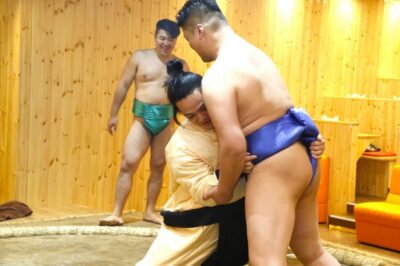
You meet early for a three-hour visit, with morning practice running from 8:00 am to noon. At the stable, you watch wrestlers train in an authentic working setting while the guide explains what you are seeing through an audio headset. Chanko lunch follows the practice session.
This option suits you if close-up training interests you more than the scale of a tournament. Practice can show the repetition, discipline, and physical work behind the short bouts. But read the fine print carefully: this is not a substitute ticket. You receive no tournament seat because the date falls outside the official competition season.
The stable visit is a join-in group of about 8 to 16 people. The meeting directions arrive one week before the date. It is an off-season alternative, not an additional stop on the tournament itinerary.
Price, group size, and ticket value
The listed price is $184.38 per person. That is not cheap for a four-hour activity, but ordinary sumo tickets can be hard for overseas visitors to secure. Group tickets are released by the Sumo Association around four to seven weeks before the tournament, and official tickets may sell out within minutes.
This tour charges for more than a seat. You receive ticket arrangement, seating allocation, an English-speaking guide, the ranking chart, pamphlet, headset, and access to a person who can explain what the ceremony means. For a first visit, that support can make the difference between watching unfamiliar movements and following a real competition.
The group option offers the better value if you mainly want entry and clear explanations. The private option costs more, but S or A seats bring you closer to the dohyo. Groups can include up to 20 people in the same area, so do not expect a private atmosphere unless you select the private package.
Book as early as practical. The operator recommends about three months ahead, or at least one month before your date. Ticket availability is not guaranteed until the Sumo Association releases group tickets. If tickets cannot be secured, you may be offered another date or a full refund.
Who should book this sumo experience
I would choose this tour if you are new to sumo, want a reserved ticket, or have limited time in Japan. It is especially useful for families, couples, and first-time visitors who would like help with the sport’s rules and rituals without studying beforehand.
It also suits anyone whose schedule matches one of the six official tournaments. Tokyo offers the most calendar flexibility, with three tournaments each year. Osaka, Nagoya, and Fukuoka are excellent choices if your wider route already includes those cities.
You may want to skip it if you dislike fixed schedules, group activities, or the possibility of sitting on the second floor. You should also avoid booking casually because the experience is non-refundable and cannot normally be changed after purchase.
Should you book it?
Book it if sumo is on your Japan wish list and you can accept the cost and fixed date. The reserved ticket solves the hardest problem, while the guide and headset give you a way into a sport that can be difficult to read on your own.
Choose the group tour for value, the private tour for closer seats, and the chanko dinner if you want the day to include food tied to sumo culture. If your visit falls outside tournament season, choose the stable practice option only if you understand that it includes no tournament ticket.
FAQ
How long does the tournament experience last?
The guided tournament visit lasts about four hours.
Which Japanese cities offer the tournament tour?
The experience is available in Tokyo, Osaka, Nagoya, and Fukuoka, depending on the tournament season.
When are the official sumo tournaments held?
Official basho take place six times a year: January in Tokyo, March in Osaka, May in Tokyo, July in Nagoya, September in Tokyo, and November in Fukuoka. Each tournament lasts 15 days.
What kind of seats are included?
The standard group tour uses second-floor B chair seats, generally in rows 7 through 11, or C chair seats. The private tour includes S or A seats closer to the ring.
Is transportation included?
No. Hotel pickup and transportation are not included, so you must make your own way to the meeting point and arena.
Is food included?
Meals and drinks are not included unless you select the chanko hot pot dinner add-on. Food and drinks can be purchased inside the arena, but outside food and drinks are not allowed.
Can I request a vegetarian chanko meal?
Yes. You should make the request during checkout in the special requirements field. Traditional chanko broth usually contains pork or chicken, and changes cannot be made one week before the tour date after the request has been accepted.
What happens during the off-season stable visit?
You visit a sumo stable near Warabi Station for morning practice, use an audio headset with the guide, and have chanko lunch afterward. This option does not include a tournament seat ticket.
Just added around Tokyo
- Tokyo: Customizable Private Guided Walking Tour★ 4.5 · 129 reviews
- Private Harajuku Omotesando Architecture Tour★ 4.9 · 18 reviews
- Tokyo: Guided Helicopter Ride★ 4.9 · 24 reviews
- Tokyo: Guided Walking Tour of Tsukiji Market with Lunch★ 4.4 · 24 reviews
- Tokyo: Private Personalized Local Food Tour★ 4.5 · 101 reviews
- Tokyo GINZA: KONPARU Japanese Cabaret Show with Drink★ 4.8 · 38 reviews
- Tokyo: Guided Walking Tour of Tsukiji Market with Breakfast★ 4.4 · 134 reviews
- Tokyo: Gotokuji Cat Temple, Shinjuku Cat Cafe & 3D Cat Tour★ 4.9 · 38 reviews
Sumo Experiences, compared.
Sumo Show Experience with Chicken Hot Pot and a Photo
Read our review →
Tokyo Shinjuku Sumo Show & Experience with Photo
Read our review →
Sumo Show & Experience w/ Optional Kimono & Hot Pot
Read our review →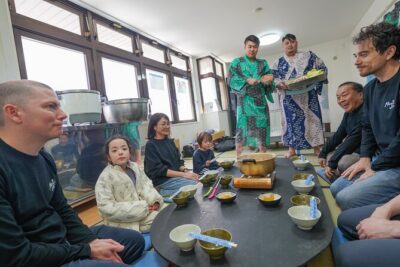
Authentic Sumo Experience in Tokyo: Enter the Sanctuary
Read our review →Browse the lists this tour appears in