
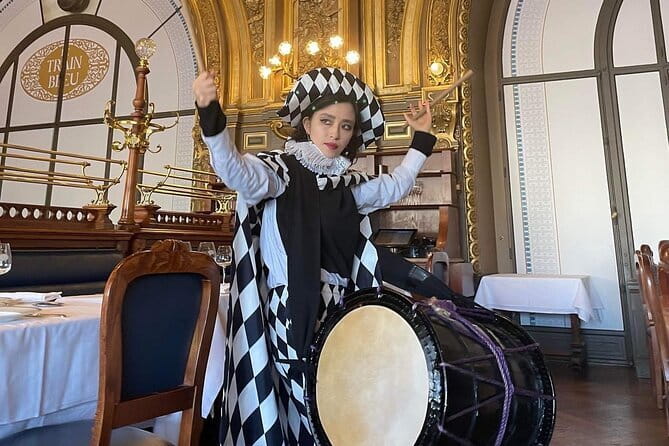
REVIEW · WORKSHOPS
Tokyo’s Authentic and Finest Taiko Drumming Workshop
Tokyo’s best musical souvenir may be the sound of your own taiko performance. In this 90-minute class with Eva Kestner, you learn the posture, strikes, rhythms, and coordinated movements behind Japanese taiko, then put them together in a group piece. I like the hands-on format and the chance to watch Eva perform. The main catch is that this is a real workout, not a quiet cultural lecture.
I also like that the class stays small, with a maximum of 15 people, and that each participant can have a drum. Eva teaches in English, provides all equipment, and sends you away with a personalized video. Bring water, wear breathable clothes, and expect the room to get loud.
In This Review
- The best parts of this taiko workshop
- What happens during the 90-minute class
- Eva Kestner brings serious musical experience
- Why the small group makes a difference
- Taiko is louder and harder than it looks
- A useful cultural experience for families and teens
- Making sense of the $120 price
- Plan the rest of your day around Daikanyama
- Who should book this experience
- Booking, cancellation, and practical details
- Should you book the taiko workshop?
- FAQ
- How long does the taiko workshop last?
- Where does the workshop take place?
- Do I need previous drumming experience?
- Is the workshop taught in English?
- Are drums and sticks provided?
- How many people can join the class?
- Can I cancel for a full refund?
The best parts of this taiko workshop
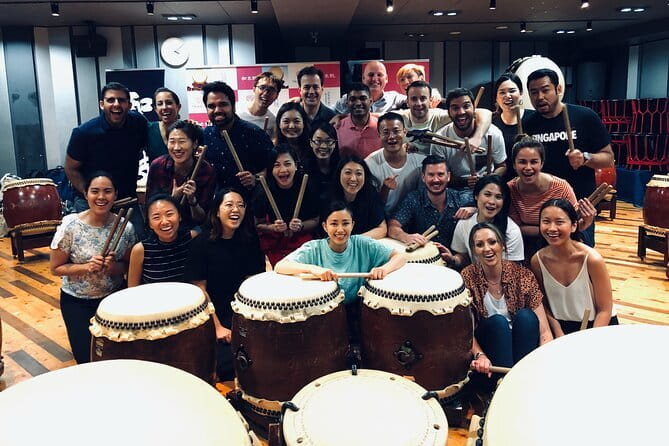
- A working professional leads the class: Eva Kestner is an accomplished taiko drummer, teacher, composer, and former founder and first musical director of Cornell University’s taiko group.
- You play almost at once: The lesson moves quickly into basic beats, so you spend less time watching and more time making music.
- Traditional and modern music meet: You learn a traditional or contemporary piece after working through the fundamentals.
- It is physical as well as musical: The stance and repeated strikes work your legs and core, and the pace can leave you pleasantly tired.
- Your own video is included: You receive a personalized recording of yourself playing taiko, a useful reminder of the class and an unusual Tokyo keepsake.
- The central Shibuya setting helps: The class ends where it begins, making it easy to continue exploring Daikanyama and nearby Shibuya afterward.
What happens during the 90-minute class
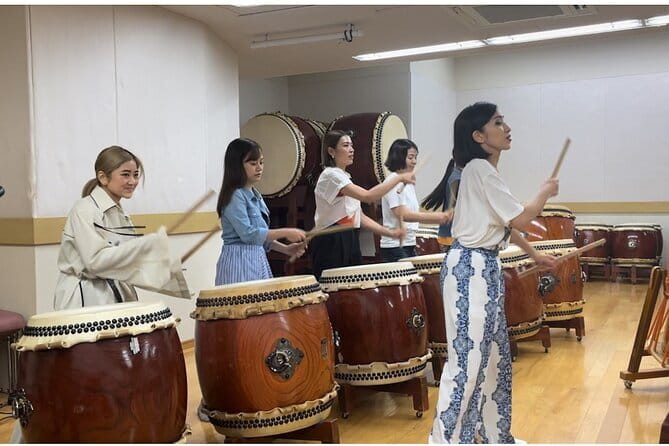
The class takes place at Eva Kestner International Taiko Drum Academy in the Daikanyama area of Shibuya. The meeting address is in the 150-0032 Tokyo postal district, at Taiyo Residence Daikanyama on Uguisudanicho.
The exact location can be a little awkward to identify from the written address. I would put it into Google Maps before leaving your hotel, since the map location has proved easier to use than the address alone. This is a small practical point, but it matters in Tokyo, where one wrong turn around a residential building can cost you several minutes.
Once inside, you receive a taiko drum and taiko sticks. You do not need to rent or carry anything. English and Japanese support are available, and the class is designed for beginners, so previous musical training is not required.
Eva begins with a short explanation of taiko’s background and place in Japanese culture. This introduction gives the activity some context without turning it into a long history lesson. You then move into foundation training, including how to hold the sticks, how to position your body, and how to strike with control.
The class gets physical quickly. Taiko is not simply an arm exercise. You use your legs, keep your stance active, and repeat movements while staying alert to the rhythm. One participant with percussion experience described the session as a workout, and that is a useful way to plan your clothing and energy level.
After the basic technique, Eva teaches simple rhythms. She breaks the patterns into manageable parts, then has you repeat them until the group can play together. This is where the workshop becomes more than hitting a drum. You must watch, listen, count, and keep your body moving at the right time.
The class then works toward a traditional or contemporary taiko piece. The music may be taught in sections, with time to practice before the final group performance. The format gives beginners a clear goal and makes the 90 minutes feel active from start to finish.
Eva also performs a demonstration. This is one of the strongest parts of the session because you can hear the power, precision, and movement of an experienced drummer before returning to your own drum. It helps explain what the basic exercises are building toward.
At the end, you receive a personalized video of yourself playing taiko. The precise recording arrangements are not described, so I would treat the video as a welcome included souvenir rather than assume it will be a professionally edited production. Still, it gives you something personal to take home, rather than just a memory of the class.
A few more Tokyo trips to weigh up
- Sushi Making Tokyo Roll and Authentic Japanese Sushi Class
★ 5.0 · 3,971 reviews - Tokyo: Roll and Authentic Sushi Making Class in Asakusa
★ 4.9 · 1,957 reviews - Tokyo Shinjuku Chopsticks Making Class
★ 5.0 · 1,763 reviews
Eva Kestner brings serious musical experience
The instructor is not simply a casual activity leader. Eva Kestner is a professional taiko drummer and instructor who founded and served as the first musical director of Cornell University’s Taiko Drumming group.
She has also received an excellence award from the Tokyo University of the Arts New Artists Competition. Her original music has been published by HarperCollins and Cambridge International Curriculum. Those credentials matter because the class combines beginner-friendly teaching with a genuine connection to the wider taiko world.
Eva’s teaching style is patient and energetic. She can take a group of complete beginners from basic rhythms to a coordinated piece in a short period. She also adjusts well to mixed ability levels, including people who have some percussion background and people whose only prior contact with taiko came through an arcade game.
That range is useful for families and mixed groups. You do not need to worry that a lack of experience will hold everyone back. At the same time, someone with musical training is unlikely to spend the whole class doing only the most basic exercise.
Why the small group makes a difference
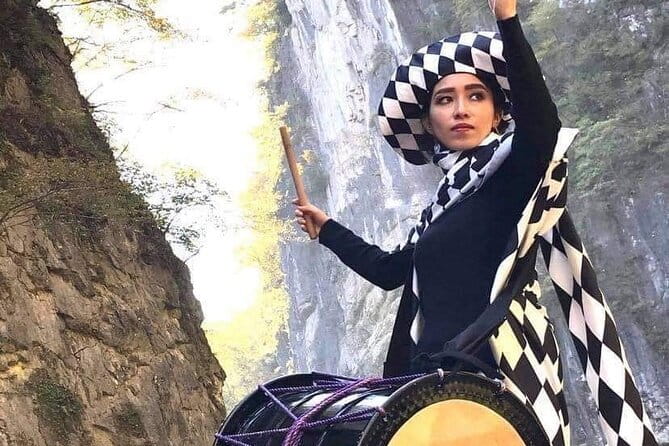
The class allows up to 15 participants, but it is described as a boutique-style session with personal attention. A smaller class is important here because taiko technique involves posture, grip, striking angle, and coordinated movement. If you are doing something incorrectly, individual guidance helps you correct it before the pattern becomes a habit.
The personal scale also makes it easier to ask questions. Several parts of the class move quickly, particularly once Eva begins combining rhythms and choreography. Having time to clarify a beat or movement can make the difference between feeling lost and keeping up.
Group size may vary. One session had eight people, and each person had an individual drum. That setup gives you more room to focus on your own playing instead of sharing equipment or waiting for a turn.
For groups larger than 20 people, a separate large-group booking is required, and the location is about 20 minutes from Shibuya. That is a different arrangement, so large parties should not assume they will use the same central studio.
Taiko is louder and harder than it looks
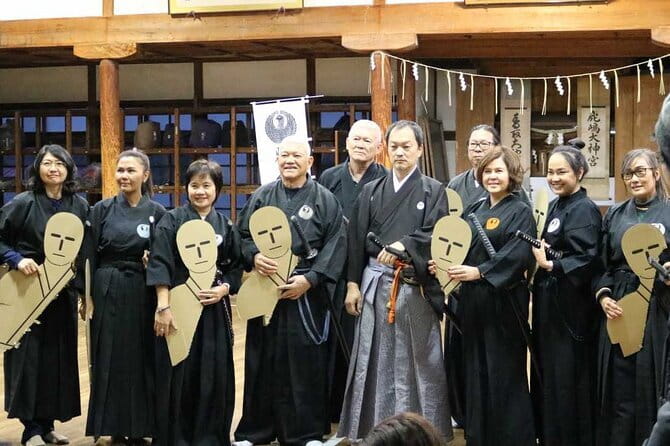
The first surprise for many beginners is the physical effort. The drumsticks are not the whole story. You bend your knees, use your legs, maintain a strong stance, and repeat the movements while keeping time with the group.
Wear comfortable, breathable clothing. The class is active enough that heavy or restrictive clothes could make it less enjoyable. Bring water, especially if you are scheduling the workshop in the middle of a busy sightseeing day.
The drums are loud. That is part of the appeal, but it may not suit someone who is sensitive to noise. The room’s sound is created by a group of people striking drums together, not by a quiet one-on-one music lesson.
You may also want to carry a few Band-Aids. One family participant developed blisters, particularly among younger members of the group. This will not happen to everyone, but repeated stick work can be tough on unaccustomed hands.
The physical side is also what makes the workshop memorable. You are not passively watching a performance. You feel the rhythm through your stance and arms, and the final group piece has a shared pulse that a standard cultural talk cannot provide.
Same city, a completely different kind of day:
- Mt Fuji and Hakone 1-Day Bus Tour Return by Bullet Train
★ 5.0 · 26,383 reviews - 1-Day Tokyo Bus Tour
★ 5.0 · 14,250 reviews - Tokyo: TOKYO SKYTREE® Admission ticket
★ 4.5 · 11,192 reviews - Tokyo: teamLab Planets TOKYO Digital Art Museum Entry Ticket
★ 4.6 · 9,779 reviews
A useful cultural experience for families and teens
This class works especially well for families with older children and teenagers. The activity is active, structured, and short enough to fit between other Tokyo plans. Two teenagers, a 15-year-old and a 17-year-old, took part with their parents and found the class a good family activity.
It also suits couples, solo visitors, and small groups who want something beyond temples, shopping, and food. You do not need to read music or speak Japanese. Eva teaches in English, and the rhythms are shown through demonstration and repetition.
The class is not aimed only at children. Adults can expect to work hard, and the movements have enough detail to keep a percussionist interested. A person with prior drumming experience may pick up the patterns faster, but everyone still has to coordinate with the group.
The accessibility information is unusually broad. Support is available for visual, audio, mobility, and neurodivergent needs. Because taiko involves sound, movement, and physical equipment, I would contact the provider before booking to discuss the specific support you need.
Making sense of the $120 price
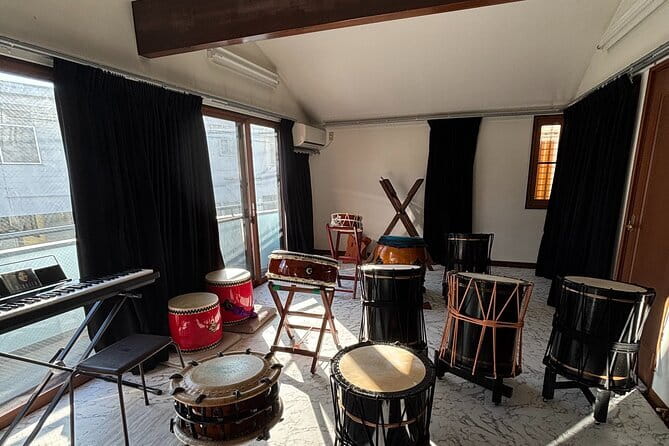
At $120 per person, this is not a budget activity. You are paying for a private-feeling cultural lesson, a professional instructor, use of the drum and sticks, English-language teaching, a live demonstration, and a personalized video.
The value depends on what you want from Tokyo. If you are looking for a cheap way to fill an hour, this will seem expensive. If you want an activity that gives you direct contact with a Japanese musical tradition and leaves you with a personal recording, the price is easier to justify.
The small group also affects the value. You are not sitting in a theater watching taiko from a distance. You have your own instrument and take part in the performance. That active format is the reason I would compare this with a show or a private lesson, not with a basic museum entry.
The workshop lasts about an hour and a half, which is long enough to build toward a complete piece without taking half a day. Since it begins and ends at the same studio, you do not lose time changing locations during the activity.
Plan the rest of your day around Daikanyama
The central location is a practical advantage. After the class, you can continue exploring the Daikanyama and Shibuya area without returning across Tokyo. The activity ends at the same place where it starts, so you can collect your belongings and continue with your plans.
Because the class is energetic, I would avoid placing a formal dinner or an important reservation immediately afterward unless you allow time to cool down and change. The class can leave you warm and tired, particularly if you have been sightseeing all day.
It is also worth keeping your schedule flexible around the meeting time. Tokyo’s addresses can be hard to read in English, and the written location has been difficult for some people to find. Check the map in advance and arrive with enough time to locate the building.
The activity is booked, on average, 31 days ahead. That does not guarantee every date sells out, but it tells you this is the sort of experience to reserve before your Tokyo visit rather than leave until the last morning.
Who should book this experience
I would book this workshop if you want to take part in Japanese culture instead of only observing it. It is particularly good for:
- First-time drummers who want clear instruction without needing prior skill
- Families with teens and older children
- Couples looking for a shared activity
- People who enjoy music, rhythm, or physical activities
- Visitors who want an English-language class in central Tokyo
- Anyone who values a personal video more than a standard souvenir
I would think twice if loud sounds are a problem, if you have a physical limitation that makes repeated drumming difficult, or if you prefer a slow, quiet cultural presentation. The class asks you to concentrate and move for much of its 90 minutes.
The physical level is moderate rather than extreme, but it is still more demanding than it looks. If you have a long day of walking planned, place the workshop earlier or allow time afterward to rest.
Booking, cancellation, and practical details
Confirmation is provided when you book, and the activity is near public transportation. All drums and sticks are supplied, so you only need comfortable clothing, water, and perhaps hand protection for younger participants.
Free cancellation is available up to 24 hours before the local start time for a full refund. Cancellations or changes made less than 24 hours before the start time are not accepted for a refund.
The maximum group size is 15 people. Larger groups of more than 20 must book the large-group option, which uses a location about 20 minutes from Shibuya.
Should you book the taiko workshop?
Yes, if you want an active and personal Tokyo experience. Eva’s musical background gives the class substance, while her patient instruction keeps it friendly for beginners. You learn a real piece, watch a professional demonstration, and leave with a video of your own performance.
The $120 price is the main reason to pause. Add the noise, physical effort, and possible hand soreness, and this will not suit every itinerary. But if those points sound like part of the fun, the workshop offers something rare: you do not just hear the heartbeat of taiko, you help create it.
FAQ
How long does the taiko workshop last?
The workshop lasts approximately 90 minutes.
Where does the workshop take place?
It takes place at Eva Kestner International Taiko Drum Academy in Shibuya’s Daikanyama area. The meeting address is Japan, 150-0032 Tokyo, Shibuya, Uguisudanicho, Taiyo Residence Daikanyama.
Do I need previous drumming experience?
No. The class teaches foundation training and basic rhythms, and it is designed for beginners as well as people with some musical experience.
Is the workshop taught in English?
Yes. Eva teaches the taiko class in English, with English and Japanese support available.
Are drums and sticks provided?
Yes. The academy provides the taiko drums and taiko drumming sticks.
How many people can join the class?
The activity has a maximum of 15 participants. Groups larger than 20 need to book a separate large-group slot at a location about 20 minutes from Shibuya.
Can I cancel for a full refund?
Yes. You can cancel at least 24 hours before the local start time for a full refund. Cancellations and changes made less than 24 hours before the start time are not accepted for a refund.
Just added around Tokyo
- Private Memorable Tokyo Tour with English Speaking Driver★ 5.0 · 30 reviews
- Private Tokyo Custom Full-Day Tour by Chartered Vehicle★ 5.0 · 16 reviews
- Private Sightseeing to Mt Fuji and Hakone with English Driver★ 5.0 · 51 reviews
- Tokyo Photography Masterclass – Private Photography Lesson★ 5.0 · 25 reviews
- Private Mt. Fuji Day Trip from Tokyo with English-Speaking Driver★ 5.0 · 33 reviews
- 4 Day Tour – Mount. Fuji, Tokyo, Hakone, Kamakura and Yokohama★ 5.0 · 19 reviews
- Private Unforgettable Mt Fuji Tour with English Speaking Driver★ 5.0 · 142 reviews
- Private Tokyo Food Tour – A Journey Through Time Through Food★ 5.0 · 36 reviews
Workshops, compared.

Sushi Making Tokyo Roll and Authentic Japanese Sushi Class
Read our review →

Roll and Authentic Sushi Making Class in Asakusa
Read our review →
Ramen Cooking Class at Ramen Factory in Kyoto
Read our review →
Sushi Making Class in a Happi Coat near a Famous Spot
Read our review →

Sushi Making Osaka Roll and Authentic Japanese Sushi Class
Read our review →
Tokyo Sushi Making Class in Tsukiji with Professional Chef
Read our review →Browse the lists this tour appears in