
REVIEW · FOOD MARKET TOURS
Tokyo West-Side Cycling & Food Tour
Tokyo West-Side Cycling & Food Tour Review
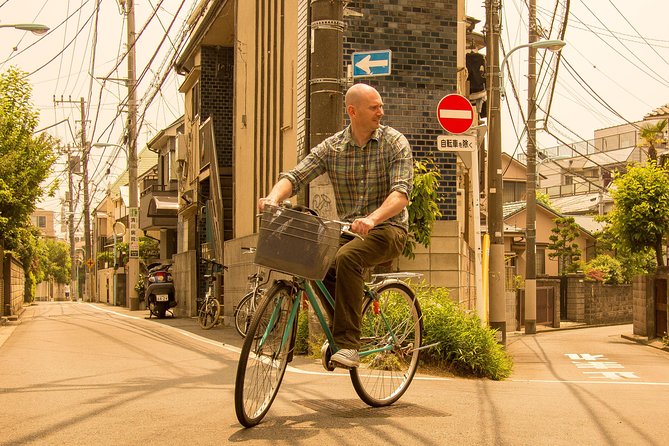
Tokyo’s best moments are often found beyond the famous crossings and towers. This small-group bike ride takes you through Nakano, Koenji, and Asagaya, where narrow lanes, neighborhood shops, river paths, bicycle parking systems, and ordinary daily routines tell you more about city life than another packed sightseeing district.
I like the personal scale, with no more than eight riders, and the way guide Andy mixes food with practical talk about housing, schools, religion, work, and local customs. I also like that the tour includes snacks, drinks, and a Japanese-style lunch, so the $99.49 price covers more than a guided spin.
The main consideration is the cycling itself. You need to handle a bicycle in narrow, sometimes crowded streets for about 12 to 15 kilometers, and the Japanese-sized mamachari bikes may feel small or a little creaky to taller riders. Weather can also affect the outing.
In This Review
- Key things to know before you book
- Why West Tokyo makes a better bike route than central Tokyo
- Meeting Andy at Kōenji Station
- Riding a salvaged Japanese mamachari
- Pedaling through Nakano, Koenji, and Asagaya
- Following the Zenpukuji River
- Snacks, drinks, and a local-style lunch
- What the $99.49 price really covers
- Weather, pace, and practical comfort
- Who should book this West Tokyo outing
- Should you book the Tokyo West-Side Cycling & Food Tour?
- FAQ
- Where does the Tokyo West-Side Cycling & Food Tour begin?
- Where does the tour finish?
- How long is the cycling and food tour?
- How far do you ride?
- Are helmets available?
- Can people with food allergies or dietary restrictions join?
Key things to know before you book
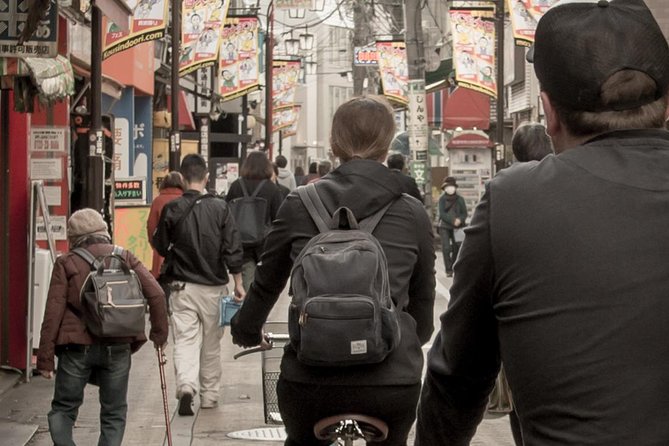
- Ride through everyday West Tokyo: Explore Nakano, Koenji, and Asagaya instead of sticking to Shibuya and Shinjuku.
- Small groups make conversation easy: The maximum is eight people, a good size for questions and relaxed stops.
- Mamachari bikes are part of the experience: These practical Japanese city bicycles have front baskets and are kept in good working order.
- Food is built into the route: Expect local snacks, drinks, and a Japanese-style lunch at typical neighborhood eateries.
- The ride is mostly flat but not effortless: Plan on 7.5 to 9.5 miles through back streets and on uneven surfaces.
- Andy is the guide to know: His long experience living in Japan shapes the tour’s useful talk about ordinary life and local customs.
Why West Tokyo makes a better bike route than central Tokyo
Central Tokyo is exciting, but it can also be tiring. Shibuya, Shinjuku, and other major districts bring crowds, traffic, tall buildings, and a long list of famous sights competing for your attention. This tour heads west from Kōenji Station into neighborhoods that many first-time visitors never reach.
That change matters on a bicycle. You are close enough to see details that disappear from a train window: compact homes, small shrines, neighborhood businesses, school routes, local gathering places, and the way people organize limited urban space.
The route includes Nakano, Koenji, and Asagaya. Each area has its own feel, but the tour is not built around major monuments. That is important to understand. You are not signing up for a checklist of Tokyo landmarks. You are signing up to see how the city works at street level.
I find this kind of route especially useful near the start of a Tokyo visit. It gives you a sense of scale and helps you understand that Tokyo is not one single downtown. It is a huge collection of distinct neighborhoods, each with its own rhythm.
More Food Market Tours in Tokyo
- Tokyo: Shinjuku Food Tour (13 Dishes at 4 Local Eateries)
★ 5.0 · 6,603 reviews - Tokyo Tsukiji Fish Market Food and Culture Walking Tour
★ 5.0 · 3,184 reviews - Tokyo: Shinjuku Food Tour (15 Dishes and 4 Eateries)
★ 4.9 · 2,033 reviews
Meeting Andy at Kōenji Station
The tour begins at Kōenji Station, at 4-chōme-48-2 Kōenjiminami in Suginami City. The station is near public transportation, making the meeting point practical even if you are staying in another part of Tokyo.
Andy leads the ride and brings a friendly, informal manner to the outing. His strength is not simply pointing out buildings. He explains how people live, work, study, eat, and move around the city. That may include subjects such as housing, schooling, religion, bicycle parking, local etiquette, and everyday customs.
The group format helps here. With eight riders or fewer, you can ask questions without turning the ride into a lecture. Past outings have included families, first-time cyclists, regular visitors to Japan, and people looking for a break from standard sightseeing. Andy also gives route and meeting instructions clearly, which is useful when you are still finding your feet in Tokyo.
The tour ends back at the meeting point. Since the outing lasts about three and a half hours, allow closer to four hours if the group eats slowly, the roads are busy, or weather affects the pace.
Riding a salvaged Japanese mamachari
The bicycle is not a sleek road bike or a lightweight touring machine. You ride a salvaged mamachari, the practical upright bicycle commonly associated with daily life in Japan. The bikes are Japanese-sized, have front baskets, and are maintained for urban riding.
That choice adds character. You are using the sort of bicycle that fits the neighborhood rather than gliding through on specialized equipment. The upright design should feel natural to many casual riders, and the route is described as mainly flat. A front basket can hold a standard-sized backpack, so you do not need a separate luggage plan for a small day bag.
Still, this is an urban ride, not a gentle park cruise. You should be comfortable steering through narrow lanes, dealing with uneven surfaces, and riding near other people. The stated distance is roughly 12 to 15 kilometers, or 7.5 to 9.5 miles.
The operator expects riders to be over 140 centimeters tall, about 4 feet 7 inches, for a comfortable fit. Helmets are available on request for all participants, so ask for one when booking or before setting off.
If you ride regularly, the route should feel manageable. If you have not ridden a bike in years, Tokyo’s tight streets may be more demanding than the flat mileage suggests. Parents should judge their child’s urban cycling skills rather than rely only on age. One family completed the ride with an 11-year-old, but the key requirement is confidence and control.
Pedaling through Nakano, Koenji, and Asagaya
The route moves through back streets in Nakano, Koenji, and Asagaya, areas known for their local character and neighborhood life. The appeal is the steady change of scene as you pedal, walk, stop, and eat.
In the back streets, the bike lets you cover more ground than walking while still moving slowly enough to notice details. You may turn down lanes you would never choose on a first solo visit. Andy provides context as the group moves, then pauses for explanations and rest.
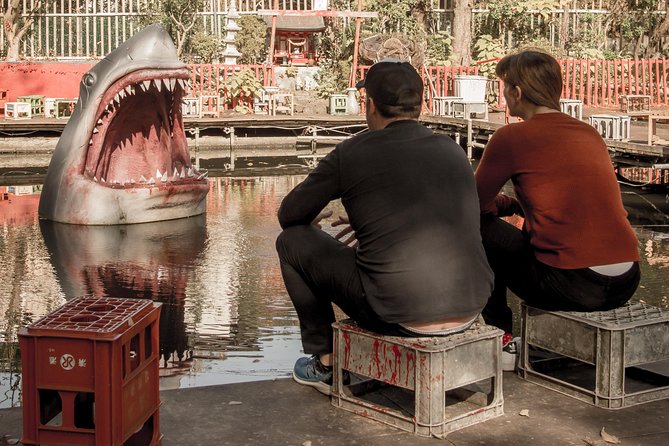
Koenji and Asagaya are also useful places to see a side of Tokyo that is less polished for sightseeing. The tour description makes clear that it is not focused on grand attractions or fine dining. Instead, you encounter ordinary urban spaces and local businesses. That means the experience can feel more genuine, but it also means the sights are modest. If you want Tokyo Tower, a famous temple, or a dramatic skyline view, choose a different tour.
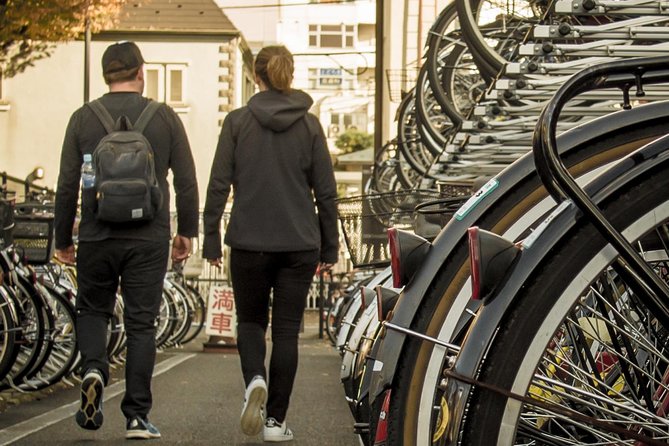
A particularly memorable part is the chance to see Tokyo’s bicycle parking systems firsthand. Bicycle storage is a small subject, but it reveals how carefully the city handles limited space and shared streets. This is the sort of detail that helps you understand Tokyo beyond its postcard images.
Same city, a completely different kind of day:
- Mt Fuji and Hakone 1-Day Bus Tour Return by Bullet Train
★ 5.0 · 26,383 reviews - 1-Day Tokyo Bus Tour
★ 5.0 · 14,250 reviews - Tokyo: TOKYO SKYTREE® Admission ticket
★ 4.5 · 11,192 reviews - Tokyo: teamLab Planets TOKYO Digital Art Museum Entry Ticket
★ 4.6 · 9,779 reviews
Following the Zenpukuji River
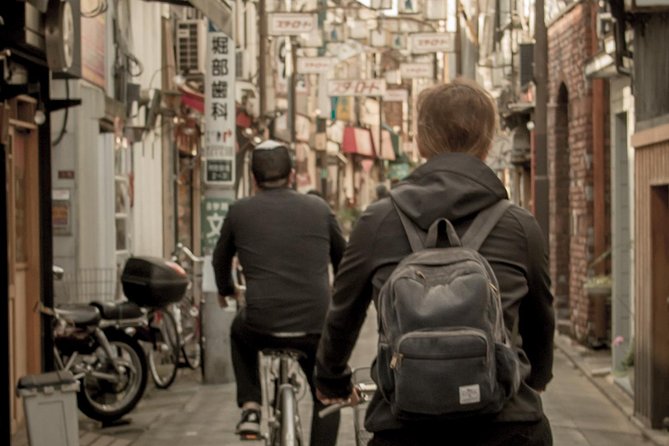
The ride includes time along the picturesque Zenpukuji River. Riverside paths provide a welcome change from the twisting lanes, giving the group room to pedal and a calmer setting for conversation.
The river section also breaks up the outing physically. You are not navigating tight streets for the entire three and a half hours. A route that combines back streets, walking sections, riverside cycling, food stops, and neighborhood pauses should feel more varied than a nonstop ride.
Do not expect a grand natural spectacle. This is still Tokyo, and the river is part of an urban setting. Its value is the contrast: after threading through dense streets, you get a quieter stretch where the pace can ease.
Snacks, drinks, and a local-style lunch
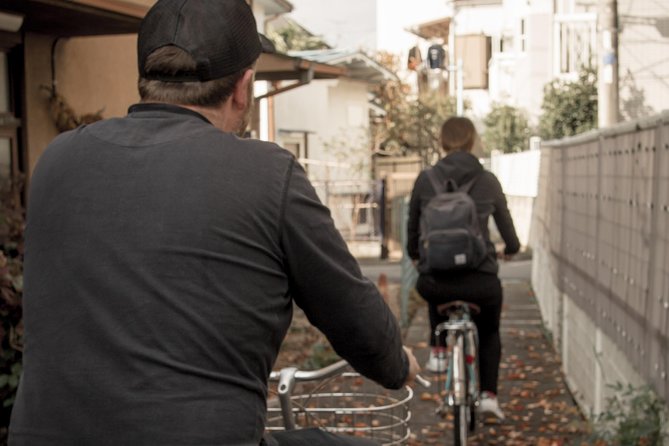
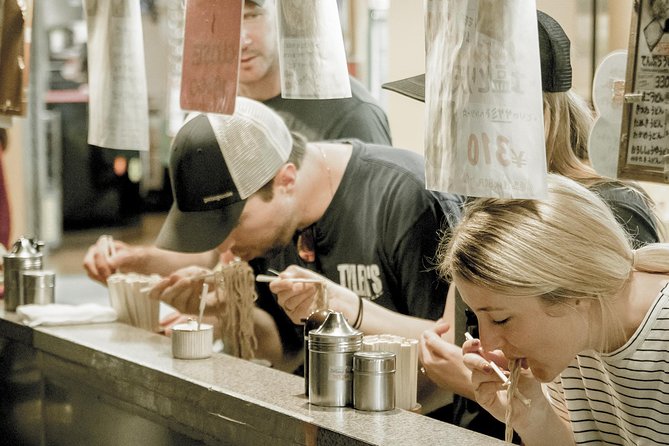
Food is one of the strongest reasons to choose this tour. Included stops feature a tailored selection of popular local snacks, drinks, and a Japanese-style lunch. The food gives the ride a purpose beyond sightseeing and introduces items you might not know how to order by yourself.
The stops are at typical local eateries, not formal restaurants designed around foreign visitors. That can make the meal more interesting. You may find yourself sharing counter space with hungry office workers, an ordinary scene that says a lot about how people eat during the workday.
Past food selections have included noodle dishes and local snacks, though the exact choices can vary. This is not a tasting menu with a fixed lineup. It is better to think of it as a guided introduction to familiar Japanese neighborhood food.
I like that food breaks also function as cultural lessons. Andy can explain what you are eating, how it fits into daily life, and what ingredients commonly appear. You may learn why meat, seafood, and dashi, a common soup stock, turn up in dishes that initially seem vegetarian.
That last point matters. Japanese cuisine often uses meat and seafood, including in broths and stock. Personal tastes, allergies, and dietary restrictions can be difficult to manage at typical local eateries. Contact the operator before booking if food is a serious concern, and do not assume that a dish is vegetarian simply because no meat is visible.
What the $99.49 price really covers
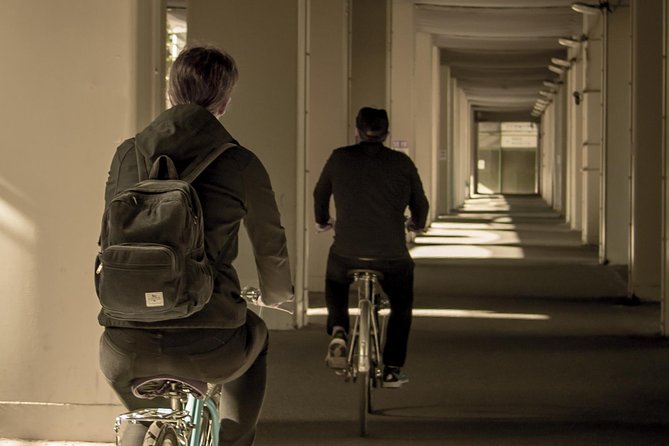
At $99.49 per person, this is not the cheapest way to spend a morning in Tokyo. You can rent a bicycle or walk through a neighborhood for far less. The value comes from combining several services into one compact outing.
Your fee includes the guide, bicycle, cycling liability insurance for the cycling portion, snacks, drinks, and lunch. You also get a planned route through several neighborhoods and the benefit of local explanation while you ride. Buying all the included food separately would add to the cost, though the main benefit is the structure and access to places you might not find on your own.
The maximum group size of eight improves the value. A large bus tour could cover more famous sights, but it would not offer the same easy conversation or flexible neighborhood pace. If you are traveling with family or friends, group discounts may make the price easier to justify.
I would see this tour as good value for someone who places a high price on local context and food. It is less compelling for a strong cyclist who wants a long, fast ride, or for someone mainly interested in famous Tokyo attractions.
Weather, pace, and practical comfort
This is an all-season, all-weather outdoor activity, so conditions matter. The tour generally proceeds in light rain, and basic ponchos can be provided. At the same time, poor weather can lead to cancellation, with a different date or full refund offered.
Wear clothes you can move in and shoes suitable for pedaling and walking. Keep your belongings compact because the front basket holds a standard-sized backpack, not large luggage. A helmet can be provided on request.
The group’s speed, eating time, and weather can all change the finishing time. Treat the advertised three and a half hours as an estimate, with three and a half to four hours being a more useful planning window.
Cycling liability insurance is included for the cycling section, but you are expected to have comprehensive travel insurance for other unexpected problems. You also accept that an urban bike ride carries some personal risk, especially on crowded or uneven streets.
Who should book this West Tokyo outing
I would recommend this tour to you if you enjoy seeing cities through neighborhoods rather than monuments. It is a strong match for first-time Tokyo visitors who want an introduction to daily life, and for repeat visitors who have already covered the major sights.
Families can enjoy it if every rider is comfortable on a bicycle. Couples and small groups will appreciate the relaxed format, while solo riders can meet a few people without joining a huge organized outing.
This is also a good first-day activity. Several parts of the experience help you get oriented quickly: Andy can answer practical questions, the route gives you a feel for Tokyo’s scale, and the food stops introduce local dishes without requiring you to plan each one.
You should think twice if you dislike riding in cities, have trouble on uneven surfaces, need strict control over every ingredient, or want a polished sightseeing program. The mamachari bicycles are maintained but not luxury equipment, and the route is intentionally informal.
Should you book the Tokyo West-Side Cycling & Food Tour?
Book it if you want local Tokyo rather than landmark Tokyo. The combination of a small group, easygoing guide, neighborhood food, riverside paths, and everyday cultural details creates a useful counterpoint to the city’s big attractions.
At $99.49, the outing is fairly priced when you count the bicycle, food, drinks, guide, and planning. Just arrive ready to ride, accept that the route is not a major-sightseeing tour, and leave some flexibility in your schedule for weather and group pace.
Free cancellation is available up to 24 hours before the start time. If bad weather or an insufficient number of bookings cancels the outing, you can choose another date or receive a full refund.
FAQ
Where does the Tokyo West-Side Cycling & Food Tour begin?
It begins at Kōenji Station, at 4-chōme-48-2 Kōenjiminami, Suginami City, Tokyo 166-0003, Japan.
Where does the tour finish?
The activity ends back at the meeting point near Kōenji Station.
How long is the cycling and food tour?
The planned duration is about three hours and 30 minutes. Group pace, eating time, and weather can extend the outing to roughly three and a half to four hours.
How far do you ride?
You should be prepared to cycle roughly 12 to 15 kilometers, or about 7.5 to 9.5 miles, through narrow streets, bike paths, and uneven surfaces.
Are helmets available?
Yes. Helmets can be provided for all participants on request.
Can people with food allergies or dietary restrictions join?
Most people can participate, but Japanese cuisine often includes meat, seafood, and dashi. Since the tour uses typical local eateries, strict dietary needs and allergies may be difficult to accommodate.
More Food & Drink in Tokyo
- Best of Shinjuku: Izakaya Food Tour (4 Stops, 14+ Tastings)
★ 5.0 · 1,863 reviews - Tokyo: Tsukiji Fish Market Food and Walking tour
★ 5.0 · 1,724 reviews - Eat and Drink Like a Local: Tokyo Ueno Food Tour-Taverns&Ramen
★ 5.0 · 957 reviews - Tokyo: Shibuya Food Tour (13 dishes and 4 Eateries)
★ 5.0 · 770 reviews
More Cycling Tours in Tokyo
- Tokyo Guided Small-Group Biking Tour
★ 5.0 · 1,250 reviews - Tokyo Great Cycling Tour
★ 5.0 · 811 reviews - Tokyo Top Highlights 3h Guided E-bike Tour
★ 5.0 · 714 reviews - 3h Tokyo E-Bike Tour: Hidden Gems, and Local Life with guide
★ 5.0 · 670 reviews
Just added around Tokyo
- Tokyo: Customizable Private Guided Walking Tour★ 4.5 · 129 reviews
- Private Harajuku Omotesando Architecture Tour★ 4.9 · 18 reviews
- Tokyo: Guided Helicopter Ride★ 4.9 · 24 reviews
- Tokyo: Guided Walking Tour of Tsukiji Market with Lunch★ 4.4 · 24 reviews
- Tokyo: Private Personalized Local Food Tour★ 4.5 · 101 reviews
- Tokyo GINZA: KONPARU Japanese Cabaret Show with Drink★ 4.8 · 38 reviews
- Tokyo: Guided Walking Tour of Tsukiji Market with Breakfast★ 4.4 · 134 reviews
- Tokyo: Gotokuji Cat Temple, Shinjuku Cat Cafe & 3D Cat Tour★ 4.9 · 38 reviews
Food Market Tours, compared.
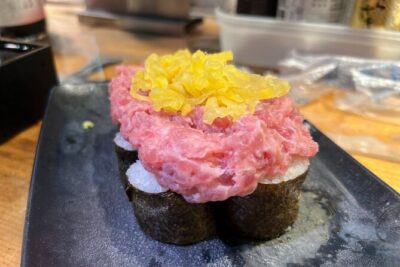
Shinjuku Food Tour (13 Dishes at 4 Local Eateries)
Read our review →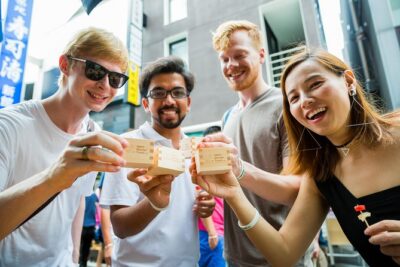
Tokyo Tsukiji Fish Market Food and Culture Walking Tour
Read our review →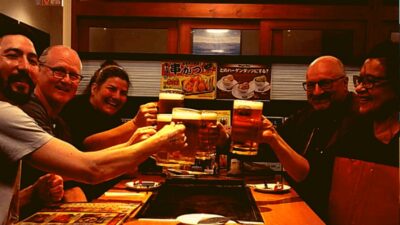
Shinsekai Food Tour with 13-15 Dishes at 5 Eateries
Read our review →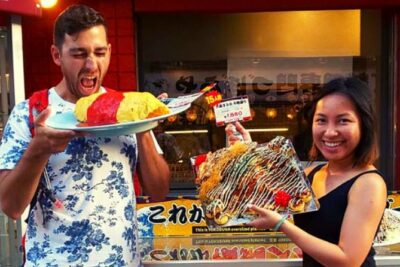
Osaka Food Tour: 13 Dishes at 5 Local Eateries
Read our review →
Shinjuku Food Tour (15 Dishes and 4 Eateries)
Read our review →
Best of Shinjuku: Izakaya Food Tour (4 Stops, 14+ Tastings)
Read our review →
Hungry Osaka Street Food Tour:15 Tastings & 3 Drinks with a Local
Read our review →
Browse the lists this tour appears in