REVIEW · JAPANESE COOKING CLASSES
Tokyo: Sushi and Ramen Cooking Class with Sake Pairing Set
Tokyo’s best food lessons do more than show you how to roll sushi. This three-hour class brings ramen and nigiri sushi together, with hands-on work, cultural background, and three sake pairings chosen by a certified sake sommelier. You make a full meal, not just a sample.
I like the tiny group size, limited to about eight people, and the way the class leaves room for questions. I also like the practical recipe booklet, ingredient tips, and souvenir chopsticks. The one catch is that the class is not suitable for vegans or vegetarians, and some prep work is done ahead of time so the meal fits into three hours.
In This Review
- Key points to know before booking
- Why this class works for a Tokyo afternoon
- Starting with Japanese food culture
- Making ramen, broth, and chashu pork
- Shaping nigiri sushi by hand
- Three sake pairings with a sommelier
- A small room makes a big difference
- What you get for $129
- The practical details that shape your day
- Who should book this Tokyo cooking class
- Should you book it?
- FAQ
- How long does the Tokyo sushi and ramen class last?
- Where does the cooking class take place?
- How far is the venue from Tsukishima Station?
- Is the class taught in English?
- What food will I learn to make?
- Is sake included in the experience?
- Are vegans and vegetarians able to join?
Key points to know before booking
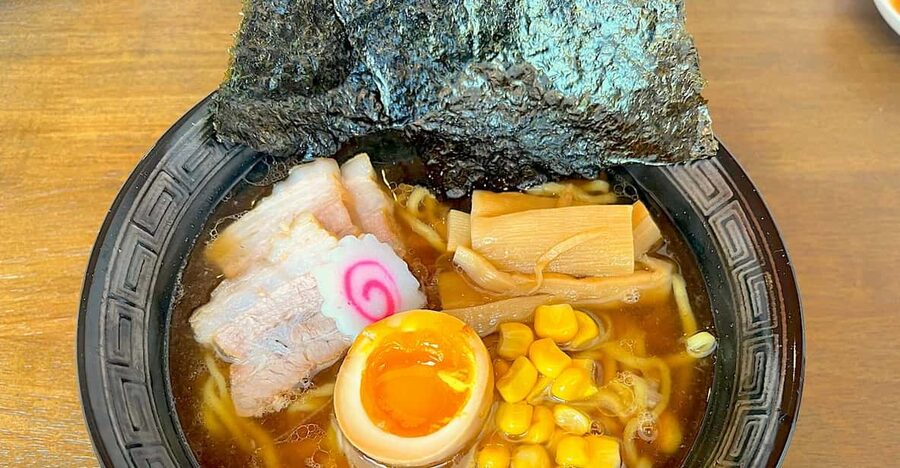
- Ramen goes beyond instant noodles: Learn how broth and chashu pork come together, with some preparation completed in advance to keep the class moving.
- Nigiri sushi is made by hand: You work with supplied ingredients and tools to shape your own sushi.
- Three sake pairings are included: A certified sake sommelier selects the drinks and explains what you are tasting.
- The setting is genuinely small: Groups are limited to eight, and some sessions have only two or even one participant.
- The teaching team adds local context: Instructors including Sato, Haruko, Risa, Alisa, Alex, Misa, and Luna have been praised for warm, patient instruction.
- You leave with useful take-home material: The recipe booklet covers ramen, gyoza, and sushi, and you receive a pair of chopsticks.
Why this class works for a Tokyo afternoon
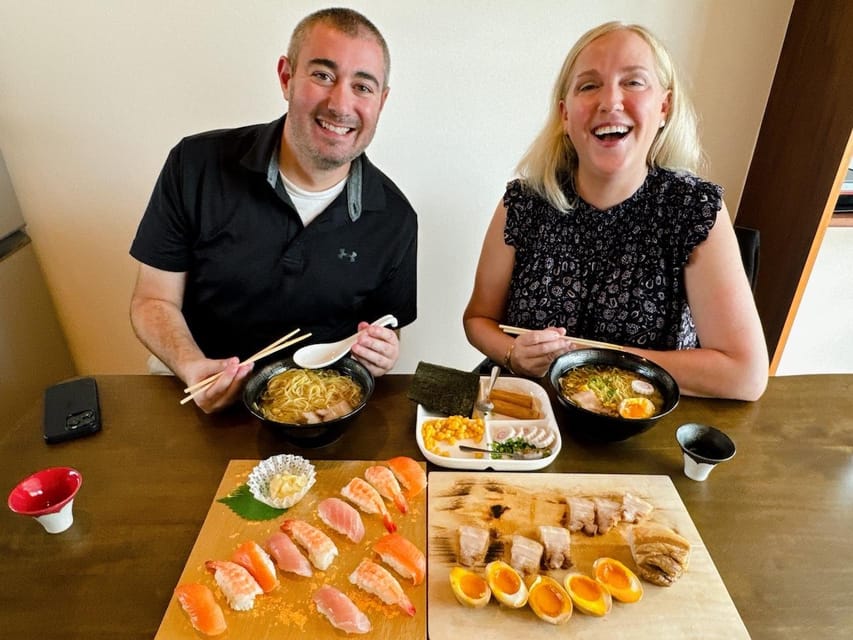
I see this experience as a good answer to a common Tokyo problem: you want to eat well, but you also want to do something more active than sitting at a restaurant. The class gives you a meal, a lesson, and a bit of Japanese food culture in one three-hour block.
The location is in Tsukuda, in Chuo-ku, on the eastern side of central Tokyo. It is a five-minute walk from Exit 4 of Tsukishima Station, listed as station Y21. That makes it simple to reach by subway, though you should allow time to find the correct building and reach the second floor.
The address is 2nd Floor, HAUS Tsukishima, 2-13-5 Tsukuda, Chuo-ku, Tokyo 104-0051. If you use a taxi, show the driver this Japanese address:
東京都中央区佃2-13-5 HAUS Tsukishima 2階
By taxi, the venue is listed as about six minutes from Tsukiji Fish Market, nine minutes from Ginza, ten minutes from Tokyo Station, eleven minutes from teamLab Planets, and thirty minutes from Shinjuku. Traffic can affect those times, so I would use the subway when practical.
Arrive five minutes early. The class asks you to wear comfortable clothes that can handle a little mess. That is sensible advice for a session involving broth, pork, rice, and several work surfaces.
More Japanese Cooking Classes in Tokyo
- Sushi Making Tokyo Roll and Authentic Japanese Sushi Class
★ 5.0 · 3,971 reviews - Tokyo: Roll and Authentic Sushi Making Class in Asakusa
★ 4.9 · 1,957 reviews - Tokyo: Sushi Making Class in a Happi Coat near a Famous Spot
★ 4.9 · 1,377 reviews
Starting with Japanese food culture
The class does not treat sushi and ramen as mysterious restaurant magic. Your English-speaking instructor explains where the dishes come from and how they fit into Japanese food traditions before you begin the main hands-on work.
That context matters because sushi and ramen represent different sides of Japanese cooking. Nigiri depends on rice texture, proportion, and careful hand-forming. Ramen depends on broth, seasoning, noodles, and toppings coming together in the right balance. Learning both in one sitting gives you a clearer sense of how varied Japanese food can be.
The teaching style is aimed at beginners, but experienced home cooks should still find useful details. You are shown techniques rather than simply watching a demonstration. Instructors also offer ingredient substitutions for cooking outside Japan, which is one of the most useful parts of the class if you plan to repeat the dishes at home.
The instructors named in the experience include Sato, Haruko, Risa, Alisa, Alex, Misa, and Luna. The exact teaching team can vary, but the consistent theme is friendly, patient guidance. One instructor is described as coming from a sake-brewing family, adding a personal connection to the tasting portion.
Making ramen, broth, and chashu pork
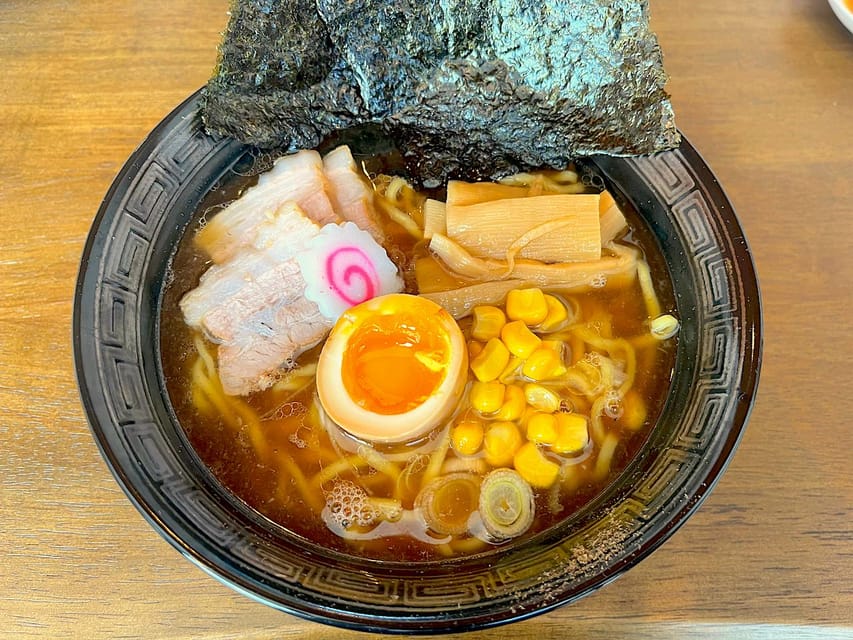
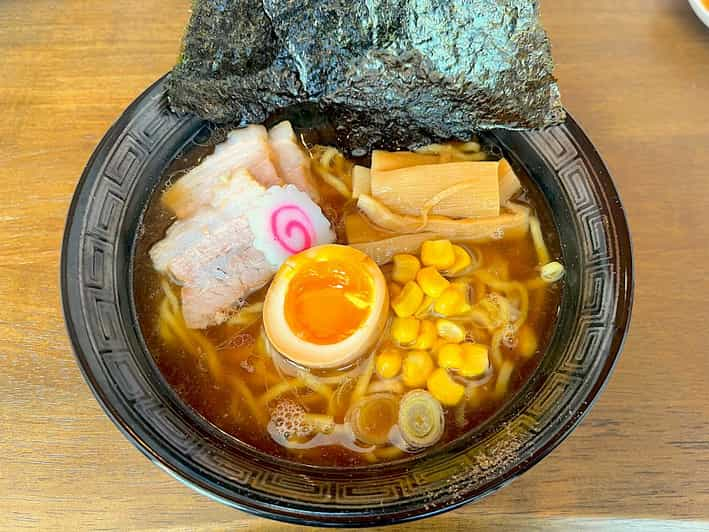
The ramen portion is the heart of the class for many people. You learn how to create a flavorful soup and prepare chashu, the tender pork belly commonly served with ramen.
You should understand what the three-hour format means. A restaurant-quality broth can take far longer than a cooking class allows, so some elements are prepared ahead of time. This keeps you from spending the whole session waiting for stock to develop. It also means you are learning a realistic home method rather than pretending that a long simmer can be squeezed into a few minutes.
The class focuses on the parts you can use again: seasoning, assembling the soup, handling the pork, and understanding how the components work together. You are not just handed a bowl at the end. You take part in building it, then sit down to eat the results.
The setting is reported to be clean and well organized, with enough time to cook and eat without feeling hurried. That balance is important. A rushed class can leave you with a few photos but little sense of what you actually did. Here, the cooking is coordinated with the sushi work so the two dishes are ready at a sensible pace.
For home cooks, the recipe booklet is a real benefit. It includes detailed instructions for ramen, gyoza, and sushi, plus advice on substitutions available overseas. You may not find every Japanese ingredient at home, so this practical guidance makes the lesson more useful after your trip.
Shaping nigiri sushi by hand

The sushi section introduces you to nigiri, the simple-looking style made from a small mound of seasoned rice topped with fish or another ingredient. Simple is not the same as easy. Rice temperature, shape, pressure, and proportion all affect the finished piece.
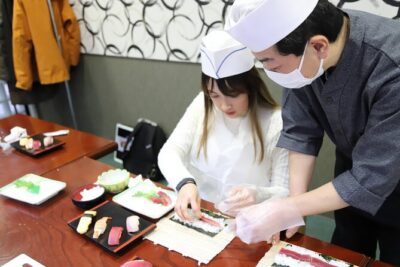
You use the supplied ingredients and tools, with the instructor demonstrating how to form the rice and place the topping. Beginners receive close help, which is where the small group makes a difference. You do not have to wave down a teacher across a crowded room.
I like that the class explains the background of sushi as well as the mechanics. That gives you more to remember than the shape of the rice. You begin to notice why sushi depends so heavily on freshness, balance, and restrained handling.
The meal is plentiful enough that some people may not finish everything. That is worth knowing if you have plans immediately afterward. This is not a quick snack between sights. It is a proper food activity with time to prepare, taste, and relax.
More Sake & Bar Hopping Tours in Tokyo
- Tokyo Bar Hopping Tour in Shinjuku (All-You-Can-Drink + Dinner)
★ 5.0 · 3,587 reviews - Best of Shinjuku: Izakaya Food Tour (4 Stops, 14+ Tastings)
★ 5.0 · 1,863 reviews - Tokyo: Shinjuku Local Bar and Izakaya Guided Walking Tour
★ 4.9 · 1,794 reviews - Shibuya Meltdown Nightlife Tour: All-You-Can-Drink Bar Hopping
★ 5.0 · 1,058 reviews
Three sake pairings with a sommelier
The sake portion adds a welcome layer to the meal. You taste three premium Japanese sakes selected by a certified sake sommelier, rather than being given one generic drink and left to guess.
The point is not to turn you into a sake expert in one afternoon. It is to help you compare styles and see how the drink works with sushi and ramen. The sommelier-led approach also gives the tasting more purpose than an open pour at a restaurant.
The class has been described as generous with drinks, and some sessions have included additional choices such as beer. The official experience specifically promises the three sake pairings, so I would treat those as the reliable inclusion and regard anything beyond them as a possible extra rather than part of the booking promise.
If you do not drink alcohol, check the arrangements before booking. The supplied information does not explain nonalcoholic alternatives. Vegans and vegetarians should also note that this experience is specifically not suitable for them.
A small room makes a big difference
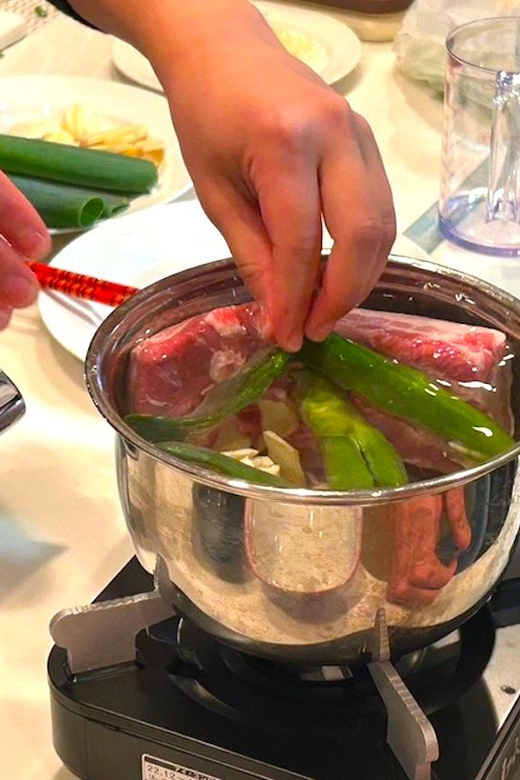
The group limit is eight participants, but the class may be much smaller. Sessions have sometimes had only two people, and one person even received a one-on-one lesson. You cannot count on a private class, but the format allows for personal attention when numbers are low.
I value this more in a cooking class than I would on a standard sightseeing tour. You need someone to correct your sushi shape, answer questions about broth, and help when a technique feels awkward. A large demonstration can show you what to do, but a small class can help you do it yourself.
The social side also seems important. The instructors encourage people to work together, and one session included a pop quiz that made the group cooperate. That sounds lighthearted rather than school-like, and it gives couples, families, and solo participants an easy way to talk with one another.
Families should find the format approachable, especially if everyone is willing to participate in the cooking. Couples can treat it as a shared meal with a practical souvenir. Solo visitors may appreciate the built-in conversation and the chance to receive more individual help.
What you get for $129
At $129 per person, this is not a budget lunch. The price makes more sense when you count what is included: three hours of instruction, all ingredients, the sushi and ramen meal, three sake tastings, an English-speaking instructor, a recipe booklet, and chopsticks to take home.
I would compare it with the cost of a good Tokyo meal plus a separate cultural activity. You are paying for food, but also for teaching time, preparation, translation into English, cultural explanation, and a small-group setting. The value is strongest if you will actually use the recipes later.
The fresh ingredients are another reason the price may feel fair. One session used ingredients sourced from Toyosu Market, which is associated with Tokyo’s high-quality seafood trade. The experience does not promise that every ingredient comes from there, so I would not book solely for that point. Still, it suggests care in choosing what goes onto your plate.
The class is less valuable for someone who only wants to eat sushi and ramen. Tokyo offers plenty of restaurants for that. This makes sense if you want to understand the dishes, practice the techniques, and leave with a meal you helped create.
The practical details that shape your day
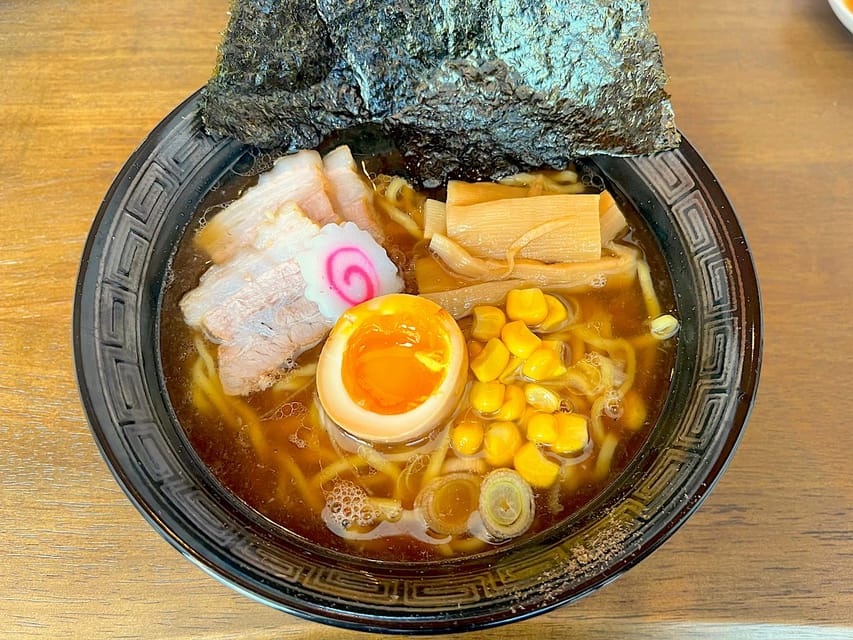
The activity lasts three hours, with starting times available according to the date you choose. I would place it on a day when you can take your time before and after. Even though the cooking is organized, the meal itself can be filling, and you will likely want a little breathing room.
The venue is convenient from Tsukiji, Ginza, Tokyo Station, and teamLab Planets, so it can pair with nearby plans. I would avoid scheduling it immediately before a timed attraction in Shinjuku because the listed thirty-minute taxi ride can become longer in traffic, and the class asks you to arrive early.
Hotel pickup and drop-off are not included. You make your own way to HAUS Tsukishima. The booking terms allow free cancellation up to 24 hours before the start for a full refund, and you can reserve now and pay later, which helps if your Tokyo schedule is still shifting.
Wear clothes you can move in and do not mind getting a little dirty. You do not need to arrive with cooking experience. The instructors are set up to guide beginners, and the provided ingredients and tools cover the class itself.
Who should book this Tokyo cooking class
I would recommend it most strongly to:
- First-time visitors who want a food activity with cultural background
- Couples looking for a shared afternoon rather than another restaurant meal
- Families who enjoy hands-on activities
- Solo visitors who like small groups and easy conversation
- Home cooks who want recipes that can be adapted outside Japan
- Sushi and ramen fans who want to understand the work behind the dishes
I would skip it if you are vegan or vegetarian, since the activity is not designed for those diets. I would also think twice if you dislike alcohol and cannot confirm suitable alternatives, since the sake pairing is a named part of the experience.
The class is not a specialist culinary school course. You will learn useful techniques and principles, but you will not become a ramen chef or sushi master in three hours. That is not a flaw. The real aim is to give you a clear, enjoyable introduction that you can build on at home.
Should you book it?
Book this class if you want food, instruction, and conversation in one compact Tokyo experience. The small group, patient English-speaking teachers, fresh ingredients, sake guidance, and take-home recipes give it more substance than a simple tasting.
At $129, it is a considered purchase, but the value is solid for anyone who will take part fully and use the recipes later. I would put it on a free afternoon near Tsukishima, Tsukiji, or Ginza, especially for a first visit to Tokyo.
Skip it if you only want a fast meal, need a vegan or vegetarian menu, or prefer to spend the afternoon sightseeing outdoors. For everyone else, this is a warm, practical way to turn two famous Japanese dishes into memories you can recreate in your own kitchen.
FAQ
How long does the Tokyo sushi and ramen class last?
The class lasts three hours.
Where does the cooking class take place?
It takes place on the second floor of HAUS Tsukishima, at 2-13-5 Tsukuda, Chuo-ku, Tokyo 104-0051.
How far is the venue from Tsukishima Station?
The venue is a five-minute walk from Exit 4 of Tsukishima Station, identified as Y21.
Is the class taught in English?
Yes. The class is led by English-speaking instructors.
What food will I learn to make?
You will learn to prepare ramen, including soup and chashu pork, and make nigiri sushi. The recipe booklet also includes instructions for gyoza.
Is sake included in the experience?
Yes. Three premium Japanese sakes selected by a certified sake sommelier are included.
Are vegans and vegetarians able to join?
No. The experience is not suitable for vegans or vegetarians.
More Drinking Tours in Tokyo
- Tokyo: Pub Crawl and Bar Tour
★ 4.5 · 951 reviews - Tokyo: Shinjuku Local Bar & Izakaya Crawl Tour
★ 5.0 · 890 reviews - Tokyo: Shinjuku Bar Hopping with All-You-Can-Drink & Dinner
★ 4.9 · 440 reviews - Shibuya: Local Bar & Izakaya Crawl
★ 4.9 · 354 reviews
More Cooking Classes in Tokyo
- Ramen & Gyoza Cooking Class in Tokyo with Local Supermarket Visit
★ 5.0 · 823 reviews - Tokyo: Easy Ramen Cooking Experience in Kabukicho, Shinjuku
★ 4.6 · 321 reviews - Ramen and Sushi Cooking Class with Sake Pairing Set in Tokyo
★ 5.0 · 291 reviews - Tokyo: Wagyu and 7 Japanese Dishes Cooking Class
★ 4.9 · 273 reviews
Just added around Tokyo
- Private Memorable Tokyo Tour with English Speaking Driver★ 5.0 · 30 reviews
- Private Tokyo Custom Full-Day Tour by Chartered Vehicle★ 5.0 · 16 reviews
- Private Sightseeing to Mt Fuji and Hakone with English Driver★ 5.0 · 51 reviews
- Tokyo Photography Masterclass – Private Photography Lesson★ 5.0 · 25 reviews
- Private Mt. Fuji Day Trip from Tokyo with English-Speaking Driver★ 5.0 · 33 reviews
- 4 Day Tour – Mount. Fuji, Tokyo, Hakone, Kamakura and Yokohama★ 5.0 · 19 reviews
- Private Unforgettable Mt Fuji Tour with English Speaking Driver★ 5.0 · 142 reviews
- Private Tokyo Food Tour – A Journey Through Time Through Food★ 5.0 · 36 reviews
Japanese Cooking Classes, compared.

Sushi Making Tokyo Roll and Authentic Japanese Sushi Class
Read our review →
Roll and Authentic Sushi Making Class in Asakusa
Read our review →
Ramen Cooking Class at Ramen Factory in Kyoto
Read our review →
Sushi Making Class in a Happi Coat near a Famous Spot
Read our review →
Sushi Making Osaka Roll and Authentic Japanese Sushi Class
Read our review →
Tokyo Sushi Making Class in Tsukiji with Professional Chef
Read our review →
Ramen & Gyoza Cooking Class in Tokyo with Local Supermarket Visit
Read our review →