
REVIEW · SUMO EXPERIENCES
Tokyo Sumo Experience: Chanko & Mochi with a Former Pro
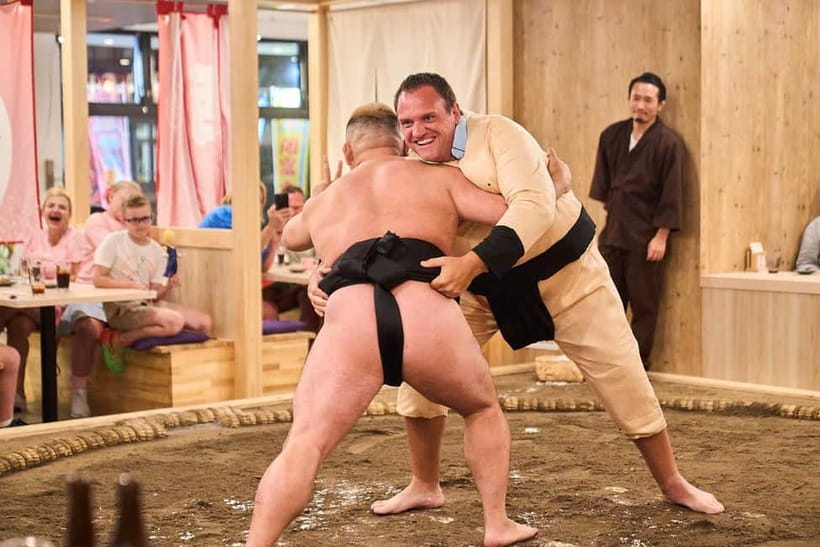
The best part of this two-hour experience is the chance to see sumo at arm’s length, rather than from a distant stadium seat. In Ryogoku, Tokyo’s sumo district, former professional wrestlers demonstrate techniques, explain their training, and invite you onto the dohyo for a friendly match.
I like the warm chanko nabe meal, prepared under the supervision of sumo wrestlers, and the generous audience participation. Mochi pounding, sumo drills, and wrestling give you several ways to join in. The one catch is that this is a lively entertainment show, not a quiet visit to serious morning practice.
In This Review
- Key points
- Why Ryogoku is the right place for a sumo experience
- What happens when you take your seat
- Watching sumo from close range
- Chanko nabe, the meal built around sumo
- Mochi pounding is more fun than it sounds
- Your turn on the dohyo
- The tone: educational, friendly, and intentionally playful
- Is $103 good value for two hours?
- Who will enjoy this most
- Practical ways to plan the visit
- Should you book it?
- FAQ
- Where does the Tokyo sumo experience take place?
- How long does the activity last?
- Is the activity available in English?
- What food is included?
- Can children participate?
- Is the experience suitable for wheelchair users?
Key points
- Former professional wrestlers explain the sport: Learn about sumo techniques, training, diet, and the wrestlers’ lifestyle in an accessible setting.
- Chanko nabe is part of the experience: Eat the hot pot dish associated with sumo stables while watching the demonstrations.
- You can step onto the dohyo: Adults and children can try sumo with the wrestlers in a controlled, playful activity.
- Mochi making adds a second Japanese tradition: Watch the pounding process, take a turn yourself, and enjoy sweet mochi afterward.
- Ryogoku makes the setting meaningful: The venue is near Ryogoku Station, in the Tokyo district most closely tied to sumo.
- The format suits families and groups: The hosts encourage participation, and the two-hour schedule fits neatly into a day of sightseeing.
Why Ryogoku is the right place for a sumo experience
Ryogoku is not just a convenient Tokyo neighborhood. It is the city’s traditional home of sumo, with sumo stables, the Kokugikan area, and a strong connection to the sport’s daily life.
That setting gives this activity useful context before the action begins. You are not simply watching a themed performance in an unrelated part of town. You are meeting the sport in the district where sumo has long been part of the local identity.
The venue is on the first floor, marked by a large sumo wrestler sign and flags. It is only a short walk from Ryogoku Station, though one person found it a little hard to locate and recommended arriving early. I would allow extra time, especially if you are coming with children or a larger group.
Ryogoku also works well as part of a larger Tokyo day. You can combine the activity with sightseeing in nearby Asakusa, Akihabara, Nihonbashi, or around Tokyo Skytree. Since the event lasts about two hours, it does not consume an entire day.
More Sumo Experiences in Tokyo
- Tokyo: Sumo Show and Dining Experience
★ 4.8 · 2,742 reviews - the SUMO show
★ 5.0 · 1,960 reviews - Tokyo Shinjuku Sumo Show & Experience with Photo
★ 5.0 · 1,750 reviews
What happens when you take your seat
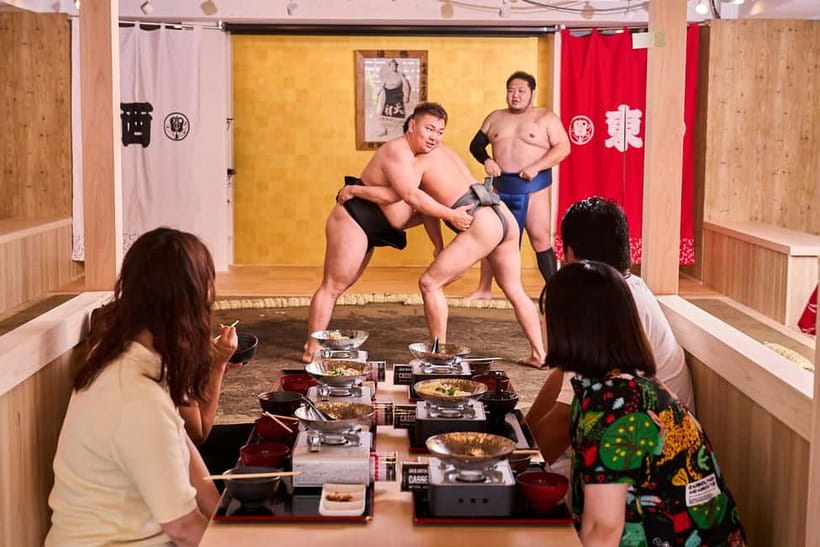
You are seated around the dohyo, the raised sumo ring used for the demonstrations and activities. Seat locations are assigned by the venue, so you cannot choose a particular position or request a specific seat.
That policy is worth knowing before you book. If being close to one side of the ring matters greatly to you, this activity does not offer that kind of control. Still, the layout is designed for viewing and participation, and the wrestlers work directly with people around the ring.
Standard seats require a reservation for every person, including small children. Holding a child on your lap in those seats can be dangerous. Box seats are safer for lap seating and can hold up to six people, but the supplied information does not promise that every booking will receive a box seat.
Once everyone is settled, the host helps explain what you are seeing. Instruction is available in English and Japanese. The presentation is built for people who may know very little about sumo, so you do not need to arrive with a rulebook in your pocket.
Watching sumo from close range
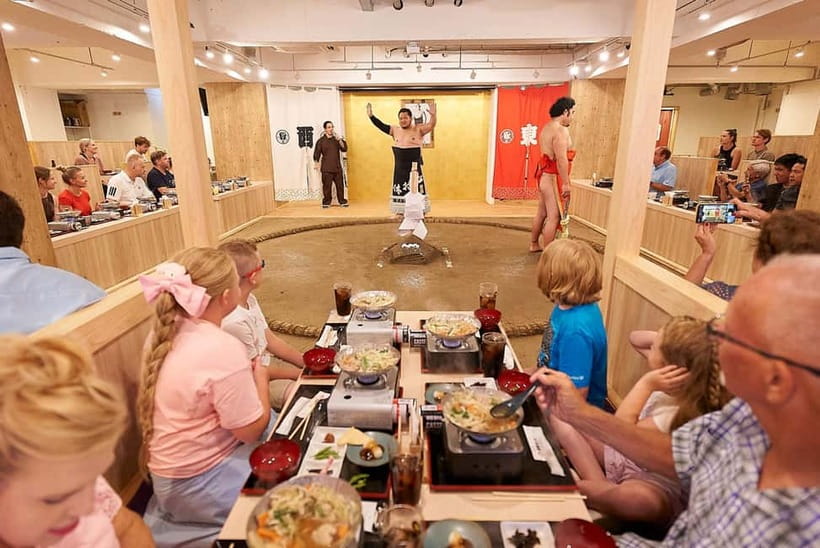
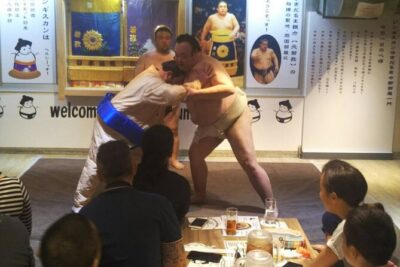
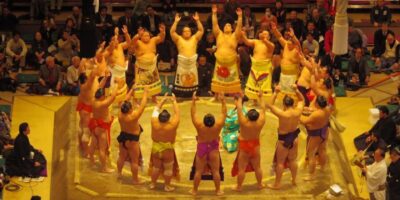
The demonstrations are the heart of the event. You see wrestlers perform sumo techniques and show parts of their training directly in front of you. The physical power is easy to appreciate from a nearby seat. Sumo can look slow on television, but the force, balance, and sudden movement become much clearer at close range.
The demonstrations are not presented as a serious morning training session. That distinction matters. A stable’s practice can be intense, formal, and demanding. This experience is designed as an entertaining introduction for adults and children, with explanations, humor, and chances to participate.
You can expect demonstrations of techniques and several rounds of actual sumo-style wrestling. One participant described seeing four different rounds, while others singled out the demonstrations as exciting and informative. The exact running order may vary, but the show includes both instruction and live action.
I like this balance. You get enough explanation to understand why a wrestler moves in a certain way, then you see that idea tested in the ring. The result is more useful than a simple photo opportunity, but more relaxed than a formal sporting event.
Chanko nabe, the meal built around sumo
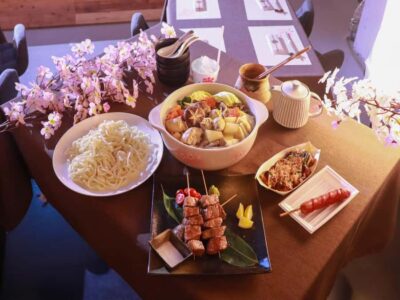
Chanko nabe is the traditional hot pot associated with sumo wrestlers. Here, it is served as part of the experience while the activity takes place around you.
The dish is supervised by sumo wrestlers from an actual stable, which gives the meal a direct connection to the sport. It is also practical food for a two-hour event: warm, filling, and served in a shared hot pot style.
The food receives some of the strongest praise in the supplied feedback. People describe it as delicious, healthy, fresh, and more filling than expected. One family noted that even a six-year-old enjoyed it. That makes the meal a useful part of the experience rather than a token snack added to a show.
You should still keep dietary needs in mind. Vegetarian, vegan, and gluten-free meals can be arranged if you make the request at least two days before your reservation date. Halal meals cannot be provided, although you may bring your own food.
A complimentary sour plum drink may also be served. If you have an alcohol allergy, ask about it before drinking, since one participant could not have the beverage for that reason. The available information does not list every ingredient, so specific dietary questions are best raised in advance.
Same city, a completely different kind of day:
- Mt Fuji and Hakone 1-Day Bus Tour Return by Bullet Train
★ 5.0 · 26,383 reviews - 1-Day Tokyo Bus Tour
★ 5.0 · 14,250 reviews - Tokyo: TOKYO SKYTREE® Admission ticket
★ 4.5 · 11,192 reviews - Tokyo: teamLab Planets TOKYO Digital Art Museum Entry Ticket
★ 4.6 · 9,779 reviews
Mochi pounding is more fun than it sounds
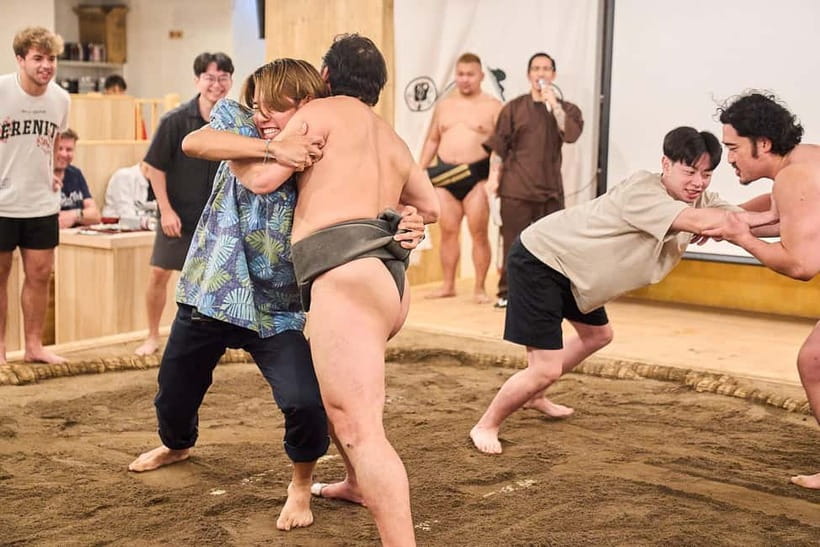
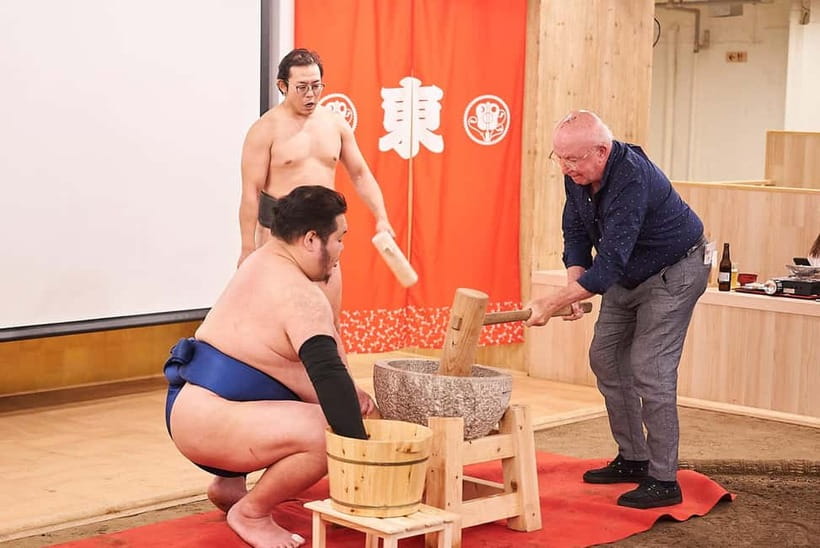
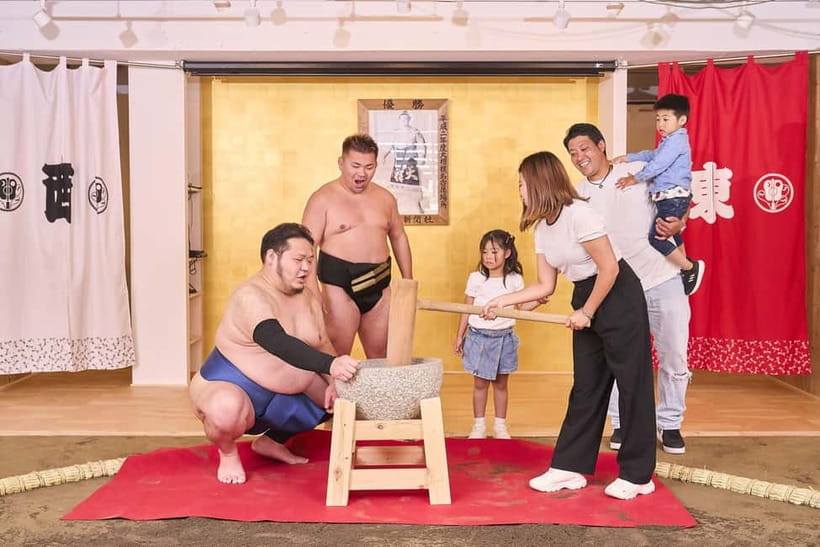
The mochi portion adds rhythm and hands-on activity to the meal and wrestling. You watch a demonstration of the traditional pounding process, then get the chance to help pound mochi with the wrestlers.
This is a good change of pace. Sumo demonstrations are about strength and control, while mochi making depends on timing and cooperation. You do not simply watch a finished dessert arrive at the table. You see how the rice becomes mochi, take part in the process, and then enjoy sweet mochi afterward.
Several participants made mochi a personal highlight. It is also one of the easiest activities for children to understand and enjoy. The hosts encourage participation, so you can join in without needing special skill.
The pounding itself involves a large wooden mallet and careful timing, so follow the staff’s instructions closely. Comfortable clothes are recommended, and that advice applies especially if you plan to take part in every activity.
Your turn on the dohyo
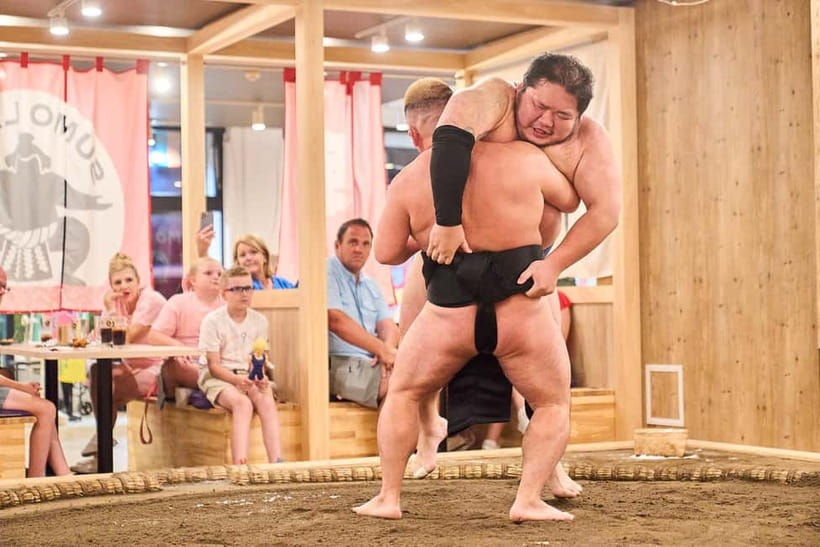
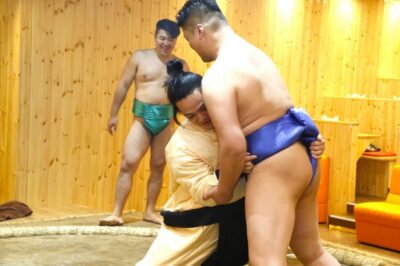
The most memorable part for many people is stepping into the ring. You can try sumo techniques and wrestle with one of the professionals in a playful, controlled match.
This is not a test of your athletic ability, and you should not expect a genuine contest against a trained wrestler. The point is to feel the stance, the push, and the remarkable stability of a sumo professional. The contrast between your effort and the wrestler’s controlled strength is part of the fun.
Adults and children can participate. Families with children, groups of friends, and work groups all fit the format well. One group of six particularly enjoyed the combination of food, explanations, and laughter, while several families said children and teenagers took part in both wrestling and mochi making.
You do not have to join every activity. You can remain seated and watch, then volunteer only for the parts that appeal to you. Still, I would encourage you to participate if you are comfortable. The event becomes more personal once you leave your seat and enter the ring.
Wear comfortable clothing that allows easy movement. Smoking is not allowed. The information provided does not promise changing facilities, so arrive dressed for the activities you intend to try.
The tone: educational, friendly, and intentionally playful
The host and wrestlers keep the mood open and inclusive. You learn about sumo culture, techniques, training, food, and the wrestlers’ lifestyle, but the presentation does not feel like a formal lecture.
The event also depends on audience participation. The hosts invite people forward, explain what to do, and keep the activities moving. If you prefer to observe without being called on, you may want to tell the staff when you arrive, though the supplied details do not state how volunteer selection works.
This approach makes the experience especially useful for first-time visitors to Japan. You get cultural background without needing to understand Japanese television coverage or the rules of a tournament. The English-speaking instruction helps, and the presence of Japanese instruction adds local context.
The tradeoff is authenticity of a particular kind. You are learning about a real sport through former professionals, eating its associated food, and trying its techniques. But you are not watching private training or attending an official tournament. If your main goal is to study elite sumo in silence, choose a serious training visit instead. If you want to understand the sport while laughing and taking part, this format is better suited.
Is $103 good value for two hours?
At $103 per person, this is not a budget meal or a quick photo stop. The price needs to cover several parts of one organized experience: a sumo presentation, instruction from former professionals, chanko nabe, mochi making, mochi dessert, and the chance to wrestle.
I consider the value strongest when you take part in the activities. The meal alone would not justify the cost for most people, and a short performance without interaction would feel expensive. Combined with the demonstrations, food, cultural explanation, and hands-on moments, the price becomes easier to defend.
It is also a useful option during a period when there is no major sumo tournament in Tokyo. You do not need to plan around tournament dates to see sumo at close range. One participant specifically valued it as an option during the off-season.
Families should calculate carefully because every person needs a reservation in standard seating, including children. That can raise the total quickly. On the other hand, the format gives children something to do instead of asking them to sit through a long museum visit or a formal performance.
The booking terms add flexibility. You can reserve now and pay later, and cancellation is free up to 24 hours before the start time for a full refund. Check the available start times when choosing your slot.
Who will enjoy this most
I would put this high on the list for:
- Families with children, especially if everyone enjoys taking part
- First-time visitors who want a simple introduction to sumo
- Groups looking for an evening activity with food and plenty of shared laughs
- People visiting Tokyo outside the main tournament schedule
- Anyone interested in Japanese food culture as well as sport
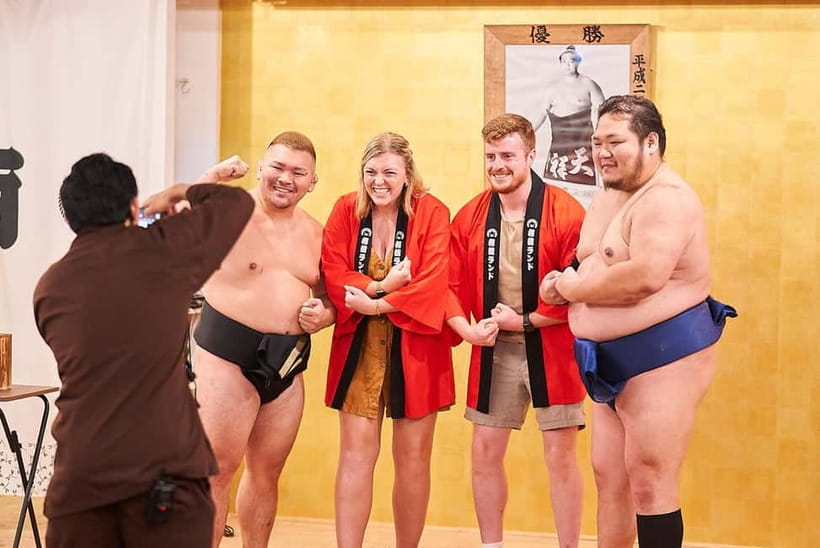
- Visitors who enjoy meeting performers and taking photographs
The experience may be less suitable for you if you want a quiet, highly formal presentation. It is also not suitable for wheelchair users, according to the activity information.
The assigned seating may matter to people who need a precise view or have mobility concerns. Contact the provider before booking if you have questions about seating, dietary requirements, or participation.
Practical ways to plan the visit
Start with the meeting point rather than racing in at the last minute. Look for the large sumo wrestler sign and flags on the first floor near Ryogoku Station. Arriving early is sensible if you are unfamiliar with the area.
Bring a camera. There are several natural photo opportunities, including the ring, the mochi activity, the meal, and the interaction with the wrestlers. Ask before taking close-up photographs if the staff gives any special instructions.
Choose comfortable clothes, even if you think you will only watch. The event may tempt you into trying mochi pounding or wrestling once you see other people joining in.
If you need vegetarian, vegan, or gluten-free food, provide notice at least two days in advance. Halal food is not available, but bringing your own food is permitted. Do not assume that a last-minute request can be accommodated.
The activity is two hours long. That is enough time for a full sequence of demonstrations, food, and participation without taking over your day. You can pair it with Asakusa, Akihabara, Nihonbashi, or Tokyo Skytree, all named as nearby sightseeing areas.
Should you book it?
I would book this if you want active cultural entertainment, not just a performance. The strongest reasons are the close view of sumo, the former professionals who explain the sport, the filling chanko nabe, and the chance to try both mochi pounding and wrestling.
I would pause if you are seeking serious training, official competition, or fully controlled seating. This is an entertaining introduction, and it says so plainly. That is not a weakness unless you book it expecting something else.
For families and groups, the combination is hard to beat: food, laughter, a little education, and activities that work for different ages. At $103, it is a considered purchase, but the two-hour package offers enough substance to make sense for visitors who plan to participate.
FAQ
Where does the Tokyo sumo experience take place?
It takes place in Ryogoku, near Ryogoku Station on Honshu in Japan. The venue is on the first floor and is marked by a large sumo wrestler sign and flags.
How long does the activity last?
The experience lasts two hours. Available starting times can be checked when you select a date.
Is the activity available in English?
Yes. Instruction is available in English and Japanese.
What food is included?
Chanko nabe is included as the main meal, followed by sweet mochi connected with the mochi-making activity. Vegetarian, vegan, and gluten-free meals can be provided if requested at least two days before the reservation date.
Can children participate?
Yes. The activity is designed for adults and children, and children can take part in mochi making and sumo wrestling. In standard seats, you must reserve a place for every person because holding a child on your lap can be dangerous. Box seats allow lap seating and can accommodate up to six people.
Is the experience suitable for wheelchair users?
No. The activity is listed as unsuitable for wheelchair users.
Just added around Tokyo
- Tokyo: Customizable Private Guided Walking Tour★ 4.5 · 129 reviews
- Private Harajuku Omotesando Architecture Tour★ 4.9 · 18 reviews
- Tokyo: Private Personalized Local Food Tour★ 4.5 · 101 reviews
- Tokyo: Guided Helicopter Ride★ 4.9 · 24 reviews
- Tokyo: Guided Walking Tour of Tsukiji Market with Lunch★ 4.4 · 24 reviews
- Tokyo GINZA: KONPARU Japanese Cabaret Show with Drink★ 4.8 · 38 reviews
- Tokyo: Guided Walking Tour of Tsukiji Market with Breakfast★ 4.4 · 134 reviews
- Tokyo: Gotokuji Cat Temple, Shinjuku Cat Cafe & 3D Cat Tour★ 4.9 · 38 reviews
Sumo Experiences, compared.
Sumo Show Experience with Chicken Hot Pot and a Photo
Read our review →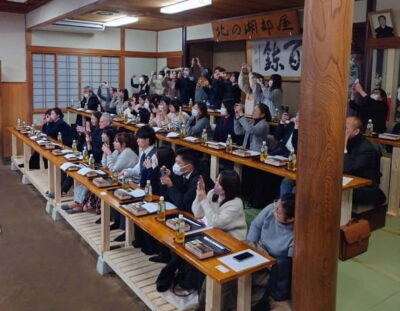
Tokyo Shinjuku Sumo Show & Experience with Photo
Read our review →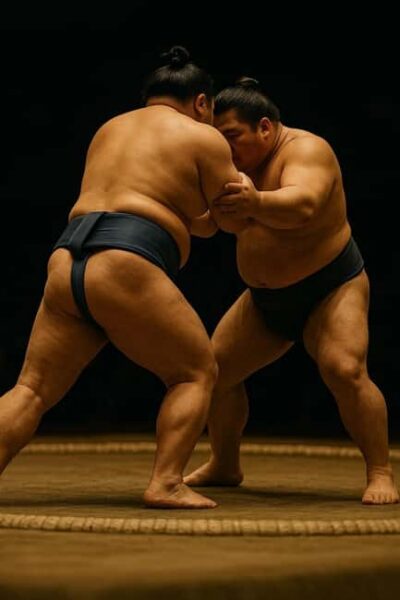
Sumo Show & Experience w/ Optional Kimono & Hot Pot
Read our review →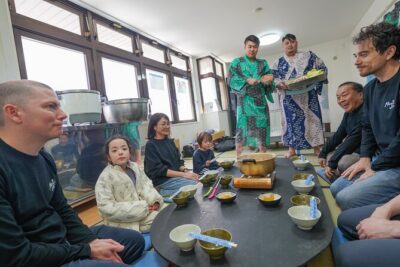
Authentic Sumo Experience in Tokyo: Enter the Sanctuary
Read our review →Browse the lists this tour appears in