
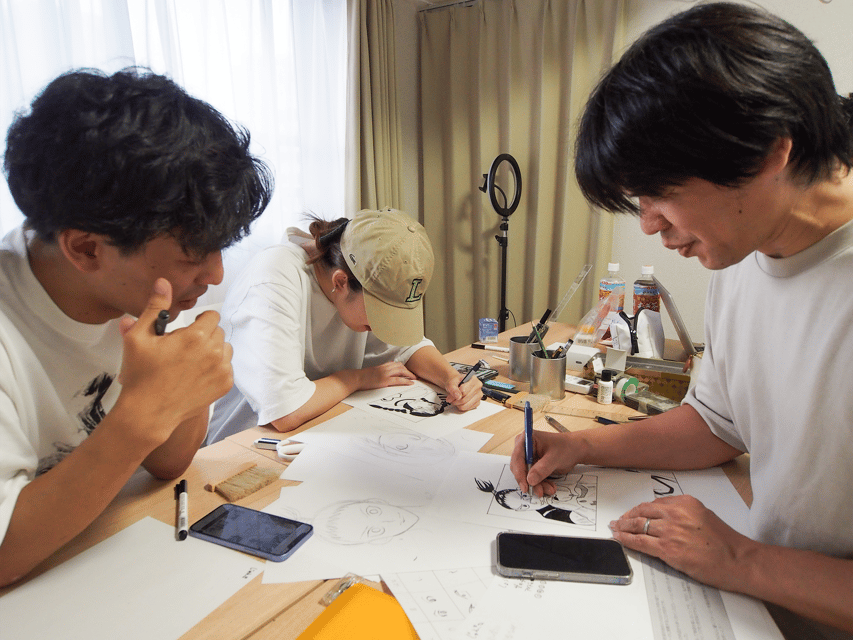
REVIEW · WORKSHOPS
Tokyo: Manga Drawing Workshop Guided by Pro Manga Artist
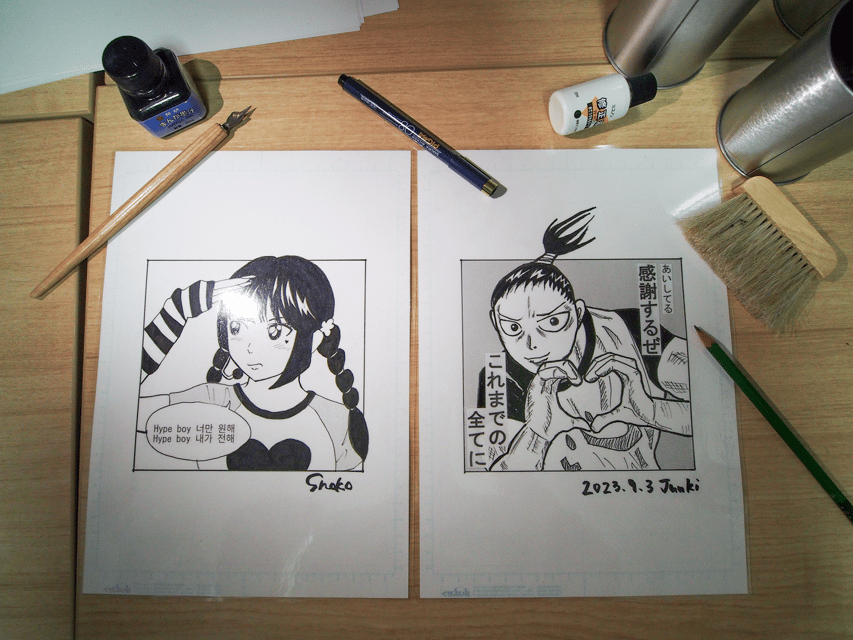
Creating a manga panel in Shibuya means more than sketching a cartoon. You follow the working method of a professional artist: idea, rough drawing, pencil draft, ink, solid black areas, screentone, and speech bubbles. The finished panel is yours to take home.
I like the small groups of up to eight, which give the artist time to help each person. I also like that all materials are supplied, including the less familiar tools for screentone and inking. The main thing to consider is that the workshop may feel slow at the start, and some stronger artists may want more freedom than the guided format allows.
- Follow a real manga production process, rather than simply coloring a prepared picture.
- Work with a professional artist who has more than 20 years of manga experience.
- Use traditional tools, including ink, brushes, cutters, and screentone.
- Ask questions through an interpreter in English or Japanese.
- Take home a laminated manga panel made during the session.
- Choose a supplied example or bring your own idea, with guidance adjusted to your skill level.
In This Review
- From Manga Fan to Working Artist in 150 Minutes
- Meeting the Artist in Shibuya
- Choosing Your Character and Panel
- Rough Sketching Without the Blank-Page Panic
- Pencil, Ink, Black Areas, and Screentone
- Speech Bubbles and the Finished Keepsake
- How the Interpreter Shapes the Class
- Who Will Get the Most From It
- Is $129 Good Value?
- Timing and Practical Tips for a Better Panel
- Should You Book the Manga Workshop?
- FAQ
- How long does the manga workshop last?
- Where is the meeting point?
- Do I need previous drawing experience?
- Are drawing materials included?
- Is an interpreter included?
- Can I keep the manga panel I make?
- How many people can join the group?
- Is the activity wheelchair accessible?
- What happens if I need to cancel?
From Manga Fan to Working Artist in 150 Minutes
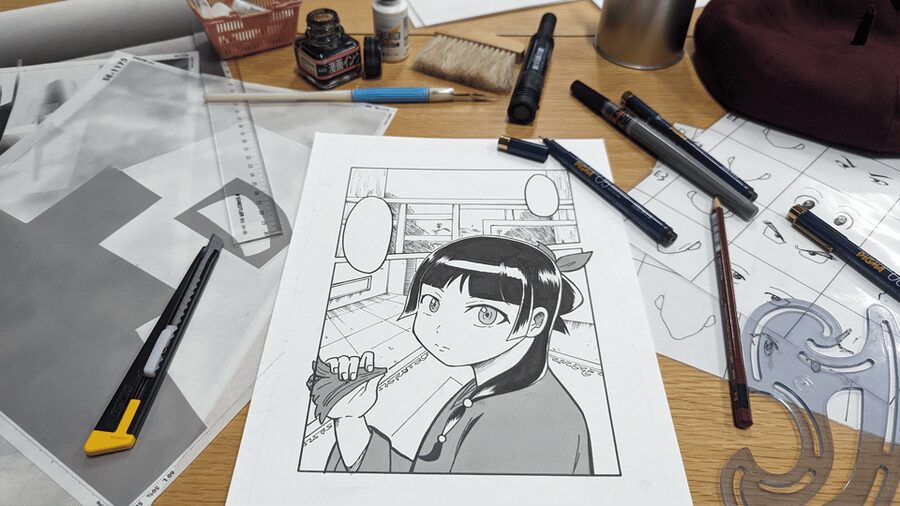
This workshop gives you a close look at the practical craft behind Japanese manga. You do not just watch a professional draw. You take part in the full sequence used to build a single panel, with the artist helping you make choices that would otherwise feel difficult.
The instructor has been creating manga for more than 20 years. Different sessions may feature different artists, including instructors identified in past sessions as Shige Mathumori, Rokkaku-sensei, Kousei-sensei, Hiroshi, and Kamaya Katsuki. The supplied information does not promise a particular artist for every booking, so treat the professional instructor as the constant, not a specific name.
An interpreter is included. That matters here because the best part of the session is often the conversation around the drawing. You can ask about tools, character design, the work of a manga artist, and the stages of production without relying entirely on gestures or translation apps.
The group limit is eight people. That is small enough for individual help, but the exact feel depends on attendance. Some sessions have had only one or two participants, while others have included families, couples, children, and adult artists.
Meeting the Artist in Shibuya
The meeting point is 6F, Shibuya 3-chome TR Building, 3-8-11 Shibuya, Shibuya-ku, Tokyo. The building is black and relatively thin, details worth noting because the address can be harder to spot than a large commercial entrance.
I would arrive early. Shibuya is easy to reach but not always easy to navigate, and one family had trouble finding the building during a political rally near Shibuya Crossing. The staff helped locate them, but extra time will keep the start calm.
Pickup is not included, so you make your own way there. Food and drinks are also not included, though the 150-minute session is short enough that you can eat before or afterward. The setting is a working studio or workshop space rather than a large sightseeing attraction. That is part of the appeal: you sit down and make something instead of moving from display to display.
A few more Tokyo trips to weigh up
- Sushi Making Tokyo Roll and Authentic Japanese Sushi Class
★ 5.0 · 3,971 reviews - Tokyo: Roll and Authentic Sushi Making Class in Asakusa
★ 4.9 · 1,957 reviews - Tokyo Shinjuku Chopsticks Making Class
★ 5.0 · 1,763 reviews
Choosing Your Character and Panel
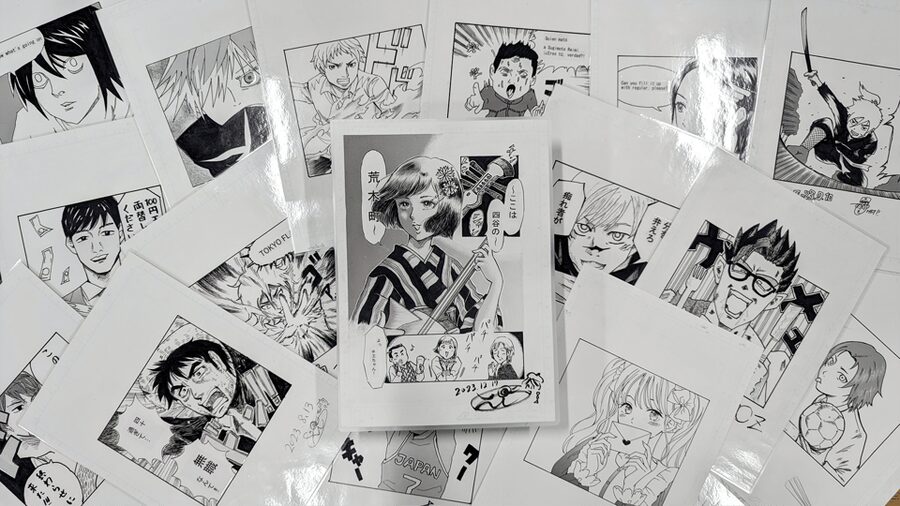
The first creative decision is what you want to draw. You may choose from a set of examples or work from your own image and idea. Past participants have used familiar manga characters, original characters, personal ideas, pets, and even more complicated designs such as a virtual YouTuber.
This choice affects the difficulty. A straightforward character from the provided set gives you a clear path through the lesson. Your own character can feel more personal, but elaborate costumes, unusual poses, or detailed designs take more time. If you arrive with a specific idea, keep it simple enough to complete in one session.
The artist helps shape the concept before you begin. In some cases, the sensei makes the first rough outline, then you refine it. This is useful for beginners because you are not left staring at an empty sheet of paper.
There is also room for personal input. You may suggest a pose, choose characters, or alter the expression. The balance is important: this is a guided workshop, not an open studio where you receive occasional advice while making an entirely independent illustration.
Rough Sketching Without the Blank-Page Panic
The rough sketch is where the artist’s experience becomes most useful. You learn how a simple idea becomes a readable manga image through pose, placement, facial expression, and composition.
If you are nervous about your drawing ability, this stage should lower the pressure. The artist can establish the proportions and basic structure, then guide you as you work over the lines. Several sessions have included people who said they could not draw well, yet they finished a panel they were happy to display at home.
That does not mean the artist does every part for you. You still need to follow directions, make marks, and stay involved. The finished result benefits from professional correction, so it may look better than work you could produce alone. That is the point of the lesson, but it also explains why the experience is not a pure test of your drawing skill.
More experienced artists should not assume the class will operate like an advanced critique. One participant who wanted to make fully original work felt the format leaned toward following the instructor’s prepared drawing. If you already draw professionally, tell the sensei at the start what you want to learn. The session can still be useful for traditional tools and screentone, but the amount of creative independence may vary.
Pencil, Ink, Black Areas, and Screentone
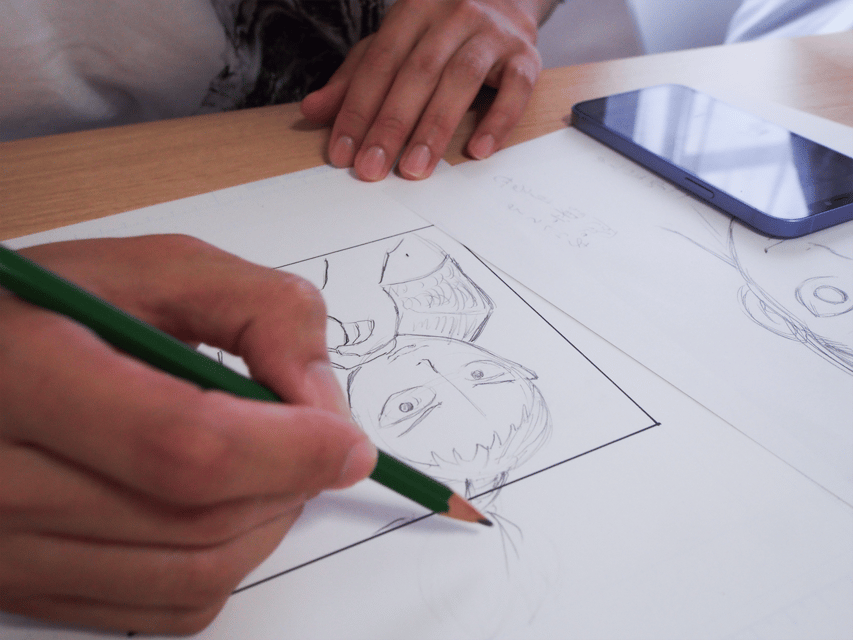
After the rough drawing comes the more formal draft. You refine the pencil lines, then move to ink. This change is a small but important lesson in manga production because ink gives the drawing its final confidence and weight.
You also learn how solid black areas shape the panel. A brush or similar tool helps fill backgrounds, hair, clothing, or shadowed sections. The process requires care because an ink mistake cannot be erased like a pencil mark.
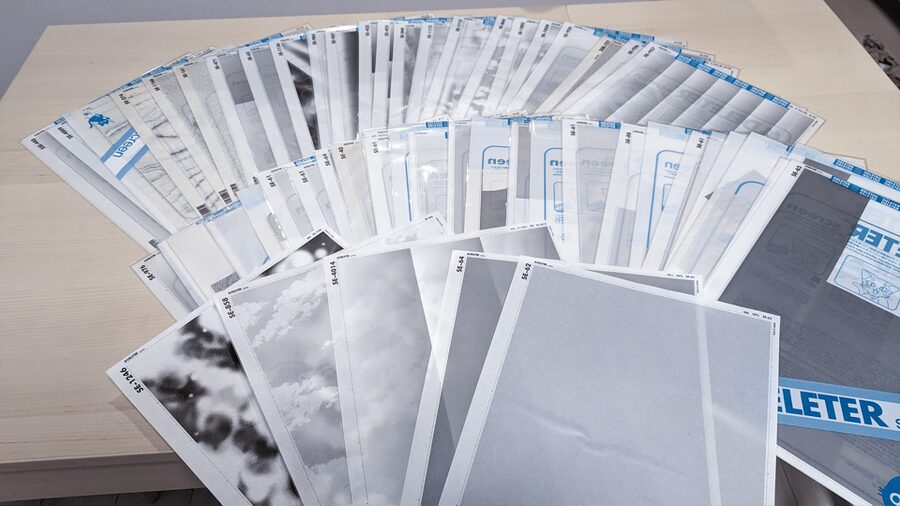
Once the ink is dry, you remove the remaining pencil marks. Then comes screentone, one of the most distinctive parts of the workshop. Screentone is a patterned gray material used to create tones and shading in black-and-white manga. You cut and apply it to selected areas, learning how a flat drawing gains depth without full color.
This is often the most unusual tool for people used to digital drawing. One participant who normally worked digitally found the traditional method so interesting that she went art-supply shopping afterward. That says something useful about the class: even if your panel is not perfect, you leave with a better sense of how physical manga pages are built.
The cutting stage can be fiddly. It is not just placing a gray sticker on the page. You use a cutter and need to work carefully around the artwork. The instructor demonstrates the method and helps when needed, which keeps the process manageable.
Same city, a completely different kind of day:
- Mt Fuji and Hakone 1-Day Bus Tour Return by Bullet Train
★ 5.0 · 26,383 reviews - 1-Day Tokyo Bus Tour
★ 5.0 · 14,250 reviews - Tokyo: TOKYO SKYTREE® Admission ticket
★ 4.5 · 11,192 reviews - Tokyo: teamLab Planets TOKYO Digital Art Museum Entry Ticket
★ 4.6 · 9,779 reviews
Speech Bubbles and the Finished Keepsake
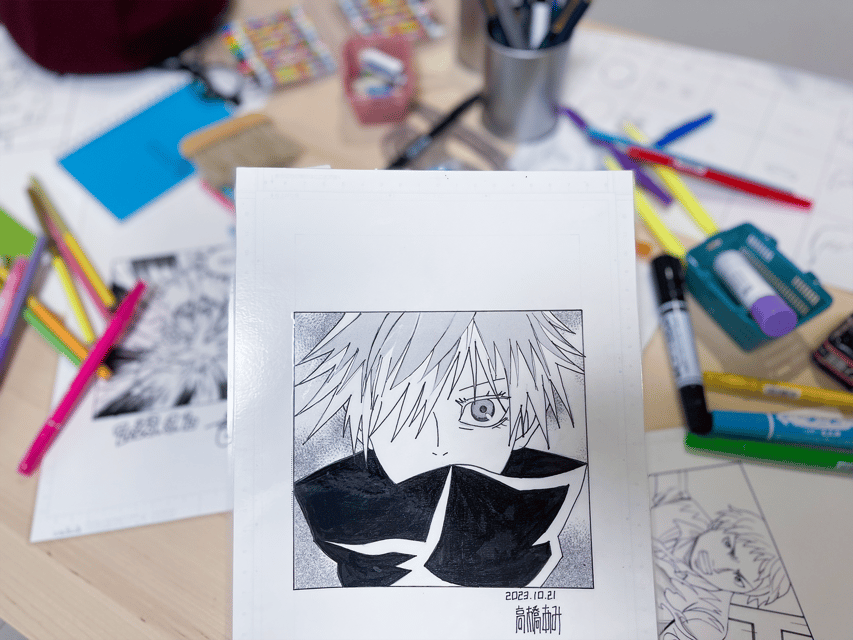
The final touches include speech bubbles and other comic-style details. These small additions make the page feel like a real manga panel rather than a standalone portrait.
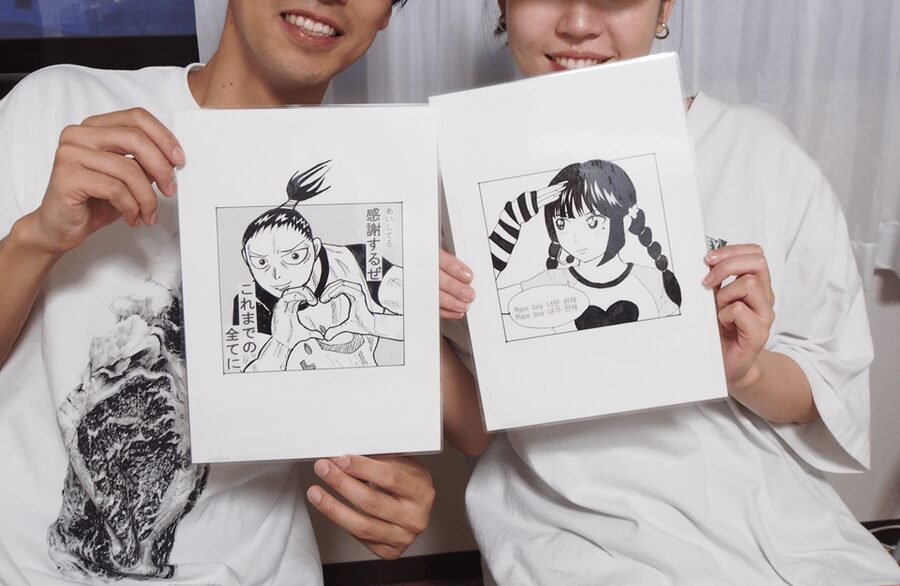
The finished work is laminated, according to the activity details and past session descriptions. Lamination protects the page during the journey home and makes it easy to frame or display. It also gives the activity a clear ending: you leave with a physical souvenir that you made during your time in Tokyo.
I find this a better keepsake than another mass-produced character item. You can buy manga merchandise in many parts of Japan, but you cannot buy the exact panel you created with your own choices and mistakes included.
The result will not be identical for every person. Some participants produce a largely guided image, while others make more of their own decisions. The instructor’s skill helps the work look polished, but you should see the panel as a personal record of the process rather than a professional publication-ready page.
How the Interpreter Shapes the Class
The interpreter is not just there for emergency translation. The role helps the class move at a steady pace and allows you to ask questions while you draw.
Past sessions have included interpreters named Hanae, Madoka, Machi, and Ai. The assigned interpreter may differ. English and Japanese are the listed languages, and the interpreter explains the artist’s directions, translates questions, and helps create conversation between the group and the sensei.
This support is especially helpful when discussing technical tools. Words for line weight, shading, screen patterns, and cutting technique can be hard to communicate with simple translation. The interpreter also helps children and adults take part at the same time.
A few small language gaps may still occur, and one past participant used Google Translate briefly. That is not unusual in an art class with hands-on instruction, but the included interpreter makes the session far easier than trying to follow a Japanese-only lesson.
Who Will Get the Most From It
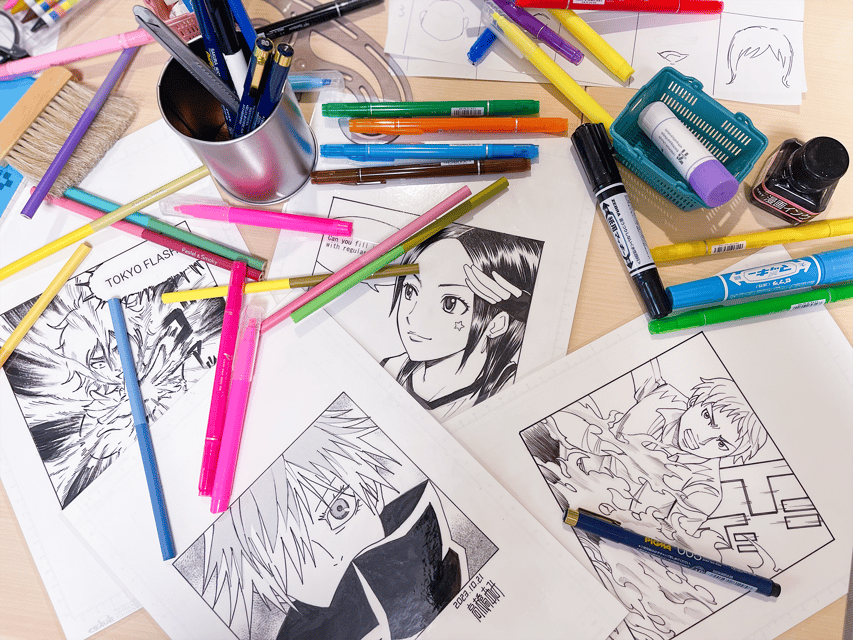
This is an easy choice for fans of manga and anime who want a creative activity in Tokyo. It also works for people who enjoy making things but do not consider themselves artists.
Families are a strong match. Children as young as 10 and 11 have taken part with adults, and the instructor adjusted the pace while answering plenty of questions. Couples can also create a shared holiday memory, and one couple used the finished panels as honeymoon keepsakes.
You can book alone as well. A solo participant once had an especially personal session with plenty of time for questions, and the small-group format means you are not automatically lost in a crowd.
You do not need to be a devoted fan of One Piece or Naruto. The process is interesting on its own, and the activity can appeal to anyone curious about Japanese illustration. Still, if manga and anime mean little to you, another Tokyo craft class may offer a more natural fit.
Is $129 Good Value?
At $129 per person, this is not a cheap drop-in activity. The price covers 150 minutes, a professional manga artist, an interpreter, and all drawing materials. You are also taking home a laminated panel rather than using supplies provided only for the lesson.
The value depends on what you want. If you are comparing it with a short character-drawing demonstration, the price is high. If you want personal instruction, access to traditional tools, a finished souvenir, and the chance to ask a working artist about the craft, the cost is easier to justify.
The small group improves the value. With a maximum of eight, the instructor can look at your lines and help solve problems as they arise. Sessions with only one or two participants may feel especially personal, though you should not book expecting a private class unless that is confirmed.
Free cancellation up to 24 hours before the start and reserve-now, pay-later booking make the financial decision less rigid. The workshop is wheelchair accessible, but you should still check the available start time and meeting arrangements when booking.
Timing and Practical Tips for a Better Panel
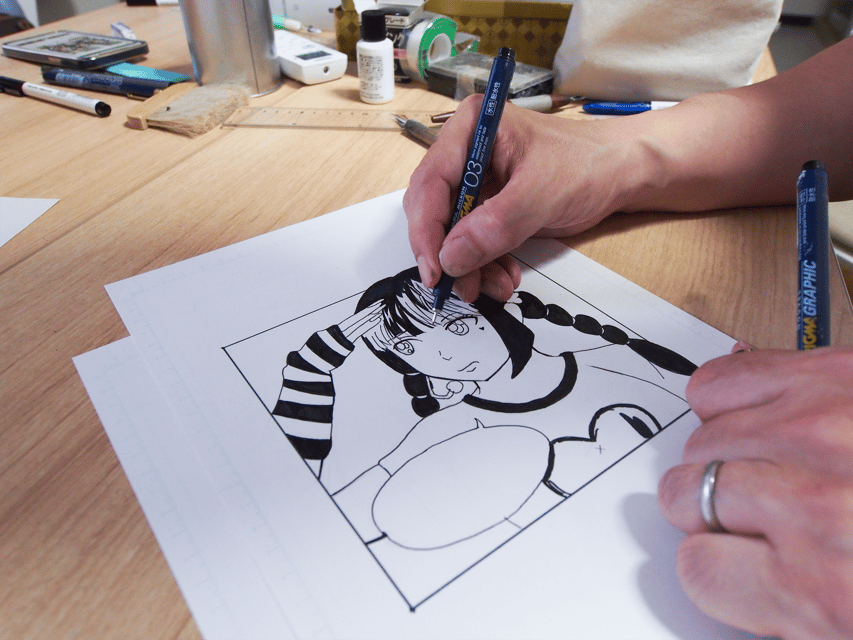
Set aside the full two and a half hours. The session is listed as 150 minutes, and the time includes several stages that should not be rushed, especially inking, erasing, and applying screentone.
I would prepare in three simple ways:
- Arrive early at the black, narrow building and allow time to find the entrance.
- Bring a simple character or pose idea if you want to use your own design.
- Tell the instructor at the beginning if you are a beginner or an experienced artist.
Do not worry about bringing pens, paper, or specialty tools. Materials are provided. You might still want to bring a phone with your reference image if you plan to draw a personal character, pet, or photo-based idea.
Wear clothes you can work comfortably in. The activity involves ink and black filling, so careful handling matters, even though the materials and instruction are supplied.
Should You Book the Manga Workshop?
I would book this if you want to make something in Tokyo, especially if manga is part of your Japan plans. The strongest reasons are the patient professional guidance, the interpreter, and the chance to learn screentone and traditional inking rather than simply coloring a souvenir.
I would pause if you are an experienced artist seeking a completely free-form studio session. The format may guide you closely, and the artist may create much of the initial structure. Ask about the session style if independent composition is your main goal.
For beginners, families, couples, solo art fans, and anime enthusiasts, the balance is strong. You arrive with no materials and no need for drawing confidence. You leave with a laminated manga panel, a working knowledge of the basic production steps, and a souvenir tied to your own time in Japan.
FAQ
How long does the manga workshop last?
The workshop lasts 150 minutes, or two and a half hours.
Where is the meeting point?
The meeting point is on the sixth floor of the Shibuya 3-chome TR Building, 3-8-11 Shibuya, Shibuya-ku, Tokyo. The building is black and relatively thin.
Do I need previous drawing experience?
No. The activity is designed for people with no previous skills, and the professional artist provides step-by-step guidance.
Are drawing materials included?
Yes. Manga drawing materials are provided.
Is an interpreter included?
Yes. An interpreter is included, and the activity is offered in English and Japanese.
Can I keep the manga panel I make?
Yes. You take home your self-drawn manga, and session descriptions state that the finished artwork is laminated.
How many people can join the group?
The group is limited to eight participants.
Is the activity wheelchair accessible?
Yes. The activity is listed as wheelchair accessible.
What happens if I need to cancel?
You can cancel up to 24 hours in advance for a full refund. Reserve-now, pay-later booking is also available.
Just added around Tokyo
- Private Memorable Tokyo Tour with English Speaking Driver★ 5.0 · 30 reviews
- Private Tokyo Custom Full-Day Tour by Chartered Vehicle★ 5.0 · 16 reviews
- Private Sightseeing to Mt Fuji and Hakone with English Driver★ 5.0 · 51 reviews
- Tokyo Photography Masterclass – Private Photography Lesson★ 5.0 · 25 reviews
- Private Mt. Fuji Day Trip from Tokyo with English-Speaking Driver★ 5.0 · 33 reviews
- 4 Day Tour – Mount. Fuji, Tokyo, Hakone, Kamakura and Yokohama★ 5.0 · 19 reviews
- Private Unforgettable Mt Fuji Tour with English Speaking Driver★ 5.0 · 142 reviews
- Private Tokyo Food Tour – A Journey Through Time Through Food★ 5.0 · 36 reviews
Workshops, compared.
Sushi Making Tokyo Roll and Authentic Japanese Sushi Class
Read our review →
Roll and Authentic Sushi Making Class in Asakusa
Read our review →
Ramen Cooking Class at Ramen Factory in Kyoto
Read our review →
Sushi Making Class in a Happi Coat near a Famous Spot
Read our review →

Sushi Making Osaka Roll and Authentic Japanese Sushi Class
Read our review →
Tokyo Sushi Making Class in Tsukiji with Professional Chef
Read our review →Browse the lists this tour appears in