
REVIEW · WORKSHOPS
Tokyo: Knife Making Workshop (Sharpening, Engraving)
A Japanese knife workshop gives you something better than a souvenir picked up at a shop. You shape it yourself, from the slow sharpening strokes to the final handle assembly, then carry home a tool marked with your name in Japanese. The hands-on sharpening is the heart of the experience, and the short lesson on Japanese knives and swords gives the work useful cultural context.
I especially like the friendly English-speaking instruction and the choice of up to five knife types, with larger styles available for a small extra fee. You also get tea, juice, snacks, attractive packaging, and a custom key-holder. The main consideration is that sharpening takes concentration and some effort, so this is not a passive craft demonstration. The standard knife is included, but the handle quality may feel basic to some people.
In This Review
- Key Points
- Why a Knife Workshop Works So Well in Tokyo
- Arriving at BUB Activity Center in Asakusa
- Haori Jackets, Japanese Name Badges, and a Gentle Start
- A Short Lesson on Japanese Knives and Swords
- Choosing the Right Blade for Your Kitchen
- The Main Event: Sharpening the Blade
- Engraving Your Name and Attaching the Handle
- The Finished Knife and What You Take Home
- Is $161 a Fair Price?
- Who Should Book This Experience?
- Practical Tips Before You Go
- Should You Book the Tokyo Knife Workshop?
- FAQ
- How long does the Tokyo knife-making workshop last?
- Where does the workshop take place?
- What knife is included in the price?
- Can I choose a different type of knife?
- Do I need previous knife-sharpening experience?
- Can I engrave my name on the knife?
- Are drinks and snacks included?
- Is English instruction available?
- Can a friend or family member watch without making a knife?
- How should I take the knife home?
Key Points
- Sharpen your own Japanese knife: Learn the controlled, repetitive motion of working a blade rather than simply watching a demonstration.
- Choose your knife style: Start with the standard multi-tasking knife or pay a small supplement for options such as usuba, deba, or petit yanagiba.
- Personalize the handle: Engrave your name in Japanese, a picture, or another simple design with help from the staff.
- Meet at an easy Asakusa location: BUB Activity Center is in the Heiwa Building at 2 Chome 6-11, with the workshop on the fifth floor.
- Take home a useful keepsake: Your finished knife comes with aesthetic packaging, plus a custom key-holder as a gift.
- Bring a non-participating companion if needed: An observation ticket is available on site, though an observation fee applies.
Why a Knife Workshop Works So Well in Tokyo
Tokyo offers plenty of polished souvenirs, but many are made for display rather than use. This workshop gives you a small connection to daily Japanese life. A kitchen knife is practical, and the process of sharpening one asks you to slow down and pay attention.
The experience also avoids turning Japanese craftsmanship into a long lecture. You receive a concise introduction to the history of Japanese knives and swords, then put the ideas to work with your hands. You learn why different kitchen knives serve different purposes and how Japanese blades differ from Western swords and kitchen tools.
The final knife will not be a museum-quality handmade blade forged from raw steel. That is important to understand. This is a guided customization and sharpening workshop, not a blacksmithing course. Still, you leave with an object you helped finish, and that personal link gives it more meaning than a standard shop purchase.
A few more Tokyo trips to weigh up
- Sushi Making Tokyo Roll and Authentic Japanese Sushi Class
★ 5.0 · 3,971 reviews - Tokyo: Roll and Authentic Sushi Making Class in Asakusa
★ 4.9 · 1,957 reviews - Tokyo Shinjuku Chopsticks Making Class
★ 5.0 · 1,763 reviews
Arriving at BUB Activity Center in Asakusa
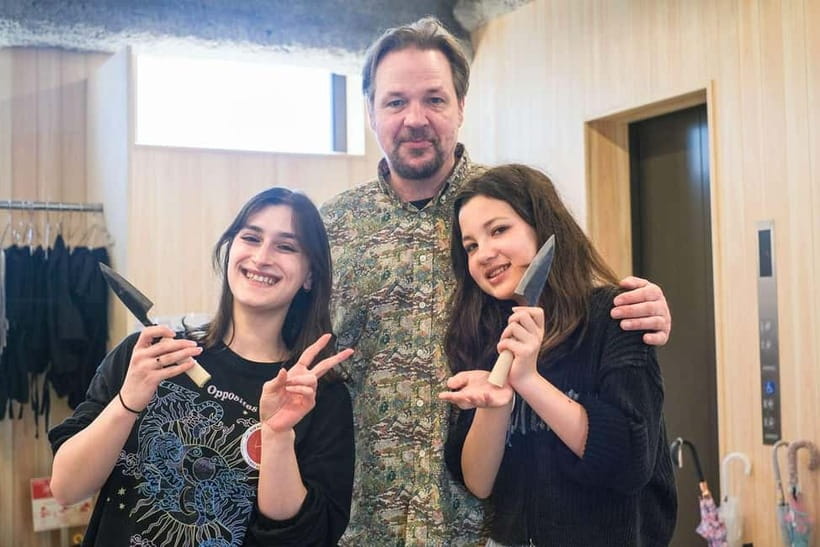
The meeting point is BUB Activity Center, located at Tokyo, Taito-ku, Asakusa, 2 Chome 6-11, inside the Heiwa Building. Take the elevator to the fifth floor. The location is in central Tokyo and is easy to reach by public transport, though the building entrance and elevator are the kind of details you should allow a little time to find.
If you have trouble locating the activity center, contact the provider rather than wandering around the neighborhood with a sharpening appointment approaching. The directions specifically ask you to use the elevator, so do not assume the workshop is at street level.
The activity lasts about 90 minutes. That is a sensible length for the project. You have enough time to learn the basic ideas, sharpen the blade, work on the handle, and finish with packaging, without turning the session into an all-day commitment.
Haori Jackets, Japanese Name Badges, and a Gentle Start
At the beginning, you put on a light haori, a jacket in the style of a Japanese kimono. It helps protect your clothes from accidental stains and sets the tone for the workshop without requiring you to dress up in a full costume.
You also receive a badge with your name written in Japanese letters. This is a small touch, but it helps make the session personal from the first few minutes. If you are curious about Japanese writing, the engraving portion gives you a chance to ask how your name works in Japanese characters.
Before the tools come out, you can sit down with tea, juice, or another soft drink. Japanese snacks are also included. This opening matters because it gives you time to settle in, ask questions, and get comfortable with the staff before handling a blade.
The bilingual team adjusts explanations to your level of English. Several instructors are available to demonstrate movements, correct your technique, and keep the conversation going. Guides named Mori, Agata, Lisa, and Joe have been praised for their clear English, energy, patience, and humor in different sessions.
A Short Lesson on Japanese Knives and Swords
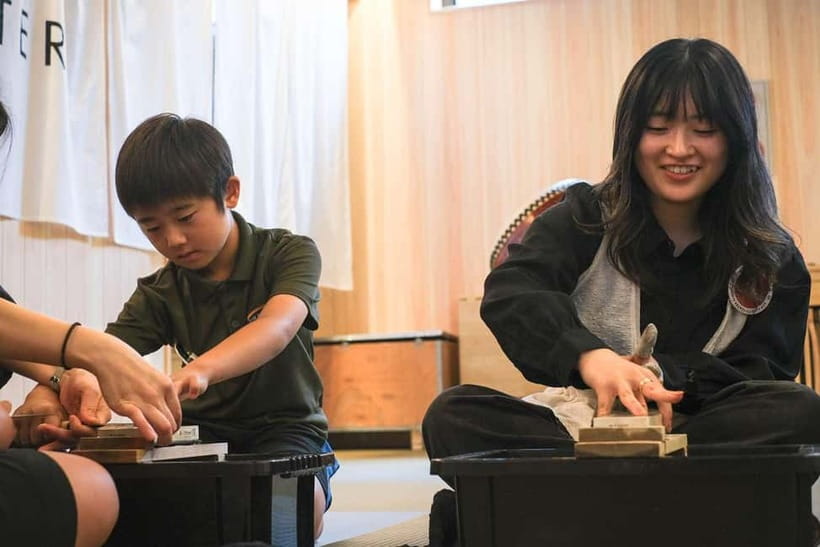
The cultural introduction covers the background of Japanese knives and swords. You learn about the differences between Japanese katana and Western swords, then move into the kitchen knives used for different tasks.
This section is brief enough to keep the workshop moving, but it gives you a reason to care about your choice of blade. A small kitchen knife, an all-purpose knife, and larger specialized styles do not serve the same role. The staff can explain the options before you decide.
The standard included knife is described as a multi-tasking size. Up to five types may be available, depending on the session, and usuba, deba, and petit yanagiba options require an additional payment. One participant selected an all-purpose upgrade and found the extra cost worthwhile, while others were happy with the standard knife.
Ask about the differences before committing to an upgrade. A larger or more specialized knife may look impressive, but the best choice depends on how you plan to use it at home. The staff can help you choose a blade that suits your interests rather than simply pushing you toward the biggest option.
Same city, a completely different kind of day:
- Mt Fuji and Hakone 1-Day Bus Tour Return by Bullet Train
★ 5.0 · 26,383 reviews - 1-Day Tokyo Bus Tour
★ 5.0 · 14,250 reviews - Tokyo: TOKYO SKYTREE® Admission ticket
★ 4.5 · 11,192 reviews - Tokyo: teamLab Planets TOKYO Digital Art Museum Entry Ticket
★ 4.6 · 9,779 reviews
Choosing the Right Blade for Your Kitchen
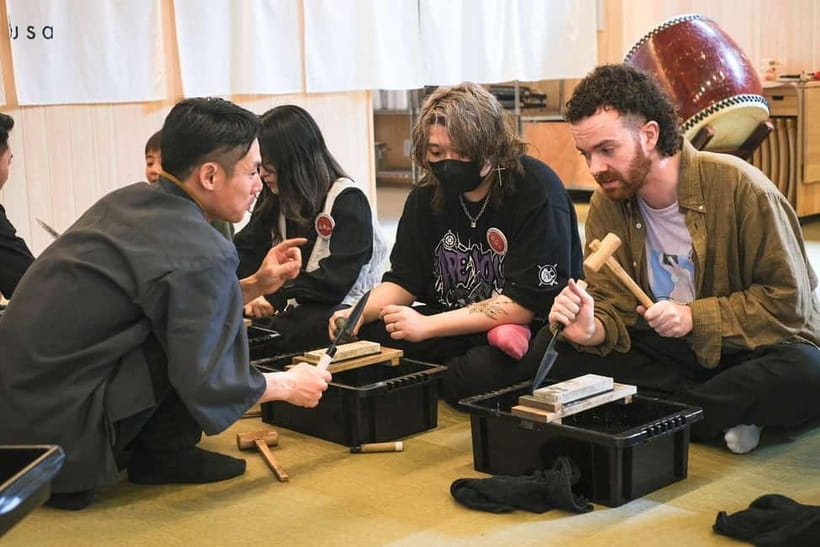
The knife selection is one of the most useful parts of the workshop because it turns a souvenir decision into a practical one. You can think about whether you want an everyday knife or a style connected to a particular kind of food preparation.
The standard knife is the safest choice if you want a general-purpose keepsake. It is included in the $161 price, so you do not need to pay more to take part in the full activity. The larger options add cost, but the supplement is described as small.
You should also remember that the knife is a real blade. It is not something to place casually in your carry-on bag. The activity provider advises putting the knife box in checked luggage or asking the staff to ship it. Plan around that before your flight, especially if you are traveling with hand luggage only.
The Main Event: Sharpening the Blade
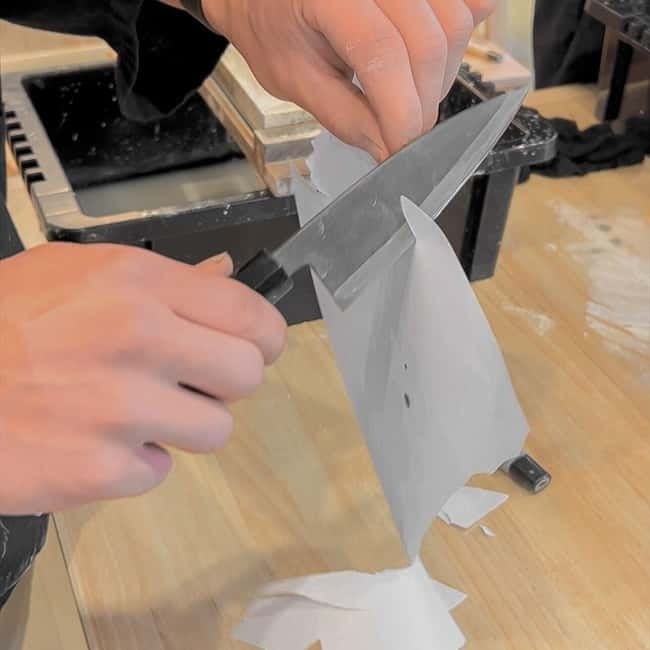
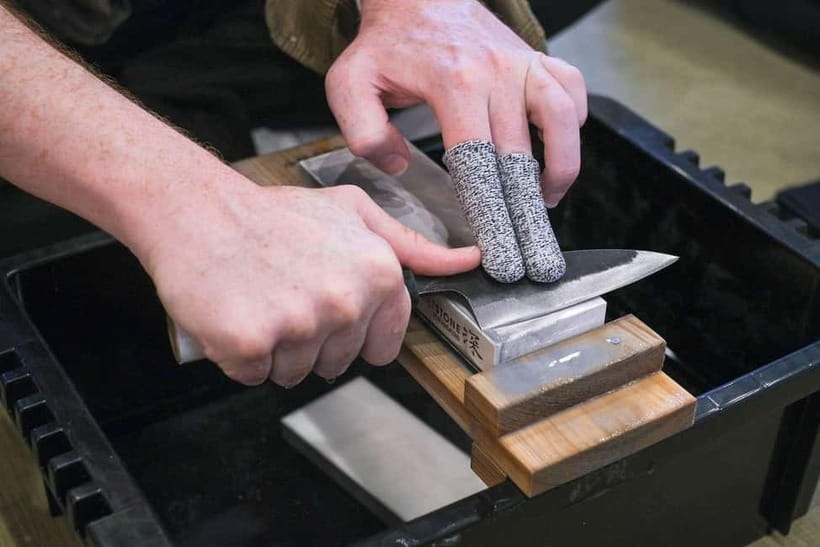
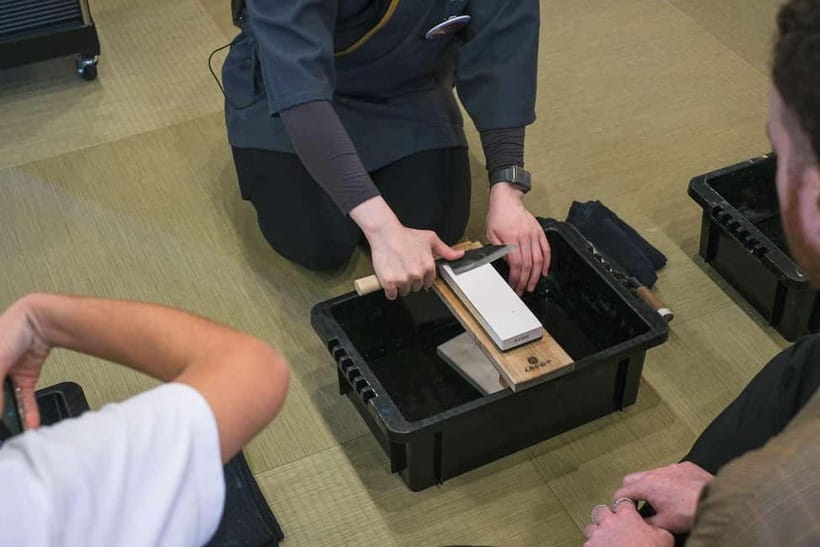
Sharpening is the most tactile portion of the class. You work the blade across the sharpening surface with steady movements while the instructor checks your angle and pressure. The motion can feel meditative, but it is also more physical than the promotional language might suggest.
This is where attentive guidance makes the difference. You do not need prior experience. Staff members show you the movement, watch your progress, and politely correct mistakes. That matters because the technique is not immediately natural for everyone.
Several people found the process harder than expected, but also satisfying once they could see the blade changing. The instructors may help finish the knife if you have another appointment and need to leave early, though you should still protect the full 90-minute time slot in your schedule.
I like that the workshop treats sharpening as a skill rather than a quick trick. You are not simply handed a finished knife with your name on it. You put in the repetitive work, and the result carries some evidence of your effort.
Engraving Your Name and Attaching the Handle
After sharpening, you personalize the handle. The usual option is to engrave your name in Japanese letters, but you can also attempt a picture or another design. The staff can help with the Japanese basics if you want to understand what you are writing.
Engraving requires a light touch and patience. Do not expect a perfectly polished professional mark on your first attempt. That slight irregularity is part of the charm, though one participant felt that the handle quality could be improved and wished for more engraving methods.
Once the engraving is complete, you attach the handle using a traditional hammer. The sound of the hammer turning separate parts into a finished knife is one of the memorable details of the workshop. It also gives the final stage a clear sense of purpose.
The guides remain close by during this process. They can help with the engraving and handle fitting, which is useful if your Japanese lettering is uncertain or your design becomes more ambitious than planned.
The Finished Knife and What You Take Home
At the end, your knife is packaged for you in an attractive presentation. You also receive Japanese snacks and tea during the session, along with a customized key-holder featuring a unique design.
The knife is the main prize, but the packaging makes a difference if you are giving it to someone else. Some participants planned to display their finished knife, while others intended to use it as a cooking tool or present it to a friend.
The final quality depends partly on the knife you select and partly on your own engraving. The handle may not satisfy someone looking for luxury finish work, and this is not the right purchase for a collector seeking a rare artisan blade. For a personal souvenir, gift, or first step into Japanese knife care, the result is more compelling.
Is $161 a Fair Price?
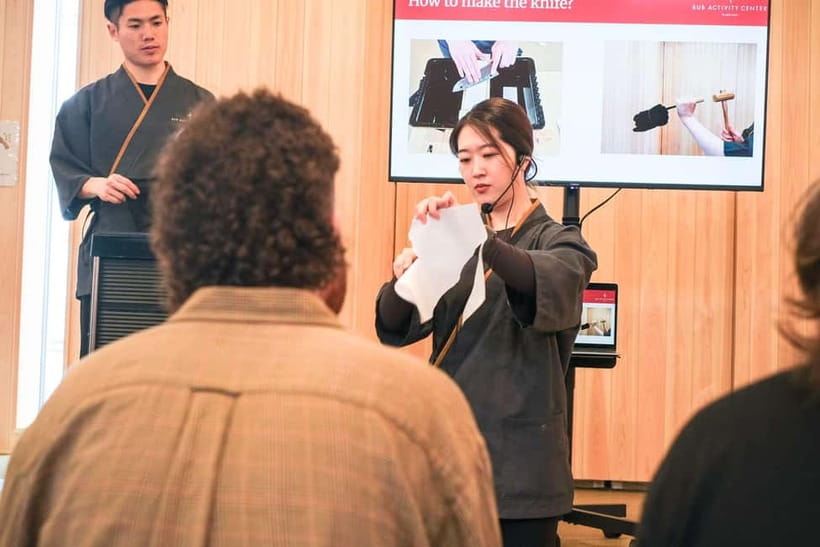
At $161 per person, this is not a cheap Tokyo activity. You are paying for instruction, the knife, drinks, snacks, packaging, staff support, and the chance to personalize the item. The value improves if you care about the process as much as the object.
If you only want to buy a Japanese kitchen knife, visit a knife shop and compare several models. You may find more choice and possibly better handle quality. If you want to understand sharpening, ask questions in English, and make a souvenir with your own hands, the workshop offers something a shop cannot.
The observation option also helps couples and families manage the cost. A partner or relative who does not need another knife can attend by paying an observation fee on site. This is useful when one person wants the full craft experience and the other mainly wants to watch.
The price feels easier to justify for people who enjoy cooking, craft work, Japanese culture, or hands-on activities. It is less suitable for someone who wants a fast photo opportunity or a fully finished luxury product.
Who Should Book This Experience?
I would recommend it to first-time visitors who want a practical connection to Japanese culture. It suits solo participants, couples, families, and older children who can follow careful instructions around a blade. One 10-year-old participant enjoyed the class with a parent, and the staff are used to helping beginners.
It is also a good choice if you are visiting Asakusa and want an indoor activity that does not depend on the weather. The 90-minute format fits neatly into a day of sightseeing, though you should not schedule something immediately afterward in case sharpening or engraving takes longer than expected.
Cooking enthusiasts will get the most long-term value. You learn basic care for a Japanese kitchen knife, and the finished tool has a use beyond the trip. People interested in swords will appreciate the opening lesson, but remember that the class focuses on knives, not sword forging.
The workshop is wheelchair accessible. Alcohol and drugs are not allowed. Transportation to and from the activity is not included, so you make your own way to Asakusa.
Practical Tips Before You Go
Wear clothes that you do not mind protecting with the provided haori. The jacket helps with accidental stains, but sensible clothing is still a good idea for a hands-on activity.
Arrive with enough time to locate the Heiwa Building and take the elevator to the fifth floor. Bring your questions about knife types, engraving, and care. The staff can explain the options, and asking early gives you a better chance of choosing the knife that fits your plans.
Think about luggage before booking. The knife box should go into checked luggage, or you can ask the staff about shipping. If you are flying with only a carry-on bag, this detail may affect your decision.
If you are deciding between the standard knife and an upgrade, choose based on use rather than appearance. The standard multi-tasking knife is included, while usuba, deba, and petit yanagiba styles cost extra.
Should You Book the Tokyo Knife Workshop?
Book it if you want a useful souvenir and enjoy learning by doing. The strongest parts are the patient English-speaking instruction, the chance to sharpen the blade yourself, and the personal engraving. Staff members such as Mori, Agata, Lisa, and Joe have helped make the workshop friendly and easy to follow.
Skip it if your main goal is to purchase the finest Japanese knife available or if you dislike repetitive handwork. The standard handle may feel plain, and sharpening takes real concentration.
For most visitors who want something more personal than a store-bought souvenir, this is a strong use of 90 minutes in Asakusa. You leave with a knife, a new maintenance skill, a Japanese name badge memory, and a story attached to the object.
FAQ
How long does the Tokyo knife-making workshop last?
The activity lasts approximately 90 minutes, or one and a half hours.
Where does the workshop take place?
It takes place at BUB Activity Center in the Heiwa Building, Tokyo, Taito-ku, Asakusa, 2 Chome 6-11. Take the elevator to the fifth floor.
What knife is included in the price?
A standard-size, multi-tasking knife is included in the $161 per-person price.
Can I choose a different type of knife?
Yes. Up to five knife types may be available. Usuba, deba, and petit yanagiba knives require an additional fee.
Do I need previous knife-sharpening experience?
No. The workshop is suitable for beginners, and no prior experience is required.
Can I engrave my name on the knife?
Yes. You can engrave your name in Japanese letters on the handle. You can also attempt a picture or another design with staff assistance.
Are drinks and snacks included?
Yes. Japanese snacks, tea, juice, and a selection of soft drinks are included.
Is English instruction available?
Yes. The listed activity language is English, and bilingual staff assist with explanations, sharpening, and engraving.
Can a friend or family member watch without making a knife?
Yes. Non-participating companions can attend by paying an observation fee on site.
How should I take the knife home?
Put the knife box into your checked luggage, or ask the staff about shipping it. Transportation to and from the workshop is not included.
Just added around Tokyo
- Private Memorable Tokyo Tour with English Speaking Driver★ 5.0 · 30 reviews
- Private Tokyo Custom Full-Day Tour by Chartered Vehicle★ 5.0 · 16 reviews
- Private Sightseeing to Mt Fuji and Hakone with English Driver★ 5.0 · 51 reviews
- Tokyo Photography Masterclass – Private Photography Lesson★ 5.0 · 25 reviews
- Private Mt. Fuji Day Trip from Tokyo with English-Speaking Driver★ 5.0 · 33 reviews
- 4 Day Tour – Mount. Fuji, Tokyo, Hakone, Kamakura and Yokohama★ 5.0 · 19 reviews
- Private Unforgettable Mt Fuji Tour with English Speaking Driver★ 5.0 · 142 reviews
- Private Tokyo Food Tour – A Journey Through Time Through Food★ 5.0 · 36 reviews
Workshops, compared.
Sushi Making Tokyo Roll and Authentic Japanese Sushi Class
Read our review →
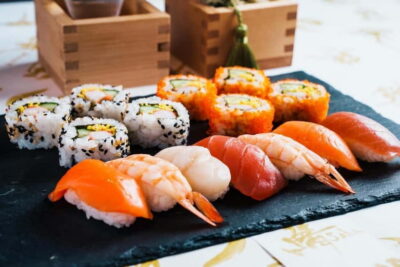
Roll and Authentic Sushi Making Class in Asakusa
Read our review →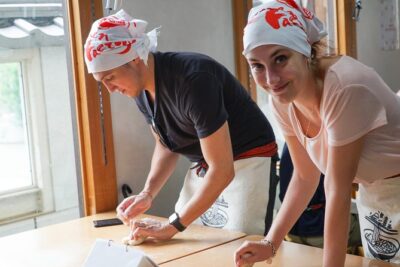
Ramen Cooking Class at Ramen Factory in Kyoto
Read our review →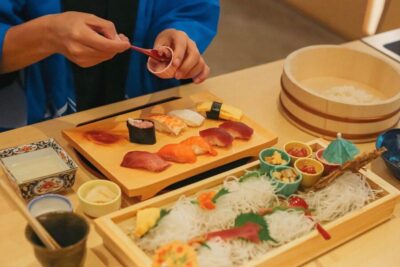
Sushi Making Class in a Happi Coat near a Famous Spot
Read our review →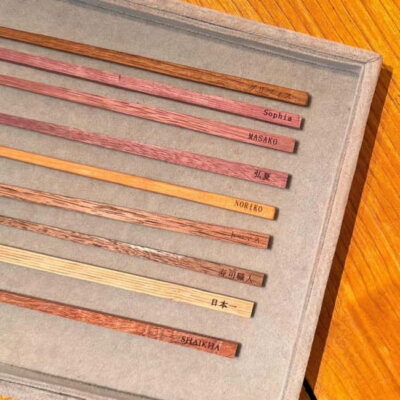

Sushi Making Osaka Roll and Authentic Japanese Sushi Class
Read our review →
Tokyo Sushi Making Class in Tsukiji with Professional Chef
Read our review →Browse the lists this tour appears in