
REVIEW · WORKSHOPS
Tokyo: Kintsugi Workshop to Learn the Art of Golden Joinery
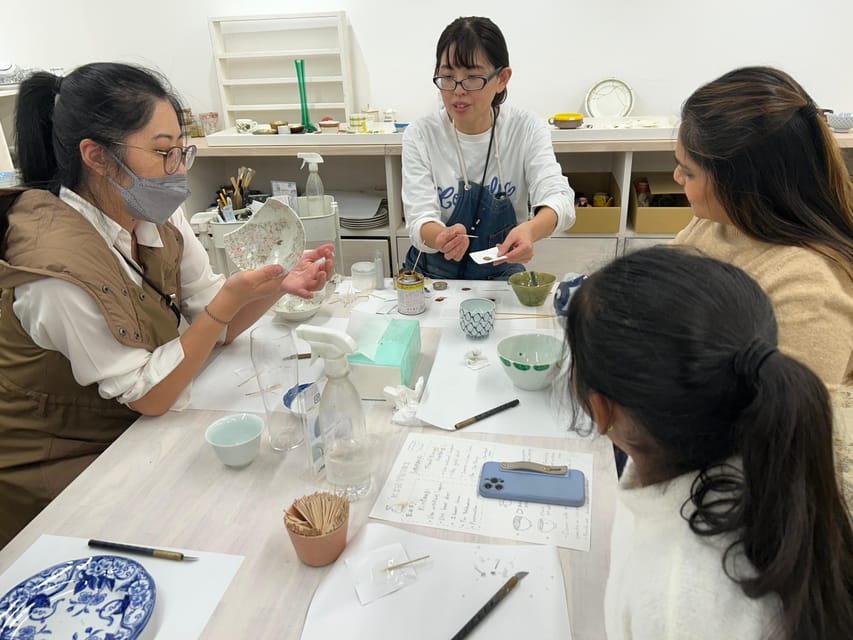
Broken pottery gets a second life here. In this two-hour kintsugi workshop, you learn to repair a ceramic piece with lacquer and gold powder, turning a crack into part of its story rather than something to hide. The lesson also introduces wabi-sabi, the Japanese appreciation of imperfection and change.
I like the small group of up to six, which gives the instructor room to steady your hand and explain each step. I also like the thoughtful pace. One participant found two hours long enough to work carefully, talk with the guide, and enjoy the process without rushing. The main catch is cost: at $63, you still pay an extra ¥1,000 to ¥2,000 for the plate, and the amount of pottery you repair may be smaller than expected.
In This Review
- Key points
- What kintsugi means beyond the gold lines
- Meeting the guide near Gakugei Daigaku Station
- The opening lesson: craft, philosophy, and old repair methods
- Choosing your pottery and understanding the extra cost
- Filing and preparing the damaged pottery
- Applying lacquer and gold powder
- Two hours that reward a slower pace
- What you take home at the end
- Is $63 good value in Tokyo?
- Who will enjoy this workshop most?
- Booking advice and final verdict
- FAQ
- Where does the kintsugi workshop meet?
- How long does the workshop last?
- What language is the workshop taught in?
- How many people can join the class?
- Are the pottery plate and materials included?
- What does kintsugi mean?
- Can I take my repaired pottery home?
- Is the activity suitable for children?
- Can I cancel the booking for a full refund?
Key points
- Hands-on golden joinery: Work with artificial lacquer and gold powder rather than simply watching a demonstration.
- A calm two-hour pace: You have time to file, repair, and finish your piece without a hurried class atmosphere.
- English instruction: Guides such as Anne and Chiara explain both the craft and the ideas behind it.
- Small group setting: The class is limited to six people, useful when you need help with delicate work.
- A personal souvenir: Your repaired pottery goes home with you as a handmade reminder of Tokyo.
- Check the project size: A plate costs an additional ¥1,000 to ¥2,000, and the work may involve only part of a piece.
What kintsugi means beyond the gold lines
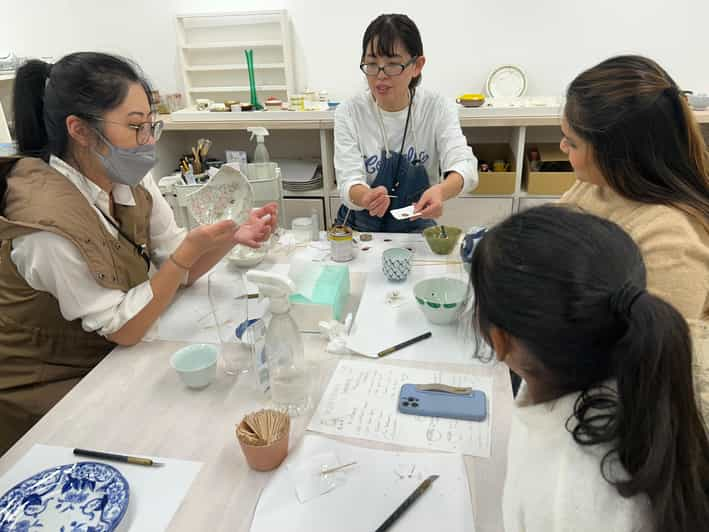
Kintsugi means golden joinery. The practice dates to the 15th century and grew from a Japanese habit of preserving valued pottery instead of throwing it away after damage.
That idea matters because the repair is not meant to disappear. Cracks become visible lines, picked out with gold, silver, or platinum. In this workshop, you use lacquer and gold powder, with artificial lacquer supplied for the activity.
I like that the class treats kintsugi as more than a decorative trick. The philosophy connects with wabi-sabi, an approach that values imperfection, age, and impermanence. You do not simply make a plate look new. You give it a new chapter.
That makes the workshop a good fit for anyone who enjoys crafts with a story behind them. It also suits you if you want a quieter Tokyo activity, one based on concentration rather than speed, crowds, or a long list of sights.
A few more Tokyo trips to weigh up
- Sushi Making Tokyo Roll and Authentic Japanese Sushi Class
★ 5.0 · 3,971 reviews - Tokyo: Roll and Authentic Sushi Making Class in Asakusa
★ 4.9 · 1,957 reviews - Tokyo Shinjuku Chopsticks Making Class
★ 5.0 · 1,763 reviews
Meeting the guide near Gakugei Daigaku Station
Your meeting point is Gakugei Daigaku Station on Tokyo’s Honshu island. The guide sends a photograph of themselves before the meeting time, a small but useful detail in a city where station exits and crowds can make a first meeting less obvious.
Plan to pay attention to the exact meeting instructions when you book. The supplied information names Gakugei Daigaku Station, but does not provide a more specific exit or studio address. The guide’s photo should help you identify the right person.
The class is taught in English. Anne received especially strong praise for her teaching, while Chiara was described as explaining every task clearly and offering a steady hand when needed. Another class used a translator who also understood the craft. That tells you the teaching style can include hands-on help as well as spoken explanation.
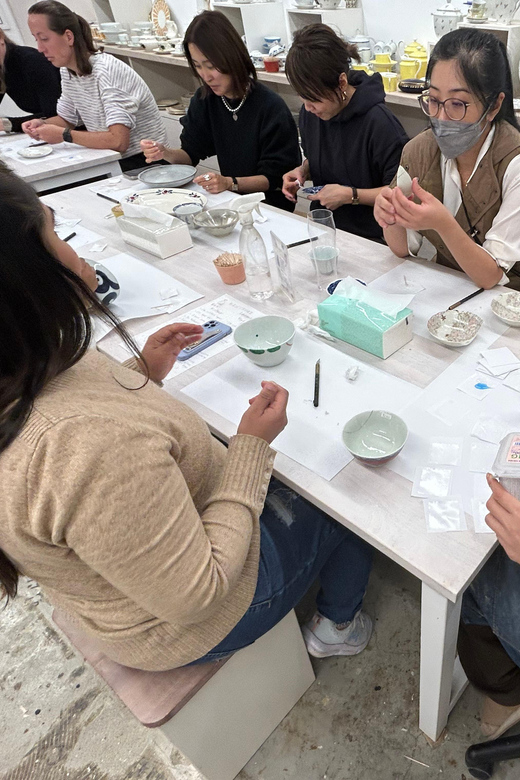
The group limit is six people. That number is important here. Kintsugi involves small, careful movements, and you may need someone to show you how to handle the pottery or apply the repair material. A large class would make this kind of help harder to provide.
The opening lesson: craft, philosophy, and old repair methods
The workshop begins with a short introduction to kintsugi and its philosophy. You learn why Japanese artisans repaired broken ceramics and why the finished damage was treated as part of an object’s identity.
One guide also explained how adhesive was made in earlier times. Details like this give the workshop more substance than a basic souvenir craft. You are not only placing gold on a crack. You are learning why the technique developed and how it fits Japanese ideas about beauty.
The opening talk should help you see the pottery differently. A flaw is not automatically a failure. A repair can record use, accident, and care. That message is simple, but it becomes more convincing once you are responsible for making a repair yourself.
Do not expect a long lecture. The introduction is brief, with most of the two hours reserved for making. That is the right balance for a hands-on class, especially if you prefer doing the work to sitting through a history lesson.
Choosing your pottery and understanding the extra cost
The plate you work on is not included in the $63 activity fee. You arrange it separately for about ¥1,000 to ¥2,000.
That extra charge changes the real price. The advertised rate gets you the class, instruction, lacquer, gold powder, and the use of the main tools. Once you add the plate, your total cost is higher, so budget for both parts before booking.
The available information does not specify the plate’s exact size, shape, design, or condition. It also does not promise that you will repair an entire bowl or plate. One participant expected to work on a larger section and found the repair area very small. That is the most important point to clarify before you commit.
Ask what portion of the pottery you will repair and what kind of piece you can choose. A small crack can produce a lovely result, but it may not feel like enough hands-on work for $63. If you want a substantial ceramic project, confirm the scope first, particularly if another class offers work on a whole bowl.
Same city, a completely different kind of day:
- Mt Fuji and Hakone 1-Day Bus Tour Return by Bullet Train
★ 5.0 · 26,383 reviews - 1-Day Tokyo Bus Tour
★ 5.0 · 14,250 reviews - Tokyo: TOKYO SKYTREE® Admission ticket
★ 4.5 · 11,192 reviews - Tokyo: teamLab Planets TOKYO Digital Art Museum Entry Ticket
★ 4.6 · 9,779 reviews
Filing and preparing the damaged pottery
The practical work includes filing the pottery, and one participant noted that this can take about half an hour. That is not glamorous work, but it is part of what makes the class hands-on.
You will need patience here. Filing is repetitive and can feel slow if you arrived expecting a quick gold-painting activity. On the other hand, the time gives you a chance to understand the shape of the break and prepare the surface properly.
This stage also explains why the workshop lasts two hours. The process is not simply a quick application of color. You handle the piece, work through each step, and wait for guidance when the material or pottery needs careful treatment.
For younger children, the filing may be difficult. One participant suggested the activity for children over 12, along with solo visitors, couples, friends, and families. That is sensible advice based on the fine manual work involved.
Applying lacquer and gold powder
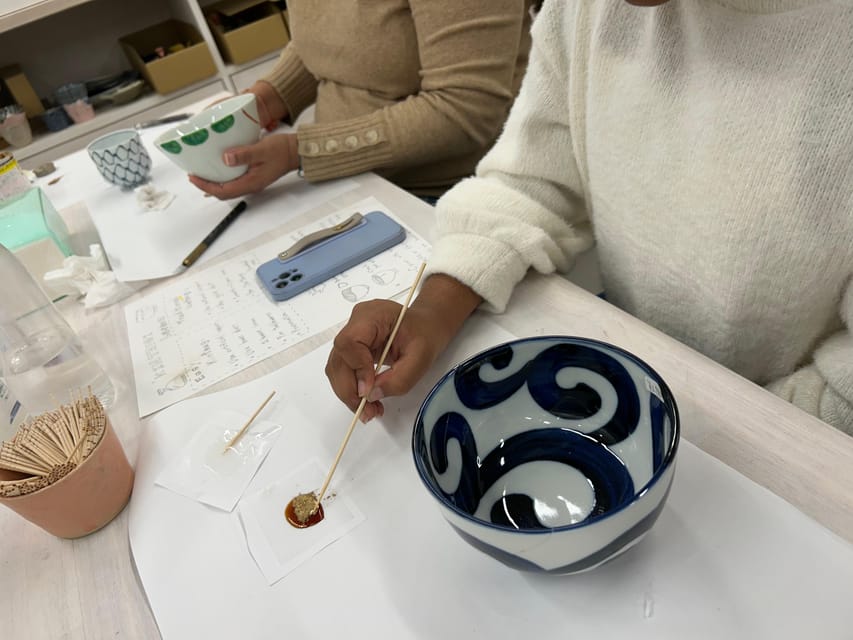
The main materials are lacquer and gold powder. The lacquer joins or covers the damaged area, while the powder creates the bright seam that gives kintsugi its name.
The class uses artificial lacquer, which makes this an approachable introduction rather than a professional restoration course. You should think of the finished plate as a personal art object, not as museum-grade conservation.
The gold line is the part most people picture, but it works best when you have taken care with the preparation. The class gives you time to work through the stages rather than rushing straight to the final shine.
Expect the instructor to explain and demonstrate the process, then let you do the task yourself. Chiara’s teaching style was described as giving clear instructions while allowing the participant to take control, with help offered when a steady hand was needed. That is exactly the right arrangement for a craft class. You learn more by making the decisions and movements yourself.
The final result may be modest. One person took home a bowl with a single gilded crack and considered it a special souvenir. Another person felt disappointed after repairing only a tiny area. Both reactions make sense. Your satisfaction will depend partly on how much pottery you expect to handle.
Two hours that reward a slower pace
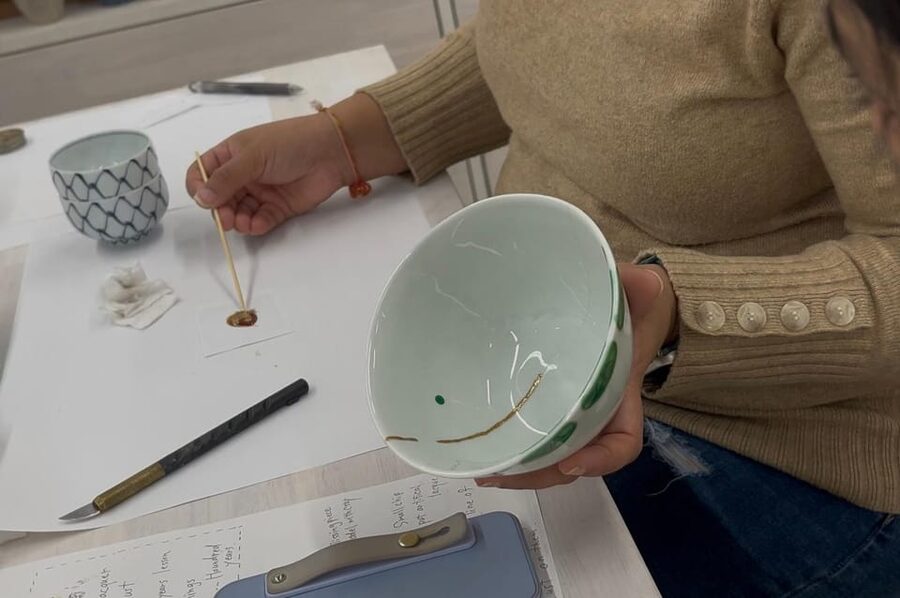
Two hours is a useful length for this activity. A shorter session could turn the process into a rushed demonstration, while a much longer one might test your patience if the repair area is small.
The class has enough time for the introduction, preparation, filing, repair, and conversation. One participant specifically liked having time to complete each step, relax, and interact with the guide and the other people in the group.
I would not schedule this between two attractions on opposite sides of Tokyo. The class asks for attention, and the work benefits from a calm mood. Place it in a lighter part of your day, when you can concentrate on the pottery instead of watching the clock.
The small group also supports conversation. You can compare how different cracks look and ask questions as you work. This makes the session social without turning it into a loud group performance.
What you take home at the end
Your repaired pottery becomes a keepsake. It carries the marks of your hands, including any small irregularities in the repair. That personal quality is one of the strongest reasons to choose the workshop.
A purchased souvenir can remind you of Tokyo, but a repaired object can remind you of a particular afternoon, a new technique, and the decision to preserve something damaged. The item does not need to be perfect to be meaningful. In fact, its uneven gold seam may be the part you value most.
The available information does not explain whether the piece can be used for food, washed in a dishwasher, or handled like ordinary tableware. Treat it as a decorative keepsake unless the guide gives you different care instructions. Ask about drying, washing, and safe use before leaving if those details matter to you.
Do not expect a flawless professional finish. The charm comes from the fact that you made the repair yourself. If you want a polished commercial product, buy a finished kintsugi-style object instead. If you want a souvenir with your own fingerprints in the story, this class makes more sense.
Is $63 good value in Tokyo?
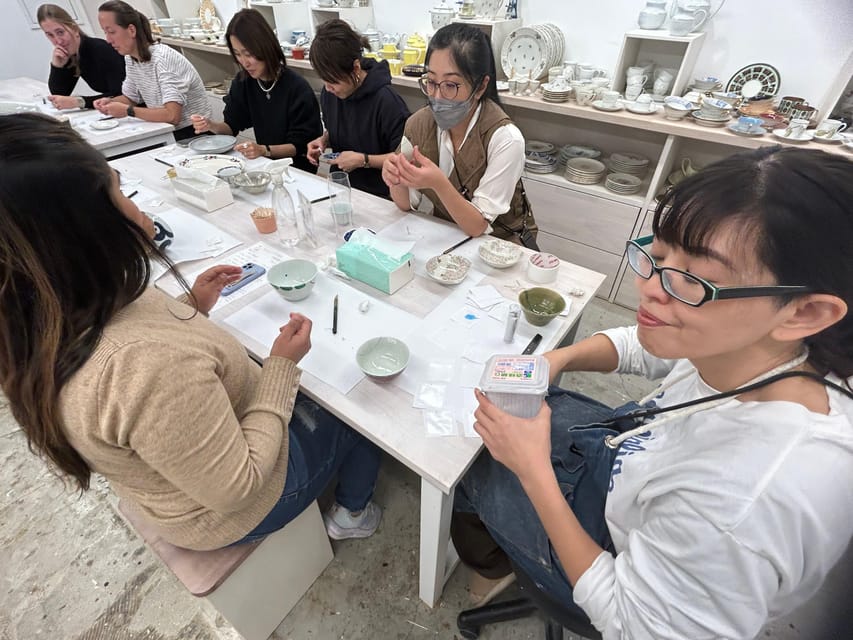
At $63 per person, the workshop is not a bargain craft lesson, especially once you add ¥1,000 to ¥2,000 for the plate. The price is easier to justify if you value English instruction, a very small group, supplied materials, and a keepsake you create yourself.
You are paying for guidance and time, not just gold powder. The instructor explains the cultural background, supports you during delicate work, and gives you access to the tools and materials needed for the project.
Still, value depends on the amount of pottery involved. If you work on only a tiny crack, the session may feel expensive. If you are hoping to repair a whole bowl, confirm that before booking. The class description promises a plate to work with, but it does not spell out how much of the piece each person repairs.
The 4.8 rating from 27 reviews reflects strong overall satisfaction, with repeated praise for the instructors, clear explanations, enjoyable pace, and finished artwork. The lower score focused on price and the small amount of repair work, not on poor teaching. That distinction is useful. The class appears well regarded as an experience, but it may not satisfy every expectation about the size of the project.
Who will enjoy this workshop most?
I would choose this for:
- Solo visitors who want a quiet activity with a small group and a clear creative purpose.
- Couples and friends looking for something more personal than another sightseeing stop.
- Families with older children, especially teenagers who can manage sustained filing and careful handwork.
- People interested in Japanese aesthetics, particularly the ideas of wabi-sabi, preservation, and imperfection.
- Craft lovers who want to take home something made during the trip.
I would hesitate if you have limited patience for repetitive work. Filing may take around 30 minutes, and the final repair could be smaller than you imagine.
I would also pause if accessibility is a major concern. The supplied information says the activity is wheelchair accessible, but another section says it is not suitable for wheelchair users. Because those statements conflict, contact the provider before booking and ask about the exact space, seating, surfaces, and access route.
Babies under one year are listed as unsuitable for the activity. Children over 12 may be a better fit because of the filing and delicate handwork.
Booking advice and final verdict
This workshop makes a good choice when you want a thoughtful Tokyo memory rather than a fast attraction. You learn a traditional craft, hear the ideas behind it, work at a measured pace, and leave with pottery marked by your own effort.
Book it if you are comfortable paying $63 plus the plate fee and if a small repair would still feel worthwhile. Before paying, ask how much of the pottery you will repair and confirm the accessibility details. Those two questions address the only real concerns raised by the experience.
The class is especially appealing with Anne or Chiara, whose teaching has been praised for clear explanations and patient hands-on help. It is also a practical option for English speakers, since the instruction is in English and the group is capped at six.
I would recommend it to anyone who sees beauty in repaired things and enjoys making a souvenir instead of simply buying one. I would skip it if your main goal is a large, fully restored bowl or if you want a low-cost activity. The best reason to book is not the gold itself. It is the chance to leave Tokyo with a small object that openly shows where it has been repaired.
FAQ
Where does the kintsugi workshop meet?
You meet the guide at Gakugei Daigaku Station. The guide sends a picture of themselves before the meeting time to help you identify them.
How long does the workshop last?
The activity lasts two hours.
What language is the workshop taught in?
The instructor teaches in English.
How many people can join the class?
The workshop is a small-group activity limited to six participants.
Are the pottery plate and materials included?
The main tools, artificial lacquer, and gold powder are provided. The plate is not included and costs about ¥1,000 to ¥2,000.
What does kintsugi mean?
Kintsugi means golden joinery. It is the Japanese art of repairing broken pottery with lacquer and powdered metal, such as gold.
Can I take my repaired pottery home?
Yes. You take home the piece you repair as a personal keepsake.
Is the activity suitable for children?
Babies under one year are not suitable for the activity. The hands-on filing work may be difficult for younger children, and one participant recommended it for children over 12.
Can I cancel the booking for a full refund?
Yes. You can cancel up to 24 hours in advance for a full refund. You can also reserve now and pay later.
Just added around Tokyo
- Private Memorable Tokyo Tour with English Speaking Driver★ 5.0 · 30 reviews
- Private Tokyo Custom Full-Day Tour by Chartered Vehicle★ 5.0 · 16 reviews
- Private Sightseeing to Mt Fuji and Hakone with English Driver★ 5.0 · 51 reviews
- Tokyo Photography Masterclass – Private Photography Lesson★ 5.0 · 25 reviews
- Private Mt. Fuji Day Trip from Tokyo with English-Speaking Driver★ 5.0 · 33 reviews
- 4 Day Tour – Mount. Fuji, Tokyo, Hakone, Kamakura and Yokohama★ 5.0 · 19 reviews
- Private Unforgettable Mt Fuji Tour with English Speaking Driver★ 5.0 · 142 reviews
- Private Tokyo Food Tour – A Journey Through Time Through Food★ 5.0 · 36 reviews
Workshops, compared.
Sushi Making Tokyo Roll and Authentic Japanese Sushi Class
Read our review →

Roll and Authentic Sushi Making Class in Asakusa
Read our review →
Ramen Cooking Class at Ramen Factory in Kyoto
Read our review →
Sushi Making Class in a Happi Coat near a Famous Spot
Read our review →

Sushi Making Osaka Roll and Authentic Japanese Sushi Class
Read our review →
Tokyo Sushi Making Class in Tsukiji with Professional Chef
Read our review →Browse the lists this tour appears in