
REVIEW · WORKSHOPS
Tokyo: Kintsugi Art Repair Workshop
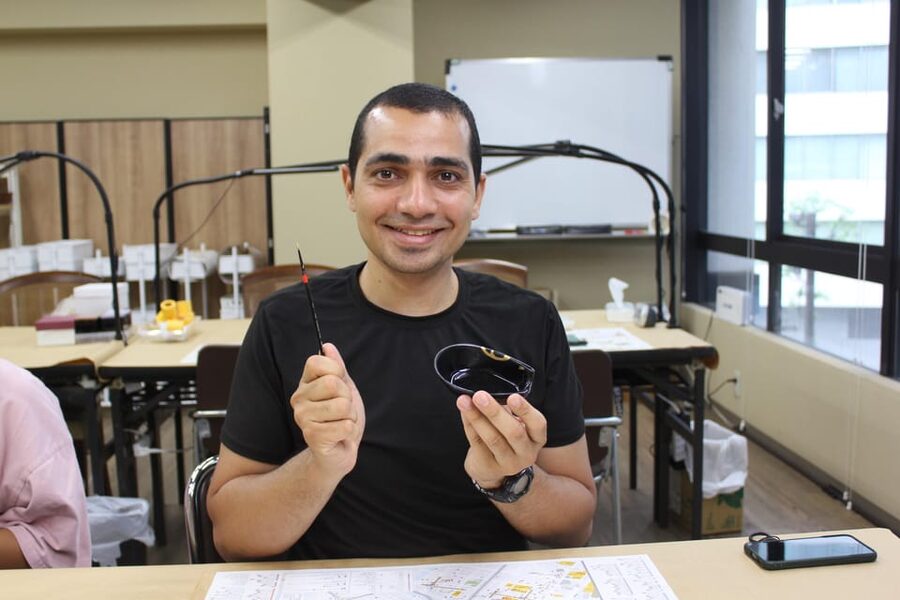
Broken pottery gets a second life here, with cracks turned into bright gold lines. The 90-minute class covers hands-on repair, not just a talk, so you leave with a small ceramic artwork and a better sense of why kintsugi has such a lasting appeal.
I like the small groups of up to five, which give instructors time to guide each step. I also like the calm shop setting and the chance to see professional work being done nearby. The main consideration is that this is a shortened workshop version, not the full traditional process, which can take a month.
In This Review
- Key points to know
- What kintsugi means in this Tokyo workshop
- Arriving at Nihonbashi Mutoh Main Store
- The first stage: choosing and preparing the pottery
- Fitting fragments, filling gaps, and sanding
- Painting the cracks gold
- The teaching style and English support
- Why the 90-minute schedule works
- Is the $125 price good value?
- Who should book this activity
- Practical booking advice
- Should you book the Tokyo kintsugi workshop?
- FAQ
- Where is the kintsugi workshop held?
- How long does the activity last?
- How far is the workshop from Asakusa?
- Is English instruction available?
- How many people can join the class?
- What age is the workshop suitable for?
- Do I need to bring materials?
- Can I bring my own broken pottery?
- Can I use the finished piece for food?
- What happens if my repair is not finished in 90 minutes?
Key points to know
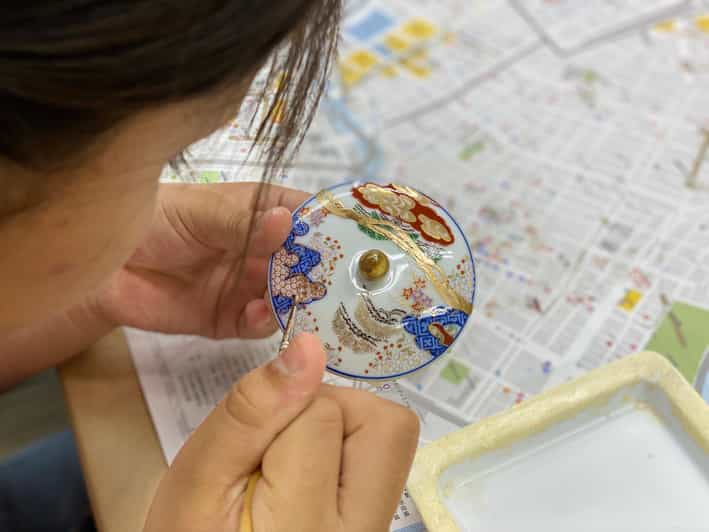
- You work through real repair steps: fitting pieces, using adhesive, filling gaps, sanding, and adding metallic paint.
- The class is capped at five people: some sessions may feel almost private, especially if few people book.
- English help is available: instruction may come through an English-speaking host and an interpreter.
- You take home your own piece: the finished pottery is mainly decorative and suitable for dry food only.
- You can bring a vessel, within limits: ceramic items up to 15 centimeters wide and 15 centimeters high, with one or two cracks, are accepted.
- The timing suits a busy Tokyo day: the session lasts 90 minutes and is about 15 minutes by subway from Asakusa.
What kintsugi means in this Tokyo workshop
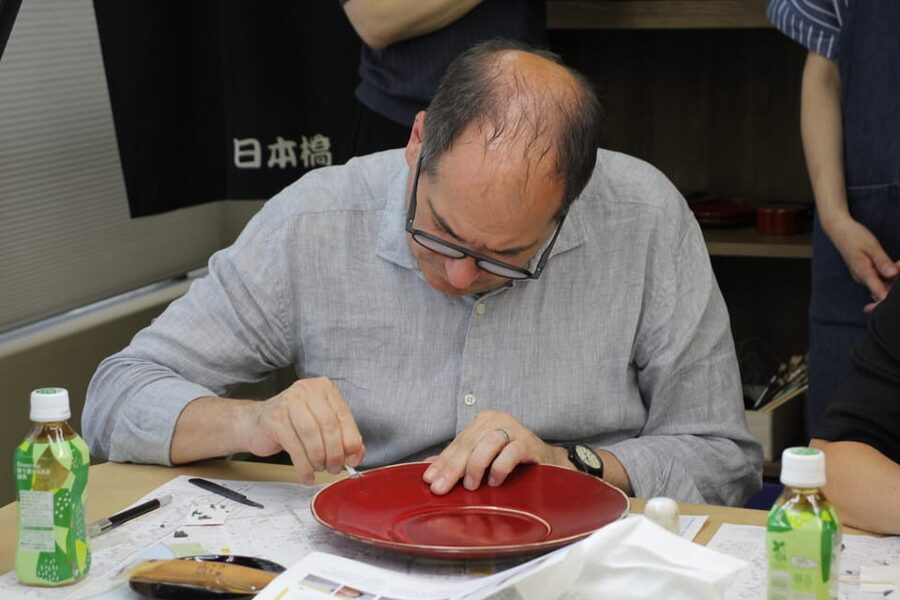
Kintsugi is the Japanese practice of repairing broken pottery so the damage becomes part of the design. Instead of hiding a crack, you trace it with gold or gold-colored material. The result is not a perfect restoration. It is a visible record of repair.
That idea gives this class more weight than a standard craft activity. You are not simply decorating a bowl. You are handling an object that has been damaged, working carefully to make it useful or beautiful again. The message is easy to grasp, even if your finished line is not perfectly straight.
The workshop uses a practical, shortened form of kintsugi. Traditional lacquer work requires long curing periods and several stages spread over weeks. Here, the process is adapted so you can complete a small project during a 90-minute visit. That makes it realistic for a holiday schedule, but it also means you should not expect to master every traditional material or method in one sitting.
A few more Tokyo trips to weigh up
- Sushi Making Tokyo Roll and Authentic Japanese Sushi Class
★ 5.0 · 3,971 reviews - Tokyo: Roll and Authentic Sushi Making Class in Asakusa
★ 4.9 · 1,957 reviews - Tokyo Shinjuku Chopsticks Making Class
★ 5.0 · 1,763 reviews
Arriving at Nihonbashi Mutoh Main Store
Your meeting point is Nihonbashi Mutoh Main Store, in the Nihonbashi Mutoh building at 1-8-13 Nihonbashihoncho, Chuo City, Tokyo. The shop is in central Tokyo and is roughly 15 minutes by subway from Asakusa, making it a practical add-on after visiting Senso-ji or exploring the older parts of the city.
Give yourself enough time to find the building. You are asked to arrive at least five minutes early, and the workshop begins on schedule. That matters here because the activity moves through several small steps, and the end time cannot be extended if you arrive late or work slowly.
The shop itself adds something to the visit. It carries kintsugi pieces, ceramics, lacquerware, tenugui, bento boxes, chopstick sets, and chopstick rests. You can browse before or after class, though the workshop is the main reason to come. The store gives you a useful look at Japanese tableware and repair work beyond the small object you make.
The first stage: choosing and preparing the pottery
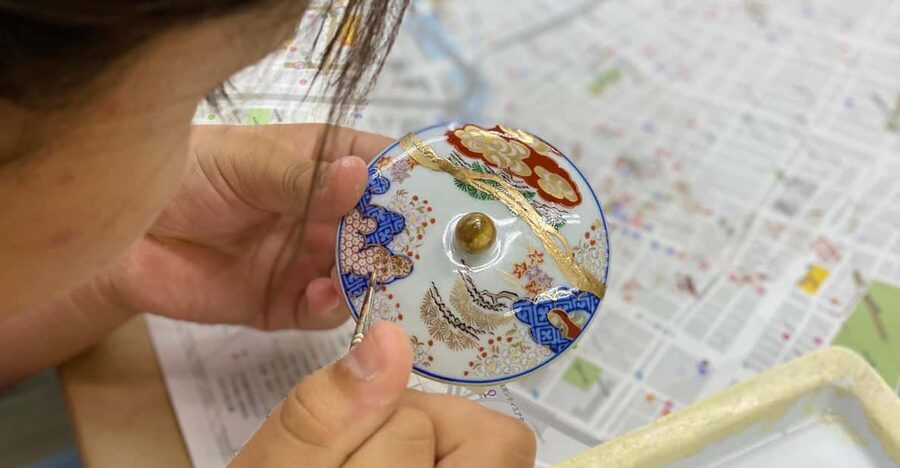
The exact object can vary, but the class gives you pottery to work on and provides the needed materials. Some sessions offer several pieces or designs to choose from. If you want to repair something from home, you may be able to do so, but you need to follow the size and condition rules.
Bring ceramic vessels only. The item can be no larger than 15 centimeters in diameter and 15 centimeters high, with one or two cracks. A chipped or cracked mug handle cannot be repaired in this session, so a sentimental cup with a damaged handle is not a good candidate.
The class is best suited to a small bowl or similar ceramic vessel. If your item has a large break, many fragments, or a substantial chip, the repair may not be finished in 90 minutes. The staff can explain what is possible, but you should not assume every broken object can be restored during the appointment.
For a simple class project, the instructor sets up the materials and guides you through the work in stages. Materials are provided, so you do not need to pack tools or craft supplies. Wear comfortable clothes, since you will be working at a table and handling repair materials.
Fitting fragments, filling gaps, and sanding
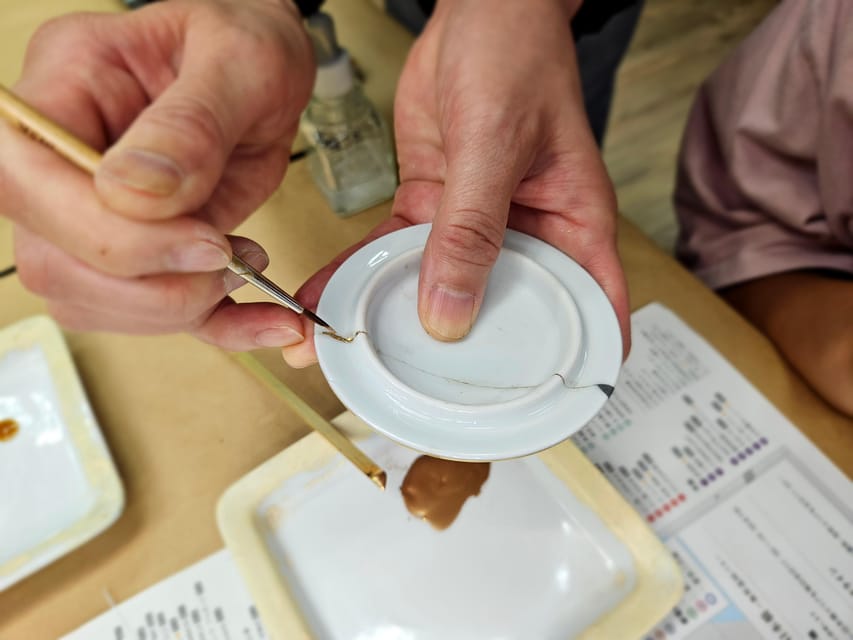
The most useful part of the class is that you do not jump straight to painting gold. You get to see the repair process that comes first.
If you bring a broken object, the early stage may involve taping the pieces together like a puzzle. The goal is to make sure the fragments sit in the correct position before they are fixed. This requires patience and a light touch. It is also where the instructor’s help matters most, since a small misalignment can affect the final appearance.
After the pieces are secured, the repair is adhered with an appropriate glue or bonding material. Larger chips can be filled with putty or clay. Once the filler is in place, you may sand it to create a smoother surface before the visible seam is finished.
This is a hands-on class, but it is not a free-for-all. Materials are handed out in small amounts and refilled as needed, which keeps the table tidy and avoids waste. The instructor leads you step by step, so you are not expected to know how much material to use or where to begin.
The pace can feel quick for anyone who wants a long lesson in traditional craft. One person finished in about 35 minutes and felt the experience focused more on making a simple piece than on learning the full theory. That is a fair warning: book this for a guided introduction and a keepsake, not for professional training.
Same city, a completely different kind of day:
- Mt Fuji and Hakone 1-Day Bus Tour Return by Bullet Train
★ 5.0 · 26,383 reviews - 1-Day Tokyo Bus Tour
★ 5.0 · 14,250 reviews - Tokyo: TOKYO SKYTREE® Admission ticket
★ 4.5 · 11,192 reviews - Tokyo: teamLab Planets TOKYO Digital Art Museum Entry Ticket
★ 4.6 · 9,779 reviews
Painting the cracks gold
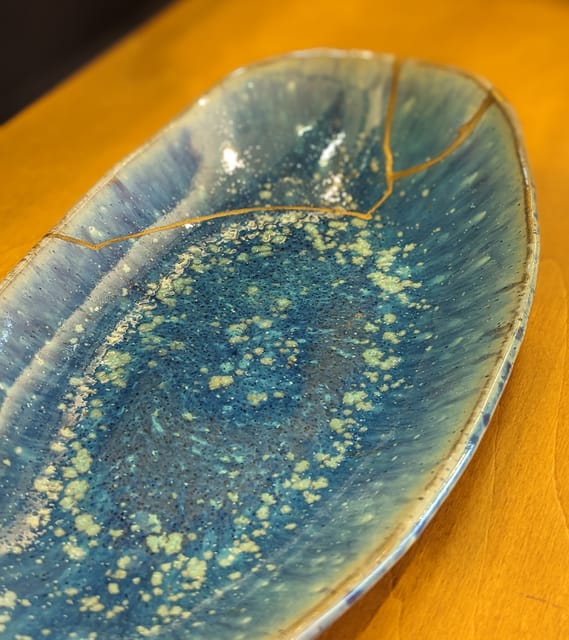
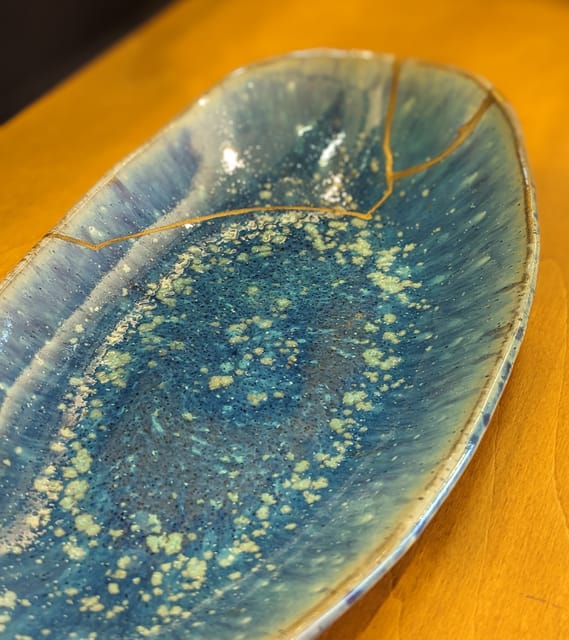
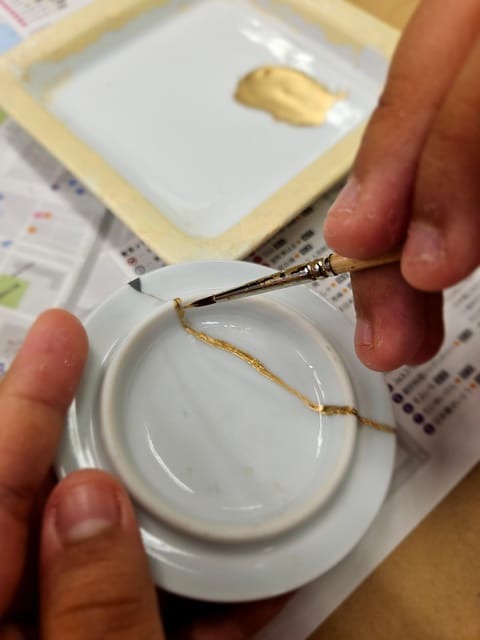
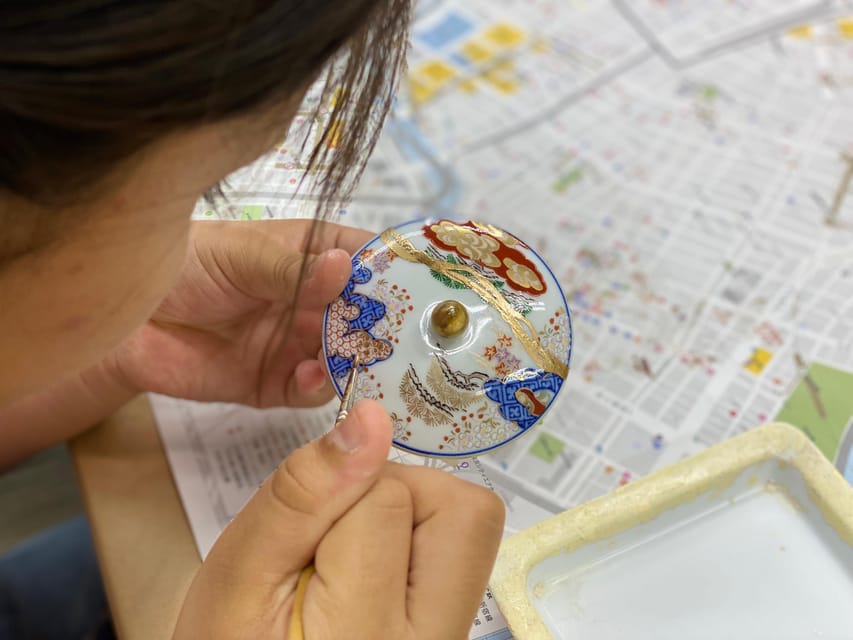
The final visible stage is the most satisfying. You apply metallic color along the repaired seams, turning the damage into the main decorative feature. This is the point when the object begins to look like kintsugi rather than ordinary glued pottery.
In the supplied description, the technique is described as lacquer and gold. In practice, the shortened class uses an adapted method, including metallic paint, so the finished piece can be completed during the visit. This distinction is worth understanding before you book. The workshop gives you a taste of the craft and its look, while the full traditional process involves more time and curing.
Your result will be handmade, which means it may have uneven lines or small variations. That is part of the appeal. You are creating a personal souvenir, not buying a factory-finished bowl. The instructor can help you control the paint, but the final marks remain your own.
The completed piece is mainly decorative. It can hold dry food items, but it should not be treated as a fully restored everyday vessel for wet foods or heavy use. If you are repairing a treasured object, ask yourself whether you want it as a display piece rather than returning it to regular kitchen duty.
The teaching style and English support
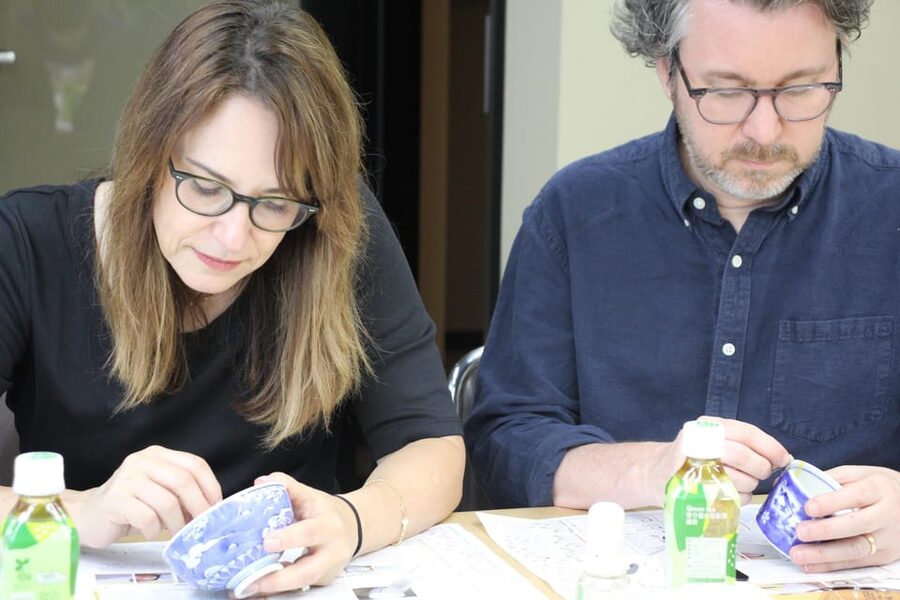
English guidance is provided, and the class may use both an English-speaking instructor or host and a Japanese craft instructor with interpretation. Hijiri received especially warm praise for being patient, kind, and clear, and other sessions were led by two friendly instructors who explained each stage carefully.
The teaching style is practical. You learn by doing, with explanations delivered as you work. Instructors help with the fragile parts, refill materials, and correct your technique when needed. This is useful for first-time participants who may worry about damaging the pottery further.
The small capacity of five is a real advantage. A full group still feels manageable, while a session with only two people can become highly personal. In one such class, the participants had several options and received close attention throughout. If you are lucky enough to book a quiet time, you may get nearly individual instruction.
You may also sit near professional craftspeople working in the shop. That does not turn the class into an advanced apprenticeship, but it gives you a better sense of the care involved in Japanese repair work. You can watch how experienced hands approach the materials, then try the basic version yourself.
Why the 90-minute schedule works
Tokyo can make even a simple outing feel like a major project. This class keeps its footprint small. You can reach the Nihonbashi area from Asakusa in about 15 minutes by subway, take the 90-minute session, browse the shop, and continue with your day.
I would plan it between larger sightseeing blocks rather than treating it as a full-day activity. It fits well on a rainy afternoon, during a shopping day, or when you need a quieter break from temples, department stores, and train platforms.
The short duration is also the main limitation. You will not get a long history lecture or a detailed study of every form of kintsugi. One participant specifically wished there had been more explanation of the traditional theory. If the philosophy interests you, read a little about kintsugi before arriving so the practical lesson has more context.
The class begins promptly and cannot run over. A complicated personal repair may need more time than the session allows, and traditional pieces may need a longer curing period. Some completed works have been boxed carefully so they could cure for about a week, so ask about handling and drying if your piece is not fully set when you leave.
Is the $125 price good value?
At $125 per person, this is not a cheap souvenir-making class. You are paying for a small group, professional instruction, materials, an English-supported experience, and a finished piece to take home.
The value depends on what you want. If you want a low-cost craft project, the price may feel high for 90 minutes. If you want an organized cultural activity in central Tokyo, with no need to bring supplies and with a handmade result, the cost is easier to justify.
The small group improves the value. You get more personal help than in a large tourist class, and the instructors guide delicate work rather than leaving you to copy a demonstration. The included piece also saves you from shopping for suitable pottery before the class.
You should not pay this price expecting a professional qualification or a full traditional restoration. You are buying a carefully supervised introduction and a personal object. For many people, the memory of making the piece is as important as the piece itself.
Who should book this activity
I recommend the workshop for adults, couples, friends, and families with teenagers aged 13 or older. Minors must be accompanied by a guardian. It is a good choice if you want a quieter cultural activity that gives you something physical to remember Tokyo by.
It suits you especially well if you enjoy careful handwork, Japanese design, ceramics, or meaningful souvenirs. The work can feel almost meditative because you spend much of the session concentrating on small movements rather than rushing from one sight to the next.
It is less suitable for children under 13, anyone who wants a fast and casual painting activity, or anyone hoping to complete a large family heirloom. People with a complex vessel should confirm that it fits the size and crack limits before booking.
If you bring your own pottery, wrap it safely for transport. A broken object may have emotional value, but the class cannot promise to finish every repair within the fixed time. A simple ceramic item supplied at the shop is the safer choice if you mainly want a smooth experience.
Practical booking advice
Free cancellation is available up to three days before the scheduled time for a full refund. Check the available start times, then allow extra time for the subway ride and finding the Nihonbashi building.
Wear clothes you can work comfortably in. All materials are supplied, and you do not need to bring equipment. If you are bringing a vessel, check these limits first:
- Ceramic only
- Up to 15 centimeters in diameter
- Up to 15 centimeters high
- One or two cracks
- No damaged mug handles
- Large chips or complicated breaks may not be completed
Plan to carry the finished piece carefully. It is a small piece of art, not just another item to toss into a suitcase. If it needs additional curing, the staff may pack it for protection, but you should still give it space among your belongings.
Should you book the Tokyo kintsugi workshop?
Book it if you want a calm, hands-on activity with strong personal attention and a souvenir you helped make. The English support, five-person limit, central location, and 90-minute schedule make it easy to fit into a Tokyo itinerary.
Skip it if your main goal is a long lesson on traditional lacquer chemistry or a complete restoration of a badly damaged heirloom. This is a shortened, accessible introduction rather than a full craft course.
For most visitors, the best reason to book is the combination of action and meaning. You repair a ceramic object, mark its cracks in gold, and carry home something that could not be duplicated. That is a more personal souvenir than another shop-bought trinket, and the compact schedule leaves plenty of time for the rest of Tokyo.
FAQ
Where is the kintsugi workshop held?
The meeting point is Nihonbashi Mutoh Main Store in the Nihonbashi Mutoh building, at 1-8-13 Nihonbashihoncho, Chuo City, Tokyo, Japan.
How long does the activity last?
The workshop lasts 90 minutes. Starting times depend on availability, and the session begins promptly.
How far is the workshop from Asakusa?
The meeting point is about 15 minutes by subway from Asakusa.
Is English instruction available?
Yes. English instruction and interpretation are provided.
How many people can join the class?
The activity is limited to five participants, making it a small-group workshop.
What age is the workshop suitable for?
The experience is recommended for people aged 13 and older. Minors must be accompanied by a guardian, and children under 13 cannot join.
Do I need to bring materials?
No. The experience fees and materials are included, and the completed piece is included as a souvenir.
Can I bring my own broken pottery?
Yes, but it must be a ceramic vessel no larger than 15 centimeters in diameter and 15 centimeters high, with one or two cracks. Chipped or cracked mug handles cannot be repaired.
Can I use the finished piece for food?
The finished piece can hold dry food items, but it is mainly intended for decoration.
What happens if my repair is not finished in 90 minutes?
The workshop cannot extend its end time. Complicated or larger cracks may not be completed during the session, especially on personal vessels.
Just added around Tokyo
- Private Memorable Tokyo Tour with English Speaking Driver★ 5.0 · 30 reviews
- Private Tokyo Custom Full-Day Tour by Chartered Vehicle★ 5.0 · 16 reviews
- Private Sightseeing to Mt Fuji and Hakone with English Driver★ 5.0 · 51 reviews
- Tokyo Photography Masterclass – Private Photography Lesson★ 5.0 · 25 reviews
- Private Mt. Fuji Day Trip from Tokyo with English-Speaking Driver★ 5.0 · 33 reviews
- 4 Day Tour – Mount. Fuji, Tokyo, Hakone, Kamakura and Yokohama★ 5.0 · 19 reviews
- Private Unforgettable Mt Fuji Tour with English Speaking Driver★ 5.0 · 142 reviews
- Private Tokyo Food Tour – A Journey Through Time Through Food★ 5.0 · 36 reviews
Workshops, compared.
Sushi Making Tokyo Roll and Authentic Japanese Sushi Class
Read our review →

Roll and Authentic Sushi Making Class in Asakusa
Read our review →
Ramen Cooking Class at Ramen Factory in Kyoto
Read our review →
Sushi Making Class in a Happi Coat near a Famous Spot
Read our review →

Sushi Making Osaka Roll and Authentic Japanese Sushi Class
Read our review →
Tokyo Sushi Making Class in Tsukiji with Professional Chef
Read our review →Browse the lists this tour appears in