
REVIEW · WORKSHOPS
Tokyo/Ikebukuro Manga drawing workshop by pro-Manga artists
Tokyo/Ikebukuro Manga drawing workshop by pro-Manga artists gives you something most sightseeing stops cannot: a chance to make a piece of Japanese pop culture with your own hands. In two hours, a professional manga artist guides you through character creation and drawing techniques, with course levels for beginners, practiced artists, and aspiring pros.
I like the small class size, capped at eight people, because you can ask questions instead of simply watching a demonstration. I also like that all drawing equipment is provided, from pens and comic paper to screen tones and ink, so you can arrive with nothing but an interest in manga.
The main consideration is the price, $114 per person. That is a fair amount for a two-hour creative class, professional instruction, materials, and souvenirs, but it will feel high if you are looking only for a quick sketch lesson or a casual family activity.
In This Review
- Key points to know before booking
- What the two-hour manga class is really about
- Learning character design, panels, and story structure
- Creating a chibi-style original character
- Why the supplied materials improve the value
- A good fit for mixed skill levels and families
- Manga Dojo Tokyo in Ikebukuro
- Timing, group size, and booking details
- Is $114 a fair price for two hours?
- My practical advice for getting the most from class
- Should you book this manga workshop?
- FAQ
- How long does the manga workshop last?
- Where does the activity begin and end?
- How many people can join the class?
- Are different skill levels available?
- What drawing materials are included?
- What souvenirs do I receive?
- Can I cancel for a full refund?
Key points to know before booking
- Three ability levels: Choose beginner, intermediate, or advanced instruction so the class fits your drawing background.
- A real manga-making process: Learn story structure, panel layout, character design, and practical drawing methods.
- Your own original character: Use reference examples to build a unique chibi-style character from different design elements.
- A small group of up to eight: The format leaves room for questions and individual help.
- Materials and keepsakes included: Pens, ink, comic paper, screen tones, a clear file, and three original postcards are supplied.
- Central Ikebukuro location: The class starts and ends at Manga Dojo Tokyo, making it easy to plan around other Tokyo activities.
What the two-hour manga class is really about
This is not just a lesson in copying a cartoon face. The aim is to show you how manga is built, from the first idea to the finished page. That makes the class useful even if your drawing skills are modest.
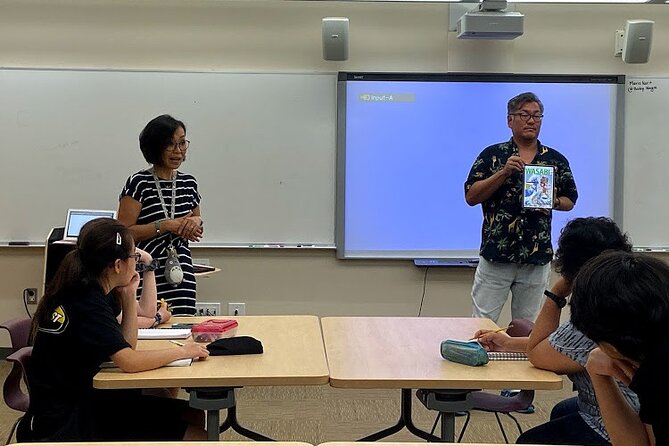
You can choose among three levels. Beginners can focus on basic forms, simple character creation, and learning how manga artists turn an idea into an image. Intermediate participants can work with more confidence on structure and style. Advanced students and aspiring professional artists can select a more demanding course suited to their experience.
That choice matters. A complete beginner may feel discouraged in a class aimed at experienced artists, while a practiced illustrator may find a basic lesson too slow. If you are booking for a mixed group, think about the person with the least drawing experience, especially if children are joining you.
The class is taught by a professional Japanese manga artist. The supplied information does not identify the instructor by name, so you should not book this expecting a particular celebrity artist. What you can expect is guidance from someone who works within the manga tradition and can explain the process directly.
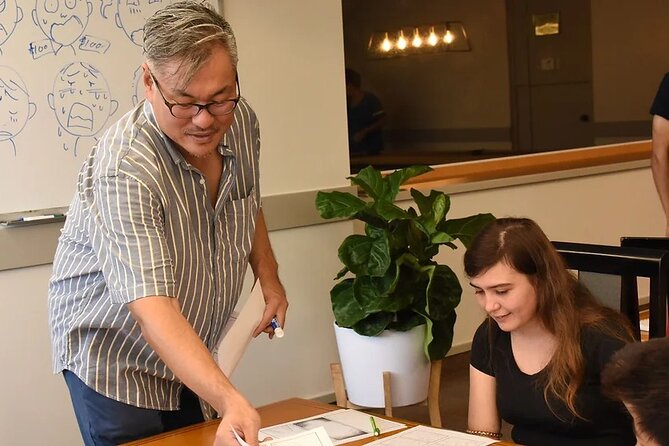
The small-group format is one of the strongest parts of the setup. With a maximum of eight people, you have a reasonable chance to ask how to improve a line, shape a face, or arrange a page. One class participant specifically found the format worked well for a couple with different skill levels, allowing an experienced drawer and a first-time artist to take part together.
A few more Tokyo trips to weigh up
- Sushi Making Tokyo Roll and Authentic Japanese Sushi Class
★ 5.0 · 3,971 reviews - Tokyo: Roll and Authentic Sushi Making Class in Asakusa
★ 4.9 · 1,957 reviews - Tokyo Shinjuku Chopsticks Making Class
★ 5.0 · 1,763 reviews
Learning character design, panels, and story structure
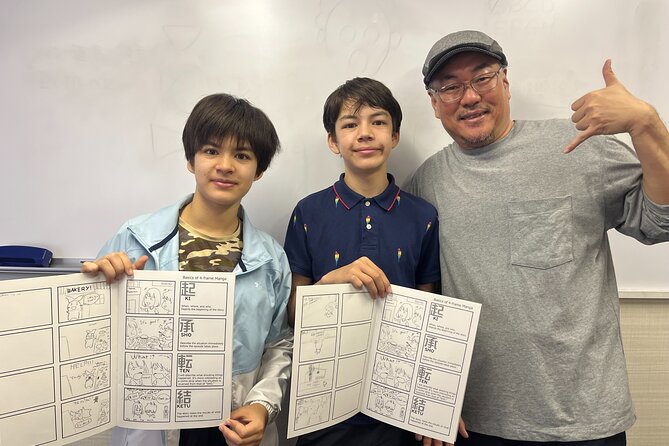
A key part of the workshop is learning the full manga process. That includes story structure, panel layout, and character design. You may not produce a long comic in two hours, but you should come away understanding how separate drawings fit into a readable page.
Story structure gives your drawing a purpose. Even a short travel memory can have a beginning, a small problem or surprise, and an ending. The class encourages you to think about that sequence rather than treating manga as a collection of attractive faces.
Panel layout is just as important. The order, size, and shape of panels help control how a reader moves through a page. A large panel can give weight to a moment, while several smaller panels can show quick action or a change in expression.
For a visitor to Japan, the travel-memory option adds a personal angle. You can turn an episode from your trip into manga instead of buying another generic souvenir. The information does not promise a finished multi-page comic, so keep your expectations sensible. The value is in learning the steps and producing an original piece during the session.
Character design is likely to be the most approachable part for many people. The class uses reference samples and lets you combine different features to create your own character. This gives you a starting point without forcing you to invent everything from a blank page.
Creating a chibi-style original character
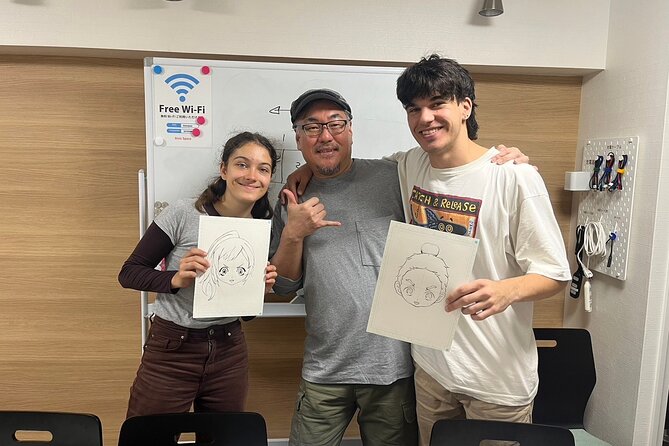
The workshop includes instruction in drawing chibi-style characters. Chibi designs use simplified, expressive forms, making them a good fit for a short lesson and for people who worry that they cannot draw realistic figures.
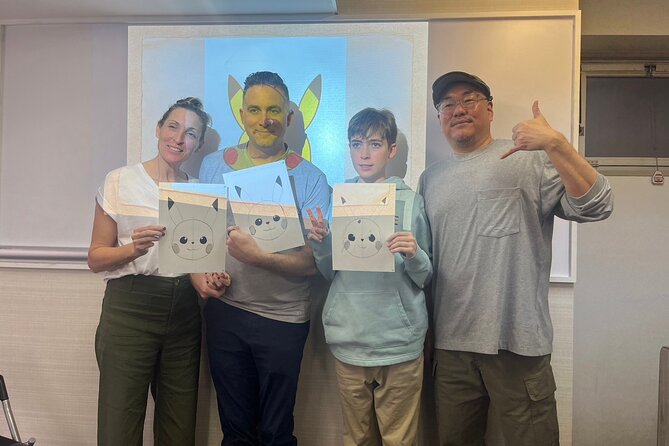
You will work from examples, then combine elements into an original design. That might mean choosing features, clothing details, expressions, or other visual traits from the available references, then arranging them into a character that is yours.
This is a clever format for a souvenir. A purchased postcard shows a character created by someone else. Your drawing may be imperfect, but it records your own visit and gives you a story to tell when you show it at home.
The class also seems designed to reduce the fear of making a bad drawing. One German-speaking participant described the exercises as funny and useful, saying they learned a great deal and lost some hesitation about drawing. That is an important benefit for adults who have not picked up a pencil since school.
You do not need to approach the class as an aspiring comic artist. You can treat the chibi exercise as a guided creative activity. At the same time, the range of course levels means the class is not limited to children or total beginners.
Why the supplied materials improve the value
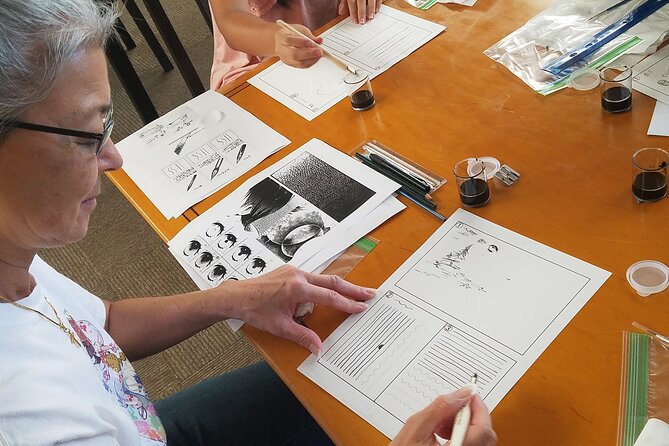
The $114 price includes all the equipment used for manga drawing. That includes screen tones, ink, pens, and comic paper. You do not need to buy a special kit in advance or guess which tools a manga artist uses.
Screen tones are particularly useful because they show you a traditional manga technique that is easy to miss in a standard drawing class. They help add shading, texture, and visual depth to comic artwork. The inclusion of these materials gives the workshop a more specific Japanese manga focus than a general cartoon lesson.
The materials also keep the class practical. You are not simply listening to an explanation of manga history or watching an artist work. You are using the same broad categories of tools as the instructor while building your own page or character.
You receive a MANGA DOJO TOKYO original clear file and three postcards after the class. These are modest souvenirs, but they add value and are easy to pack. The postcards also give you a finished sample from the workshop to keep, share, or use as a reminder of the techniques you practiced.
There are no drinks or snacks included. That is not a major issue for a two-hour class, but plan accordingly if you are coming straight from sightseeing with children. Bottled water and food are your responsibility.
Same city, a completely different kind of day:
- Mt Fuji and Hakone 1-Day Bus Tour Return by Bullet Train
★ 5.0 · 26,383 reviews - 1-Day Tokyo Bus Tour
★ 5.0 · 14,250 reviews - Tokyo: TOKYO SKYTREE® Admission ticket
★ 4.5 · 11,192 reviews - Tokyo: teamLab Planets TOKYO Digital Art Museum Entry Ticket
★ 4.6 · 9,779 reviews
A good fit for mixed skill levels and families
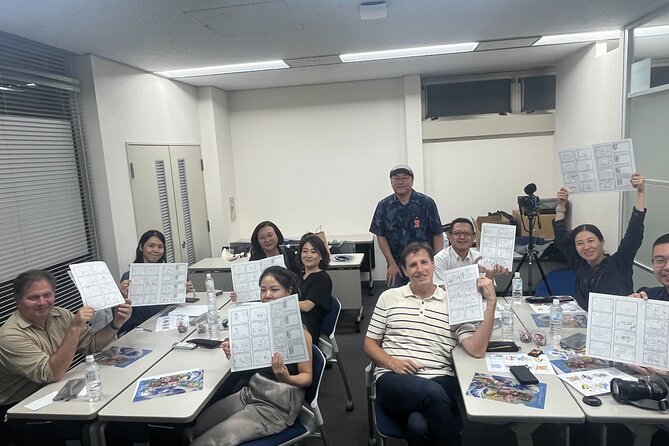
The three-course system makes this activity more flexible than a one-size-fits-all art lesson. You can choose beginner, intermediate, or advanced instruction based on your own ability. Younger children should be placed in the course that suits their level rather than automatically joining the adults’ selection.
I would especially consider this class for two people who enjoy manga at different levels. A couple, parent and child, or small group of friends can attend together while choosing an appropriate challenge for each person. The class is still shared, but nobody has to pretend to be more advanced than they are.
The experience also suits fans of Japanese pop culture who want more than a shopping stop in Ikebukuro. Manga is treated here as a creative form, not just a product. You get a short look at how stories and characters are constructed, then put that lesson into practice.
It may be less suitable for someone who wants a polished professional illustration to take home. The class is instructional and participatory. Your finished piece will reflect your own time, skill, and choices, which is part of the point.
The class is also not a full manga production course. Two hours is enough for a focused introduction and a personal creation, not enough for mastery. If you are an advanced artist, choose the advanced option and ask questions, but do not expect a full portfolio review or professional career coaching based on the information provided.
Manga Dojo Tokyo in Ikebukuro
The meeting point is Manga Dojo Tokyo, at 1-chome 31-6 Higashiikebukuro, Toshima City, Tokyo 170-0013, in Sanchou Building 602. The activity returns to this same meeting point when the two hours are over.
The location is near public transportation and in central Ikebukuro. That makes it easy to combine with other plans before or after class. You can schedule the workshop as a mid-day creative break, then continue exploring the area without losing time on a long transfer across Tokyo.
The location is part of the value. A class in a distant suburb would take more effort to fit into a short Tokyo visit. Here, you can build your day around Ikebukuro and use the drawing session as one stop in a larger neighborhood plan.
The provided details do not name the nearest station exit, give step-by-step directions, or describe the building entrance. I would allow extra time to find Sanchou Building 602, especially if you are not familiar with Japanese addresses. Bring your mobile ticket and confirm the booking details before you set out.
Timing, group size, and booking details
The workshop lasts about two hours. That is long enough to feel like a proper activity, but short enough to fit between sightseeing plans. I would avoid scheduling a tight appointment immediately afterward, since the stated duration is approximate and Tokyo transit can add delays.
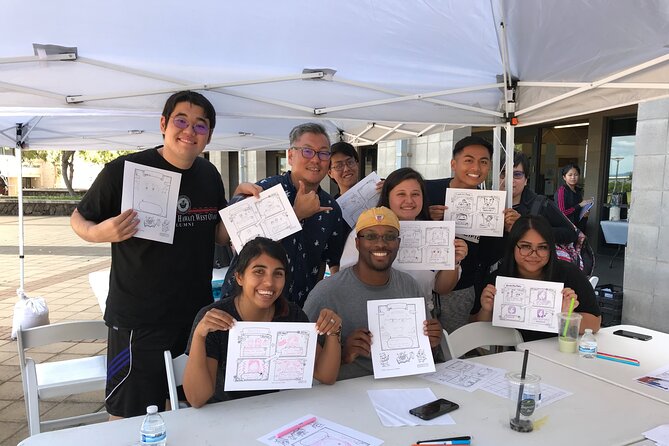
The maximum group size is eight people. That is small enough for personal questions, while still giving the class a social feel. If you prefer complete privacy or one-on-one teaching, this is not the right format, since it is explicitly a small-group class.
The activity is booked, on average, 31 days ahead. That does not guarantee that every date sells out, but it is a useful reason to reserve early if your Tokyo schedule is fixed. Confirmation arrives within 48 hours, subject to availability, so check that your booking is confirmed before relying on the session.
Mobile tickets are accepted, which saves you from printing paperwork. The class is near public transportation, and most people can participate. Specific accessibility details are not provided, so contact the operator if you have mobility or other access needs.
Free cancellation is available up to 24 hours before the start time for a full refund. Cancellations or changes made inside that 24-hour window are not accepted for a refund, and the cut-off uses local Tokyo time.
Is $114 a fair price for two hours?
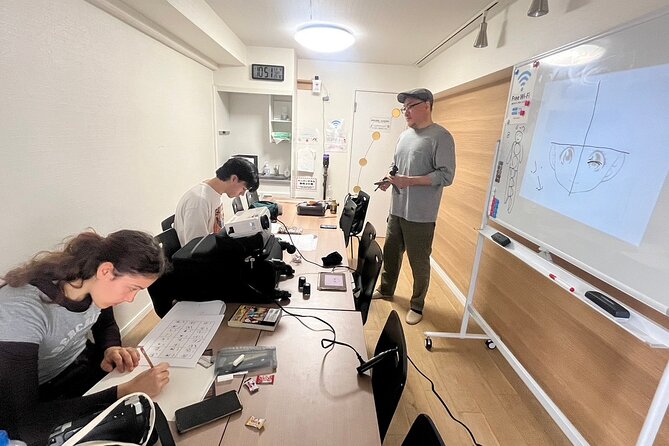
At $114 per person, this is not a bargain activity in the way a free neighborhood walk or museum visit can be. The price makes more sense when you count the professional instruction, small group, art supplies, original clear file, and three postcards.
You are also paying for a structured activity. A visitor who buys pens and paper independently may spend less, but would not receive the same guided process or feedback. For someone who already has manga tools at home, the souvenirs may matter less, but access to a professional artist and the chance to ask questions still carry value.
The strongest value comes when you care about doing rather than simply seeing. If manga is a serious interest, the class gives you a direct introduction to techniques that a guidebook cannot teach. If you are only mildly curious, the cost may be harder to justify.
Group discounts are available, so check the final rate if you are booking for several people. The standard listed price is $114 per person, but the group option may improve the total value for families or friends attending together.
My practical advice for getting the most from class
Choose your level honestly. A beginner course is not a failure for someone who can draw a little, and an advanced course will not automatically produce better art. The best choice is the one that lets you work without either frustration or boredom.
If you want to turn a travel memory into manga, think about a simple scene before arriving. You might choose a meal, a funny moment, or a memorable sight from your trip. The class can help shape the idea, but having a starting point will give you more time to draw.
Do not worry about producing a perfect page. The class is built around learning, experimenting, and making an original character. The most useful result may be a new way to think about expressions, page order, or visual storytelling.
Plan to explore Ikebukuro around the session. The central location makes the workshop easy to pair with other city plans, but do not pack the whole day so tightly that you cannot enjoy the drawing. A calm arrival will help you focus.
Should you book this manga workshop?
Book it if you want a hands-on connection to Japanese pop culture, prefer small classes, or are looking for a personal souvenir rather than another shop-bought item. It is especially well suited to families, couples with different drawing abilities, and manga fans who want guidance from a professional Japanese artist.
Think twice if $114 feels too high for a two-hour activity, or if you want a finished illustration made by someone else. The result depends partly on your own effort, and the class is an introduction rather than a complete professional course.
For the right person, the appeal is clear: you spend two focused hours learning how manga works, make your own character or page, and leave Ikebukuro with art supplies knowledge and keepsakes that connect directly to your visit.
FAQ
How long does the manga workshop last?
The workshop lasts approximately two hours.
Where does the activity begin and end?
It begins at Manga Dojo Tokyo, 1-chome 31-6 Higashiikebukuro, Toshima City, Tokyo 170-0013, in Sanchou Building 602. It ends back at the same meeting point.
How many people can join the class?
The maximum group size is eight people.
Are different skill levels available?
Yes. You can choose a beginner, intermediate, or advanced course. The most suitable level should also be selected for younger children attending the class.
What drawing materials are included?
The workshop provides screen tones, ink, pens, and comic paper, along with the other equipment needed for manga drawing.
What souvenirs do I receive?
You receive a MANGA DOJO TOKYO original clear file and a set of three postcards.
Can I cancel for a full refund?
Yes. You can cancel at least 24 hours before the start time for a full refund. Cancellations or changes made less than 24 hours before the start time are not accepted for a refund.
Just added around Tokyo
- Private Memorable Tokyo Tour with English Speaking Driver★ 5.0 · 30 reviews
- Private Tokyo Custom Full-Day Tour by Chartered Vehicle★ 5.0 · 16 reviews
- Private Sightseeing to Mt Fuji and Hakone with English Driver★ 5.0 · 51 reviews
- Tokyo Photography Masterclass – Private Photography Lesson★ 5.0 · 25 reviews
- Private Mt. Fuji Day Trip from Tokyo with English-Speaking Driver★ 5.0 · 33 reviews
- 4 Day Tour – Mount. Fuji, Tokyo, Hakone, Kamakura and Yokohama★ 5.0 · 19 reviews
- Private Unforgettable Mt Fuji Tour with English Speaking Driver★ 5.0 · 142 reviews
- Private Tokyo Food Tour – A Journey Through Time Through Food★ 5.0 · 36 reviews
Workshops, compared.
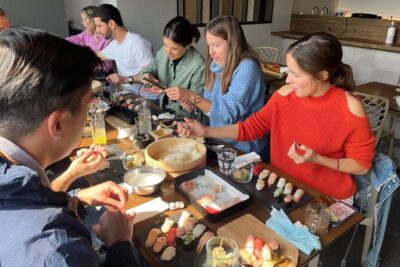
Sushi Making Tokyo Roll and Authentic Japanese Sushi Class
Read our review →
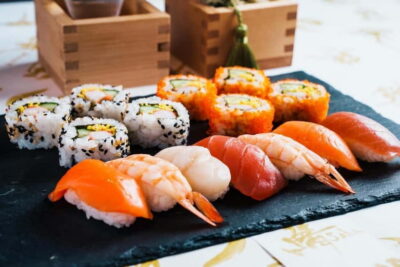
Roll and Authentic Sushi Making Class in Asakusa
Read our review →
Ramen Cooking Class at Ramen Factory in Kyoto
Read our review →
Sushi Making Class in a Happi Coat near a Famous Spot
Read our review →
Sushi Making Osaka Roll and Authentic Japanese Sushi Class
Read our review →
Tokyo Sushi Making Class in Tsukiji with Professional Chef
Read our review →Browse the lists this tour appears in