
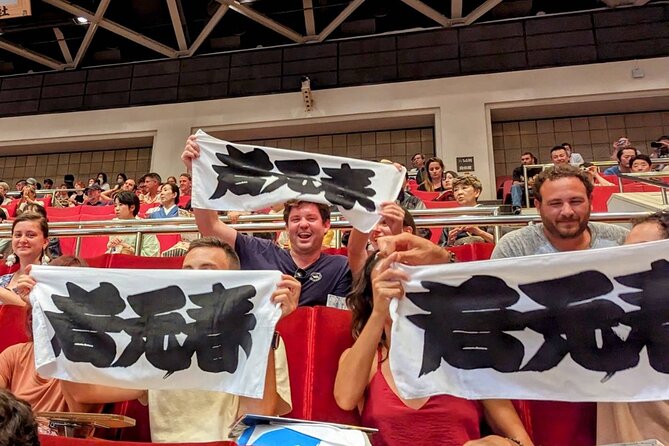
REVIEW · SUMO EXPERIENCES
Tokyo: Grand Sumo May Tournament
Tokyo’s Grand Sumo Tournament is far more than a few enormous men pushing each other out of a ring. It is a carefully staged afternoon of ritual, rank, costume, music, ceremony, and sudden force. I like the Ryogoku walking tour because it gives the neighborhood meaning before you enter the arena, and I like the guide’s live explanations through headsets, which help you follow the action without shouting across the seats. The main drawback is price: at $198.20 per person, you are paying a sizable premium over the cost of an arena ticket alone.
The six-hour plan also asks for a good block of your day, with the walking portion beginning at 1 p.m. and the bouts running until about 6 p.m. The optional chanko-nabe dinner adds another hour. Still, for a first sumo match, this is a strong way to turn an unfamiliar sport into an understandable and memorable part of your Tokyo visit.
In This Review
- Key points before you book
- Why the May tournament is such a good Tokyo outing
- Starting in Ryogoku from 1 to 3 p.m.
- Inside Ryogoku Kokugikan
- How the live commentary changes the match
- Adding chanko-nabe after the final bouts
- What the $198.20 price really covers
- The guides and the human side of the day
- Who will get the most from this experience
- Booking advice for the May tournament
- Should you book the Grand Sumo May Tournament tour?
- FAQ
- How long does the sumo experience last?
- Is the chanko-nabe dinner included?
- Are arena seats included?
- Will I hear the guide during the sumo bouts?
- Does the tour include hotel pickup?
- Can I cancel for a full refund?
Key points before you book
- Ryogoku before the match: Visit sumo-related landmarks, a sumo stable from the outside, and a nearby sumo shrine.
- Arena orientation included: See the large murals, championship prizes, Sumo Museum, and displays of past yokozuna.
- Live commentary: Hear your English-speaking guide through headsets, particularly useful when seated away from the guide.
- Chair seating option: Choose balcony chair seats in sections B or C instead of sitting on cushions on the flat first-floor floor.
- Chanko-nabe afterward: Add the hot-pot meal associated with wrestlers’ training diets, with drinks paid separately.
- Book early: Sumo tickets can sell out quickly, and this experience is commonly reserved about 41 days ahead.
Why the May tournament is such a good Tokyo outing
The Grand Sumo May Tournament takes place at Ryogoku Kokugikan, Tokyo’s main sumo arena and the center of Ryogoku’s sumo world. The building is not simply a sports hall. Its murals, prize displays, museum, wrestler portraits, and ceremonial details help you see how much ceremony surrounds every bout.
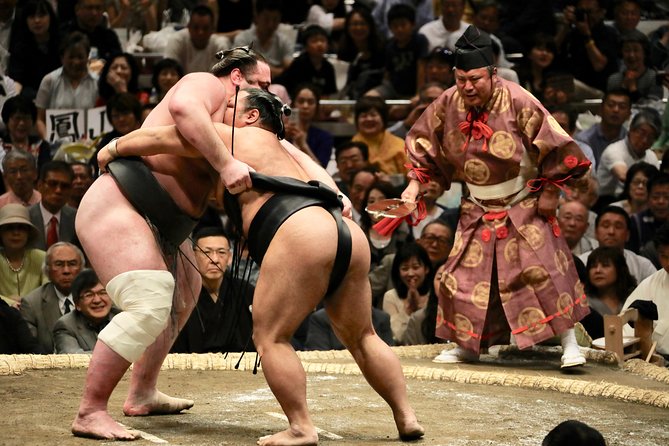
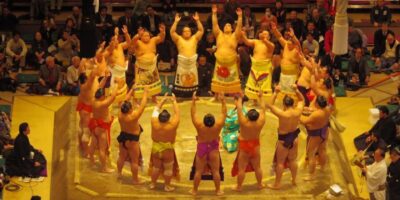
You can watch the opening divisions and then remain for the higher-ranked wrestlers later in the day. The most anticipated bouts feature top-division wrestlers and grand champions, with formal ring-entering ceremonies before the serious action begins. The change in pace is part of the fun. Early matches can feel like an introduction, while the upper divisions bring louder cheers and more tension.
I especially recommend this experience if you know little about sumo. Without context, the sport can look like two wrestlers bowing, stamping, throwing salt, and then crashing together for a few seconds. With a guide explaining the rankings, rituals, and techniques, those short bouts become easier to read.
More Sumo Experiences in Tokyo
- Tokyo: Sumo Show and Dining Experience
★ 4.8 · 2,742 reviews - the SUMO show
★ 5.0 · 1,960 reviews - Tokyo Shinjuku Sumo Show & Experience with Photo
★ 5.0 · 1,750 reviews
Starting in Ryogoku from 1 to 3 p.m.
The afternoon begins with a meeting in Ryogoku, a convenient choice if you are already visiting Tokyo’s sumo district. The first two hours are a walking tour around the neighborhood. This part can be optional depending on the package you choose, but I think it is worth keeping if you are new to sumo.
Your guide takes you to sumo-related landmarks and explains the sport’s place in Japanese culture. The walk can include the exterior of a sumo stable, where wrestlers train and live, as well as a sumo shrine near the arena. One guide, Ken, has been praised for sharing sumo lore and even singing a sumo song at the shrine. That sort of personal touch can make the district feel less like a collection of streets and more like the home base of a living tradition.
You will not tour the inside of a stable. The stable visit is an exterior look, so keep your expectations sensible. The value comes from understanding what you are seeing and why Ryogoku has so many sumo connections.
This walk also gives you time to ask questions before the match starts. Ask about the ranking system, the role of the yokozuna, the meaning of the pre-bout gestures, and how wrestlers prepare. Guides such as Aki, Yoko, Ken, Sue, and Ali have been singled out for clear explanations and friendly help, though your guide is assigned by the operator and may be someone else.
Wear comfortable shoes. Two hours on foot, followed by several hours in an arena, makes simple footwear advice worth taking seriously.
Inside Ryogoku Kokugikan
At around 3 p.m., the group moves into the arena for the tournament. Your guide walks you through several parts of the building before you settle in to watch.
The tour includes the large murals, championship prizes, the Sumo Museum, and paintings or photographs showing successive yokozuna. These stops are brief, but they help you understand the visual language of the sport. The championship prizes also show that sumo is tied to far more than the bout itself. National attention, regional pride, sponsors, rank, and tradition all gather around the ring.
The Sumo Museum visit is listed at about 15 minutes. That is enough for an introduction, not a museum day. If you are passionate about sumo memorabilia, you may wish you had more time. For most first-time visitors, though, the short tour keeps the afternoon moving.
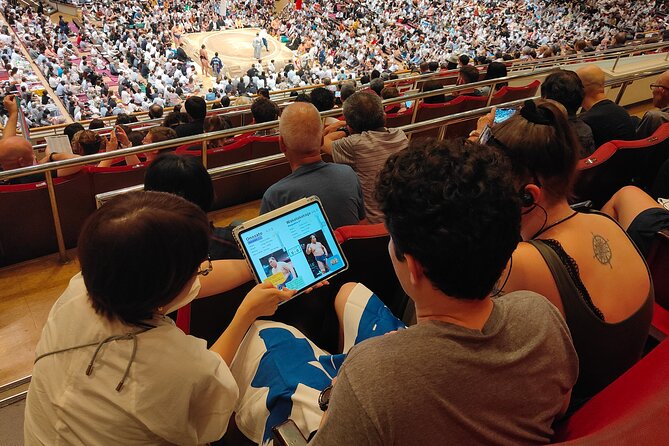
The guide then helps you understand the bouts as they happen. For groups of three or more, headsets are provided so you can hear the guide’s voice from a distance. This is one of the best features of the experience. Sumo has bursts of action surrounded by long rituals, and the commentary helps you notice what matters during both.
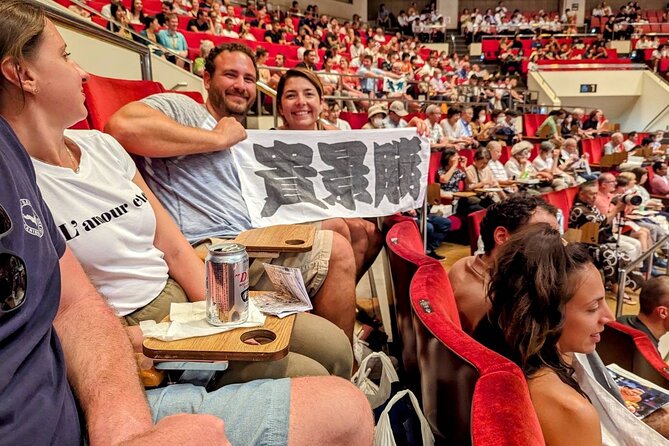
The explanation may cover why wrestlers throw salt, how the ring-cleansing rituals work, what the referee’s clothing indicates, and why a match can be decided in seconds. You also receive an information package with tournament details, rankings, and profiles of prominent wrestlers. Small cheer-up goods are included so you can support a particular wrestler.
One practical point matters here: the seats are assigned. The chair option uses balcony seats in section B or C, allowing you to sit in a proper chair throughout the match. If you choose first-floor seats, you sit on a flat floor with cushions. Traditional box seats place four people within a roughly 1.3-meter by 1.3-meter square, which can be atmospheric but less comfortable for several hours.
I would choose the chair option if comfort matters, especially for older visitors or anyone who dislikes sitting on the floor. The first-floor arrangement may put you closer to the ring, but it is not the easy choice for everyone.
How the live commentary changes the match
A sumo bout is easy to watch and surprisingly hard to interpret. The wrestlers may spend more time preparing than fighting. They face each other, step back, stamp, throw salt, and repeat the ritual until both are ready. Then the match can be over almost instantly.
A guide gives those pauses a purpose. You learn that the ceremony is not filler. It reflects rules, beliefs, rank, and the formal character of the sport. You also gain a better sense of how a wrestler wins, whether through a push, a throw, a belt technique, or forcing an opponent outside the ring.
The personal headsets are particularly helpful if you are not seated right beside the guide. One criticism of this sort of tour is that a quiet guide may offer too little information unless you ask questions. That is a fair concern. The experience works best when you take an active role. Prepare a few questions and use the headset time well.
The guides are not all the same in personality. Some, including Yoko and Aki, have been described as warm and talkative. Others may be more reserved. The operator has addressed concerns about a quieter guide, but you should still know that the quality of the explanation depends partly on the person assigned to your group.
Same city, a completely different kind of day:
- Mt Fuji and Hakone 1-Day Bus Tour Return by Bullet Train
★ 5.0 · 26,383 reviews - 1-Day Tokyo Bus Tour
★ 5.0 · 14,250 reviews - Tokyo: TOKYO SKYTREE® Admission ticket
★ 4.5 · 11,192 reviews - Tokyo: teamLab Planets TOKYO Digital Art Museum Entry Ticket
★ 4.6 · 9,779 reviews
Adding chanko-nabe after the final bouts
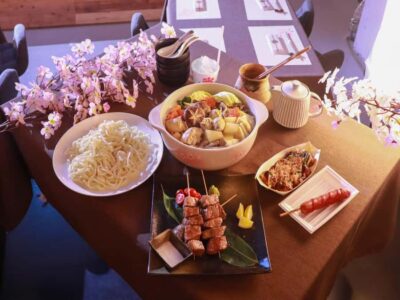
After the arena portion, you can walk to a nearby restaurant for chanko-nabe. This is the hot-pot dish associated with sumo wrestlers’ diets. It is designed as a filling meal, and the dinner option gives the day a proper ending rather than leaving you to find food after several hours at the arena.
The food is prepared for the group on arrival, so you are not expected to wait around after the match. That is convenient, especially when you are tired and the area is crowded with people leaving the tournament.
Chanko-nabe is not a light snack. It is a hearty meal with ingredients cooked together in a hot pot. Check the menu carefully if you do not eat fish, since fish may be mixed into the broth or other parts of the dish. Drinks are not included and must be ordered separately.
Dinner is optional, so you can skip it if you have another reservation or prefer to explore Tokyo at night. I would add it if you want the full sumo-themed day and enjoy communal Japanese meals. I would leave it out if you have dietary restrictions that are not easily handled or if your evening plans are tight.
What the $198.20 price really covers
At $198.20 per person, this is not a cheap ticket with a little commentary attached. The basic ticket to the tournament may cost much less, and one dissatisfied customer calculated a large markup compared with buying an arena ticket independently.
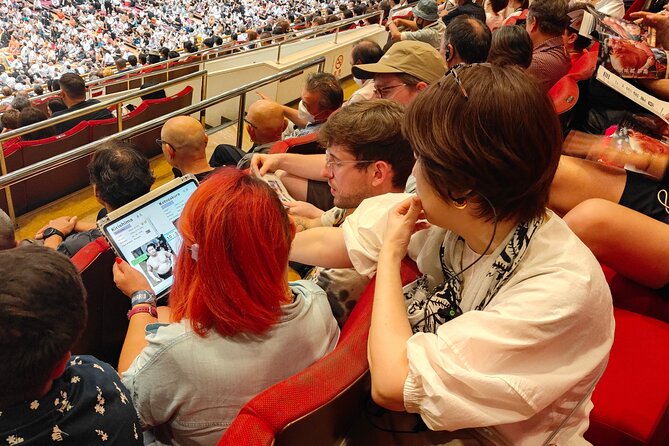
That criticism deserves a clear answer. You are paying for more than admission. The price includes an English-speaking sumo guide, the Ryogoku walking tour, arena orientation, tournament information, headsets for groups of three or more, small cheering goods, and all listed fees and taxes. Depending on the package, it may also include the optional dinner arrangement and chair seating.
The value depends on your priorities. If you already understand sumo, speak Japanese, and can obtain a ticket yourself, going independently may make more financial sense. You can enter the arena, watch the bouts, and save money.
If you are unfamiliar with sumo, the guide can make the difference between watching a strange sequence of ceremonies and understanding a sport with its own rules and social order. The ticket supply is another part of the value. Grand tournament tickets can sell out very quickly, and reserving this experience well ahead may be the simplest way to secure a place.
The group can reach a maximum of 35 people, so do not assume the private-tour wording means you will have a guide entirely to yourself. The experience promises personalized attention, but the actual feel may depend on the date and group size. A smaller group should make questions easier. A full group may feel more like a guided outing.
The guides and the human side of the day
The strongest part of this experience is the guide. Names attached to past departures include Sue, Aki, Yosh, Ken, Ali, Yoko, Ichirio, and Yasu. You are not guaranteed one of them, but the range of guide styles gives you an idea of what the day can offer.
Yoko has been particularly effective at setting the tone from the start. She meets visitors at the station, provides a gift bag with tournament information and wrestler profiles, explains the arena and museum, and continues to interpret the ceremonies during the bouts.
Aki has been praised for clear explanations of sumo culture and history, while Ken has brought the neighborhood walk to life with a stable visit, a shrine stop, and local sumo lore. Yosh has been described as quick to answer questions, and other guides have helped first-time viewers understand the sport well enough to leave wanting to follow it.
But do not book this expecting a nonstop lecture. One guide was described as quiet and inclined to offer short comments only when asked. That is why I suggest treating the day as a conversation. Ask questions, tell the guide what you already know, and say if you need more explanation during the match.
Who will get the most from this experience
I would recommend this tour to:
- First-time sumo spectators who want the rituals explained
- Visitors interested in traditional Japanese culture, not only sports
- Families or mixed-age groups who want a structured afternoon
- Fans who value getting a tournament ticket in advance
- People who would enjoy matching a major sporting event with a neighborhood walk and local meal
I would be more cautious if your main goal is to spend as little as possible. The markup is real, and the price may be hard to justify for a seasoned sumo fan who can arrange a ticket alone.
It also may not suit you if you dislike fixed schedules. The walking tour begins at 1 p.m., the arena portion runs from about 3 to 6 p.m., and the dinner option follows afterward. You have less freedom than you would with an independent visit.
Booking advice for the May tournament
Reserve early. The average booking point is about 41 days before the experience, and major sumo tournaments have limited seats. If you wait until you are already in Tokyo, you may find the event sold out.
Check which combination of options you are buying. The packages can vary by inclusion of the Ryogoku history walk, arena viewing, chanko-nabe dinner, and chair seating. Confirm whether the meal is included in your selected version rather than assuming every package contains it.
Your confirmation arrives at booking, and the meeting point is in Ryogoku near public transportation. Hotel pickup and drop-off are not included, so you need to reach the meeting place yourself.
Cancellation is flexible up to 24 hours before the start time for a full refund. Within 24 hours, refunds and changes are not accepted, with cut-off times based on local Tokyo time.
Should you book the Grand Sumo May Tournament tour?
Book it if you want the full story around the match: Ryogoku landmarks, arena displays, live explanations, assigned seating, and an optional bowl of chanko-nabe afterward. The tour is especially useful when you are new to sumo or when securing a ticket independently feels risky.
Skip it if you are a confident sumo fan who can buy a ticket directly and does not need a guide. You will pay less on your own, and a quiet guide could leave you feeling that the commentary did not earn its share of the price.
For most first-time visitors, I think the guided format earns its keep, provided you choose the chair option if floor seating sounds uncomfortable and arrive ready to ask questions. The match itself is the star, but the walk through Ryogoku and the explanations of what happens around the ring are what make the afternoon understandable.
FAQ
How long does the sumo experience last?
The main experience lasts about six hours. The Ryogoku walking tour runs from approximately 1 to 3 p.m., and arena viewing runs from approximately 3 to 6 p.m. The optional chanko-nabe dinner adds about one hour.
Is the chanko-nabe dinner included?
Chanko-nabe is an optional part of the experience, depending on the package selected. Drinks are not included and must be ordered separately.
Are arena seats included?
Yes. Admission to Ryogoku Kokugikan is included. Seat types vary by option, with chair seats available in balcony sections B or C, while first-floor box seats use cushions on a flat floor.
Will I hear the guide during the sumo bouts?
For groups of three or more, headsets are provided so you can hear the guide clearly from a distance. The guide provides live commentary in English.
Does the tour include hotel pickup?
No. Hotel pickup and drop-off are not included. You meet the guide at a convenient location in Ryogoku, which is near public transportation.
Can I cancel for a full refund?
Yes, if you cancel at least 24 hours before the experience start time. Cancellations or changes made less than 24 hours before the start time are not accepted for a refund.
Just added around Tokyo
- Private Memorable Tokyo Tour with English Speaking Driver★ 5.0 · 30 reviews
- Private Tokyo Custom Full-Day Tour by Chartered Vehicle★ 5.0 · 16 reviews
- Private Sightseeing to Mt Fuji and Hakone with English Driver★ 5.0 · 51 reviews
- Tokyo Photography Masterclass – Private Photography Lesson★ 5.0 · 25 reviews
- Private Mt. Fuji Day Trip from Tokyo with English-Speaking Driver★ 5.0 · 33 reviews
- 4 Day Tour – Mount. Fuji, Tokyo, Hakone, Kamakura and Yokohama★ 5.0 · 19 reviews
- Private Unforgettable Mt Fuji Tour with English Speaking Driver★ 5.0 · 142 reviews
- Private Tokyo Food Tour – A Journey Through Time Through Food★ 5.0 · 36 reviews
Sumo Experiences, compared.
Sumo Show Experience with Chicken Hot Pot and a Photo
Read our review →
Tokyo Shinjuku Sumo Show & Experience with Photo
Read our review →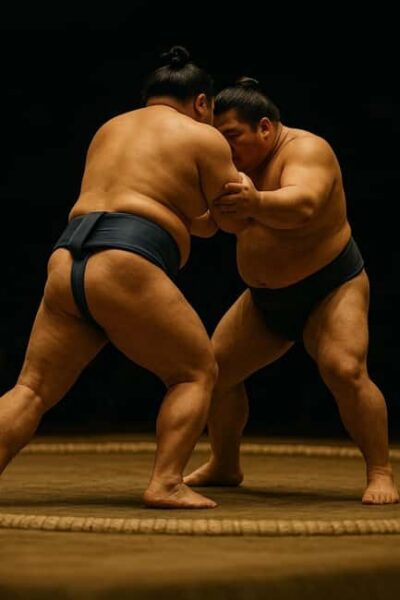
Sumo Show & Experience w/ Optional Kimono & Hot Pot
Read our review →
Authentic Sumo Experience in Tokyo: Enter the Sanctuary
Read our review →Browse the lists this tour appears in