

REVIEW · WORKSHOPS
Tokyo: Edo Kiriko Traditional Glass Carving Class
Edo Kiriko is not a glassblowing show. It is a hands-on craft class where you use a cutting wheel to carve patterns into a finished glass. In 90 minutes, you choose your glass, practice simple marks, and create a piece that carries the uneven, human touch of your own work. Making something yourself is the best part.
I like the easy location, just 30 seconds from Asakusa Station, and the chance to choose from six types of clear and colored glasses, including blue, pink, and yellow. I also like the calm instruction. Teachers such as Ze give beginners time to practice and offer gentle corrections. The trade-off is that neat carving takes patience, so your glass may not look like the instructor’s polished examples.
In This Review
- Key points to know before booking
- What Edo Kiriko means in practical terms
- Arriving at Sokichi near Asakusa Station
- The first 15 minutes: choosing your glass and design
- Practice cuts before the real artwork
- The main carving session
- What your finished glass will really be like
- Why the $30 price feels reasonable
- The best fit for this class
- How it fits into an Asakusa day
- Booking and cancellation details
- My verdict on Edo Kiriko in Asakusa
- FAQ
- How long does the Edo Kiriko glass-carving class last?
- How much does the class cost?
- Where does the class meet?
- Can beginners take part?
- What colors and designs can I choose from?
- What should I bring?
Key points to know before booking
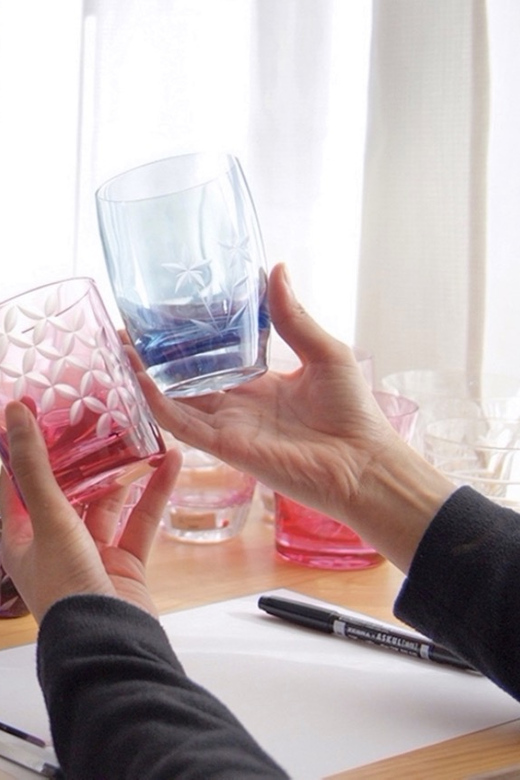
- Choose from more than 20 glass styles: Select your preferred shape and color before you begin carving.
- Pick from dozens of patterns: Designs range from simple practice motifs to more demanding decorative work.
- Practice before touching your final glass: You can work on sample designs first, which takes pressure off beginners.
- Take home a handmade souvenir: Your finished piece is personal, even if the lines are not perfectly even.
- Meet near Asakusa Station: Sokichi is a short walk from the station and close to Senso-ji and Tokyo Skytree.
- Expect English or Japanese instruction: The class is suitable for beginners, with a lecturer beside you during the work.
What Edo Kiriko means in practical terms

Edo Kiriko is a Japanese glass-cutting craft with more than 180 years of history. Instead of shaping hot glass, you work on a finished tumbler or other glass item, cutting into its surface to reveal patterns and color.
The effect comes from the contrast between smooth glass and the carved lines. On colored glass, the cuts can expose a lighter layer beneath the surface, making the pattern easier to see. Clear glass creates a subtler result, with light catching the etched lines.
You do not need an artistic background. The class offers beginner and expert-level choices, but both are designed to be approachable. That does not mean the technique is easy to master. Cutting a clean line requires control, and curved patterns can be harder than they look.
I see that as a strength. You get a genuine introduction to the craft rather than a staged activity where the result is guaranteed. Your instructor can help refine rough areas, but the main design remains yours.
A few more Tokyo trips to weigh up
- Sushi Making Tokyo Roll and Authentic Japanese Sushi Class
★ 5.0 · 3,971 reviews - Tokyo: Roll and Authentic Sushi Making Class in Asakusa
★ 4.9 · 1,957 reviews - Tokyo Shinjuku Chopsticks Making Class
★ 5.0 · 1,763 reviews
Arriving at Sokichi near Asakusa Station
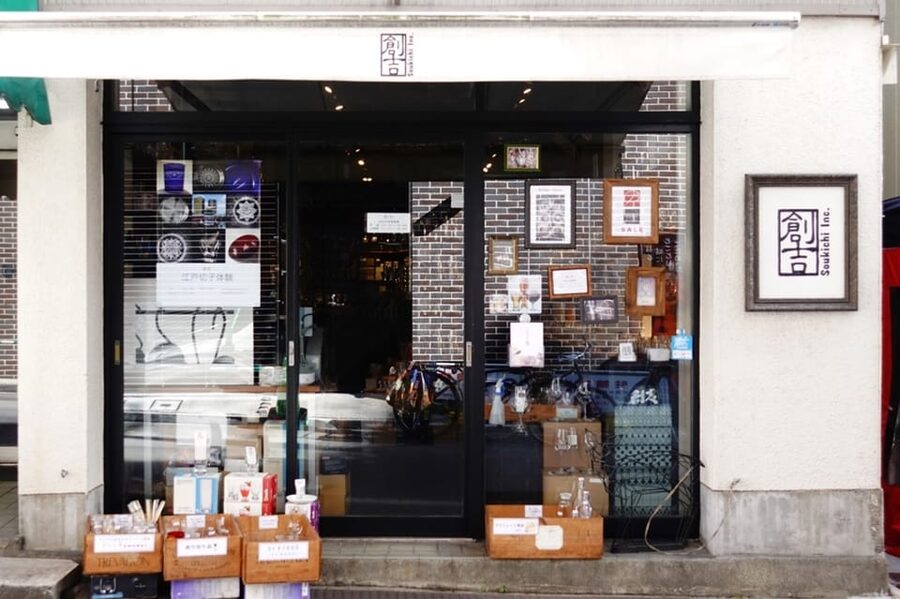
Your meeting point is Sokichi, a glassware shop about 30 seconds from Asakusa Station. Speak with a staff member inside, and someone will escort you to the classroom.
The class is on a small side street, directly above the glassware shop. That arrangement makes sense: you see finished glasswork downstairs before trying the technique yourself. The shop also gives you a clear landmark, which is useful in a dense Tokyo neighborhood.
The location works well with a day around Asakusa. Senso-ji is about five minutes away according to the timing given by one participant, and Tokyo Skytree is roughly 15 minutes away. You can schedule the class between sightseeing stops without spending much time crossing the city.
Bring a hair tie if you have long hair. It is a small point, but practical when you are working close to tools and glass.
The first 15 minutes: choosing your glass and design

The class begins with a look at the available glassware and pattern samples. You can choose from more than 20 kinds of glasses and dozens of designs. The six glass color choices include clear, blue, pink, and yellow options, with several forms and finishes available within the selection.
This choice is more important than it may seem. A broad, simple glass may give you more room for a large pattern. A smaller or more curved glass can look elegant, but the surface may be harder to follow with the cutting tool.
The instructor can explain how a design will look on a particular glass. That advice is useful because a pattern that looks simple on paper may become crowded on a narrow surface. Ask questions before you commit. You can also compare colors under the classroom light, where the carved areas may look different from the way they appear in the display cabinet.
I would choose a pattern that leaves some open space. Beginners often want to fill every inch, but a few clean cuts usually look better than too many rushed ones.
Practice cuts before the real artwork
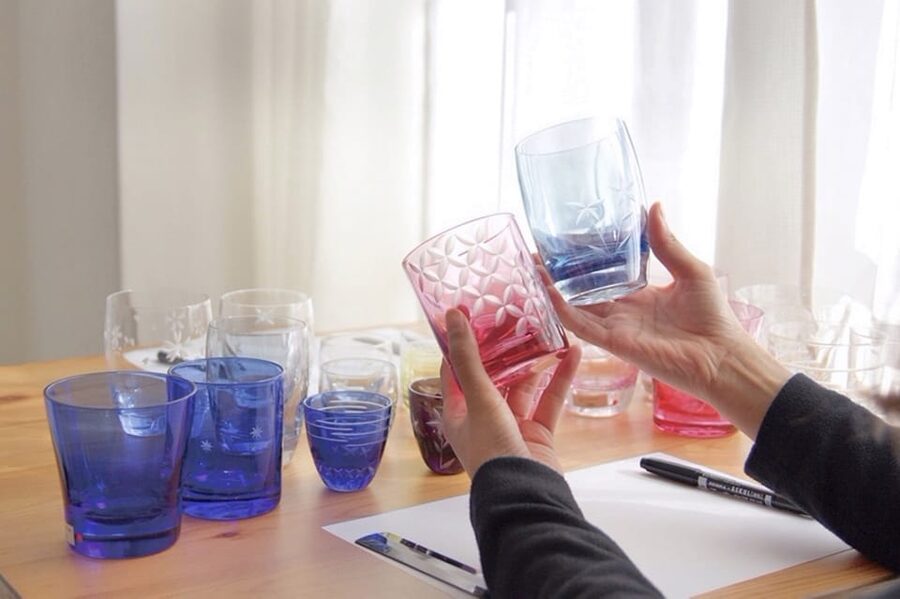
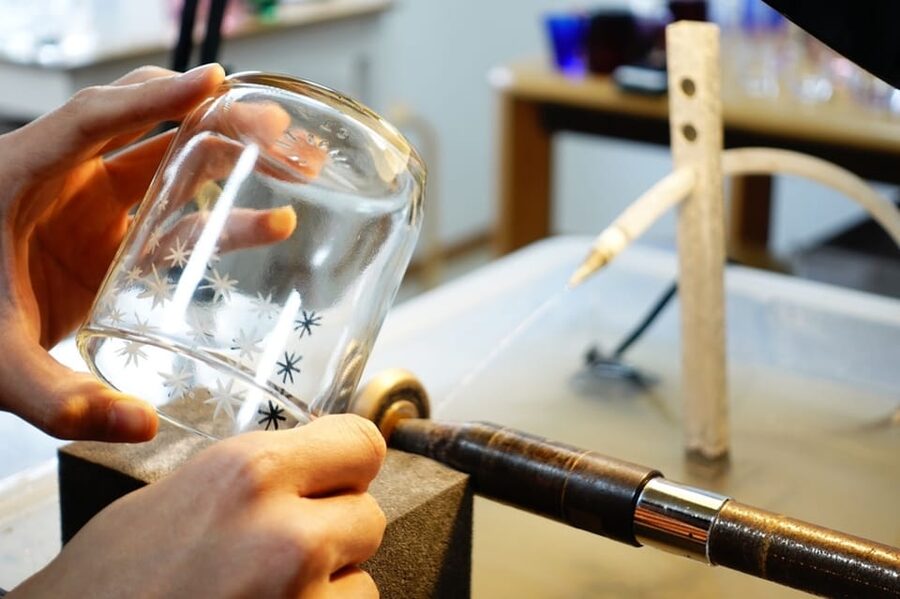
Before working on your chosen glass, you practice. One reported class began with star shapes, giving participants a chance to learn how the tool responds before making permanent marks.
This practice period is one of the most valuable parts of the class. It lets you understand the pressure needed, the pace of the cutting wheel, and the difference between a straight line and a controlled curve. You can make mistakes on the practice piece without worrying about ruining your souvenir.
The lesson is simple: cutting the glass is straightforward, but cutting accurately is harder. You may find that your first attempts are crooked or lighter than expected. That is normal for a craft based on hand control.
The instructor watches your technique and offers corrections. Several classes have been led by Ze, who is described as patient, encouraging, and clear in English. Other instructors also teach in English and Japanese. The guidance is not a long lecture. You learn by trying, then adjusting.
Same city, a completely different kind of day:
- Mt Fuji and Hakone 1-Day Bus Tour Return by Bullet Train
★ 5.0 · 26,383 reviews - 1-Day Tokyo Bus Tour
★ 5.0 · 14,250 reviews - Tokyo: TOKYO SKYTREE® Admission ticket
★ 4.5 · 11,192 reviews - Tokyo: teamLab Planets TOKYO Digital Art Museum Entry Ticket
★ 4.6 · 9,779 reviews
The main carving session
Once you select the glass and design, you begin the final piece. You follow the sample pattern, work at your own pace, and ask for help when a line goes off course.
The classroom is described as a quiet space away from the noise of central Tokyo. That matters because the work needs concentration. You are not rushing through a photo opportunity. The full 90 minutes is used for practice, selection, carving, and finishing.
You should expect a small-group feel, although the exact group size is not specified. One class had four people, which allowed everyone to receive individual support. If your group is similarly sized, you will have time with the instructor without losing the relaxed character of the session.
The teacher may refine part of your work. This is not a problem as long as you understand the result correctly: you are making the design, while the instructor helps fix an uneven cut or prevent a mistake from spreading. One participant brought home a piece she considered her own even after the teacher corrected crooked etchings.
That balance is right for a beginner activity. You get enough help to finish a usable glass, but you still make the important choices.
What your finished glass will really be like
Your piece may not be perfect. That is part of the appeal, but it is worth knowing before you book.
The instructor’s carvings will look far more precise than yours. A professional has years of control, while you have about an hour of practice. Do not compare your first glass with the examples too harshly. The value is in the process and in the fact that you made the design yourself.
A finished piece can still look attractive with small irregularities. In fact, those marks show that it was handmade during your time in Tokyo. The teachers can help clean up serious problems, and participants have left with glasses they were proud to use as souvenirs.
You may finish one glass, though one participant reported taking home two fine glasses. The number can depend on the class and the pace of your work, so treat one completed piece as the sensible expectation.
Why the $30 price feels reasonable
At $30 per person, this is a good-value activity for Tokyo, especially if you want more than another photograph or short sightseeing stop. The fee includes the glass-carving class, the lecturer, and the colored glass. You do not need to buy extra materials to take part.
The value comes from three things. First, you receive a physical souvenir rather than a temporary experience. Second, the class gives you direct contact with a Japanese craft that you would not learn by visiting a shop. Third, the instructor provides personal help instead of leaving you to copy a diagram.
It is also a compact use of time. Ninety minutes is long enough to learn the basics but short enough to fit around Asakusa plans. Transportation is not included, but the station location keeps that cost and effort low if you are already in the area.
For a family or pair, the activity also gives you something to discuss afterward. You can compare colors, patterns, and the places where your cutting went slightly wrong. That personal connection makes the souvenir more meaningful than a ready-made purchase.
The best fit for this class
I would recommend the class to you if you enjoy making things, want a hands-on cultural activity, or need a break from temples and shopping. It works especially well for couples, parent and adult-child pairs, and small groups of friends.
It also suits people who are nervous about artistic ability. The instructor starts with practice, the choices are explained, and the work can be corrected. You do not need to arrive with a finished idea.
Families should consider the child’s ability to follow instructions and work carefully with glass-cutting equipment. The supplied information does not specify a minimum age, so ask before booking if a child will participate.
This is less suitable if you want a polished professional result with no effort. It is also not the right pick if you prefer a fast demonstration where you simply watch an expert. The class asks you to concentrate and accept that handmade work has small flaws.
How it fits into an Asakusa day
The class is easy to pair with Senso-ji, Asakusa Station, and Tokyo Skytree. You can visit the temple area before or after the workshop, then keep the rest of the day nearby rather than losing time on trains.
A quiet craft class can also reset the pace of a busy sightseeing day. After crowded streets and large attractions, 90 minutes at a work station gives you a slower task with a clear result.
Plan enough time to find Sokichi. The shop is very close to the station, but the classroom is on a side street, and you need to speak with staff before being escorted upstairs. Arriving a little early will help you begin without rushing.
The class has English and Japanese instruction. English ability appears strong enough for clear demonstrations and corrections, with one instructor noted for speaking English very well. Still, ask questions as you work. The more clearly you explain the pattern you want, the more useful the advice will be.
Booking and cancellation details
The experience lasts 90 minutes, with starting times shown according to availability. You can reserve now and pay later, which helps if you are still arranging your Tokyo schedule.
Free cancellation is available up to 24 hours in advance for a full refund. Transportation is not included, so make your own way to Sokichi near Asakusa Station.
The price is $30 per person. That includes the class, instructor, and colored glass, but the important extra is your finished artwork, which you take home.
My verdict on Edo Kiriko in Asakusa
Book this class if you want a personal souvenir and a close look at one of Japan’s traditional crafts. The short walk from Asakusa Station, modest price, practice time, and patient instruction make it an easy activity to add to a Tokyo itinerary.
Go in expecting to learn, not to produce museum-quality glass. Your lines may wobble, and the instructor may need to tidy part of the design. That is a fair trade for making something yourself, and the finished piece should carry more meaning than a souvenir chosen from a shelf.
If you have only one free hour in Asakusa and dislike careful handwork, spend that time at Senso-ji instead. If you can spare 90 minutes and want to leave Tokyo with a keepsake you shaped yourself, this is a strong choice.
FAQ
How long does the Edo Kiriko glass-carving class last?
The class lasts 90 minutes. Starting times depend on availability.
How much does the class cost?
The listed price is $30 per person. The fee includes the glass-carving class, lecturer, and colored glass.
Where does the class meet?
Meet at Sokichi, a glassware shop about 30 seconds from Asakusa Station. Speak with a staff member, who will escort you to the classroom.
Can beginners take part?
Yes. You can choose beginner or expert-level patterns, and both options are beginner-friendly. You practice before working on your final glass, and the instructor helps as you carve.
What colors and designs can I choose from?
The class includes six types of clear and colored glasses. The stated colored choices are blue, pink, and yellow. You can choose from more than 20 kinds of glasses and dozens of pattern samples.
What should I bring?
Bring a hair tie if you have long hair. Transportation is not included. Instruction is available in English and Japanese, and you can cancel up to 24 hours in advance for a full refund.
Just added around Tokyo
- Tokyo: Customizable Private Guided Walking Tour★ 4.5 · 129 reviews
- Private Harajuku Omotesando Architecture Tour★ 4.9 · 18 reviews
- Tokyo: Private Personalized Local Food Tour★ 4.5 · 101 reviews
- Tokyo: Guided Helicopter Ride★ 4.9 · 24 reviews
- Tokyo: Guided Walking Tour of Tsukiji Market with Lunch★ 4.4 · 24 reviews
- Tokyo GINZA: KONPARU Japanese Cabaret Show with Drink★ 4.8 · 38 reviews
- Tokyo: Guided Walking Tour of Tsukiji Market with Breakfast★ 4.4 · 134 reviews
- Tokyo: Gotokuji Cat Temple, Shinjuku Cat Cafe & 3D Cat Tour★ 4.9 · 38 reviews
Workshops, compared.
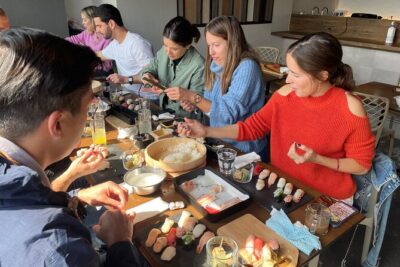
Sushi Making Tokyo Roll and Authentic Japanese Sushi Class
Read our review →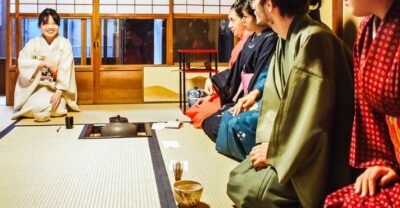

Roll and Authentic Sushi Making Class in Asakusa
Read our review →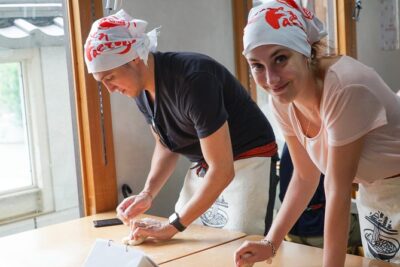
Ramen Cooking Class at Ramen Factory in Kyoto
Read our review →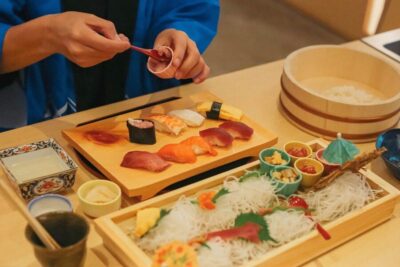
Sushi Making Class in a Happi Coat near a Famous Spot
Read our review →

Sushi Making Osaka Roll and Authentic Japanese Sushi Class
Read our review →
Tokyo Sushi Making Class in Tsukiji with Professional Chef
Read our review →Browse the lists this tour appears in