
REVIEW · WORKSHOPS
Tokyo Chopstick Making Workshop with Artisan
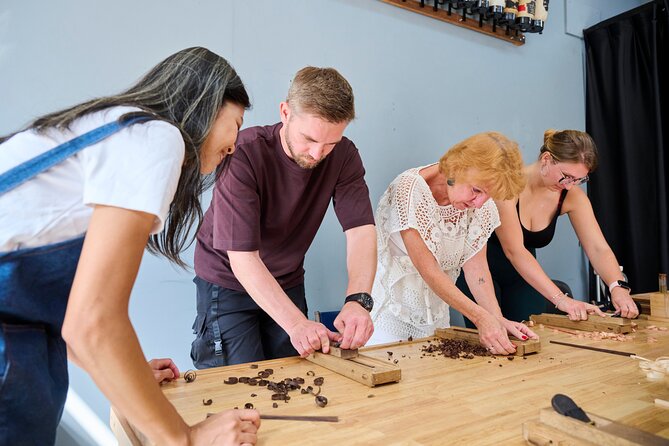
The best souvenir from this Tokyo workshop is one you actually use. You’ll shape a pair of wooden chopsticks with hand tools, smooth the surface, and take home the finished set, often beautifully wrapped. I like the hands-on work and the chance to learn why chopsticks matter in Japanese daily life.
I also like the small setting, capped at 10 people, where help is close at hand. Staff members such as Angie and Kaana have been praised for making the process easy and fun, even for children. The main catch is that the advertised price may not cover better wood or engraving, and some people finish in closer to two hours than one.
In This Review
- Key details before you book
- Turning a plain block of wood into chopsticks
- Why this small Tokyo craft class works well
- Choosing wood and adding a personal mark
- The cultural side of an everyday object
- What the visit feels like from arrival to finish
- Is the $26.53 price good value?
- Who will enjoy making chopsticks
- Practical advice for a smoother session
- Should you book this Tokyo chopstick workshop?
- FAQ
- Where does the chopstick-making workshop meet?
- Where does the activity finish?
- How long does the workshop last?
- How much does the experience cost?
- Are materials included in the price?
- Can I engrave the chopsticks?
- How many people can join?
- Is the workshop suitable for beginners and children?
- Can I cancel for a refund?
Key details before you book
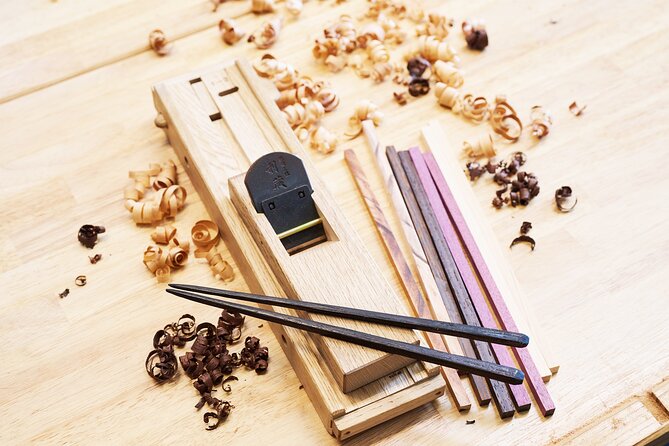
- You make a usable souvenir: Shape and finish your own wooden chopsticks, then take them home the same day.
- Wood choice affects the price: Basic materials are included in the starting cost, while nicer woods cost extra.
- Engraving is available: Add names or another personal touch for an additional fee.
- The workshop is small: A maximum of 10 participants means you can usually get direct help.
- Plan for more than one hour: The listed duration is about an hour, but some sessions take closer to two hours.
- The location is in Taito City: The meeting point is 1-chōme-7-1 Misuji, near public transportation and within walking distance of Ryogoku Kokugikan.
Turning a plain block of wood into chopsticks
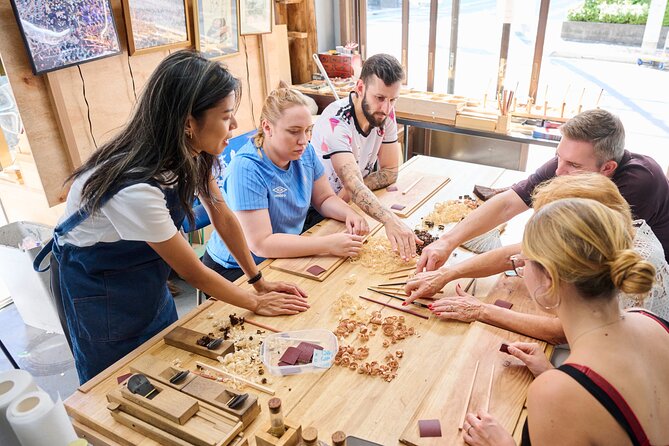
This is not a demonstration where you sit back and watch someone else work. You handle the wood yourself from the start. The basic task is simple to understand: shape the chopsticks, smooth them, and finish them so they feel comfortable in your hand.
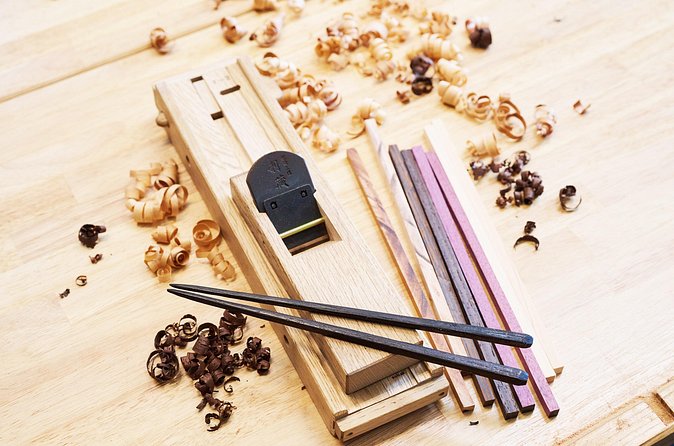
You’ll use traditional tools and techniques under the direction of a local artisan. The work calls for patience more than special skill. If you have never planed wood before, the first few strokes may feel awkward, and harder wood can require a fair amount of effort. One useful tip is to choose an easier wood if you are new to woodworking.
The physical side is part of the fun, but do not mistake this for a completely passive craft class. One person described it as an arm workout, especially if you are not used to planing. That is fair advice. You are making a real object, not decorating a premade pair.
As the wood takes shape, you smooth the surface and work toward a balanced pair. The finish matters because chopsticks need to feel right between your fingers. A slightly uneven or rough result is not a disaster, but it is a reminder that traditional craft takes care and time.
A few more Tokyo trips to weigh up
- Sushi Making Tokyo Roll and Authentic Japanese Sushi Class
★ 5.0 · 3,971 reviews - Tokyo: Roll and Authentic Sushi Making Class in Asakusa
★ 4.9 · 1,957 reviews - Tokyo Shinjuku Chopsticks Making Class
★ 5.0 · 1,763 reviews
Why this small Tokyo craft class works well
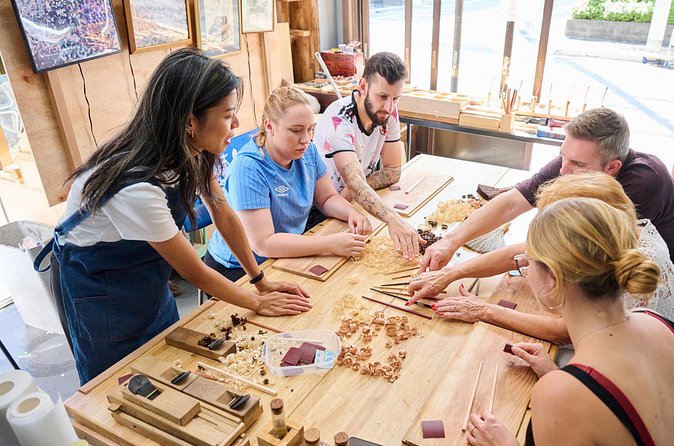
The workshop’s maximum of 10 people is a useful limit. You are not lost in a large class, and the instructor can show you how to hold the tool or correct your technique. That matters most during the early shaping stage, when a small mistake can affect the final form.
The staff also seem comfortable with beginners. Angie has been singled out for making the process easy, while Kaana has been praised for working especially well with families. Rasmus and Sakura have also helped explain the steps and keep the session moving.
The tone is relaxed rather than formal. You can work at your own pace, ask for help, and focus on the small changes that turn rough wood into something useful. One session took close to two hours, but the participant was not rushed. That is good news if you care more about the finished pair than a strict timetable.
At the same time, you should not assume every visit follows the exact same pace. The stated duration is about one hour, so leave room in your schedule if you want to work carefully, choose a special wood, or add engraving.
Choosing wood and adding a personal mark
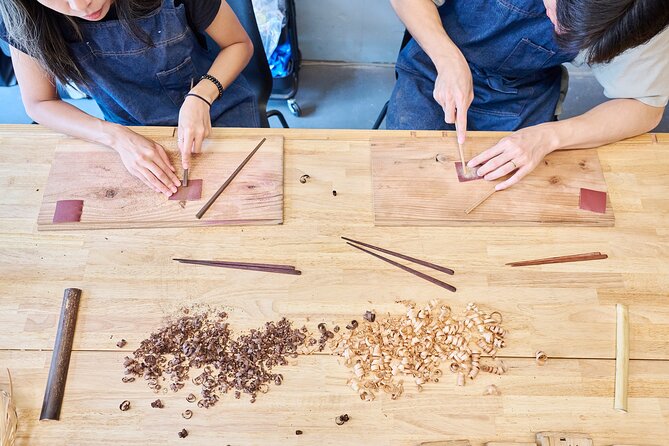
The starting price is appealing because it is only $26.53 per person. For Tokyo, that is a modest cost for an activity that gives you both a short cultural lesson and a physical souvenir. It can also be a practical choice on a rainy day or when you want a break from temples, shops, and crowded attractions.
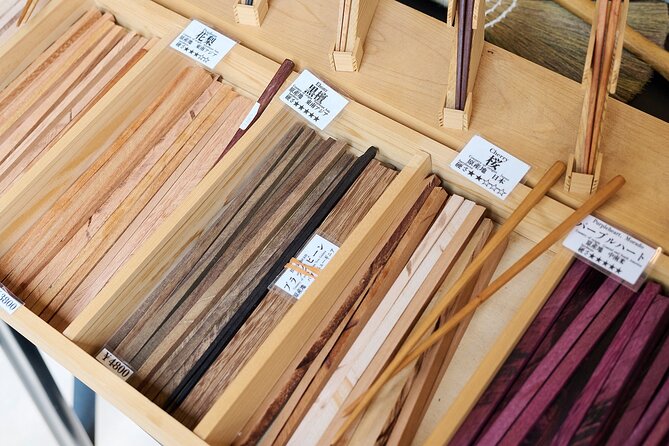
The final price can rise. Several kinds of wood are available, and the more attractive or premium options cost extra. Engraving also carries an additional charge. The basic price is therefore best treated as an entry point, not a guaranteed total for every finished pair.
I would decide on your budget before choosing the wood. If you want a simple, personal souvenir, the base option may be enough. If you are buying a gift or hoping for a more distinctive grain, the upgrade may feel worthwhile. The same goes for engraving. It is not essential to the activity, but it can make the chopsticks feel more personal and easier to identify at home.
The ability to engrave the finished chopsticks is one of the workshop’s strongest extras. You can turn a useful kitchen item into a keepsake with a name or another short marking. Since the engraving costs more, ask about the added price before committing.
The cultural side of an everyday object
Chopsticks are so common in Japan that it is easy to overlook their design. This class gives you time to think about the object itself: its length, shape, surface, balance, and role at the table.
The workshop includes an explanation of the cultural significance of chopsticks in Japan. The practical craft takes up most of the session, so do not expect a long lecture on Japanese history or woodworking. One participant wished for more background on the history of chopstick making.
That limitation is worth noting. If your main goal is a detailed cultural talk, this may feel light. If you want a short explanation paired with actual making, the balance works better. You learn through your hands, and the finished item gives the lesson a lasting connection.
The location also helps. The workshop is in Misuji, in Tokyo’s Taito City, an area associated with traditional crafts. You are not simply passing through a generic activity room in a major tourist district. The surrounding neighborhood gives the visit a sense of place, even though the workshop itself is the main event.
Same city, a completely different kind of day:
- Mt Fuji and Hakone 1-Day Bus Tour Return by Bullet Train
★ 5.0 · 26,383 reviews - 1-Day Tokyo Bus Tour
★ 5.0 · 14,250 reviews - Tokyo: TOKYO SKYTREE® Admission ticket
★ 4.5 · 11,192 reviews - Tokyo: teamLab Planets TOKYO Digital Art Museum Entry Ticket
★ 4.6 · 9,779 reviews
What the visit feels like from arrival to finish
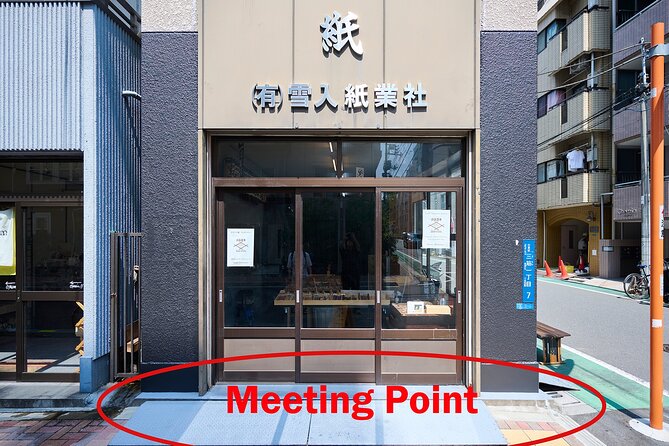
You meet at 1-chōme-7-1 Misuji, Tokyo 111-0055. The activity ends at the same point, which keeps the logistics simple. The address is near public transportation, and one participant noted that it is walkable from Ryogoku Kokugikan.
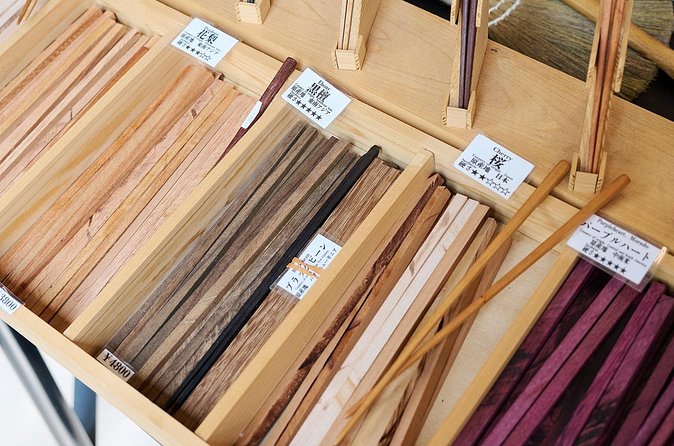
After arrival, you select the wood for your chopsticks. The range of choices is part of the appeal, but it is also where the possible extra cost appears. Ask which options are included before you settle on a material.
The artisan then guides you through the basic method. You shape the wood with traditional tools, remove rough areas, and work toward a smooth finish. The instructor’s support is important here because the result depends on technique, not just decoration.
Once the chopsticks are finished, you can arrange engraving if you want it. The completed pair is wrapped for you to take home. That same-day result makes this particularly useful near the end of a Tokyo visit, when you want a souvenir without waiting for shipping.
The workshop is listed at roughly one hour. In practice, allow extra time if you work slowly or want a more polished result. A careful finish is more satisfying than rushing out on the minute.
Is the $26.53 price good value?
For a short Tokyo activity, I think the base price offers solid value. You receive instruction, materials for the basic option, use of the workshop tools, and a finished item. The souvenir is also compact, light, and easy to pack.
The price deserves one warning. A person who visited without a reservation paid less as a walk-in. That means you should compare the advance booking cost with the workshop’s direct walk-in price if you are already nearby and have a flexible schedule. The tradeoff is convenience and a confirmed place, especially when the workshop has limited capacity.
The high demand also matters. The activity was booked more than 10 times in the previous week, and the overall recommendation rate was 99 percent with a five-star rating from 466 reviews. Those figures suggest strong interest, but they do not remove the need to check the final cost of wood and engraving.
I would book ahead if your schedule is tight, you are visiting during a busy period, or you are traveling with a group. I would consider a walk-in only if you are close by, can accept some uncertainty, and have confirmed the direct price.
Who will enjoy making chopsticks
This is a good fit for beginners because you do not need prior woodworking experience. You will get guidance with each stage, and the small class size makes it easier to ask for help.
Families can also make good use of the one-hour format. Children aged 10 and 12 were reported to enjoy the activity, and Kaana received special praise for making the session work well for them. Parents should still expect the task to require attention and some physical effort.
Couples, friends, and solo visitors have good reasons to choose it too. You can compare the shape of your chopsticks, choose different woods, and leave with a personal reminder of the day. It is also a useful option when the weather is poor, since the activity takes place indoors.
I would be less likely to recommend it to someone who wants a major sightseeing stop, a long cultural talk, or a completely effortless souvenir. This is a craft workshop first. You need to take part.
Practical advice for a smoother session
Wear something that lets you work comfortably. The class involves hand tools and repeated movements, so you will get more from it if you are ready to concentrate rather than hurry.
Arrive with enough time to find the Misuji meeting point. The workshop is near public transportation, but the address is still worth checking before you set out. Since the activity returns to the same location, you can pair it with nearby plans rather than arranging a separate pickup.
If you are choosing a wood upgrade, ask about the difference in price and difficulty. A harder or more expensive wood may look appealing, but a beginner may find an easier material more satisfying.
Ask about engraving before the final stage if you think you want it. That lets you understand the added fee and decide without pressure. The finished chopsticks can be used at home or given as a gift, and the wrapping makes them easier to present.
The experience has free cancellation if you cancel at least 24 hours before the scheduled start time. Changes or cancellations made inside that 24-hour window are not accepted for a refund, and the cut-off uses Tokyo local time.
Should you book this Tokyo chopstick workshop?
I would book it if you want a small, useful souvenir and prefer making something over buying another packaged gift. The class is reasonably priced, beginner-friendly, and short enough to fit into a Tokyo day. The chance to choose wood and add engraving gives the finished chopsticks a personal touch.
Book with two cautions in mind: premium wood and engraving cost extra, and the real session may take longer than the listed one hour. If you only want a detailed lecture on Japanese craft traditions, this may not go far enough.
For families, couples, solo visitors, and anyone looking for a rainy-day activity in Taito City, this is an easy choice. You leave with more than a souvenir. You leave knowing why the object in your hand feels different because you made it yourself.
FAQ
Where does the chopstick-making workshop meet?
The meeting point is 1-chōme-7-1 Misuji, Taito City, Tokyo 111-0055, Japan.
Where does the activity finish?
The workshop ends back at the meeting point.
How long does the workshop last?
The listed duration is approximately one hour. Some sessions may take closer to two hours, especially if you work carefully.
How much does the experience cost?
The listed price is $26.53 per person.
Are materials included in the price?
The workshop includes a basic option for making wooden chopsticks, but nicer types of wood cost extra.
Can I engrave the chopsticks?
Yes. Engraving is available for an additional cost.
How many people can join?
The activity has a maximum of 10 participants.
Is the workshop suitable for beginners and children?
Yes. Most people can participate, and the activity has been enjoyed by children aged 10 and 12. Staff provide help during the process.
Can I cancel for a refund?
You can cancel at least 24 hours before the start time for a full refund. Cancellations or changes made less than 24 hours before the start time are not accepted for a refund.
Just added around Tokyo
- Tokyo: Customizable Private Guided Walking Tour★ 4.5 · 129 reviews
- Private Harajuku Omotesando Architecture Tour★ 4.9 · 18 reviews
- Tokyo: Guided Helicopter Ride★ 4.9 · 24 reviews
- Tokyo: Guided Walking Tour of Tsukiji Market with Lunch★ 4.4 · 24 reviews
- Tokyo: Private Personalized Local Food Tour★ 4.5 · 101 reviews
- Tokyo GINZA: KONPARU Japanese Cabaret Show with Drink★ 4.8 · 38 reviews
- Tokyo: Guided Walking Tour of Tsukiji Market with Breakfast★ 4.4 · 134 reviews
- Tokyo: Gotokuji Cat Temple, Shinjuku Cat Cafe & 3D Cat Tour★ 4.9 · 38 reviews
Workshops, compared.
Sushi Making Tokyo Roll and Authentic Japanese Sushi Class
Read our review →
Roll and Authentic Sushi Making Class in Asakusa
Read our review →
Ramen Cooking Class at Ramen Factory in Kyoto
Read our review →
Sushi Making Class in a Happi Coat near a Famous Spot
Read our review →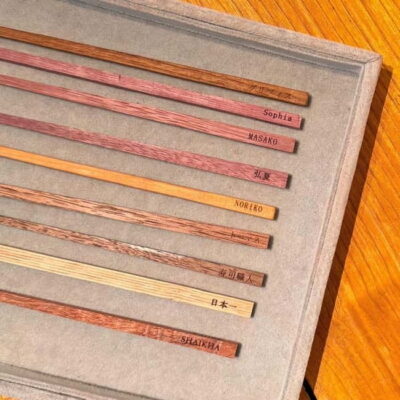
Sushi Making Osaka Roll and Authentic Japanese Sushi Class
Read our review →
Tokyo Sushi Making Class in Tsukiji with Professional Chef
Read our review →Browse the lists this tour appears in