
REVIEW · WORKSHOPS
Tokyo: Chopstick Making Workshop with Artisan
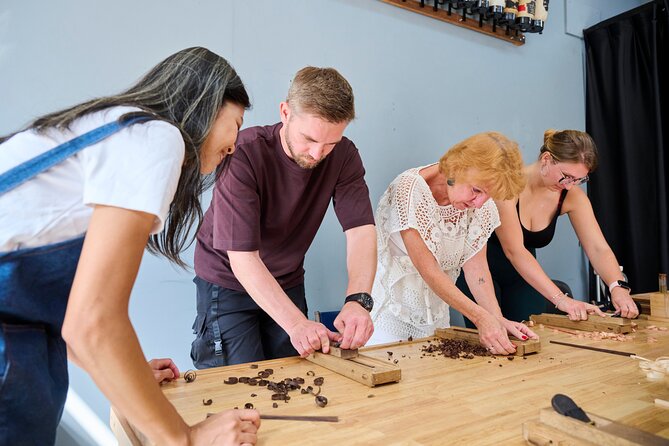
Making chopsticks by hand turns an everyday Japanese object into a personal keepsake. At Hashiyuki Chopsticks Shop, you choose your wood, shape it with traditional tools, smooth the surface, and take home a pair you made yourself. I love the hands-on work and the chance to learn why chopsticks matter in Japanese culture.
I also like the small groups of up to 10 and the calm change of pace from Tokyo’s busy streets. Guides including Angie, Yuki, Chihiro, and Victoria have been praised for patient, clear instruction. The one concern is timing: an hour is enough, but a full group with staggered starts can feel rushed.
In This Review
- Key points at a glance
- A quiet craft hour in Taito
- Choosing wood before the tools come out
- Shaping the chopsticks with traditional tools
- Sanding, finishing, and the one-hour limit
- Learning why chopsticks matter in Japan
- Optional engraving and the finished gift
- Why the $16 price makes sense
- Who will enjoy this workshop most
- Practical timing and group advice
- My recommendation: book it for the souvenir and the process
- FAQ
- How long does the chopstick-making workshop last?
- What is included in the price?
- Can I choose the type of wood?
- Is engraving included?
- Is the workshop available in English?
- How many people are in each group?
- Is the workshop wheelchair accessible?
- Can I cancel for a refund?
Key points at a glance
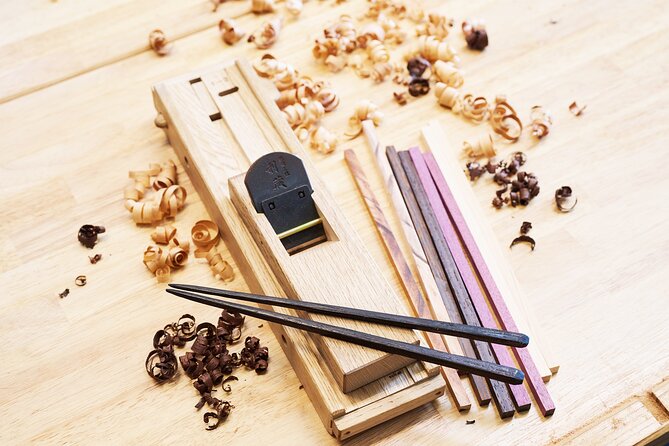
- Make a usable souvenir: Shape and finish your own wooden chopsticks, then take them home the same day.
- Choose your wood: Three wood types are included, with more than 10 choices available if you pay extra for higher-grade options.
- Get patient guidance: English and Japanese instruction is available, with staff helping you correct mistakes as you work.
- Keep the group small: The workshop accepts no more than 10 participants, though the compact room can feel busy at full capacity.
- Add a personal touch: Engraving is available for an additional ¥1,000, according to participant experience.
- Easy for beginners: The activity is designed for first-timers, families, solo visitors, and curious makers.
A quiet craft hour in Taito
Tokyo can fill your day with neon, trains, department stores, and crowds. This workshop offers something much simpler: a piece of wood, a few tools, and time to make something useful.
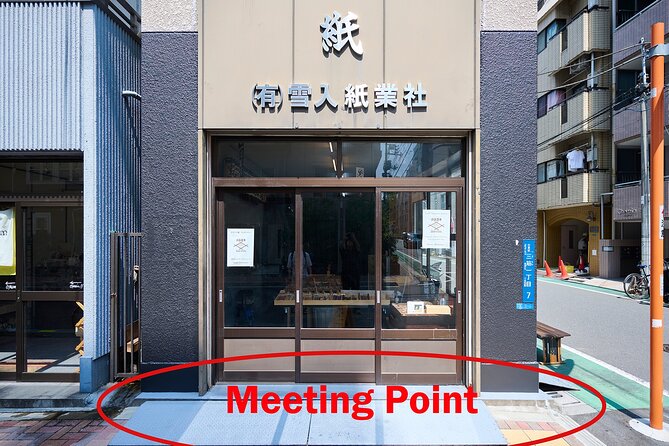
You meet at Hashiyuki Chopsticks Shop & Workshop at 1-7-1 Misuji in Taito-ku. The location is also identified by the Japanese name 雪入紙業社, or Yukiirishigyosya, and the listed coordinates are 35.7032168, 139.7853879.
The setting matters. This is presented as one of Tokyo’s longstanding craft neighborhoods, so the workshop feels tied to the city’s tradition of making practical objects by hand. You are not just buying a finished pair from a shelf. You are learning how a plain wooden blank becomes something balanced enough to use at the table.
The session lasts about one hour. That makes it easy to fit into a day of sightseeing, and the price of $16 per person makes it one of the more affordable craft activities in Tokyo. At that price, the real value is not the raw materials. It is the instruction, the cultural context, and the fact that your souvenir carries your own fingerprints.
A few more Tokyo trips to weigh up
- Sushi Making Tokyo Roll and Authentic Japanese Sushi Class
★ 5.0 · 3,971 reviews - Tokyo: Roll and Authentic Sushi Making Class in Asakusa
★ 4.9 · 1,957 reviews - Tokyo Shinjuku Chopsticks Making Class
★ 5.0 · 1,763 reviews
Choosing wood before the tools come out
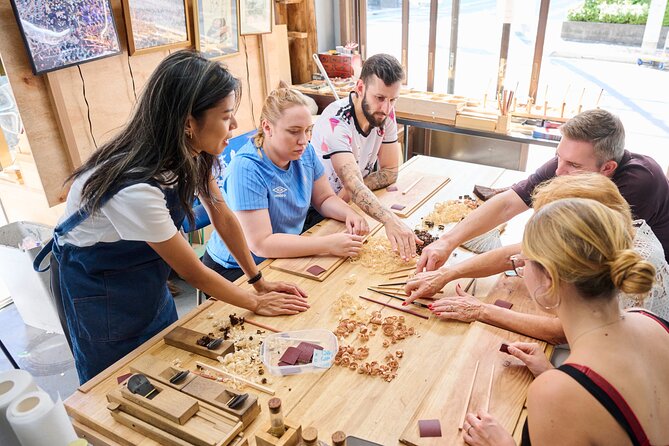
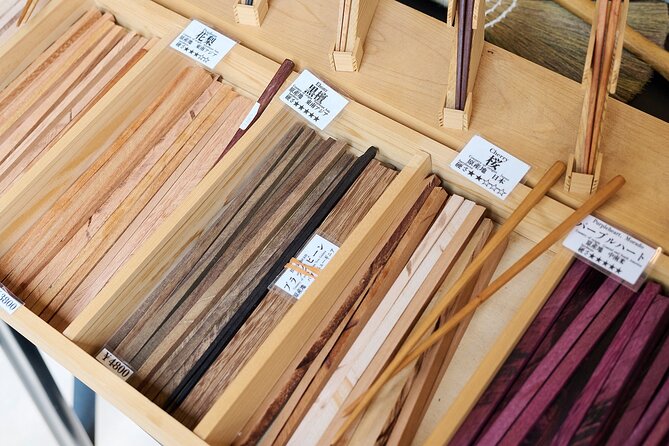
One of the first decisions is the wood. Three types are included in the basic price, while higher-grade varieties are available for an additional charge. More than 10 types are offered in total, giving you a chance to compare color, grain, and feel before you begin.
The supplied details do not identify every wood species, so do not arrive expecting a fixed menu of named varieties. Instead, ask the English-speaking staff to explain the choices available that day. This is a useful part of the lesson, since the wood affects the look of the finished chopsticks and gives you a better sense of Japanese woodworking.
I recommend deciding early if you want to stay within the advertised price. The included choices are enough to complete the activity, and the optional woods are a choice, not a requirement. If you are making a gift or want a more distinctive finish, the surcharge may feel worthwhile. If you are making several pairs for a family, sticking with the included options keeps the total easier to control.
The workshop also lets you think about who will use the chopsticks. You can make a pair for yourself, create a gift, or personalize them for a friend. One participant had a friend’s name engraved as a present, turning a short class into a thoughtful birthday or holiday souvenir.
Shaping the chopsticks with traditional tools
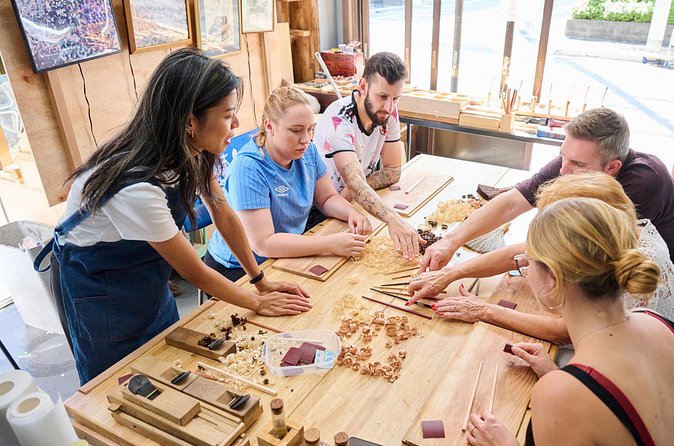
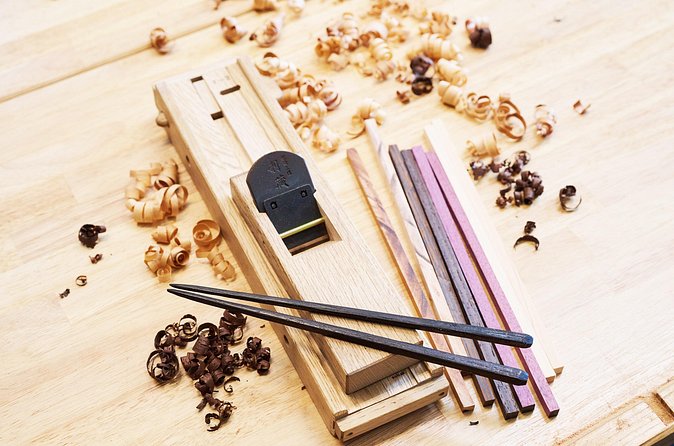
After selecting the wood, you begin shaping. The basic process includes shaving or carving the wood, sanding the surface, and refining the form until the pair looks and feels right.
You do not need prior woodworking experience. The instructions are described as simple and direct, and the staff remain nearby to help when a cut or angle goes wrong. This is important because chopstick-making looks easy until you try to keep two narrow pieces even. The guides can show you how to remove material gradually rather than rush toward the final shape.
The work is hands-on but not presented as stressful. That balance is one of the strongest reasons to book this activity. You have enough to do to stay interested, but you are not expected to master a trade before the hour ends.
Guides named in participant accounts include Angie, Yuki, Chihiro, Anthony, Victoria, Tomo, Kaana, Rad, and others. Their roles may vary by session, but the consistent practical point is that English-speaking help is available. Several visitors specifically appreciated being shown how to shave and sand the wood, as well as how different wood types behave.
If you make a mistake, do not panic. The staff can help fix problems as you work. That makes this a better choice for beginners than a self-guided craft table where you are left to guess.
Sanding, finishing, and the one-hour limit
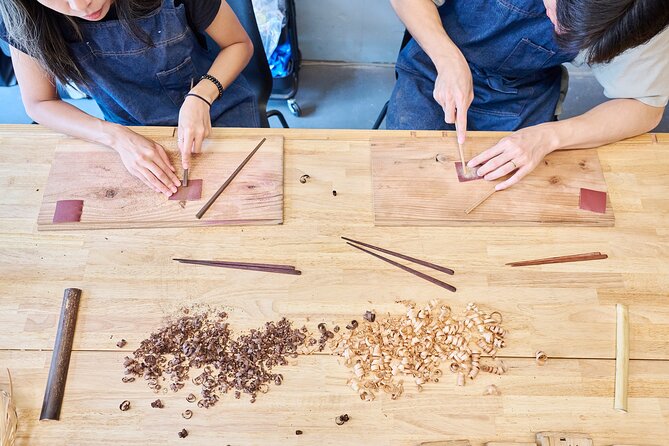
The sanding stage is where the rough blank starts to feel like a finished utensil. You smooth the surface and refine the shape, paying attention to the ends and the grip. This is also the most calming part of the class. One participant described the activity as a peaceful break from the city, and that is a fair way to think of it.
The hour is workable, but you should keep an eye on the clock. One account noted that a very quick maker might finish in 30 minutes, while a careful beginner can use the full session. Another described the process as fitting only just within the one-hour allocation when the group was full and participants started at different times.
That timing issue deserves attention. The class is limited to 10 people, but two employees may be helping several makers at once. In a compact room, staff might need to move quickly between workstations. You should expect guidance, but not necessarily a long private lesson with an artisan focused only on you.
My advice is to begin promptly, listen closely to the first demonstration, and ask questions as soon as you need help. If you want a slow, meditative woodworking class with plenty of spare time, this may feel short. If you want a compact activity that produces a real souvenir, the format works well.
Same city, a completely different kind of day:
- Mt Fuji and Hakone 1-Day Bus Tour Return by Bullet Train
★ 5.0 · 26,383 reviews - 1-Day Tokyo Bus Tour
★ 5.0 · 14,250 reviews - Tokyo: TOKYO SKYTREE® Admission ticket
★ 4.5 · 11,192 reviews - Tokyo: teamLab Planets TOKYO Digital Art Museum Entry Ticket
★ 4.6 · 9,779 reviews
Learning why chopsticks matter in Japan
The workshop is not only about sanding wood. You also learn about the cultural role of chopsticks in Japan and gain a better sense of why an everyday table item deserves careful design.
The information provided does not give a full lecture outline, so the amount of cultural explanation may depend on your guide and the pace of the group. Still, the basic idea is valuable: chopsticks are part of daily life, and making your own pair helps you notice details you might otherwise ignore.
You begin to think about the taper, the texture, and the balance between the two sticks. Those details are easy to overlook when you pick up a disposable pair at a restaurant. Here, the object becomes personal because you have shaped it yourself.
This cultural element also gives the class more substance than a standard souvenir purchase. You leave with something useful, but you also understand a little more about the craft behind it. That combination makes the workshop especially appealing if you prefer activities connected to local life rather than another photo stop.
Optional engraving and the finished gift
Once your chopsticks are shaped and smoothed, you can have them personalized with engraving for an additional ¥1,000. Engraving is not included in the $16 base price, so budget for it only if the extra touch matters to you.
I think engraving makes the most sense for a gift, a couple’s keepsake, or a family set. It also helps distinguish your pair from similar souvenirs sold in shops. One participant specifically praised the engraving and felt the extra ¥1,000 was worthwhile.
The finished chopsticks are wrapped beautifully and ready to use or give away. That presentation adds value, especially if you are carrying them home as a gift. You are not leaving with an unfinished craft project that needs more work at your hotel.
The final product will reflect your skill and the time you put into it. Do not expect factory-perfect symmetry if this is your first attempt. That is part of the charm. The small irregularities show that you made them rather than simply purchased them.
Why the $16 price makes sense
At $16 per person, this is a good-value short activity. The price includes the workshop, tools, materials, instruction, and one of the included wood options. You also receive a pair of personalized chopsticks to take home the same day.
The cost becomes less predictable if you select premium wood or add engraving. That is not a problem, but you should treat those choices as optional upgrades rather than assume everything is included. Ask about any surcharge before choosing a higher-grade wood.
Compared with a quick souvenir purchase, the workshop offers more for your money because you spend time learning and making. Compared with a long craft course, it is inexpensive but brief. The best value comes if you care about the process as much as the object.
For families, the price is also easier to manage than many full-day attractions. A family of five, including children from age eight through adults, was able to take part. The activity can work across ages because each person can shape at their own pace, with staff stepping in when needed.
Who will enjoy this workshop most
I would recommend this activity to several kinds of visitors:
- First-time makers: You get clear instructions, supplied tools, and help when something goes wrong.
- Families: The activity has worked for children as young as eight through adults, and everyone leaves with the same type of useful souvenir.
- Solo visitors: The small format gives you a friendly, focused activity, and staff have also offered Tokyo tips during the session.
- Couples and friends: You can make matching pairs or prepare an engraved gift for someone at home.
- Anyone needing a slower hour: The sanding and shaping offer a calm pause between larger Tokyo sights.
- Craft fans: You get a short introduction to traditional woodwork without committing to a long class.
I would hesitate if you dislike close handwork, want a fully polished professional product, or need a very slow pace. The workshop is beginner-friendly, but it still requires attention and a willingness to shape the chopsticks yourself.
The activity is wheelchair accessible, though the available information does not describe the exact room layout or workbench height. If you need a particular setup, confirm the details before booking.
Practical timing and group advice
The experience runs for one hour, with starting times available according to the day’s schedule. An early booking can be quiet, but the pace depends on how many people are assigned to that session. One morning booking had only two participants, while another session had about 10 people and felt more hurried.
Because the room is described as small and groups may not begin at exactly the same moment, you should expect some movement around you. A smaller session will likely feel more personal, while a full group may require patience when waiting for a guide.
The staff speak English and Japanese. That makes the workshop accessible to international visitors, and the hands-on demonstration helps bridge any language gap. You do not need to rely on a long technical explanation to understand the main steps.
The meeting point is a shop and workshop rather than a large attraction with a prominent entrance description. Save the full address, the Japanese name, and the coordinates before setting out so you can identify the correct place without wasting workshop time.
Cancellation is free up to 24 hours before the activity for a full refund. You can also reserve now and pay later, which helps if your Tokyo schedule is still changing.
My recommendation: book it for the souvenir and the process
I would book the Tokyo chopstick workshop if you want a short, affordable activity that gives you something personal to take home. The strongest parts are the patient instruction, the choice of wood, the cultural explanation, and the chance to make a practical object rather than buy a generic trinket.
Go in with realistic expectations. This is a one-hour introduction, not a long artisan apprenticeship. A full group can feel rushed, and premium wood and engraving cost extra. Still, the base price is modest, the activity suits beginners, and the finished chopsticks are useful long after your Tokyo holiday ends.
For the best experience, choose your wood carefully, ask for help early, and consider the ¥1,000 engraving if you are making a gift. If you want a calm hour with a clear result, this is an easy workshop to add to a Tokyo itinerary.
FAQ
How long does the chopstick-making workshop last?
The workshop lasts one hour. Starting times vary, so you need to check availability for the date you want.
What is included in the price?
The price includes the chopstick-making workshop, tools, materials, a personalized pair of chopsticks, and access to three included wood types. Higher-grade woods cost extra.
Can I choose the type of wood?
Yes. You can choose from more than 10 types of wood. Three choices are included, while other higher-grade options require an additional fee.
Is engraving included?
No. Engraving is an optional extra. Participants have paid an additional ¥1,000 for this service.
Is the workshop available in English?
Yes. Staff provide instruction in English and Japanese, and English-speaking staff are available.
How many people are in each group?
The workshop is limited to 10 participants. Smaller sessions may be possible, depending on the booking schedule.
Is the workshop wheelchair accessible?
Yes. The activity is listed as wheelchair accessible.
Can I cancel for a refund?
Yes. You can cancel up to 24 hours in advance for a full refund. A reserve-now, pay-later option is also available.
Just added around Tokyo
- Tokyo: Customizable Private Guided Walking Tour★ 4.5 · 129 reviews
- Private Harajuku Omotesando Architecture Tour★ 4.9 · 18 reviews
- Tokyo: Guided Helicopter Ride★ 4.9 · 24 reviews
- Tokyo: Guided Walking Tour of Tsukiji Market with Lunch★ 4.4 · 24 reviews
- Tokyo: Private Personalized Local Food Tour★ 4.5 · 101 reviews
- Tokyo GINZA: KONPARU Japanese Cabaret Show with Drink★ 4.8 · 38 reviews
- Tokyo: Guided Walking Tour of Tsukiji Market with Breakfast★ 4.4 · 134 reviews
- Tokyo: Gotokuji Cat Temple, Shinjuku Cat Cafe & 3D Cat Tour★ 4.9 · 38 reviews
Workshops, compared.
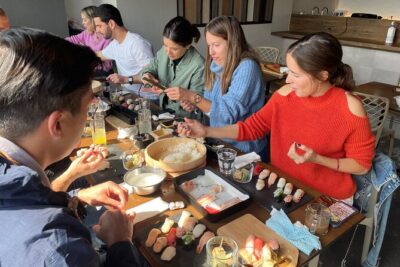
Sushi Making Tokyo Roll and Authentic Japanese Sushi Class
Read our review →
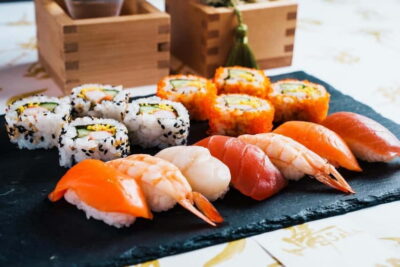
Roll and Authentic Sushi Making Class in Asakusa
Read our review →
Ramen Cooking Class at Ramen Factory in Kyoto
Read our review →
Sushi Making Class in a Happi Coat near a Famous Spot
Read our review →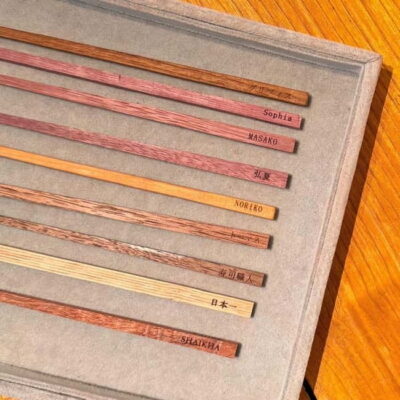
Sushi Making Osaka Roll and Authentic Japanese Sushi Class
Read our review →
Tokyo Sushi Making Class in Tsukiji with Professional Chef
Read our review →Browse the lists this tour appears in