
REVIEW · CYCLING TOURS
Tokyo: 2-Hour Night Bike Tour of the City’s Hidden Gems
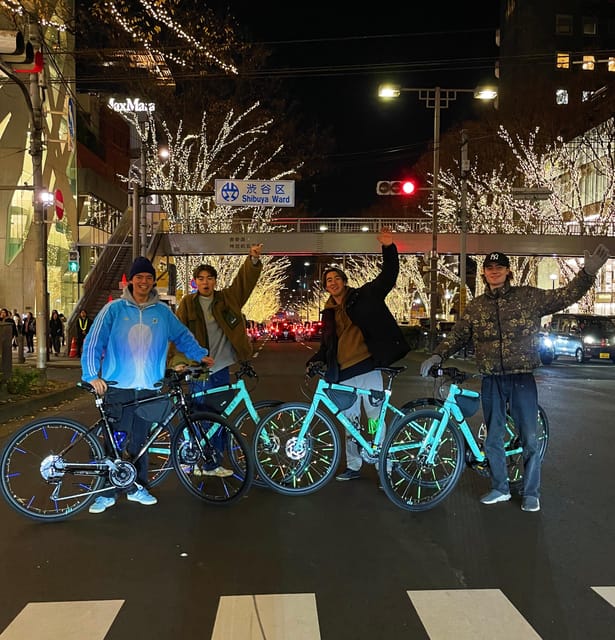
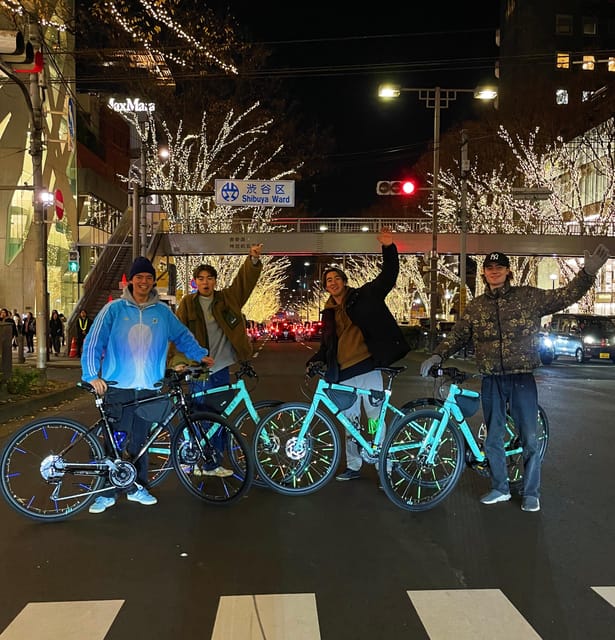
Tokyo looks different from a bicycle at night. You glide from the glow of Shibuya Crossing to the polished lights of Roppongi, then finish beneath Tokyo Tower. The neon-lit Bianchi and Fuji bikes add a playful touch without turning the ride into a costume show.
I like the flexible routing and the chance to see parts of Tokyo between major sights. I also like the practical extras: a phone pouch, bike insurance, and English-speaking guides such as Kei, who can adjust the ride to your interests. The catch is simple: you need to ride confidently on city roads, sometimes without a bike lane.
In This Review
- Key points to know before you book
- Tokyo after dark, seen from a bicycle
- Meeting the glowing bikes at Yoyogi Park
- Shibuya and the city’s brightest crossroads
- Omotesando’s seasonal lights and polished streets
- Roppongi’s towers and Tokyo Midtown
- Finishing beneath Tokyo Tower
- Why the guide can make or break the ride
- The real cycling question: are you comfortable on Tokyo roads?
- Is $73 a fair price for two hours?
- Who should book this neon bike tour?
- FAQ
- Where does the Tokyo neon bike tour begin?
- Where does the tour finish?
- How long is the bike tour?
- Which places does the route visit?
- Is the tour conducted in English?
- What kind of bikes are provided?
- Who should not book this activity?
Key points to know before you book
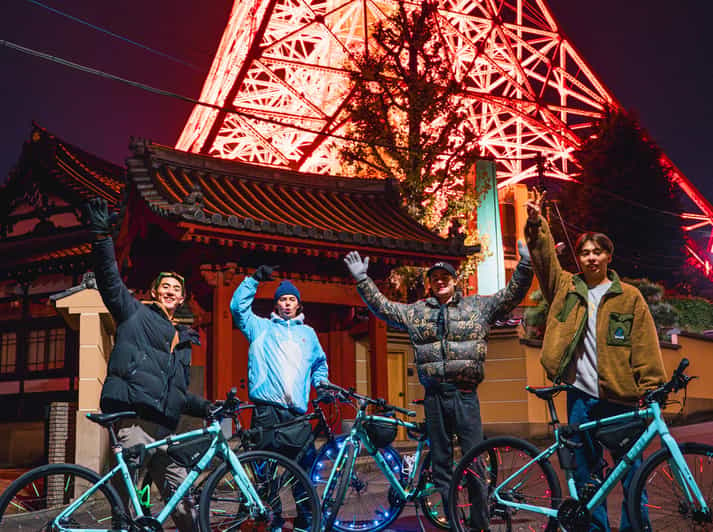
- Neon-lit Bianchi and Fuji bikes: The custom bikes make the evening ride easy to spot and especially fun for families with older children and teenagers.
- Yoyogi Park starting point: Meet at the park’s main entrance, where the illuminated bikes should be visible.
- Major night sights: The route takes in Shibuya, Omotesando, Roppongi, Tokyo Midtown, and Tokyo Tower.
- Two hours on city streets: This is an active sightseeing tour, not a slow lesson or a short photo stop.
- Confident riding required: You may share roads with traffic and encounter streets without dedicated bike lanes.
- $73 value: The price includes the guide, customized bicycle, small bike pouch, and insurance, but the main value is seeing Tokyo between the famous districts.
Tokyo after dark, seen from a bicycle
Most first-time visits to Tokyo rely on trains and walking. That works well, but it gives you two very different views: underground stations and short stretches between them. This tour fills in the space between those points.
For two hours, you travel at street level through several of Tokyo’s best-known night districts. You can watch the city change from the youthful energy around Shibuya to the stylish lighting of Omotesando, then to the high-rise glow of Roppongi. A bicycle gives you a steady sense of movement while still letting you notice shopfronts, signs, reflections, and side streets.
The neon bikes are more than a novelty. They make the group easier to identify at night, and they give the outing a cheerful, social feel. If you are traveling with teenagers, the glowing wheels may be the part they remember most. If you prefer a quiet cultural walk, this is a livelier choice.
The guide matters here. A well-informed English-speaking guide can explain what you are seeing while keeping the ride moving. Kei is one of the guides associated with this experience, and the tour can sometimes bend toward your interests rather than following a rigid script. That flexibility is useful if you have already seen the main sights or want extra time near a particular area.
More Walking Tours in Tokyo
- Tokyo Tsukiji Fish Market Food and Culture Walking Tour
★ 5.0 · 3,184 reviews - Tokyo: Imperial Palace and Shogun Historical Walking Tour
★ 5.0 · 2,251 reviews - Tokyo: Shinjuku Local Bar and Izakaya Guided Walking Tour
★ 4.9 · 1,794 reviews
Meeting the glowing bikes at Yoyogi Park
Your evening begins at the main entrance of Yoyogi Park. Look for the bikes with their lights on. The meeting point is straightforward in principle, but Yoyogi Park is a large area, so give yourself enough time to reach the main entrance without rushing.
The start point also gives you a sensible transition into the ride. You are near the Harajuku and Shibuya area, where Tokyo quickly shifts from park paths and fashion streets to bright commercial roads. You can use the first few minutes to settle onto the bike and check that your phone, wallet, or keys are secure in the small pouch attached to the bicycle.
The supplied bikes are high-quality Bianchi and Fuji models customized with neon lighting. That is a better setup than an ordinary rental bike for an evening tour, especially if you care about comfort and handling. Still, the information does not specify frame sizes or step-through models, so mention any bike-fit concerns when booking.
Wear comfortable clothes and shoes. Bring water, since two hours of steady riding can be tiring even in the evening. Smoking, alcohol, drugs, and littering are not allowed, which is sensible for a guided ride on public streets.
Shibuya and the city’s brightest crossroads
Shibuya is the obvious early highlight. The area is best known for Scramble Crossing, where streams of pedestrians cross from every direction beneath enormous signs and screens. From a bicycle, you are not simply walking into the crowd and stopping for the usual picture. You are approaching the district as part of the wider street scene.
The exact amount of time at Shibuya can vary because the guide may adapt the route. You should expect a moving city view rather than a long, formal stop with an extended explanation. That suits the tour’s pace, but it means you should not book this ride if your main goal is a slow photography session at every landmark.
Shibuya also gives you an early reminder that Tokyo cycling is not always gentle. Roads can be busy, and bike lanes are not guaranteed. You need to pay attention to vehicles, pedestrians, signals, and the riders around you.
I would rate this section as particularly good for people who have already visited Shibuya on foot. You see the district in motion and gain a better sense of how its streets connect. First-time visitors will recognize the famous crossing, but the bicycle lets you continue rather than getting stuck in one crowded pocket.
Omotesando’s seasonal lights and polished streets
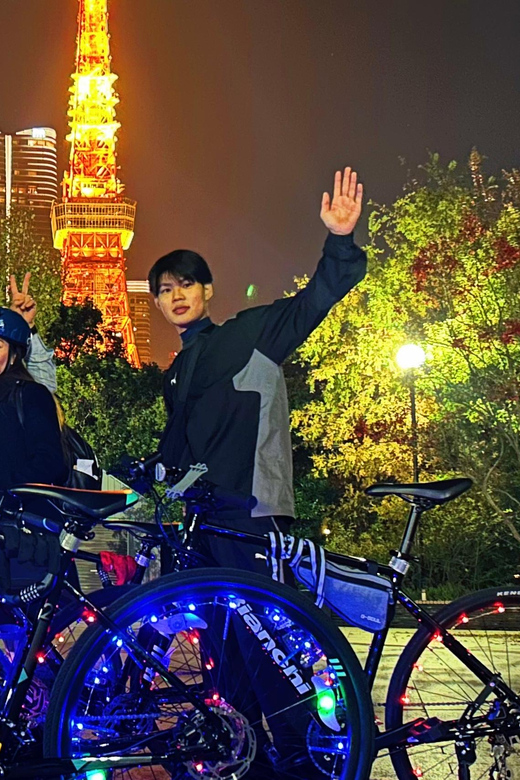
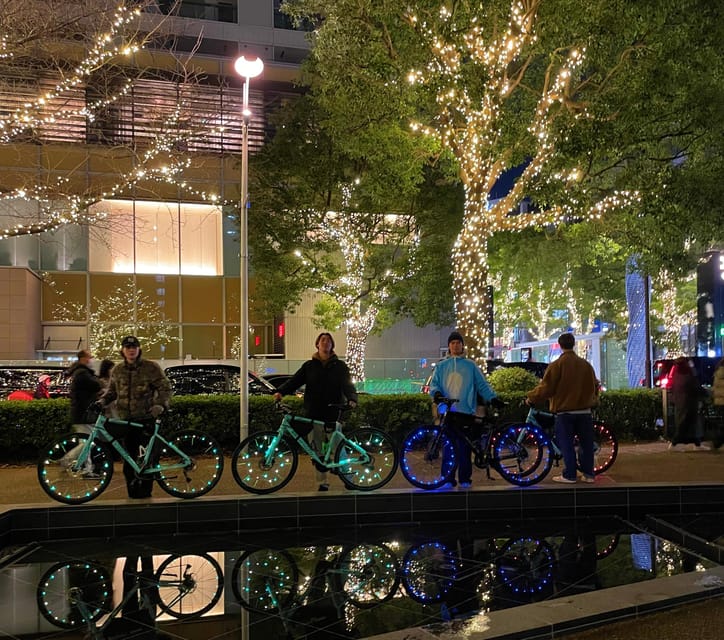
From Shibuya, the ride reaches Omotesando, one of Tokyo’s best-known shopping avenues. Its broad streets and designer storefronts take on a different mood after sunset, especially when seasonal light displays are in place.
The appeal here is visual rather than historical. Glass, trees, shop windows, and street lighting combine into a smooth, carefully arranged night scene. You might find this stretch calmer than Shibuya, though the road remains part of an active city route.
Seasonal displays are a real strength, but they also create uncertainty. Illumination programs change with the time of year, so the precise decorations and brightness may differ from one visit to the next. The basic district remains part of the advertised route, but no two evening rides need look exactly alike.
This is where the bicycle format earns its keep. You can cover more ground than on foot, yet you are still close enough to notice the details. You are not sealed inside a vehicle behind glass, and you do not need to spend the evening changing trains for a short move between districts.
Same city, a completely different kind of day:
- Mt Fuji and Hakone 1-Day Bus Tour Return by Bullet Train
★ 5.0 · 26,383 reviews - 1-Day Tokyo Bus Tour
★ 5.0 · 14,250 reviews - Tokyo: TOKYO SKYTREE® Admission ticket
★ 4.5 · 11,192 reviews - Tokyo: teamLab Planets TOKYO Digital Art Museum Entry Ticket
★ 4.6 · 9,779 reviews
Roppongi’s towers and Tokyo Midtown
Roppongi brings a more modern, high-rise mood. Glass towers catch the surrounding lights, while installations and seasonal displays add color around the streets. The district has an upscale feel, but the important thing for this tour is the way its buildings reflect and multiply the illumination.
The route passes near Tokyo Midtown, a major complex known for its changing seasonal lighting. This section should appeal to anyone who enjoys contemporary architecture and night photography. The bright surfaces and tall buildings create a very different picture from the open pedestrian space around Shibuya.
You may also appreciate the contrast between Roppongi and Omotesando. Omotesando feels tied to a grand avenue and high-end storefronts. Roppongi is more vertical, with tower walls, plazas, and reflected light. Seeing both in one short ride gives the evening a useful rhythm.
The drawback is that urban cycling requires concentration precisely when you are tempted to look upward. Keep your eyes on the road while riding, then take in the buildings when the group pauses or slows safely. A guide can point out details, but you still need to manage your own bike.
Finishing beneath Tokyo Tower
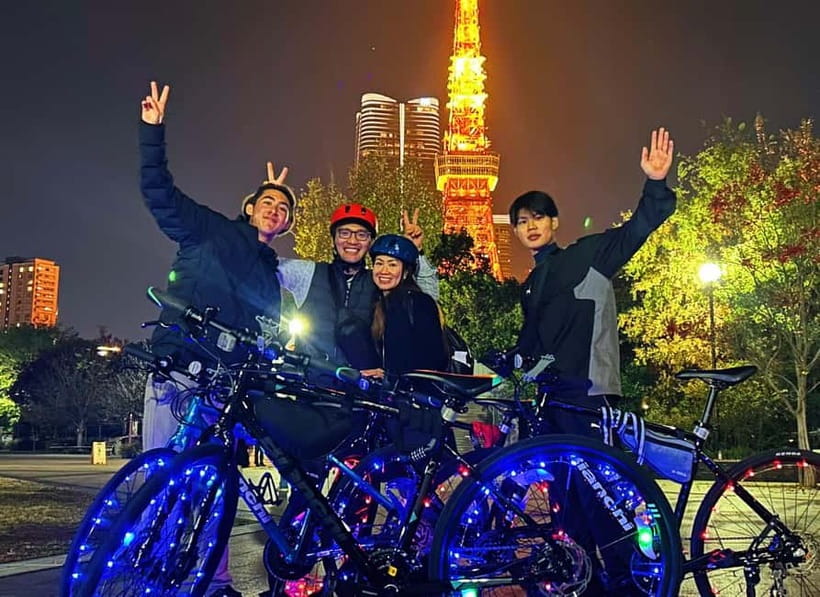
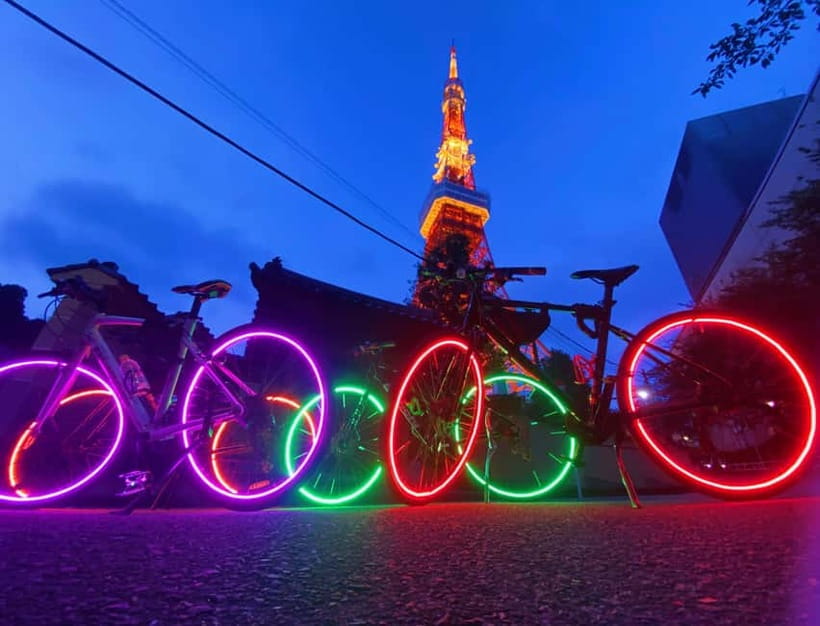
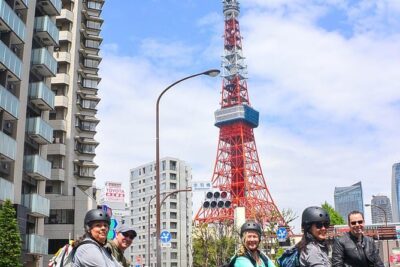
The ride ends at Tokyo Tower, one of the most recognizable sights in the city. Its red and white structure rises above the surrounding streets, giving the tour a clear visual finish instead of simply returning through the same neighborhood.
Tokyo Tower is especially effective at night because it is easy to pick out against the dark sky. After the smaller signs, shop lights, and glass reflections of the earlier stops, the tower provides a strong final image. It also connects the modern city you have been riding through with one of Tokyo’s most familiar symbols.
The route then returns to the original meeting point at Yoyogi Park. That matters for planning: you do not need to arrange a separate pickup at the end or figure out public transportation from an unfamiliar district. You should still leave room in your evening schedule for the return ride and any small changes made along the way.
The activity description presents Tokyo Tower as the finale, but the exact order or route can be adjusted. If you have a particular interest in architecture, seasonal lighting, or famous crossings, tell the guide early. The strongest part of this tour may be the ability to shape the evening slightly rather than simply following a fixed line.
Why the guide can make or break the ride
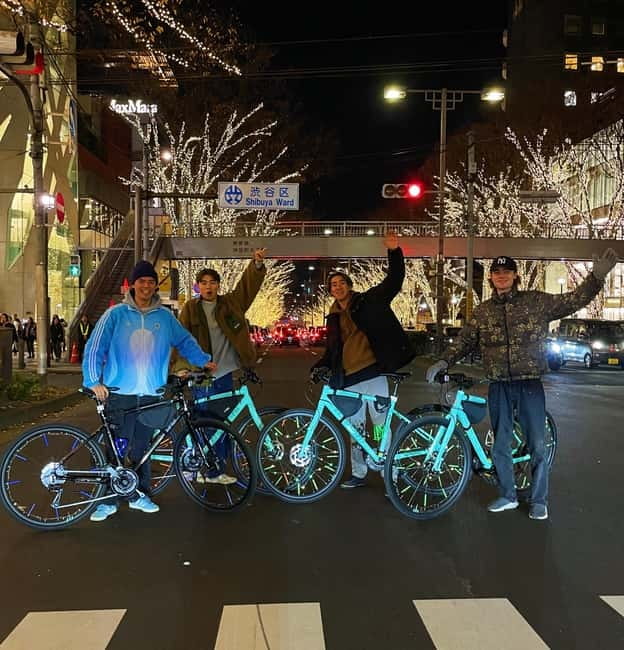
A bicycle tour is not just a rental with company. You are paying for route judgment, local context, and group management. An English-speaking guide can tell you what you are passing and help you make sense of districts that may otherwise blur together after dark.
Kei has been singled out for being accommodating and entertaining, including adjusting the route around personal interests. That does not mean you should assume Kei will lead every departure. It does mean that asking about the guide when you book could be worthwhile if the human side of the tour is important to you.
The route may include places beyond the core highlights when the guide sees a good reason or when the group has a particular request. I like that approach, especially for repeat visitors to Tokyo. You may already know Shibuya and Tokyo Tower, but you can still see how the city joins them together.
The guide cannot remove every road challenge. Listen carefully to instructions, keep a safe distance, and do not treat the neon lighting as permission to ride casually. This is an escorted city ride, not a private lane or a beginner class.
The real cycling question: are you comfortable on Tokyo roads?
The most important booking test is your riding ability. You need to be able to control a bicycle confidently, start and stop smoothly, follow traffic signals, and stay aware of other road users.
One practical warning is that some roads may not have bike lanes. You could be riding alongside traffic rather than on a separate cycling path. That is normal for many city bike tours, but it can feel stressful if you have little experience riding in urban conditions.
The tour is not suitable for people who cannot ride a bike, children under 12, pregnant women, or people with back problems. Those limits are worth taking seriously because the activity lasts two hours and may require repeated starts, stops, turns, and time in a forward-leaning position.
Comfortable shoes are more important than stylish ones. Bring water, and wear clothing that lets you move easily. If you are unsure about your fitness or city-riding skills, this is the point to choose a walking tour instead.
Is $73 a fair price for two hours?
At $73 per person, this is not the cheapest way to see Tokyo’s lights. You can walk through some of these districts for free, and the train system costs far less than a guided activity. The question is what you are buying beyond transport.
The fee includes a customized Bianchi or Fuji bike, an English-speaking guide, local stories, a small pouch for personal items, and bike insurance. You also get a route that links several major night districts in one outing. If you would otherwise spend time planning connections between Shibuya, Omotesando, Roppongi, Tokyo Midtown, and Tokyo Tower, the convenience has real value.
The price makes the most sense for a small group or family with older children who wants an active evening and a different angle on familiar sights. It is less compelling for someone who only wants to see Tokyo Tower or Shibuya, since those places are easy to visit independently.
The flexible route adds value, too. If the guide responds to your interests and shows you streets you would not have chosen alone, the tour becomes more than a checklist of illuminated landmarks. Just remember that the two-hour duration limits how long you can linger at each one.
Who should book this neon bike tour?
I would choose this experience if you already ride comfortably, enjoy city energy, and want to connect several Tokyo districts without spending the evening underground. It is also a good match for teenagers, provided they meet the minimum age and can handle traffic-aware cycling.
It works particularly well on a repeat visit. You may have walked through Shibuya or taken the train to Roppongi before, but riding between them gives you a fresh view of the city. The lights, reflections, and glowing bicycles make the evening feel special without requiring a formal show.
I would skip it if you dislike riding near cars, need a completely flat and protected route, or want long stops at each sight. Pregnant people, anyone with back problems, children under 12, and non-cyclists should choose another activity.
Book up to 24 hours before the start for a full refund if your plans change, and you can reserve now while paying later. That flexibility is useful in Tokyo, where weather and energy levels can alter your evening plans.
FAQ
Where does the Tokyo neon bike tour begin?
The tour begins at the main entrance of Yoyogi Park. The neon-lit bikes should make the meeting point easy to identify.
Where does the tour finish?
The ride ends back at the Yoyogi Park meeting point.
How long is the bike tour?
The activity lasts two hours.
Which places does the route visit?
The route includes Shibuya, Omotesando, Roppongi, Tokyo Midtown, and Tokyo Tower. The guide may adjust the route based on interests and conditions.
Is the tour conducted in English?
Yes. An English-speaking guide leads the experience.
What kind of bikes are provided?
You ride customized neon-lit Bianchi and Fuji bicycles. A small pouch on the bike holds items such as your phone, wallet, and keys.
Who should not book this activity?
The tour is not suitable for children under 12, pregnant women, people with back problems, or anyone who cannot ride a bike. You should also be comfortable cycling on city roads, including roads without bike lanes.
More Evening Experiences in Tokyo
- Tokyo Night Foodie Tour in Shinjuku – Seasonal Sushi, Wagyu Beef
★ 5.0 · 1,161 reviews - Tokyo: Daikoku JDM Car Meet & Night Car Culture Tour
★ 4.8 · 626 reviews - Tokyo After 5: Authentic Japanese Food & Drink Night Tour
★ 4.5 · 560 reviews - Tokyo: Samurai Entertainment Night Show in Kanda Shrine
★ 4.6 · 417 reviews
More Cycling Tours in Tokyo
- Tokyo Guided Small-Group Biking Tour
★ 5.0 · 1,250 reviews - Tokyo Great Cycling Tour
★ 5.0 · 811 reviews - Tokyo Top Highlights 3h Guided E-bike Tour
★ 5.0 · 714 reviews - 3h Tokyo E-Bike Tour: Hidden Gems, and Local Life with guide
★ 5.0 · 670 reviews
Just added around Tokyo
- Tokyo: Customizable Private Guided Walking Tour★ 4.5 · 129 reviews
- Private Harajuku Omotesando Architecture Tour★ 4.9 · 18 reviews
- Tokyo: Guided Helicopter Ride★ 4.9 · 24 reviews
- Tokyo: Guided Walking Tour of Tsukiji Market with Lunch★ 4.4 · 24 reviews
- Tokyo: Private Personalized Local Food Tour★ 4.5 · 101 reviews
- Tokyo GINZA: KONPARU Japanese Cabaret Show with Drink★ 4.8 · 38 reviews
- Tokyo: Guided Walking Tour of Tsukiji Market with Breakfast★ 4.4 · 134 reviews
- Tokyo: Gotokuji Cat Temple, Shinjuku Cat Cafe & 3D Cat Tour★ 4.9 · 38 reviews
Cycling Tours, compared.
3h Tokyo E-Bike Tour: Hidden Gems, and Local Life with guide
Read our review →
Arashiyama Bamboo Forest & Hidden Gems Bike Tour (Early Bird)
Read our review →
Hiroshima in a Nutshell: Morning Bike Adventure
Read our review →
5 Top Highlights of Kyoto Full Day Bike Tour (E-bike option)
Read our review →Browse the lists this tour appears in