
REVIEW · WORKSHOPS
Private Handmade Ring Workshop Activity in Tokyo Shibuya
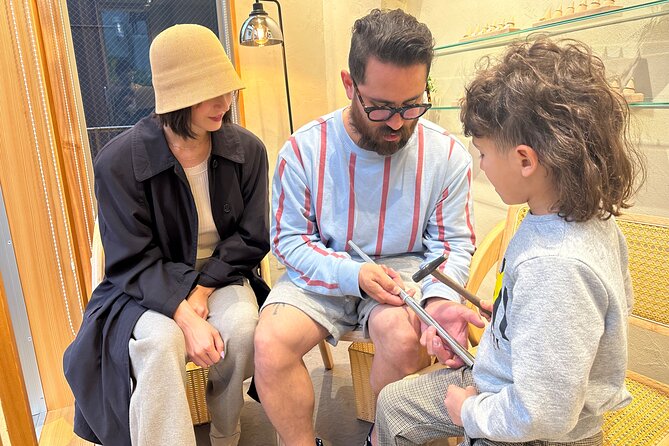
The best part of this Shibuya activity is that your souvenir is not pulled from a shop shelf. You choose the metal, thickness, shape, and texture, then use a hammer to create the surface pattern yourself. Skilled staff handle the more technical shaping and final polish, so you leave with a ring that looks finished rather than a lopsided metal experiment.
I like the warm one-to-one help, especially for first-time makers, and I like the personal meaning of making a ring for a partner, child, parent, or yourself. Instructors including Hikari, Nana, and Tao have been praised for patient guidance, clear English, and taking photos during the process. The catch is price: the listed $21.80 workshop fee does not include the material cost, and the final ring price rises with the metal, size, and design you choose.
In This Review
- Key points to know before you book
- Making a Japanese metalwork souvenir in Shibuya
- Choosing the metal, thickness, and finish
- The hammering session and what you actually make
- A private class with Hikari, Nana, or Tao
- A good choice for couples, families, and anniversaries
- Timing, meeting point, and same-day pickup
- Is the ring worth the extra material cost?
- What this workshop does well, and where it falls short
- Should you book this Shibuya ring workshop?
- FAQ
- Where does the ring-making activity take place?
- How long does the workshop last?
- Is the activity private?
- What is included in the price?
- Can I choose the ring design?
- How much of the ring do I make myself?
- Can I take the ring home on the same day?
- Is previous craft experience required?
- Is the workshop suitable for families?
- Can I cancel for a full refund?
Key points to know before you book
- You make the texture yourself: Hammering the ring’s surface is the hands-on heart of the class.
- Staff complete the technical work: The base ring and final polishing are handled by the craftsmen.
- Your ring is ready the same day: You do not need to return later to collect it.
- The class is private: Only your own group takes part, allowing plenty of questions and personal help.
- It suits more than couples: Families with children aged 12, 14, and 17 have enjoyed making individual rings.
- Budget for materials: The advertised activity price covers the workshop, but the ring itself costs extra.
Making a Japanese metalwork souvenir in Shibuya
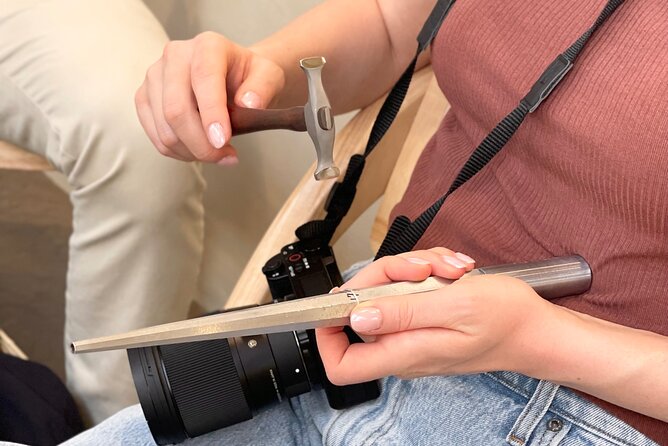
This is a small craft session built around tankin, a Japanese metalworking technique that uses tools and controlled hammering to shape and texture metal. You are not simply buying a ring and adding a token mark. You take part in the design and surface work, while the professionals make sure the finished item is wearable.
The workshop takes place at nane tokyo’s Cat Street shop, at Jingumae 5-chome 11-13, 1F, in the Shibuya area. The setting is described as a cute, jewel-box-like boutique rather than a large industrial studio. That matters because the experience feels intimate and manageable, but it also means you should expect a shop-based class, not a full day at a traditional metal foundry.
You meet your instructor at the shop and begin by discussing the ring you want. The available choices include material, blend, shape, thickness, size, and texture. Your instructor helps you compare the options and suggests what may look best, which is useful if you arrive with only a vague idea such as a simple silver band or a more distinctive hammered finish.
The private format is a real advantage here. You are not trying to catch an instructor’s attention across a crowded room. You can ask questions as you work, slow down when you need to, and make decisions with help close at hand.
A few more Tokyo trips to weigh up
- Sushi Making Tokyo Roll and Authentic Japanese Sushi Class
★ 5.0 · 3,971 reviews - Tokyo: Roll and Authentic Sushi Making Class in Asakusa
★ 4.9 · 1,957 reviews - Tokyo Shinjuku Chopsticks Making Class
★ 5.0 · 1,763 reviews
Choosing the metal, thickness, and finish
The design stage is where the activity becomes more personal than a standard souvenir purchase. You can select from different metals and blends, then consider how wide and thick the ring should be. The exact material choices and prices are handled at the shop, so do not assume the entry price covers every option.
This is also the point where the advertised price needs careful reading. The $21.80 per-person charge is for the workshop itself, while materials are separate. Several participants found the finished ring more expensive than first expected, especially after choosing higher-priced metals or larger options.
That does not automatically make the activity poor value. You are paying for the ring, guided instruction, use of the tools, the finishing work, and the time spent creating it. Still, if you are shopping for the cheapest possible silver souvenir, this is not the right comparison. The better comparison is a personalized keepsake and a short shared experience.
Ask about the material price before you commit to a particular metal. The staff can help you understand the available choices and any added cost. This simple question keeps the experience pleasant and prevents a surprise at the end.
The hammering session and what you actually make
The most hands-on portion involves applying texture with a special hammer. You work on the ring’s surface, creating the marks that give it a handmade look. Some people choose a more understated texture, while others enjoy making the pattern clearly visible.
The staff guide you through the technique and support you until the workshop ends. You do not need previous craft experience. The process is designed for beginners, and the instructors can correct your approach or help repair a mistake. One participant specifically appreciated being assisted after damaging the ring during the work.
It is important to understand the limits of the hands-on work. You are not responsible for every step from raw metal to finished jewelry. The base ring is prepared by the staff, and the final shaping, cleaning, and polishing are also completed by skilled craftsmen. You apply the texture and take part in the design decisions, while the shop handles the precision work.
That division is sensible for a one-hour class. It gives you a real role without asking you to master jewelry making in a single sitting. If you want a long, technically demanding craft course, you may find this too short. If you want a pleasant introduction and a polished result, the balance works well.
A private class with Hikari, Nana, or Tao
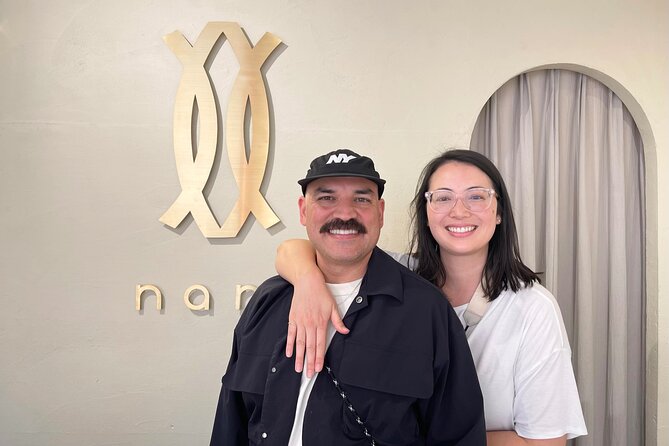
The instructor can shape the mood of the whole visit. Hikari has been singled out for kind, attentive help and for answering questions throughout the session. Nana has been described as cheerful and playful, making the class especially enjoyable for people who like conversation and laughter while they work.
Tao has also helped make anniversary sessions feel special, including taking photographs during the ring-making process. English-speaking customers have found communication clear, which removes much of the worry that can come with a hands-on activity in another country.
The staff do more than explain the hammering. They help you think through the ring’s look, guide you toward suitable choices, and watch for details that affect the final result. For a couple, the suggestion to make each other’s rings can add a thoughtful touch. It turns the class into more than parallel crafting at the same table.
Photo-taking is not listed as a formal inclusion, so treat it as a possible courtesy rather than a guaranteed service. Staff have taken photos and sent them afterward in some cases, but the main included item is the workshop itself.
Same city, a completely different kind of day:
- Mt Fuji and Hakone 1-Day Bus Tour Return by Bullet Train
★ 5.0 · 26,383 reviews - 1-Day Tokyo Bus Tour
★ 5.0 · 14,250 reviews - Tokyo: TOKYO SKYTREE® Admission ticket
★ 4.5 · 11,192 reviews - Tokyo: teamLab Planets TOKYO Digital Art Museum Entry Ticket
★ 4.6 · 9,779 reviews
A good choice for couples, families, and anniversaries
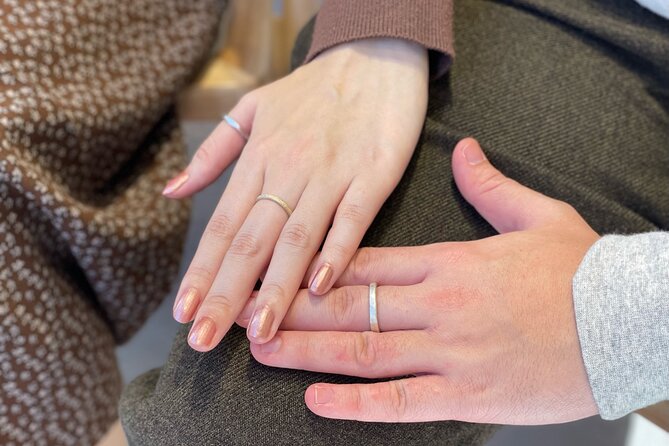
Couples are the clearest match for this experience. It works for a honeymoon, wedding anniversary, engagement memory, Christmas gift, or simply a shared afternoon in Tokyo. Making each other’s rings gives the activity a gentle romantic angle without requiring you to purchase formal wedding jewelry.
Some couples have used the session to create wedding rings, but you should keep expectations realistic. These are handmade custom rings made during a short workshop, not a full bridal consultation. Ask about the available materials, sizing, and finish if you are considering them for daily wedding use.
Families can also make good use of the private format. A family group of five, including teenagers aged 12, 14, and 17, was able to choose individual designs. That flexibility lets each person create something different instead of forcing everyone into one style.
The activity may also suit a grandparent and grandchild, parent and teenager, or friends who want a shared memento. Most people can participate, and service animals are allowed. The workshop is near public transportation, making it easy to add to a day around Shibuya and Harajuku.
Timing, meeting point, and same-day pickup
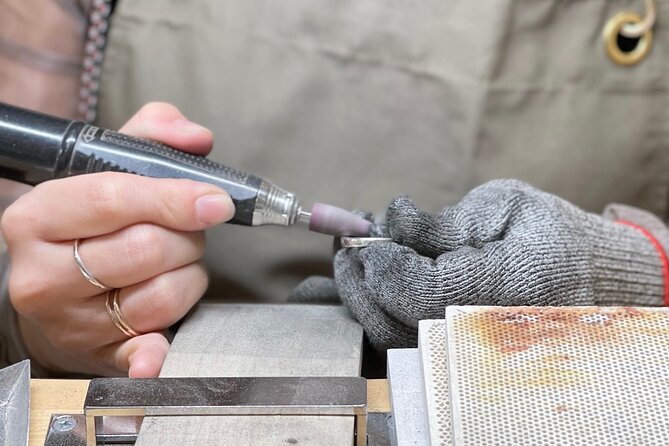
Set aside about 1 hour and 30 minutes, although the ring-making portion is also described as taking around one hour. The extra time allows for choosing the design, receiving instruction, and waiting for the final cleaning and polish.
You meet and finish at nane tokyo キャットストリート店, Japan, 150-0001 Tokyo, Shibuya, Jingumae 5-chome 11-13, 1F. The activity returns to this same location, so there is no second drop-off point to arrange.
The same-day pickup is one of the strongest practical features. You can wear the ring for the rest of your Tokyo visit or pack it in your luggage that evening. It also makes the workshop easier to fit near the end of a trip, when you want to bring home a finished souvenir without arranging international delivery.
Plan your schedule with a little breathing room. The experience is short, but design choices and finishing work can take time, particularly if your group asks many questions or chooses several rings.
Is the ring worth the extra material cost?
The answer depends on what you value. If you measure value only by the amount of metal, the activity may feel expensive. One clear criticism is that the ring’s price can seem high for the amount of work you personally complete.
I would look at it as two purchases combined: a piece of jewelry and a guided memory. You get to select the design, hammer the texture, spend focused time with someone important, and take home a finished object that carries the marks of your own hand. That is more meaningful than a generic key chain, but it is not the cheapest Tokyo keepsake.
The quality of the final result helps justify the cost for many people. Staff polish and clean the ring, and the finished pieces have been described as beautiful, with a good selection for different tastes. A guarantee for the rings has also been mentioned, though you should ask the shop for the exact terms before booking or paying for materials.
For the best value, decide your spending limit before the class. Choose the material and size with that limit in mind, then enjoy the creative part without second-guessing every upgrade.
What this workshop does well, and where it falls short
The strongest feature is the staff attention. The private setup, friendly instruction, and willingness to fix mistakes make the class comfortable for beginners. Hikari, Nana, and Tao have each helped create a warm experience, and clear English support is a useful benefit for international visitors.
The second strength is the emotional value. The ring can mark an anniversary, a first trip to Japan, a family holiday, or a special gift exchange. You are making something small, but the story attached to it can last much longer.
The main weakness is the limited amount of true metalworking. You choose the design and add texture, but staff prepare the base and complete the final polish. If your dream is to forge a ring from raw metal, this workshop will not meet that expectation.
The other concern is cost clarity. The low starting price does not include materials, so the final bill depends on your choices. Ask for the full price before selecting premium metals, larger sizes, or extra design options.
Should you book this Shibuya ring workshop?
Book it if you want a compact, private craft activity with a finished souvenir in your hand the same day. It is especially well suited to couples, families with older children, anniversary trips, and anyone who prefers a personal object to a mass-produced souvenir.
Skip it if your main goal is the lowest-cost ring or a full technical jewelry course. You will do only part of the making, and the material cost can push the total higher than the headline price suggests.
For most people, the smart approach is simple: confirm the material cost, choose a design within your budget, and treat the session as a shared memory with a wearable result. In Shibuya, that is a pleasant way to spend an hour or two.
FAQ
Where does the ring-making activity take place?
The workshop takes place at nane tokyo Cat Street shop, at Jingumae 5-chome 11-13, 1F, Shibuya, Tokyo 150-0001.
How long does the workshop last?
The activity lasts approximately 1 hour and 30 minutes. The ring-making portion is also described as taking around one hour.
Is the activity private?
Yes. This is a private activity, and only your own group participates.
What is included in the price?
The workshop price is included. The cost of the ring materials is not included.
Can I choose the ring design?
Yes. You can choose the material, thickness, texture, shape, and size. Additional choices may affect the material cost.
How much of the ring do I make myself?
You take part in choosing the design and applying the texture with a hammer. Staff prepare the base ring and complete the final shaping, cleaning, and polishing.
Can I take the ring home on the same day?
Yes. The finished ring can be taken home on the day of the workshop.
Is previous craft experience required?
No previous experience is stated as necessary. The staff guide you through the process and support you until the workshop ends.
Is the workshop suitable for families?
Yes. Most people can participate, and families with children aged 12, 14, and 17 have enjoyed making individual rings.
Can I cancel for a full refund?
Yes, if you cancel at least 24 hours before the experience start time. Cancellations made less than 24 hours in advance are not refunded, and changes within that period are not accepted.
Just added around Tokyo
- Private Memorable Tokyo Tour with English Speaking Driver★ 5.0 · 30 reviews
- Private Tokyo Custom Full-Day Tour by Chartered Vehicle★ 5.0 · 16 reviews
- Private Sightseeing to Mt Fuji and Hakone with English Driver★ 5.0 · 51 reviews
- Tokyo Photography Masterclass – Private Photography Lesson★ 5.0 · 25 reviews
- Private Mt. Fuji Day Trip from Tokyo with English-Speaking Driver★ 5.0 · 33 reviews
- 4 Day Tour – Mount. Fuji, Tokyo, Hakone, Kamakura and Yokohama★ 5.0 · 19 reviews
- Private Unforgettable Mt Fuji Tour with English Speaking Driver★ 5.0 · 142 reviews
- Private Tokyo Food Tour – A Journey Through Time Through Food★ 5.0 · 36 reviews
Workshops, compared.
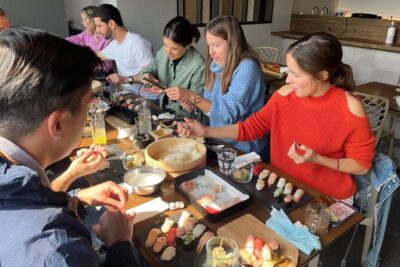
Sushi Making Tokyo Roll and Authentic Japanese Sushi Class
Read our review →

Roll and Authentic Sushi Making Class in Asakusa
Read our review →
Ramen Cooking Class at Ramen Factory in Kyoto
Read our review →
Sushi Making Class in a Happi Coat near a Famous Spot
Read our review →

Sushi Making Osaka Roll and Authentic Japanese Sushi Class
Read our review →
Tokyo Sushi Making Class in Tsukiji with Professional Chef
Read our review →Browse the lists this tour appears in