
REVIEW · TEMPLE & SHRINE TOURS
Osaka Temple :Warm Bamboo Oil Massage – Deep Restore〈90min〉
A warm bamboo massage inside an Osaka temple is the unusual heart of this experience. You move from incense and bell meditation to a foot bath, oil massage, matcha, and Japanese sweets, with the whole visit limited to three people.
I like the thoughtful mix of real bodywork and cultural activities, rather than a spa treatment with a few decorative Japanese touches. I also like the calm pace and the complimentary smartphone photos, which give you a small keepsake without turning the visit into a photo session. The main consideration is that the massage is listed as 90 minutes within a two-hour program, so this is not a full two-hour massage.
The experience is especially appealing if you want quiet time during a busy Osaka trip. The meditation may be shared with other participants unless you request a private session, and reservations for three people are handled by email.
In This Review
- Key points at a glance
- A temple visit with a massage at its center
- Getting oriented before the first bell
- Incense, worship, and quiet attention
- Foot bath and bamboo oil work
- Matcha, sweets, and the meaning behind tea
- What the $129 price really covers
- Who will enjoy this most
- Timing, language, and group details
- What the high ratings suggest about the experience
- Should you book the Warm Bamboo Oil Massage?
- FAQ
- How long does the experience last?
- What is included in the massage?
- Is a yukata provided?
- Is the activity available in English?
- Can the meditation be private?
- How many people can join?
- Where should I go for the meeting point?
Key points at a glance
- Warm bamboo and hand massage: Full-body oil work includes myofascial release with warm bamboo.
- Temple-based ritual: Begin with incense offering, an explanation of Japanese worship, and meditation with a bell and kneaded incense.
- A proper matcha moment: Learn about the cultural and historical background of tea while eating original Japanese sweets.
- Simple yukata included: Change into a yukata before the temple activities and receive smartphone photos afterward.
- Very small group: The experience is limited to three participants, with English and Japanese instruction.
- Strong relaxation focus: The program combines massage, foot care, meditation, tea, and a quiet setting rather than rushing from one activity to another.
A temple visit with a massage at its center
Many Japanese cultural activities ask you to watch, listen, or make something. This one adds a long body treatment, making it useful for the middle or end of a sightseeing trip. You get a temple setting, but you also get practical relief for tired legs and a tense back.
The experience lasts two hours. The massage portion is described as 90 minutes, while the remaining time covers arrival, changing, temple customs, meditation, foot care, tea, and photographs. That distinction matters. If your priority is massage, you are paying for a complete ritual around the treatment, not 120 minutes of hands-on work.
The provider, japanese massage 唯一無二, uses English and Japanese. Arisa is one of the practitioners, and she was specifically praised for her massage skill and guidance through the visit. Staff are also described as warm and attentive, which matters when an activity includes unfamiliar customs such as incense offering and meditation.
More Temple & Shrine Tours in Osaka
- Osaka: Minoh, Katsuoji Temple, & Minoh Falls Full-day Tour
★ 4.9 · 172 reviews - Sagano Romantic Train & Arashiyama, Kiyomizudera, Fushimi Inari Taisha Day Tour
★ 4.5 · 171 reviews - Full Day Kyoto Tour : Bamboo Forest, Golden Temple, Fushimi Inari
★ 5.0 · 84 reviews
Getting oriented before the first bell
The meeting-point advice deserves attention. For Google Maps, enter Japanese Massage -the one&only-, not the temple name. Using only the temple name may send you to the back entrance, where it can be easy to lose your bearings. If needed, search for the restaurant Tossa de coracao. The meeting point is right next to it.
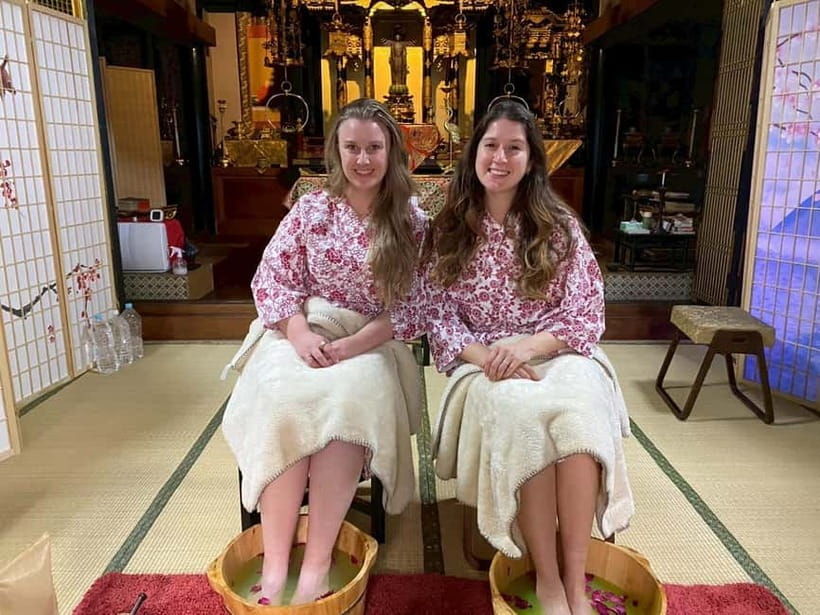
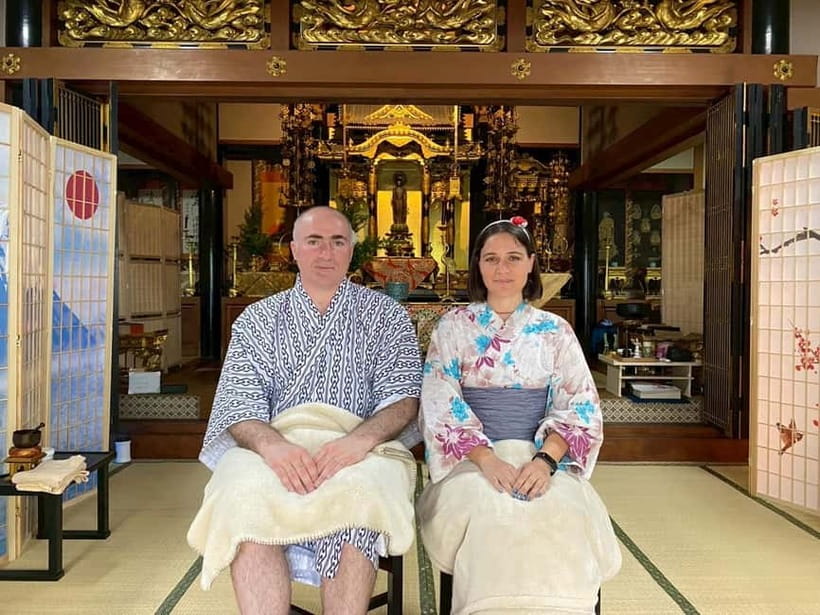
Once you arrive, you receive a welcome drink and change into a simple yukata. This is not presented as a formal costume rental or elaborate dressing service. It is a practical garment for the visit, and it helps mark a clear change from ordinary sightseeing to a slower, more traditional setting.
A complimentary smartphone photo is included. The picture is a pleasant extra, especially for couples or friends, but the real value is the time spent in the temple and treatment room. I would treat the photograph as a keepsake, not the reason to book.
Incense, worship, and quiet attention
The temple portion begins with a visit and incense offering. You also receive an introduction to the temple’s history and Japanese worship culture. This short explanation gives context to the gestures, so you are not simply copying what someone else does.
The program then moves into Zen meditation with a bell and kneaded incense. The bell provides a clear start to the quiet portion, while the incense adds scent and ritual without requiring prior knowledge. You do not need to arrive as a meditation expert. The format is designed to guide you into stillness.
Meditation may be shared with other people unless you request a private experience. That is the clearest tradeoff in the program. A small shared group can feel gentle and social, but it will not offer the same silence as a one-on-one temple visit. If privacy is important, ask about it before booking.
Foot bath and bamboo oil work
The hands-on treatment begins with a foot bath and scrub massage. This is a sensible choice after walking around Osaka, where even a short sightseeing day can mean plenty of time on your feet. The foot care also serves as a transition between the temple rituals and the longer massage.
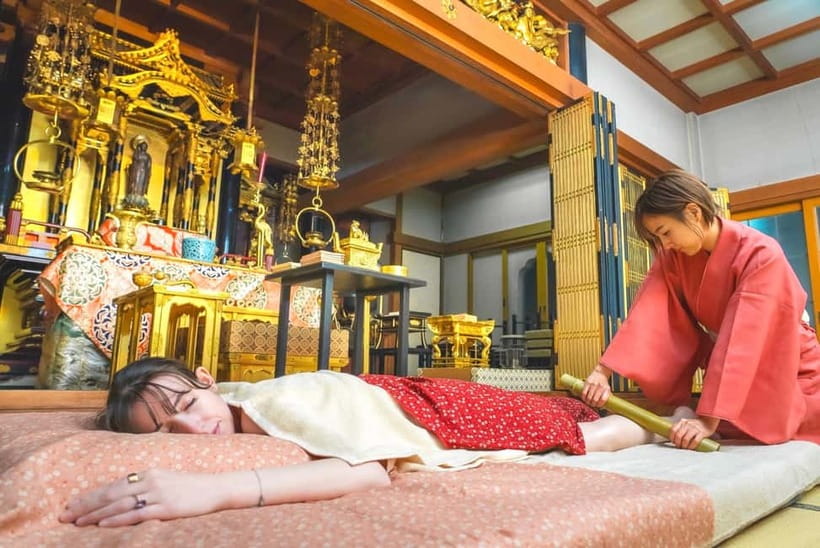
The main treatment combines warm bamboo and hand oil massage. The bamboo is used for myofascial release, so the technique is not simply a light oil rub. You can expect the bamboo to add pressure and a different sensation from hands alone, while the oil allows longer strokes across the body.
The title calls this a deep restore treatment, but I would keep your expectations practical. It is designed for relaxation and body release, not described as medical treatment. If you prefer very firm pressure or have specific physical concerns, discuss those with the practitioner before the massage begins.
The program information also explains Reiki as a non-contact Japanese energy-healing method intended to support relaxation and emotional balance. Since Reiki is not listed as a separate item in the main inclusions, ask the provider how it fits into your booked session if that element matters to you.
Same city, a completely different kind of day:
- Osaka Go Karting Tour with Funny Costume
★ 5.0 · 2,658 reviews - Osaka Castle: Museum and Tower Entry Ticket
★ 4.5 · 2,380 reviews - Osaka: Shinsekai Food Tour with 13-15 Dishes at 5 Eateries
★ 4.8 · 2,204 reviews - Osaka Food Tour: 13 Dishes at 5 Local Eateries
★ 5.0 · 2,149 reviews
Matcha, sweets, and the meaning behind tea
After the massage, the tea ceremony gives the experience a second rhythm. You learn about matcha and receive original Japanese sweets, with cultural and historical explanation included. This is more useful than simply being handed a bowl of tea, since the ceremony’s value lies in the gestures, order, and ideas behind it.
Matcha can be earthy and bitter, while the sweet provides balance. The pairing is part of the pleasure, but the explanation is what makes the activity suitable for people who want more than a spa appointment.
I like this timing. Tea comes after the body treatment, when you are already slowing down, and it gives you a calm way to finish rather than sending you straight back into Osaka’s noise. The tea ceremony is also a good feature for couples or friends who want a shared cultural activity but do not want a long formal class.
What the $129 price really covers
At $129 per person, this is not a budget massage. It becomes easier to judge once you count the full package: a 90-minute full-body oil treatment, foot bath and scrub, temple visit, incense offering, Zen meditation, yukata, matcha, Japanese sweets, cultural explanations, and smartphone photos.
The price makes the most sense for someone who would otherwise book both a massage and a separate cultural activity. You are paying for the setting, instruction, rituals, and small-group format as well as the bodywork. If all you want is a long, inexpensive massage, a standard Osaka spa may offer better value.
The small group improves the calculation. With a maximum of three participants, the visit is more personal than a large class. Still, the meditation can be shared, and the program is not described as fully private by default. Ask for a private arrangement if that is central to your plans.
Free cancellation is available up to 24 hours before the start time, and you can reserve now and pay later. Those terms are useful when you are building an Osaka schedule around weather, day trips, or changing arrival plans.
Who will enjoy this most
I would recommend this to you if you want a slow cultural break from sightseeing. It suits couples, solo visitors, and small groups who enjoy learning a little while they relax. The couple-focused feedback is especially relevant: the format gives two people a shared activity without requiring them to talk constantly or keep moving.
It also works well for anyone who wants to try Japanese customs with guidance. Incense, worship, meditation, yukata, matcha, and sweets are all included, but none is presented as a test of etiquette. The explanations in English make the experience approachable.
It may be less suitable if you want an intense sports massage, a large luxury spa, or total privacy throughout. The program has a ceremonial side, so some of the two hours are spent listening, changing, meditating, and drinking tea. That is its appeal, but it is also what reduces the massage time compared with a dedicated two-hour treatment.
Timing, language, and group details
The activity is listed as two hours, with starting times based on availability. English and Japanese are available, and the instructor leads both the practical treatment and cultural explanations.
The group is limited to three participants. Reservations for three people are available by email. For meditation, shared participation is possible unless a private session is requested, so a group of friends should confirm the arrangement before booking.
You should also allow enough time to find the correct meeting point. Put the provider’s name into Google Maps rather than relying on the temple name. That one small step could prevent a confusing walk around the wrong entrance.
What the high ratings suggest about the experience
The most consistent praise centers on relaxation, the quality of the welcome, and the combination of massage with tea and temple instruction. Louis described the treatment as very relaxing and the staff as kind. A couple from France found the welcome and treatments excellent, while a visitor from Hong Kong appreciated both the massage and the new experience of learning about matcha.
The cultural side is not an afterthought. A US visitor who booked mainly for the massage found the tea ceremony informative and calming, and specifically praised Arisa’s massage work. Another person returned for a second massage after an earlier visit, which points to a program that can appeal beyond a single sightseeing stop.
The enthusiastic comments should not make you expect every session to feel identical. Massage pressure, meditation comfort, and interest in tea ceremony vary from person to person. Still, the repeated praise for calm, kindness, and the blend of treatment and culture gives a clear picture of the activity’s strongest qualities.
Should you book the Warm Bamboo Oil Massage?
Book it if you want more than a massage and like the idea of spending two quiet hours with Japanese ritual, bodywork, and tea. The $129 cost is fair for the combined program, especially for couples or small groups who value a personal setting and cultural explanation.
Skip it if you only want the longest possible massage for your money. Also think twice if you need a completely private meditation session unless you confirm that option in advance.
For the right person, this is a smart Osaka reset: gentle temple customs first, warm bamboo massage in the middle, and matcha at the end. Schedule it after a busy day, follow the meeting-point instructions carefully, and let the slower pace do its work.
FAQ
How long does the experience last?
The full activity lasts two hours. The massage portion is listed as 90 minutes, with the remaining time used for arrival, changing, temple activities, meditation, tea, and photos.
What is included in the massage?
The treatment includes a foot bath and scrub massage, warm bamboo work, hand oil massage, and myofascial release with bamboo.
Is a yukata provided?
Yes. A simple yukata is included, and you change into it at the beginning of the experience.
Is the activity available in English?
Yes. The instructor can provide guidance in English or Japanese.
Can the meditation be private?
Zen meditation may be shared with other participants. A private experience can be requested, so you should confirm this when booking if privacy matters to you.
How many people can join?
The activity is limited to three participants. Reservations for three people are available by email.
Where should I go for the meeting point?
Enter Japanese Massage -the one&only- in Google Maps. Do not use only the temple name, because that may direct you to the back entrance. You can also search for the restaurant Tossa de coracao, which is right next to the meeting point.
More Massage & Relaxation in Osaka
- Osaka Temple Head Spa &Matcha Facial – Refresh & Glow〈90min〉
★ 5.0 · 24 reviews - Osaka: Tennen Onsen Naniwa-no-Yu, the famous hot spring spa
★ 4.7 · 19 reviews
Just added around Osaka
- (Ticket Included) Explore Osaka Castle & Museum of History★ 4.8 · 21 reviews
- Hidden Osaka – Yukaku Red Light Tour & Culinary Adventure★ 4.8 · 96 reviews
- Osaka: Walking Tour and Top Highlights★ 4.8 · 104 reviews
- Osaka: Private Ceramic Painting Workshop★ 5.0 · 13 reviews
- Pickleball in Osaka, Kobe & Kyoto with Locals!★ 4.7 · 80 reviews
- Eat Like a Local in Osaka – Private Custom Street Food Tour★ 4.3 · 33 reviews
- Osaka:SUMO BEATS SHOWCASE: Taiko Drum and Wagyu burger!★ 4.2 · 37 reviews
- Kimono photoshoot-Includes 100 photo data★ 5.0 · 21 reviews
Temple & Shrine Tours, compared.
Tea Ceremony in a Traditional Tea House in Kiyomizu
Read our review →
Meiji Shrine, Asakusa, Skytree Bus Tour and Cruise
Read our review →
Asakusa Walking Tour with Sensoji Temple Visit
Read our review →
Kamakura & Enoshima Day Trip including Temple Tickets
Read our review →
Kyoto/Osaka: Nara, Fushimi Inari Taisha, Arashiyama Bus Tour
Read our review →
Nikko Toshogu Shrine and Kegon Waterfall Tour
Read our review →
Tokyo Panoramic 1 Day: Meiji Shrine, Asakusa, Odaiba and SKYTREE®
Read our review →Browse the lists this tour appears in