
REVIEW · MASSAGE & RELAXATION
Tokyo Ikebana Wellness Art Experience near Shinjuku
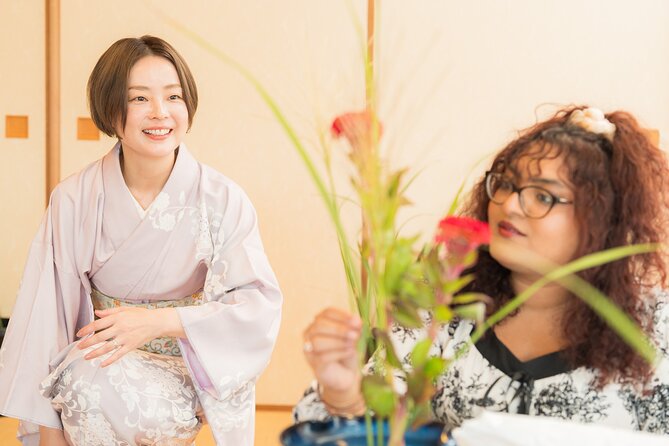
Ikebana is not simply putting flowers in a vase. In this small workshop near Shinjuku, you learn to notice the shape of each branch, the direction of every leaf, and the space between flowers. Ai-sensei introduces the art’s 600-year story, then helps you create an arrangement of your own.
I like two things right away: no experience is expected, and the group is limited to five people. That gives Ai-sensei time to correct a cut, suggest a better angle, or help you find the shape you had in mind. The main consideration is that the activity is non-refundable, so book only when your schedule is firm.
In This Review
- Key points at a glance
- Why this Tokyo flower workshop feels different
- Arriving in Nakano for the 1:00 pm session
- Ai-sensei’s introduction to 600 years of ikebana
- Handling seasonal flowers and branches
- Step-by-step guidance for first-time participants
- The best souvenir is alive
- What the 90-minute schedule gives you
- Who should book this experience
- A strong choice for a first cultural activity
- Should you book the Tokyo Ikebana Wellness Art Experience?
- FAQ
- How long does the ikebana experience last?
- What time does the workshop begin?
- Where does the experience meet?
- Do I need previous ikebana experience?
- How many people can join the workshop?
- Can I take my flower arrangement with me?
Key points at a glance
- Ai-sensei teaches in English, with calm, step-by-step guidance for first-time participants.
- The 90-minute session begins with culture and technique, including ikebana’s origins, styles, tools, vases, and flower care.
- You work with seasonal flowers and branches, so the materials change with the time of year.
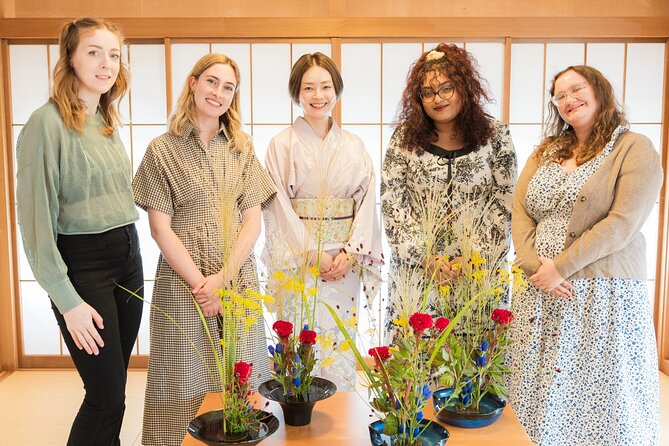
- The small group has a maximum of five people, allowing personal advice instead of a one-size-fits-all lesson.
- Your arrangement goes home with you, and you can enjoy it in your hotel room during your stay.
- The workshop meets in Nakano City at 1:00 pm, near public transportation and within reach of the Shinjuku area.
Why this Tokyo flower workshop feels different
Many cultural activities in Tokyo ask you to watch, listen, and take a photo. This one asks you to make something. That simple difference matters.
You sit with real flowers and branches, decide which element should lead, and discover that a small change can alter the whole arrangement. Raise a chrysanthemum, remove a leaf, or turn a branch slightly, and the balance shifts. The lesson is practical, but it also gives you a quiet hour away from Tokyo’s crowded streets and constant movement.
The style taught here is free flower, known in Japanese as jiyūka. It gives beginners room to express an idea while still using basic principles of balance, proportion, and space. You are not expected to copy a rigid model. Ai-sensei respects your image and helps you turn it into a workable arrangement.
That makes the activity useful for people who assume ikebana is too formal or difficult. You get enough structure to avoid feeling lost, but enough freedom to make the finished piece feel personal.
A few more Tokyo trips to weigh up
- Tokyo: Japanese Massage – Kangfu Beauty & Body Care Salon
★ 4.4 · 43 reviews - Experience Award-Winning Spa Treatments in Downtown Tokyo
★ 5.0 · 21 reviews - Osaka Temple Head Spa &Matcha Facial – Refresh & Glow〈90min〉
★ 5.0 · 24 reviews
Arriving in Nakano for the 1:00 pm session
The meeting point is in Nakano City at:
3-chōme 8, M Square, Nakano, Tokyo 164-0001
The experience is near public transportation, but the supplied details do not identify a specific station or give walking directions. Check the meeting instructions carefully before leaving your hotel, and allow time to find the building. A mobile ticket is provided, so keep the booking confirmation easy to access on your phone.
The class starts at 1:00 pm and lasts about 90 minutes. This is a useful time slot for a day in western Tokyo. You can spend the morning sightseeing, eat lunch first, then give yourself an unhurried afternoon activity. Since the workshop ends where it begins, you do not need to arrange a second pickup point.
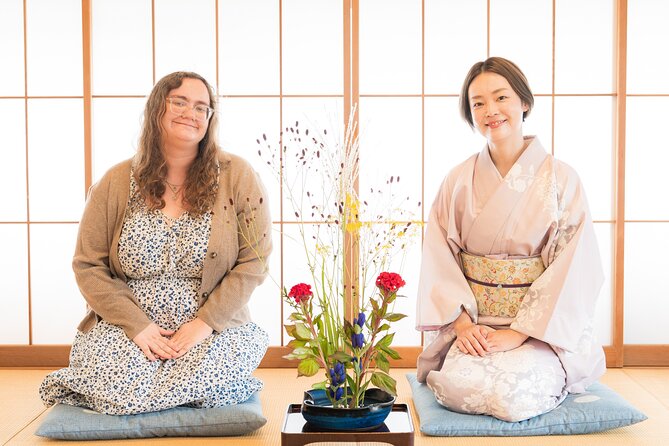
The setting is part of the appeal. Descriptions of the venue highlight a clean, open, bright Japanese-style room. This is not a large commercial classroom built for a crowd. The room helps create the calm mood that suits flower arranging, and it gives the activity a sense of place that a hotel conference room would lack.
Ai-sensei’s introduction to 600 years of ikebana
The session begins with an introduction to ikebana’s cultural background. Ai-sensei explains its roughly 600-year development and discusses the main styles, flower vases, tools, and basic care of the materials.
You also see photographs of the instructor’s own work. That is helpful because ikebana can be hard to understand from rules alone. Seeing finished arrangements lets you notice how height, direction, empty space, and the natural character of a branch work together.
The introduction also gives you a useful correction to the usual first impression. Ikebana may look severe, expensive, or reserved for experts, but its central pleasure is close attention. You look at a flower as an individual object rather than treating every stem as identical. A bent branch may be more interesting than a perfectly straight one. A leaf may help the design, or it may need to be removed.
This part is not just a lecture before the real activity. It explains why the practical decisions matter. You learn that arranging flowers is also a way to express season, movement, simplicity, and personal taste.
Handling seasonal flowers and branches
The flowers used in class depend on the season. That gives the workshop a changing character and connects it to a familiar part of Japanese culture: noticing the time of year through plants, colors, and natural forms.
You learn the name of the flowers used that day and receive guidance on handling them. The lesson covers how to cut the stems, position branches, and think about color combinations. The advice is specific enough to help a beginner, but it does not turn the experience into a technical exam.
Several aspects make the hands-on work especially satisfying. You choose how the flowers relate to one another. You consider which stem should be the main feature and which should support it. You decide how much empty space to leave. These choices may sound small, but they are what make each arrangement different.
The same number of flowers can produce very different results. One person may emphasize height and movement. Another may create a lower, fuller shape. The contrast helps you see that ikebana is not about finding one correct answer.
This is also where the activity becomes a quiet exercise in concentration. You have to slow down enough to observe the materials. For a first attempt, that can be more rewarding than producing a technically perfect result.
Same city, a completely different kind of day:
- Mt Fuji and Hakone 1-Day Bus Tour Return by Bullet Train
★ 5.0 · 26,383 reviews - 1-Day Tokyo Bus Tour
★ 5.0 · 14,250 reviews - Tokyo: TOKYO SKYTREE® Admission ticket
★ 4.5 · 11,192 reviews - Tokyo: teamLab Planets TOKYO Digital Art Museum Entry Ticket
★ 4.6 · 9,779 reviews
Step-by-step guidance for first-time participants
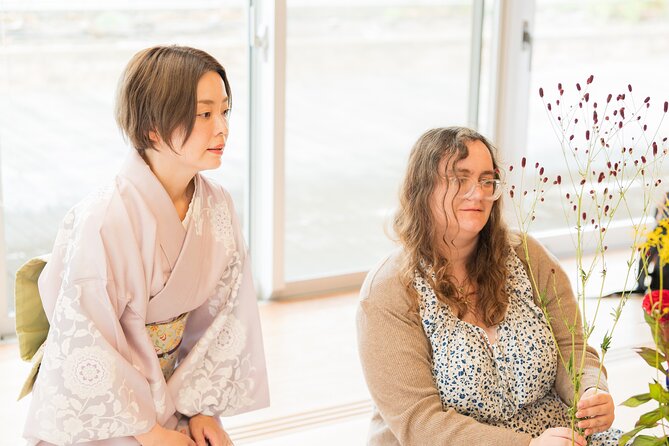
After the introduction, you make your own arrangement with Ai-sensei’s help. The instruction is described as gentle, clear, and easy to follow, with explanations in English.
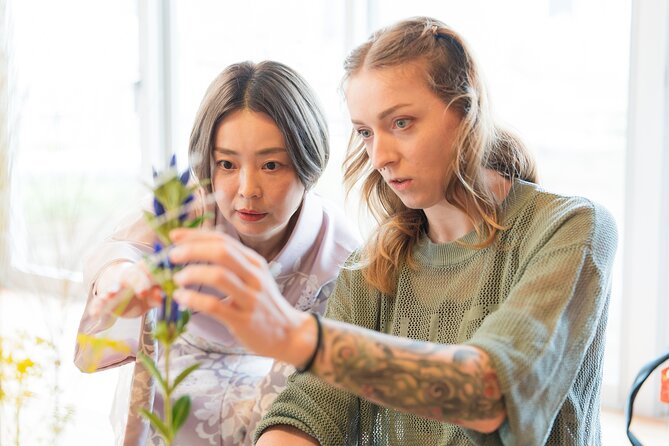
You are shown the basic process, then work through it with individual advice. Ai-sensei may suggest a different branch angle, a new height for a flower, or the removal of a leaf that hides the shape. The guidance does not replace your decisions. It helps you see what the flowers are already offering.
That balance is important. A class that gives no help can leave you frustrated. A class that dictates every move can leave you with a piece that feels like the instructor’s rather than yours. Here, the emphasis is on helping you express your own idea while learning the basic rules.
The small-group limit of five supports this approach. You should have a reasonable chance to ask questions and receive attention. It also means you can compare arrangements as they take shape without the session feeling like a large workshop.
The experience is intended for all ages, and the activity information says most people can participate. No prior flower-arranging experience is required. The supplied details do not specify wheelchair access, child age limits, or special accommodations, so contact the provider directly if anyone in your party has particular needs.
The best souvenir is alive
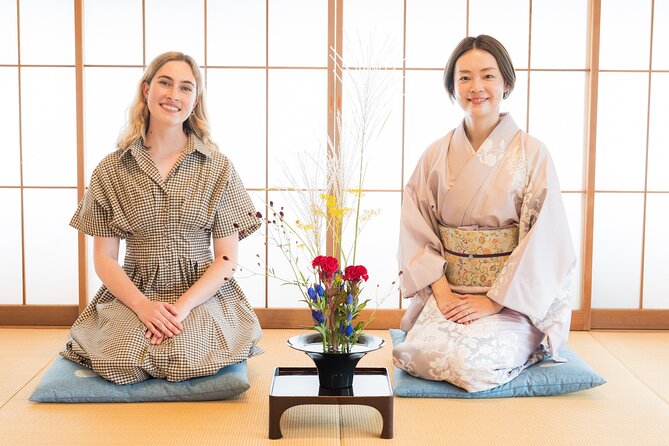
At the end, you take your arrangement with you. This is one of the strongest practical features of the class.
A typical Tokyo souvenir sits in your luggage or on a shelf at home. Your ikebana can be placed in your hotel room and enjoyed during the rest of your stay. It keeps the experience present instead of ending when you walk out of the workshop.
The flowers will not last forever, of course. That is part of the point. Ikebana pays attention to seasonal beauty and change, rather than treating flowers as permanent decoration. You also receive ideas about caring for the materials, which may give you confidence to arrange flowers at home.
Several people who have taken the class went on to think differently about their own vases and flower displays. You may leave wanting a flower frog, a vase, or simply a better sense of how to place stems at home. The class can be a one-time cultural activity, but it may also become a starting point for a new hobby.
What the 90-minute schedule gives you
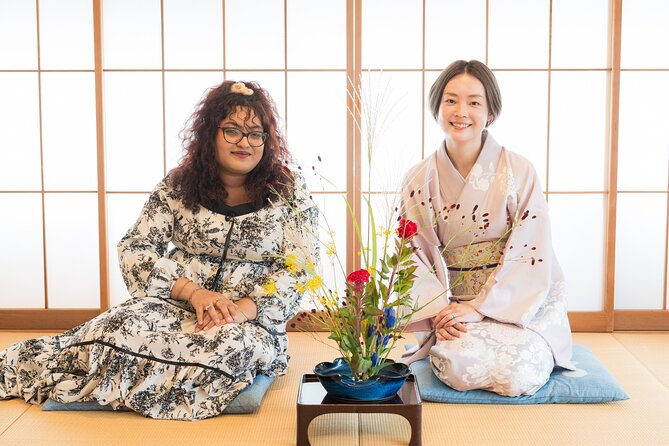
Ninety minutes is a good length for this format. It is long enough to cover cultural background, demonstrate the basics, let you work, and finish an arrangement. It is short enough to fit around a full Tokyo sightseeing plan.
Do not expect a full professional ikebana course in one sitting. You will get an introduction, not mastery. The value is in gaining a clear first understanding and completing something yourself.
The class also moves at a calmer pace than many short tourist activities. The quiet setting and close attention to the flowers are central to the experience. If you want a fast photo opportunity with a finished arrangement already prepared, this may feel too slow. If you want to make a personal connection with a traditional art, the pace works in its favor.
At $52.71 per person, the price is reasonable for a private-feeling activity with instruction, flower materials, a cultural explanation, and a take-home arrangement. You are paying for more than a demonstration, but less than a long formal course. The maximum of five people is particularly important to the value. Your fee includes access to a teacher who can respond to your individual choices.
Who should book this experience
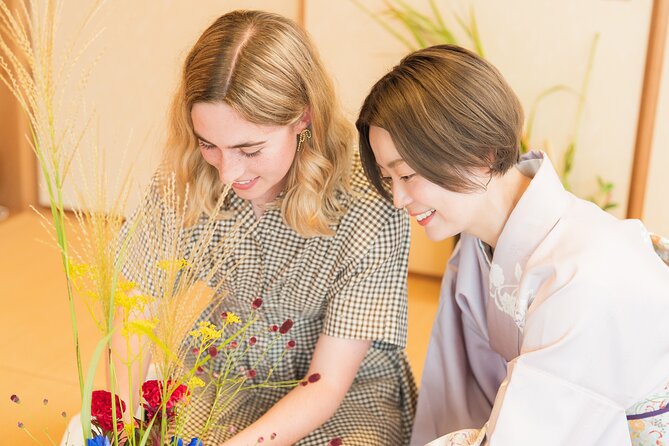
I would recommend it to you if you want a hands-on introduction to Japanese culture without committing to a full-day class. It works well for solo participants, couples, friends, families, and colleagues. Several participants have attended with a friend or coworker, and the quiet format gives people something to discuss while they work.
It is also a good choice if you enjoy creative activities but do not consider yourself artistic. The basic structure keeps the task manageable. You are not asked to arrive with a design or special skill.
Men and women can enjoy it equally, and the class is not presented as a formal ladies-only tradition. The emphasis is on flowers, balance, and personal expression.
You may especially like it if you:
- Want a break from crowded sightseeing
- Prefer making a souvenir instead of buying one
- Have an interest in Japanese aesthetics
- Enjoy seasonal plants and nature
- Are curious about traditional arts but nervous about strict etiquette
- Want an activity that suits different ages and experience levels
I would think twice if your schedule is uncertain, since the booking cannot be refunded or changed. I would also check the meeting directions in advance, since the address is in Nakano City and the information provided does not name the nearest station.
A strong choice for a first cultural activity
This workshop earns its excellent rating for understandable reasons. It combines a real introduction to Japanese tradition with an activity you perform yourself. Ai-sensei’s calm teaching style, English guidance, attractive Japanese-style room, and personal feedback all support beginners.
The most valuable lesson is that ikebana is not simply about making flowers look pretty. It asks you to notice form, space, season, and change. You learn to work with the natural personality of a branch instead of forcing every piece into a standard shape.
The activity is also refreshingly modest. You are not promised expert status after 90 minutes. You are given flowers, basic principles, a supportive teacher, and enough time to make something that belongs to you. That is a fair bargain in a city where many cultural activities are built around watching rather than doing.
Should you book the Tokyo Ikebana Wellness Art Experience?
Book it if you want a calm, personal, beginner-friendly activity near Shinjuku and like the idea of taking a living souvenir back to your hotel. The small group, English instruction, seasonal flowers, and free-style approach make it approachable even if ikebana has always seemed intimidating.
Skip it if you need flexible cancellation, dislike creative tasks, or want a large-scale sightseeing tour with many locations. This is a focused 90-minute workshop at one meeting point.
For most people interested in Japanese culture, I think the strongest reason to book is the combination of context and making. You learn where ikebana comes from, then discover its ideas with your own hands.
FAQ
How long does the ikebana experience last?
The activity lasts approximately 1 hour and 30 minutes.
What time does the workshop begin?
The scheduled start time is 1:00 pm.
Where does the experience meet?
The meeting point is Japan, 164-0001 Tokyo, Nakano City, Nakano, 3-chōme 8, M Square. The activity ends back at the meeting point.
Do I need previous ikebana experience?
No. The workshop is designed for beginners, and no prior experience is required.
How many people can join the workshop?
The maximum group size is five participants.
Can I take my flower arrangement with me?
Yes. You can take your completed arrangement with you and enjoy it during your stay, including in your hotel room.
Just added around Tokyo
- Private Memorable Tokyo Tour with English Speaking Driver★ 5.0 · 30 reviews
- Tokyo Photography Masterclass – Private Photography Lesson★ 5.0 · 25 reviews
- Private Tokyo Custom Full-Day Tour by Chartered Vehicle★ 5.0 · 16 reviews
- Private Sightseeing to Mt Fuji and Hakone with English Driver★ 5.0 · 51 reviews
- Private Mt. Fuji Day Trip from Tokyo with English-Speaking Driver★ 5.0 · 33 reviews
- 4 Day Tour – Mount. Fuji, Tokyo, Hakone, Kamakura and Yokohama★ 5.0 · 19 reviews
- Private Unforgettable Mt Fuji Tour with English Speaking Driver★ 5.0 · 142 reviews
- Private Tokyo Food Tour – A Journey Through Time Through Food★ 5.0 · 36 reviews
Massage & Relaxation, compared.
Japanese Massage – Kangfu Beauty & Body Care Salon
Read our review →
Osaka Temple Head Spa &Matcha Facial – Refresh & Glow〈90min〉
Read our review →
Experience Award-Winning Spa Treatments in Downtown Tokyo
Read our review →
Tennen Onsen Naniwa-no-Yu, the famous hot spring spa
Read our review →
Osaka Temple :Warm Bamboo Oil Massage – Deep Restore〈90min〉
Read our review →Browse the lists this tour appears in