
REVIEW · CYCLING TOURS
Naha: Guided E-Bike Tour of the 12 Zodiac Temples
Shuri’s temples are easy to miss from a car and surprisingly hard to connect on foot. This three-hour e-bike tour takes you through side streets, temple grounds, old gates, and quiet corners tied to Okinawa’s Buddhist and Shinto traditions, with the red Shureimon Gate as its best-known photo stop.
I like two things here. First, the electric bikes take the sting out of Shuri’s hills, so you can spend your energy looking around rather than wrestling with the pedals. Second, the helmet intercom system lets you hear your guide while riding, and guides such as Maki, Maria, Hiro, and Reiji have been praised for clear explanations, careful cycling guidance, and personal attention.
The catch is simple: you need to be comfortable on a bicycle. You will ride on public streets, and Okinawa’s heat can be strong, so this is not the right choice if you want a passive sightseeing tour or dislike cycling in the sun.
In This Review
- Key points before you book
- Why an e-bike works so well in Shuri
- Starting near Makishi Station
- Shuri Kannon Temple and the first hill
- Ankokuj Temple and the old gajumaru tree
- Shureimon Gate, Okinawa’s classic red landmark
- Daruma Temple and prayers for health
- Seikoji Temple’s quiet change of pace
- Saki Kasahigawa, the miracle spring
- Sogenji Temple and the former royal mausoleum
- What the three hours feel like
- Guides, language, and the personal touch
- Is $95 a fair price?
- Who should book this ride?
- Practical details to remember
- Should you book the 12 Zodiac Temples e-bike tour?
- FAQ
- How long does the Naha e-bike temple tour last?
- Where does the tour begin and end?
- What is included in the price?
- Are food and drinks included?
- What languages are available?
- How many people can join the group?
- Can someone who cannot ride a bike join?
Key points before you book
- Small groups capped at five: The guide can adjust the pace and answer questions without turning the outing into a crowd exercise.
- E-bike help for Shuri’s hills: The electric assist makes the uphill sections manageable, but you still need basic bike control.
- Temple stops beyond the usual sights: Kannon, Ankokuj, Daruma, Seikoji, and Sogenji add quieter religious sites to a visit centered on Shuri.
- Shureimon Gate photo stop: You can pause with your bike beside one of Okinawa’s most recognizable red gates.
- Helmet communication: The intercom helps you hear instructions and stories while moving between stops.
- Good guide support: Maki, Maria, Hiro, Reiji, Jojo, and others have been noted for friendly explanations, safety checks, and help with different riding abilities.
Why an e-bike works so well in Shuri
Shuri is best understood at a slower pace. The former royal area has major landmarks, but its character also sits in narrow lanes, small temple compounds, old gates, stone walls, and trees that you could pass without noticing from a taxi.
The electric bike gives you a practical middle ground. You cover more ground than you would on foot, yet you can stop at places that are awkward to reach by car. The electric motor is especially useful on Shuri’s inclines. One important distinction: this is assisted cycling, not a motorized sightseeing ride. You still steer, brake, balance, and follow road directions.
The group limit of five is a real advantage. A guide can keep an eye on the road, check that everyone is comfortable, and explain a temple without shouting across a large party. The helmet intercom adds another useful layer. You can hear directions and commentary during the ride instead of trying to stay beside the guide at every moment.
I would still arrive ready for an active outing. Wear proper shoes, not sandals or flip-flops, and bring water, sunscreen, and a hat. Comfortable clothing suitable for cycling matters more here than dressing for a formal temple visit. Smoking is not allowed during the tour.
A few more Naha trips to weigh up
- Hidden Kyoto E-Biking tour
★ 5.0 · 1,843 reviews - Tokyo Guided Small-Group Biking Tour
★ 5.0 · 1,250 reviews - Bike Tour Exploring North Kyoto plus Lunch
★ 5.0 · 1,087 reviews
Starting near Makishi Station
The tour begins at the operator’s shop in Daisho Building, about a five-minute walk from Monorail Makishi Station and next to the post office. You meet the guide there, get fitted with an electric bicycle, and receive a helmet with the intercom system.
This start point is convenient if you are staying near Kokusai Street or using the monorail. It also keeps the tour simple: you finish at the same place, so you do not need to arrange a pickup from another part of Naha.
The initial setup is more important than it may sound. Use this time to make sure the saddle feels right, you understand the electric assist, and you can operate the brakes comfortably. If you have not used an e-bike before, ask the guide to explain the controls before leaving the shop.
Shuri Kannon Temple and the first hill
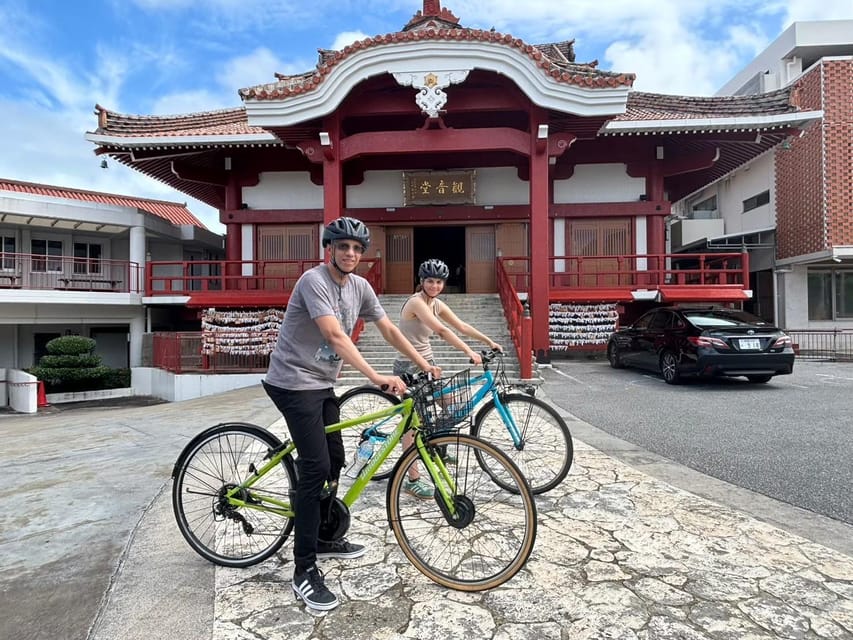
The first major stop is Shuri Kannon Temple, also called Shuri Kannondo. It served as a guardian temple during the Ryukyu Kingdom period, and its bright red structure gives you an immediate sense of Okinawa’s distinctive religious style.
Look closely at the carvings and decorative details rather than treating the temple as a quick photo stop. From the temple area, you can also look out across Shuri. The elevated position helps explain why an e-bike is useful. The route is not flat, but the motor makes the climb less demanding.
This is also where a guide adds value. A temple gate or carving can look attractive without making much sense. The tour connects the site to local history and religious practice, giving you a better frame for what you are seeing.
Allow yourself a little patience here. Red paint and ornate decoration are visually strong, but the details can be easy to miss if you rush through the grounds. Your guide may also explain appropriate temple customs, including the fact that offerings are not included in the tour.
Ankokuj Temple and the old gajumaru tree
The ride continues to Ankokuj Temple, a smaller local site surrounded by traditional houses. Its ancient gate and large gajumaru tree create a different mood from the bright Kannon Temple.
The gajumaru, or banyan tree, is one of the memorable natural features on this route. Its broad form and roots give the temple grounds a sense of age, while the nearby houses help you picture Shuri as a lived-in district rather than a string of isolated monuments.
The stop is listed as a short visit, about five minutes. That makes it a quick look rather than a long temple study, but the brevity helps keep the tour moving. If you want extended time at every site, the pace may feel brisk. If you want to see several parts of Shuri in three hours, the short pauses make sense.
Same city, a completely different kind of day:
- Official Street Go-Kart Tour – Okinawa Shop
★ 5.0 · 699 reviews - Naha: North Okinawa Sightseeing Tour & Churaumi Aquarium
★ 4.4 · 472 reviews - Okinawa: From Naha: Kerama Islands 1-day snorkeling tour
★ 4.4 · 423 reviews - From Naha: Tokashiki Island Day Trip by Boat
★ 4.3 · 385 reviews
Shureimon Gate, Okinawa’s classic red landmark

Shureimon Gate is the route’s most recognizable stop. Its red structure, layered roof, and decorative style have become a symbol of Okinawa, and you get time to take a photograph with your bike in front of it.
That bike photo is a small but useful touch. It records how you reached the gate and gives the stop a more personal feel than a standard landmark picture. Bring your phone or camera where you can reach it easily, since this is one of the clearest photo opportunities of the outing.
The gate can attract attention because it is such a well-known symbol. Your guide helps place it within the wider Shuri route, so the tour does not become only a checklist of famous red buildings. The contrast between this major sight and the quieter temple stops is one of the experience’s strengths.
Daruma Temple and prayers for health
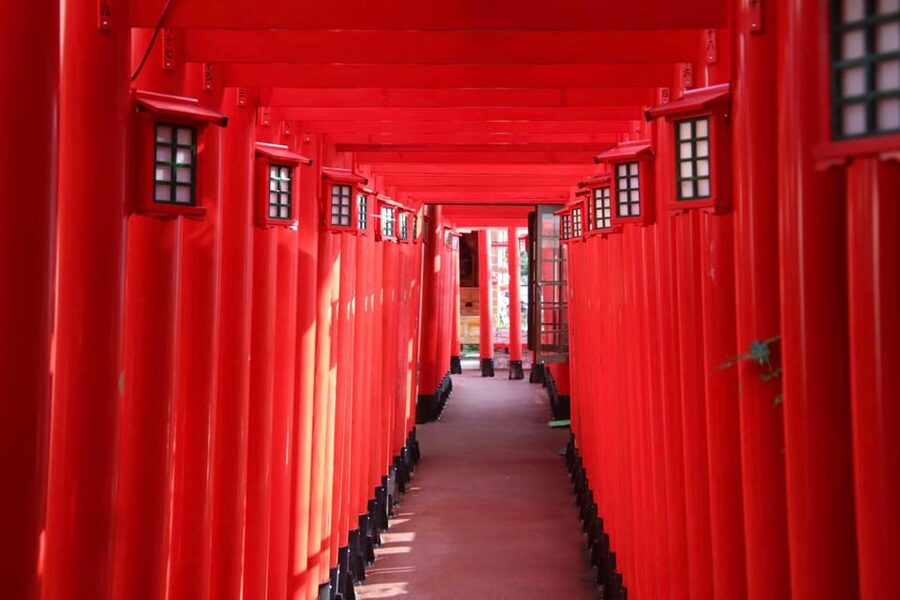
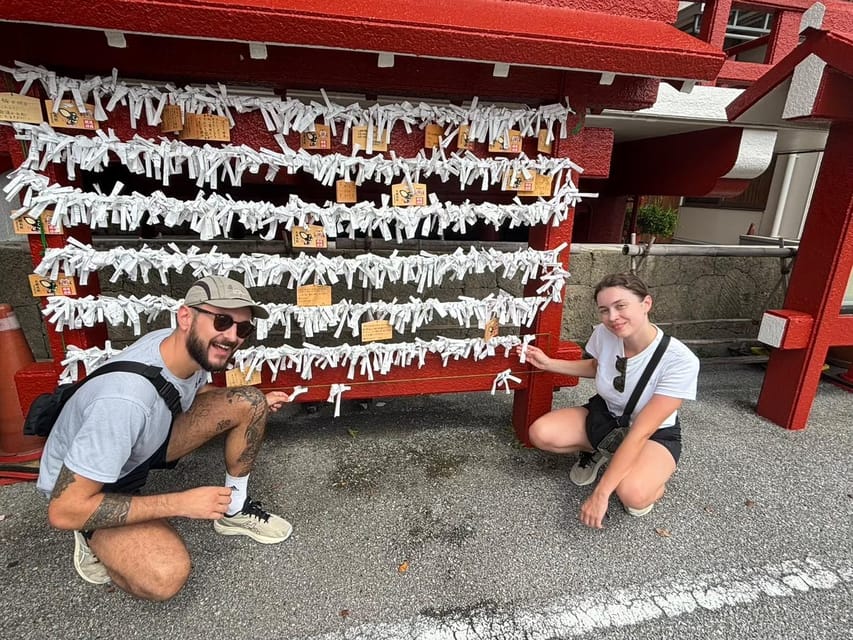
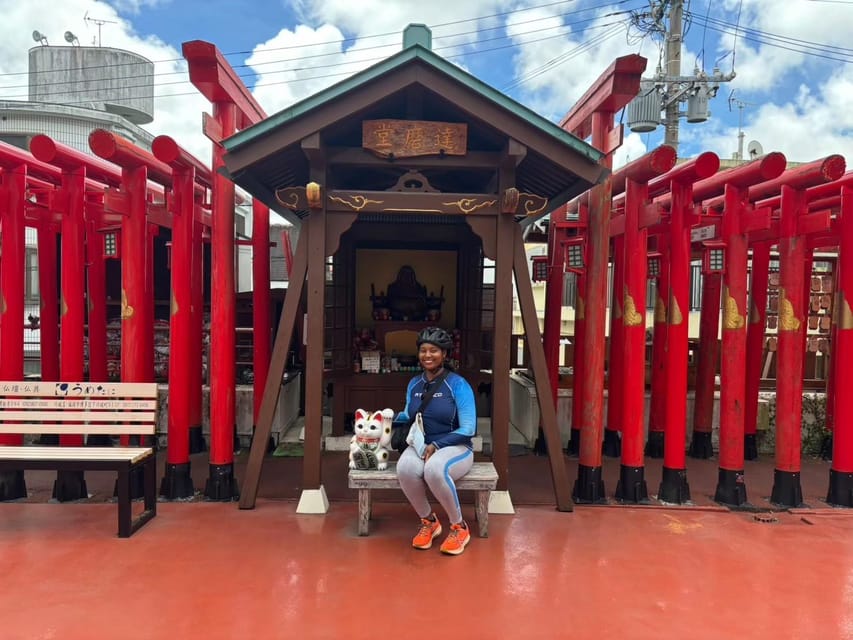
The next stop is Daruma Temple, known for prayers related to health and pregnancy. The red daruma dolls and torii gate give the site a bold appearance, but the purpose of the temple is just as interesting as its color.
Daruma figures are often linked with perseverance and wishes. Here, the tour introduces the local use of the temple for personal prayers. That makes this stop feel less like a monument and more like a place connected to ordinary hopes and concerns.
You have around 20 minutes here, enough time to look at the dolls, see the gate, and ask questions. This is a good point to slow down and notice how religious sites can serve different roles. Some are tied to royal history, while others remain places where people come to pray for specific needs.
Seikoji Temple’s quiet change of pace
Seikoji Temple offers a calmer pause. The grounds have a sacred atmosphere, Jizo statues, and a modern building, creating a mix of old religious symbols and newer construction.
The Jizo figures are worth seeing carefully. Your guide can explain the role of the statues and help you notice details that might otherwise blend into the setting. The modern building also reminds you that Okinawan religious places are not frozen in the past.
The visit is about 10 minutes. That is enough for a focused stop, though not for a long period of quiet reflection. If you enjoy taking time alone at temples, remember that this is a guided route with several destinations. The benefit is breadth: you see several different kinds of religious site in one morning or afternoon.
Saki Kasahigawa, the miracle spring
Saki Kasahigawa is described as a miracle spring flowing from the deep forest. The flowing water brings a different sensory experience to the tour after the gates, carvings, and statues.
This stop connects the area’s spiritual traditions to the natural world. You can feel the history in the water and see why a spring might hold meaning in a place where religious practice and the surrounding environment have long been linked.
Do not expect a large attraction with extensive facilities. The value is in the pause and the story. The spring gives the ride a quieter, more local feeling and breaks up the sequence of formal temple grounds.
Sogenji Temple and the former royal mausoleum
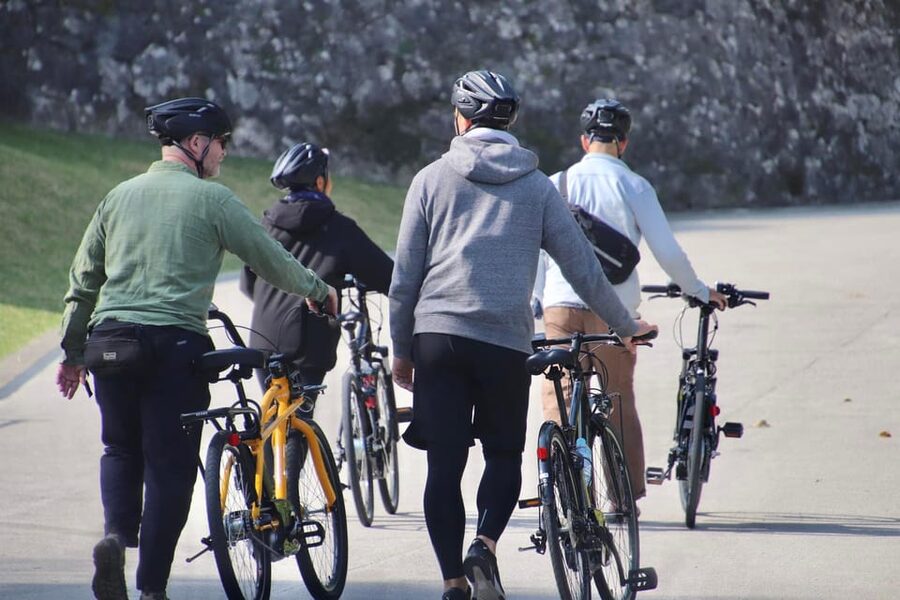
The final major site is Sogenji Temple, a former royal mausoleum. Its park offers clean air, a gate, and another large gajumaru tree.
After several shorter stops, Sogenji gives the tour a fitting final note. The open park and mature tree offer space to breathe before returning to the bike shop. The site also brings you back to the connection between Shuri’s religious places and the former Ryukyu royal world.
The tour then returns to the original shop. Since the start and finish are the same, you can continue your Naha plans without figuring out a new meeting point.
What the three hours feel like
The advertised duration is three hours, including cycling between stops and visits. The route includes riding sections of about 15 to 20 minutes, followed by short temple visits. That pattern keeps you moving and gives you repeated chances to rest, look around, and listen.
The experience is active, but it is not designed as a hard training ride. The electric assist helps on hills, and guides have been praised for checking that riders are doing well, giving traffic instructions, and helping groups with different skill levels.
Still, do not confuse easy with effortless. You must ride a bicycle, pay attention to traffic, and manage the bike in public areas. If you are rusty, tell the guide at the start. The small group makes it easier to receive help, but the tour cannot suit someone who cannot ride.
Weather is another practical concern. If the chance of precipitation rises above 70 percent or severe weather is expected, the operator may change the plan and contact you the day before. Okinawa’s sun can also be intense, so water, sunscreen, and a hat are sensible rather than optional extras.
Guides, language, and the personal touch
The tour operates in English, Chinese, and Japanese. Several guides are named in the experience information, including Maki, Maria, Reiji, Hiro, Jojo, and Tiny.
The strongest pattern in the guide feedback is not just friendliness. It is active care: checking bike comfort, explaining traffic movement, making sure people stay hydrated, and adjusting to the group’s riding level. Maki is particularly noted for detailed cultural explanations and thoughtful route suggestions when time allowed. Maria is praised for clear English and a warm, professional approach. Hiro is noted for enthusiasm and regular hydration checks.
The helmet speakers and microphone help all of this work in practice. You can hear the guide while riding, and the system also makes it easier for the group to communicate. That is more useful than it sounds on a street-based tour.
Some guides may add a small extra stop if the schedule allows, such as a bakery. Do not book expecting that addition, since it is not a guaranteed part of the route. Treat it as a possible bonus rather than a feature.
Is $95 a fair price?
At $95 per person, this is not the cheapest way to see Naha. You are paying for more than a bicycle rental, though. The price includes the electric bike, helmet, intercom, and a guide for three hours, with a maximum group of five.
That small group changes the value. A self-guided rental costs less, but you would need to find the tucked-away temples, plan a route through Shuri’s hills, interpret the religious details, and manage street navigation yourself. Here, the guide handles that work and adds cultural context.
Meals and drinks are not included, and neither are temple or shrine offerings. Bring your own water and budget separately if you want to make an offering. For someone who values local explanation and wants to reach several sites efficiently, $95 is reasonable. For someone who only wants a bicycle and a casual ride, it may feel expensive.
The free cancellation policy allows a full refund when you cancel at least 24 hours in advance, and you can reserve now and pay later. Those terms are useful if your Naha schedule is still shifting, but the weather provision remains important.
Who should book this ride?
I would recommend it to you if you enjoy a mix of movement, culture, and small discoveries. It suits first-time visitors who want more than Kokusai Street, photographers who like red gates and temple details, and curious riders who would not feel confident finding Shuri’s side-street sites alone.
It is also a good choice for couples, families with confident cycling members, and small groups that want a guide’s attention. The electric assistance makes the hills less intimidating, while the short stops keep the outing varied.
I would skip it if you cannot ride a bike, dislike cycling near traffic, or want a slow, silent temple visit. You should also think twice if hot weather makes outdoor activity unpleasant. The tour offers support, but it does not remove the basic demands of riding.
Practical details to remember
The shop is a five-minute walk from Monorail Makishi Station, next to the post office. The tour starts and ends there, and the group is limited to five people.
Wear comfortable shoes and cycling-friendly clothing. Sandals and flip-flops are not allowed. Bring water, sunscreen, and a hat, and keep some money available if you plan to make temple offerings. Food and drinks are not part of the tour.
The guide will provide an electric bike and helmet with intercom. Since the tour runs in English, Chinese, and Japanese, select the language that best fits your group when booking.
Should you book the 12 Zodiac Temples e-bike tour?
Book it if you want Shuri’s lesser-seen religious sites explained as part of a connected route rather than visited as isolated photo stops. The combination of electric assistance, a five-person limit, intercom helmets, and guides who pay attention to safety makes the $95 price easier to justify.
Skip it if cycling is not comfortable for you. For capable riders, though, this is a practical way to connect Shuri Kannon, Ankokuj, Daruma, Seikoji, Saki Kasahigawa, Sogenji, and Shureimon Gate in one compact outing. It gives you the famous red landmark, but the quieter temples and local stories are the real reason to go.
FAQ
How long does the Naha e-bike temple tour last?
The tour lasts three hours, including the cycling sections and visits to the temples, shrines, gate, and spring.
Where does the tour begin and end?
It begins and ends at the operator’s shop in Daisho Building. The shop is about a five-minute walk from Monorail Makishi Station, next to the post office.
What is included in the price?
The price includes an electric bicycle, a helmet, and a guided tour using an intercom system.
Are food and drinks included?
No. Meals and drinks are not included, so you should bring water. Temple and shrine offerings are also not included.
What languages are available?
The tour is available in English, Chinese, and Japanese.
How many people can join the group?
The tour is limited to five participants.
Can someone who cannot ride a bike join?
No. The tour is not suitable for people who cannot ride a bicycle. You should also wear comfortable shoes, and sandals or flip-flops are not allowed.
Just added around Naha
- Original Street Kart Experience in Naha, Okinawa★ 4.9 · 39 reviews
- Okinawa Full Tour: Castle, Manza, Kouri, Aquarium & American★ 5.0 · 17 reviews
- Okinawa: Naha: 1 day Kerama Islands diving‣ license required★ 3.9 · 20 reviews
- Naha, Okinawa: Kerama Islands Full-Day Intro-Diving Trip★ 4.6 · 203 reviews
- Naha Bar Hopping Tour in Okinawa★ 5.0 · 51 reviews
- Kerama Half-Day Snorkeling Tour★ 3.8 · 44 reviews
- Kintsugi Workshop in Naha, Okinawa★ 5.0 · 79 reviews
- Gorilla Kart Tour-Plenty of Time Slots|Many Great Views★ 3.9 · 20 reviews
Cycling Tours, compared.





3h Tokyo E-Bike Tour: Hidden Gems, and Local Life with guide
Read our review →
Arashiyama Bamboo Forest & Hidden Gems Bike Tour (Early Bird)
Read our review →
Hiroshima in a Nutshell: Morning Bike Adventure
Read our review →
5 Top Highlights of Kyoto Full Day Bike Tour (E-bike option)
Read our review →Browse the lists this tour appears in