
REVIEW · OKINAWA TOURS
Kintsugi Experience in Naha, Okinawa – Art from Broken Pieces!
Kintsugi turns a broken bowl or plate into a keepsake by tracing its cracks with gold or silver color. At Urushi Studio Kodemari, you work at an easy pace with kind instructors, learn the basic idea behind this Japanese craft, and leave with a piece you repaired yourself.
I like two things here: the quiet, hands-on pace and the fact that your souvenir is personal rather than mass-produced. It also works well for families, including children around 11 and 14, and makes a welcome indoor break from Naha’s summer heat.
The main thing to know is that this is a shortened workshop, not a full professional Kintsugi apprenticeship. Your finished pottery is decorative only, so you cannot use it for eating or drinking, and some visitors may want a longer explanation of the craft’s background.
In This Review
- Key points to know before booking
- Why broken pottery makes such a good Okinawa souvenir
- Starting at Urushi Studio Kodemari in Maejima
- Choosing your pottery and seeing the cracks differently
- The step-by-step repair process
- A quiet craft session, not a rushed tourist stop
- Why families and couples fit this activity well
- What your finished piece can and cannot do
- Is $56.01 a fair price?
- What to know about the cultural lesson
- Cancellation, group size, and practical planning
- Who should book this Naha Kintsugi class?
- FAQ
- Where does the Kintsugi experience take place?
- How long does the workshop last?
- Where does the activity end?
- Is previous art experience required?
- What do I repair during the class?
- Can I use the finished pottery for food or drinks?
- What can I do with the finished piece?
- How many people can join the activity?
- Is the studio near public transportation?
- Is there parking at the studio?
- Can I cancel for a full refund?
- Is a mobile ticket accepted?
- Should you book it?
Key points to know before booking
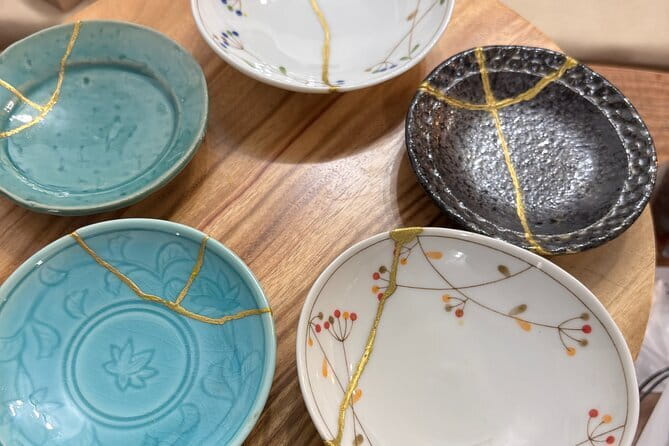
- Repair a real piece of pottery: Choose a broken item and give it a new look with gold or silver-colored repair lines.
- Beginner-friendly instruction: The instructors explain each step clearly and offer help without rushing you.
- A calm two-hour activity: The slow pace makes this a good choice after busy sightseeing or on a hot afternoon.
- Useful for families: Children and adults can work side by side, with no previous art skills required.
- Take home a personal souvenir: Your finished piece becomes a small reminder of your time in Okinawa.
- Decorative use only: The simplified process means the repaired item is not suitable for food or drink.
Why broken pottery makes such a good Okinawa souvenir
Many Japanese souvenirs are easy to buy and just as easy to forget. Kintsugi gives you something different: a small object with visible flaws, repair marks, and your own decisions stamped into it.
The basic idea is simple. Instead of hiding a crack, you highlight it with a gold or silver color. The damage becomes part of the design. That idea gives the class more meaning than a standard craft session, even if your finished piece is not perfectly neat.
You do not need to arrive with an artistic background. The workshop is designed as a shortened version of traditional Kintsugi, so you can learn the central process in about 1.5 to 2 hours rather than committing to a long course.
This is also a nice fit for a final day in Naha. You can spend the morning sightseeing, then take a quiet break indoors and finish your trip with a souvenir that connects directly to Japanese craft.
Other Naha days people book alongside this one:
- Official Street Go-Kart Tour – Okinawa Shop
★ 5.0 · 699 reviews - Naha: North Okinawa Sightseeing Tour & Churaumi Aquarium
★ 4.4 · 472 reviews - Okinawa: From Naha: Kerama Islands 1-day snorkeling tour
★ 4.4 · 423 reviews
Starting at Urushi Studio Kodemari in Maejima
The meeting point is 漆工房 小手毬 Urushi Studio Kodemari, at 2-chōme-16-6 Maejima, Naha, Okinawa 900-0016. The activity begins and ends at the studio, which keeps the arrangement simple.
The studio is near public transportation, but there is no car park. If you are driving, this is an important detail. A mobile ticket is accepted, and booking confirmation is provided at the time of booking.
The class has a maximum of 10 people. That is small enough for the instructor to offer individual help, but it is not a private lesson. If you prefer quiet activities, the limited size should feel more manageable than a large group class.
Plan to arrive with enough time to find the studio. The experience itself lasts roughly two hours, though the stated workshop range is 1.5 to 2 hours. The exact pace can depend on how carefully you work and how much assistance you need.
Choosing your pottery and seeing the cracks differently
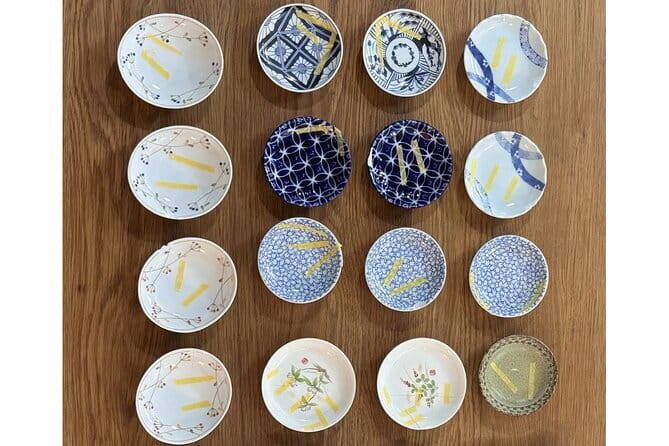
Once the class begins, you choose a piece of pottery to repair and design. The available pieces are smaller than some people expect. One description compares the plates to something smaller than a saucer, so do not picture a large dinner plate or serving bowl.
That small scale is not a dealbreaker. It makes the project easier to finish within the session and simpler to pack for the journey home. The finished object can work as interior art or a small accessory tray.
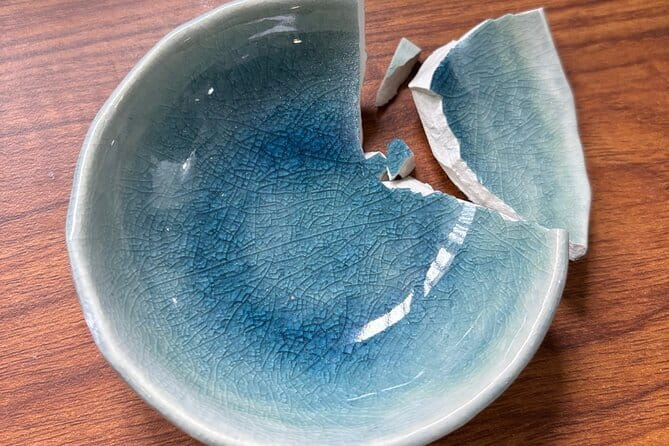
The choice of piece matters because you are not simply copying an instructor’s example. You decide how to approach the repair and how much of the original pottery you want to feature. Some people focus on a clean, simple result. Others enjoy the irregular shape of the cracks.
You may also see pottery made by the studio. This helps show what the craft can look like when handled by an experienced artist, while your own item remains a beginner project. The point is not to produce gallery-quality work in one sitting. It is to understand the process and make something that belongs to you.
The step-by-step repair process
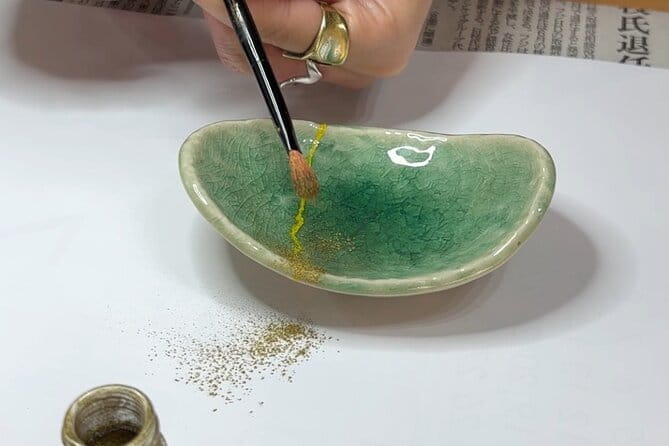
The instructor guides you through the work in clear stages. You learn how to revive a broken piece rather than simply decorate an intact one.
The pace is gentle. You are not pushed to finish quickly, and help is available when a repair line or technique feels awkward. That support is important for beginners because the charm of Kintsugi comes partly from following the break rather than trying to force everything into perfect symmetry.
The workshop uses gold and silver colors to mark the repaired areas. The result gives the broken pottery a deliberate, finished appearance. Your lines may not be perfectly even, but that is part of the character of a handmade object.
The activity also introduces the connection between Kintsugi and lacquer craft. Some of the learning concerns the history of repair with lacquer and the idea of giving damaged objects a useful second life.
One small limitation is that the amount of spoken background may vary with the session. The practical instruction is clear, but at least one participant wanted more explanation about Kintsugi and how the studio became involved in the work. If cultural context is your main reason for booking, ask questions as you go and take time to read the historical information provided at the end.
Same city, a completely different kind of day:
- From Naha: Tokashiki Island Day Trip by Boat
★ 4.3 · 385 reviews - Naha, Okinawa: Keramas Island Snorkeling Day Trip with Lunch
★ 4.7 · 370 reviews - Naha, Okinawa: Kerama Islands Half-Day Whale Watching Tour
★ 4.4 · 241 reviews - Naha, Okinawa: Kerama Islands Full-Day Intro-Diving Trip
★ 4.6 · 203 reviews
A quiet craft session, not a rushed tourist stop
The mood is one of the strongest reasons to book this activity. Kintsugi requires you to slow down and pay attention to a small piece of pottery. That can be a welcome change after crowded streets, shopping, and a full sightseeing schedule.
The workshop has a mindful quality without requiring any formal meditation. You focus on your hands, the shape of the pottery, and the next small task. For many people, that is enough to settle the mind for an hour or two.
The studio’s indoor setting also makes practical sense in Okinawa. Several people chose the class as a break from the heat, and one mother and daughter were even allowed to start early. Early starts may depend on the studio, so do not count on that option, but the air-conditioned or cool indoor setting can be a real advantage during summer.
A cup of cold tea at the end adds a small Japanese hospitality touch. It is not the reason to book the class, but it rounds out the session nicely.
Why families and couples fit this activity well

Kintsugi is easy to share. You can work alongside a partner, parent, or child while each person creates a different result.
The class has been used successfully as a family activity with children aged 11 and 14. It does not demand advanced drawing skills, and the instructors keep the steps approachable. Younger children may need more help, but the supplied information does not set a minimum age, so check the booking details if age is important for your group.
Couples may like the class because it gives you something to do together without turning the activity into a competition. You can compare your finished pieces, but each repaired object still has its own shape and story.
Solo visitors should also feel comfortable here. The class does not depend on arriving with a group, and the instructors can guide you through the process at your own pace. If you enjoy quiet, practical activities, this may be more satisfying than a crowded sightseeing stop.
What your finished piece can and cannot do

You take home the pottery you repaired and designed. That is the central value of the experience. It is not just a class sample, and it is not a souvenir selected from a shop shelf.
Use it as a decorative piece, a small tray for accessories, or an art object for your home or office. The item can remind you of Naha and the craft long after the trip ends.
There is an important safety limit. Because this is a simplified workshop, the finished item is not suitable for eating or drinking. Do not use it as a food plate, cup, or bowl, even if it looks sturdy.
The small size also makes the souvenir easier to carry than a large ceramic object. Still, you should protect it carefully in your luggage. The supplied details do not describe special packing materials or shipping, so ask the studio if you need advice before leaving.
Is $56.01 a fair price?

At $56.01 per person, this is not the cheapest two-hour activity in Naha. You are paying for instruction, the pottery piece, the chance to work in a real studio setting, and a finished souvenir that you make yourself.
The value is strongest if you care about the process. If you only want an inexpensive decoration, shopping will cost less and take less time. If you want a hands-on cultural activity with a personal result, the price is easier to justify.
The class also saves time. A 1.5 to 2 hour session fits neatly between other plans and does not require a full-day commitment. That makes it practical for a short stay, a rainy afternoon, or a day when the heat makes outdoor sightseeing less appealing.
I would think of the price as covering three things: a guided craft lesson, a calm break from the city, and a meaningful object to carry home. The activity is good value for the right kind of visitor, but less so if you expect a full technical course or a usable repaired dish.
What to know about the cultural lesson
Kintsugi is presented here as both a repair technique and a way of thinking about imperfection. The visible crack is not treated as something to hide. It becomes part of the item’s appearance and story.
That message is easy to understand through the work itself. You see the broken pottery, handle the repair, and watch the colored lines change the object. The lesson is more effective because it is connected to something you make with your own hands.
The workshop offers an introduction, not an exhaustive study of Japanese lacquer traditions. The practical steps receive the most attention, while the history is available through the instructor and written material for further reading.
If you want more cultural detail, ask about the origins of Kintsugi, the role of lacquer, and how the studio approaches the craft. The instructors are described as warm, patient, and able to explain the process in English. One participant specifically praised the instructor’s English, which is useful for international visitors.
Cancellation, group size, and practical planning
You can cancel for a full refund up to 24 hours before the experience starts. Changes or cancellations made within 24 hours are not accepted for a refund, and cut-off times use local Okinawa time.
The maximum group size is 10. Most people can participate, and the activity is near public transportation. There is no car park, so public transport is the simpler choice unless you arrange parking elsewhere.
The class ends back at Urushi Studio Kodemari. You do not need to plan a separate return transfer from another part of Naha.
Bring a mobile ticket and allow enough time to reach the address. Since the workshop involves hands-on craft, wear something comfortable and be ready to spend much of the session seated and focused on a small object. The supplied details do not list special clothing requirements, so normal casual travel clothes should be fine.
Who should book this Naha Kintsugi class?
Book it if you want a calm, creative activity with a souvenir you make yourself. It suits solo visitors, couples, families, and anyone who wants a break from outdoor sightseeing.
It is especially useful on a hot day, near the end of a trip, or during a stay when you have already seen the main sights and want something more personal. Beginners are welcome, and you do not need to consider yourself artistic.
Think twice if you need a large finished object, a fully functional dish, or a long academic talk about Kintsugi. The pottery may be quite small, and the class focuses on accessible practice rather than advanced restoration.
FAQ
Where does the Kintsugi experience take place?
It takes place at 漆工房 小手毬 Urushi Studio Kodemari, 2-chōme-16-6 Maejima, Naha, Okinawa 900-0016, Japan.
How long does the workshop last?
The activity lasts approximately two hours. The stated workshop range is about 1.5 to 2 hours.
Where does the activity end?
The activity ends back at the meeting point, Urushi Studio Kodemari.
Is previous art experience required?
No. The instructor guides you through each step, and the workshop is designed for beginners.
What do I repair during the class?
You repair a broken piece of pottery using a simplified Kintsugi process and gold or silver colors.
Can I use the finished pottery for food or drinks?
No. The finished item is decorative only and cannot be used for eating or drinking.
What can I do with the finished piece?
You can display it as interior art or use it as a decorative accessory tray.
How many people can join the activity?
The maximum group size is 10 people.
Is the studio near public transportation?
Yes. The studio is near public transportation.
Is there parking at the studio?
No. The activity information states that there is no car park.
Can I cancel for a full refund?
Yes, if you cancel at least 24 hours before the experience start time. Cancellations within 24 hours are not refunded.
Is a mobile ticket accepted?
Yes. The experience includes a mobile ticket, and confirmation is provided at the time of booking.
Should you book it?
I recommend this Kintsugi class if you want to slow down, make something with your hands, and take home a souvenir with a personal story. The instructors are patient, the pace is relaxed, and the two-hour format fits neatly into a Naha itinerary.
The best reason to book is not the finished pottery alone. It is the chance to turn a damaged object into something attractive while learning a Japanese idea about repair and imperfection. Just keep your expectations realistic: the piece will be small, decorative, and made through a shortened process.
At $56.01, it is a fair choice for a meaningful cultural activity, especially for families, couples, and visitors looking for an indoor break from Okinawa’s heat.
Just added around Naha
- Zodiac Shrines and Naha Backstreets Cycling Tour★ 5.0 · 29 reviews
- E-Bike Nature Tour in Shuri★ 5.0 · 25 reviews
- Port Pick-Up: Naha Private Tour Licensed Guide& Vehicle★ 4.5 · 16 reviews
- Tokashiki Island Day Trip from Naha★ 4.0 · 15 reviews
- Karate History Tour in Okinawa★ 5.0 · 42 reviews
- Sushi Making Experience Class in Naha Makishi Public Market★ 5.0 · 35 reviews
- Okinawa 2-Hours Genuine Kendo/Samurai Experience in Japan★ 5.0 · 28 reviews
- Okinawa:Kerama Islands experience Diving/Snorkeling/WhaleWatching★ 4.5 · 16 reviews
Okinawa Tours, compared.


North Okinawa Sightseeing Tour & Churaumi Aquarium
Read our review →
From Naha: Kerama Islands 1-day snorkeling tour
Read our review →

Naha, Okinawa: Keramas Island Snorkeling Day Trip with Lunch
Read our review →


Snorkeling in the Blue Cave area【Okinawa Prefecture: Free feeding & photo images!English and Chinese speaking guide available!
Read our review →Browse the lists this tour appears in