
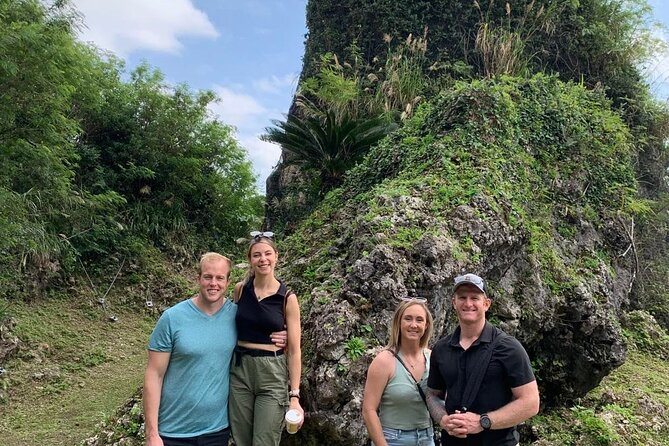
REVIEW · PRIVATE GUIDED TOURS WITH DRIVER
Port Pick-Up: Naha Private Tour Licensed Guide& Vehicle
Naha’s great strength is its mix of Ryukyu royal culture, Okinawan religion, and wartime memory. In six hours, a private guide and vehicle can connect places that are scattered across the city and southern Okinawa, without making you solve the bus system on a cruise-ship schedule.
I like the freedom to choose only three or four sights, and I like having a guide who can explain Okinawa’s distinct culture rather than treating the island as simply another part of mainland Japan. The main caution is that six hours goes quickly, and one poor itinerary choice can leave you rushing or missing a port departure buffer.
In This Review
- Key points to know before booking
- A private way to make sense of Naha
- Shuri Castle and the Ryukyu royal past
- Kokusai Street, Makishi Market, and lunch
- Okinawa’s war sites in the south
- Sacred places and royal gardens
- Traditional homes, pottery, and local craft
- How the customization really works
- Guide quality and the human side of the day
- Is $505.58 a fair price?
- Cruise-day planning and practical limits
- Should you book this Naha private tour?
- FAQ
- Where does the tour pick up?
- How long does the tour last?
- How many people can book at the listed price?
- Is the tour private?
- What is included?
- Are entrance fees included?
- Is lunch included?
- Which places can I choose?
- Can I request a specific itinerary?
- Are child car seats available?
- Can I cancel for a full refund?
Key points to know before booking
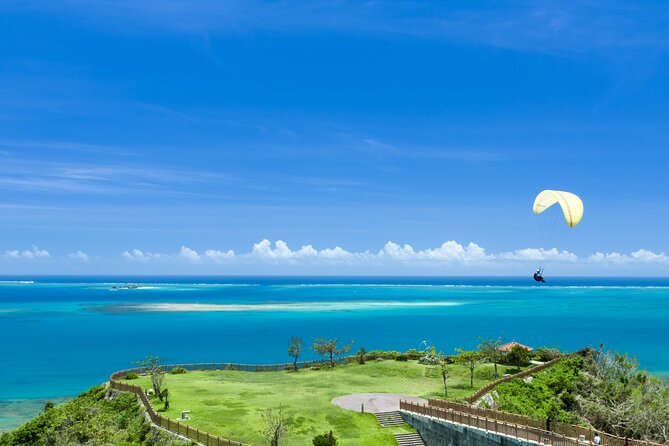
- Choose three or four priorities: The tour is customized rather than a checklist visit to all 12 possible stops.
- Port pickup is built in: Pickup is offered at Naha Port and hotels near the port, useful on a cruise day.
- Licensed English-speaking guides lead the day: Guides named in past bookings include Hiromi, Hyde, Kumiko, Michie, Sui, and Hide.
- The strongest themes are culture and war history: Shuri Castle, sacred sites, markets, and the Underground Naval Headquarters offer very different views of Okinawa.
- The advertised price is for a group of up to two: At $505.58, that works out to about $252.79 per person for two people, before admissions and lunch.
- Make your wishes clear in writing: One poor experience involved requested stops and lunch plans not being followed, so itinerary confirmation matters.
A private way to make sense of Naha
Naha is compact in feel but spread across several sightseeing zones. Shuri lies inland and uphill, the central market and shopping streets sit in the city core, and the major World War II sites are farther south. A private vehicle saves time between these areas, especially when your ship gives you only one day in port.
The tour lasts about six hours. You select three or four must-see places from the available list, then your guide builds the day around those choices. That format is important. The 12-stop itinerary is a menu, not a promise that you will visit every location.
Your guide is a government-certified National Government Licensed Guide Interpreter. The tour includes a local English-speaking guide and a private vehicle. In practice, some outings have also included a separate driver, which lets the guide focus on explanations and lets you step in and out without arranging taxis at each stop.
Pickup is available at Naha Port or hotels near the port. If you are arriving by cruise ship, allow time for customs and disembarkation. One guide waited patiently while a group cleared the ship and helped communicate with the taxi driver, a small but useful service when every minute matters.
More private guided tours with driver in Naha:
- Tokyo 6hr Private Tour with Government-Licensed Guide
★ 5.0 · 3,902 reviews - Tokyo 4hr Private Tour with Government-Licensed Guide
★ 5.0 · 1,394 reviews - Kyoto 6hr Private Tour with Government-Licensed Guide
★ 5.0 · 1,369 reviews
Shuri Castle and the Ryukyu royal past
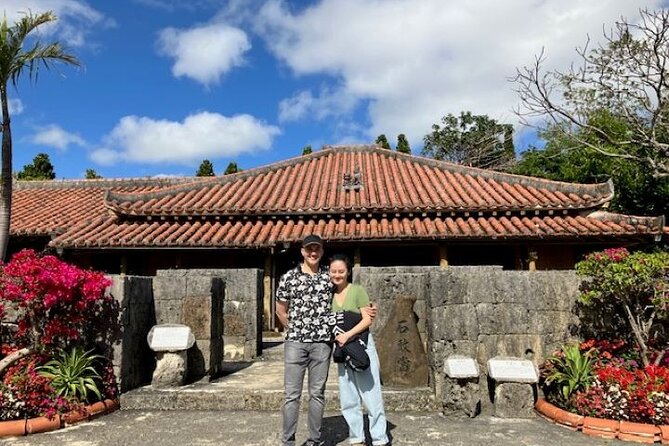
Shuri Castle is the natural first choice for anyone wanting a clear introduction to Okinawa. It was the center of the Ryukyu Kingdom, whose links with China and nearby regions shaped the island’s language, architecture, ceremonies, and trade.
The principal buildings were destroyed by fire on October 31, 2019. Reconstruction work has been part of the site’s story, and the available information specifically warns that building work has affected parts of Shuri Castle and nearby Enkakuji. You should therefore confirm what is open when you book and avoid expecting a fully restored palace complex.
A 30-minute visit is enough for a quick look at the grounds and major surviving features, but not for a leisurely exploration. One private outing included Shureimon Gate and parts of the castle grounds, along with an Okinawa Prefecture museum visit. That kind of pairing can add useful context, but you should agree on it ahead of time because the museum is not one of the listed core choices.
The castle area includes uphill sections and steps. One guide congratulated a couple for making the uphill walk, while another adjusted an itinerary for people using walkers and oxygen. If mobility is a concern, tell the operator before the day begins so the guide can choose manageable stops.
Kokusai Street, Makishi Market, and lunch
Kokusai Street is Naha’s main commercial strip. After World War II, it became known as the miracle mile because of how quickly the area was rebuilt. Today, you will find souvenir shops, restaurants, and an easy first look at modern Naha.
The listed visit is 30 minutes and admission is free. That is enough for a drive-through or a short walk, but not enough to browse every side street. If shopping is your main goal, you may want to make Kokusai Street one of only three stops rather than squeezing it between several historic sites.
Nearby Makishi Public Market is known as Naha’s kitchen. The market began in 1972 and offers a direct look at local food culture. A particularly good use of the tour is to walk through the market and eat upstairs, an arrangement described in several outings. Another group enjoyed a local lunch arranged by its guide.
Lunch is not included, and you pay for your own food. Still, using a private tour for a market meal can be worthwhile because your guide can help you understand what you are seeing and point out local choices. Be very clear if you want lunch at Makishi Market. One unhappy booking resulted from a requested market lunch being replaced by a different destination.
Okinawa’s war sites in the south
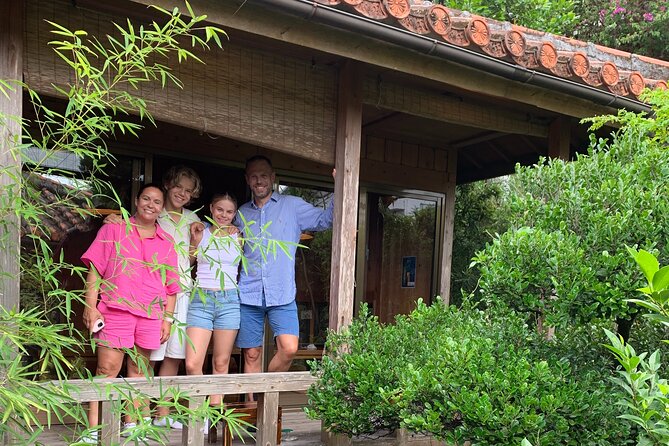
Okinawa’s World War II sites are difficult but important. The Battle of Okinawa caused enormous loss of life, including more than 100,000 Okinawan civilians within an estimated total of about 200,000 people killed. These places give the island’s past a human scale that a general sightseeing tour cannot provide.
The Himeyuri Peace Museum tells the story of the Himeyuri students and teachers caught up in the final stages of the war. A 30-minute visit gives you an introduction, but the subject deserves quiet attention. You may find the museum emotionally heavy, especially when combined with the other war sites.
Peace Memorial Park offers open grounds and memorial spaces connected with the Battle of Okinawa. Admission is free. It is a better choice if you want room to reflect and a broad view of the conflict, while Himeyuri provides a more focused account.
The Former Japanese Navy Underground Headquarters is another powerful stop. The site is in the Tomigusuku uplands, southwest of Naha, with views toward the East China Sea, the southern metropolitan area, and Shuri Castle. You walk through underground passages and rooms connected with the Japanese Navy command.
The steps are easier than they may sound, according to one detailed account, but you should still ask about the route if stairs are difficult. The site is not just a museum stop. It gives you a physical sense of the cramped conditions faced by the people inside.
If World War II history is your priority, choose two or three related sites instead of trying to add royal gardens and sacred places on the same day. Your guide can explain the connections, but you will get more from the visit if you are not watching the clock.
A few more Naha trips to weigh up
- Private Tour to Mt. Fuji and Hakone (Fully Licenced Operator)
★ 5.0 · 1,910 reviews - Fushimi Inari Hidden Hiking Tour (Private Option Available)
★ 5.0 · 1,750 reviews - Private Kyoto Tour with a Local, Highlights & Hidden Gems, Personalised
★ 5.0 · 1,543 reviews - Tokyo Customized Private Tour (Must See Places in 1 Day)
★ 5.0 · 1,499 reviews
Sacred places and royal gardens
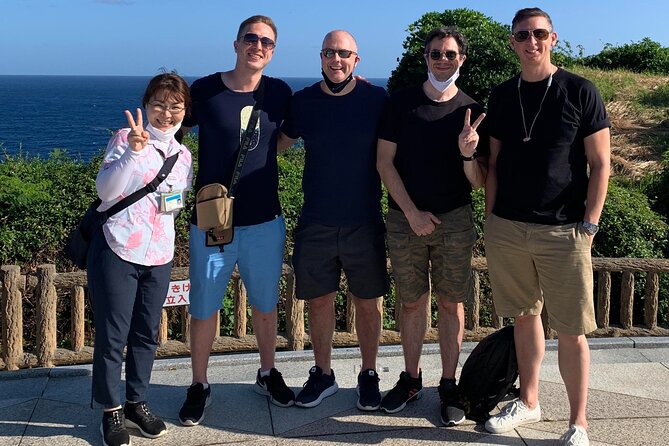
Sefa Utaki is one of Okinawa’s most important sacred sites. The indigenous Okinawan religion places strong emphasis on nature, and this forested hillside site remains associated with that older spiritual tradition. It offers a different view of Okinawa from Shuri Castle’s formal royal setting.
The visit takes about 30 minutes, with admission not included. The site’s value comes from its setting and meaning rather than a long list of buildings. Wear shoes suitable for a short walk and ask your guide about the route if you need to limit steps.
Shikinaen Garden was built near the end of the 18th century as a second residence for the Ryukyu kings. The grounds include simple wooden buildings with Okinawan-style red tile roofs and garden scenery. It is a calmer stop than Kokusai Street and helps show how the royal household used space outside the main castle.
The garden also carries Chinese influence, a reminder that the Ryukyu Kingdom developed through regional connections. Admission is not included. At 30 minutes, you will see the main design and buildings, but you will not have time for a slow garden walk.
Tamaudun is the royal mausoleum associated with the Ryukyu kings. The site has been undergoing renovation, and the small accompanying museum has also had work nearby. Confirm current access before booking if Tamaudun is high on your list.
Fukushu-en Garden offers another look at Okinawa’s connection with China. Built in 1992 to celebrate those ties, it is free to enter and provides a picturesque urban pause. It is a practical choice if you want a pleasant garden without spending part of your tour budget on admissions.
Traditional homes, pottery, and local craft
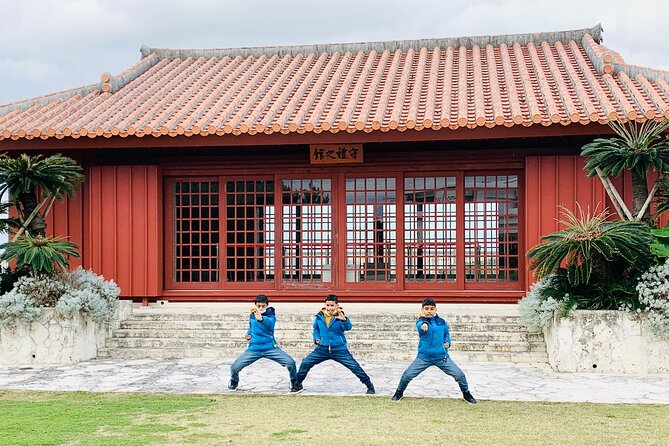
Nakamura Residence is an 18th-century traditional Okinawan home that once belonged to the Nakamura family. It has been designated a major cultural asset by the Japanese government. The house can help you picture domestic life in the Ryukyu period, especially when your guide explains how the architecture responds to Okinawa’s climate and cultural links.
Tsuboya Pottery Museum sits near the central Kokusai-dori area. The surrounding Tsuboya Pottery District leads into leafy backstreets away from the main shopping strip. Admission to the museum is free, and the area is a good pick if you prefer craft and neighborhood character to large formal attractions.
Several custom outings added nearby craft stops, including a kimono material store or factory, a lacquerware shop, and places selling Ryukyu glass. These extras are not guaranteed, so treat them as possible additions only after your main three or four choices are fixed.
A tour focused on Tsuboya, Makishi Market, and Fukushu-en would make a good food-and-craft day. You would see local work, eat in a market, and learn about the Chinese influence on Okinawan culture without spending the entire day at major memorials.
How the customization really works
The flexibility is the main reason to choose this tour, but customization only helps when you make firm choices. Before departure, send three or four must-see sites, your preferred lunch plan, and any places you do not want to visit.
The available choices cover several different kinds of day:
- Royal Okinawa: Shuri Castle, Shikinaen Garden, Tamaudun, and Fukushu-en Garden.
- War history: Himeyuri Peace Museum, Peace Memorial Park, and the Former Japanese Navy Underground Headquarters.
- Food and local life: Kokusai Street, Makishi Public Market, and Tsuboya Pottery Museum.
- Spiritual and rural character: Sefa Utaki, Nakamura Residence, and selected southern Okinawa sites.
I would not try to combine all four themes. Three or four stops, plus driving and lunch, already fill six hours. A guide may rearrange the order to avoid rain or reduce backtracking. That flexibility worked well on one rainy day, when the guide changed the sequence so the group missed much of the bad weather.
At the same time, do not assume that a message sent weeks earlier will automatically control the day. Ask for written confirmation of your route and lunch stop. The tour provider acknowledged one case in which the requested itinerary was not followed, so this is a sensible precaution.
Guide quality and the human side of the day
The strongest part of this experience is the guide’s ability to connect the stops. Hiromi has used pictures and slides to explain difficult subjects and has been praised for careful organization. Hyde has shared local and family perspectives on Okinawa, along with stories about the island’s past. Kumiko has handled a deeply personal visit to a childhood apartment as well as stops at the naval headquarters and pottery district.
Other named guides include Michie, Sui, and Hide. Sui has combined Shuri Castle grounds, sake tasting, pottery, the naval bunker, and lunch at the market. Hide has added nearby craft shops while explaining Okinawan history.
You should expect different personalities and routes because this is a small agency with several guides, not a single-guide product. The common thread is a licensed English-speaking guide who can answer questions and explain culture, history, religion, food, and local customs.
The day can also work well for mixed-age groups or people who need a gentler pace. One guide adjusted visits for people using oxygen and walkers, while the driver helped load and unload mobility equipment. Service animals are allowed, and most people can participate. Car seats and booster seats are limited, and rear-facing seats are not available, so contact the operator directly if you need one.
Is $505.58 a fair price?
The listed price is $505.58 per group of up to two people for about six hours. For two, that is roughly $252.79 each. The cost includes the private vehicle, pickup, and licensed local English-speaking guide, but not entrance fees, lunch, or personal expenses.
That is not a budget shore excursion. The value comes from time and control. You can avoid arranging several taxis, ask questions throughout the day, and choose sites that match your interests. On a cruise stop, that can matter more than the headline price because a delayed taxi or missed connection creates real risk.
The price is easier to justify if you want a private day for two and plan to visit scattered sites such as Shuri Castle, the naval headquarters, and Peace Memorial Park. It is less attractive if you only want Kokusai Street and Makishi Market, which you could explore more simply on your own.
The booking information says only one reservation is allowed per group and that separate tour groups cannot be combined. The advertised capacity is up to two people. One past outing involved seven people and a van, but that does not change the current stated terms. If you are a larger party, contact the provider before paying rather than assuming a bigger vehicle is included.
Cruise-day planning and practical limits
Give yourself a generous return buffer. The tour is designed for people visiting by ship, but six hours is an approximate duration and traffic, customs delays, weather, and attraction access can all affect the schedule.
Pickup at the port is a major convenience. Look for the guide holding your name sign, as one successful pickup worked that way, and keep your phone available in case the meeting point needs clarification. The guide can help with local communication, but you still need to provide accurate ship and pickup details.
Admission fees vary by stop and are not included. Shuri Castle, Himeyuri, Sefa Utaki, Shikinaen, Nakamura Residence, Tamaudun, and the Former Japanese Navy Underground Headquarters list admission as extra. Kokusai Street, Peace Memorial Park, Fukushu-en Garden, Tsuboya Pottery Museum, and Makishi Public Market list free admission.
Free cancellation is available up to 24 hours before the local start time. Changes made less than 24 hours ahead are not accepted, and late cancellations are not refunded. Confirmation arrives within 48 hours, subject to availability.
Should you book this Naha private tour?
Book it if you want a personal guide, door-to-door transport, and a carefully chosen look at Okinawa rather than a quick shopping stop. It is especially useful for a cruise day, for anyone interested in the Battle of Okinawa, or for a small group that wants help with local culture and food.
I would choose three or four connected stops. For a first visit, Shuri Castle, Makishi Public Market, the Former Japanese Navy Underground Headquarters, and either Fukushu-en or Kokusai Street create a broad day. For a more reflective day, choose Himeyuri, Peace Memorial Park, the naval headquarters, and Shuri Castle.
Skip it if you want a cheap, unstructured walk around central Naha or if you dislike planning your route in advance. Before booking, confirm the current castle access, the vehicle capacity, your lunch request, and every must-see stop. Do that, and this can be a smart way to turn a short port call into a meaningful introduction to Okinawa.
FAQ
Where does the tour pick up?
Pickup is offered at Naha Port and at hotels near the port.
How long does the tour last?
The tour lasts approximately six hours.
How many people can book at the listed price?
The listed price of $505.58 applies to a group of up to two people.
Is the tour private?
Yes. Only your group participates, and the activity is private.
What is included?
The tour includes a licensed local English-speaking guide, a customizable itinerary of three or four selected sites, and a private vehicle.
Are entrance fees included?
Entrance fees are not included. Guide entry fees are covered only for sights listed under the tour’s included sightseeing choices.
Is lunch included?
No. Lunch and personal expenses are not included.
Which places can I choose?
Choices include Shuri Castle, Kokusai Street, Himeyuri Peace Museum, Peace Memorial Park, Sefa Utaki, Shikinaen Garden, Nakamura Residence, Tamaudun, Fukushu-en Garden, Tsuboya Pottery Museum, Makishi Public Market, and the Former Japanese Navy Underground Headquarters.
Can I request a specific itinerary?
Yes. You are asked to select three or four must-see places for a customized itinerary. It is wise to confirm your choices and lunch request directly with the provider.
Are child car seats available?
A limited number of car seats and booster seats are available. Rear-facing car seats are not available, and you must contact the provider directly if you need a seat.
Can I cancel for a full refund?
You can cancel up to 24 hours before the experience start time for a full refund. Cancellations or changes made less than 24 hours before the start time are not accepted or refunded.
Just added around Naha
- Zodiac Shrines and Naha Backstreets Cycling Tour★ 5.0 · 29 reviews
- E-Bike Nature Tour in Shuri★ 5.0 · 25 reviews
- Tokashiki Island Day Trip from Naha★ 4.0 · 15 reviews
- Karate History Tour in Okinawa★ 5.0 · 42 reviews
- Sushi Making Experience Class in Naha Makishi Public Market★ 5.0 · 35 reviews
- Kintsugi Experience in Naha, Okinawa – Art from Broken Pieces!★ 5.0 · 28 reviews
- Okinawa 2-Hours Genuine Kendo/Samurai Experience in Japan★ 5.0 · 28 reviews
- Okinawa:Kerama Islands experience Diving/Snorkeling/WhaleWatching★ 4.5 · 16 reviews
Private Guided Tours with Driver, compared.
Tokyo 4hr Private Tour with Government-Licensed Guide
Read our review →
Kyoto 6hr Private Tour with Government-Licensed Guide
Read our review →
Hiroshima / Miyajima Full-day Private Tour with Government Licensed Guide
Read our review →
Kyoto 4hr Private Tour with Government-Licensed Guide
Read our review →
Mt. Fuji Day Trip from Tokyo with English Speaking Driver Guide
Read our review →
Hiroshima City 4hr Private Walking Tour with Licensed Guide
Read our review →Browse the lists this tour appears in