
REVIEW · CYCLING TOURS
Afternoon Adventure: Okinawa Local Cycling with Spectacular Views
Naha’s best cycling route is not a flat ride along the shore. It heads through Tsuboya’s pottery lanes, old neighborhood streets, Shuri’s stone paths, and a hilltop viewpoint over the city. You get a close look at Okinawa’s past while still seeing how people live today.
I like two things here: the small maximum of five riders keeps the outing personal, and the power-assisted bikes make the climb toward Shuri far less punishing. Guides such as Aki, Maki, Tony, Hiro, and Jojo are praised for clear explanations and friendly help. The main drawback is simple: this is still a 3 to 3.5-hour ride with hills, heat, and city traffic, so it is not a passive sightseeing trip.
- Tsuboya pottery quarter: See the district where Okinawan pottery has been made for about 300 years.
- Helmet communication: The supplied cycling helmets have microphones, so you can talk with the guide while riding.
- Shuri by e-bike: Power assistance helps on the inclines toward the former Ryukyu capital.
- Local Naha streets: Pass traditional homes, Asato Shotengai, and ordinary residential areas missed by many visitors.
- Sunset potential: Afternoon departures can lead to glowing views over Naha from Shurisakiyamacho.
- Tiny group size: With no more than five people, the pace can feel more flexible than a large bus tour.
In This Review
- Why This Ride Shows You More Than Naha’s Main Streets
- Starting Beside Makishi Monorail Station
- Tsuboya Yachimun Dori and Okinawan Pottery
- Asato Shotengai and Ordinary Naha
- Shikina? No, Shuri: Stone Paths and the Old Royal Town
- Shurijo Castle Park at a Gentle Pace
- Shurisakiyamacho and the Naha Viewpoint
- What the Small Group and Guides Add
- Who Will Get the Most From This Tour
- Practical Value at $99.10
- Should You Book This Naha Cycling Tour?
- FAQ
- Where does the cycling tour start?
- Where does the tour finish?
- How long does the experience last?
- What is included in the price?
- Are e-bikes provided?
- How many people can join the tour?
- Can young children participate?
- What happens if the weather is poor?
- What is the cancellation policy?
Why This Ride Shows You More Than Naha’s Main Streets
At $99.10 per person, this is not the cheapest way to spend an afternoon in Naha. But the price covers the bike, helmet, guide, and a route that links several parts of the city without making you arrange transport between them.
I see the value in the combination. You are not simply pedaling past sights and taking quick photographs. A guide explains why Tsuboya became a pottery center, how Shuri functioned under the Ryukyu Kingdom, and what remains of local life in neighborhoods between the headline attractions.
The group limit matters, too. Five riders is small enough for questions, quick stops, and help with riding technique. The experience has been led by guides including Aki, Maki, Tony, Jojo, Hiro, Sammi, Stephen, Aziz, and Rechi. The strongest praise focuses on their warmth, historical explanations, patience, and ability to keep the ride moving.
You should still consider the physical side. The ride includes inclines, narrow lanes, and city roads. The e-bikes reduce the effort, but they do not remove the need to steer, watch traffic, and stay with the group. In hot weather, the route may feel strenuous. Bring water and dress for the season, with an extra layer if your afternoon ends in cooler air.
Starting Beside Makishi Monorail Station
The meeting point is e-CHARIty Naha Kokusai Street at 3-chōme-13-20 Makishi, about a one-minute walk from Makishi Monorail station. That is a practical start, especially if you are staying near Kokusai Street or using Naha’s monorail.
The opening 15 minutes cover bike pickup and a safety briefing. Use this time to make sure the saddle feels right and that you understand the power assistance. The supplied helmet is more than basic protective gear: the built-in microphone lets you communicate with the guide as the group rides.
That small feature is useful in real life. On a city ride, you do not want to stop every few minutes just to hear a historical explanation. The helmet communication system helps the guide speak while you keep moving, though traffic and road noise can still affect how clearly you hear.
The bikes are power-assisted, based on the equipment described during the experience. One point to note is sizing. A shorter rider may receive a smaller city-style bicycle rather than a compact mountain-bike frame. This has worked well for many people, but riders who are particular about frame fit should ask the shop before booking.
A few more Naha trips to weigh up
- Naha: Guided E-Bike Tour of the 12 Zodiac Temples
★ 4.9 · 50 reviews - Zodiac Shrines and Naha Backstreets Cycling Tour
★ 5.0 · 29 reviews - E-Bike Nature Tour in Shuri
★ 5.0 · 25 reviews
Tsuboya Yachimun Dori and Okinawan Pottery
The first substantial stop is Tsuboya Yachimun Dori, about 30 minutes into the outing. Yachimun means pottery in the Okinawan language, and this street gives the ride a strong cultural opening.
Around 300 years ago, the Ryukyu Kingdom brought pottery kilns from different parts of Okinawa into this area. That decision made Tsuboya an important center for ceramic production. You will hear about that past while moving through a district that still has a strong connection to pottery.
This is one of the most appealing parts of the route because it is easy to rush through Naha without noticing its craft traditions. The narrow streets and old buildings offer a slower look at the city. Guides have also taken time to explain pottery customs and local traditions, so this stop is more than a quick photo break.
Do not expect an extended workshop or a shopping session to be part of the tour. The stated stop lasts about 30 minutes, and the main purpose is to see the district and understand its place in Okinawa’s story. If you want to buy ceramics, you may need to return on your own after the ride.
Asato Shotengai and Ordinary Naha
From Tsuboya, the route passes near Asato Shotengai. The area once had a reputation as a red-light district, while today its evening life centers on izakayas and other places to eat.
That contrast is part of what makes the ride useful. Naha’s past is not confined to museums or restored monuments. It also appears in commercial streets that have changed function over time. If your tour takes place later in the afternoon, you may see the area beginning to come alive for the evening.
The ride then continues through local parts of Naha where a few traditional houses remain. This section does not offer one grand sight. Its value is quieter. You see the scale of daily life, residential streets, and the mix of older homes with modern city development.
I especially like this kind of route because it helps you understand how the major sights fit into the city around them. The tradeoff is that you need to appreciate observation rather than constant landmark stops. Some stretches are simply about riding through a neighborhood and noticing details.
Shikina? No, Shuri: Stone Paths and the Old Royal Town
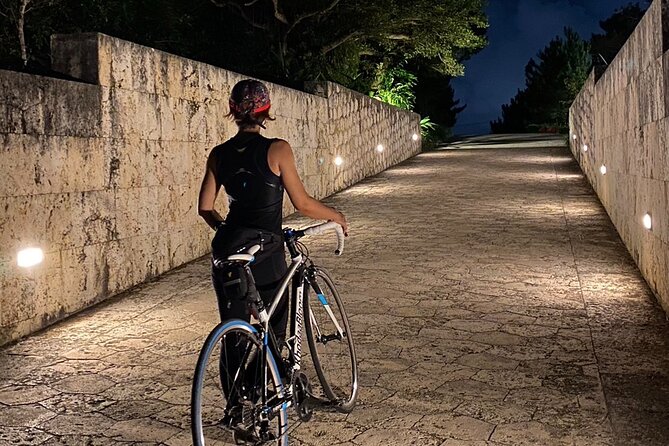
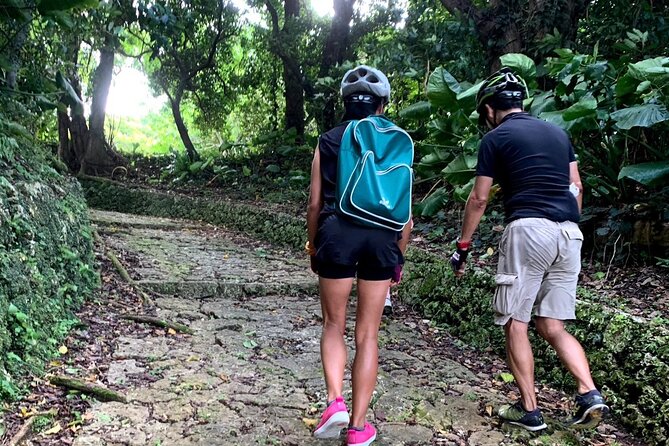
The route next climbs toward Shurinjocho Stone-Path Road, in the old town around Shuri. This was the capital of the Ryukyu Kingdom, and the change in atmosphere is clear in the stone paving, temples, and sacred shrines.
The stop lasts about an hour, giving you time to move at a relaxed pace and listen to the guide. This is where the power assistance earns its keep. The roads toward Shuri include steep sections, and several riders have found the e-bikes especially helpful on the climb.
You should not confuse power assistance with a motor scooter. You still pedal, and you still need to manage the bicycle on uneven or narrow surfaces. But the extra help can make the difference between enjoying the old streets and focusing only on the hill.
The stone paths can also be less comfortable than smooth pavement. Wear shoes that stay secure on the pedals and be ready for a slower pace. The guide may need to manage tight turns, pedestrians, and changes in road surface. Sammi was specifically praised for handling narrow alleys and difficult two-point turns, while the route has also been described as carefully planned for both visitors and local riders.
Same city, a completely different kind of day:
- Official Street Go-Kart Tour – Okinawa Shop
★ 5.0 · 699 reviews - Naha: North Okinawa Sightseeing Tour & Churaumi Aquarium
★ 4.4 · 472 reviews - Okinawa: From Naha: Kerama Islands 1-day snorkeling tour
★ 4.4 · 423 reviews - From Naha: Tokashiki Island Day Trip by Boat
★ 4.3 · 385 reviews
Shurijo Castle Park at a Gentle Pace

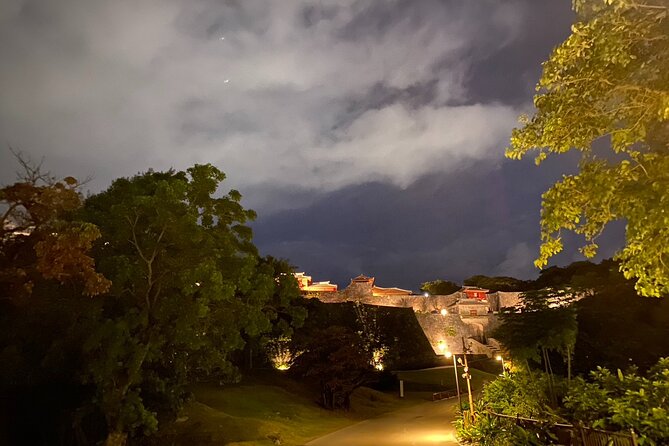
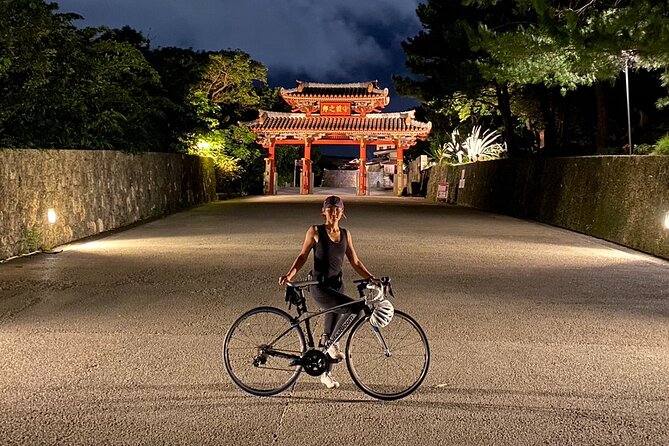
The next hour is spent passing through Shurijo Castle Park. The park has plants that change with the seasons, stone walls, and the Shureimon gate, one of Okinawa’s most recognizable architectural features.
The tour description emphasizes riding through the park rather than a full indoor castle visit. That distinction matters. You are seeing the grounds, paths, walls, and gate as part of a cycling route, not taking a dedicated castle admission tour.
This approach gives you a wider sense of Shuri. You can connect the royal town, the old road network, and the castle grounds in one continuous outing. The park also supplies some calmer riding after the city streets and steep approach.
The exact light will depend on the date and departure time. Afternoon rides may reach the park when the stone walls and gate catch softer light, while later departures can continue toward sunset. The route is described as lasting about three hours to three and a half hours, so the final timing can vary.
If Shurijo Castle is a major priority, set aside separate time to explore it in greater detail. This tour gives you a useful introduction and a scenic ride through the park, but its goal is broader than a full castle visit.
Shurisakiyamacho and the Naha Viewpoint
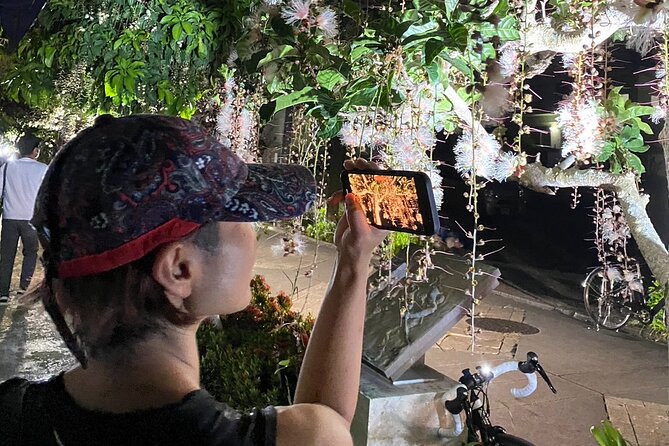
The ride’s payoff comes at Shurisakiyamacho, where the guide takes you to a viewpoint over Naha. The stop lasts about 20 minutes and is presented as one of the best places for photographs.
Several afternoon outings have included sunset views. The timing is not guaranteed in every season, but the possibility adds real appeal to a ride that already covers history and local streets. From the viewpoint, you get a wider picture of Naha after spending much of the tour among lanes, walls, and buildings.
A short photo stop also keeps the experience from becoming tiring. After the climb toward Shuri and the hour around the castle park, 20 minutes is enough to enjoy the view without turning the tour into a long stationary break.
Bring your own phone or camera if you want pictures. Camera mounts and mobile-phone holders are not included, so you should not expect the bike to carry your device in a fixed mount. The guide may be able to help with photographs, but that should not be treated as a guaranteed service.
What the Small Group and Guides Add
The maximum group size is five. That is one of the strongest reasons to choose this outing over a larger sightseeing vehicle. A guide can answer individual questions, adjust explanations, and keep an eye on riders more easily.
The guide names associated with the tour include Aki, Maki, Tony, Jojo, Hiro, Aziz, Rechi, Sammi, and Stephen. Their roles may vary by departure, so you cannot select a particular guide from the information provided. Still, the pattern is clear: the experience depends heavily on the person leading it.
Aki is noted for detailed explanations and for making the hills easier with the e-bikes. Maki is praised for being thoughtful, thorough, and helpful, as well as for taking photographs on a sunset ride. Tony is described as especially strong on Okinawan history and local culture. Jojo is noted for answering questions carefully, while Hiro received praise for communication, safety, and personal support.
The helmets with microphones help the guide share information without repeated stops. That makes the ride feel more like a moving conversation than a silent procession. You should still speak up if you cannot hear or need a break.
Who Will Get the Most From This Tour
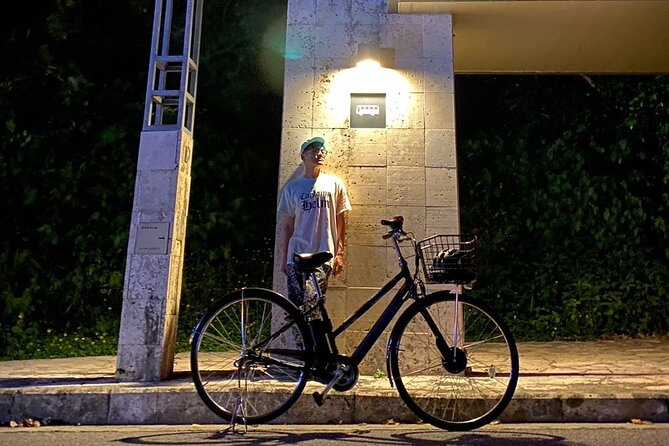
I would choose this ride if you want Naha beyond Kokusai Street and the standard castle visit. It suits a solo rider, a couple, or a small family group that wants history, local neighborhoods, and views in one half-day activity.
It is also a good choice for cruise passengers. The start and finish are in central Naha, and the outing lasts about three and a half hours, leaving you free to continue around the city afterward. The return to the same shop simplifies the plan.
The route can work for novice riders because the bikes provide assistance, and the guide gives a safety briefing. Children aged one to five may ride in a child seat attached to a parent’s bicycle, but you need to consult the staff about that arrangement.
I would hesitate to recommend it if you dislike hills, cycling in cities, or changing road surfaces. You should also think carefully about Okinawa’s weather. If the chance of rain rises above 70 percent or severe conditions are expected, the operator may change the plan and contact you the day before.
Practical Value at $99.10
The $99.10 price includes bicycle use, bike rental, an installed cycling helmet, and a cycling guide. It does not include a camera mount or mobile-phone holder, and there is no stated meal or attraction admission included.
The cost makes the most sense when you value access to several areas in a short period. On your own, you could visit Tsuboya, Shuri, and the castle park, but you would need to work out the route, handle the uphill sections, and research the historical links yourself.
The tour also saves energy. The e-bike helps on the Shuri climb, while the guide handles navigation through unfamiliar streets. For a first visit, that combination can be worth more than simply renting a standard bicycle.
Free cancellation is available up to 24 hours before the start time for a full refund. If poor weather cancels the outing, you are offered another date or a full refund. Changes or cancellations inside the 24-hour window are not accepted for a refund.
Should You Book This Naha Cycling Tour?
I would book this experience if you want a compact introduction to Okinawa that joins craft, royal history, ordinary neighborhoods, and a city view. The small group, power-assisted bikes, helmet microphones, and strong guide roster make the $99.10 price reasonable for a well-organized half-day outing.
You should skip it if you want a beach ride, a completely flat route, or a full guided visit inside Shurijo Castle. This is a city and history ride, not a resort excursion.
For the best fit, arrive ready to pedal, wear secure shoes, bring an extra layer for the evening, and leave room in your schedule after the ride. You finish back at e-CHARIty Naha Kokusai Street, so you can continue exploring Naha on foot afterward.
FAQ
Where does the cycling tour start?
It starts at e-CHARIty Naha Kokusai Street, at 3-chōme-13-20 Makishi, Naha, Okinawa 900-0013. The shop is about a one-minute walk from Makishi Monorail station.
Where does the tour finish?
The tour ends back at the meeting point, where you return the bicycles. You can continue exploring Naha on your own afterward.
How long does the experience last?
The stated duration is approximately three hours and 30 minutes. The tour description also gives a range of three to three and a half hours.
What is included in the price?
The price includes use of a bicycle, bike rental, an installed cycling helmet, and a cycling guide.
Are e-bikes provided?
The bikes used on the experience are described in the tour information and participant details as power-assisted e-bikes. They are especially helpful on the inclines toward Shuri Castle.
How many people can join the tour?
The activity has a maximum of five participants.
Can young children participate?
Children aged one to five can use a child seat attached to a parent’s bicycle. You should consult the staff for more information before booking.
What happens if the weather is poor?
If the precipitation probability exceeds 70 percent or severe weather is expected, the operator may change the plan and contact you the day before. If the experience is canceled because of poor weather, you can choose another date or receive a full refund.
What is the cancellation policy?
You can cancel up to 24 hours before the start time for a full refund. Cancellations or changes made less than 24 hours before the start time are not accepted for a refund.
Just added around Naha
- Zodiac Shrines and Naha Backstreets Cycling Tour★ 5.0 · 29 reviews
- E-Bike Nature Tour in Shuri★ 5.0 · 25 reviews
- Port Pick-Up: Naha Private Tour Licensed Guide& Vehicle★ 4.5 · 16 reviews
- Tokashiki Island Day Trip from Naha★ 4.0 · 15 reviews
- Karate History Tour in Okinawa★ 5.0 · 42 reviews
- Sushi Making Experience Class in Naha Makishi Public Market★ 5.0 · 35 reviews
- Kintsugi Experience in Naha, Okinawa – Art from Broken Pieces!★ 5.0 · 28 reviews
- Okinawa 2-Hours Genuine Kendo/Samurai Experience in Japan★ 5.0 · 28 reviews
Cycling Tours, compared.




3h Tokyo E-Bike Tour: Hidden Gems, and Local Life with guide
Read our review →
Arashiyama Bamboo Forest & Hidden Gems Bike Tour (Early Bird)
Read our review →
Hiroshima in a Nutshell: Morning Bike Adventure
Read our review →
5 Top Highlights of Kyoto Full Day Bike Tour (E-bike option)
Read our review →Browse the lists this tour appears in