
REVIEW · WALKING TOURS
Nagano: Tateyama-Kurobe Guided Walking Tour
The remarkable part of this day is the journey itself. You rise from Nagano to Murodo at 2,450 meters using buses, a tunnel trolley bus, the Tateyama Ropeway, and an electric car. Along the way, you see Japan’s highest dam and reach a high mountain plateau without needing a serious climb.
I like the careful timing and the English-speaking guide, especially for a route with several transfers. I also like the choice between joining the one-hour walk and spending some free time on your own. The main catch is the long day: you leave Nagano early, return around 18:00 to 19:00, and lunch is not included.
In This Review
- Key points at a glance
- Why the Alpine Route works so well as a day trip
- Ogizawa and the first mountain transport
- Kurobe Dam, Japan’s great engineering stop
- Riding the Tateyama Ropeway to Daikanbo
- Murodo at 2,450 meters
- Choosing the best season for your visit
- The long return to Nagano
- What the guiding adds
- What to pack for the Alpine plateau
- Who should book this day?
- Should you book the Tateyama-Kurobe walking tour?
- FAQ
- Where does the tour meet in Nagano?
- How long does the tour last?
- What is the highest point reached?
- Is lunch included?
- What transport is used?
- How long is the walk at Murodo?
- Can I explore Murodo without the guide?
- What languages are available?
- Is the tour suitable in November?
- Are shinkansen tickets included?
Key points at a glance
- Kurobe Dam: Stop at Japan’s highest dam, a huge concrete wall built from 1956 to 1963.
- Four kinds of mountain transport: Travel by coach, Kanden Tunnel trolley bus, Tateyama Ropeway, and electric car.
- Murodo at 2,450 meters: Reach Japan’s highest station and a high alpine plateau beneath Mount Tate.
- Seasonal scenery: Look for summer flowers, September and October colors, and possible November snow and ice.
- Guided but flexible: Follow the one-hour walk or use the free time to explore at your own pace.
- Good route management: Guides such as Kieron, Orlando, Luki, and Jans have helped visitors keep up with the timed connections.
Why the Alpine Route works so well as a day trip
The Tateyama-Kurobe Alpine Route is not simply a ride to a viewpoint. It is a chain of carefully linked mountain transports crossing central Honshu from the Nagano side. You do not drive the entire route yourself. Instead, you board the next vehicle at each station, which makes the high-altitude journey accessible to people who would not want to hike up a mountain.
This tour uses the eastern approach from Nagano City. Your meeting point is at JR Nagano Station at 08:15, in front of the Information Board directly opposite the shinkansen ticket gates. There is also a pickup at Hotel Kokusai 21 before the station stop.
The early start matters. This is a full one-day outing, not a short excursion squeezed between other Nagano plans. The ride to Ogizawa takes about 115 minutes, and you then spend much of the day moving through the route and exploring Murodo. I would keep the evening free rather than book a tight dinner reservation.
The tour costs $232 per person. That is not a cheap day out, but the price includes transport from Nagano to Ogizawa and back, the return Alpine Route ticket, and an English-speaking guide. Those route tickets and connections are the hard part to organize on your own. The price makes the most sense if you value a smooth day and clear help at each transfer.
You still need to buy your own shinkansen tickets to and from Nagano, and you pay for lunch, snacks, and drinks separately. Bring food from Nagano or plan to buy something during the day, but do not expect lunch to be arranged for you.
More Walking Tours in Nagano
- Matsumoto Castle Town Walking Tour
★ 4.8 · 58 reviews - Food & Cultural Walking Tour around Zenkoji temple in Nagano
★ 5.0 · 58 reviews - Matsumoto Discovery – Half Day Walking Tour
★ 5.0 · 43 reviews
Ogizawa and the first mountain transport
After the coach reaches Ogizawa Station at about 09:45, you get roughly 25 minutes to prepare for the ascent. Use this pause well. Check your layers, fill your water bottle, and make sure your camera and phone are easy to reach.
From Ogizawa, you board the Kanden Tunnel trolley bus. This is the first transport that makes the route feel different from an ordinary sightseeing day. The bus carries you through the mountain toward Kurobe Dam, replacing a long and difficult road journey with a short, efficient passage through the Tateyama range.
Your guide helps you stay on schedule. That support is useful because the route has several timed departures, and a missed connection could affect the rest of the day. Past guides have included Kieron, Orlando, Luki, and Jans. The most praised quality is not a lecture packed with facts, but the practical care of getting everyone to the right vehicle at the right time.
Kurobe Dam, Japan’s great engineering stop
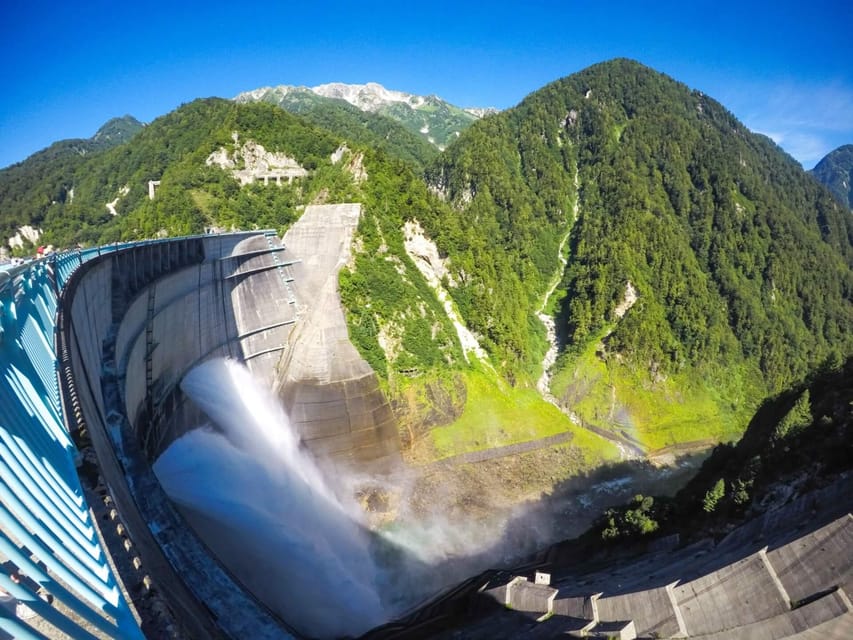
Kurobe Dam is the first major pause, with around 30 minutes for sightseeing. Built between 1956 and 1963, it required the labor of as many as 10 million people. It remains Japan’s highest dam, and its size gives the first part of the trip a powerful human scale.
The dam is also a useful contrast to the mountain scenery. You are looking at a major national engineering project in a place where steep slopes, cold weather, and difficult access made construction extremely demanding. Your guide can add context about the project and the role the mountains play in Japanese culture.
Do not treat this as a quick photo stop only. Take time to look across the dam and toward the surrounding peaks. The views can change with the season, and the open setting helps you understand how far above the ordinary roads and towns you have come.
The 30-minute break is enough for a proper look, but it is not a long wander. Keep an eye on the time and follow your guide’s instructions. The next part of the route is one of the day’s main attractions.
Riding the Tateyama Ropeway to Daikanbo
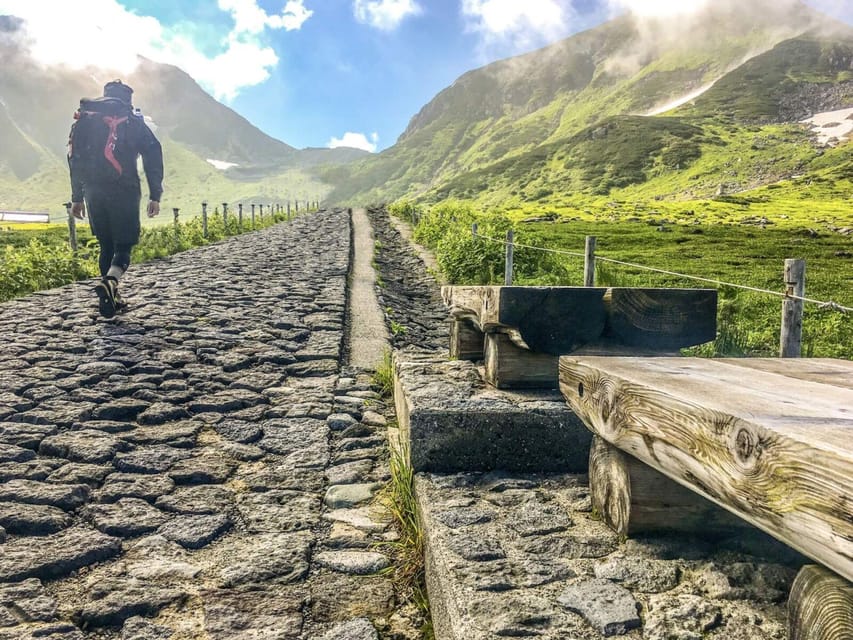
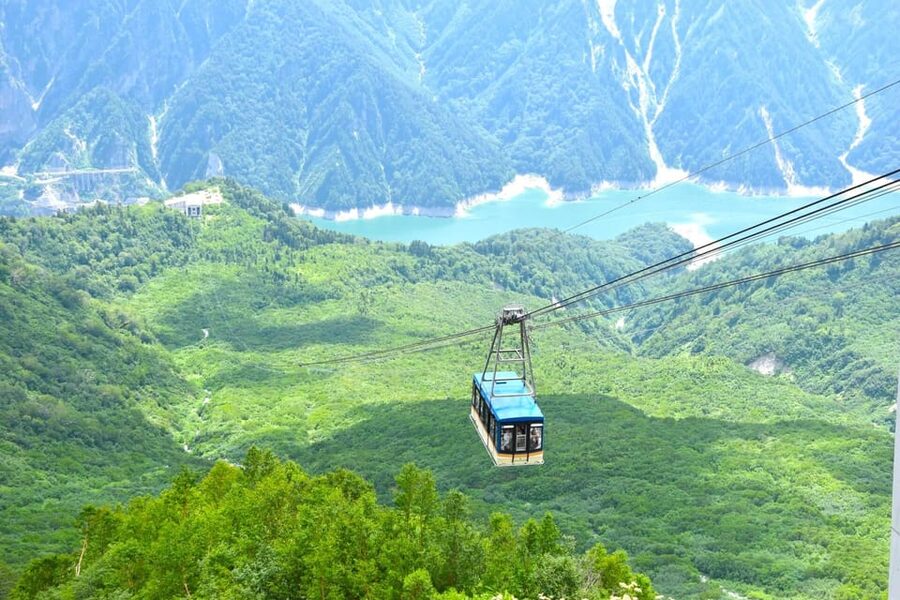
The Tateyama Ropeway covers about 1,700 meters and carries you higher toward Daikanbo. It is one of the most memorable parts of the route because you gain height while looking across the mountain slopes rather than through a tunnel.
In September and October, the ropeway gives you a good view of autumn color below. Alpine grasses and shrubs turn red, orange, and brown, while the forests lower down show broader bands of seasonal color. The ride provides a useful change of view: Kurobe Dam gives you a close look at a single structure, while the ropeway opens the area into a wide sweep of peaks and forests.
Weather controls how much you see. Clouds, rain, or early snow can reduce the views, so you should think of the transport itself as part of the experience, not only as a way to reach a lookout. The route remains interesting even when the high peaks are partly hidden.
At Daikanbo, you take the final trolley bus to Murodo. The sequence of vehicles is a genuine feature, not busywork. You are moving through a high mountain corridor by several forms of transport that each solve a different access problem.
Same city, a completely different kind of day:
- 1-Day Snow Monkeys, Zenko-ji Temple & Sake in Nagano
★ 5.0 · 1,020 reviews - Nagano: Snow Monkeys, Zenkoji Temple & Sake Day Trip
★ 4.9 · 833 reviews - From Tokyo: Snow Monkey 1 Day Tour with Beef Sukiyaki Lunch
★ 4.6 · 295 reviews - Tokyo: Snow Monkey & Nagano Customiseable Private Day Tour
★ 4.8 · 138 reviews
Murodo at 2,450 meters
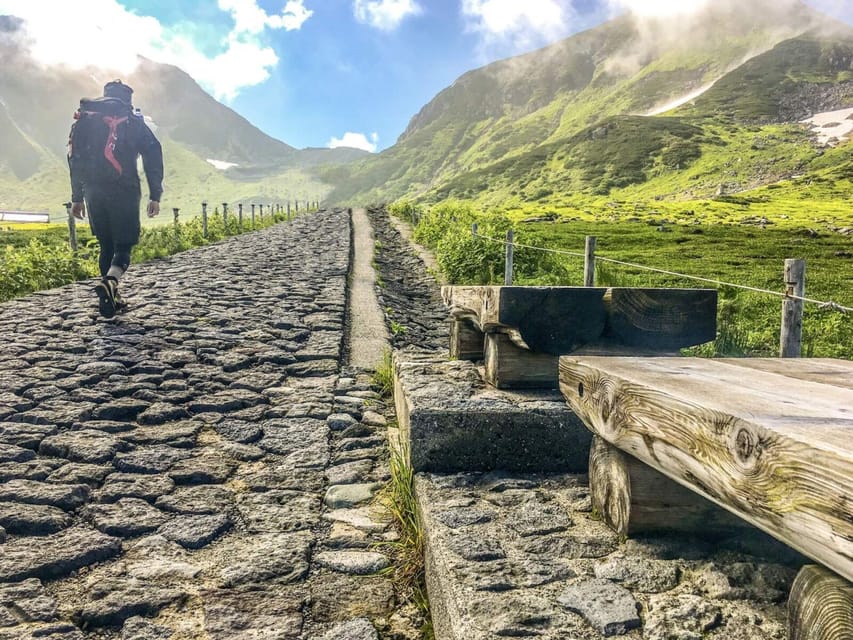
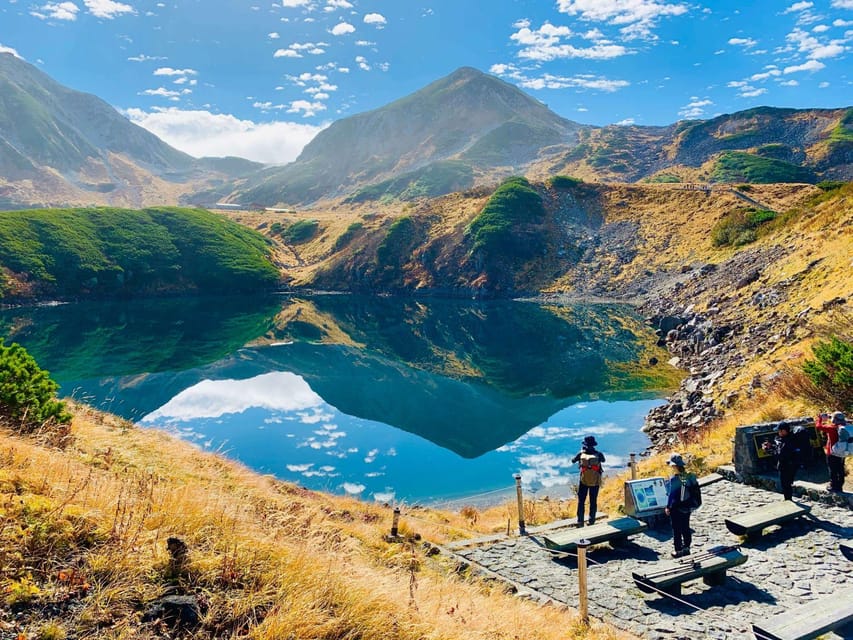
Murodo Station sits at 2,450 meters, making it Japan’s highest station and the gateway to the plateau below Mount Tate. The air is cooler than in Nagano City, and conditions can change sharply with the season.
The guided walk lasts about one hour and is intended for anyone with reasonable fitness. This is a walk on leisurely trails rather than a summit climb, so the appeal is the setting and the interpretation. Your guide explains the surrounding mountains, alpine plants, and the place of mountain worship in Japanese tradition.
That cultural explanation adds depth to the walk. Mount Tate is not only a scenic peak. Mountains in Japan have long been linked with religious practice, pilgrimage, and respect for the natural world. A guide can help you see the plateau as more than a pretty backdrop.
You can also choose to explore independently during part of the time and meet the guide at the appointed place. I like this arrangement because it suits different walking speeds. Join the guide if you want context and company, or use the free time for photographs and a quieter look at the plateau.
The trail is described as easy for people of reasonable fitness, but high altitude still deserves respect. You may notice cooler air and more demanding conditions than the short walking distance suggests. Take your time, wear suitable shoes, and follow the guide if the surface becomes wet, icy, or snowy.
Choosing the best season for your visit
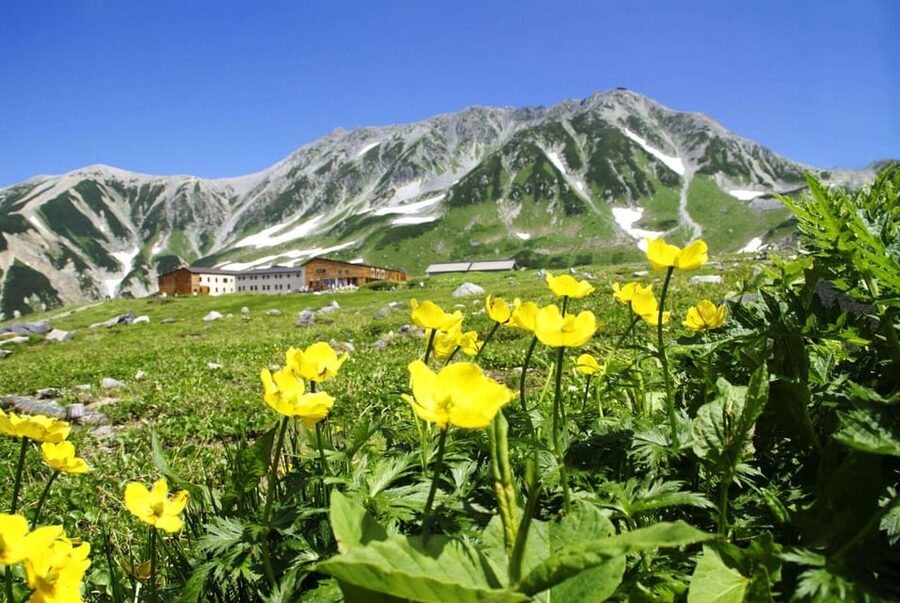
Summer is the classic season for alpine flowers. July brings average daytime temperatures of 11 to 16°C, while August ranges from 12 to 18°C. These are cool figures compared with lowland Japan, so pack a warm layer even if Nagano City feels mild.
September and October offer the strongest chance of autumn color. September averages 9 to 15°C during the day, and October drops to 3 to 10°C. The high meadows can turn red, orange, and brown, with the ropeway providing views of forests lower on the slopes.
November is a different experience. Average daytime temperatures range from -5 to 2°C, and snow is possible. One visitor found the paths icy in November and wished for overshoes with spikes. That is useful advice: if you visit late in the season, bring traction aids if you have them, and use shoes suited to slippery conditions.
The tour information gives no promise of a particular flower display, autumn color level, or snow scene. Nature sets the schedule. You should choose your month based on the type of scenery you want, while accepting that weather can alter the view.
The long return to Nagano
Between 15:00 and 15:30, your guide gathers the group for the descent. You retrace the route from Murodo through the mountain transports, return to Ogizawa, and board the waiting coach for Nagano City.
The return is practical rather than leisurely. After several hours at altitude, you may be ready to sit quietly and watch the scenery pass. The bus is scheduled to reach Nagano between 18:00 and 19:00.
This timing is one reason the guide is valuable. You need to move through the stations without losing track of the next departure. The route is manageable, but it is not a simple hop-on, hop-off attraction. A guide who is patient, polite, and clear in English can make the difference between an enjoyable day and a tense one.
The day includes a lot of sitting and transferring. If you want a slow mountain picnic with long pauses, this may feel too structured. If you want to see the Alpine Route without sorting out every ticket and connection, the structure is a strong advantage.
What the guiding adds
The guides work in English, and the strongest part of the service is the combination of explanation and practical help. Guides have included Kieron, Orlando, Luki, and Jans, with particular praise for friendly communication, patience, punctuality, and help at every stage.
You can expect explanations about the mountain environment and Japanese mountain worship, not only directions to the next bus. That matters because the day combines engineering, transport, nature, and culture. Without context, you might remember a series of rides and viewpoints. With a good guide, the route has a clearer story.
The group size can be small, and the tour works for solo visitors who want company without joining a huge crowd. English is the listed tour language. Infants from age 0 to 5 are free, though they may need to sit on an adult’s lap.
The activity is listed as wheelchair accessible. Since the day involves several stations, vehicles, and a high-altitude walk, I would still confirm the exact support needed before booking, especially if you plan to join the trail portion.
What to pack for the Alpine plateau
Pack for Murodo, not only for Nagano. The supplied temperature ranges show how quickly conditions become colder as the season moves toward late autumn.
Bring:
- Warm layers, even in July and August
- Comfortable shoes with good grip
- Food, snacks, and drinks, since lunch is not included
- A waterproof layer if the forecast is unsettled
- Gloves and extra insulation for October or November
- Traction aids for icy November paths, if available
You will have several chances to enjoy scenery from vehicles, but you should still keep your camera and essentials close. The day includes a one-hour walk and free time at Murodo, so comfort matters more than dressing for city sightseeing.
Who should book this day?
I would recommend this tour if you are staying in Nagano and want a high mountain experience without planning the Alpine Route alone. It is especially suitable for solo visitors, couples, and small groups who want an English-speaking guide and a clear schedule.
It also suits people who enjoy variety. In one day, you get a major dam, tunnel transport, a ropeway, high-altitude scenery, alpine flowers or autumn color, and a guided cultural walk.
I would hesitate if you dislike early starts, long transfers, or fixed departure times. The route is beautiful, but it is not a relaxed single-location outing. You should also reconsider if you want a serious mountain hike, since the walk at Murodo is leisurely and around one hour.
Free cancellation is available up to 24 hours before departure, and you can reserve now and pay later. Those terms help if your Japan plans are still shifting, but the bigger decision is simple: do you want the convenience of an organized route, or do you prefer arranging each Alpine Route ticket and connection yourself?
Should you book the Tateyama-Kurobe walking tour?
Book it if you want to reach 2,450 meters from Nagano in one day with the transport, tickets, and timing handled for you. The best reasons are the unusual sequence of mountain vehicles, the scale of Kurobe Dam, and the chance to walk Murodo with cultural explanation from an English-speaking guide.
The $232 price is fair for a full day that includes the return Alpine Route ticket and transport from Nagano to Ogizawa. Just budget separately for your shinkansen, lunch, and drinks, and dress for the high mountain weather.
For the best fit, choose summer for alpine flowers, September or October for autumn color, and November only if you are prepared for snow and ice. If those conditions suit you, this is one of the most efficient ways to experience Japan’s high mountains from Nagano.
FAQ
Where does the tour meet in Nagano?
Meet at JR Nagano Station at 08:15, in front of the Information Board directly opposite the shinkansen ticket gates. There is also a meeting point at Hotel Kokusai 21 before the Nagano Station pickup.
How long does the tour last?
It is a full-day activity. The coach returns to Nagano City between 18:00 and 19:00.
What is the highest point reached?
The tour reaches Murodo Station at 2,450 meters, Japan’s highest station.
Is lunch included?
No. Lunch, snacks, and drinks are not included, so you should plan to bring or purchase your own food.
What transport is used?
The route uses a bus or coach, the Kanden Tunnel trolley bus, the Tateyama Ropeway, and an electric car.
How long is the walk at Murodo?
The guided walk lasts about one hour and follows leisurely trails suitable for people with reasonable fitness.
Can I explore Murodo without the guide?
Yes. You may spend the time exploring independently and meet the guide again at the appointed time.
What languages are available?
The live tour guide operates in English.
Is the tour suitable in November?
It can be, but average daytime temperatures are listed as -5 to 2°C, and paths may be icy. Suitable warm clothing, footwear, and traction aids are important.
Are shinkansen tickets included?
No. Shinkansen tickets to and from Nagano are not included in the tour price.
Just added around Nagano
- Nagano: 1-Day Ski Tour Package from Nagano Station★ 4.9 · 35 reviews
- Nagano Sake Tasting Walking Tour★ 5.0 · 17 reviews
- Nagano: Snow Monkeys & Togakushi Shrine Two-Spot in-One Day★ 4.9 · 35 reviews
- Snow Monkeys & Best of Nagano: Togakushi, Zenko-ji and more★ 4.9 · 36 reviews
- From Nagano: Tateyama-Kurobe Alpine Route★ 4.8 · 45 reviews
- Food & Cultural Walking Tour around Zenkoji temple in Nagano★ 5.0 · 16 reviews
- 1 Day Tour: Snow Monkeys & Snow Fun in Shiga Kogen★ 5.0 · 52 reviews
- Nagano/Matsumoto: Matsumoto Castle and Narai-juku Day Trip★ 5.0 · 23 reviews
Walking Tours, compared.
Kyoto Geisha Walking Tour: Gion District & Hidden Gems
Read our review →
Tokyo Tsukiji Fish Market Food and Culture Walking Tour
Read our review →
Gion Magical Night Walking Tour with Geisha Trivia
Read our review →
Imperial Palace and Shogun Historical Walking Tour
Read our review →
Gion Geisha District Walking Tour – Stories of Geisha
Read our review →

Asakusa Walking Tour with Sensoji Temple Visit
Read our review →
Kyoto Gion Geisha District Walking Tour – The Stories of Geisha
Read our review →Browse the lists this tour appears in