
REVIEW · MIYAJIMA ISLAND TOURS
Miyajima: Private Rickshaw Tour to Itsukushima Shrine
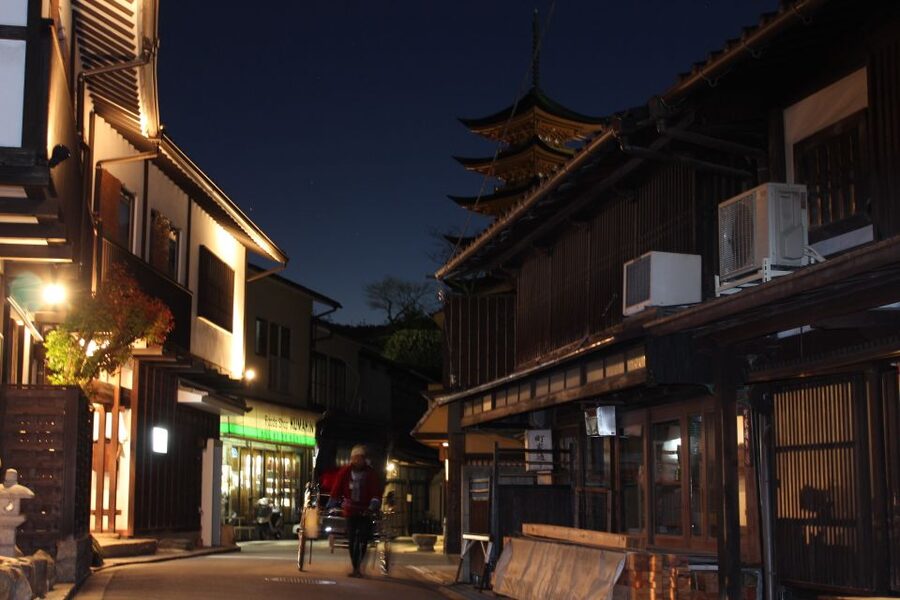
The best part of this Miyajima tour is the way a rickshaw turns a busy sightseeing day into a small private outing. You roll from the ferry terminal through old town streets, past the shopping arcade, and along the waterfront toward the great red torii of Itsukushima Shrine. It is a fun way to get your bearings before exploring on foot.
I like the personal guide and the choice of tour length. I also like that the ride can include Daishoin Temple, Senjokaku Shrine, or quieter routes by the sea, rather than stopping at only the obvious photo point.
The main catch is space: two adults share a 74-centimeter-wide seat, and temple admission is extra. The ride is also not suitable for people with back problems or pregnant women, particularly during the first 16 weeks.
In This Review
- Key points to know before you book
- Why a rickshaw makes sense on Miyajima
- Meeting your guide outside the ferry terminal
- Old town streets, townhouses, and the shopping arcade
- The waterfront and Itsukushima Shrine’s floating torii
- Choosing the 45, 70, 130, or 190-minute experience
- Daishoin Temple and the 1,200-year-old power spot
- Senjokaku Shrine and the extra 100 yen
- Parks, seaside roads, and the long scenic route
- Deer, photos, and the small moments
- Is $51 per person good value?
- Seating, children, and comfort
- Who should book this Miyajima ride?
- FAQ
- Where does the Miyajima rickshaw tour meet?
- How long does the rickshaw tour last?
- Is entry to the temples and shrines included?
- How many adults can ride in one rickshaw?
- Can young children ride for free?
- Is the tour suitable for pregnant women or people with back problems?
- Should you book the private rickshaw tour?
Key points to know before you book
- The ferry terminal is the easy meeting point: Your guide waits just outside Miyajima Ferry Terminal, with a map and meeting-place photo sent after booking.
- The 70-minute option reaches Daishoin Temple: You get a hilltop temple visit and broad views over Miyajima.
- The 130-minute option adds Senjokaku Shrine: This airy shrine has a Toyotomi Hideyoshi connection and costs an extra 100 yen to enter.
- The 190-minute ride is the most scenic: It adds special routes through parks and along the seaside, with room to shape the outing around your interests.
- The ride works best as a private orientation: Your guide can stop for photos, explain local customs, and adjust the endpoint.
- The guides make the difference: Kim, Jose, and Shinemasa are praised for humor, clear explanations, friendly service, and help taking photos.
Why a rickshaw makes sense on Miyajima
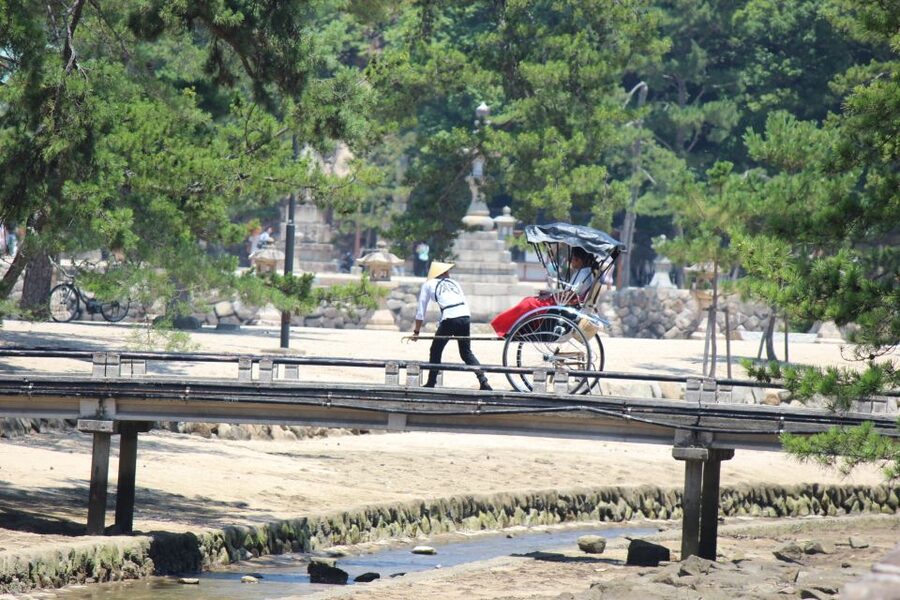
Miyajima is easy enough to walk, but a rickshaw gives you a different view of the island. You sit above street level while your guide handles the route and points out details you might pass without noticing. The pace is gentle, and you can focus on the old town, the water, and the shrine instead of checking a map every few minutes.
I see this as an orientation tour rather than a replacement for exploring Miyajima on foot. The ride takes you to the main sights, but the stops let you get out and look around. Afterward, you can return to places that caught your eye or continue your own visit.
The private format matters. You are not sharing the carriage with strangers, and the guide can shape the ride to your interests. You might want more history, more photographs, a temple stop, or a scenic route. The tour is described as customizable, and you can choose your endpoint, which helps if you want to finish near a particular part of the island.
More Temple & Shrine Tours in Hiroshima
- Hiroshima and Miyajima Day Trip with Itsukushima Shrine & Ferry
★ 5.0 · 378 reviews - Miyajima: Cultural Experience in Zen Temple
★ 5.0 · 258 reviews - Day Trip to Hiroshima & Miyajima with Itsukushima Shrine
★ 4.6 · 124 reviews
Meeting your guide outside the ferry terminal
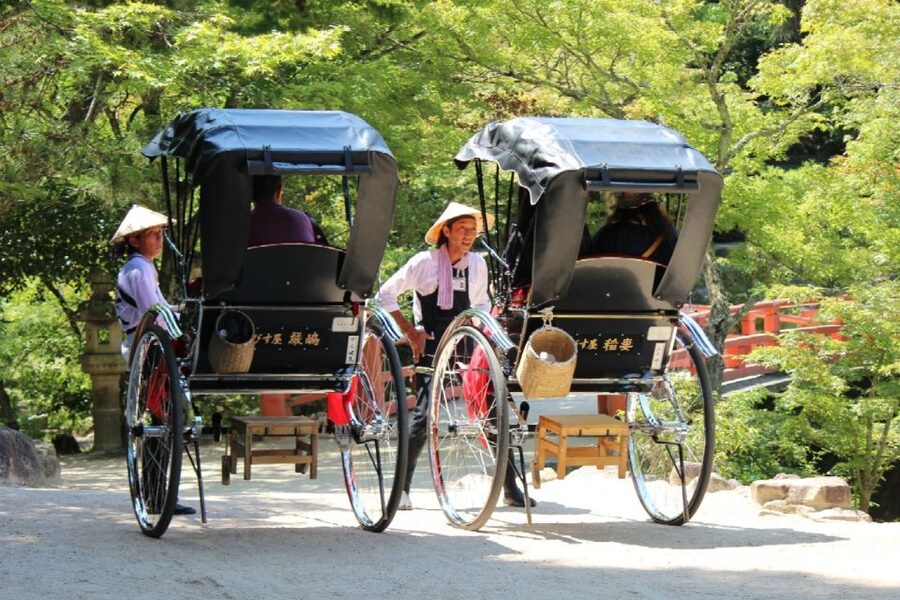
Your guide waits just outside the Miyajima Ferry Terminal at the scheduled time. This is a practical start because most people arrive on the island by ferry, and you do not need to search through town for a shop or office.
After booking, you receive a map and a photograph of the meeting place. I would save both on your phone before leaving the mainland. Ferry terminals can feel confusing when you are watching departure times, looking after children, or carrying luggage.
The tour provider is Ebisuya Rickshaw. The stated live-tour language is Japanese. In practice, some guides have used Google Translate when they needed help explaining a point in another language. Guides named in customer comments include Kim, Jose, and Shinemasa, with particular praise for their warmth, humor, island knowledge, and willingness to take photographs.
Do not expect a formal bus-tour setup. This is a small carriage, a local guide, and a moving conversation. That informal feel is part of the appeal, though communication can vary if you do not speak Japanese.
Old town streets, townhouses, and the shopping arcade
The opening section takes you through Miyajima’s town center. You pass traditional townhouses and the old-fashioned shopping arcade before reaching the waterfront.
This is a useful introduction to the island because Miyajima is more than its famous torii. The town streets show how the shrine, ferry traffic, shops, and local life fit together. From a rickshaw, you can take in the buildings without rushing from one storefront to the next.
The shopping arcade gives you a quick sense of the island’s food and souvenir culture, but this tour is not a food tour. Food and drinks are not included, so save time before or after the ride if you want to eat or browse properly.
The guide can add context as you go. One of the tour’s strongest points is the human explanation: guides have been praised for bringing local customs and island history to life, often with humor. That can make a short ride feel much more useful than simply following a route on a map.
The waterfront and Itsukushima Shrine’s floating torii
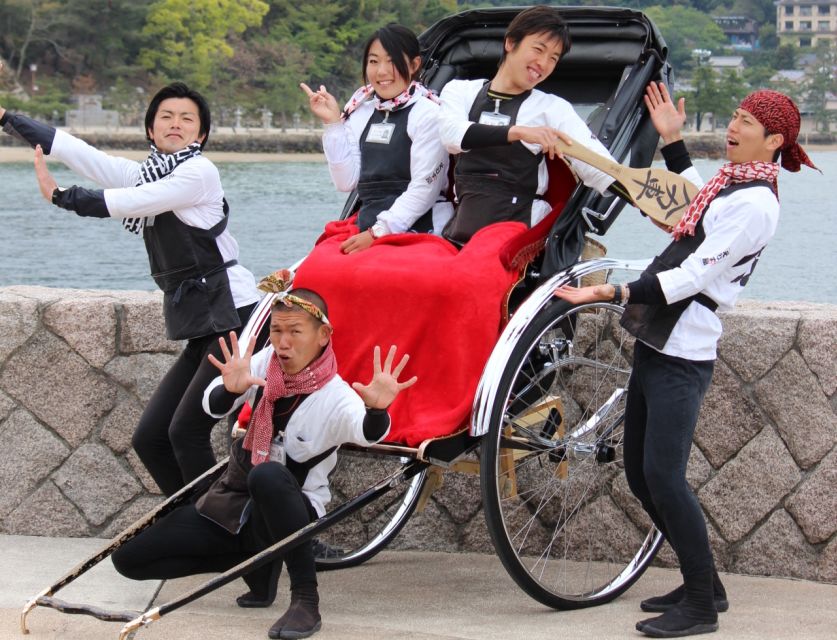
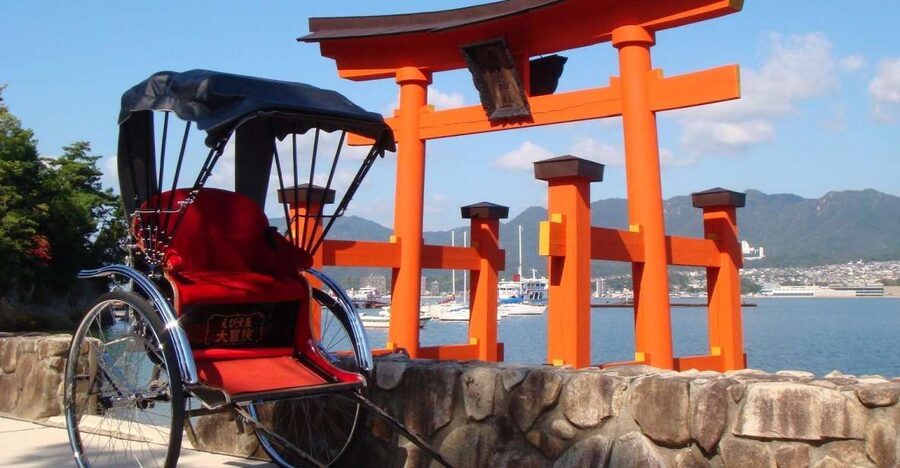
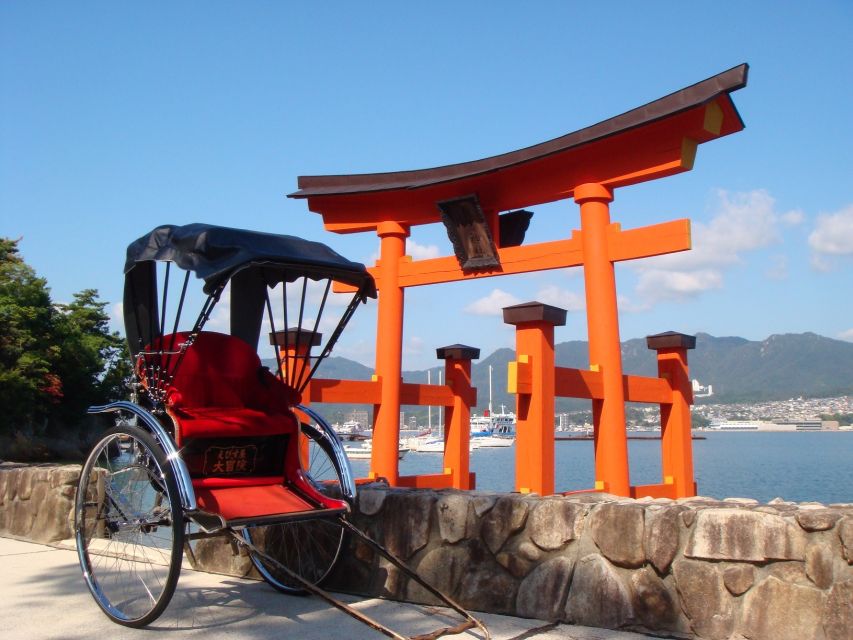
The rickshaw continues along the waterfront toward Itsukushima Shrine. The large orange torii gate sits in the water in front of the shrine, creating the view most people associate with Miyajima.
High tide is the key condition if you want the classic floating-gate image. At high tide, water surrounds the gate and gives it that famous offshore appearance. Tide levels change, so do not treat the tour time as a guarantee of a particular water view. If the torii is especially important to you, check the tide schedule separately and ask about timing when you book.
The waterfront route is also one of the easiest places to appreciate the ride itself. You are not simply being carried between two points. You get changing views of the shrine area, the water, and the island’s public spaces while your guide handles the movement.
Photo stops are a major part of the experience. Guides have been praised for taking good photographs, which is useful when you are traveling as a couple or family and do not want to rely on a stranger with your phone. Selfie sticks are not allowed, so plan to use a handheld phone or ask the guide for help.
Same city, a completely different kind of day:
- Peaceful Hiroshima & Miyajima UNESCO 1 Day Bus Tour
★ 5.0 · 5,309 reviews - Hiroshima: Hiroshima and Miyajima UNESCO Sites 1-Day Tour
★ 4.9 · 2,330 reviews - Hiroshima / Miyajima Full-day Private Tour with Government Licensed Guide
★ 5.0 · 1,298 reviews - Hiroshima Historical Walking Tour – Why A-Bomb was Dropped
★ 4.8 · 893 reviews
Choosing the 45, 70, 130, or 190-minute experience
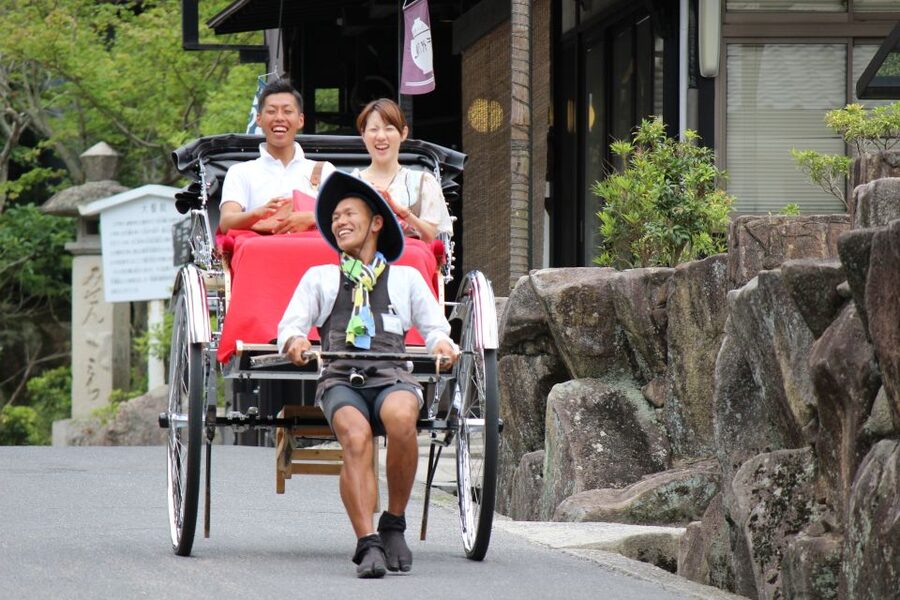
The available duration is listed as 45 to 190 minutes, with longer choices adding more stops. Starting times depend on availability, so check the exact option offered for your date.
A shorter ride is best if you want a quick introduction to the town, waterfront, and shrine area. One piece of feedback specifically considered 30 minutes enough, so visitors who already know Miyajima or have a tight schedule may prefer the briefest available option.
The 70-minute option adds Daishoin Temple. This is the first choice I would consider for a balanced visit, since it combines the central town and shrine area with a major religious site.
The 130-minute option includes Senjokaku Shrine as well as the earlier sights. This gives you more time for stops, explanation, and photographs, but it also requires a bigger block in your day.
The 190-minute option adds scenic routes through parks and along the seaside. It is the strongest pick if you want the ride itself to be a major activity rather than a quick transfer between sights. It also gives the guide more room to adjust the pace and follow your interests.
Longer is not automatically better. Miyajima has plenty to see on foot, and you may prefer a shorter rickshaw ride followed by your own time at the shrine and shops. I would choose based on how much independent walking you plan to do.
Daishoin Temple and the 1,200-year-old power spot
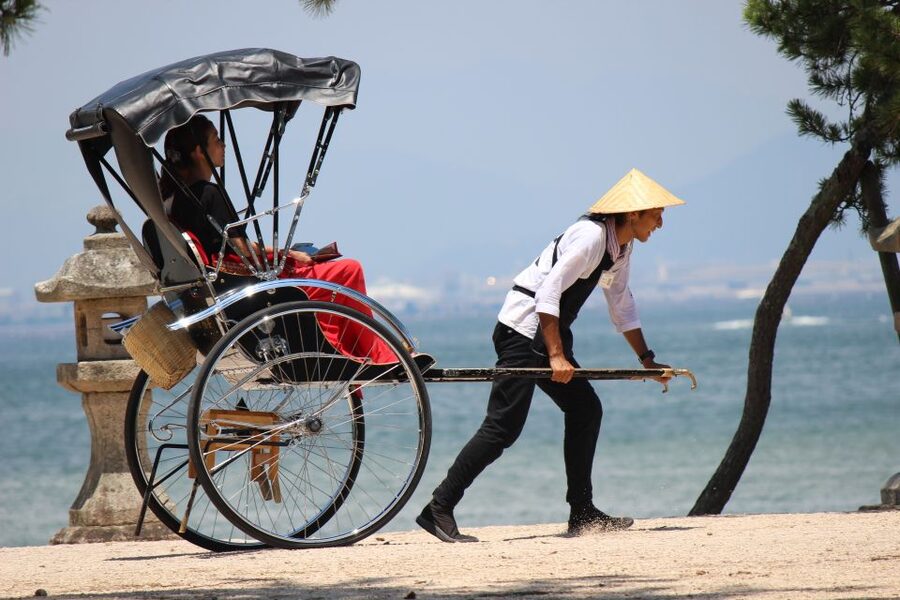
The 70-minute route includes Daishoin Temple, a 1,200-year-old temple described as a power spot, a place associated with restoring or building up good energy.
The appeal is both spiritual and visual. The temple gives you a different side of Miyajima from the waterfront shrine, and the elevated setting offers a fine view over the island. Your guide can explain why the temple matters and help connect the site to the wider religious character of Miyajima.
This stop comes with a practical point: the route to a hilltop temple is not the same as a flat ride through town. Anyone with back problems should avoid the tour, and the ride is not suitable for pregnant women. If mobility is a concern, ask the operator about the exact route before committing.
For many people, Daishoin will be the most worthwhile addition to the basic outing. It adds quiet, views, and a sense of place without requiring the longest booking.
Senjokaku Shrine and the extra 100 yen
The 130-minute tour adds Senjokaku Shrine, built under the order of the former shogun Toyotomi Hideyoshi. The site offers sea views and a chance to hear more about Miyajima’s political and religious past.
Entry is not included and costs 100 yen. That is a small extra charge, but you should carry a little cash so the stop does not become awkward.
Senjokaku is a good choice if you enjoy broad, open shrine spaces and historical background. It is less about a quick photograph and more about pausing to understand how powerful figures shaped the island’s religious buildings.
If you are already planning several shrine and temple visits, you may decide the shorter route is enough. If you want the guide to add another meaningful stop, the 130-minute version gives the day more depth.
Parks, seaside roads, and the long scenic route
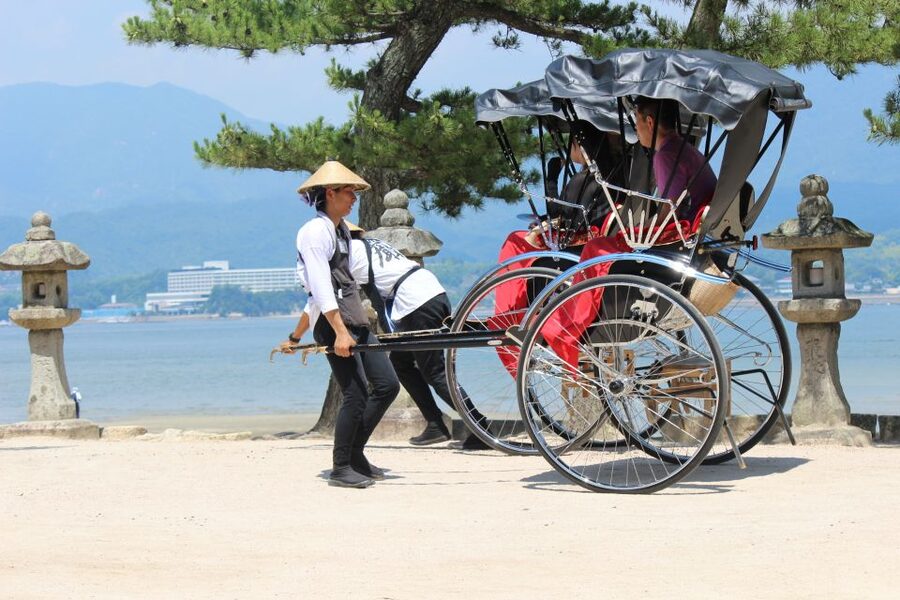
The 190-minute option goes beyond the main town and shrine corridor. You travel on special scenic routes that wind through parks and along the seaside.
This is where the private format has the most value. A longer carriage ride lets you see more of Miyajima without turning the day into a strict march from one landmark to another. The route can be adjusted around your interests, and you can select your endpoint.
I would choose this version if you want a relaxed half-day experience, have already seen the central shrine area, or care more about scenery and local atmosphere than ticking off a list. It is also the best choice for someone who wants plenty of time for conversation and photographs.
The tradeoff is simple: a 190-minute tour uses a large part of your day and costs more than a short ride. If your schedule includes other Miyajima sights, check that the extended route does not crowd out the things you most want to do.
Deer, photos, and the small moments
Miyajima’s deer are part of the charm, and the tour gives you the chance to greet them along the way. They are cute, but you should still treat them as animals rather than photo props. The supplied information does not promise feeding or a special deer encounter, so think of this as a pleasant sight during the route.
The photo help is more useful than it may sound. Guides including Kim have been praised for making attractive photographs while keeping the ride lively. Jose has been praised for storytelling and for showing less obvious places, while Shinemasa has been described as attentive and good at sharing island details.
These personal touches are what separate the experience from simply hiring transport. You get a local person who can point out what you are seeing, adjust the pace, and help turn the ride into a memory you can show people at home.
Is $51 per person good value?
At $51 per person, the tour is not the cheapest way to move around Miyajima. You can walk the central area without paying for transport, and admission fees are not included.
The value comes from the private guide, the carriage, the route planning, and the time saved getting oriented. For two adults sharing one rickshaw, the price buys a personal sightseeing experience rather than a simple ride. It is especially useful on a first visit, when a good guide can make the town, shrine, temple, and waterfront fit together.
The value is weaker if you want only a quick photo at the torii or if you plan to spend most of your time walking independently. In that case, choose the shortest available option or skip the ride.
I consider the longer options better value for families, couples, and small private groups who want conversation, photographs, and several stops. The souvenir postcard and sticker are included, but they are minor extras. The guide and private route are what you are really paying for.
Seating, children, and comfort
Each rickshaw can carry a maximum of two adults. The seat is 74 centimeters wide, or about 29.1 inches, so two adults can sit side by side but may find separate rickshaws more comfortable.
Children aged six and under can ride free on an adult’s lap, with one child per adult and a maximum of two adults and two children per rickshaw. A child aged six or older who uses one of the two seats must book as an adult.
These rules matter for families. Measure expectations against the actual seat size, particularly if you are tall, broad-shouldered, or carrying a young child. The private setup is convenient, but the carriage is still compact.
The tour is not suitable for people with back problems or pregnant women. It is specifically not recommended for expecting mothers during the first 16 weeks. I would take those restrictions seriously rather than trying to make the ride fit.
Who should book this Miyajima ride?
I would recommend it most strongly to:
- First-time visitors who want a clear introduction to Miyajima
- Couples who want private photographs without asking strangers
- Families who may find a long walking route tiring
- Visitors interested in local stories, customs, and religious sites
- Anyone who wants to combine the shrine area with Daishoin or Senjokaku
- People with enough time for a relaxed 130 or 190-minute outing
I would be more cautious if you have a strict schedule, back trouble, pregnancy, or a strong preference for walking independently. The Japanese-language format may also require patience if you need detailed explanations in another language, although some guides have used translation tools when needed.
Free cancellation up to 24 hours before the tour and the reserve-now, pay-later option make the booking less rigid. Still, check the exact duration, start time, language details, and meeting instructions before you commit.
FAQ
Where does the Miyajima rickshaw tour meet?
Your guide waits just outside the Miyajima Ferry Terminal at the scheduled time. After booking, the local provider sends a map and photograph showing the meeting place.
How long does the rickshaw tour last?
Available options range from 45 to 190 minutes. The described longer routes include a 70-minute option with Daishoin Temple, a 130-minute option with Senjokaku Shrine, and a 190-minute scenic route.
Is entry to the temples and shrines included?
No. Admission fees are separate. Entry to Senjokaku Shrine costs 100 yen.
How many adults can ride in one rickshaw?
A maximum of two adults can ride in one rickshaw. The seat measures 74 centimeters wide, so separate carriages may be more comfortable for some adults.
Can young children ride for free?
Children aged six and under can ride free on an adult’s lap, with one child per adult. The maximum is two adults and two children per rickshaw. Children aged six or older who use a seat must book as adults.
Is the tour suitable for pregnant women or people with back problems?
No. The experience is not suitable for people with back problems or pregnant women, and it is not recommended during the first 16 weeks of pregnancy.
Should you book the private rickshaw tour?
Book it if you want Miyajima to feel personal from the moment you step off the ferry. The private guide, flexible endpoint, photo help, shrine views, and optional temple stops give you more than a simple ride. I would pick the 70-minute route for a balanced first visit, the 130-minute option for extra history, and the 190-minute route if the scenic journey is the main event.
Skip it if you are happy walking, have little time, or cannot manage the compact seat. At $51 per person, the tour earns its price through the guide and private experience, not through transport alone. For the right visitor, that is a fair trade for a smoother, more memorable introduction to Miyajima.
More Miyajima Island Tours in Hiroshima
- From Hiroshima: Hiroshima & Miyajima 1 Day Tour with Lunch
★ 4.7 · 395 reviews - Full Day Hiroshima and Miyajima Bus Tour from Hiroshima
★ 4.5 · 371 reviews - Hiroshima: Miyajima Peace Memorial Icons of Peace and Beauty
★ 4.9 · 361 reviews - Miyajima Half-day Trip Historical Walking Tour
★ 5.0 · 284 reviews
Just added around Hiroshima
- The Journey of Hiroshima from Tragedy to Peace★ 4.8 · 44 reviews
- Hiroshima: Miyajima Half-day Historical Walking Tour★ 4.7 · 100 reviews
- Hiroshima:Guided Virtual Tour/PEACE PARK TOUR VR★ 5.0 · 29 reviews
- Hiroshima/Miyajima Private Custom Tour with Local Guide★ 5.0 · 134 reviews
- Hiroshima: Saijo Sake Tasting at 7 Breweries Guided Tour★ 4.8 · 29 reviews
- Hiroshima: Tour of Atomic Bomb Dome & Peace Memorial Museum★ 5.0 · 20 reviews
- Hiroshima: Private Walking Tour with a Local★ 4.6 · 70 reviews
- Hiroshima to Miyajima: Private Custom Tour with Ferry Ride★ 4.9 · 77 reviews
Miyajima Island Tours, compared.
Peaceful Hiroshima & Miyajima UNESCO 1 Day Bus Tour
Read our review →
Hiroshima and Miyajima UNESCO Sites 1-Day Tour
Read our review →
Hiroshima / Miyajima Full-day Private Tour with Government Licensed Guide
Read our review →
Osaka/Kyoto: Hiroshima Miyajima Bus Tour & Shinkansen Ticket
Read our review →
Hiroshima and Miyajima Day Trip with Itsukushima Shrine & Ferry
Read our review →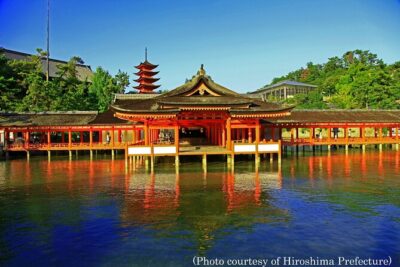
Full Day Hiroshima and Miyajima Bus Tour from Hiroshima
Read our review →
Miyajima Peace Memorial Icons of Peace and Beauty
Read our review →Browse the lists this tour appears in