
REVIEW · MIYAJIMA ISLAND TOURS
Miyajima: Cultural Experience in Zen Temple
Miyajima’s Tokujuji Temple offers a rare chance to do more than look at Japanese tradition from the outside. You choose a kimono, sit through a carefully ordered tea ceremony, brush Japanese characters, or make a small wish amulet from kimono fabric. I like the quiet temple setting and the fact that your finished calligraphy or amulet gives you a real keepsake, not just a quick photo.
I also like the patient, personal help with dressing and photography. Staff take plenty of pictures and send them by email or AirDrop, so you can focus on the ceremony instead of managing your phone. The main consideration is that this is a short cultural lesson, not a full-day temple visit, and the selected option affects exactly what you do.
In This Review
- Key points at a glance
- Why this Miyajima activity is worth your time
- Entering Tokujuji Temple and leaving the crowds behind
- Choosing a kimono and learning how to wear it
- Tea ceremony in the Ryurei style
- Calligraphy with Kanji and your own name
- Making an amulet from kimono fabric
- Photos in the Japanese garden
- The staff and the pace of the lesson
- How to fit it into a Miyajima day
- Who should book this experience
- Should you book Tokujuji Temple?
- FAQ
- Where does the cultural experience take place?
- How long does the activity last?
- What activities can I choose?
- Is the tea ceremony suitable for beginners?
- What food and drink are included?
- Can I take home something I make?
- Is the activity suitable for children and people with limited mobility?
Key points at a glance
- Choose your own kimono: Staff help match the kimono, obi, and accessories, then dress you properly.
- Learn tea ceremony manners: The Ryurei style uses a table and chairs, with two bowls of matcha and two types of sweets included.
- Take home Japanese calligraphy: Practice Kanji plus your name in Hiragana or Katakana, then sign and wrap your work.
- Make a personal amulet: Pick from more than 300 handmade kimono-fabric bags, then add Kumihimo cord and a wish.
- Use the garden as a photo studio: Staff take photos around the Japanese garden and share the images afterward.
- Plan for a temple setting: You must remove your shoes, and the activity is not suitable for children under six or people with limited mobility.
Why this Miyajima activity is worth your time
Miyajima is famous for its floating torii gate, Itsukushima Shrine, deer, and steep green hills. Those sights are worth your time, but the island can also feel like a place you pass through with a camera in hand. This activity slows things down.
At Tokujuji Temple, you take part in traditions that are usually watched from a distance. You do not simply see a tea ceremony. You learn why the host purifies the tools, prepares the tea, cleans everything, and closes the ceremony in a fixed order. You do not just wear a kimono for a staged picture. You choose one and see the careful process of dressing, including the obi.
That makes the experience especially useful if you have limited time on Miyajima. Sessions run about one to two hours, and several people found that the calm pace allowed extra time for photographs and practice. Still, do not treat the listed duration as a promise that every booking will follow the same schedule. The meeting point can vary by option, and the activities included depend on what you book.
More Temple & Shrine Tours in Hiroshima
- Hiroshima and Miyajima Day Trip with Itsukushima Shrine & Ferry
★ 5.0 · 378 reviews - Day Trip to Hiroshima & Miyajima with Itsukushima Shrine
★ 4.6 · 124 reviews - Hiroshima & Miyajima 6.5h Guided Tour – Dome, Park & Shrine
★ 4.9 · 83 reviews
Entering Tokujuji Temple and leaving the crowds behind
The temple is away from the busiest part of the island, which is part of its appeal. You enter a quieter space rather than another packed sightseeing stop. The garden adds to that change of mood, giving you a place to pause before or after the lesson.
You must remove your shoes before entering. Wear socks you are comfortable being seen in, and choose footwear that is easy to take off and put back on. The activity is not recommended for people with limited mobility, so check the physical demands before booking.
The setting is traditional without requiring you to know anything in advance. English and Japanese instruction is available, and Yoko has been specifically noted for fluent English. The teaching style is gentle and practical, with explanations followed by time to try each step yourself.
Small groups are available. That matters here because dressing, brushwork, tea preparation, and photographs all work better when the instructors can give you direct attention. Group size may vary by booking, so check the specific option before you pay.
Choosing a kimono and learning how to wear it
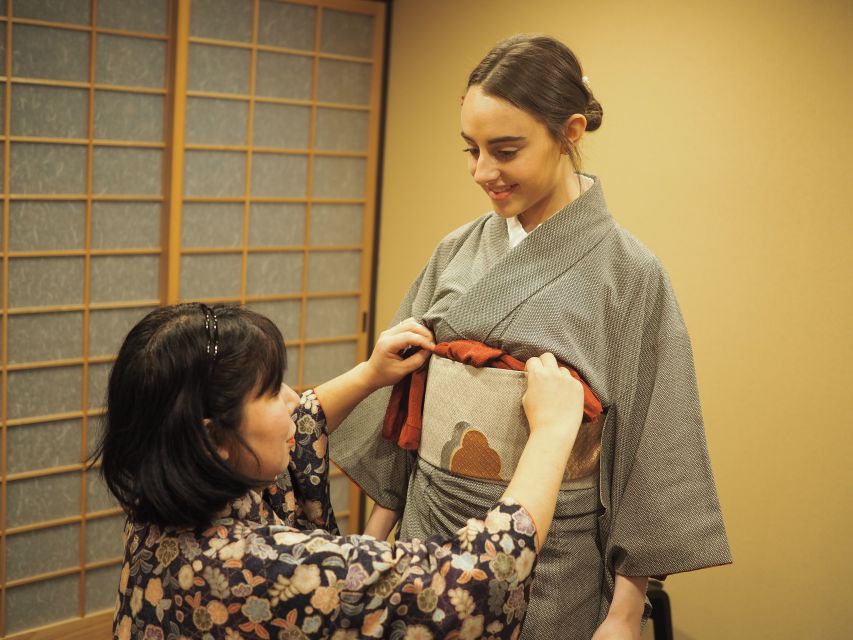
For many people, kimono dressing becomes the highlight before the tea or calligraphy even begins. You select your favorite kimono from the available choices, then staff help with the obi and other pieces. The dressing is part of the lesson, not a rushed costume change.
The assistance is useful because a kimono is not simply a robe you throw on. The obi must be tied properly, and the colors and patterns need to work together. Staff help you choose combinations that photograph well and make sure the outfit sits correctly.
You can expect the process to take some time. That is a good thing. Several sessions were described as relaxed, with no pressure to hurry through the clothing or picture-taking. Children, parents, and grandparents can all take part if they meet the age and mobility requirements. Children under six cannot participate in the activities.
The kimono option is also a good choice for couples, families, and solo visitors who want a shared memory. It works particularly well if someone in your group enjoys photography. You can take your own pictures, while the staff also suggest poses and locations and photograph you in the garden.
One practical point: the information provided does not give a separate kimono rental period outside the activity. Plan to wear the kimono as part of the scheduled temple experience rather than expecting to walk around Miyajima in it for the rest of the day.
Tea ceremony in the Ryurei style
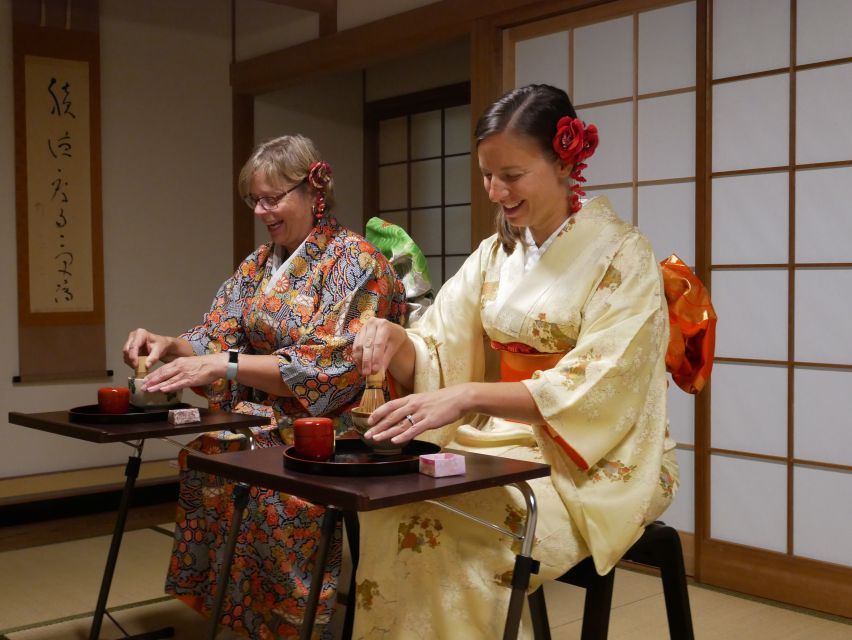
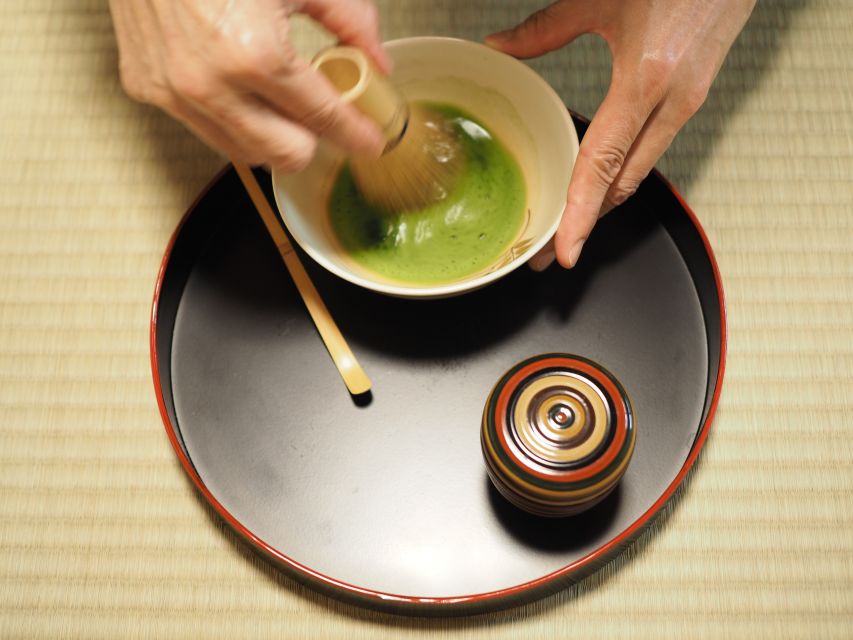
The tea ceremony follows formal steps, but you do not need to know the rules beforehand. The host begins with a greeting, purifies the utensils, prepares the matcha, cleans the tools, and closes the ceremony. Each movement has a purpose, and the order helps you understand the care behind the ritual.
This is a Ryurei-style ceremony, which means you sit at a table on a chair rather than on the floor. That makes the activity more approachable for people who are unfamiliar with Japanese tea customs. It does not remove the ceremony’s formality, but it does avoid the discomfort of kneeling for an extended period.
You receive two bowls of matcha and two types of sweets. The sweets balance the tea’s bitter edge and give you a small taste of the traditional pairing. You also learn how to drink the matcha in the proper manner and get a chance to make it yourself.
I like this part because it puts the tea in context. If you only drink matcha at a café, you experience the flavor. Here, you also learn about greeting, cleanliness, hospitality, and restraint. The ceremony is less about quickly finishing a cup and more about paying attention to the host, the tools, and the sequence.
The pace is peaceful. That can be a welcome break after walking around the shrine area. If you prefer a lively, hands-on activity every minute, the quiet pauses may feel slow. For most people, that stillness is the point.
Same city, a completely different kind of day:
- Peaceful Hiroshima & Miyajima UNESCO 1 Day Bus Tour
★ 5.0 · 5,309 reviews - Hiroshima: Hiroshima and Miyajima UNESCO Sites 1-Day Tour
★ 4.9 · 2,330 reviews - Hiroshima / Miyajima Full-day Private Tour with Government Licensed Guide
★ 5.0 · 1,298 reviews - Hiroshima Historical Walking Tour – Why A-Bomb was Dropped
★ 4.8 · 893 reviews
Calligraphy with Kanji and your own name
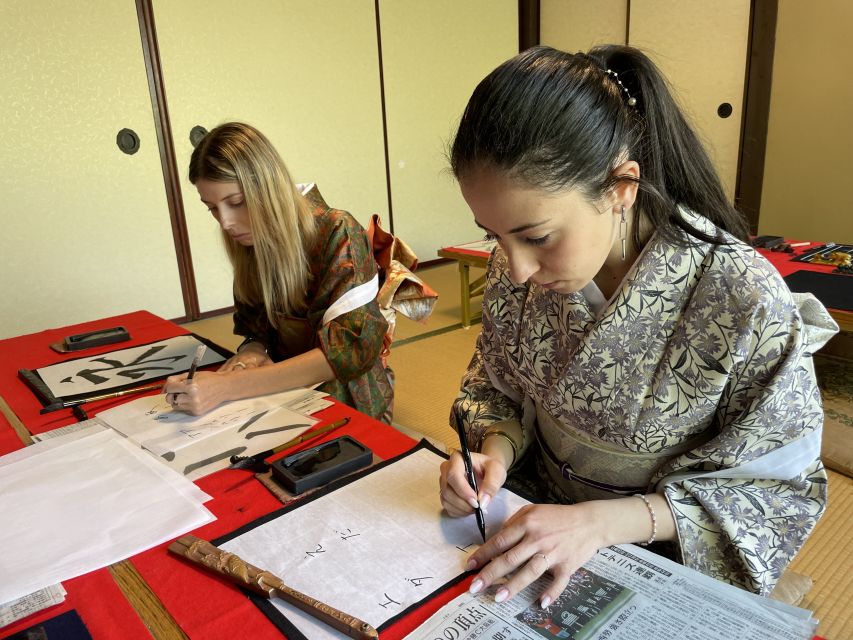
The calligraphy lesson gives you the most tangible souvenir. Your instructor first explains how to hold and use the brush, then shows you how to draw the lines step by step. You practice one or more Kanji, the Chinese characters used in Japanese writing.
You are not expected to produce perfect work on the first try. The lesson includes practice time, which lets you get used to pressure, direction, and brush movement. That gradual approach makes the activity suitable for beginners and families.
While you practice, the instructor prepares a sample of your name. You then learn to write your name in Japanese, using either Hiragana or Katakana. After practicing, you sign your work in Japanese and finish the piece.
Your calligraphy is wrapped so you can safely take it home. The value here is not just the paper. You have created a souvenir with your own hand, and the process gives you a quiet task that rewards concentration.
The lesson can feel almost meditative, but it is still practical. You receive all the calligraphy tools needed during the activity. If you are booking for children, the patient instruction helps, though the minimum age remains six.
Making an amulet from kimono fabric
The amulet-making option offers a different kind of keepsake. The activity takes place in the temple’s main hall, where you choose from more than 300 handmade amulet bags made from kimono fabric.
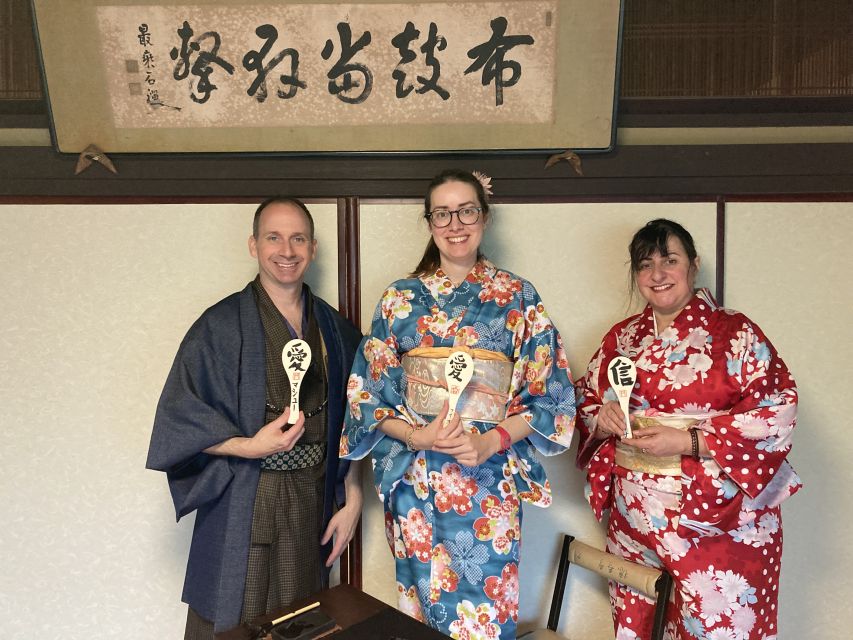
The large selection means you can look for a color or pattern that fits your taste. You then choose a Kumihimo cord, a braided cord tied in a special way, and select a wish. That wish is written or stamped onto a miniature rice scoop, which is associated with carrying the wish.
You put the pieces together to create a one-of-a-kind amulet. Once it is complete, you greet Kinseki Jizou, the temple’s Buddha, to report that you have come to make a wish.
This option has more personal meaning than a standard souvenir-shop purchase. You choose the bag, the cord, and the wish, then assemble the object yourself. It is a good fit if calligraphy does not appeal to you or if you want a small item that connects directly to the temple.
The supplied details describe the activity as a choice among experiences, so confirm your selected package carefully. Some bookings combine several activities, while others may focus on kimono and calligraphy, tea, or amulet making.
Photos in the Japanese garden
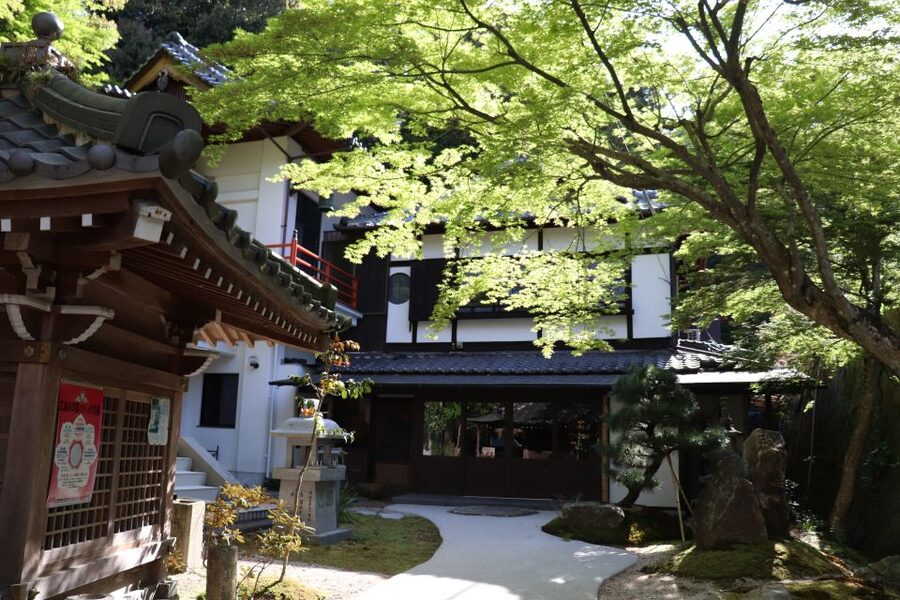
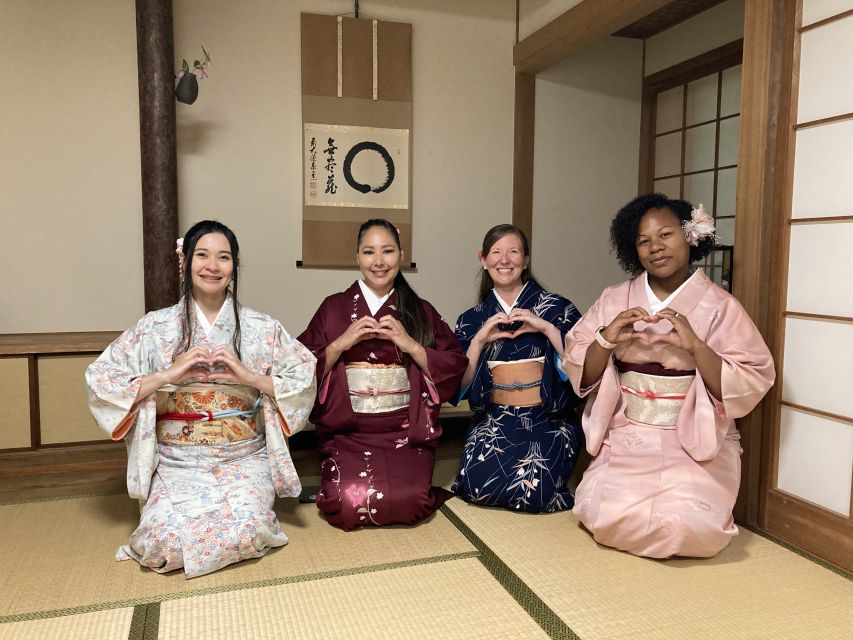
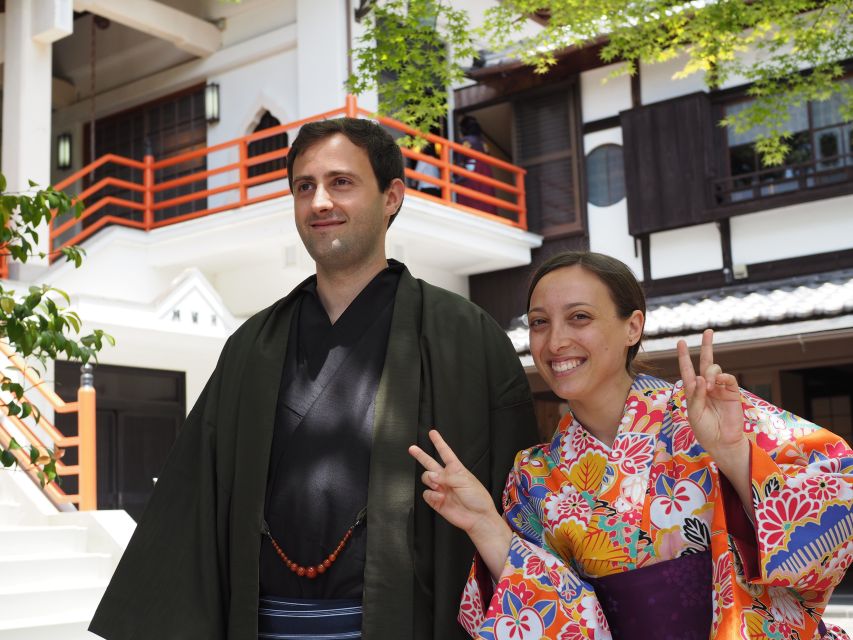
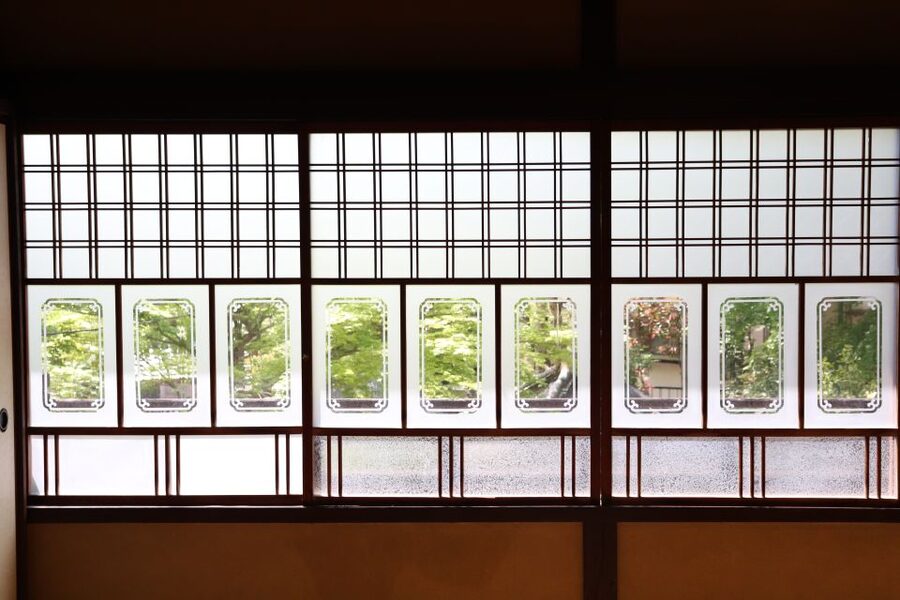
The garden is not an afterthought. It is one of the strongest reasons to wear the kimono here. Staff take pictures during the activity and arrange additional photos in the garden, where the temple setting provides a natural background.
You can also take pictures yourself, but the staff know the garden and can suggest poses and spots. This is handy when you are traveling as a couple or family and want everyone included. Images are sent by email or AirDrop on site, giving you more than the pictures stored on your own phone.
Lighting may not be perfect in every photograph. One useful criticism concerned faces appearing dark in some garden shots. If you care about portraits, check the light on your face before settling into a pose and ask the staff if another angle would work better.
The photo session is generally unhurried. That matters because traditional clothing looks best when you have time to stand, sit, and adjust your posture. It also lets you enjoy the garden rather than treating it as a quick backdrop.
The staff and the pace of the lesson
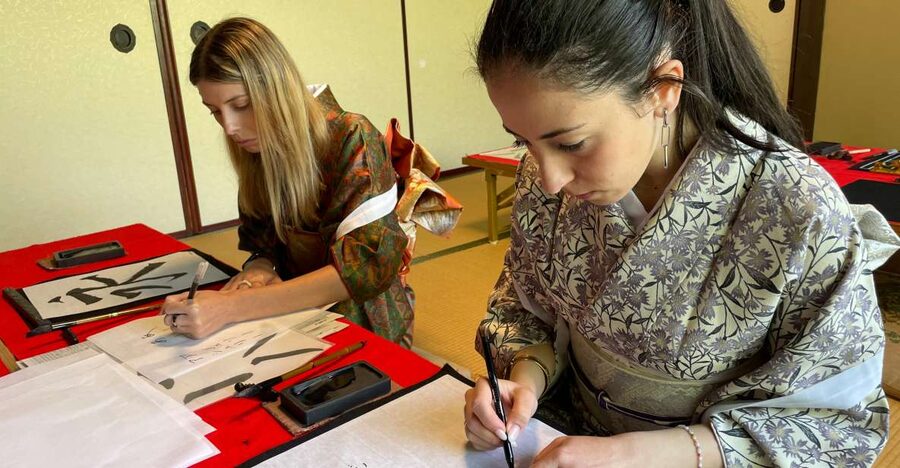
The people leading the experience are central to its success. You receive help choosing and putting on the kimono, clear instruction during tea and calligraphy, and plenty of encouragement while you practice. English instruction is available, and the staff are described as friendly and easy to approach.
The tone is relaxed rather than stiff. That helps if you are nervous about making a mistake with the brush, drinking matcha incorrectly, or wearing a kimono for the first time. You are taught the proper steps, but the mood remains welcoming.
The pace can also work well for mixed-age groups. Families have used the activity with pre-teens, teenagers, parents, and grandparents. Couples can split their interests, with one person favoring calligraphy and another enjoying amulet making.
At about $90 per person, the price is not a bargain-basement cultural demonstration. The value depends on what your package includes. You are paying for instruction, the temple setting, kimono help, tea and sweets, materials, a handmade amulet if selected, and staff-taken photos when included.
I think the price is fair for a package combining several activities, especially if you value the photographs and the finished calligraphy or amulet. It is less compelling if you only want to wear a kimono for a few minutes or simply taste matcha. Compare the exact inclusions before booking, since the meeting point and activity sequence may change by option.
How to fit it into a Miyajima day
Give yourself enough time to reach the meeting point listed for your chosen option. The meeting point may vary, so do not rely on directions from a different package.
A two-hour block fits well between major Miyajima sights. You can visit the famous shrine area, set aside time for this temple activity, then continue exploring. Avoid squeezing it into a gap so tight that a session running longer than expected causes stress. Some appointments have lasted beyond the planned 90 minutes because the staff allowed extra time.
Book ahead if your schedule is fixed, but the activity offers free cancellation up to 24 hours before the start time and a reserve-now, pay-later option. Those terms help if your Miyajima plans depend on ferry timing or weather.
The experience works in different seasons, though the garden photos will change with the conditions. Bring a phone or camera if you want your own pictures, but remember that staff take and share images too.
Who should book this experience
I would recommend it most strongly to:
- First-time visitors to Japan who want a guided introduction to tea, calligraphy, and traditional dress.
- Couples who want shared photographs without asking strangers to take every picture.
- Families with children aged six and older, including groups with grandparents.
- Solo visitors who want both instruction and staff-taken portraits.
- Anyone who prefers a calm cultural activity to another crowded sightseeing stop.
- People who like souvenirs with a personal story, especially handwritten calligraphy or a self-made amulet.
It may not suit you if you have limited mobility, dislike removing your shoes, or want a long, scholarly tea lesson. The program is designed to be accessible to beginners, but it remains a compact introduction rather than formal professional training.
Should you book Tokujuji Temple?
Yes, if you have one to two hours on Miyajima and want to take part rather than simply observe. The combination of kimono dressing, garden photos, tea, calligraphy, and optional amulet making gives you several ways to connect with Japanese culture.
Choose your package with care. For the fullest visit, look for an option that combines tea, calligraphy, and kimono, or includes amulet making if that personal souvenir appeals to you. If you prefer a quieter, more focused lesson, calligraphy and tea are enough.
At $90, this is best viewed as a guided cultural session with keepsakes and photographs, not a cheap photo rental. For many visitors, that combination makes it one of the most memorable things to do on Miyajima.
FAQ
Where does the cultural experience take place?
The activity takes place at Tokujuji Temple on Miyajima, in the Chugoku Region of Japan. The exact meeting point may vary depending on the option you book.
How long does the activity last?
The stated duration is one to two hours. Check availability for the starting times, and allow some flexibility because the session may run longer when there is extra time for photographs or practice.
What activities can I choose?
Options include a tea ceremony, calligraphy lesson, amulet making, and wearing traditional Japanese dress. The exact combination depends on the package selected.
Is the tea ceremony suitable for beginners?
Yes. The instructor explains the ceremony’s steps, including greeting, purifying the tools, preparing matcha, cleaning the tools, and closing the ceremony. You also learn how to drink and make matcha.
What food and drink are included?
The activity includes two types of sweets and two bowls of matcha tea. It also includes the tools needed for calligraphy.
Can I take home something I make?
Yes. In the calligraphy lesson, you practice Kanji and your name in Hiragana or Katakana, then sign and wrap your finished work. The amulet-making option also lets you create an original amulet for yourself.
Is the activity suitable for children and people with limited mobility?
Children under six cannot participate. The activity is not recommended for people with limited mobility, and everyone must remove their shoes before entering the temple.
More Miyajima Island Tours in Hiroshima
- From Hiroshima: Hiroshima & Miyajima 1 Day Tour with Lunch
★ 4.7 · 395 reviews - Full Day Hiroshima and Miyajima Bus Tour from Hiroshima
★ 4.5 · 371 reviews - Hiroshima: Miyajima Peace Memorial Icons of Peace and Beauty
★ 4.9 · 361 reviews - Miyajima Half-day Trip Historical Walking Tour
★ 5.0 · 284 reviews
Just added around Hiroshima
- The Journey of Hiroshima from Tragedy to Peace★ 4.8 · 44 reviews
- Miyajima: Private Rickshaw Tour to Itsukushima Shrine★ 4.9 · 45 reviews
- Hiroshima: Miyajima Half-day Historical Walking Tour★ 4.7 · 100 reviews
- Hiroshima:Guided Virtual Tour/PEACE PARK TOUR VR★ 5.0 · 29 reviews
- Hiroshima/Miyajima Private Custom Tour with Local Guide★ 5.0 · 134 reviews
- Hiroshima: Saijo Sake Tasting at 7 Breweries Guided Tour★ 4.8 · 29 reviews
- Hiroshima: Tour of Atomic Bomb Dome & Peace Memorial Museum★ 5.0 · 20 reviews
- Hiroshima: Private Walking Tour with a Local★ 4.6 · 70 reviews
Miyajima Island Tours, compared.
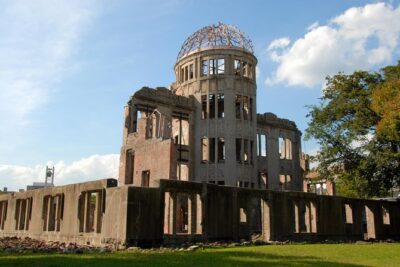
Peaceful Hiroshima & Miyajima UNESCO 1 Day Bus Tour
Read our review →
Hiroshima and Miyajima UNESCO Sites 1-Day Tour
Read our review →
Hiroshima / Miyajima Full-day Private Tour with Government Licensed Guide
Read our review →
Osaka/Kyoto: Hiroshima Miyajima Bus Tour & Shinkansen Ticket
Read our review →

Hiroshima and Miyajima Day Trip with Itsukushima Shrine & Ferry
Read our review →
Full Day Hiroshima and Miyajima Bus Tour from Hiroshima
Read our review →
Miyajima Peace Memorial Icons of Peace and Beauty
Read our review →Browse the lists this tour appears in