
REVIEW · WORKSHOPS
Manga Lesson with a Professional Japanese Manga Artist in Nakano
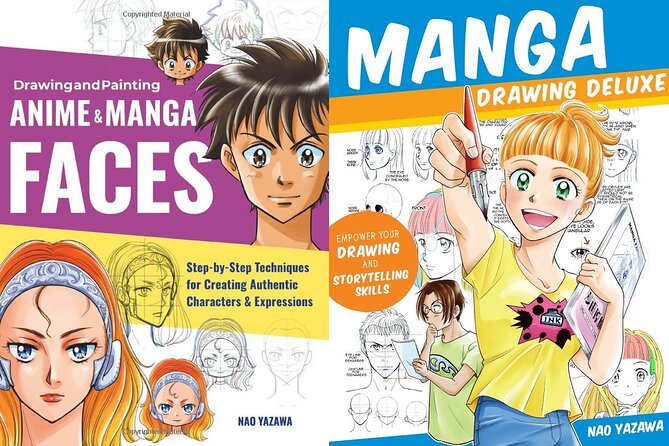
Manga School Nakano puts the tools of a working manga studio in your hands: dip pens, ink, screen tones, manga paper, white correction ink, and specialized nibs. You work through a complete drawing instead of merely watching a demonstration, and professional artist Nao Yazawa may guide you through the process.
I like the step-by-step teaching, which lets complete beginners make progress without feeling rushed. I also like the chance to use genuine manga materials, especially screen tones and dip pens, tools many visitors will not encounter in a normal drawing class.
The main consideration is the meeting point. The school is near public transportation, but one family had trouble finding it and felt the directions needed improvement. Allow extra time to locate the building at Arai 2-chome in Nakano.
In This Review
- Key points to know before booking
- What makes this Nakano manga class different
- Meeting the artist at Manga School Nakano
- The first 30 minutes: tools, technique, and manga basics
- Building your character one stage at a time
- Why Nao Yazawa matters to the experience
- A finished drawing to take home
- Is $67.77 per person a fair price?
- Who should book this class?
- What may disappoint you
- My practical verdict
- FAQ
- Where does the manga lesson take place?
- How long does the lesson last?
- Is the activity private?
- Can a solo visitor book the class?
- Do I need drawing experience?
- What manga tools are provided?
- Can I take my artwork home?
- Can I cancel for a full refund?
Key points to know before booking
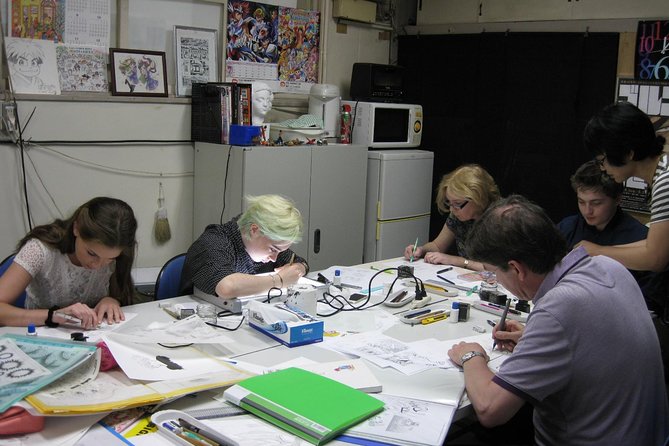
- Traditional manga production: Work through drafting, inking, black fills, corrections, highlights, and screen tones.
- Instruction by a professional artist: Nao Yazawa has taught many family and solo sessions, adjusting the pace to each student.
- Private and flexible format: Only your group participates, with single-person and two-to-four-person tuition options.
- A finished souvenir: Take your completed manga drawing home at the end of the two-hour class.
- English guidance without an interpreter: The lesson includes clear instruction in English, along with demonstrations and corrections.
- Good value for hands-on learning: At $67.77 per person, the price includes the professional artist and manga tools, but not drinks.
What makes this Nakano manga class different
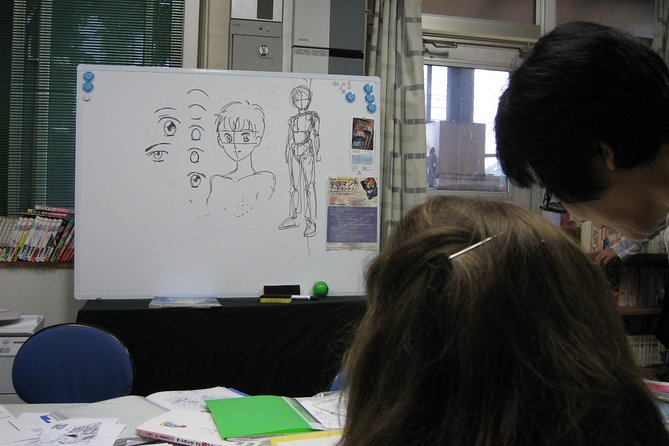
Many art activities give you a pencil, a sheet of paper, and a short explanation. This one introduces you to the working methods behind printed manga. You do not simply sketch an anime-style face and leave. You learn how a manga image is built in stages.
The class begins with a short explanation of manga techniques and its development. That introduction matters because it gives the tools a purpose. Screen tones are not just gray stickers, and dip pens are not novelty props. They are part of the traditional production process used to add shading, texture, and visual effects.
You then create your own manga-style character with guidance at each stage. Beginners can choose from reference material and copy with help from the instructor. Students who already draw can receive more focused advice on their own work.
I see this as a practical lesson rather than a lecture. You spend much of the time making marks, receiving corrections, and trying again. That makes the class useful for a curious first-timer and for an experienced artist who wants to understand traditional manga methods.
A few more Tokyo trips to weigh up
- Sushi Making Tokyo Roll and Authentic Japanese Sushi Class
★ 5.0 · 3,971 reviews - Tokyo: Roll and Authentic Sushi Making Class in Asakusa
★ 4.9 · 1,957 reviews - Tokyo Shinjuku Chopsticks Making Class
★ 5.0 · 1,763 reviews
Meeting the artist at Manga School Nakano
The class takes place at Manga School Nakano in Nakano City, at 2-chome 7-13 Arai, Minami Building, Tokyo 165-0026. The activity returns to this same meeting point when the lesson ends.
The location is in Nakano, a sensible choice for a class devoted to manga. Nakano is known for its connection to popular culture, and the school setting gives this activity more purpose than a generic craft workshop. You are visiting a place set up for manga instruction, with manga references and original art from published work available during the lesson.
Finding the exact building may take patience. The supplied address is specific, but one family had difficulty locating the school and found that the English directions were limited. I would not arrive at the last minute. Have the address ready on your phone, and use the activity messages for the final meeting details.
The class is private, meaning only your booking group participates. That is important for families with different ages and abilities. A child can work from a simple reference while an adult receives more detailed advice, without the entire room having to move at the same pace.
The first 30 minutes: tools, technique, and manga basics
Your instructor starts with a brief talk about manga techniques and the development of manga art. The exact balance between discussion and drawing can vary, but the class is designed to move into practical work quickly.
You are introduced to the supplied materials, including manga pens, ink, manga paper, screen tones, and three types of specialized pen nibs. Each nib produces a different line, so the exercise helps you see why manga artists use more than an ordinary fine-liner.
This is one of the strongest parts of the experience for anyone who already enjoys drawing. You are not limited to a digital tablet or a standard pencil. You can test the pressure and movement needed for traditional tools, then see how line weight changes the look of a character.
For children, the tools add a sense of occasion. Parents have described the lesson as especially rewarding for children who already draw manga or anime characters. At the same time, you do not need previous drawing skill. The instructor can give you a reference and help you work from it.
Building your character one stage at a time
The main project develops in a clear sequence. First comes the pencil draft, where you establish the character and correct the basic proportions. This stage is forgiving, since changes can be made before the permanent ink goes down.
Next, you ink the drawing and erase the pencil lines. You also paint the solid black areas, correct mistakes, and add highlights with white ink. Finally, you apply screen tones to create gray areas, textures, and effects.
That sequence gives you a better sense of how manga artwork is produced. The finished page is not the result of one perfect line. It is built through several passes, each with a different job.
The instructor reviews your drawing during the process and offers corrections. This personal attention is especially helpful during inking, when a shaky or misplaced line cannot be erased as easily as pencil. You can listen to instructions, watch a demonstration, then try the technique yourself.
I would not expect every first drawing to look publication-ready. The value is in learning the process and leaving with something complete. The teaching is patient and encouraging, but you still have to do the drawing. That makes the final piece feel earned.
Same city, a completely different kind of day:
- Mt Fuji and Hakone 1-Day Bus Tour Return by Bullet Train
★ 5.0 · 26,383 reviews - 1-Day Tokyo Bus Tour
★ 5.0 · 14,250 reviews - Tokyo: TOKYO SKYTREE® Admission ticket
★ 4.5 · 11,192 reviews - Tokyo: teamLab Planets TOKYO Digital Art Museum Entry Ticket
★ 4.6 · 9,779 reviews
Why Nao Yazawa matters to the experience
Several bookings have been taught by Nao Yazawa, a professional manga artist and series creator with a long career. Her name appears often in the strongest feedback, particularly from families, children, couples, and solo students.
Her teaching style seems especially suited to mixed groups. She has worked with parents and children at different levels, adjusting her explanations and pace rather than giving everyone the same assignment. One family with four people and different ages said she helped each person produce a strong final piece.
That flexibility is a major advantage of a private class. A seasoned artist can ask about technique, while a child can focus on drawing a favorite character. You may also have time to discuss manga and anime you already enjoy while choosing a subject for your drawing.
The class is not limited to Nao Yazawa, so your instructor may be another professional manga artist. The important point is that the lesson is run by an artist who can demonstrate the tools and correct your work directly.
English instruction is provided without an interpreter. That keeps the lesson moving and allows the teacher to respond to your drawing in real time. The available information does not promise advanced art vocabulary for every situation, so students should still be ready to watch demonstrations closely and ask simple, direct questions.
A finished drawing to take home
At the end of the class, you take your completed manga drawing with you. That makes the activity more satisfying than a lesson that ends with practice sheets left behind.
The finished page also serves as a record of the process. You can see the pencil draft, ink work, black fills, white highlights, and screen tone effects come together in one image. For a child, it becomes a personal souvenir of Tokyo. For an adult, it may be a useful sample of traditional manga methods.
One group was given supplies to use during the class and kept the artwork afterward, while the instructor retained copies for display and social media. The exact handling of copies may vary, so ask if you have concerns about your work being photographed or displayed.
You should protect the drawing during the rest of your trip. The activity information does not specify a folder or protective sleeve, so bring a flat way to carry it if you plan to spend the day sightseeing afterward.
Is $67.77 per person a fair price?
At $67.77 per person, the cost is reasonable for a two-hour private art lesson in Tokyo, particularly because it includes a professional manga artist and the manga tools used in class.
You are paying for more than materials. The real value is the individual correction and the chance to handle traditional equipment under professional guidance. A standard art workshop might offer a short demonstration, but this class takes you through a finished piece.
The price works best for people who will take part actively. Manga fans, children who already draw, adults curious about Japanese art, and practicing artists are likely to get the most from it. If you only want to watch a professional draw, this is not the right format. You will spend the session working.
For a family, the private structure can make the cost easier to justify. Parents and children can learn together, and the teacher can adapt the work to each person. For a solo visitor, the activity offers concentrated instruction, but the single-person tuition option may be priced differently from the per-person headline amount. Check the available choice when booking.
Drinks are not included. This is a minor point, since the class lasts about two hours, but you may want to have water before arriving.
Who should book this class?
I would recommend it first to people who already love manga or anime. The opportunity to use screen tones, dip pens, and ink gives familiar characters and styles a physical connection.
It also suits beginners. You do not need drawing experience, and reference materials are available. The instructor can guide you through the basic forms, expressions, and inking process rather than assuming you know how to start.
Families are a particularly good match. Children as young as 11 have enjoyed the full two-hour lesson, and adults do not have to sit on the sidelines. Three generations can work at different levels while sharing the same project.
Couples and friends can also make it a joint activity. Two people can compare their drawings, talk about favorite series, and leave with separate souvenirs. Solo visitors should choose the single-person tuition option rather than joining a group lesson intended for two to four people.
Practicing artists may find the traditional tools most useful. If you normally work digitally or with standard pens, the lesson gives you a direct introduction to dip nibs, screen tones, and white correction ink. The class may not replace a long technical course, but it is a focused introduction.
What may disappoint you
The two-hour schedule passes quickly. You can cover the main production stages, but you will not master manga drawing in one sitting. If you want detailed anatomy training, panel layout, storytelling, or a finished multi-page comic, this class is too short.
The final result also depends on your expectations. The instructor can help you create a good souvenir, but the class is not a professional portfolio review. Beginners should enjoy the process rather than compare their page with published manga.
The meeting instructions deserve attention. The school is near public transportation, yet the building was not easy for everyone to find. Confirmation is sent within 48 hours of booking, subject to availability, and the activity time and details arrive through Viator messages. You should read those messages carefully instead of relying only on the general address.
The requested departure time should be placed in the special requirements box at checkout. If that time is not available, the local supplier will offer another option. Build some flexibility into your Tokyo schedule.
Free cancellation is available when you cancel at least 24 hours before the local start time. Changes or cancellations inside that window are not accepted for a refund.
My practical verdict
I would book Manga School Nakano if you want an active, hands-on connection with manga rather than a quick photo stop or a general drawing workshop. The strongest reasons are the traditional tools, the complete production sequence, the private format, and the patient teaching associated with Nao Yazawa.
The class is especially good for families and manga fans who want a souvenir they made themselves. Beginners should feel comfortable, while experienced artists can ask for more precise guidance. Just allow time to find the building, choose the correct single-person or group tuition option, and keep your expectations realistic about what two hours can teach.
At $67.77 per person, this is a worthwhile Tokyo activity for anyone who wants to leave with both a finished drawing and a clearer understanding of how manga artwork is made.
FAQ
Where does the manga lesson take place?
The class takes place at Manga School Nakano, Japan, 165-0026 Tokyo, Nakano City, Arai, 2-chome 7-13, Minami Building.
How long does the lesson last?
The manga drawing class lasts approximately two hours.
Is the activity private?
Yes. Only your group participates in the private activity.
Can a solo visitor book the class?
Yes. Solo visitors should choose the single-person tuition option. Groups of two to four should choose the group tuition option intended for that size.
Do I need drawing experience?
No. All skill levels are welcome. Beginners can use manga references and receive step-by-step help from the instructor.
What manga tools are provided?
The class provides manga tools such as manga paper, manga pens, ink, screen tones, dip pens, and three types of specialized pen nibs.
Can I take my artwork home?
Yes. You produce a finished manga drawing during the class and take it home as a souvenir.
Can I cancel for a full refund?
Yes, if you cancel at least 24 hours before the experience start time. Cancellations or changes made less than 24 hours before the start time are not refunded.
Just added around Tokyo
- Private Memorable Tokyo Tour with English Speaking Driver★ 5.0 · 30 reviews
- Private Tokyo Custom Full-Day Tour by Chartered Vehicle★ 5.0 · 16 reviews
- Private Sightseeing to Mt Fuji and Hakone with English Driver★ 5.0 · 51 reviews
- Tokyo Photography Masterclass – Private Photography Lesson★ 5.0 · 25 reviews
- 4 Day Tour – Mount. Fuji, Tokyo, Hakone, Kamakura and Yokohama★ 5.0 · 19 reviews
- Private Mt. Fuji Day Trip from Tokyo with English-Speaking Driver★ 5.0 · 33 reviews
- Private Unforgettable Mt Fuji Tour with English Speaking Driver★ 5.0 · 142 reviews
- Private Tokyo Food Tour – A Journey Through Time Through Food★ 5.0 · 36 reviews
Workshops, compared.
Sushi Making Tokyo Roll and Authentic Japanese Sushi Class
Read our review →
Roll and Authentic Sushi Making Class in Asakusa
Read our review →
Ramen Cooking Class at Ramen Factory in Kyoto
Read our review →
Sushi Making Class in a Happi Coat near a Famous Spot
Read our review →

Sushi Making Osaka Roll and Authentic Japanese Sushi Class
Read our review →
Tokyo Sushi Making Class in Tsukiji with Professional Chef
Read our review →Browse the lists this tour appears in