REVIEW · FULL-DAY
Kyoto & Uji: Full Day Sightseeing Tour from Osaka or Kyoto
Kyoto’s famous sights are spread across the city, while Uji sits south along the Uji River. This full-day tour links both places in one long but useful outing, taking you from the gold-covered Kinkaku-ji to tea shops and Byodo-in’s graceful Phoenix Hall. I like the smart route and the chance to see two very different destinations without working out several train and bus connections.
I also like the free time at each stop, which lets you take photos, browse Ninenzaka and Sannenzaka, or buy Uji tea at your own pace. Guides such as John and Jone have helped with meeting details, maps, and return times. The tradeoff is a packed nine-hour day, with only 40 minutes at Kinkaku-ji and a maximum group size of 45.
In This Review
- Key points to know before booking
- Why this Kyoto and Uji route works
- Kinkaku-ji: 40 minutes with Kyoto’s Golden Pavilion
- Kiyomizu-dera and the old streets below
- Ninenzaka and Sannenzaka: Kyoto’s most atmospheric stroll
- Yasaka Koshindo and its colorful monkey charms
- The shift to Uji River and Uji Shrine
- Byodo-in: Uji’s essential temple visit
- Byodoin Omotesando and Uji’s tea culture
- What the $57.90 price really covers
- Transport, group size, and the daily rhythm
- Who should book this full-day outing
- Should you book it?
- FAQ
- How long does the Kyoto and Uji sightseeing tour last?
- Where does the tour take place?
- Which attractions are included in the route?
- Are temple admission fees included?
- Is lunch included?
- What type of transportation is provided?
- Can I cancel for a full refund?
Key points to know before booking
- Eight major sights in one day: The route covers Kinkaku-ji, Kiyomizu-dera, Ninenzaka and Sannenzaka, Yasaka Koshindo, the Uji River, Uji Shrine, Byodo-in, and Byodoin Omotesando.
- Two cities, one vehicle: Air-conditioned transport saves you from piecing together Kyoto and Uji by public transportation.
- Temple fees are extra: Kinkaku-ji, Kiyomizu-dera, and Byodo-in together cost 1,600 yen.
- Lunch is not included: Plan for your own midday meal and keep the schedule in mind.
- A useful choice for a short stay: The tour gives you a broad first look at Kyoto and Uji in about nine hours.
- Group size can reach 45 people: This is organized sightseeing, not a quiet private walk.
Why this Kyoto and Uji route works
The best feature here is the range. In Kyoto, you see a famous Zen temple, a major Buddhist temple, and old sloping lanes lined with traditional buildings. In Uji, the mood changes to riverside scenery, Shinto worship, tea shops, and one of Japan’s most recognizable temple halls.
I find this combination valuable if you have only one open day. Kyoto alone can fill a week, and Uji is easy to skip when you are busy with the city’s central sights. This tour removes that choice. You get a fast look at both places, with transport and a guide handling the basic structure.
The schedule is also clear. The listed stops add up to nearly five hours of sightseeing time, leaving the rest of the nine-hour day for driving, transfers, and the practical business of moving a large group. You will not have unlimited time at any one temple, but you will see far more than you could comfortably arrange by yourself in a single day.
The main question is pace. If you want long visits inside temples, slow photography, or time for a full meal, this will feel tight. If you want a well-organized overview with room to explore on your own at each stop, the format makes sense.
A few more Kyoto trips to weigh up
- 5 Top Highlights of Kyoto Full Day Bike Tour (E-bike option)
★ 5.0 · 511 reviews - Full Day Biking Tour Exploring the Best of Kyoto
★ 5.0 · 498 reviews - Full Day Guided Tour to Kyoto and Nara from Osaka by Van
★ 5.0 · 420 reviews
Kinkaku-ji: 40 minutes with Kyoto’s Golden Pavilion
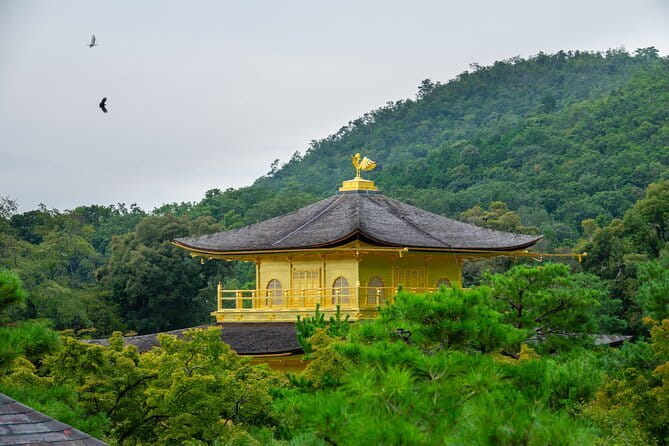
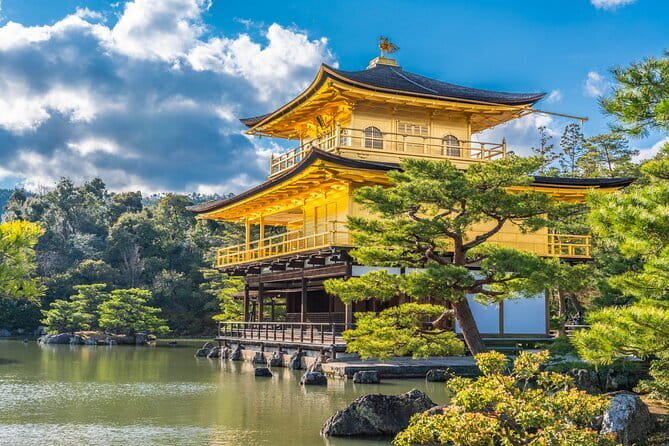
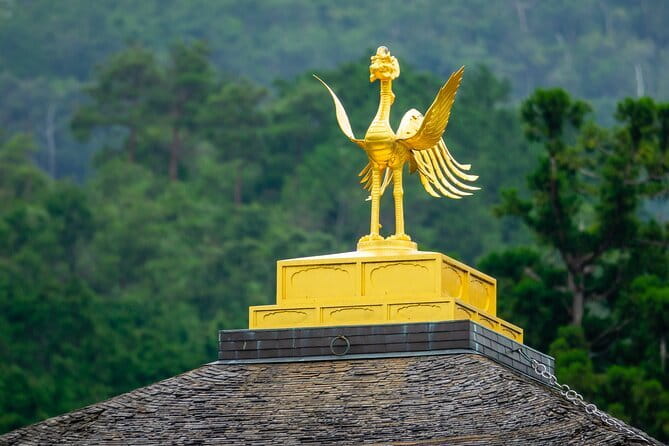
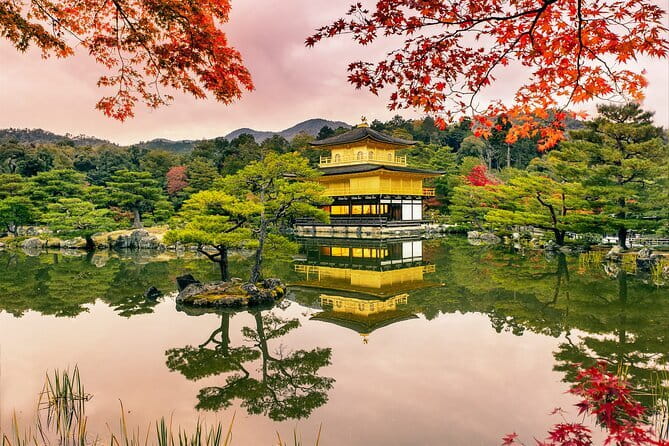
The day begins with Kinkaku-ji, usually called the Golden Pavilion. Its upper floors are covered in gold leaf, and the building reflects in a pond surrounded by carefully arranged gardens. It is one of Kyoto’s most recognizable sights for good reason, though its fame also means you should expect a popular stop rather than a quiet temple visit.
Forty minutes is enough to see the pavilion, walk the main garden route, and take photographs. It is not enough for a leisurely study of every corner. I would use this stop efficiently: get the classic pond view first, then follow the garden path and listen for the guide’s meeting instructions.
Admission is not included. The separate cost is part of the combined 1,600 yen fee for Kinkaku-ji, Kiyomizu-dera, and Byodo-in. The tour price looks attractive at $57.90, but you should add this temple cost, lunch, and any tea or souvenir purchases when comparing the total.
Kiyomizu-dera and the old streets below
Kiyomizu-dera receives one hour, making it one of the more substantial stops. Founded in 780 near the Otowa Waterfall, it is part of the Historic Monuments of Ancient Kyoto UNESCO World Heritage Site. The temple is known for its large wooden stage and hillside setting, though the provided tour details focus mainly on the temple itself and its long cultural importance.
The approach is part of the pleasure. Kiyomizu-dera connects naturally with the old streets of Ninenzaka and Sannenzaka, where Japanese-style buildings house shops and food businesses. Wear shoes you can walk in comfortably because the route includes slopes and substantial time on foot.
Kiyomizu-dera admission is not included. You will pay that fee as part of the 1,600 yen combined admission for the three paid temples. One practical point matters here: one hour sounds generous, but it goes quickly once you account for the entrance, viewpoints, photographs, and returning to the meeting place.
Ninenzaka and Sannenzaka: Kyoto’s most atmospheric stroll
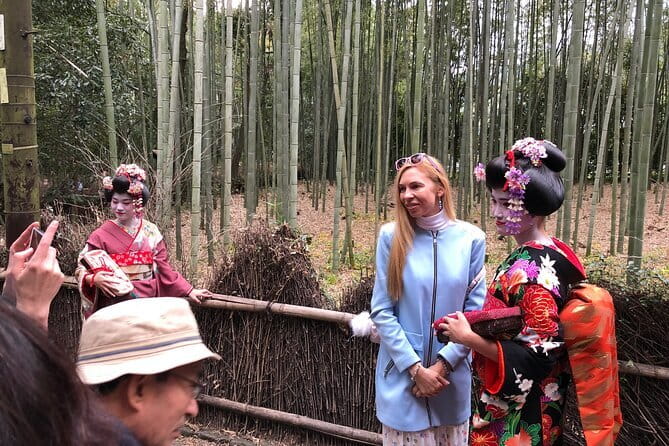
The Ninenzaka and Sannenzaka lanes have served visitors for centuries. Their traditional buildings and steep, stone-paved streets offer a more street-level view of Kyoto than the major temple grounds do. This is where you can browse, take pictures, and notice details that are easy to miss from a vehicle.
You receive about an hour here, and admission is free. I like that the schedule separates the old streets from Kiyomizu-dera rather than treating them as a rushed walk-through. You can use this time for small purchases, snacks, or a slower look at the architecture.
The drawback is that these lanes can be difficult for anyone who dislikes slopes or uneven walking. The tour asks you to move between several sites, so large bags and strollers may be awkward. Tell the operator at booking if you have a stroller or large luggage.
Same city, a completely different kind of day:
- PERFECT KYOTO 1-Day Bus Tour
★ 5.0 · 13,518 reviews - Kyoto: Fushimi Inari, Kinkakuji, Bamboo Grove 1 Day Bus Tour
★ 4.8 · 4,316 reviews - Kyoto: Tea Ceremony in a Traditional Tea House in Kiyomizu
★ 4.9 · 3,519 reviews - Kyoto Geisha Walking Tour: Gion District & Hidden Gems
★ 4.7 · 3,273 reviews
Yasaka Koshindo and its colorful monkey charms
Yasaka Koshindo is a small but distinctive stop near Ichinenzaka. The temple is decorated with colorful monkey-shaped objects, a detail that gives it a very different look from Kyoto’s grander temple compounds. It is officially Daikokusan Kongoji Temple Koshindo.
The visit lasts about 30 minutes and costs nothing. This is a good pause between the larger sights, especially if you appreciate unusual local customs and compact religious sites. It also gives you another chance to explore the old streets around the Higashiyama area.
Do not expect a huge complex or a long formal temple visit. The value is in the brief stop and the visual detail. Your guide can provide the context, then you can photograph the decorations and regroup.
The shift to Uji River and Uji Shrine
After Kyoto’s dense historic districts, Uji changes the rhythm. The Uji River is tied to the area’s identity and has long served as a water route between Shiga and Osaka. The tour allows about 20 minutes by the river, enough for a short walk, photographs, and a look at the waterway that gives Uji much of its character.
Uji Shrine follows with another 20-minute stop. The shrine’s theme centers on rabbits, with white, red-eyed rabbits appearing on lanterns and votive plaques. That detail makes the visit easy to remember and gives you something specific to look for rather than simply passing through another religious site.
Both stops are free. Together, they provide a short introduction to Uji before the main temple visit. The time is limited, so I would not plan on a long riverside walk. Treat these as focused stops within a larger route.
Byodo-in: Uji’s essential temple visit
Byodo-in is the main reason many people come to Uji. Its Phoenix Hall, with wing-like corridors extending from the central building, is one of Japan’s best-preserved national treasures and part of a UNESCO World Heritage Site. You may recognize its image from the back of the Japanese 10-yen coin.
The tour sets aside about 30 minutes here. That is enough to see the hall from the garden, take in its proportions across the pond, and visit the grounds at a measured pace. It is not a long visit, and the listed schedule does not promise entry to every interior area or a special Phoenix Hall admission time.
Admission is not included, and Byodo-in is part of the combined 1,600 yen charge for the three paid temples. Check the guide’s instructions carefully because large groups need to meet at a precise time. A few extra minutes spent photographing the hall can become a problem if you are late returning to the vehicle.
Byodoin Omotesando and Uji’s tea culture
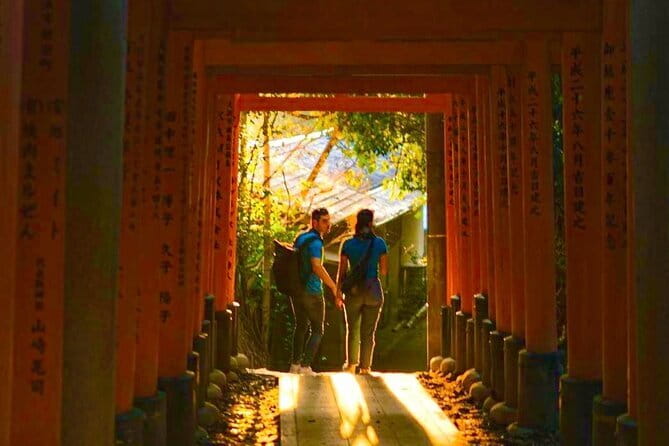
The final stop is Byodoin Omotesando, a shopping street lined with tea shops and tea-related products. Uji is famous for green tea production, so this is your chance to connect the town’s reputation with something you can taste or take home.
You have about 30 minutes and no extra admission cost. That is enough for browsing and a purchase, but not for a long tea tasting session unless the schedule and shop allow it. If you want Uji tea, this is the obvious place to compare products and choose something practical to carry home.
I would save some spending money for this stop. The tour includes transportation and a guide, but food, drinks, and purchases are your responsibility. Since lunch is also excluded, it is wise to ask the guide early about the day’s timing and keep your meal plan flexible.
What the $57.90 price really covers
At $57.90 per person, this is priced as an efficient group day rather than a luxury excursion. You are paying mainly for the air-conditioned vehicle, the guide, and the convenience of connecting Kyoto with Uji in one route.
The value is strongest if you are staying briefly, dislike navigating unfamiliar connections, or want someone to manage meeting points and return times. A guide can also add useful context at places that otherwise risk becoming a series of photo stops. One guide, John, was noted for speaking English, Mandarin, and Japanese and for sending meeting details and maps through WhatsApp. Another guide named Jone was praised for being friendly and helpful. Guide assignments can vary, so consider those examples rather than a guarantee.
The price does not cover lunch or the three temple admissions. Add 1,600 yen for those entrance fees, then budget for a meal and any purchases in Uji. This remains a reasonable deal for a nine-hour day, but it is not an all-inclusive package.
Transport, group size, and the daily rhythm
The air-conditioned vehicle is a real advantage in Kyoto, where a full day of walking and transfers can wear you down. It also makes the Kyoto to Uji connection simple. You do not need to decode several train routes or keep checking departure times between every stop.
The group can include up to 45 people. That size affects the feel of the day. Meeting points, head counts, and departure times matter, and a late return from a temple can hold everyone up. On the positive side, the schedule is structured, and guides have provided maps and clear check-in and return instructions.
Most people can take part, but this is not a no-walking sightseeing ride. Kiyomizu-dera, Ninenzaka, Sannenzaka, and the temple grounds involve walking, including sloping streets. Tell the operator in advance about a stroller or large luggage, and if you booked separately from relatives or friends, notify the operator at least one day ahead so you have a better chance of being assigned to the same vehicle.
Rain does not automatically ruin the day, but it changes the practical side of it. Wet slopes, crowded temple paths, and outdoor viewpoints are less comfortable. Bring suitable rain protection if the forecast looks poor, and keep expectations realistic for photographs.
Who should book this full-day outing
I would recommend this tour to you if:
- You have one day for Kyoto and want to add Uji.
- You prefer a guide and arranged transport over independent route planning.
- You want to see famous landmarks but still have short periods to explore alone.
- You are comfortable with a busy schedule and a possible group of 45.
- You want a first look at both Kyoto’s temple districts and Uji’s tea culture.
I would be more cautious if you have several days in Kyoto and prefer slow travel. You could spend much longer at Kinkaku-ji, Kiyomizu-dera, or Byodo-in on separate visits. This tour also may not suit you if you need a long lunch, extensive shopping time, or a private guide.
The 4.9 rating from 25 ratings and 96 percent recommendation rate reflect a strong overall response, especially for the friendly guides, comfortable transport, clear timing, and amount covered in one day. The weak point is not hard to identify: the schedule can feel physically demanding, and one account described the day as painful. That is useful warning, not a reason to dismiss the tour. Plan for walking, slopes, weather, and short temple visits.
Should you book it?
Book this Kyoto and Uji tour if your priority is seeing the major sights efficiently. The route is broad, the vehicle makes the day easier, and the combination of Kyoto temples with Uji’s river, shrine, Phoenix Hall, and tea street gives you a good sense of both destinations.
Skip it if your ideal day means lingering at one temple, choosing your own meal stops, and moving without a group schedule. At $57.90 plus 1,600 yen in temple admissions and your own lunch, the tour is good value for a one-day overview, not a slow cultural study.
FAQ
How long does the Kyoto and Uji sightseeing tour last?
The tour lasts approximately nine hours.
Where does the tour take place?
The experience covers sightseeing in Kyoto and Uji, Japan. It can be booked from Osaka or Kyoto.
Which attractions are included in the route?
The route includes Kinkaku-ji, Kiyomizu-dera, Ninenzaka and Sannenzaka, Yasaka Koshindo, the Uji River, Uji Shrine, Byodo-in Temple, and Byodoin Omotesando.
Are temple admission fees included?
No. Admission to Kinkaku-ji, Kiyomizu-dera, and Byodo-in is not included. The combined ticket cost is 1,600 yen.
Is lunch included?
No. Lunch is not included in the tour price.
What type of transportation is provided?
The tour includes an air-conditioned vehicle and a guide.
Can I cancel for a full refund?
Yes, if you cancel at least 24 hours before the experience start time. Cancellations or changes made less than 24 hours before the start time are not refunded or accepted.
Just added around Kyoto
- Private Guided Traditional Buddhist Cooking in Japan★ 5.0 · 16 reviews
- Kyoto: Gion Geisha District & Sake-in-Hand Walking Tour★ 5.0 · 37 reviews
- Your Private Vacation Photography Session In Kyoto★ 5.0 · 110 reviews
- Kyoto: Zen Meditation at a Private Temple with a Monk★ 5.0 · 25 reviews
- Traditional Japanese Washi Papermaking- Kyoto morning★ 5.0 · 77 reviews
- Kyoto Wagashi(Japanese sweets) Cooking Class near Fushimiinari★ 5.0 · 60 reviews
- Private Pewter Sake Cup Experience with a Kyoto Artisan★ 5.0 · 31 reviews
- Private Cooking Class Udon in Kyoto Japan★ 5.0 · 23 reviews
Full-Day, compared.
Mount Fuji Full-Day Private Tour from Tokyo (Customizable)
Read our review →
Hiroshima / Miyajima Full-day Private Tour with Government Licensed Guide
Read our review →

5 Top Highlights of Kyoto Full Day Bike Tour (E-bike option)
Read our review →
Full Day Biking Tour Exploring the Best of Kyoto
Read our review →