
REVIEW · KAMAKURA DAY TRIPS
Kamakura Walking Tour – The City of Shogun
Kamakura’s best story is told on foot, from the grand Tsurugaoka Hachimangu Shrine to the bronze Great Buddha and the gardens of Hasedera Temple. This tour links the city’s major sights while explaining how Shinto shrines, Buddhist temples, and samurai rule shaped Japan.
I like the small maximum of 10 people, which gives guides such as Miyu, Maki, and Midori room to answer questions and help with photos. I also like the route’s useful finish near Hase Station, leaving you time to continue exploring on your own.
The main catch is that the $35 price covers the guide only. You should budget another 1,200 yen for transportation and admission, and the tour requires good weather, so a rainy forecast can affect your plans.
In This Review
- Key points before you book
- Why this Kamakura route works
- Tsurugaoka Hachimangu begins the story
- Komachi Street adds food and people watching
- The Enoden ride connects the city
- The Kamakura Great Buddha is the visual centerpiece
- Hasedera brings gardens and views
- What the guides add
- Is $35 a good value?
- Who should take this tour?
- Practical details for a smooth morning
- Should you book the Kamakura Walking Tour?
- FAQ
- Where does the Kamakura walking tour start?
- What time does the tour start?
- Where does the tour end?
- How long does the experience last?
- What sights are included?
- Is admission included in the tour price?
- What does the $35 price include?
- How large is the group?
- Is a mobile ticket available?
- Can I cancel for a full refund?
- What happens if bad weather cancels the tour?
Key points before you book
- Three major Kamakura sights in 3.5 hours: Tsurugaoka Hachimangu, the Great Buddha, and Hasedera.
- A small group capped at 10 people: Easier to hear the guide and ask questions.
- A useful historical focus: Learn how Shinto customs, Buddhist practice, and Kamakura’s samurai past connect.
- Komachi Street included: A short stop for local food, shops, and a look at modern Kamakura.
- The tour uses local transportation: Past tour experiences include riding the Enoden train.
- Good value for first-time visitors: The guide helps you understand the sights before you explore more on your own.
Why this Kamakura route works
Kamakura is easy to underestimate. On a map, its shrines and temples seem close together. In practice, the city has several important districts, busy roads, rail connections, and a steady flow of day visitors. A guide saves you from treating each site as just another pretty gate or statue.
This tour gives you a clear half-day framework. You begin at 10:00 am outside the Kamakura City Tourist Information Center, near Kamakura Station, then work toward Hase Station. That direction makes sense: you begin with the city’s political and religious center, pause on Komachi Street, and finish with Kamakura’s two most famous Buddhist sights.
The tour lasts about three and a half hours. That is long enough for useful context but short enough to leave most of the afternoon free. I particularly like this balance. You get help with the major sights, then you can return to a favorite temple, visit the coast, or find lunch without spending the whole day in a group.
The group limit of 10 also matters. Large guided groups often turn a temple visit into a march behind an umbrella. Here, you have a better chance of hearing explanations and getting an answer when something catches your attention. The exact guide varies, but Miyu, Maki, and Midori are named in the tour information and praised for their clear explanations, friendly manner, and ability to make the walk comfortable for families.
More Kamakura Day Trips in Kamakura
- Tokyo: Kamakura & Enoshima Day Trip including Temple Tickets
★ 4.5 · 1,375 reviews - From Tokyo: Kamakura & Enoshima 1-Day Bus Tour
★ 4.5 · 189 reviews - Kamakura Historical Walking Tour with the Great Buddha
★ 5.0 · 129 reviews
Tsurugaoka Hachimangu begins the story
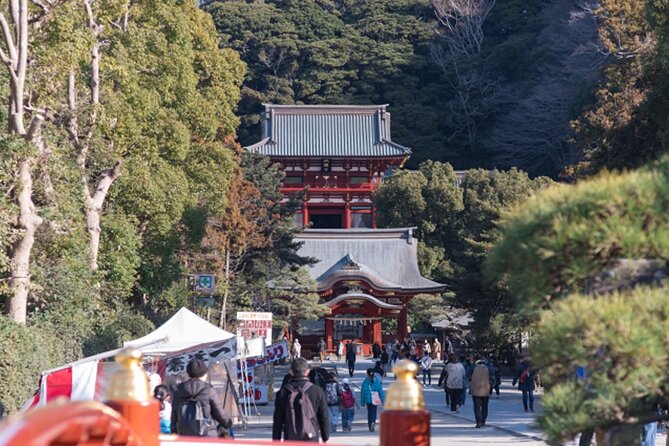
Your first stop is Tsurugaoka Hachimangu Shrine, one of Kamakura’s central landmarks. Founded in the 12th century by Minamoto no Yoritomo, it is dedicated to Hachiman, the Shinto god connected with warriors and the Minamoto family.
The planned visit lasts about 30 minutes, so expect an introduction rather than a detailed study of every structure. That is enough time to understand why this shrine matters and how it relates to Kamakura’s rise as a seat of samurai power.
I find this an excellent place to begin because it gives the rest of the tour a framework. Without some historical grounding, the Great Buddha can feel like an isolated monument and Hasedera can seem like another attractive temple. At Tsurugaoka Hachimangu, you start to see Kamakura as a city shaped by political authority, religious practice, and military families.
A guide can also explain the difference between the sites you visit. Tsurugaoka Hachimangu is a Shinto shrine, while the Great Buddha and Hasedera are Buddhist places. The distinction is valuable because Japanese religious customs often overlap in daily life, yet shrines and temples have different symbols, rituals, and traditions.
The shrine visit is free, which helps keep the additional costs manageable. Still, 30 minutes is not enough for a slow photographic visit, so you may want to return later if the grounds appeal to you.
Komachi Street adds food and people watching
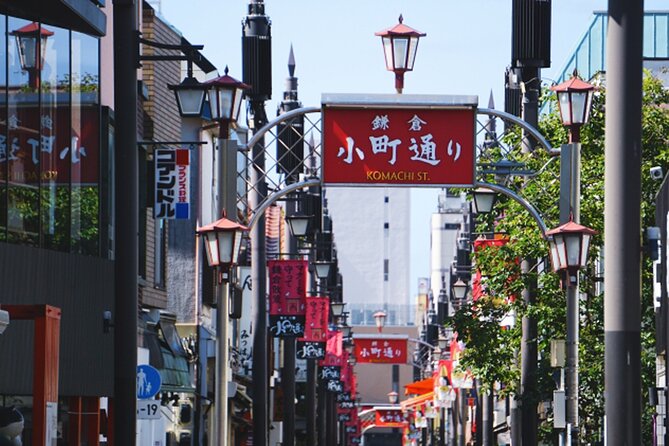
From the shrine area, the route includes about 20 minutes on Komachi Street. This pedestrian shopping street runs through the heart of Kamakura and is named after the poet Ono no Komachi.
This is the most modern stop on the route. Instead of temple roofs and religious grounds, you get shops, snacks, local specialties, and the everyday side of a popular Japanese destination. The tour overview also points to local cuisine and lesser-known food spots, though the supplied itinerary does not promise a specific tasting or meal. Plan to buy food separately if something catches your eye.
Twenty minutes is a short stop, but that can be useful. Komachi Street can become a time trap, especially if you browse every shop. A brief guided pass lets you get your bearings without using up the afternoon.
I would not treat this as a full food tour. It is better understood as a chance to notice what Kamakura eats and sells, then return after the tour if you want more time. Keep your expectations practical: the main purpose here is to connect the shrine district with the rest of the route, not to sit down for a long meal.
The Enoden ride connects the city
The tour information does not list a separate transportation segment in the formal stop schedule, but the experience descriptions include riding the Enoden train. Transportation is not included in the price, so you should expect to pay for local transit as part of the stated 1,200 yen total for transportation and admission.
That small train ride is more than a way to cover ground. It helps you see that Kamakura is not one compact temple complex. The city spreads across several areas, and the route toward Hase brings you to the Great Buddha and Hasedera district.
The transport detail is also one reason this tour suits a first visit. You do not have to work out the connection between Kamakura Station and Hase on your own during the guided portion. Just remember that the guide fee does not cover the fare.
Since the exact transport timing can vary, keep comfortable walking shoes on and avoid treating the 3.5-hour schedule as an exact minute-by-minute promise. This is a walking tour with transit, not a private car outing.
More walking tours in Kamakura:
- Kyoto Geisha Walking Tour: Gion District & Hidden Gems
★ 4.7 · 3,273 reviews - Tokyo Tsukiji Fish Market Food and Culture Walking Tour
★ 5.0 · 3,184 reviews - Kyoto: Gion Magical Night Walking Tour with Geisha Trivia
★ 4.9 · 2,393 reviews - Tokyo: Imperial Palace and Shogun Historical Walking Tour
★ 5.0 · 2,251 reviews
The Kamakura Great Buddha is the visual centerpiece
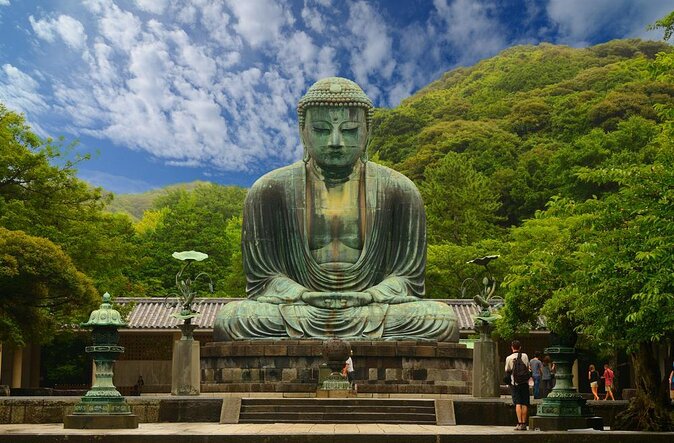
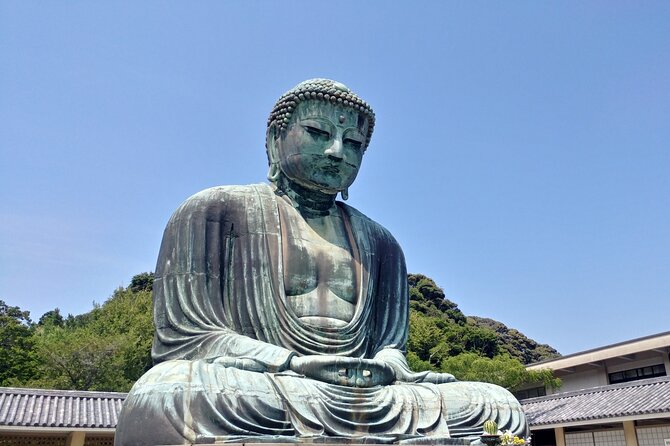
At Kotoku-in, you visit the Kamakura Great Buddha, also called the Kamakura Daibutsu. The bronze statue is about 13.35 meters, or 44 feet, tall, and dates from the 13th century.
The planned visit is about 30 minutes. That gives you time to take in the scale of the statue, listen to the explanation, and take photographs. It is a focused stop, not an invitation to linger for an hour.
What makes the Great Buddha memorable is its setting and material. This is not a small indoor image viewed from a quiet corner. The bronze figure has a powerful presence, and its size gives you an immediate sense of the resources and devotion involved in creating it.
The guide’s context is especially useful here. You can ask about the statue’s place in Kamakura’s Buddhist tradition rather than simply taking a picture and moving on. Several guides, including Maki and Miyu, are praised for explaining Buddhist temples and Japanese customs in a way that is easy to follow.
Admission is not included. The tour supplies a total estimate of 1,200 yen for transportation and admission, so carry enough Japanese currency or confirm the current payment arrangements when booking. The stated fee can change in real life, but the important planning point is clear: the advertised $35 is not the complete cost.
Hasedera brings gardens and views
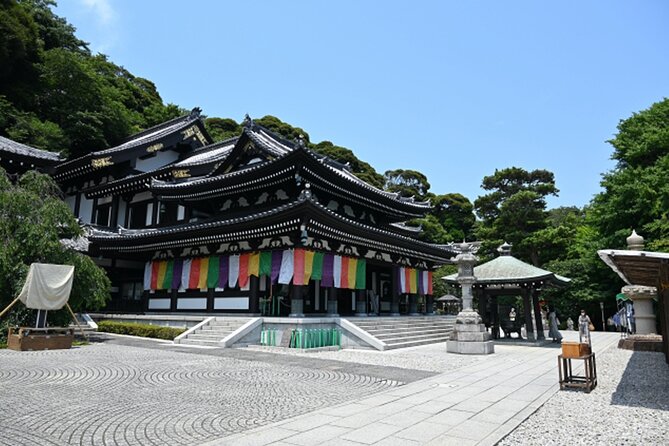
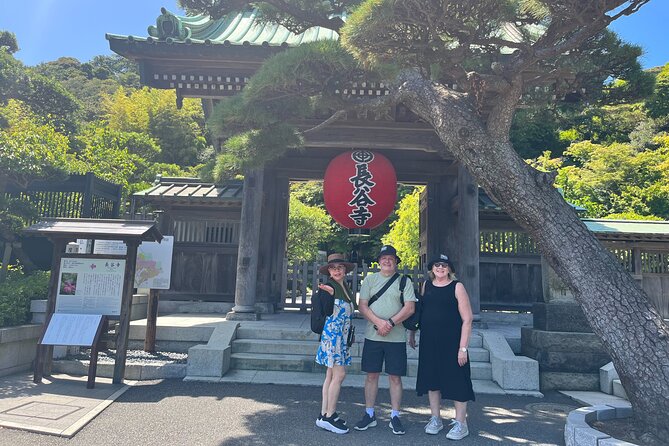
The final major stop is Hasedera, also known as Hase Kannon Temple. The visit is scheduled for about 40 minutes, making it the longest stop of the tour.
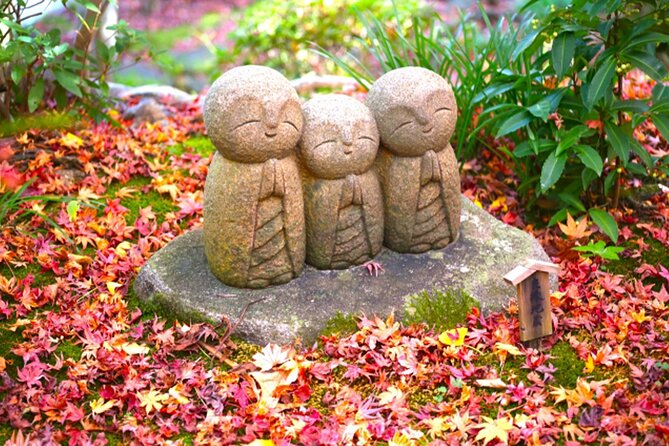
Hasedera is known for its calm setting, gardens, and a large wooden statue of Kannon. The temple also offers views toward the coast and surrounding parts of Kamakura, giving the tour a change of pace after the formal shrine and the open-air Great Buddha.
This is where the city’s natural beauty becomes part of the story. The tour overview highlights coastal views, and the guides are also praised for showing good viewing points and taking photographs. Do not expect a long free period for every garden path, but you should have enough time to see why Hasedera is often considered one of Kamakura’s most attractive temple visits.
The temple is reached near Hase Station, where the tour ends. That is a practical finish. You are already in a useful area for continuing your day, and you do not have to trek back to the original meeting point.
Because the visit includes gardens and viewing areas, comfortable shoes are important. The tour is not described as strenuous, and most people can participate, but you should still expect regular walking and time on your feet.
What the guides add
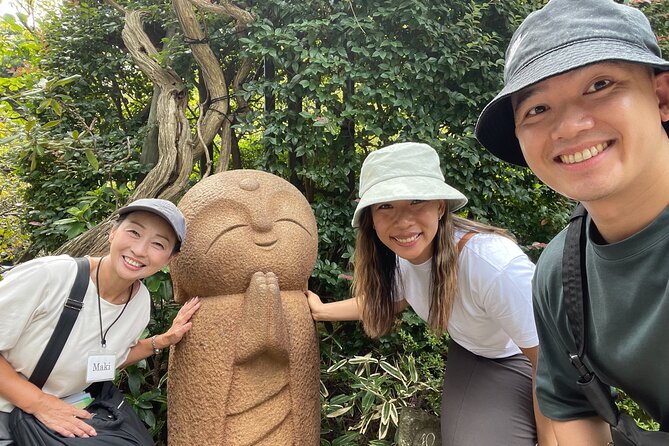
The strongest part of this experience is the guide’s role. Miyu is praised for making the tour engaging, answering questions, and offering ideas for the afternoon. Maki is described as energetic, personal, and clear when explaining the difference between temples and shrines. Midori is singled out for showing fun places along the way, taking photos, and making the experience enjoyable for children.
Those details tell you what kind of guiding to expect. This is not simply a silent escort from one entrance to the next. You should expect explanations about history and culture, help with orientation, and some flexibility when you have questions.
The guides also seem to connect old customs with present-day Japan. That matters in Kamakura, where the buildings are historic but the religious practices remain part of modern life. If you want only photographs, a self-guided day may be enough. If you want to understand what you are looking at, the guide fee earns its keep.
The small group supports that style. With no more than 10 people, a guide can usually keep the pace personal rather than delivering one speech and moving on.
Is $35 a good value?
At $35 per person, the tour is reasonably priced for a guided three-and-a-half-hour introduction to Kamakura. You still pay for transportation and admission, with the stated additional total at 1,200 yen, so compare the full cost rather than the headline price alone.
The value comes from the route and the explanation. A self-guided visit can cost less, especially if you already know how to use local trains and have researched Kamakura’s religious sites. But you would need to plan the route, learn the background, manage the timing, and decide how the shrine and temple traditions fit together.
I would book this tour if Kamakura is your first visit or if you want a strong orientation before exploring alone. I would be less inclined if you prefer spending a full hour at each temple, shopping slowly on Komachi Street, or setting your own pace for photography.
The 100-review rating is listed as 5 out of 5, with 100 percent recommending the experience. That is an unusually strong record, and the praise centers on the guides’ clear explanations, warmth, historical detail, and help with photos. Still, a perfect rating cannot remove the tour’s practical limits: a fixed route, a short visit at each main sight, extra costs, and possible weather cancellation.
Who should take this tour?
This tour is a good match for first-time Kamakura visitors, families, and anyone who wants the main sights explained without giving up a whole day. The feedback specifically includes children enjoying the experience, so families may appreciate the friendly pace and personal guiding.
It also suits visitors who want cultural context. You will hear about Shinto shrines, Buddhist temples, Buddha images, Japanese customs, and Kamakura’s samurai-era importance in one connected walk.
You should think twice if you have limited mobility or dislike extended walking. The information says most people can participate and that service animals are allowed, but it does not provide detailed accessibility information for every path, stairway, or temple area. Ask the provider before booking if those details are important for you.
The tour also requires good weather. If poor weather cancels it, you are offered another date or a full refund. For your own plans, avoid placing a must-see coastal day immediately afterward unless you have some flexibility.
Practical details for a smooth morning
Meet at 10:00 am at the Kamakura City Tourist Information Center, 1-chōme-1-1 Komachi, Kamakura. The tour ends at Hase Station, 2 Chome-14 Hase, Kamakura, rather than returning to the starting point.
That one-way design is useful, but plan your day around it. Do not leave luggage or other commitments near Kamakura Station if you need to return there immediately. You will finish in Hase, a good location for continuing your sightseeing.
Bring comfortable shoes, a phone, and enough money for the stated transportation and admission costs. The ticket is mobile, confirmation arrives at booking, and the group has a maximum of 10 people.
Free cancellation is available until 24 hours before the start time for a full refund. Changes or cancellations inside that window are not accepted, and the cut-off follows local time.
Should you book the Kamakura Walking Tour?
Book it if you want Kamakura’s major sights to make sense as one story. The route covers Tsurugaoka Hachimangu, Komachi Street, the Great Buddha, and Hasedera, with a local guide and a finish near Hase Station. The strongest reason to choose it is the personal guiding, especially if Miyu, Maki, or Midori is leading your group.
Skip it if you already know Kamakura well or want a slow, self-directed temple day. The tour moves through several places in three and a half hours, so each stop is an introduction rather than a long visit.
For most first-time visitors, I think it is a practical way to get your bearings, learn the cultural basics, and save the rest of the day for your own discoveries. Just add the 1,200 yen transportation and admission estimate to the $35 tour price, wear good walking shoes, and keep an eye on the weather.
FAQ
Where does the Kamakura walking tour start?
It starts at the Kamakura City Tourist Information Center, 1-chōme-1-1 Komachi, Kamakura, Kanagawa 248-0006, Japan.
What time does the tour start?
The start time is 10:00 am.
Where does the tour end?
The tour ends at Hase Station, 2 Chome-14 Hase, Kamakura, Kanagawa 248-0016, Japan.
How long does the experience last?
The tour lasts approximately 3 hours and 30 minutes.
What sights are included?
The route includes Tsurugaoka Hachimangu Shrine, Komachi Street, Kotoku-in and the Kamakura Great Buddha, and Hasedera Temple.
Is admission included in the tour price?
No. Transportation and admission are not included. The stated total for those additional costs is 1,200 yen.
What does the $35 price include?
The $35 price includes the tour guide fee.
How large is the group?
The tour has a maximum of 10 travelers.
Is a mobile ticket available?
Yes. The experience provides a mobile ticket, and confirmation is received at the time of booking.
Can I cancel for a full refund?
Yes. You can cancel at least 24 hours before the experience start time for a full refund. Cancellations or changes made less than 24 hours before the start time are not accepted.
What happens if bad weather cancels the tour?
If poor weather causes a cancellation, you are offered a different date or a full refund.
Just added around Kamakura
- When Emperors Reigned and Shoguns Ruled★ 5.0 · 43 reviews
- First time in Kamakura? Enjoy a Tour of All Must-sees!★ 5.0 · 15 reviews
- Your Own HANKO Name Seal Activity in Kamakura.★ 5.0 · 24 reviews
- Kamakura 4hr Private Trip with Government-Licensed Guide★ 5.0 · 58 reviews
- Kamakura Tours Half Day or Full Day Tours with a local guide.★ 5.0 · 12 reviews
- Kamakura Bamboo Forest and Great Buddha Private Tour★ 5.0 · 12 reviews
- Exciting Kamakura – One Day Tour from Tokyo★ 5.0 · 40 reviews
- Buddha, Bamboo & Zen – Bespoke Kamakura Private Walking Tours★ 5.0 · 25 reviews
Kamakura Day Trips, compared.
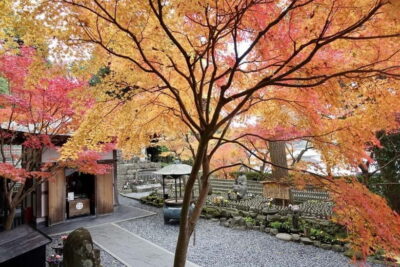
Kamakura & Enoshima Day Trip including Temple Tickets
Read our review →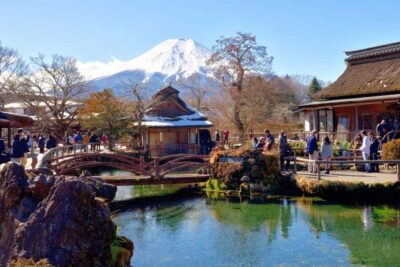
Mt. Fuji, Kamakura, Big Buddha, & Lake Ashi Day Trip
Read our review →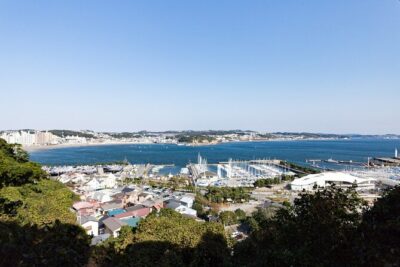
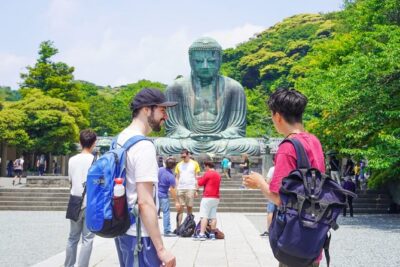
Kamakura Historical Walking Tour with the Great Buddha
Read our review →
Kamakura Private Tour: Temples, Nature, and the Great Buddha
Read our review →
Sea of Mount Fuji, Hakone Ropeway, Ōwakudani, Enoshima
Read our review →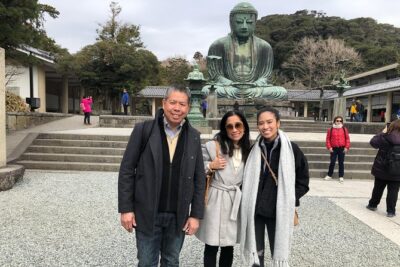
Kamakura 8 hr Private Walking Tour with Licensed Guide from Tokyo
Read our review →
Kamakura & Enoshima Day Tour with Pickup & Train Ride
Read our review →Browse the lists this tour appears in