
REVIEW · KAMAKURA DAY TRIPS
From Tokyo: Kamakura & Enoshima 1-Day Bus Tour
Kamakura and Enoshima give you a welcome change of pace from Tokyo: samurai-era temples, a giant bronze Buddha, small shopping streets, and sea views all in one day. The Great Buddha of Kamakura and the hilltop shrines of Enoshima give this outing real variety, rather than one long temple crawl.
I like the easy roundtrip bus service and the smart mix of guided sights and free time. I also like that temple entrance fees are included, which keeps the $66.05 price easy to understand. The main caution is timing: traffic can make the return ride long, and Enoshima involves plenty of stairs.
In This Review
- Key points to know before booking
- Why Kamakura and Enoshima make a strong day trip
- Tsurugaoka Hachimangu and Komachi Street
- The Great Buddha at Kotoku-in
- Hase-dera, the most layered temple stop
- Two hours on Enoshima Island
- What the guide adds to the day
- Bus comfort, group size, and the road home
- Is $66.05 a fair price?
- Who should book this day trip?
- Should you book the Kamakura and Enoshima bus tour?
- FAQ
- How long does the tour last?
- Where does the tour begin?
- Where does the tour end?
- What sights are included?
- Are entrance fees included?
- Is lunch included?
- What languages does the guide speak?
- How large can the group be?
- Can I bring luggage?
- What happens if I arrive late?
Key points to know before booking
- Four major stops in one day: Visit Tsurugaoka Hachimangu, the Great Buddha, Hase-dera, and Enoshima.
- The Great Buddha entrance is included: You can also pay a small extra fee to see the interior, when time and crowds allow.
- Enoshima is more than a viewpoint: You can explore shrines, shops, gardens, seafood restaurants, and an observatory lighthouse.
- Guides make a real difference: Omar, Yuki, Chen, Mitsuko, Mitsi, and Koji have all been praised for warmth, organization, or clear explanations.
- Expect a long day: The advertised duration is about 9 to 10 hours, with traffic often slowing the ride back to Tokyo.
- Be exact at the meeting point: The bus leaves on time, late arrivals are not accepted, and the final drop-off is near Shinjuku Station.
Why Kamakura and Enoshima make a strong day trip
Kamakura was the home of Japan’s first warrior government, founded by Minamoto no Yoritomo in the late twelfth century. That gives the town a different feel from Tokyo. The streets are smaller, the religious sites are older, and the mood is less hurried.
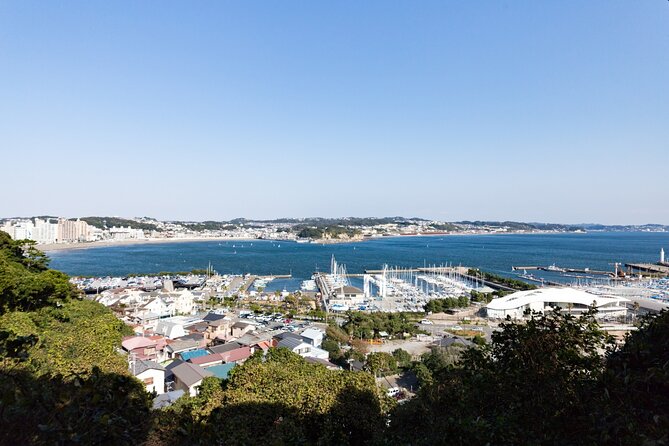
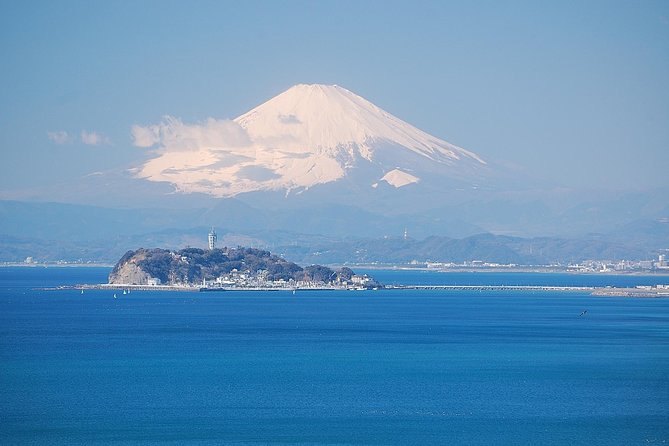
Enoshima adds a second side of Japan to the day. It is a small island west of Kamakura, tied to the mainland by a bridge, with shrines, seafood restaurants, narrow lanes, steps, and open views over the water. On a clear day, you may see Mount Fuji.
I see the tour as a practical introduction rather than a slow, scholarly study of Kamakura. You cover several famous places without working out train connections, local buses, entrance fees, and directions on your own. The tradeoff is that you follow a fixed schedule, and some stops may feel short if you want to inspect every building or wait in line for a religious souvenir.
More Kamakura Day Trips in Kamakura
- Tokyo: Kamakura & Enoshima Day Trip including Temple Tickets
★ 4.5 · 1,375 reviews - Kamakura Historical Walking Tour with the Great Buddha
★ 5.0 · 129 reviews - Kamakura Private Tour: Temples, Nature, and the Great Buddha
★ 5.0 · 121 reviews
Tsurugaoka Hachimangu and Komachi Street
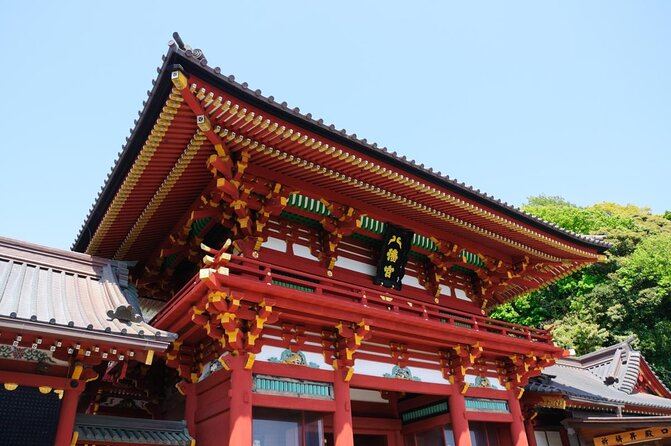
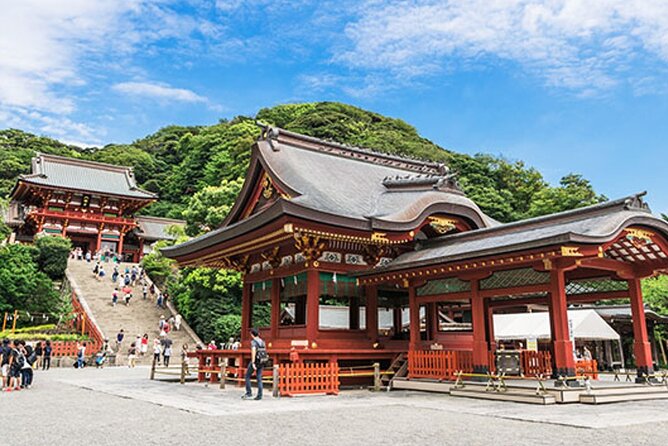
The day begins at Tsurugaoka Hachimangu, Kamakura’s leading Shinto shrine. You enter through a large torii gate and follow the approach toward the main shrine grounds, passing ponds, koi, and open ceremonial spaces.
This is a good first stop because it gives you a clear sense of Kamakura’s religious and political importance. The shrine is not simply a pretty place for photographs. It is tied to the Minamoto family and the rise of the samurai government, so a guide can help you understand why Kamakura became such an important center.
The scheduled visit is about two hours, but that time also covers the nearby Komachi Street area. This is useful because you can combine culture with lunch planning and shopping instead of treating the shrine as an isolated stop.
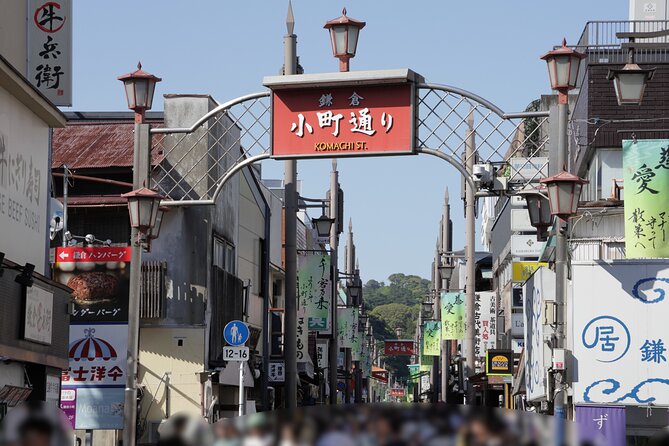
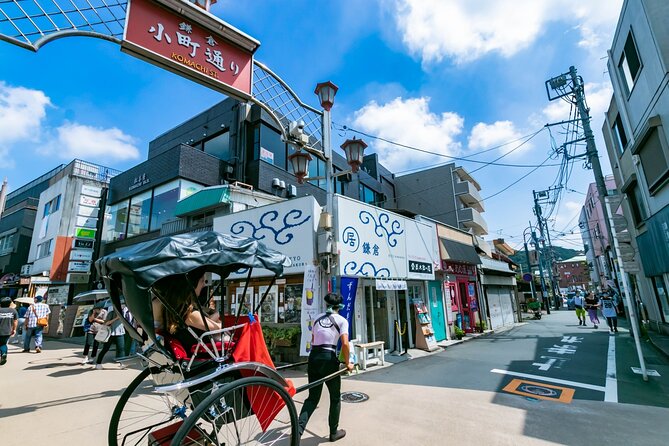
Komachi Street runs toward the shrine and is lined with snack shops, souvenirs, crafts, and casual food. You might find Kamakura-only sweets, handmade goods, and small restaurants. This is the best place to buy something edible for later in the day, especially if your group reaches Enoshima before all restaurants are open.
A practical point: the first stop can feel generous compared with later visits. One review found a little extra time here, while another felt that time at later sites was tighter. I would use the first stop to see the shrine, choose a lunch plan, and avoid spending the entire period browsing shops.
The Great Buddha at Kotoku-in
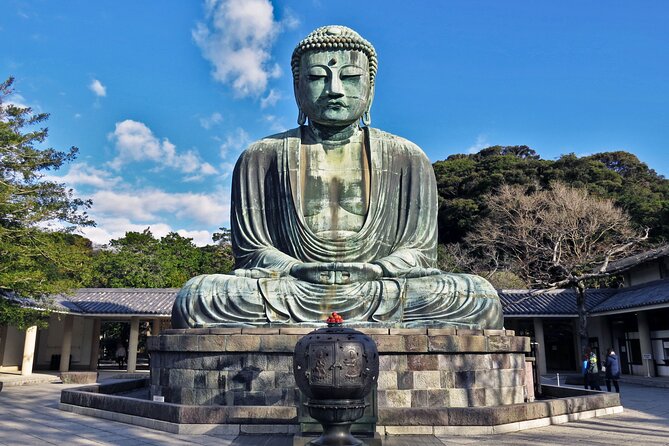
Next comes Kotoku-in Temple, home of Kamakura’s Great Buddha. The bronze Amida Buddha has sat outdoors for centuries and is one of the area’s most recognizable sights.
The visit is scheduled for about 30 minutes, and the main admission is included. That is enough to walk into the grounds, see the statue from several angles, and take photographs. It is not enough for a leisurely visit if the site is crowded or you want to wait for a special stamp.
You can pay an additional 50 yen to enter the interior of the Buddha, according to the experience details reflected in the tour information. Bring a small amount of Japanese cash if this interests you. The wait for a commemorative temple stamp, known as a goshuin, can also be long when the site is busy, so do not count on getting one during this short stop.
This is one place where the bus format helps and hurts. You arrive directly and do not need to find the temple yourself. But the fixed departure time means you must keep an eye on your watch. The Buddha is worth seeing even on a quick visit, yet anyone who wants time for quiet reflection, interior access, or a goshuin should consider returning independently on another day.
Hase-dera, the most layered temple stop
Hase-dera receives about 50 minutes and includes admission. The temple is famous for its eleven-headed statue of Kannon, the Buddhist goddess of mercy. The statue is a major reason to visit, but the setting also gives you more to explore than the allotted time may suggest.
The grounds include gardens and rising paths, so this stop feels more active than the flat approach to Tsurugaoka Hachimangu. You should expect steps and inclines. One review described a demanding amount of stair climbing across the day, especially when Enoshima was added to the mix.
I would give Hase-dera your full attention. Do not assume the Great Buddha is automatically the best stop. The combination of religious art, planted areas, and hill paths gives Hase-dera a quieter, more textured experience.
The challenge is pacing. If you stop for every view and read every sign, 50 minutes can disappear quickly. Follow the guide’s meeting instructions closely, then decide whether you want the famous statue, the gardens, or photographs from the higher paths. Comfortable shoes are essential.
More kamakura day trips in Japan:
- Tokyo: Mt. Fuji, Kamakura, Big Buddha, & Lake Ashi Day Trip
★ 4.5 · 867 reviews - Tokyo:Sea of Mount Fuji, Hakone Ropeway, Ōwakudani, Enoshima
★ 4.9 · 84 reviews - Kamakura 8 hr Private Walking Tour with Licensed Guide from Tokyo
★ 5.0 · 80 reviews - Tokyo: Kamakura & Enoshima Day Tour with Pickup & Train Ride
★ 4.1 · 61 reviews
Two hours on Enoshima Island
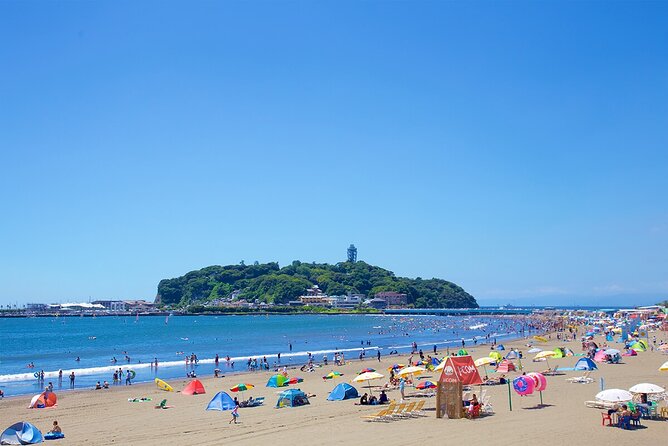
Enoshima is the final major stop and usually gets about two hours. This is where the tour shifts from temple history to island exploration, food, and views.
The approach to the island leads into a narrow shopping street with souvenir stores and restaurants. Seafood is a major draw, and the guide can point you toward food options. Still, do not assume every restaurant will be open at the exact time your bus arrives. When traffic forced one tour group to reverse the route, lunch in Enoshima happened around 11 a.m., before many places had opened.
The island’s shrine complex is dedicated to Benzaiten, associated with music, wealth, and wisdom. It includes three shrines: Hetsu-no-miya, Nakatsu-no-miya, and Okutsu-no-miya. The shrines sit along a hilly route, so visiting them means climbing stairs and walking through narrow lanes.
You can also visit Samuel Cocking Garden and its observatory lighthouse. The lighthouse reaches 59.8 meters, or 119.6 meters above sea level. The elevated position gives you broad views over the island and coast. On a clear day, Mount Fuji may appear in the distance, though weather controls the show.
The big issue here is choice. Two hours is enough to sample Enoshima, but not enough to do everything at a relaxed pace. You need to choose between seafood, the shrine route, the garden and lighthouse, or the caves and additional paths. Paid escalators can save energy on the climb, but they do not remove every stair or guarantee a quick route back to the bus.
Follow the meeting instructions carefully. In poor weather or after dark, finding the bus away from the main shopping area can be stressful. Give yourself more time than you think you need, especially if you have walked toward the caves or lighthouse.
What the guide adds to the day
The guide quality appears to be one of the strongest parts of this experience, but it may vary by departure. Omar has been praised for humor and strong explanations of historical sites. Yuki has been described as attentive, flexible, and clear in English. Chen has received praise for friendly, easy-to-follow commentary, while Mitsuko and Mitsi have been noted for warmth and helpful suggestions. Koji has also been praised for being friendly and informative.
That range matters because the tour includes several sites that can blur together without context. A good guide can explain the link between the Minamoto family, the Kamakura shogunate, Shinto shrine customs, Buddhist worship, and the local legends of Enoshima.
You should also know that English and Chinese commentary may be provided on the same bus, depending on the group. This can mean that explanations take longer or feel less detailed than on a single-language tour. One low-rated experience described a guide who focused mostly on logistics and offered little historical explanation. I would treat this as a possible variation, not a guaranteed feature of every departure.
The guide’s practical role is still important even when commentary is light. You receive directions for shopping, food, meeting points, and return times. Several highly rated experiences also praised the staff for keeping the group together and handling small problems quickly.
Bus comfort, group size, and the road home
Roundtrip transportation is the tour’s main value. Kamakura and Enoshima are possible by public transportation, but changing trains and local routes takes planning. The bus lets you sit down between sights and brings you back to Tokyo without asking you to navigate after a full day on your feet.
Vehicle quality may vary. Some departures have used a clean, modern bus with USB charging ports. Another experience involved an older, basic bus with uncomfortable rear seats and poor placement over the wheel. If comfort is important to you, keep expectations moderate rather than assuming a luxury coach.
The maximum group size is 90 people, though some departures may be much smaller. One group was pleasantly surprised by the manageable number of participants. A large bus does mean you must listen for instructions and return on time, but it also keeps the cost low.
The ride back can be long because of Tokyo-area traffic. This is the least glamorous part of the day. I would keep the evening flexible and avoid booking a costly dinner, theater performance, or timed attraction immediately after the scheduled return.
The final drop-off is near Shinjuku Station, at the Shinjuku Post Office area. The bus does not return to Ikebukuro. Check your exact pickup details before departure, since the tour information describes two central pickup choices while the supplied meeting instructions identify Shinjuku Post Office as the meeting and return location.
Is $66.05 a fair price?
At $66.05 per person, this is a solid value if you want convenience and an overview. The price includes an air-conditioned vehicle, taxes and fees, the English or Chinese-speaking guide, and admissions to Hase-dera and Kotoku-in. You still pay for lunch and any optional Enoshima attractions, such as the lighthouse or escalators.
The real savings are in time and effort. You avoid arranging several train rides, finding Kotoku-in and Hase-dera, and working out how to combine Kamakura with Enoshima in one day. If you are comfortable using Japanese trains and want long visits at fewer sites, an independent day may suit you better.
For a first visit, I think the price works because the itinerary covers the area’s major symbols: the samurai-era shrine, the Great Buddha, Hase-dera, and the island. It is a broad sampler, not a slow local experience.
Who should book this day trip?
I would recommend it to first-time visitors to Tokyo who want one easy day outside the capital. It also suits families and couples who prefer a planned route, as well as solo visitors who like having transportation and basic guidance arranged.
You will enjoy it most if you can walk comfortably, handle stairs, and accept some schedule pressure. The tour is not ideal for anyone with limited mobility, though the supplied information says most people can participate. Enoshima alone can involve substantial climbing, and Hase-dera also has slopes and steps.
It is less suitable if you want a quiet, unhurried temple day. The schedule moves through several famous places, and crowds, rain, heat, or road accidents can change the order. September heat has made the walking uncomfortable, while rain can make the island paths and bus meeting point harder to manage.
Bring comfortable shoes, water, a small amount of cash, and a portable phone charger. Keep valuables with you, since luggage stored in the trunk cannot be reached between stops.
Should you book the Kamakura and Enoshima bus tour?
Book it if your priority is seeing the main sights in one organized day for a reasonable price. The combination of shrine grounds, Komachi Street, the Great Buddha, Hase-dera, and Enoshima offers a lot for the time and money.
Skip it if you dislike fixed departure times, long bus rides, or crowded attractions. Independent rail travel will give you more freedom, especially at the Great Buddha and Enoshima.
My advice is to book this as an efficient first look at southern Kanagawa, not as a leisurely retreat. Arrive at the correct meeting point at least 10 minutes early, plan lunch before you reach Enoshima, and leave your evening open for traffic. With those limits in mind, the tour gives you a rewarding break from Tokyo and a useful introduction to two very different Japanese destinations.
FAQ
How long does the tour last?
The tour lasts approximately 9 to 10 hours, though traffic and other unforeseen conditions can cause delays.
Where does the tour begin?
The supplied meeting information lists Shinjuku Post Office, 1-chōme-8-8 Nishishinjuku, Shinjuku City, Tokyo. Booking information may describe two centrally located pickup choices, so confirm your selected point before departure.
Where does the tour end?
The only listed drop-off point is near Shinjuku Station, at the West Exit area. The bus does not return to Ikebukuro.
What sights are included?
The route includes Tsurugaoka Hachimangu Shrine, Komachi Street, Kotoku-in and the Great Buddha, Hase-dera Temple, and Enoshima Island with its shrine area and shopping street.
Are entrance fees included?
Entrance fees to Hase-dera and Kotoku-in are included. Other optional attractions on Enoshima may require separate payment.
Is lunch included?
No. Lunch is not included, and you have time to choose food in the Komachi Street or Enoshima areas.
What languages does the guide speak?
The tour includes an English or Chinese-speaking guide. Depending on the number of participants, English and Chinese commentary may be given on the same bus.
How large can the group be?
The activity may have a maximum of 90 participants. Actual group size can vary by departure.
Can I bring luggage?
One piece of luggage per person is allowed. Luggage stored in the trunk must not exceed 155 centimeters in combined height, width, and depth, and you cannot access it between stops.
What happens if I arrive late?
The bus departs on time and cannot wait. Late arrivals or arrival at the wrong meeting point may result in missing the tour without a refund, so arrive at least 10 minutes early and check the location in advance.
More 1-Day Tours in Japan
- Mt Fuji and Hakone 1-Day Bus Tour Return by Bullet Train
★ 5.0 · 26,383 reviews - 1-Day Tokyo Bus Tour
★ 5.0 · 14,250 reviews - PERFECT KYOTO 1-Day Bus Tour
★ 5.0 · 13,518 reviews - Mt Fuji & Hakone Cruise, Drum Show Bullet Train 1 Day from Tokyo
★ 4.0 · 7,413 reviews
Just added around Japan
- Tokyo: Customizable Private Guided Walking Tour★ 4.5 · 129 reviews
- Private Harajuku Omotesando Architecture Tour★ 4.9 · 18 reviews
- Tokyo: Private Personalized Local Food Tour★ 4.5 · 101 reviews
- Tokyo: Guided Helicopter Ride★ 4.9 · 24 reviews
- Tokyo: Guided Walking Tour of Tsukiji Market with Lunch★ 4.4 · 24 reviews
- Tokyo GINZA: KONPARU Japanese Cabaret Show with Drink★ 4.8 · 38 reviews
- Tokyo: Guided Walking Tour of Tsukiji Market with Breakfast★ 4.4 · 134 reviews
- Tokyo: Gotokuji Cat Temple, Shinjuku Cat Cafe & 3D Cat Tour★ 4.9 · 38 reviews
Kamakura Day Trips, compared.
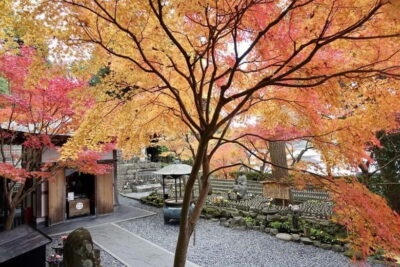
Kamakura & Enoshima Day Trip including Temple Tickets
Read our review →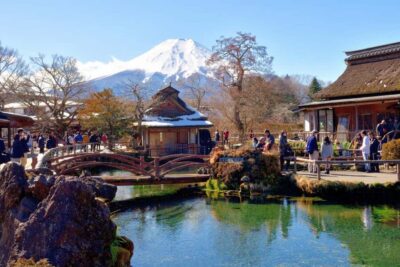
Mt. Fuji, Kamakura, Big Buddha, & Lake Ashi Day Trip
Read our review →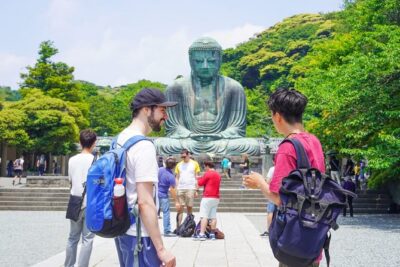
Kamakura Historical Walking Tour with the Great Buddha
Read our review →
Kamakura Private Tour: Temples, Nature, and the Great Buddha
Read our review →
Sea of Mount Fuji, Hakone Ropeway, Ōwakudani, Enoshima
Read our review →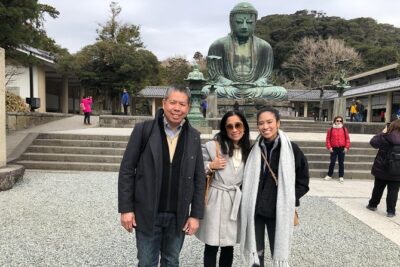
Kamakura 8 hr Private Walking Tour with Licensed Guide from Tokyo
Read our review →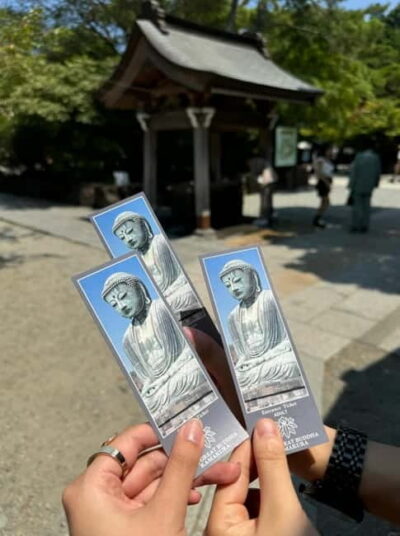
Kamakura & Enoshima Day Tour with Pickup & Train Ride
Read our review →
Kamakura Private & Customizable Tour – All-in-One Experience
Read our review →Browse the lists this tour appears in