
REVIEW · KAMAKURA DAY TRIPS
Your Own HANKO Name Seal Activity in Kamakura.
A Japanese Hanko is more than a souvenir stamp. It is a personal mark tied to identity, and this small Kamakura workshop lets you shape one from the first character to the finished seal. I like the one-on-one format and the chance to learn why different fonts, materials, and seal types matter.
I also like that the result is genuinely personal. You choose how your name appears in katakana, select a font and color, and receive an individually engraved seal with its own pouch. The main consideration is timing: the workshop is offered in the morning, while the finished Hanko is collected later, so you need to plan your Kamakura day around it.
In This Review
- Key Points to Know Before You Book
- Why a Hanko Makes a Better Souvenir Than Another Trinket
- Inside Kamakura HANKO Near Kamakura Station
- The First 45 Minutes: From Japanese Seal Culture to Your Name
- Choosing Material, Color, Case, and Ink
- How the Seal Is Actually Made
- Pickup, Shipping, and Planning Your Kamakura Day
- Is $131.65 a Fair Price?
- What the Best Parts Feel Like
- Small Drawbacks to Keep in Mind
- Who Should Book This Kamakura Activity?
- Should You Book Your Own Hanko?
- FAQ
- Where does the Hanko activity take place?
- How long does the workshop last?
- Is the activity private?
- When is the workshop available?
- When do I receive the finished Hanko?
- What is included in the basic price?
- Is a Hanko case included?
- Is red ink included?
- Do premium materials cost extra?
- Can I cancel for a full refund?
Key Points to Know Before You Book
- A private 45-minute workshop: Your group receives the craftsman’s full attention rather than joining a large class.
- Your name is written in katakana: The shop helps create Japanese characters that suit your name and preferred style.
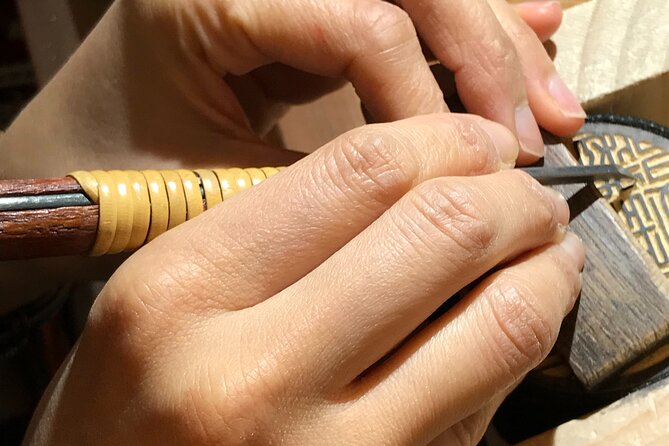
- Traditional work with modern equipment: Rough carving is machine-assisted, then the final details are completed by hand.
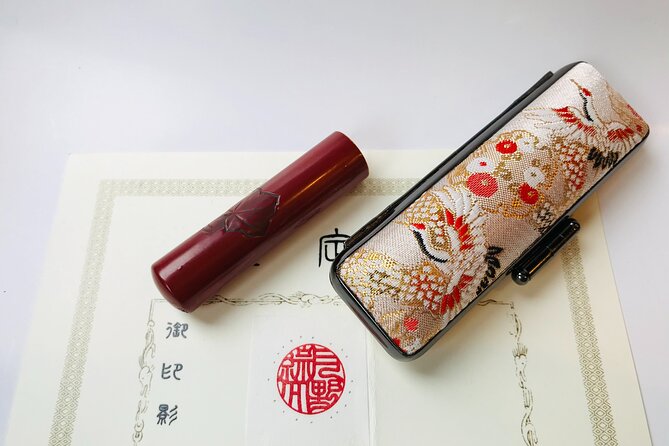
- The basic seal is included: The advertised package includes a Japanese boxwood Hanko, katakana engraving, and an original pouch.
- Pickup is later the same day: Choose an afternoon collection time, or request shipping for an extra fee.
- Upgrades cost extra: Horn, wood, gemstone materials, upgraded typefaces, cases, and red ink are not part of the base price.
Why a Hanko Makes a Better Souvenir Than Another Trinket
Kamakura is full of easy souvenirs, from sweets to temple goods. A Hanko gives you something different: a small object connected to Japanese writing, design, and daily custom. You are not simply buying a stamp with your name already printed on it. You help decide how your name will look.
In Japan, Hanko seals have long been used as personal marks. The workshop explains the difference between seal styles and their purposes, including the kind of katakana font recommended for an official-style seal. You will not leave with an official Japanese identity seal, of course, but you will understand why the shape and balance of the characters matter.
I find that useful because foreign names can look awkward when converted into Japanese characters. Here, the process includes help with writing your name in katakana and choosing characters that reflect your personality. That makes the finished piece feel considered rather than randomly transliterated.
The experience also gives you a souvenir you can use. You might stamp letters, notebooks, postcards, or personal stationery with it. The appeal is strongest if you enjoy Japanese calligraphy, printmaking, stationery, or small handmade objects.
More Kamakura Day Trips in Kamakura
- Tokyo: Kamakura & Enoshima Day Trip including Temple Tickets
★ 4.5 · 1,375 reviews - From Tokyo: Kamakura & Enoshima 1-Day Bus Tour
★ 4.5 · 189 reviews - Kamakura Historical Walking Tour with the Great Buddha
★ 5.0 · 129 reviews
Inside Kamakura HANKO Near Kamakura Station
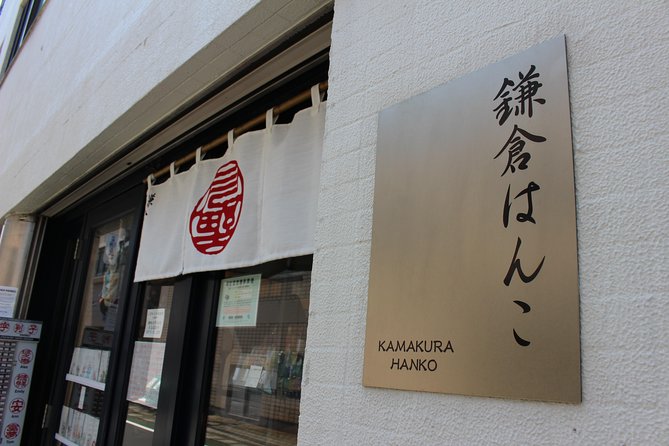
The meeting point is Kamakura seal shop Souvenir shop at 5-6 Onarimachi, a short walk south of Kamakura Station. Several participants found it less than five minutes from the station, which makes this an easy addition to a day built around central Kamakura.
That location matters. You do not need to arrange a separate taxi or trek far from the main station area. You can combine the workshop with Kamakura sightseeing, though the morning schedule and later pickup require some planning.
The activity ends back at the same meeting point. It is a private experience, so only your own group takes part. That setup suits couples, families, and small groups who want time to ask questions without competing with a room full of other people.
The shop is described as a souvenir shop, not a large studio attraction. Expect a focused craft session rather than a broad cultural show. The value comes from the conversation, decisions, and finished seal.
The First 45 Minutes: From Japanese Seal Culture to Your Name
The workshop begins with an explanation of Hanko history, culture, and the different kinds of seals. You learn that seals can vary in purpose, material, appearance, and ink color. The discussion gives context to choices that might otherwise feel like simple decoration.
The owner explains the process and answers questions throughout. One published account identifies the craftsman as Mitsuhiro, while owner responses are signed Tsukino, so the person leading your session may be presented under one of those names. In either case, the experience is built around direct instruction from the shop’s proprietor and craftsman rather than a detached guide.
Next comes the most personal part: writing your name in Japanese. The shop helps you select katakana characters and a suitable arrangement. You can discuss the look you want, from a more formal official-seal style to something with a more artistic feel, depending on the options available for your booking.
This is where you should ask questions. If you care about pronunciation, character meaning, or how the letters fit inside a round seal, say so. The workshop is short, but the private format gives you room to understand the choice before the engraving begins.
You then choose the seal type and font. The information provided recommends a katakana font suitable for official seals, but typeface upgrades may be available at an additional charge. Ask which font is included and what an upgrade changes before agreeing to one.
Choosing Material, Color, Case, and Ink
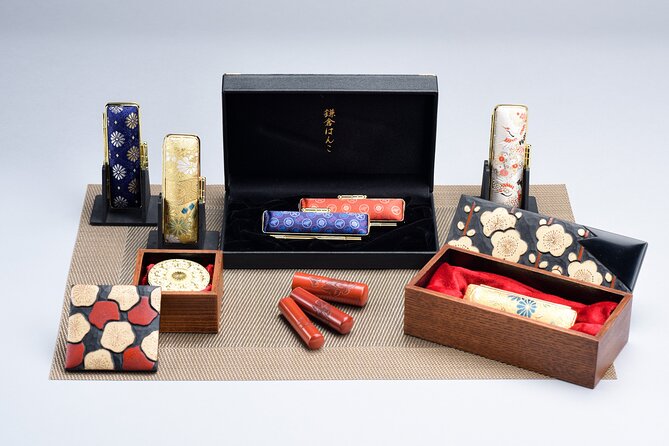
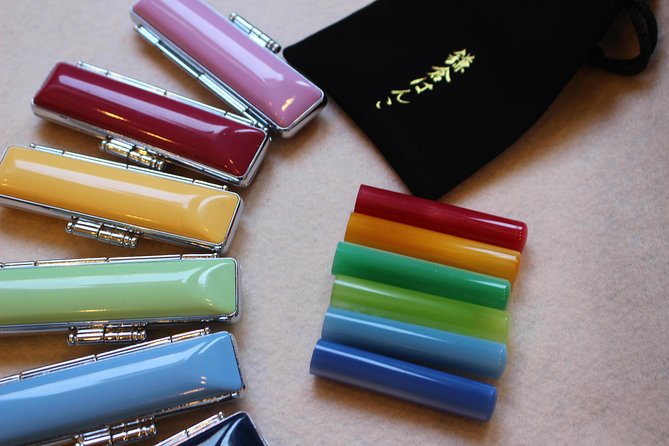
The standard materials and extras need careful attention because the package details are not perfectly consistent. The included-items section lists a Japanese boxwood Hanko, katakana engraving, and an original pouch. Elsewhere, the material choice is described as acrylic with a selection of colors, while horn and wood are listed as paid upgrades.
Because of that mismatch, confirm the exact base material when you book or at the shop. The practical point is simple: do not assume every attractive material is included in the $131.65 price.
Horn, wood, and gemstone options carry an upgrade fee according to the supplied details. One participant chose wood and paid extra, while another noted an additional charge for a kimono-fabric pouch. These extras can make the keepsake more distinctive, but they can also push the final cost above the advertised rate.
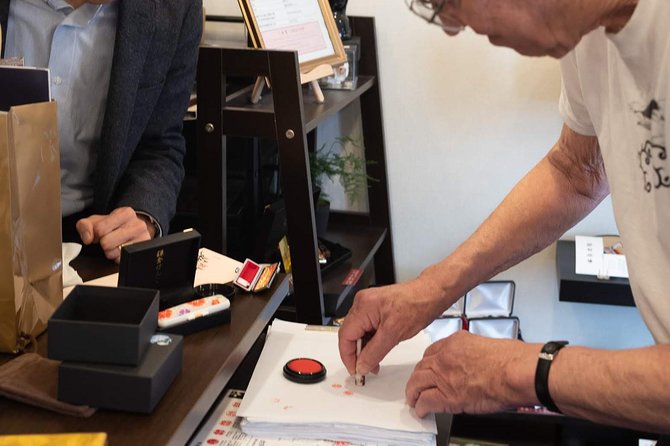
The Hanko case is sold separately. Red ink is also not included. You receive an original pouch with the base package, but if you want a hard case or a particular fabric cover, budget for that separately.
I appreciate the transparent choice, as long as you treat the base price as the starting point. You can keep the design simple and receive a meaningful souvenir without chasing every upgrade. Or you can spend more on material, typeface, case, or ink if the object itself matters to you.
Same city, a completely different kind of day:
- Kamakura Private Tour: Temples, Nature, and the Great Buddha
★ 5.0 · 121 reviews - Kamakura Walking Tour – The City of Shogun
★ 5.0 · 100 reviews - Kamakura 4hr Private Trip with Government-Licensed Guide
★ 5.0 · 58 reviews - When Emperors Reigned and Shoguns Ruled
★ 5.0 · 43 reviews
How the Seal Is Actually Made
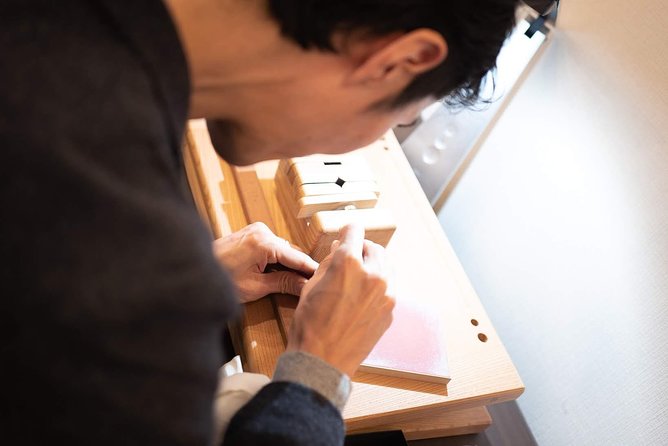
The engraving combines traditional handwork with modern precision. A machine handles the initial rough carving, which gives the craftsman a clean starting point. Skilled hands then complete the final touches.
That detail helps set expectations. This is not a workshop where you personally carve the entire seal from a blank block. You design the seal and learn about the craft, while the craftsman performs the engraving. The finished Hanko is therefore a professional piece rather than a rough class project.
The hand-finishing stage is also what gives the souvenir its craft value. Your name is individually carved in Japan, and the final result is intended as a small work of art. You can ask how the characters are balanced and how the chosen font affects the finished impression.
The shop describes the work as careful and traditional, but the process remains practical. The initial machine carving helps keep the service within a manageable time frame, while hand finishing preserves the character of handmade work.
Pickup, Shipping, and Planning Your Kamakura Day
The workshop itself lasts about 45 minutes, but the Hanko is not necessarily handed over immediately. You choose an afternoon pickup time on the day of the experience. One account describes collection after about two hours, with the shop delivering at the agreed time.
Plan to return to the same shop. That is easy if you are spending the day near Kamakura Station, but less convenient if you intend to move on to Enoshima, Yokohama, or Tokyo right after the morning session.
Shipping is available for an extra fee if you do not want to return. An account describes delivery to a hotel within one to two days without trouble, and the information also allows for shipping instead of pickup. The exact destination and price should be confirmed at the shop.
Please arrive punctually. The workshop requires preparation, and the morning-only schedule leaves less flexibility than a drop-in souvenir purchase. The best plan is to book this early in your Kamakura day, then visit other sights while the seal is being carved.
Kamakura’s station area makes the arrangement fairly workable. You can begin with the Hanko session, continue sightseeing, and return in the afternoon. Just keep your pickup time visible in your day plan.
Is $131.65 a Fair Price?
At $131.65 per person, this is not a cheap way to buy a name stamp. You can find inexpensive souvenirs in Japan for far less. The price makes sense only if you value the personal instruction, private setting, engraving, and finished object.
The package includes the Hanko, katakana engraving, and an original pouch. It also includes the time spent explaining Hanko culture, helping with your Japanese name, and guiding the design. The seal is individually finished in Japan rather than pulled from a shelf.
For a couple, the price can feel substantial because each person pays separately. For someone who collects stationery, studies Japanese culture, or wants a personal reminder of the trip, the cost is easier to justify. You are paying for a craft service and a keepsake, not just for a piece of plastic or wood.
The upgrade system deserves attention. Horn, wood, gemstone, upgraded typefaces, cases, and red ink are extra. If you want a fixed budget, stick with the included choices and ask for the final cost before adding anything.
The strong satisfaction rate and five-star score suggest that the experience delivers well on its main promise, but I would still judge the value by your interest in the object. If you want a fast, low-cost souvenir, skip it. If you want to understand the craft and leave with something made for you, the price is more defensible.
What the Best Parts Feel Like
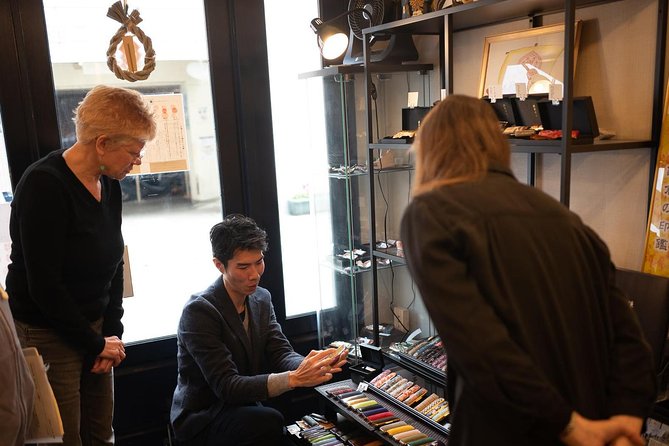
The strongest feature is the owner’s personal attention. The private setup means you can ask about seal types, materials, characters, ink colors, and fonts without rushing. The explanations are described as clear, patient, and detailed, and the proprietor is not presented as pushy about upgrades.
That last point matters. Optional materials and cases are offered, but the experience is designed so you can keep the basic package. You should feel free to ask what is included, compare the choices, and decline extras.
The craftsmanship is another major strength. The final seal is not merely printed with your name. It is individually engraved, with hand finishing after the machine-assisted rough carving. You can see why the finished Hanko has more emotional weight than an ordinary mass-produced souvenir.
The activity also works well across language backgrounds. The owner speaks English, and the workshop has been used by people writing names from different languages. Still, names can be tricky to transliterate, so take your time and make sure you approve the Japanese characters before the engraving starts.
Small Drawbacks to Keep in Mind
The short duration is both a benefit and a limit. Forty-five minutes is easy to fit into a sightseeing day, but it does not allow for an extended lesson in Japanese calligraphy or a full hands-on carving course.
The morning-only availability can be inconvenient. If you arrive in Kamakura late, you may not be able to join the workshop that day. The later pickup adds another scheduling duty, though shipping can solve that problem for an extra fee.
The base package also leaves some common accessories out. A case and red ink are separate purchases, and premium materials or typefaces cost more. The included pouch is useful, but you may want a case if you plan to carry the seal regularly.
Finally, clarify the material before you begin. The supplied information describes both Japanese boxwood as included and acrylic as the standard material. That may reflect different package versions, but you should ask the shop to confirm the current choice and any upgrade fee.
Who Should Book This Kamakura Activity?
I would recommend it most strongly to you if you enjoy personal souvenirs, Japanese writing, traditional crafts, or small design decisions. It is especially suitable for couples and small private groups who want a calm activity with plenty of direct conversation.
It also suits a repeat visitor who has already seen Kamakura’s major temples and wants a more unusual cultural stop. Families can take part as well, provided everyone can work within the morning schedule and the group is comfortable with a focused craft explanation.
You may want to pass if your schedule is too tight to return in the afternoon, or if you only want a quick souvenir with no extra decisions. The price is hard to justify if you do not care about the meaning of the name, the material, or the engraving process.
Free cancellation is available up to 24 hours before the start time. Changes or cancellations made inside that window are not accepted for a refund, so keep the local cutoff in mind.
Should You Book Your Own Hanko?
Book this if you want a personal object with a clear connection to Japanese culture. The private instruction, help with katakana, and hand-finished engraving give the experience more substance than a standard shopping stop.
My advice is to confirm three details before you pay: the exact included material, the available pickup time, and the price of any upgrades you might want. If those terms suit your day, this is a thoughtful Kamakura souvenir that you can continue using long after your Japan trip.
FAQ
Where does the Hanko activity take place?
It takes place at Kamakura seal shop Souvenir shop, located at 5-6 Onarimachi, Kamakura, Kanagawa 248-0012, Japan.
How long does the workshop last?
The activity lasts approximately 45 minutes.
Is the activity private?
Yes. Only your own group participates in the activity.
When is the workshop available?
The event is available in the morning. You should arrive punctually because the workshop requires preparation.
When do I receive the finished Hanko?
You choose a pickup time in the afternoon on the day of the experience. Shipping is also available if you request it instead of pickup.
What is included in the basic price?
The included items are a Hanko, Japanese boxwood according to the included-items details, katakana engraving, and an original pouch.
Is a Hanko case included?
No. The Hanko case is sold separately.
Is red ink included?
No. Red ink is not included in the activity price.
Do premium materials cost extra?
Yes. Horn, wood, and gemstone materials require an additional fee. Typeface upgrades also cost extra.
Can I cancel for a full refund?
Yes, if you cancel at least 24 hours before the experience start time. Cancellations or changes made less than 24 hours before the start time are not refunded or accepted.
Just added around Kamakura
- When Emperors Reigned and Shoguns Ruled★ 5.0 · 43 reviews
- First time in Kamakura? Enjoy a Tour of All Must-sees!★ 5.0 · 15 reviews
- Kamakura 4hr Private Trip with Government-Licensed Guide★ 5.0 · 58 reviews
- Kamakura Walking Tour – The City of Shogun★ 5.0 · 100 reviews
- Kamakura Tours Half Day or Full Day Tours with a local guide.★ 5.0 · 12 reviews
- Kamakura Bamboo Forest and Great Buddha Private Tour★ 5.0 · 12 reviews
- Exciting Kamakura – One Day Tour from Tokyo★ 5.0 · 40 reviews
- Buddha, Bamboo & Zen – Bespoke Kamakura Private Walking Tours★ 5.0 · 25 reviews
Kamakura Day Trips, compared.
Kamakura & Enoshima Day Trip including Temple Tickets
Read our review →
Mt. Fuji, Kamakura, Big Buddha, & Lake Ashi Day Trip
Read our review →
Kamakura Historical Walking Tour with the Great Buddha
Read our review →
Kamakura Private Tour: Temples, Nature, and the Great Buddha
Read our review →
Sea of Mount Fuji, Hakone Ropeway, Ōwakudani, Enoshima
Read our review →
Kamakura 8 hr Private Walking Tour with Licensed Guide from Tokyo
Read our review →Browse the lists this tour appears in