
REVIEW · WORKSHOPS
Japanese flower arranging (Ikebana) Experience/Workshop in Tokyo
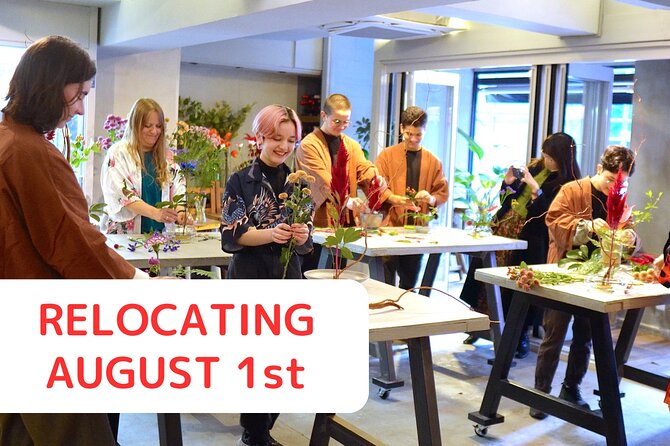
Ikebana turns a handful of flowers into a small lesson in balance, space, and attention. In this 90-minute Tokyo workshop, you work inside the Hanadouraku florist, surrounded by blooms and foliage, with a florist guiding your choices rather than forcing you into a rigid pattern.
I like the personal help from instructors such as Aki and Ruby, and I like that the class leaves room for playful self-expression. You also receive photos taken during the activity, a useful keepsake when your arrangement may not survive the trip home.
The main consideration is the extra cost if you want to buy the container or kenzan used for your arrangement. At $100 per person, this is not a bargain activity, but it can make sense if you want a hands-on Japanese cultural experience instead of another quick photo stop.
In This Review
- Key points at a glance
- Inside Hanadouraku, a calmer side of Tokyo
- What the 90-minute lesson covers
- Learning with Aki and Ruby
- Why the free-form approach works
- The flowers, tools, and extra purchases
- The final arrangement and the photo keepsake
- Is $100 a fair price?
- Who should book this workshop?
- Cancellation and timing details
- Should you book it?
- FAQ
- How long does the ikebana workshop last?
- Where does the workshop take place?
- What is included in the price?
- Are containers included?
- Is the kenzan included?
- Is this workshop suitable for children and families?
- How many people can join the activity?
- Are pets allowed?
- What is the cancellation policy?
Key points at a glance
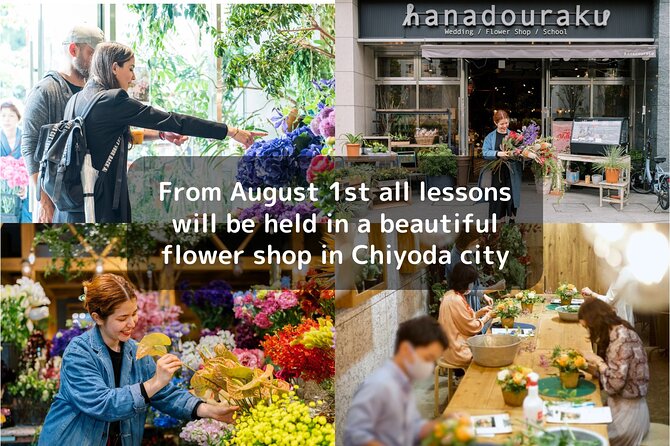
- A florist-led lesson at Hanadouraku: Work among real flowers and foliage in a Tokyo florist rather than in a plain classroom.
- A relaxed approach to ikebana: Learn the ideas behind asymmetry, flower symbolism, and mindful arranging without being tied to strict rules.
- Personal coaching from Aki or Ruby: Ask for help as your arrangement develops, or work more independently when you find your rhythm.
- A compact 90-minute activity: The short format fits neatly into a busy Tokyo day.
- Flowers and tools are included: You can begin creating without bringing equipment, though containers and kenzan cost extra if purchased.
- Photos are shared afterward: You get pictures of yourself and your group at work, not just a finished arrangement.
Inside Hanadouraku, a calmer side of Tokyo
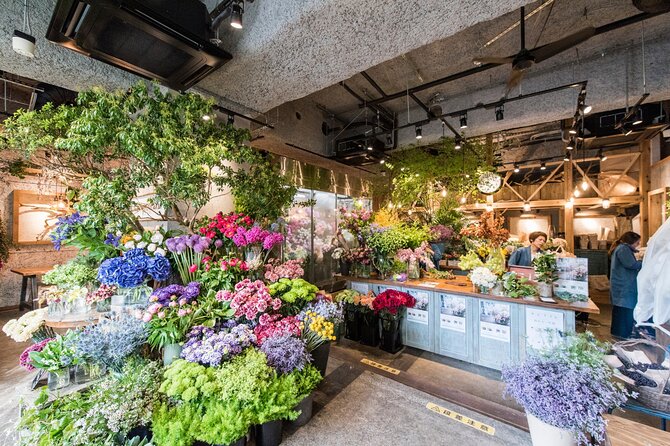
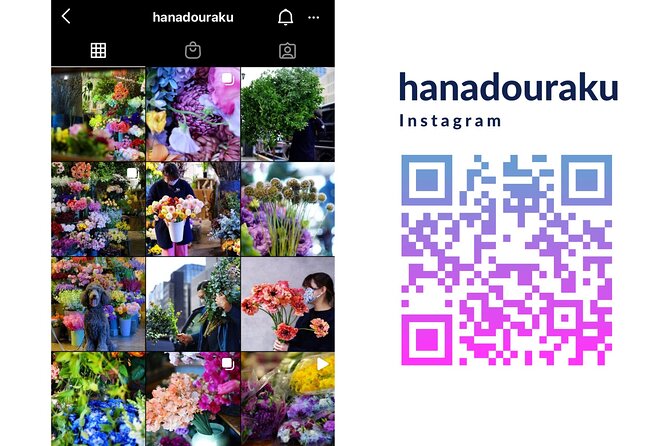
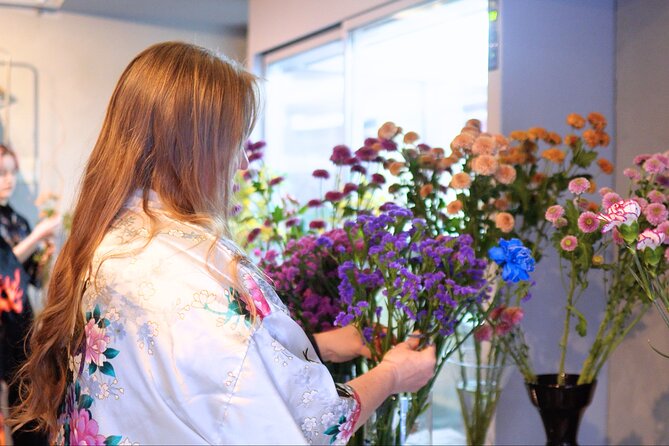
The workshop begins at 6-chome Kojimachi, in Tokyo’s Chiyoda City, at postal code 102-0083. The activity takes place at Hanadouraku, a florist filled with cut flowers, foliage, and arranging materials. That setting matters. You are not simply being handed a prepared kit. You are making choices in a working flower space.
This gives the class a more genuine feel. The flowers are the center of the lesson, and the surrounding displays offer ideas without turning the workshop into a formal museum demonstration. You may find yourself paying attention to details that are easy to miss in a bouquet: the bend of a stem, the open space around a bloom, or the way one branch changes the shape of the whole arrangement.
The meeting point is also the end point, which keeps the logistics simple. The activity is near public transportation, and confirmation arrives when you book. No separate return transfer is involved.
A few more Tokyo trips to weigh up
- Sushi Making Tokyo Roll and Authentic Japanese Sushi Class
★ 5.0 · 3,971 reviews - Tokyo: Roll and Authentic Sushi Making Class in Asakusa
★ 4.9 · 1,957 reviews - Tokyo Shinjuku Chopsticks Making Class
★ 5.0 · 1,763 reviews
What the 90-minute lesson covers
The workshop starts with an introduction to ikebana and the place flowers have held in human life. You learn some of the tradition behind Japanese flower arranging, along with ideas such as flower symbolism and the importance of asymmetry.
That background gives the practical work more meaning. You are not merely trimming stems until the display looks attractive. You begin to see why a design may leave open space, why a crooked branch can be useful, and why a flower’s natural character should not always be hidden.
The lesson does not focus on strict, precise rules. Instead, the instructor uses ikebana as a starting point for personal expression. This is a good fit if the thought of formal art instruction makes you nervous. You can ask for direction, but you are also encouraged to make decisions and see what happens.
The class is hands-on from there. Flowers and the needed tools are provided, and you work toward your own arrangement. Some participants have created two arrangements during the session, depending on the pace of the class and the amount of guidance they want.
Do not expect the work to be as easy as placing flowers in a vase. The challenge is part of the appeal. A design can look simple, but getting the angles, spacing, and balance right takes attention. The instructor steps in with suggestions, then lets you adjust the arrangement yourself.
Learning with Aki and Ruby
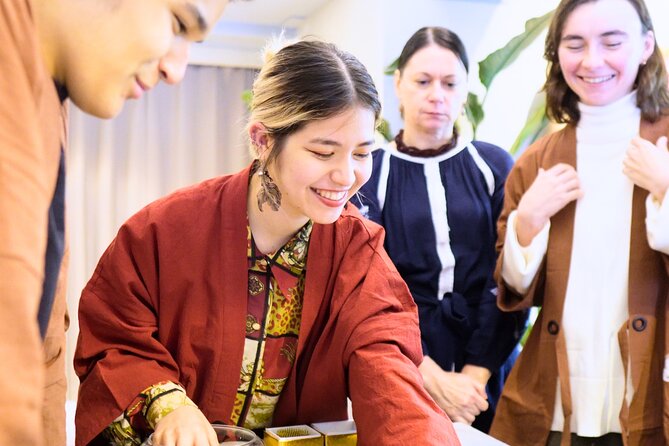
The strongest part of this activity is the teaching. Aki is described as patient and helpful, with clear English and a talent for explaining both the flowers and the arranging process. Her guidance includes how to use the kenzan, how to think about asymmetry, and how to connect with each bloom rather than treating the flowers as identical pieces.
Ruby brings a similar mix of floral skill and relaxed encouragement. Her sessions include a wide choice of flowers and other materials, with plenty of coaching available if you want it. If you prefer to experiment alone for a few minutes, you are not left without room to do so.
The instructors also explain what different flowers can symbolize. That small detail gives you something to remember after the class. Instead of recalling only the shape of your arrangement, you may remember why a particular flower appealed to you or what its form contributed to the design.
English ability is specifically praised in the provided information for both Aki and Ruby. Still, this is an art lesson, not a lecture, so much of the process is visual and practical. The instructor can demonstrate a technique, point to a stem, and show how a small change affects the composition.
Why the free-form approach works
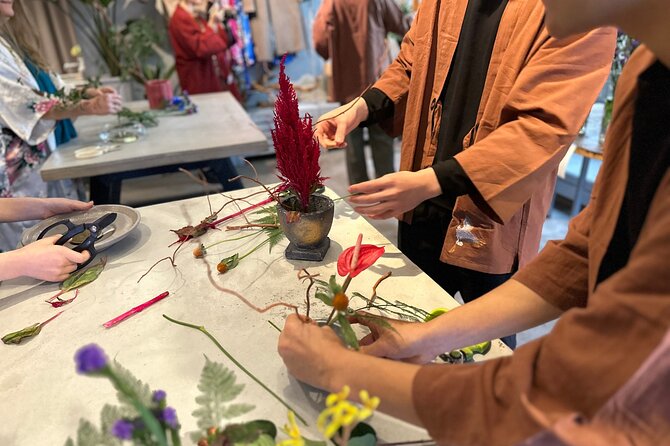
Traditional ikebana can seem intimidating from the outside. It has established schools, forms, tools, and rules. This workshop takes a softer entry point. You learn the basic spirit of the art while being allowed to make an arrangement that feels like your own.
That makes the activity suitable for beginners who want a first look rather than a formal qualification. You do not need previous flower-arranging experience. You also do not need to arrive with a strong artistic plan. The flowers, the instructor’s advice, and the physical process give you enough to begin.
I especially like the focus on asymmetry. Many Western flower arrangements aim for fullness and evenness. Ikebana often values tension, empty space, and an intentional imbalance. That difference gives the workshop a clear Japanese character, even when the lesson remains playful.
It is also a useful pause in a packed Tokyo schedule. You sit down, handle flowers, and concentrate on a small task. For 90 minutes, your attention shifts away from station signs, crowded streets, shopping lists, and temple timetables.
Same city, a completely different kind of day:
- Mt Fuji and Hakone 1-Day Bus Tour Return by Bullet Train
★ 5.0 · 26,383 reviews - 1-Day Tokyo Bus Tour
★ 5.0 · 14,250 reviews - Tokyo: TOKYO SKYTREE® Admission ticket
★ 4.5 · 11,192 reviews - Tokyo: teamLab Planets TOKYO Digital Art Museum Entry Ticket
★ 4.6 · 9,779 reviews
The flowers, tools, and extra purchases
The price includes the flowers used in your arrangement and the ikebana tools needed during the lesson. You do not have to bring your own scissors or other equipment.
The container is not included. A kenzan, the small spiked base that holds stems in place, is also available for purchase but is not part of the listed price. Ask about these items if you hope to continue arranging at your accommodation or at home.
This extra purchase can be worthwhile, especially if you love your finished design and want to keep it on display. One participant bought the vases and successfully transported the arrangements back to an Airbnb for the rest of the stay. That is a practical reminder that the class can extend beyond the workshop itself.
You should not assume that every arrangement will be easy to carry. The supplied information confirms that containers are available, but it does not specify packaging or transport arrangements. If you buy one, ask the instructor how best to protect the flowers and container before leaving.
The final arrangement and the photo keepsake
The class includes photos taken during the activity and shared afterward. These pictures capture the creative process, including you working with the flowers and your group at the table. That is more useful than a standard posed souvenir image because it shows what you actually did.
Your finished arrangement is the main physical memento, but flowers are temporary by nature. The photos preserve the shape of the experience after the blooms fade. If you want to take the arrangement with you, purchasing a container may make that easier, though transport details are not specified.
The activity ends back at the meeting point. That makes it simple to continue your day in central Tokyo, provided you have not bought more floral material than you can comfortably carry.
Is $100 a fair price?
At $100 per person, this is a premium short activity. You are paying more than you would for a self-guided visit to a florist or a casual craft session. The price becomes easier to justify when you value personal instruction, included flowers, access to tools, and the chance to create something yourself.
The small-group format is important here. The maximum is 15 people, and some sessions may be much smaller. One person had a one-on-one workshop and had plenty of time to work on an arrangement. You should not count on having the room to yourself, but the format can allow more direct help than a large group demonstration.
The 4.9 out of 5 rating from 52 evaluations and 98 percent recommendation figure suggest a very strong level of satisfaction. The praise centers on the same practical strengths: kind instructors, clear direction, good English, attractive flowers, and a relaxed mood.
I would see the cost as fair for a special occasion, a first visit to Japan, or a day when you want a quieter activity. It is less compelling if you are mainly looking for a low-cost souvenir or a quick introduction with no interest in making an arrangement.
Who should book this workshop?
This experience suits solo visitors, couples, families, and small groups. Children and families are welcome, and the free-form approach means younger participants do not need to master formal rules before enjoying the flowers.
It also works well for a short Tokyo stay. The activity lasts about an hour and a half, so it does not take over an entire morning or afternoon. You can fit it between other plans more easily than a long cultural class.
Book it if you like crafts, flowers, Japanese design, or activities that give you something to do with your hands. It is also a good choice if you want a break from sightseeing and prefer a personal encounter with a Japanese art form.
You may want to skip it if you dislike guided creative work, have no interest in flowers, or want a highly traditional ikebana lesson with formal instruction and strict structure. This workshop teaches the ideas of ikebana, but it deliberately favors freedom over ceremony.
Pets are welcome, and service animals are allowed. Most people can participate, and the activity is near public transportation. The available information does not give detailed step-free access information, so contact the provider if you need specific accessibility arrangements.
Cancellation and timing details
You can cancel up to 24 hours before the local start time for a full refund. Changes or cancellations made less than 24 hours before the start are not accepted for a refund.
The experience requires a minimum number of participants. If that minimum is not met and the activity is canceled, you will be offered another date or experience, or you will receive a full refund.
The mobile ticket is convenient for a short activity. Keep the confirmation available on your phone, and allow enough time to reach the Kojimachi meeting point. Since the workshop returns to the same location, you do not need to plan around a distant drop-off.
Should you book it?
I would book this ikebana workshop if you want a thoughtful, creative pause in Tokyo and are willing to pay for individual attention. Aki and Ruby bring floral skill, clear explanations, and a friendly teaching style, while the flowers and photos add real value to the session.
The best reason to go is not simply that you leave with flowers. It is that you learn to look at them differently, with more interest in line, space, shape, and symbolism. Just remember that the container and kenzan cost extra, and that the lesson is intentionally relaxed rather than strictly traditional.
FAQ
How long does the ikebana workshop last?
The activity lasts approximately one hour and 30 minutes.
Where does the workshop take place?
It starts and ends at Japan, 102-0083 Tokyo, Chiyoda City, Kōjimachi, 6-chōme 46. The workshop takes place at the Hanadouraku florist.
What is included in the price?
The price includes use of ikebana tools, the flowers used in your arrangement, and photos taken during the activity that are shared afterward.
Are containers included?
No. Containers used for the arrangement are not included in the price, but they are available to purchase.
Is the kenzan included?
No. The kenzan used to hold the stems is not included in the price, but it is available for purchase.
Is this workshop suitable for children and families?
Yes. Children and families are welcome, and the lesson uses a free and playful approach rather than strict ikebana rules.
How many people can join the activity?
The maximum group size is 15 participants. The actual group may be smaller.
Are pets allowed?
Yes. Pets are welcome, and service animals are allowed.
What is the cancellation policy?
You can cancel at least 24 hours before the local start time for a full refund. Cancellations or changes made less than 24 hours before the start are not accepted for a refund.
Just added around Tokyo
- Private Memorable Tokyo Tour with English Speaking Driver★ 5.0 · 30 reviews
- Private Sightseeing to Mt Fuji and Hakone with English Driver★ 5.0 · 51 reviews
- Tokyo Photography Masterclass – Private Photography Lesson★ 5.0 · 25 reviews
- Private Tokyo Custom Full-Day Tour by Chartered Vehicle★ 5.0 · 16 reviews
- Private Mt. Fuji Day Trip from Tokyo with English-Speaking Driver★ 5.0 · 33 reviews
- 4 Day Tour – Mount. Fuji, Tokyo, Hakone, Kamakura and Yokohama★ 5.0 · 19 reviews
- Private Unforgettable Mt Fuji Tour with English Speaking Driver★ 5.0 · 142 reviews
- Private Tokyo Food Tour – A Journey Through Time Through Food★ 5.0 · 36 reviews
Workshops, compared.
Sushi Making Tokyo Roll and Authentic Japanese Sushi Class
Read our review →

Roll and Authentic Sushi Making Class in Asakusa
Read our review →
Ramen Cooking Class at Ramen Factory in Kyoto
Read our review →
Sushi Making Class in a Happi Coat near a Famous Spot
Read our review →

Sushi Making Osaka Roll and Authentic Japanese Sushi Class
Read our review →
Tokyo Sushi Making Class in Tsukiji with Professional Chef
Read our review →Browse the lists this tour appears in