
REVIEW · MIYAJIMA ISLAND TOURS
Hiroshima & Miyajima Island Private Tour: History & Culture
The most moving part of this six-hour tour is its change of mood: you begin with Hiroshima’s painful wartime story at Peace Park and finish among Miyajima’s deer, shrine buildings, sea views, and steaming local food. I like the personal explanations from guides such as Nabeel, Yasmin, Malek, Abdeel, and Samy, and I like that the day joins two major sights without making you plan every train and ferry connection yourself.
I also like the food guidance, especially the chance to seek out oysters, okonomiyaki, and momiji manju rather than simply march from one landmark to the next. The main consideration is time: six hours is enough for a well-shaped introduction, but not enough for a slow museum visit, a long meal, and a full exploration of Miyajima’s upper trails.
In This Review
- Key points to know before booking
- Why this Hiroshima and Miyajima pairing works
- Peace Memorial Museum: a serious 40-minute visit
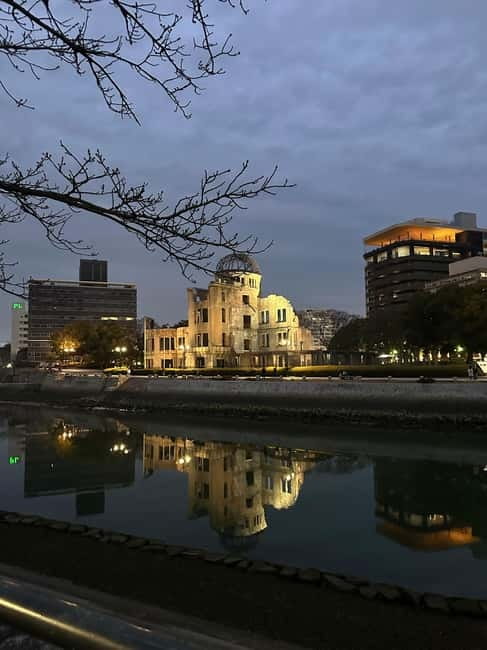
- Peace Memorial Park and the A-Bomb Dome
- The train and ferry to Miyajima
- The floating torii gate and Itsukushima Shrine
- Daisho-in: the quieter Miyajima stop
- Deer, food, and Omotesando Shopping Street
- The return route and drop-off choices
- Is $69 a good price for six hours?
- Who should book this tour?
- Should you book it?
- FAQ
- How long does the Hiroshima and Miyajima tour last?
- Is the Peace Memorial Museum entrance included?
- Is food included in the price?
- Does the tour provide private transportation?
- Where can I meet the guide?
- Can I be picked up at my accommodation?
- Is the tour suitable for wheelchair users?
- What should I bring?
Key points to know before booking
- A thoughtful start at Peace Park: The guide explains the A-Bomb Dome, memorial grounds, and Hiroshima’s past with care and context.
- Museum admission is included: You receive an entrance ticket to the Hiroshima Peace Memorial Museum, with about 40 minutes set aside inside.
- Two major Hiroshima sights in one day: Public train and ferry rides connect the city with Miyajima Island.
- Miyajima is more than the torii gate: The route includes Itsukushima Shrine, Daisho-in, deer, and Omotesando Shopping Street.
- A private pace helps families: Guides have adjusted timing for children, teenagers, late cruise arrivals, and different interests.
- Food is part of the local experience: Plan to buy your own oysters, okonomiyaki, drinks, or momiji manju along the way.
Why this Hiroshima and Miyajima pairing works
Hiroshima and Miyajima offer very different experiences, and that is the strength of this tour. Peace Memorial Park asks you to slow down and think. Miyajima gives you a quieter setting with sacred buildings, water, forested hills, and free-roaming deer.
On your own, it is possible to visit both places. You would need to work out the city meeting point, train ride, ferry connection, shrine hours, museum timing, and return route. A private guide gives the day a human thread. You are not simply checking off the A-Bomb Dome and Itsukushima Shrine. You can ask questions, adjust the pace, and get help deciding where to eat.
The English-speaking guides are a major part of the experience. The named guides who have led this tour include Nabeel, Yasmin, Malek, Abdeel, and Samy. The specific guide depends on availability, so you should not book expecting one particular person unless the provider confirms it.
More miyajima island tours in Hiroshima:
- Peaceful Hiroshima & Miyajima UNESCO 1 Day Bus Tour
★ 5.0 · 5,309 reviews - Hiroshima: Hiroshima and Miyajima UNESCO Sites 1-Day Tour
★ 4.9 · 2,330 reviews - Hiroshima / Miyajima Full-day Private Tour with Government Licensed Guide
★ 5.0 · 1,298 reviews
Peace Memorial Museum: a serious 40-minute visit
The day usually begins at the Hiroshima Peace Memorial Museum. About 40 minutes is allowed for a guided visit, and the admission ticket is included.
This is not a light sightseeing stop. The museum presents the human cost of the atomic bombing through personal belongings, photographs, written accounts, and historical displays. Some material is upsetting, and the short visit means you will need to keep moving rather than study every display in detail.
That limited time can be useful. You get a clear introduction without allowing the museum to consume the whole day, especially if Miyajima is an important reason for booking. Still, if you want to read every panel carefully, you may find 40 minutes too short. Tell your guide early if the museum is your main priority.
The guide’s role matters here. A good explanation can help you place the exhibits in context without turning the visit into a lecture. Nabeel has been praised for explaining the bombing and local history in clear English, while Yasmin and Abdeel have also been described as respectful and attentive guides.
Museum hours can affect the plan. One tour party found the museum closed and received extra historical explanation from the guide instead. That is a useful reminder to confirm opening arrangements when you book, particularly around holidays or special closures.
Peace Memorial Park and the A-Bomb Dome
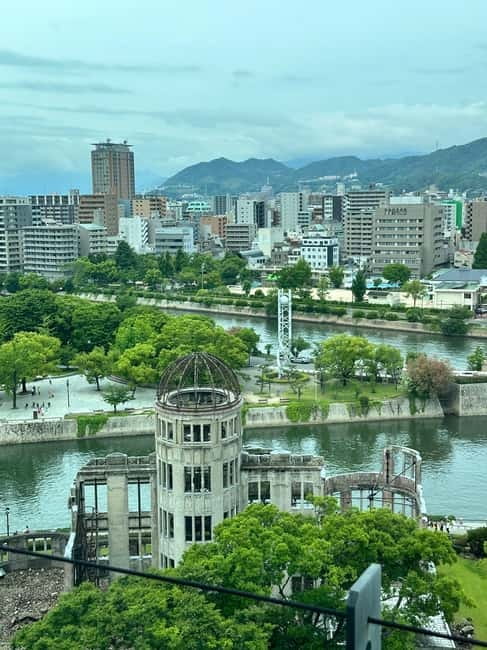
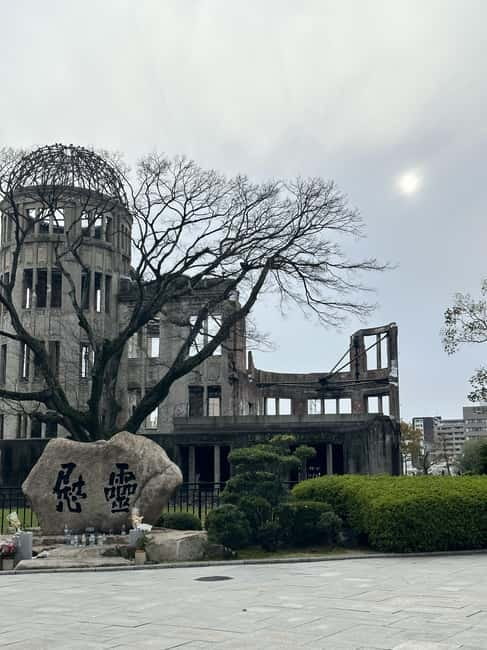
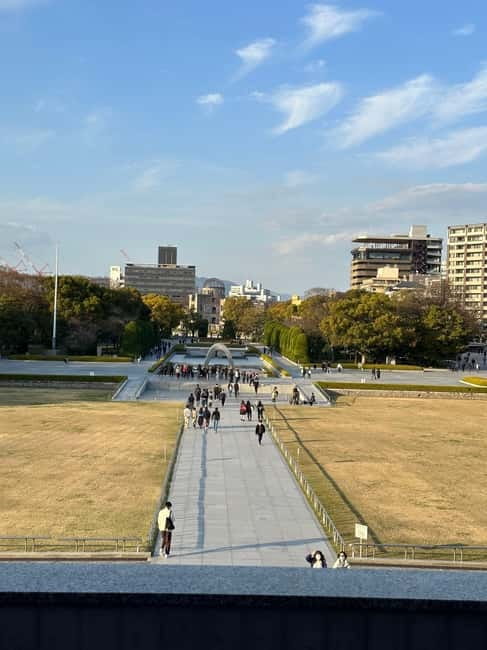
After the museum, you spend about 50 minutes walking through Peace Memorial Park, followed by roughly 10 minutes at the Atomic Bomb Dome. These are separate stops, but they work best together.
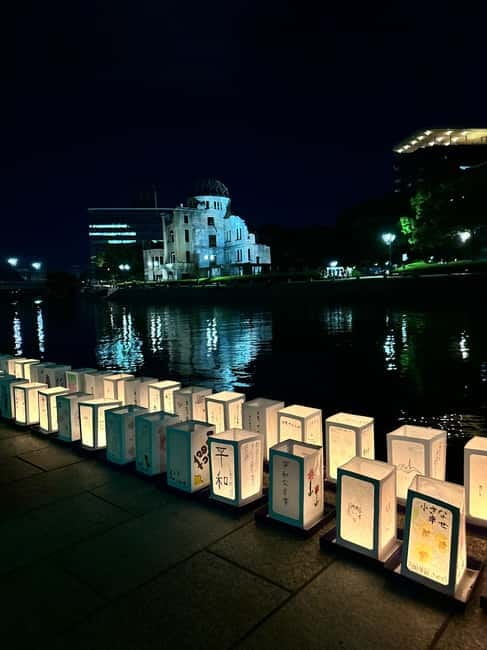
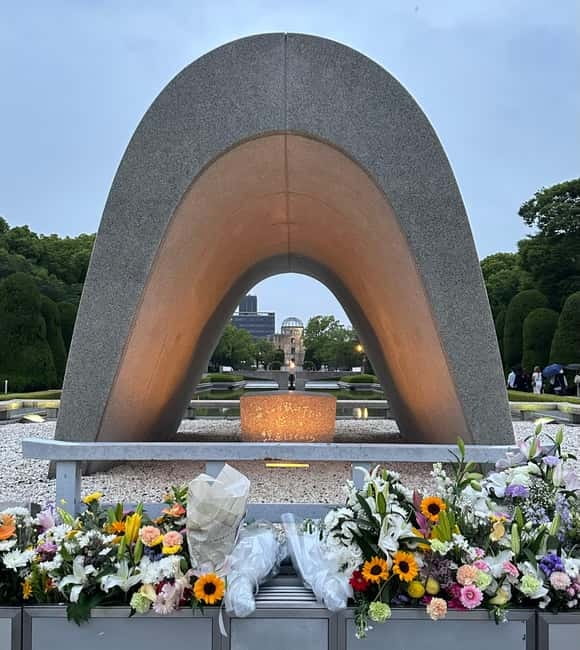
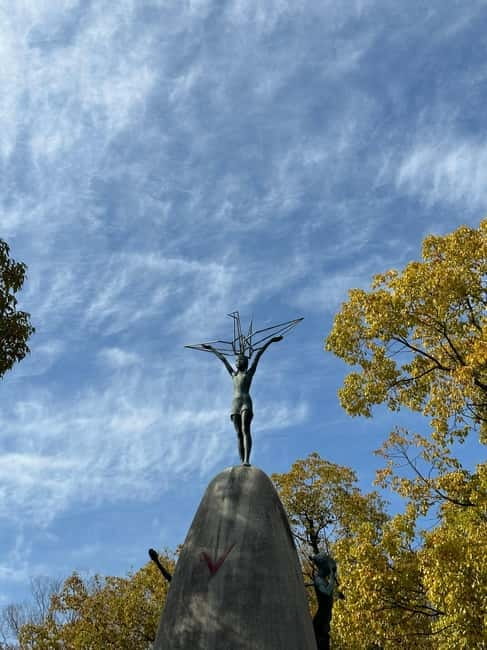
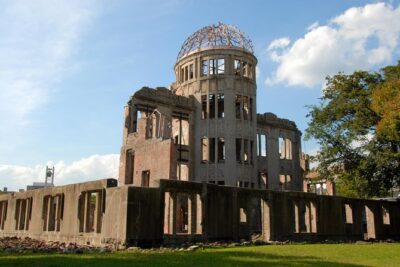
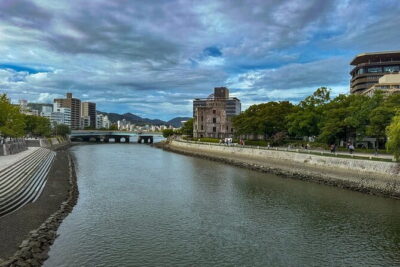
The park is open and quiet, with memorials spread across the grounds. Your guide can explain why the site was created, how Hiroshima remembers the victims, and how the city presents its message of peace. The A-Bomb Dome then gives the history a physical focus. Its damaged structure remains close to the river, a stark reminder of the destruction in August 1945.
I would not rush this section. The value is not in collecting photographs. It is in hearing the stories and understanding how ordinary buildings, families, and neighborhoods were affected. The guides are expected to handle this subject with care, and the strongest feedback about this experience centers on its respectful tone.
For families with teenagers, this can be a useful educational visit. Parents should prepare younger children for difficult subject matter. The private format lets you ask for a simpler explanation, pause when needed, or spend more time at a memorial that matters to your group.
The train and ferry to Miyajima
The route then shifts from the city to Miyajima. The planned train ride takes about 35 minutes, followed by a ferry ride of around 10 minutes.
This is not private transportation. The tour uses the regular train and ferry route, so you will be moving through public spaces and should expect the usual station and boarding process. A guide is especially useful here because you do not have to keep checking maps while also watching the clock.
The change of scene is part of the pleasure. After the solemn first half, the ferry gives you a short reset before the island portion begins. You get the first broad views of the water and the island as you approach.
Because transport is woven into a six-hour schedule, delays can reduce your time at the stops. This is another reason to wear comfortable shoes and keep your belongings easy to carry. The tour does not provide private car pickup or private transportation.
A few more Hiroshima trips to weigh up
- Hiroshima Historical Walking Tour – Why A-Bomb was Dropped
★ 4.8 · 893 reviews - Hiroshima Peace (Heiwa) Walking Tour at World Heritage Sites
★ 5.0 · 872 reviews - Miyajima Half-day Trip Historical Walking Tour
★ 5.0 · 284 reviews - Hiroshima: History of Hiroshima Group Walking Tour
★ 4.8 · 266 reviews
The floating torii gate and Itsukushima Shrine
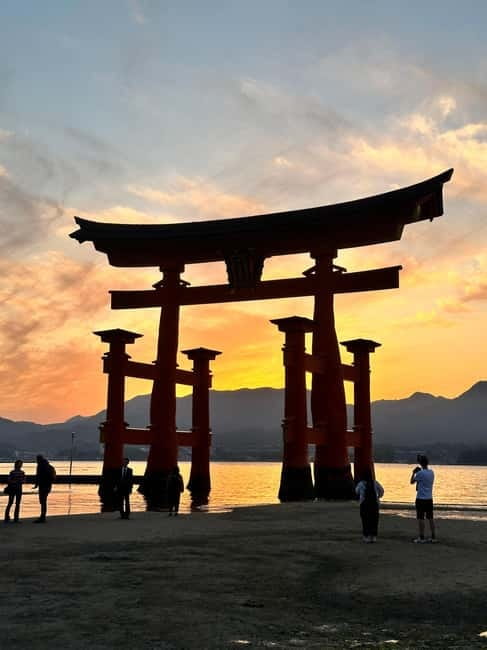
On Miyajima, the route includes about 20 minutes at the floating torii gate and another 20 minutes at Itsukushima Shrine. The famous torii is associated with the island’s sacred setting and is one of Hiroshima’s most recognizable sights.
The appearance of the gate depends on the tide and conditions. The tour information does not promise a particular water level, so you should treat the torii as a changing view rather than a fixed photo setup. Your guide can explain the relationship between the gate, the shrine, and the island’s religious importance.
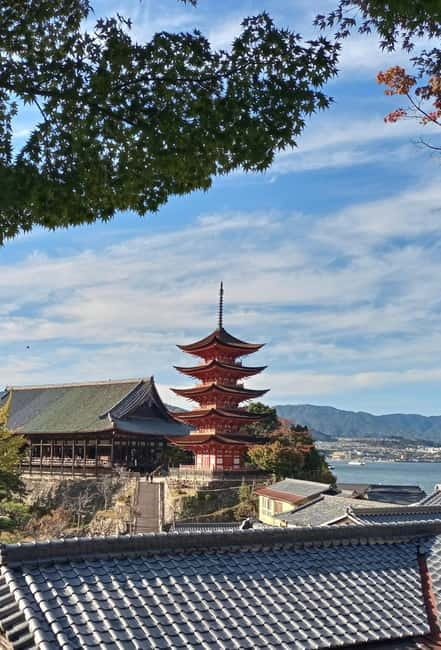
Itsukushima Shrine is the main cultural stop on Miyajima. Its buildings and walkways create a sharp contrast with the Peace Park memorials. The visit is fairly short, which suits a first look but leaves little room for lingering over every architectural detail.
If you want a quiet shrine visit, the schedule may feel brisk. If your priority is seeing both Hiroshima and Miyajima in one day, the timing is sensible. The private format gives you a chance to tell the guide if you would rather spend less time shopping and more time at the shrine.
Daisho-in: the quieter Miyajima stop
The tour allows about 40 minutes at Daisho-in, a Buddhist temple on Miyajima. This may be the most rewarding stop for visitors who want something beyond the island’s most photographed sight.
Daisho-in adds a different religious setting to the shrine visit. The guide can explain what you are seeing and point out details that are easy to pass without local help. Forty minutes gives you time to walk around, take in the atmosphere, and ask questions without turning the visit into a rushed photo stop.
The route is not only about famous landmarks. This temple is one of the places where the guide’s local knowledge has real value. You might otherwise spend your island visit at the torii gate and shopping street, missing a more reflective corner of Miyajima.
You should still expect walking and some uneven ground. Wheelchair accessibility is listed for the activity, but the practical experience at each temple area can vary. If anyone in your group has mobility concerns, discuss the route with the provider before booking.
Deer, food, and Omotesando Shopping Street
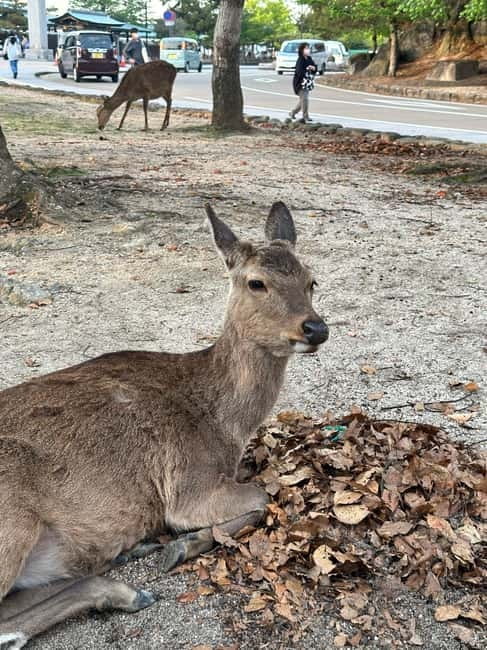
Miyajima’s deer wander around the island and are one of its most cheerful distractions. You can see them near the walking route and shopping areas. They are accustomed to people, but you should follow local instructions and avoid treating them like pets.
The final island portion includes about 30 minutes on Omotesando Shopping Street. This is the place to browse food stalls, small shops, and island specialties. It is also where the tour’s food angle becomes practical.
The guide may point you toward fresh oysters, sizzling okonomiyaki, or momiji manju, a maple-leaf-shaped sweet associated with the region. Food and drinks are not included, so keep cash or a payment method ready for anything you want to eat.
I like this part because it adds everyday Hiroshima to a day otherwise shaped by memorials and temples. The drawback is that 30 minutes is not a long shopping break. You may have time for a snack and a quick look, but not a relaxed meal and serious souvenir shopping.
If food is a major goal, say so at the start. The guide can adjust the balance where possible. Previous guide-led days have included several local specialties, and the private setup makes that kind of request easier than it would be in a large group.
The return route and drop-off choices
After the shopping street, you walk for about 15 minutes, take a 10-minute ferry, and then ride the train for roughly 25 minutes. The tour can finish at one of four listed locations:
- Hiroshima Station Shinkansen Exit
- Itsukaichi Station South Entrance
- The taxi stand at Peace Memorial Park
- Hiroshima Port Cruise Terminal
The Hiroshima Station meeting point is at the Shinkansen Exit on the second floor, in front of Starbucks. The guide contacts you the day before to confirm the exact meeting point, which is useful because the tour also allows other starting options.
Cruise passengers should pay close attention to timing. One guide kept in contact with a party delayed by immigration after disembarkation, helping them reach the meeting point. That does not remove the risk of a late start, but it shows why clear communication matters on a port day.
Accommodation pickup is available only when your lodging is within a reasonable walking distance. There is no car pickup, so do not assume the guide will collect you from a distant hotel.
Is $69 a good price for six hours?
At $69 per person, this tour is priced attractively for a private or small-group day that includes a guide and the Peace Memorial Museum entrance ticket. The value comes from combining two major destinations and having someone manage the route, explain the difficult history, and respond to your interests.
The price does not cover food or drinks. Private transportation is also not provided, and the route uses train and ferry services. Check the booking details carefully to see how transport fares are handled for your selected option, then budget separately for meals, snacks, and shopping.
For one person or a couple, a private tour can cost more than joining a large group, but the per-person rate is still modest. For a family or small party, the ability to adjust the pace can make the cost easier to justify, especially if young children or teenagers are involved.
The best value comes when you want explanation, not just directions. If you already know Hiroshima well and prefer to move independently, you may not need a guide. If this is your first visit and you want the history explained with care, $69 is a reasonable starting price.
Who should book this tour?
I would choose this tour for a first visit to Hiroshima, especially if you have only one day for the city and Miyajima. It suits couples, families, solo visitors, and small groups who value conversation and flexibility.
Families may appreciate the private pace and the mix of serious history, deer, ferry travel, temple grounds, and local sweets. Teenagers can get a clear lesson in twentieth-century history without spending the whole day inside a museum.
It also works well for cruise passengers because Hiroshima Port Cruise Terminal is one of the possible end points. You still need to allow a safe margin around ship departure, since the schedule involves public transport and several fixed stops.
I would think twice if your main aim is a long museum study, a full meal, or a substantial hike on Miyajima. The day covers a lot of ground. Its strength is range, not depth at every stop.
Cancellation is flexible up to 24 hours before departure for a full refund, and you can reserve now and pay later. The tour is offered in English, is wheelchair accessible as an activity, and requires comfortable shoes.
Should you book it?
Book this tour if you want Hiroshima’s memorial sites explained by a person, then want a well-organized introduction to Miyajima’s shrine, temple, deer, and food. The strongest reason to choose it is the guide’s role. Guides such as Nabeel, Malek, Yasmin, Abdeel, and Samy have been described as patient, clear, respectful, and flexible.
Skip it if you prefer to set your own timetable or need hours inside the museum and at the shrine. For most first-time visitors with six hours to spare, though, this is a practical way to connect Hiroshima’s difficult past with Miyajima’s calmer cultural setting.
FAQ
How long does the Hiroshima and Miyajima tour last?
The tour lasts six hours, including the visits to Hiroshima Peace Memorial Museum, Peace Memorial Park, the A-Bomb Dome, Miyajima Island, Itsukushima Shrine, Daisho-in, and Omotesando Shopping Street.
Is the Peace Memorial Museum entrance included?
Yes. An entrance ticket to the Hiroshima Peace Memorial Museum is included.
Is food included in the price?
No. Food and drinks are not included. You may want to budget for oysters, okonomiyaki, momiji manju, drinks, and other purchases on Miyajima.
Does the tour provide private transportation?
No. Private transportation and car pickup are not provided. The route includes public train and ferry rides.
Where can I meet the guide?
The meeting point depends on the option you select. If you meet at Hiroshima Station, use the Shinkansen Exit on the second floor, in front of Starbucks. The guide confirms the exact meeting point the day before.
Can I be picked up at my accommodation?
Accommodation pickup is available only when the accommodation is within a reasonable walking distance. Car pickup is not available.
Is the tour suitable for wheelchair users?
The activity is listed as wheelchair accessible. Contact the provider before booking to discuss the practical details of the walking route, temple areas, trains, and ferries.
What should I bring?
Bring comfortable shoes. You will walk through Peace Memorial Park, Miyajima’s shrine and temple areas, the shopping street, and transport connections.
Just added around Hiroshima
- The Journey of Hiroshima from Tragedy to Peace★ 4.8 · 44 reviews
- Miyajima: Private Rickshaw Tour to Itsukushima Shrine★ 4.9 · 45 reviews
- Hiroshima: Miyajima Half-day Historical Walking Tour★ 4.7 · 100 reviews
- Hiroshima:Guided Virtual Tour/PEACE PARK TOUR VR★ 5.0 · 29 reviews
- Hiroshima/Miyajima Private Custom Tour with Local Guide★ 5.0 · 134 reviews
- Hiroshima: Saijo Sake Tasting at 7 Breweries Guided Tour★ 4.8 · 29 reviews
- Hiroshima: Tour of Atomic Bomb Dome & Peace Memorial Museum★ 5.0 · 20 reviews
- Hiroshima: Private Walking Tour with a Local★ 4.6 · 70 reviews
Miyajima Island Tours, compared.
Peaceful Hiroshima & Miyajima UNESCO 1 Day Bus Tour
Read our review →
Hiroshima and Miyajima UNESCO Sites 1-Day Tour
Read our review →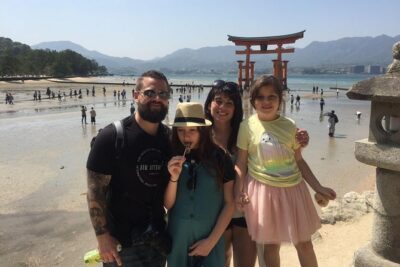
Hiroshima / Miyajima Full-day Private Tour with Government Licensed Guide
Read our review →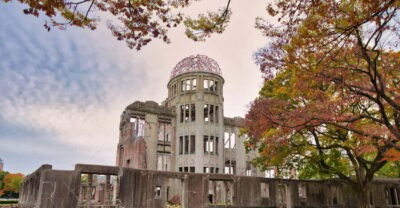
Osaka/Kyoto: Hiroshima Miyajima Bus Tour & Shinkansen Ticket
Read our review →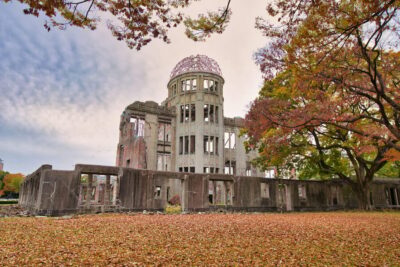
Hiroshima and Miyajima Day Trip with Itsukushima Shrine & Ferry
Read our review →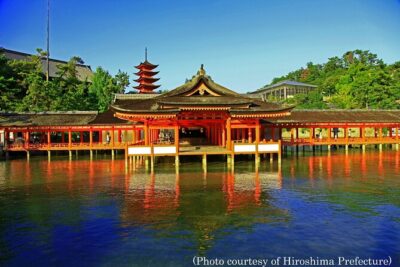
Full Day Hiroshima and Miyajima Bus Tour from Hiroshima
Read our review →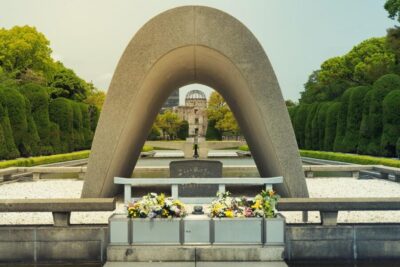
Miyajima Peace Memorial Icons of Peace and Beauty
Read our review →Browse the lists this tour appears in