
REVIEW · HISTORICAL TOURS
Hiroshima History Tour : A-Bomb Dome, Peace Memorial & City
Hiroshima is not a place to rush through with a camera and a checklist. This private walk puts the city’s atomic-bomb history in human hands, with Japanese guides who were born and raised here or whose families were affected by the bombing. Some, including guide Masa, are second-generation survivors.
I like the personal format, especially for the Peace Memorial Museum, where a good guide can help you process difficult material without turning it into a dry lecture. I also like that the tour reaches beyond the memorial district to Hiroshima Castle and Shukkeien Garden. The main consideration is walking: you may cover a lot of ground, and transportation costs are extra if your route calls for a tram, bus, or taxi.
In This Review
- Key points
- Why a private Hiroshima tour changes the experience
- Beginning at the Peace Memorial Museum
- Walking through Peace Memorial Park
- Seeing the A-Bomb Dome up close
- Hiroshima Castle and the city beyond the memorial district
- Shukkei-en Garden is the quiet surprise
- Three hours or four hours?
- What the $103 price includes
- A guide who adjusts to real people
- Who should book this Hiroshima experience?
- Practical tips before you go
- Should you book it?
- FAQ
- How long does the Hiroshima history tour last?
- Is the Peace Memorial Museum admission included?
- Is this a private tour?
- Can I be picked up from my hotel or Airbnb?
- Are transportation costs included?
- Is the tour available in English?
Key points
- Family connections to Hiroshima: Some guides are second-generation atomic bomb survivors, while others share family memories passed down through daily life.
- A genuinely private tour: Your group gets the guide’s full attention, with no unrelated participants joining.
- More than the memorial park: The route can include the Peace Memorial Museum, A-Bomb Dome, Hiroshima Castle, and Shukkeien Garden.
- Flexible pacing: Your guide can adjust the route for children, older adults, weather, and personal interests.
- Useful local help: Guides can assist with practical details, including food suggestions and directions back to a cruise port.
- Good inclusions: Peace Memorial Museum admission, Shukkeien Garden admission, walking pickup, and tour photography are included.
Why a private Hiroshima tour changes the experience
The most valuable part of this tour is not simply seeing the A-Bomb Dome. You can find the dome on a map. The value comes from having a local person beside you as you move through places that carry enormous emotional weight.
The guides do not rely only on a standard script. Their understanding may come from parents, grandparents, relatives, and the quiet way Hiroshima families have carried the past into ordinary life. Some guides are second-generation atomic bomb survivors. That does not mean you will hear the same story every time, and that is part of the strength of the experience.
Masa is the guide most often named in the available feedback. She grew up in Hiroshima, speaks English well, and has shared her family’s connection to the bombing. Her style appears to be warm, patient, and flexible. She has helped older participants manage a rainy day, answered questions about Japanese culture and writing, and even helped a cruise passenger return to the port by giving them a card written in Japanese for a taxi driver.
You should not book this expecting a fast sightseeing sweep. Book it if you want space for questions and conversation. The guide can explain the historical setting, but also help you think about how Hiroshima lives today and why its message remains focused on peace and never again.
The private format suits a solo visitor, couple, family, or small group. You can ask to spend more time in the museum, move faster through the outdoor memorials, or give extra attention to the castle and garden. Large bus tours rarely offer that kind of control.
A few more Hiroshima trips to weigh up
- Hiroshima Historical Walking Tour – Why A-Bomb was Dropped
★ 4.8 · 893 reviews - Hiroshima Peace (Heiwa) Walking Tour at World Heritage Sites
★ 5.0 · 872 reviews - Miyajima Half-day Trip Historical Walking Tour
★ 5.0 · 284 reviews
Beginning at the Peace Memorial Museum
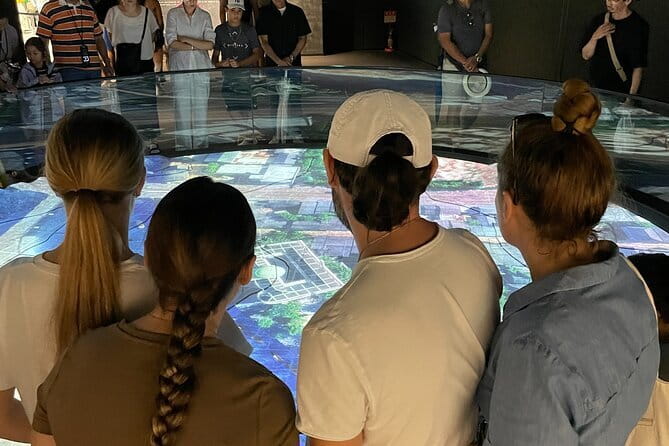
The Peace Memorial Museum is usually the emotional center of the tour. About an hour is set aside for a guided visit, and admission is included. That hour gives you enough time for an organized introduction, though you could easily spend much longer in the museum if you examined every display at length.
The museum presents the bombing and its effects through objects, photographs, testimony, and historical explanation. It is difficult material. A local guide can provide context before you enter, help clarify what you are seeing, and give you room to pause when needed.
I like having the museum early in the route. The exhibits give meaning to the outdoor sites you see afterward, while the park and dome help you place the museum’s information in the actual city. The order may change depending on your pickup point and preferences, so confirm the plan with your guide in advance.
The museum is closed for renewal from February 16 through February 21. If your visit falls during those dates, ask what replacement route is available. The rest of the memorial area can still be visited, but the museum portion will not operate normally.
Walking through Peace Memorial Park
Peace Memorial Park is more than a photo stop. It is a place to slow down and connect the museum’s historical account with the city’s present-day message.
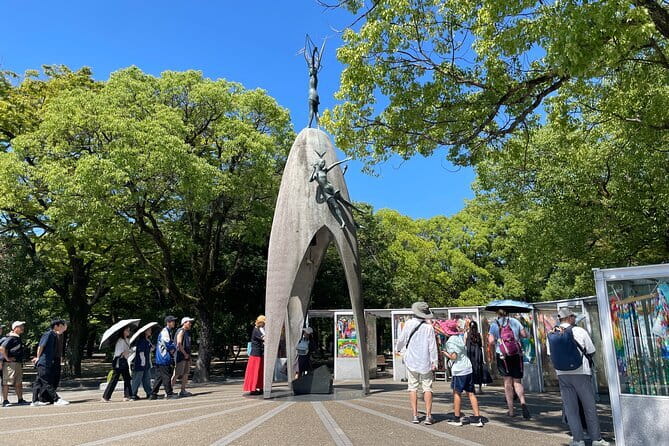
Your guide can take you through the park and point out memorials and sites tied to the bombing. The supplied route also allows time for the Children’s Peace Memorial and other nearby places, although the exact stops depend on the length of your tour and the interests of your group.
This is where a private guide can make the visit feel less mechanical. You can ask about the symbolism of a memorial, the way Hiroshima marks anniversaries, or how local families remember those who died. You can also simply walk quietly. A good tour does not need to fill every moment with speech.
Plan for an emotional change of pace. The museum may feel intense, while the park offers open space and time to think. Comfortable shoes matter, and you should tell the guide at the start if anyone in your group needs more frequent rests.
Seeing the A-Bomb Dome up close
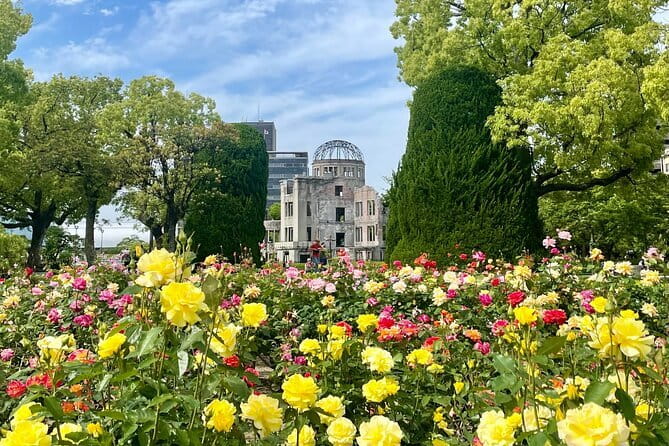
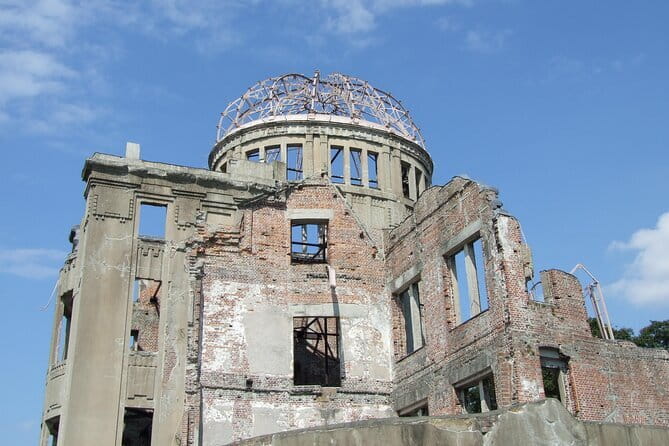
The Atomic Bomb Dome is one of Hiroshima’s best-known sights and a UNESCO World Heritage Site. Its damaged structure remains beside the river, close to the Peace Memorial Park.
The building is visually striking, but the important point is its location in the living city. Hiroshima did not become an empty memorial site. Modern streets, shops, offices, and daily routines surround the dome. Your guide helps connect the preserved ruin to the city that rebuilt around it.
Expect a guided visit and photo stop rather than an interior tour. The dome is viewed from outside, and your guide can explain its place in Hiroshima’s history and peace message. Photography is included as part of the experience, with the data provided afterward.
The best photographs are not necessarily the most dramatic ones. Take a moment to look at the structure without a camera. This is one of the stops where the guide’s personal perspective can matter more than the picture you take home.
Same city, a completely different kind of day:
- Peaceful Hiroshima & Miyajima UNESCO 1 Day Bus Tour
★ 5.0 · 5,309 reviews - Hiroshima: Hiroshima and Miyajima UNESCO Sites 1-Day Tour
★ 4.9 · 2,330 reviews - Hiroshima / Miyajima Full-day Private Tour with Government Licensed Guide
★ 5.0 · 1,298 reviews - Hiroshima in a Nutshell: Morning Bike Adventure
★ 5.0 · 524 reviews
Hiroshima Castle and the city beyond the memorial district
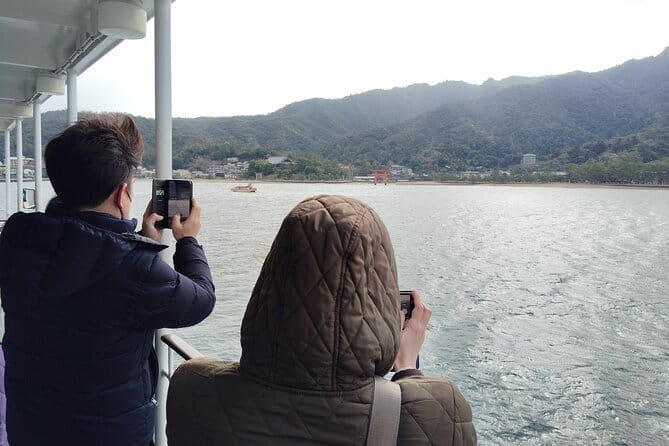
The route can continue to Hiroshima Castle, adding a different layer to the city. The castle offers historical and cultural context beyond the atomic bombing, and it helps you see Hiroshima as more than a memorial destination.
You may have time for a photo stop, a visit, and a guided explanation. The precise amount of time depends on whether you choose a three-hour or four-hour tour and how long you stay at the museum. If the bombing is your sole focus, you may prefer to spend longer in the memorial district. If you want a broader introduction to Hiroshima, the castle is a useful addition.
This part of the walk also creates a mental reset. After the museum and A-Bomb Dome, the castle shows another side of the city’s long story. You are not being asked to forget the bombing. You are seeing how Hiroshima contains several histories at once.
The tour may use public transportation or a taxi between areas. Those fares are not included, so keep some room in your budget. Your guide will help choose between walking and local transport according to your starting point, weather, mobility, and schedule.
Shukkei-en Garden is the quiet surprise
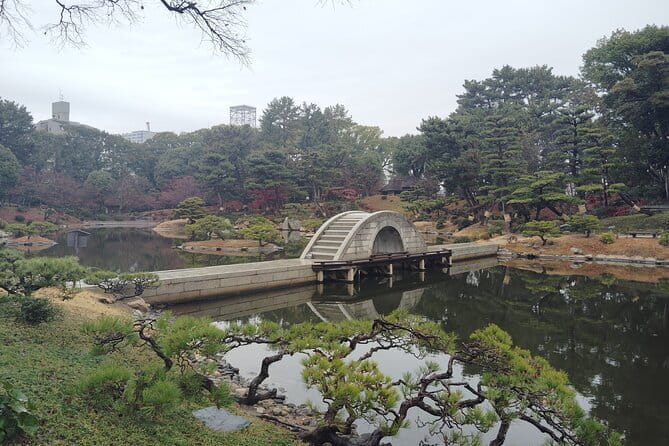
If you have time for one extra stop, do not dismiss Shukkei-en Garden as a decorative afterthought. The garden is included in the tour, and about an hour may be set aside for a visit, break, photographs, and explanation.
The garden gives you a calmer setting after the memorial sites. Its carefully arranged scenery offers a chance to sit, walk, and absorb the day at a slower speed. The contrast is useful. Hiroshima is not defined only by destruction, and the garden provides a look at Japanese aesthetics and local cultural life.
Several visitors singled out this stop as especially worthwhile, particularly on a longer route. That advice makes sense. The castle and garden require time, so trying to force both into a rushed three-hour visit can weaken the whole experience. If Shukkei-en matters to you, choose the four-hour option when available and tell the guide before the tour begins.
You might also use the garden as your preferred break if you are traveling with older relatives or children. It gives the group a chance to rest without ending the tour in the middle of the most important historical sites.
Three hours or four hours?
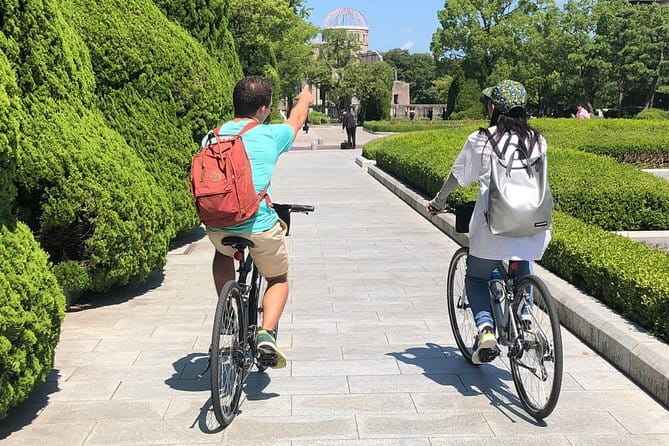
The advertised length is three to four hours. That small range matters because this is a flexible private tour, not a fixed coach route.
A three-hour version can work well if you want the Peace Memorial Museum, Peace Memorial Park, A-Bomb Dome, and perhaps one additional stop. It is also sensible for a cruise passenger with a firm return time or for anyone visiting Hiroshima as a day trip.
Four hours gives the tour breathing room. You can spend more time in the museum, ask more questions, include Hiroshima Castle and Shukkei-en Garden, and move at a less hurried pace. Families and older participants may appreciate the ability to stop and adjust the route.
The tour is described as walking-based, but transportation may be used depending on the departure point and your preferences. The pickup is on foot from a central Hiroshima location, including listed hotels, Hiroshima Station, the Peace Memorial Museum, and Orizuru Tower. If your hotel or Airbnb is not listed, you can request pickup if you are staying in central Hiroshima City. Cruise ship passengers should provide their port details in advance.
Do not assume that every listed stop fits comfortably into three hours. Ask your guide to rank the sights. A clear plan will prevent the museum, castle, and garden from all receiving too little time.
What the $103 price includes
At $103 per person, this is not the cheapest way to see Hiroshima. It is also not directly comparable to entering the museum alone or joining a large group.
Your price includes a private local guide, admission to the Peace Memorial Museum, admission to Shukkei-en Garden, walking pickup, and photography with the data supplied later. The guide’s time is the main value. You are paying for a route shaped around your group, not just for admission tickets.
The price works best for couples, families, and small groups who can share the cost while benefiting from a private conversation. It is also attractive for a short Hiroshima stay, when poor routing or missed context can cost you more than the tour fee in lost time.
Transportation is extra. You are responsible for tram, bus, or taxi fares if the route uses them. Food and drinks are also not included. These are modest practical details, but they affect the final cost, particularly if you are traveling with several people.
The included museum ticket helps, since you do not need to arrange that separately. The private format and family connection to Hiroshima are what make the price easier to justify than a simple guided walk.
A guide who adjusts to real people
The strongest pattern in the feedback is not just historical expertise. It is care.
Masa has been described as patient with seniors, adaptable in rain, attentive to children, and willing to answer questions well beyond the main subject. She has offered restaurant suggestions, explained aspects of Japanese culture, and helped with transport details after the tour.
That matters because Hiroshima can be a demanding place to visit. You may arrive with questions about responsibility, memory, war, or the future. You may also need help with ordinary matters such as finding your hotel, returning to a ship, or deciding where to eat. A guide who can handle both levels is more useful than someone who simply recites dates.
You should still remember that the guide is not guaranteed to be Masa. The experience uses local Japanese guides who speak English or Japanese, and individual style will vary. The central promise is the local connection and private format, not one named person.
Send details about your pace, mobility, interests, and departure point before the tour. The more your guide knows, the more useful the customization can be.
Who should book this Hiroshima experience?
I would choose this tour if you want a serious but personal introduction to Hiroshima and have only a few hours in the city. It is particularly well suited to:
- First-time visitors who want help understanding the memorial sites.
- Families who need the route adjusted to different ages and walking speeds.
- Couples or solo visitors who prefer conversation over a large group.
- Cruise passengers with limited time and a fixed return schedule.
- Anyone interested in how Hiroshima families remember the bombing.
- Visitors who want to combine the memorial district with the castle and garden.
It may not suit you if you want a completely self-guided museum visit with no discussion, or if you dislike walking and do not want to pay extra for local transportation. The museum itself can take several hours, so a short tour cannot show every display in detail.
This is also not a light sightseeing outing. The memorial sites involve painful history, and the tone is appropriately thoughtful. The castle and garden provide balance, but the atomic bombing remains the central subject.
Practical tips before you go
Wear comfortable shoes and dress for the weather. The tour can involve substantial walking, and the route may change when rain or mobility concerns make public transportation or a taxi more sensible.
Tell the guide if you want more museum time, more cultural sights, or a gentler pace. A private tour is most useful when you shape it early rather than simply accepting every possible stop.
If you are visiting during February 16 through February 21, check the museum closure before booking. Ask how the tour will be adjusted while the Peace Memorial Museum is closed for renewal.
Cruise passengers should share the port information in advance. The guide has helped visitors return to the port, but you should still allow a sensible margin for transport and ship boarding.
Cancellation is free up to 24 hours before the tour, and you can reserve now and pay later. The tour is wheelchair accessible, but because the route and transport method can vary, explain your needs before the day begins.
Should you book it?
Book this tour if you want Hiroshima explained by someone with a real family and local connection to the city. The combination of the Peace Memorial Museum, A-Bomb Dome, park, castle, and Shukkei-en Garden gives you a fuller picture than a memorial-only walk, especially with four hours available.
The best reason to choose it is the private guide relationship. Masa has earned especially strong praise for empathy, clear English, patience, and thoughtful local advice, though another guide may lead your tour. The main drawbacks are the walking and the extra transportation cost, along with the limited museum time on a three-hour schedule.
For a first visit, a family group, or a cruise stop, I consider $103 a fair price for the personal attention and included admissions. Choose the longer option if you want the castle and garden without hurrying. Choose the shorter route only after deciding which sights matter most to you.
FAQ
How long does the Hiroshima history tour last?
The tour lasts three to four hours. The exact duration and starting time depend on availability, your departure point, and the route you choose with the guide.
Is the Peace Memorial Museum admission included?
Yes. Entry to the Hiroshima Peace Memorial Museum is included in the price. The museum is closed for renewal from February 16 through February 21.
Is this a private tour?
Yes. The tour is for your group only, and no other participants join.
Can I be picked up from my hotel or Airbnb?
Walking pickup is available from central Hiroshima locations. Several hotels, Hiroshima Station, the Peace Memorial Museum, and Orizuru Tower are listed pickup points. If your hotel or Airbnb is not listed, you can request pickup by email if you are staying in central Hiroshima City.
Are transportation costs included?
No. If the route uses a taxi, tram, bus, or other public transportation, you are responsible for those fares. The guide will decide whether to walk or use transportation based on the departure point, weather, and your preferences.
Is the tour available in English?
Yes. Live guiding is available in English and Japanese. The tour is also wheelchair accessible, and you should communicate mobility needs in advance so the route can be adjusted.
Just added around Hiroshima
- The Journey of Hiroshima from Tragedy to Peace★ 4.8 · 44 reviews
- Miyajima: Private Rickshaw Tour to Itsukushima Shrine★ 4.9 · 45 reviews
- Hiroshima: Miyajima Half-day Historical Walking Tour★ 4.7 · 100 reviews
- Hiroshima/Miyajima Private Custom Tour with Local Guide★ 5.0 · 134 reviews
- Hiroshima:Guided Virtual Tour/PEACE PARK TOUR VR★ 5.0 · 29 reviews
- Hiroshima: Saijo Sake Tasting at 7 Breweries Guided Tour★ 4.8 · 29 reviews
- Hiroshima: Tour of Atomic Bomb Dome & Peace Memorial Museum★ 5.0 · 20 reviews
- Hiroshima: Private Walking Tour with a Local★ 4.6 · 70 reviews
Historical Tours, compared.
World Heritage Shirakawa-go and Experience Tours from Kanazawa
Read our review →
Imperial Palace and Shogun Historical Walking Tour
Read our review →
World Heritage Kyoto & Nara Uji Authentic Matcha Experience
Read our review →
Kyoto Gion: 2-Hour Geisha Culture & History Walking Tour
Read our review →
World Heritage Shirakawa-go Morning Guided Tour
Read our review →
Hiroshima Historical Walking Tour – Why A-Bomb was Dropped
Read our review →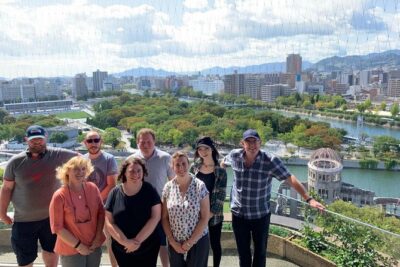
Hiroshima Peace (Heiwa) Walking Tour at World Heritage Sites
Read our review →Browse the lists this tour appears in