
REVIEW · WORKSHOPS
Handmade Japanese Glass Art Sandblasting Workshop in Tokyo
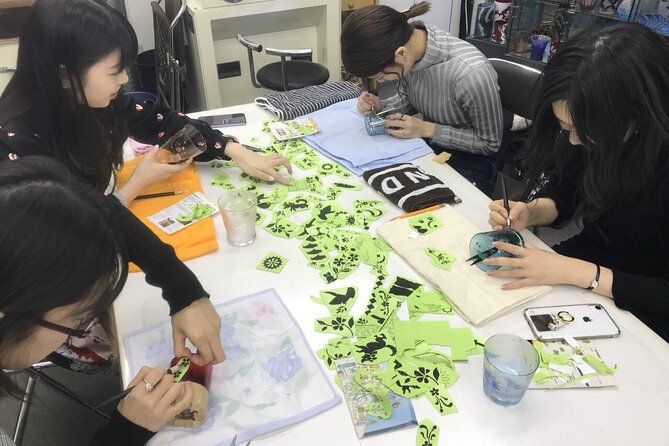
The best part of this Tokyo experience is that you do not just buy a souvenir, you make one yourself. In a 90-minute class, you decorate a glass with Japanese images, then use sandblasting to turn the design into a finished piece you can keep.
I like the maximum of four participants, which allows for calm, personal instruction. I also like the wide choice of motifs and the fact that all tools and materials are provided. The only drawback is the short class length. You will need to choose your design and work at a steady pace, especially if you want a detailed pattern.
In This Review
- Key Points Before You Book
- Making a Souvenir Instead of Buying One
- The 90-Minute Class in Asakusabashi
- Why the Four-Person Limit Matters
- Meeting Aki San and Getting Started
- Picking a Motif That Works on Glass
- Using the Sandblasting Machine
- A Calm Break From Tokyo Sightseeing
- Is $53.43 a Fair Price?
- Who Will Enjoy This Glass Art Workshop?
- Booking, Cancellation, and Practical Details
- Should You Book It?
- FAQ
- How long does the workshop last?
- Where does the activity start?
- Where does the activity finish?
- How many people can join the class?
- Is the workshop suitable for beginners?
- What designs can I use?
- Are materials and tools included?
- Is the workshop near public transportation?
- Can I cancel for a full refund?
Key Points Before You Book
- Small class size: The workshop accepts no more than four participants, so instruction can be tailored to your pace.
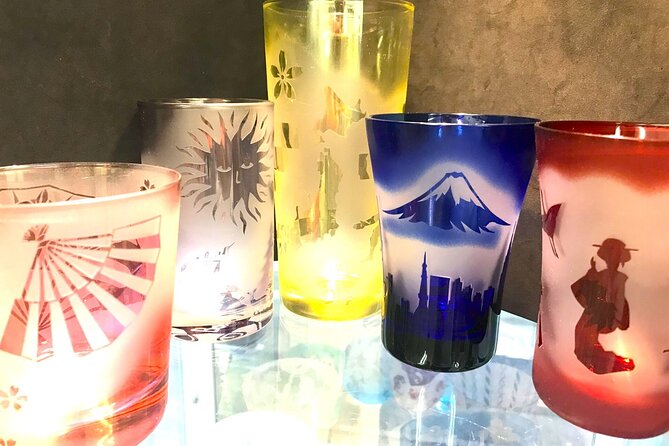
- Japanese designs: Choose from motifs such as Mount Fuji, geisha, kimono patterns, and samurai.
- Hands-on sandblasting: You create the design and use the workshop equipment to bring it onto the glass.
- Aki San’s patient guidance: The workshop owner provides step-by-step instruction and helps first-time artists.
- A useful Tokyo souvenir: Your finished glass is personal, colorful, and made during your visit.
- Convenient 90-minute format: The class fits well into a day of sightseeing in Tokyo, though the 88-day average advance booking suggests you should plan ahead.
Making a Souvenir Instead of Buying One
Tokyo has no shortage of shops selling ceramics, textiles, glass, and other crafts. A handmade glass from this class has a different value because you take part in its creation. The design may not look like something made by a professional glass artist, but it carries your choices and your memories of Japan.
The workshop focuses on glass sandblasting. You begin with a plain glass and select a Japanese image or pattern. The available examples include Mount Fuji, geisha, kimono designs, samurai, and other motifs. You then adapt the design to your glass and follow the instructions for preparing it.
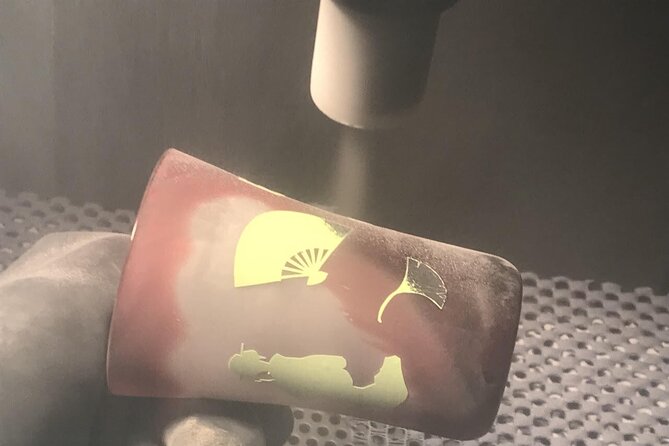
The sandblasting machine gives the artwork its finished form. It removes part of the glass surface where your design is exposed, creating a lasting pattern. The supplied information describes the finished piece as colorful, so this is not simply a plain etched drinking glass.
I like this setup because it gives you a real craft experience without asking you to master a complicated process from scratch. You get a finished object in one class, but you also learn enough about the method to understand how the image is created.
A few more Tokyo trips to weigh up
- Sushi Making Tokyo Roll and Authentic Japanese Sushi Class
★ 5.0 · 3,971 reviews - Tokyo: Roll and Authentic Sushi Making Class in Asakusa
★ 4.9 · 1,957 reviews - Tokyo Shinjuku Chopsticks Making Class
★ 5.0 · 1,763 reviews
The 90-Minute Class in Asakusabashi
The workshop meets at 1-chōme-26-12 Asakusabashi, Taito City, Tokyo 111-0053. The location is near public transportation, which makes it practical to add before or after other plans in Tokyo. The activity begins and ends at the same meeting point.
At the start, you settle into the workshop and receive an explanation of the process. Aki San, the workshop owner, guides you through the steps and helps you understand how to approach the glass. This personal instruction matters because sandblasting is not a task you should guess your way through on a first attempt.
You then choose the design for your glass. The workshop provides many pictures, so you are not limited to arriving with a finished drawing. You can select an image that connects with your time in Japan, such as Mount Fuji or a kimono pattern, or choose a figure such as a geisha or samurai.
The design stage is where I would manage your time carefully. You may want to compare several images, adjust the placement, and think about how the pattern will look on a curved glass. With only 90 minutes, you should avoid spending too long on the first decision.
After choosing the image, you use the supplied tools and follow the instructions for the sandblasting process. The class is designed for beginners, and the materials and lesson fee are included in the price. You do not need to bring your own equipment or previous art experience.
The final part is seeing the design appear on the glass. That step gives the activity its payoff. You leave with a completed work rather than an unfinished project that needs more work at home.
Why the Four-Person Limit Matters
A class capped at four people feels very different from a large group craft demonstration. You have a better chance to ask questions as soon as you need help, and the instructor can watch how you are handling each stage.
This is especially useful for families. Adults and children can work on their own glasses while receiving help from the same instructor. The activity is described as suitable for most participants, and the hands-on format gives children something concrete to do rather than simply watch.
The small size also makes the workshop a good choice if you prefer quieter activities. Tokyo can be tiring after several days of temples, stations, shopping streets, and crowded attractions. Sitting down to work with your hands offers a welcome change of pace.
I would still keep your group’s expectations realistic. A small class does not mean every participant will receive continuous one-to-one help. The instructor needs to guide everyone through the process, and a group of four can still move at different speeds.
Meeting Aki San and Getting Started
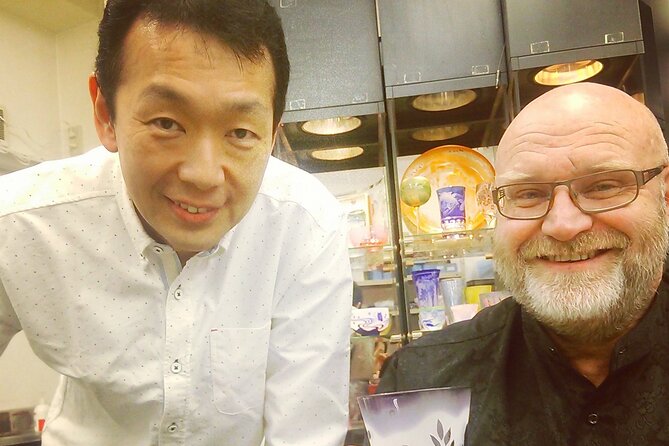
Aki San is identified as the workshop owner and instructor. The class includes step-by-step teaching, and the available feedback points to a patient and pleasant approach. One participant arrived early and found an easel outside with their name on it. Aki San noticed the early arrival, brought the participant inside ahead of time, and allowed them to look at the work displayed in the window.
That detail gives you a useful arrival tip: check the workshop carefully when you reach the address. The easel may help identify the entrance, particularly if you arrive before the scheduled start. If you are early, you might find the display of finished work useful for getting ideas.
The workshop owner’s own work can also help you understand the level of craft behind the lesson. You are not entering a generic activity room with a prepackaged project. You are learning in a glass art workshop from the person who runs it.
The teaching style appears suited to beginners. You receive the tools, examples, and directions needed to complete the piece. If you have never used sandblasting equipment, the instruction is the main reason to book this instead of attempting a craft project on your own.
Same city, a completely different kind of day:
- Mt Fuji and Hakone 1-Day Bus Tour Return by Bullet Train
★ 5.0 · 26,383 reviews - 1-Day Tokyo Bus Tour
★ 5.0 · 14,250 reviews - Tokyo: TOKYO SKYTREE® Admission ticket
★ 4.5 · 11,192 reviews - Tokyo: teamLab Planets TOKYO Digital Art Museum Entry Ticket
★ 4.6 · 9,779 reviews
Picking a Motif That Works on Glass
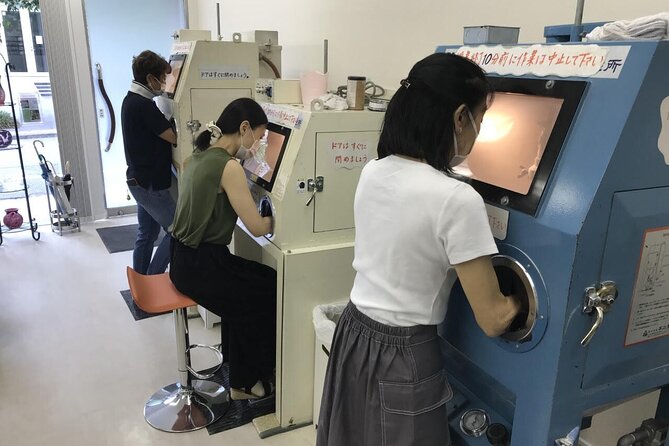
The choice of image is one of the most personal parts of the class. Mount Fuji gives you a clear Japanese symbol. A kimono pattern may produce a more decorative result, while a geisha or samurai design can create a stronger figure-based image.
The workshop provides many pictures, so you can browse instead of preparing a design in advance. I would choose an image that is easy to recognize and not so detailed that it becomes stressful within the time limit.
Think about the purpose of the glass, too. If you plan to use it for drinking, a simple design may be easier to appreciate each day. If you want a display piece, you may prefer a more detailed pattern. The class information confirms that you create a personalized glass, but it does not specify the size, shape, or exact selection of glassware, so those details may vary.
A personal motif also makes the souvenir more meaningful. You might choose Mount Fuji because it was part of your Japan itinerary, or a kimono pattern because you want a reminder of traditional design. The activity gives you room to make that choice yourself.
Using the Sandblasting Machine
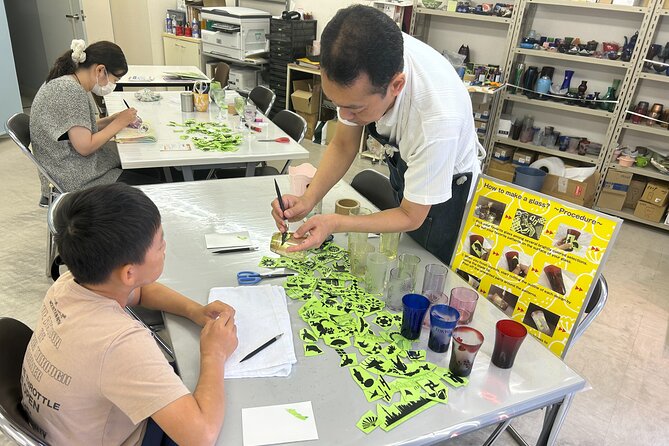
Sandblasting is the technical heart of the class. The machine brings your selected design onto the glass by treating the exposed areas of its surface. Under instruction, you learn the basic process and apply it to your own piece.
This is not a passive demonstration. You handle the tools and take part in the work. That makes the finished glass feel earned, even if your design is simple.
The process also explains why patient instruction is important. Glass is not a forgiving surface for random corrections, so you should listen closely before operating the equipment. Aki San’s role is to show you the correct steps and help you avoid mistakes.
The class is not advertised as advanced training for professional artists. It is better understood as a guided introduction to a Japanese glass technique. Seasoned artists can enjoy the freedom to design, while beginners get a clear path from blank glass to finished object.
I would not book this expecting a long technical course. The 90 minutes are enough to complete a keepsake, but not enough for an extensive study of sandblasting methods.
A Calm Break From Tokyo Sightseeing
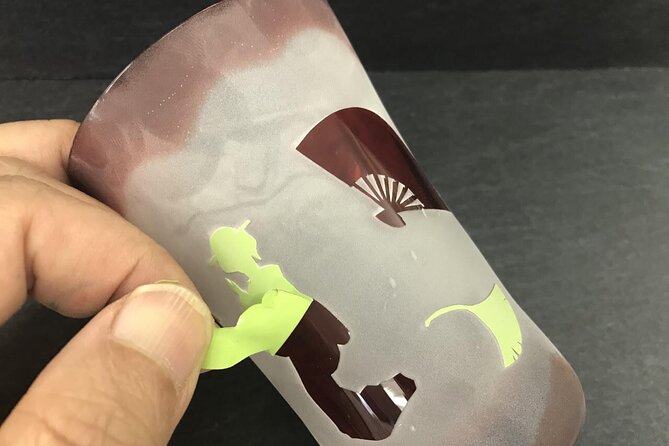
The workshop offers a useful change in rhythm. Instead of moving from one sight to another, you stay in one place and focus on a small physical task. That can be valuable on a busy Tokyo itinerary, especially if you want an activity that does not depend on sightseeing stamina.
The class is also a good rainy-day option. You are indoors, the tools are supplied, and the activity has a clear beginning and end. The mobile ticket makes it easy to keep the booking on your phone while moving around the city.
I like the balance between structure and choice. The instructor gives you the process, but you select the image and shape the final result. You are not simply following a fixed kit with the same outcome as everyone else.
The workshop may suit families particularly well because adults and children can create side by side. It also works for solo participants. One person had a private-feeling session because no other participants were booked that day, though you should not assume every time slot will be private.
Is $53.43 a Fair Price?
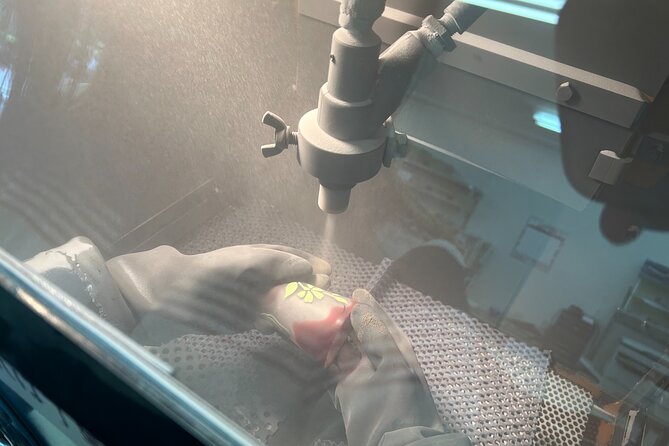
The listed price is $53.43 per person. That includes the material fee, lesson fee, and consumption tax. Hotel pickup and drop-off are not included, but the activity starts and ends at the workshop, so you only need to arrange your own transport to Asakusabashi.
For the money, you are paying for three things: instruction from the workshop owner, use of the materials and equipment, and a finished glass to take home. Compared with a short demonstration or a souvenir purchase, the hands-on element gives the price more substance.
The value is strongest if you care about making something personal. If you only want an inexpensive drinking glass, a shop may cost less and take less time. If you want a story attached to the object, this class offers more.
The small class limit also supports the price. A four-person maximum gives you a more personal lesson than a large group activity. I would compare it with the cost of other paid craft classes in Tokyo, not only with the price of mass-produced souvenirs.
The activity is booked an average of 88 days ahead. That is a strong sign that popular dates can fill early, so I would reserve it when you know your Tokyo schedule. Confirmation is sent within 48 hours, subject to availability.
Who Will Enjoy This Glass Art Workshop?
I would recommend the class to you if you want a creative activity with a clear finished result. It fits first-time artists, art lovers, solo visitors, couples, and families.
It is especially suitable for:
- People who want a Japanese souvenir they made themselves
- Families seeking a hands-on activity
- Beginners who want direct instruction
- Artists who enjoy working from traditional motifs
- Visitors needing a quiet indoor break from sightseeing
- Anyone interested in trying a craft without bringing supplies
You may want to skip it if you dislike guided activities, have no interest in taking home a glass object, or prefer a longer and more technical art course. The class is compact and practical, not an extended studio program.
The experience also makes sense for repeat visitors to Tokyo. You may have already seen Mount Fuji images, kimono fabrics, and samurai references in museums and shops. Here, you can turn one of those familiar Japanese themes into your own object.
Booking, Cancellation, and Practical Details
The mobile ticket is convenient, and the meeting point is near public transportation. Since there is no hotel pickup or drop-off, allow enough time to reach Asakusabashi on your own.
You can cancel for a full refund if you do so at least 24 hours before the experience start time. Cancellations or changes made within 24 hours are not refunded or accepted. The cut-off follows local Tokyo time, so check the clock carefully if your plans change.
Most people can participate, and the experience has a maximum of four participants. The supplied details do not give a minimum age, exact glass dimensions, or a list of available start times, so check those points when selecting your date.
Should You Book It?
I would book this workshop if you want more than another photograph or shop-bought souvenir. The small group, patient step-by-step instruction, wide choice of Japanese motifs, and take-home glass give the 90-minute session a clear purpose.
The main tradeoff is time. You need to make design choices and complete the work within the class period, so this is not the place for an elaborate art project. At $53.43, it is best value for someone who wants the process as much as the finished glass.
Reserve early if your schedule is fixed, since the average booking lead time is 88 days. For a family, a solo visitor, or an art-minded couple looking for a quieter Tokyo activity, this is an easy experience to justify.
FAQ
How long does the workshop last?
The workshop lasts approximately 1 hour and 30 minutes.
Where does the activity start?
It starts at 1-chōme-26-12 Asakusabashi, Taito City, Tokyo 111-0053, Japan.
Where does the activity finish?
The activity ends back at the meeting point.
How many people can join the class?
The workshop has a maximum of four participants.
Is the workshop suitable for beginners?
Yes. The experience is designed for beginners and art lovers, with step-by-step instruction from the workshop owner.
What designs can I use?
You can decorate your glass with Japanese motifs such as Mount Fuji, geisha, kimono patterns, samurai, and other available images.
Are materials and tools included?
Yes. The material fee, lesson fee, and consumption tax are included. Hotel pickup and drop-off are not included.
Is the workshop near public transportation?
Yes. The meeting point is near public transportation.
Can I cancel for a full refund?
Yes. You can cancel at least 24 hours before the local start time for a full refund. Cancellations or changes made within 24 hours are not refunded or accepted.
Just added around Tokyo
- Private Memorable Tokyo Tour with English Speaking Driver★ 5.0 · 30 reviews
- Private Tokyo Custom Full-Day Tour by Chartered Vehicle★ 5.0 · 16 reviews
- Private Sightseeing to Mt Fuji and Hakone with English Driver★ 5.0 · 51 reviews
- Tokyo Photography Masterclass – Private Photography Lesson★ 5.0 · 25 reviews
- Private Mt. Fuji Day Trip from Tokyo with English-Speaking Driver★ 5.0 · 33 reviews
- 4 Day Tour – Mount. Fuji, Tokyo, Hakone, Kamakura and Yokohama★ 5.0 · 19 reviews
- Private Unforgettable Mt Fuji Tour with English Speaking Driver★ 5.0 · 142 reviews
- Private Tokyo Food Tour – A Journey Through Time Through Food★ 5.0 · 36 reviews
Workshops, compared.
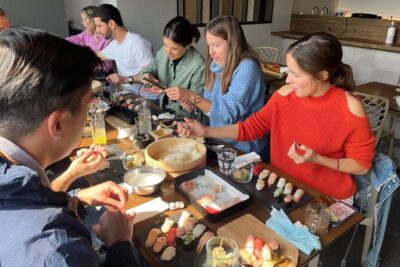
Sushi Making Tokyo Roll and Authentic Japanese Sushi Class
Read our review →
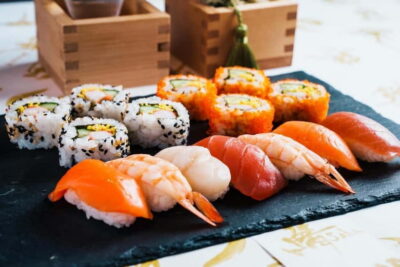
Roll and Authentic Sushi Making Class in Asakusa
Read our review →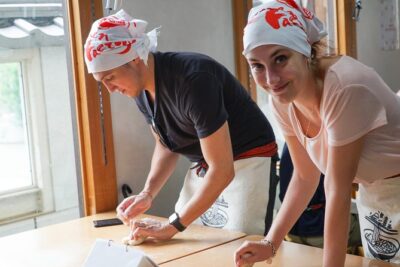
Ramen Cooking Class at Ramen Factory in Kyoto
Read our review →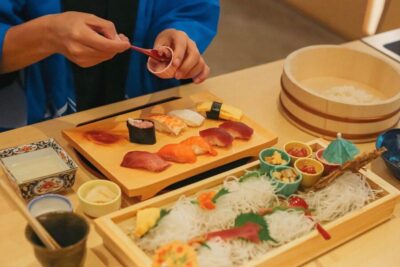
Sushi Making Class in a Happi Coat near a Famous Spot
Read our review →

Sushi Making Osaka Roll and Authentic Japanese Sushi Class
Read our review →
Tokyo Sushi Making Class in Tsukiji with Professional Chef
Read our review →Browse the lists this tour appears in