
REVIEW · SUMO EXPERIENCES
Experience the Sumo World in Tokyo
The best part of this Tokyo sumo tour is the chance to watch wrestlers train inside a working stable, not simply see a staged demonstration. You sit close to the practice area, hear the force of each clash, and learn what the rituals and daily discipline mean from guides such as Ryoko, Haru, and Tomer.
I especially like the front-row seating and the meal with the wrestlers afterward. You also get a rare chance to step forward and try pushing one of these human tanks, usually with comic results. The main drawback is the early start and the long trip out of central Tokyo, plus one important warning: communication about the meeting details must be clear before departure.
In This Review
- Key points at a glance
- What makes this sumo morning special
- Starting at Ueno Station at 7:45 AM
- Two train rides from Ueno to the stable
- Inside Asahiyama stable
- Meeting the wrestlers after practice
- Chanko nabe, the meal after training
- Is the $105.71 price fair?
- Timing, comfort, and practical concerns
- Who should book this experience?
- Should you book the Sumo World experience?
- FAQ
- Where does the sumo tour begin?
- What time should I meet the guide?
- How long does the experience last?
- How do I reach the sumo stable?
- Is the train fare included?
- Which sumo stable will I visit?
- Can I watch the wrestlers train?
- Can I try sumo wrestling?
- Can I take photographs?
- Is lunch included?
- How many people can join the tour?
- Can I cancel for a refund?
Key points at a glance
- Watch a working practice session: See real morning training at Asahiyama stable from chairs close to the action.
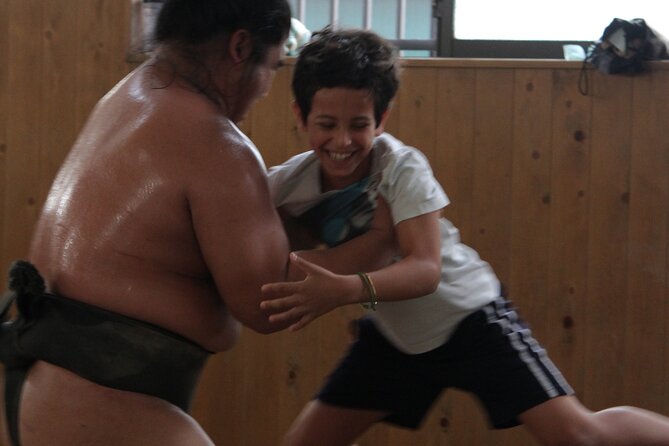
- Try a friendly strength test: Step into the practice area and attempt to move a wrestler, with help from the guides.
- Eat chanko nabe after practice: Share the hearty stew associated with the sumo lifestyle, with vegetarian service available if requested at least three days ahead.
- Learn during the train ride: Guides explain sumo rules, terms, customs, and history as you travel from Ueno toward Matsudo.
- Take photos at the right time: Photography is allowed at the end, after the formal training session.
- Budget for the train fare: The round-trip JR cost is ¥1,060, about $7, and is not included in the tour price.
What makes this sumo morning special
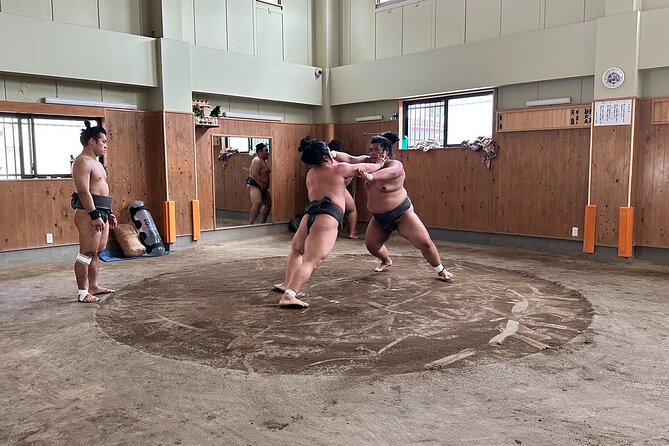
Sumo can seem simple from a distance: two large men collide, and one goes out of the ring. A morning at a stable shows you how much more is involved. Training includes force, balance, agility, tactics, ritual, and remarkable control.
You watch the wrestlers work under the eye of the stable staff, rather than sit in an arena and wait for a match to begin. That setting gives you a better sense of sumo as a way of life. The wrestlers are not performing a polished show for a crowd. They are completing their daily practice, and the tone is serious even when the later photo session becomes playful.
The guides make a big difference. Ryoko is often praised for explaining the rules and customs in plain language, while Haru, Tomer, Tammy, and other guides have helped visitors follow the action and manage the train connections. Some guides also offer useful suggestions for the rest of your day in Tokyo, which is a welcome bonus after such an early start.
This is a good choice if you know little about sumo. You do not need to understand rankings, Japanese terms, or the rules before arriving. It also works well for families, since children can watch the practice, ask questions, and take part in the gentle pushing challenge afterward.
More Sumo Experiences in Tokyo
- Tokyo: Sumo Show and Dining Experience
★ 4.8 · 2,742 reviews - the SUMO show
★ 5.0 · 1,960 reviews - Tokyo Shinjuku Sumo Show & Experience with Photo
★ 5.0 · 1,750 reviews
Starting at Ueno Station at 7:45 AM
The meeting point is the JR Information area at Ueno Station, at 7 Chome-1 Ueno in Taito City. Ueno is a sensible place to meet because it has strong rail connections, but Tokyo stations can still be confusing. Arrive early enough to find the correct station area without rushing.
The scheduled meeting time is 7:45 AM. This is not a flexible starting window. The group leaves by train, and missing the departure can create a serious problem because the stable is not nearby.
One unfortunate incident shows why this matters. A participant arrived shortly after the planned departure and had difficulty receiving the meeting information through WhatsApp. The group had already moved on, and reaching the stable by taxi took about an hour and cost roughly $70. Only a small portion of practice remained.
That situation appears to have been unusual, but you should still confirm the meeting instructions before the morning of the tour. If the operator uses WhatsApp for final updates, make sure you can receive messages there. Keep the meeting point, start time, and contact details easy to access on your phone.
Two train rides from Ueno to the stable
The journey takes you away from central Tokyo. From Ueno, the group travels by train to Matsudo, a trip of about 19 minutes. From Matsudo, you continue to Kunugiyama, with the second ride taking about 15 minutes.
The train journey is more than a transfer. Guides use the time to explain sumo vocabulary, the sport’s customs, its history, and the lives of the wrestlers. This is useful preparation because the practice itself is not narrated like a stadium event. Understanding what you are seeing makes the quiet pauses, repeated exercises, and short bouts easier to follow.
You pay the round-trip train fare separately. The listed total is ¥1,060, about $7. That is a small extra cost compared with the tour price, but you should include it when planning your budget. The two train changes also mean this is not the simplest activity for someone who dislikes early public transport or has trouble walking between platforms.
Inside Asahiyama stable
The stable, identified as Asahiyama beya, is the heart of the morning. You sit on chairs beside the training area, close enough to see the wrestlers’ footwork, balance, and physical effort. The seating is a practical touch, especially because the session lasts around two hours as an overall stable visit, while the main training portion may be shorter.
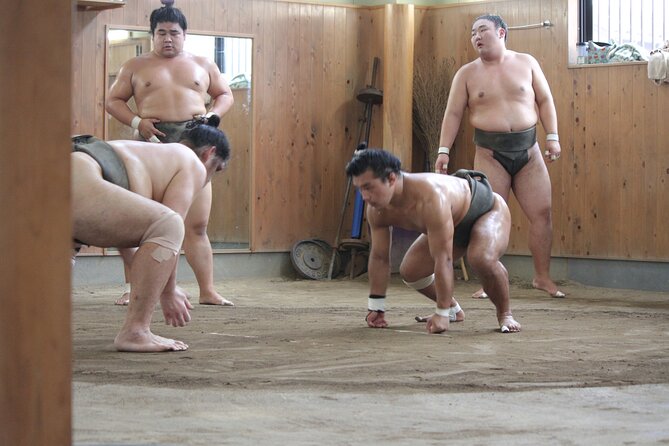
One account describes about 45 minutes of practice followed by stretching. The exact schedule can change, so do not assume every minute of the two-hour stop will consist of full bouts. Sumo practice includes different exercises and periods of observation, and the stable’s own schedule comes first.
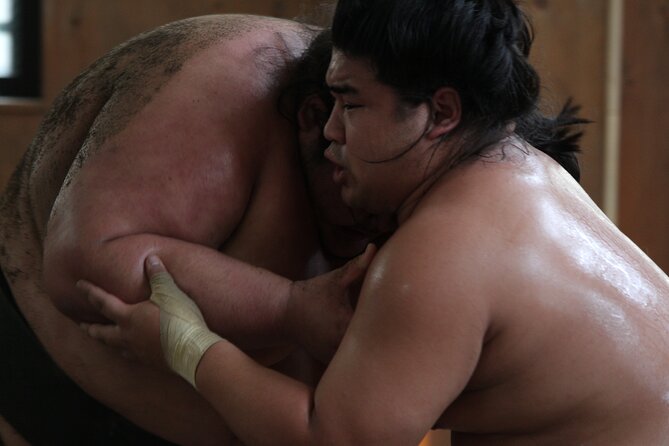
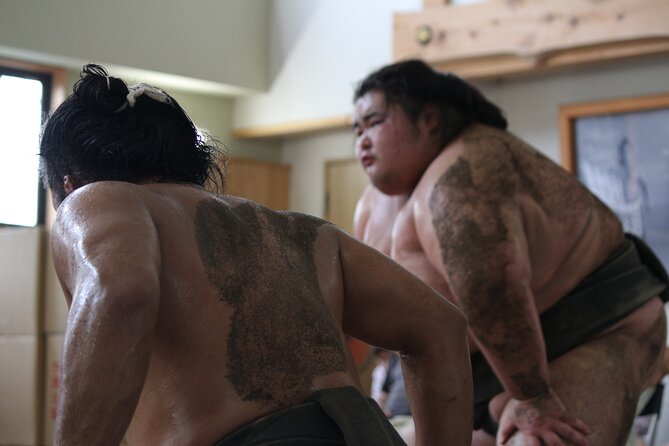
The close view is what gives this activity its value. You notice that size is only part of the equation. Wrestlers need timing, agility, technique, and the ability to stay balanced under pressure. The physical sound of the training is also difficult to understand from television. From a chair near the ring, each movement feels more immediate.
Respect for the stable is important. This is a working place, not a theme park attraction. Follow the guide’s instructions, stay seated when asked, and avoid treating the practice as a noisy sporting event. The point is to observe a demanding routine with care.
Same city, a completely different kind of day:
- Mt Fuji and Hakone 1-Day Bus Tour Return by Bullet Train
★ 5.0 · 26,383 reviews - 1-Day Tokyo Bus Tour
★ 5.0 · 14,250 reviews - Tokyo: TOKYO SKYTREE® Admission ticket
★ 4.5 · 11,192 reviews - Tokyo: teamLab Planets TOKYO Digital Art Museum Entry Ticket
★ 4.6 · 9,779 reviews
Meeting the wrestlers after practice
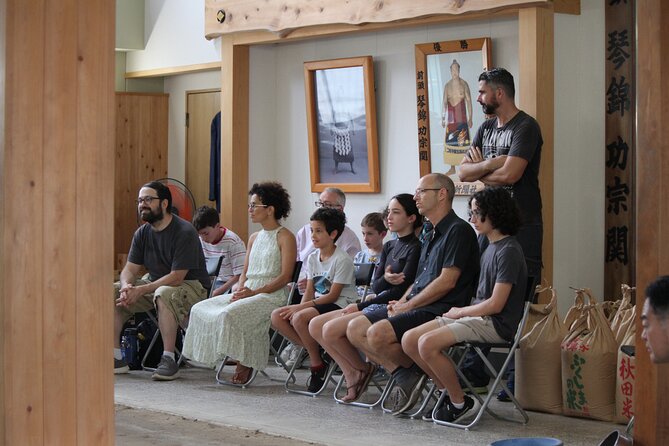
Once the formal training ends, the atmosphere becomes more relaxed. You may hear about the wrestlers’ paths into sumo and daily life at the stable. Guides can translate questions and explain points that would otherwise be lost.
This conversation is one of the strongest parts of the experience. A tournament match shows the finished product, but a stable visit gives you a glimpse of the people and discipline behind it. You can ask questions, listen to the wrestlers who speak English, and see them outside the intense rhythm of practice.
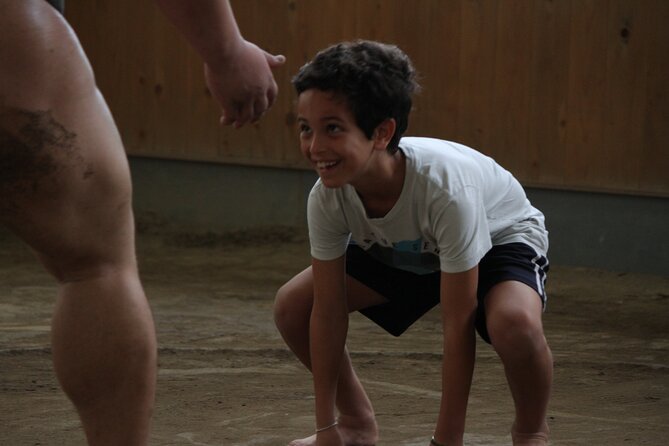
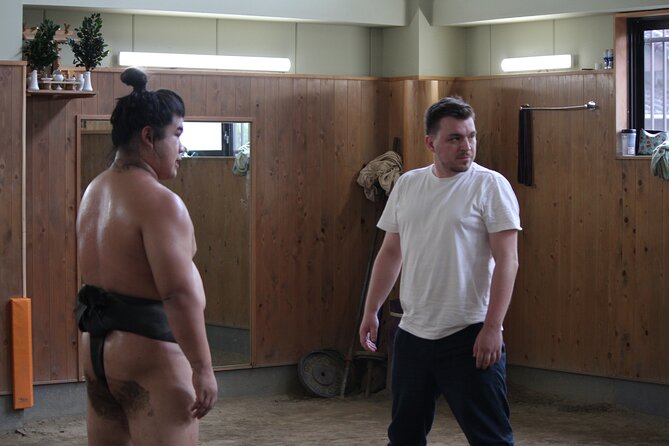
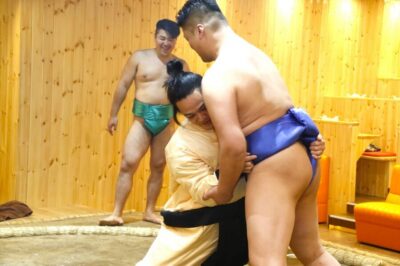
The hands-on portion is deliberately limited and friendly. Members of the group can try to push a wrestler, sometimes in a short face-off. You should expect to lose. Several participants describe the wrestlers as remarkably difficult to move, even when they seem to be giving the challenger every possible chance.
That makes the activity fun without turning it into a serious contest. Children have enjoyed the chance to test their strength, and adults tend to get a good laugh from discovering that their best effort produces almost no movement. The wrestlers are also described as patient and kind during this part.
Chanko nabe, the meal after training
After practice and the photo session, you share a meal featuring chanko nabe. This is the stew linked with the sumo diet, designed to provide substantial nourishment for athletes. The meal is often described as a light broth with vegetables and chicken, though the exact preparation may vary.
I like this element because it connects the food to the place. You are not simply eating lunch at a restaurant after a sightseeing stop. The meal helps explain how the stable functions and gives you another way to understand the wrestlers’ routine.
Vegetarian service is available, but you must request it at least three days in advance. Do not wait until the morning of the tour. If you have other dietary restrictions, the supplied information only confirms vegetarian arrangements, so ask the operator before booking rather than assuming substitutions are possible.
The meal is included in the price. That improves the value, particularly since the tour occupies most of your morning and includes transport guidance, interpretation, the stable visit, and the sumo activity. Still, food is only one part of the package. The main reason to book is access to the training stable.
Is the $105.71 price fair?
At $105.71 per person, this is not a cheap Tokyo morning. You also pay ¥1,060 for the round-trip train. The price makes more sense if you value access to a setting that is normally difficult for the public to enter.
Your fee covers the guide, the visit to the stable, seated viewing, the interactive sumo experience, photographs at the end, and lunch. It also buys help with a route that includes two train rides and an explanation of what you are seeing. For a family or a visitor with a strong interest in Japanese sport and culture, that combination can justify the cost.
The value is weaker if you only want to watch a formal match. In that case, a tournament ticket may be a better fit when tournaments are taking place. This tour offers something different: a look at training, the stable environment, and contact with wrestlers after practice.
Group size can reach 26 people. That is not a private visit, and the experience may feel less personal at full capacity. The chairs and close position help, but your exact view can depend on where you are seated. Smaller groups may get more time for questions, while larger groups can make the photo and pushing portions more structured.
Timing, comfort, and practical concerns
The tour lasts about four hours and ends back at the original meeting point. Since it begins at 7:45 AM, you should plan your evening before it carefully. The early start is part of the reward, since you are seeing morning practice, but it is not ideal if you prefer slow breakfasts or late nights.
Wear comfortable clothes suitable for train travel and sitting through a practice session. The available information does not specify a dress code or shoe policy, so follow any instructions sent before the visit. Photography is allowed at the end, not necessarily throughout the training.
The operator says most people can participate and that the activity is near public transportation. It does not provide detailed accessibility information. If you have mobility needs, ask in advance about the stations, walking route, chairs, and stable entrance.
Weather, transport, or stable scheduling can cause minor changes to the route. That is normal for an activity tied to a working sports facility. Keep the rest of your morning somewhat open rather than booking a tight appointment immediately after the planned return.
Free cancellation is available until 24 hours before the start time. Changes or cancellations inside that window are not accepted for a refund. The experience also requires a minimum number of participants, and if the operator cancels for that reason, you receive an alternative or a full refund.
Who should book this experience?
I would choose this for anyone curious about how sumo works beyond tournament television. It is especially well suited to:
- Families with children interested in Japanese culture
- First-time visitors who want a guided introduction to sumo
- Sports fans who want to see training rather than only a formal match
- Visitors who enjoy food, conversation, and hands-on activities
- People comfortable with an early start and two train rides
I would think twice if your schedule is tight, your morning begins slowly, or you need highly precise communication and accessibility arrangements. The stable’s needs come first, and the journey from Ueno takes effort.
The tour is also a good option for someone who has already visited temples, shrines, and major viewpoints in Tokyo. It offers a different side of the city, one based on a living tradition and a working community rather than a public monument.
Should you book the Sumo World experience?
Book it if you want a close, practical introduction to sumo and accept the early start. The combination of real training, guide interpretation, questions with wrestlers, a friendly strength test, and chanko nabe is unusual. The most praised elements are the guides, the welcoming stable, and the chance to see the athletes at close range.
Before paying, confirm the 7:45 AM meeting details and make sure you can receive any WhatsApp updates. Add ¥1,060 for trains, request vegetarian food at least three days ahead, and leave time after the tour in case transport or practice timing changes.
For a memorable morning that shows you the human side of sumo, this is a strong choice. For someone seeking only tournament action or an easy central Tokyo activity, it may not be the best match.
FAQ
Where does the sumo tour begin?
It begins at the JR Information area in Ueno Station, at 7 Chome-1 Ueno, Taito City, Tokyo 110-0005.
What time should I meet the guide?
The scheduled meeting time is 7:45 AM.
How long does the experience last?
The complete activity lasts approximately four hours and ends back at the original meeting point.
How do I reach the sumo stable?
The group travels by train from Ueno to Matsudo, then continues by train to Kunugiyama. The listed journey times are about 19 minutes and 15 minutes, not including station movement and waiting.
Is the train fare included?
No. The round-trip JR train fare is ¥1,060, or about $7.
Which sumo stable will I visit?
The itinerary identifies the stable as Asahiyama beya, written as 朝日山部屋.
Can I watch the wrestlers train?
Yes. You watch the practice session while seated on chairs near the training area.
Can I try sumo wrestling?
Yes. Participants can try a friendly pushing or sumo wrestling activity with the wrestlers.
Can I take photographs?
Photography is allowed at the end of the training session.
Is lunch included?
Yes. The meal includes chanko nabe, and vegetarian service is available if you notify the operator at least three days ahead.
How many people can join the tour?
The maximum group size is 26 people.
Can I cancel for a refund?
You can cancel at least 24 hours before the local start time for a full refund. Cancellations or changes made less than 24 hours ahead are not refunded or accepted.
Just added around Tokyo
- Private Memorable Tokyo Tour with English Speaking Driver★ 5.0 · 30 reviews
- Private Sightseeing to Mt Fuji and Hakone with English Driver★ 5.0 · 51 reviews
- Tokyo Photography Masterclass – Private Photography Lesson★ 5.0 · 25 reviews
- Private Tokyo Custom Full-Day Tour by Chartered Vehicle★ 5.0 · 16 reviews
- Private Mt. Fuji Day Trip from Tokyo with English-Speaking Driver★ 5.0 · 33 reviews
- 4 Day Tour – Mount. Fuji, Tokyo, Hakone, Kamakura and Yokohama★ 5.0 · 19 reviews
- Private Unforgettable Mt Fuji Tour with English Speaking Driver★ 5.0 · 142 reviews
- Private Tokyo Food Tour – A Journey Through Time Through Food★ 5.0 · 36 reviews
Sumo Experiences, compared.
Sumo Show Experience with Chicken Hot Pot and a Photo
Read our review →
Tokyo Shinjuku Sumo Show & Experience with Photo
Read our review →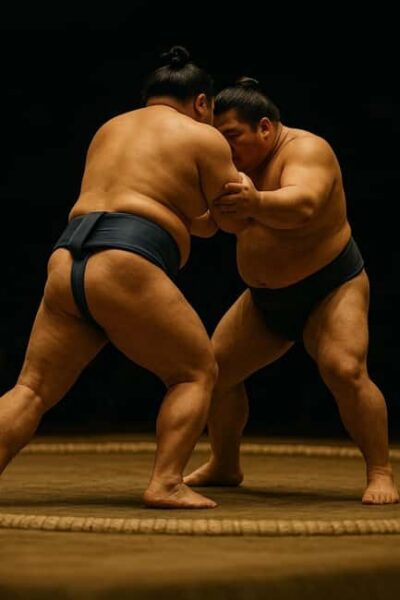
Sumo Show & Experience w/ Optional Kimono & Hot Pot
Read our review →
Authentic Sumo Experience in Tokyo: Enter the Sanctuary
Read our review →Browse the lists this tour appears in