
REVIEW · WORKSHOPS
Blade Runner photo workshop in Shibuya with Laurence Bouchard
Shibuya after dark is made for photographs, but the best shots rarely come from simply pointing at the biggest signs. On this two-hour night workshop, Laurence Bouchard takes you from Shibuya Crossing to lesser-known streets and shows you how to turn neon, movement, and reflections into deliberate images.
I like two things right away: you learn practical night settings before the walk gets going, and the group is limited to six people, so Laurence can give personal help. I also like that phone photographers are welcome. One participant used an iPhone, while more experienced photographers worked with their own cameras.
The main drawback is the short running time. Two hours goes quickly, especially if you want detailed instruction. Japanese holidays can also affect the experience, since some locations may be closed or less brightly lit.
In This Review
- Key points to know before booking
- Starting at Cerulean Tower Tokyu Hotel at 7:30 pm
- A short lesson before the neon begins
- Shibuya Crossing becomes the first photo lesson
- Side streets and locations selected by Laurence
- Making Shibuya look less ordinary
- Who gets the most from this two-hour walk
- Is $97.98 a fair price?
- Timing, holidays, and practical limits
- Should you book Laurence Bouchard’s Shibuya workshop?
- FAQ
- Where does the Blade Runner photo workshop start?
- What time does the experience begin?
- How long does the workshop last?
- Where does the workshop finish?
- Can I use a phone instead of a dedicated camera?
- How many people can join?
- What happens if I need to cancel?
Key points to know before booking
- Start with camera advice at 7:30 pm: Laurence begins with a short conversation about settings before heading into Shibuya.
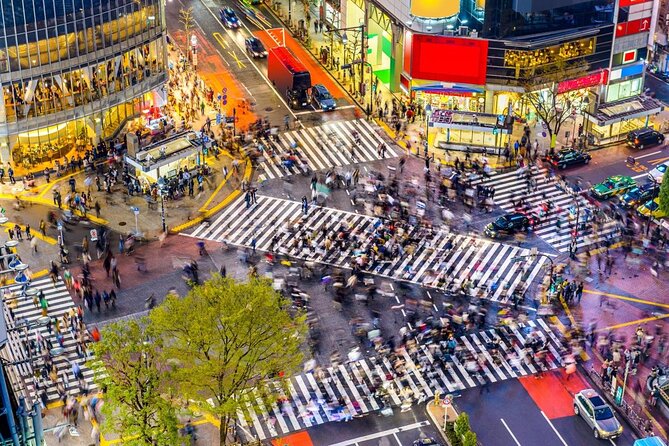
- Practice panning at Shibuya Crossing: The world-famous crossing becomes a practical lesson in photographing movement.
- Visit Laurence’s favorite Shibuya photo locations: His decade of photographing the area helps shape the route.
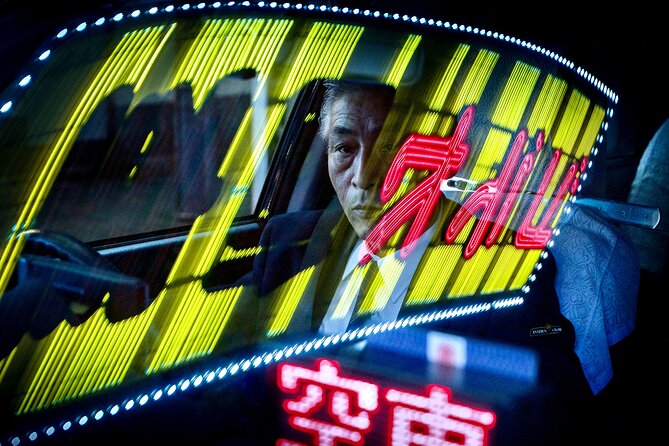
- Shoot neon with a Blade Runner feel: The aim is graphic, moody night photography rather than ordinary sightseeing snapshots.
- Bring a camera or phone: The workshop can suit beginners, experienced photographers, and people using an iPhone.
- Expect a small group and moderate walking: Up to six people take part, starting and ending at Cerulean Tower Tokyu Hotel.
Starting at Cerulean Tower Tokyu Hotel at 7:30 pm
The meeting point is Cerulean Tower Tokyu Hotel, at 26-1 Sakuragaokacho in Shibuya. The workshop starts at 7:30 pm and returns to the same place at the end, which makes the evening easier to plan than a walk that finishes in an unfamiliar part of Tokyo.
You should arrive ready to walk and photograph right away. The experience requires a moderate level of physical fitness, so it is not a sit-down photography class. The route takes you through Shibuya at night, and the value comes from working in real street conditions rather than practicing in a controlled studio.
Laurence Bouchard has photographed Shibuya for more than ten years and has run photography workshops for several years. That matters here because night photography depends on timing and location. A technically sound camera setting will not help much if you are standing in a dull spot, missing the movement, or framing the neon poorly.
The group size is capped at six. That is a useful limit for street photography, where a large group can block sidewalks, lose sight of the instructor, or make it hard to stop without getting in everyone’s way. With only a few people, you have a better chance of asking about your own camera or phone instead of receiving a general lecture.
A few more Tokyo trips to weigh up
- Sushi Making Tokyo Roll and Authentic Japanese Sushi Class
★ 5.0 · 3,971 reviews - Tokyo: Roll and Authentic Sushi Making Class in Asakusa
★ 4.9 · 1,957 reviews - Tokyo Shinjuku Chopsticks Making Class
★ 5.0 · 1,763 reviews
A short lesson before the neon begins
The first part is a brief discussion of camera settings. The supplied details do not specify particular shutter speeds, apertures, or ISO values, and that is probably the right approach for a mixed group. Your ideal settings depend on your camera, lens, available light, and the kind of image you want.
Laurence can help you understand the choices needed for nighttime work. If you are new to photography, this gives you a starting point before the streets become visually crowded. If you already use a camera often, you can spend less time on basic controls and more time working on timing, composition, and movement.
The workshop also adapts to different equipment. One experienced photographer did not need much camera help, while that person’s wife used a phone. Another participant had more than 40 years of photography experience and still enjoyed the chance to work on night street images. That range tells me this is not limited to beginners, but advanced photographers should expect a practical street session rather than a technical master class.
Phone users should not feel out of place. A smartphone can handle neon signs, motion, and strong contrast well when you pay attention to framing. You will not get every manual control found on a dedicated camera, but Laurence’s advice about angles and locations still applies.
Shibuya Crossing becomes the first photo lesson
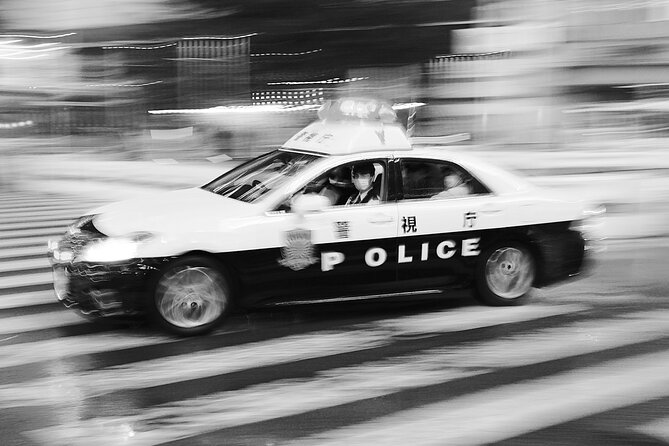
The group then heads to Shibuya Crossing, one of Tokyo’s most recognizable public spaces. Instead of treating it only as a famous place to photograph, Laurence uses it to teach panning shots.
Panning means following a moving subject during the exposure so the subject can remain relatively sharp while the background records motion. It takes timing, patience, and several attempts. That makes the crossing a sensible first stop: people move in many directions, the scene changes constantly, and you can quickly see how small changes in your movement affect the result.
You should not expect every frame to work. That is part of the lesson. Night street photography often produces a mixture of blurred, partly successful, and genuinely striking images. The useful thing is having an instructor nearby who can point out what to adjust rather than leaving you to guess.
The crossing also gives you a clear introduction to the mood this workshop is chasing. You are working with artificial light, motion, crowds, and a strong sense of place. The goal is not simply to record that you were in Shibuya. It is to create a photograph with shape, color, and movement.
If you have only used a camera for still landscapes or posed portraits, this can push you outside your usual habits. One photographer who does photography for work joined specifically to learn from another photographer and to try street photography, which was outside their comfort zone. That is a fair description of the workshop’s appeal: you are learning by responding to a live city, not by arranging the scene yourself.
Side streets and locations selected by Laurence
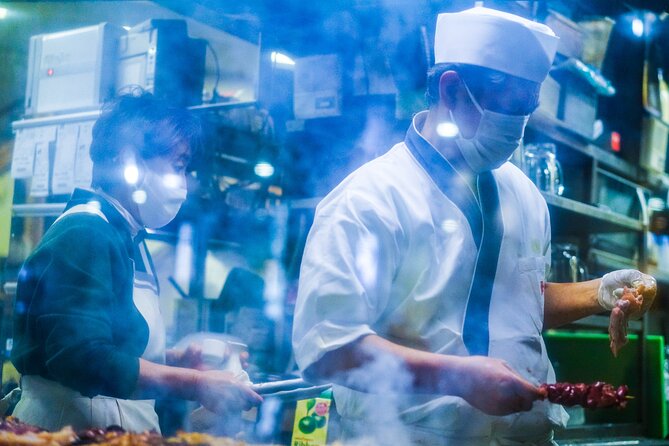
After the crossing, Laurence guides the group to other parts of Shibuya. He has spent more than a decade photographing the neighborhood, so the route includes locations he has found especially useful for night images.
The exact stops are not fixed in the information provided, and that can be a strength. Street light, access, local conditions, and the character of a place can change. A guide who knows the area can adapt instead of forcing the same walk every night.
These stops are intended to produce graphic, neon-lit photographs with a Blade Runner influence. That does not mean you should expect film sets or special effects. It means you will look for the qualities associated with futuristic city images: colored light, strong lines, reflections, silhouettes, motion, and the contrast between bright signs and dark spaces.
Laurence helps with both location and angle. That distinction is important. A good photo spot is only the beginning. You may need to move a few steps, wait for someone to enter the frame, change your viewpoint, or use a passing figure to give the image scale.
Several strong points emerge from the experience. Laurence knows where to find visually interesting places, explains how to photograph them, and adjusts his advice to the person’s camera brand or skill level. If you already know your equipment, you can focus on style. If you are still learning, you have someone to help connect the controls with the scene in front of you.
The route is also a useful answer to a common Shibuya problem. The main streets can feel visually overwhelming. A guide can help you stop chasing every sign and instead choose a few scenes with a clearer composition.
Same city, a completely different kind of day:
- Mt Fuji and Hakone 1-Day Bus Tour Return by Bullet Train
★ 5.0 · 26,383 reviews - 1-Day Tokyo Bus Tour
★ 5.0 · 14,250 reviews - Tokyo: TOKYO SKYTREE® Admission ticket
★ 4.5 · 11,192 reviews - Tokyo: teamLab Planets TOKYO Digital Art Museum Entry Ticket
★ 4.6 · 9,779 reviews
Making Shibuya look less ordinary
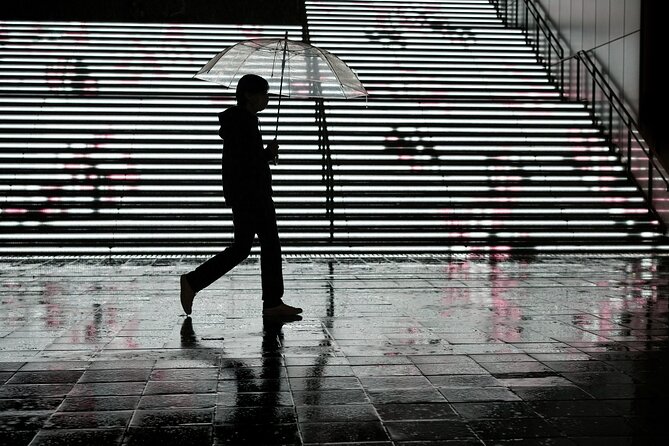
The best reason to book this is not that it takes you to Shibuya. You could walk through Shibuya on your own. The reason is that Laurence gives you a way to look at a familiar Tokyo scene with more purpose.
I like the workshop’s focus on creating images rather than collecting landmarks. You are not rushing from one attraction to the next. You are watching the light, looking for motion, and trying different angles. That pace gives the neighborhood a different character.
The Blade Runner theme is also practical. It provides a visual target without demanding that every picture look the same. You might work with a glowing sign, a dark alley-like side street, a blurred passerby, or a layered view of the city. The theme encourages you to notice atmosphere and geometry, not just people smiling in front of a landmark.
This is especially useful if your night photos usually come out too dark, too bright, or visually flat. Laurence’s guidance can help you think about the whole frame. A bright sign may need to be part of the composition rather than the entire subject. A moving person may add life to the image, but only if their position and blur help the photograph.
The workshop cannot guarantee a perfect image. Photography depends on weather, access, lighting, timing, and your own willingness to take several attempts. But it gives you a better chance of coming away with photographs that feel connected to Tokyo rather than generic night shots.
Who gets the most from this two-hour walk
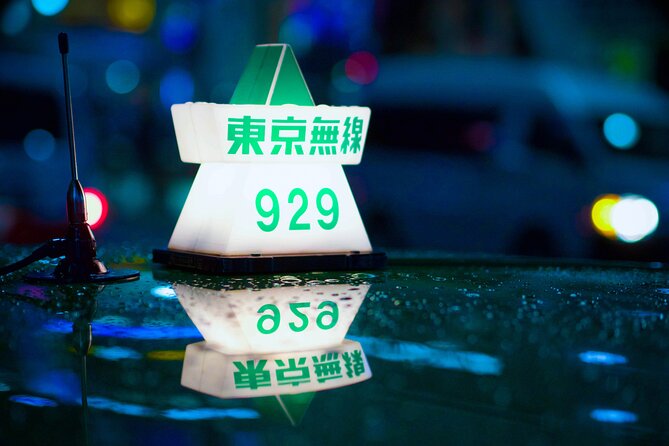
This experience suits a mixed group better than many photography classes do. It works for someone who wants a gentle introduction to night photography, but it also leaves room for a competent photographer to work on composition and street technique.
You are a good match if:
- You want help using a camera or phone after dark.
- You like street photography but are unsure how to approach moving people.
- You want photographs with a strong Tokyo mood instead of standard sightseeing images.
- You are comfortable walking for about two hours.
- You are happy to learn outdoors in changing conditions.
- You want a small group rather than a large photo tour.
An 11-year-old joined one session with a parent, and both had a good time. That does not make the workshop a children’s program, but it suggests a family can take part if the child is interested in photography and can manage the walking and evening schedule.
More advanced photographers should book with the right expectations. You may not need help with basic controls, especially if you already know your camera well. The benefit then comes from Laurence’s locations, his approach to street scenes, and the chance to practice a style that may not be part of your normal work.
Is $97.98 a fair price?
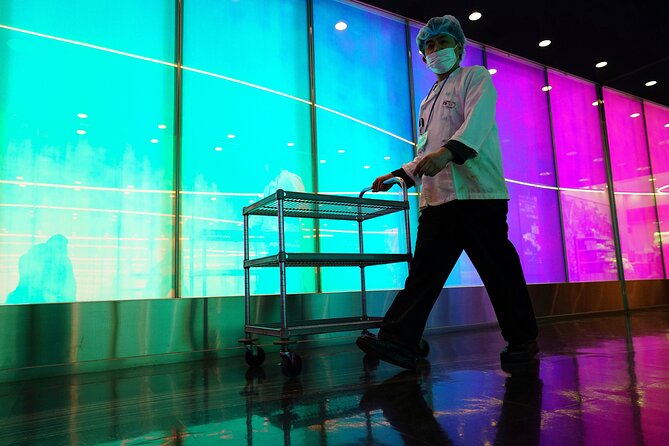
At $97.98 per person, the workshop is not a cheap sightseeing walk. You are paying for two hours, a small group, and direct instruction from an award-winning street photographer who has worked in Shibuya for more than ten years.
The value is strongest if you would otherwise spend the evening wandering without a plan. A regular walk through Shibuya costs nothing, but it will not necessarily show you where to stand, how to use movement, or how to shape the neon into a deliberate image. If you already planned to hire a private photographer or book a longer specialist class, this price may seem reasonable.
The value is weaker if you want a long technical course. Two hours includes the opening instruction, the crossing, the side streets, and the return to the hotel. You will get useful guidance, but not an exhaustive lesson in every part of night photography.
The maximum of six helps support the price. Personal feedback is much harder to provide in a large group, especially when everyone has different equipment. The workshop also welcomes phone users, so you do not need expensive camera gear to make the experience worthwhile.
It is commonly booked about 39 days ahead. That is a useful planning signal for your Tokyo schedule. If you know you want a particular evening, booking well before your trip makes sense.
Timing, holidays, and practical limits
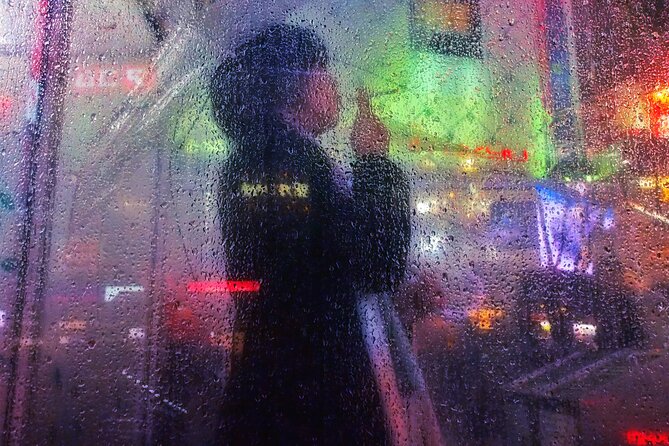
The 7:30 pm start gives you a proper nighttime setting, which is central to the workshop. You should not book this expecting a sunset photography session. The stated focus is neon, movement, and the look of Shibuya after dark.
The route starts and ends at Cerulean Tower Tokyu Hotel and is near public transportation. The return to the same meeting point is helpful if you are arranging dinner or another evening plan, though I would avoid scheduling something immediately afterward. Photography stops rarely run like a train timetable, and the two-hour estimate leaves little room for a rushed ending.
Japanese holidays deserve attention. One person found that some locations were inaccessible or not illuminated during a holiday period. That does not mean a holiday booking will fail, but it does mean the route and lighting may not match your expectations. If your dates fall during a major Japanese holiday, ask about conditions before you commit.
Cancellation is flexible up to 24 hours before the start time for a full refund. Changes or cancellations made within 24 hours are not accepted for a refund, and the cut-off follows local Tokyo time. Keep that in mind if your schedule may change.
Should you book Laurence Bouchard’s Shibuya workshop?
Book it if you want to learn by photographing the real city, not by sitting through a long classroom session. Laurence’s strongest advantages are his knowledge of Shibuya’s photo locations, his ability to work with different skill levels, and the small group size.
It is a particularly good choice for a first or second night in Tokyo if you want to understand how to photograph the city after dark. You will practice panning at Shibuya Crossing, then work on neon and graphic images in other locations. Phone users can join, and experienced photographers can still use the evening to work on street composition.
Skip it if you want a long, highly technical course, a fixed list of guaranteed viewpoints, or a relaxed sightseeing stroll with little walking. Also reconsider the date if you will be in Tokyo during a holiday when some locations may be closed or dark.
For the right person, $97.98 buys more than a walk through Shibuya. It buys a focused way to see the neighborhood, a chance to experiment with night photography, and the help of someone who knows where the city makes its best pictures.
FAQ
Where does the Blade Runner photo workshop start?
The workshop starts at Cerulean Tower Tokyu Hotel, 26-1 Sakuragaokacho, Shibuya, Tokyo 150-8512, Japan.
What time does the experience begin?
The start time is 7:30 pm.
How long does the workshop last?
The experience lasts approximately two hours.
Where does the workshop finish?
The activity ends back at the meeting point at Cerulean Tower Tokyu Hotel.
Can I use a phone instead of a dedicated camera?
Yes. The workshop is suitable for phone photography as well as camera photography. One participant used an iPhone during the session.
How many people can join?
The workshop has a maximum of six people.
What happens if I need to cancel?
You can cancel up to 24 hours before the start time for a full refund. Cancellations or changes made less than 24 hours before the start time are not accepted for a refund.
Just added around Tokyo
- Private Memorable Tokyo Tour with English Speaking Driver★ 5.0 · 30 reviews
- Private Tokyo Custom Full-Day Tour by Chartered Vehicle★ 5.0 · 16 reviews
- Private Sightseeing to Mt Fuji and Hakone with English Driver★ 5.0 · 51 reviews
- Tokyo Photography Masterclass – Private Photography Lesson★ 5.0 · 25 reviews
- Private Mt. Fuji Day Trip from Tokyo with English-Speaking Driver★ 5.0 · 33 reviews
- 4 Day Tour – Mount. Fuji, Tokyo, Hakone, Kamakura and Yokohama★ 5.0 · 19 reviews
- Private Unforgettable Mt Fuji Tour with English Speaking Driver★ 5.0 · 142 reviews
- Private Tokyo Food Tour – A Journey Through Time Through Food★ 5.0 · 36 reviews
Workshops, compared.
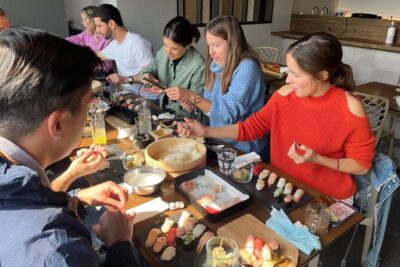
Sushi Making Tokyo Roll and Authentic Japanese Sushi Class
Read our review →

Roll and Authentic Sushi Making Class in Asakusa
Read our review →
Ramen Cooking Class at Ramen Factory in Kyoto
Read our review →
Sushi Making Class in a Happi Coat near a Famous Spot
Read our review →

Sushi Making Osaka Roll and Authentic Japanese Sushi Class
Read our review →
Tokyo Sushi Making Class in Tsukiji with Professional Chef
Read our review →Browse the lists this tour appears in