
REVIEW · HISTORICAL TOURS
Walking Through History: Hiroshima’s Path to Peace
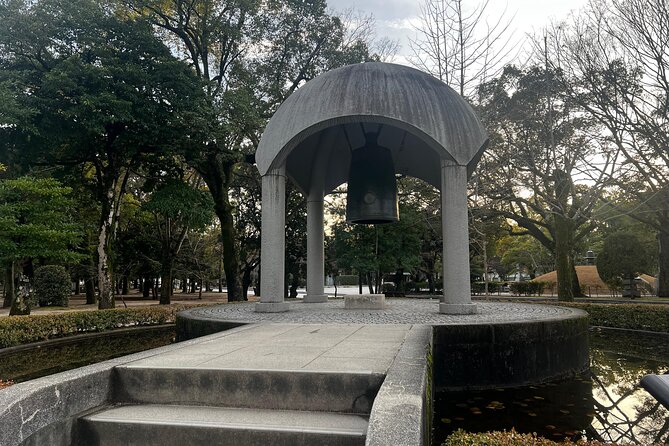
The most powerful part of this Hiroshima walk is the way it links the Atomic Bomb Dome with smaller memorials that are easy to miss on your own. In two hours, you move through the park’s central sites, from the Peace Bell and Children’s Peace Monument to the Cenotaph and the Gates of Peace.
I like the small maximum of eight people, which gives you room to ask questions and lets the guide adjust the pace. I also like the human focus: guides such as Ghani and Sheraz explain personal stories, local memories, and the meaning behind each monument rather than simply pointing out buildings.
The main consideration is that the Peace Memorial Museum visit is brief and self-guided. Your admission is arranged in advance, but guides cannot speak inside the museum, so you should plan extra time afterward if you want to read the exhibits carefully. The route is flat, yet it involves plenty of walking, and Hiroshima’s summer heat can make the pace feel harder.
In This Review
- Key points to know before you book
- Why this two-hour Hiroshima walk works
- Atomic Bomb Dome: beginning with the city’s most haunting sight
- Peace Bell and Korean Victims Monument: widening the story
- Children’s Peace Monument: Sadako and the paper cranes
- Peace Flame and the National Peace Memorial Hall
- The Cenotaph: the heart of the Peace Memorial Park
- Hiroshima Peace Memorial Museum: useful access, limited guided time
- Gates of Peace: ending with a universal message
- Guide style, group size, and walking comfort
- Who will get the most from this experience
- Practical value at $31.63 per person
- Should you book Walking Through History?
- FAQ
- How long does the Hiroshima peace walk last?
- What is included in the price?
- Is the museum visit guided?
- Where does the tour start and finish?
- How large is the group?
- Can I cancel for a full refund?
Key points to know before you book
- A two-hour route through Hiroshima’s main peace sites: The walk covers nine stops, with time at the Atomic Bomb Dome, memorials, the Peace Memorial Hall, and the Gates of Peace.
- Small groups capped at eight people: You get a more personal experience and a better chance to ask questions than on a large city tour.
- A PhD scholar leads the walk: Guides including Ghani, Cva, Sheraz, Shiraz, and Sharain have been assigned to different departures.
- The Peace Memorial Museum ticket is included: Your entry is purchased ahead of time, allowing you to avoid the main ticket line.
- The route is generally flat: It suits most people, although the total walking time and hot weather call for comfortable shoes and sensible pacing.
- A thoughtful but not fully complete wartime discussion: The tour explains Hiroshima’s suffering well, but you may want to ask directly about Japan’s role as an aggressor during the Second World War.
Why this two-hour Hiroshima walk works
Hiroshima’s Peace Memorial Park is easy to visit but not always easy to understand. The monuments are spread across a broad riverside area, and many carry layers of meaning that are not clear from a quick look. This tour gives you a sequence, moving from the physical remains of the bombing to symbols of mourning, remembrance, and future peace.
The price is $31.63 per person. For that amount, you receive a guided walk, a small group setting, and admission to the Hiroshima Peace Memorial Museum. That is fair value if you are in Hiroshima for a short time or arriving from Kyoto for the day and want someone to organize the important sights.
I would not book it as your only Hiroshima experience if you want a long museum visit or a wider look at the city. I would book it as a focused introduction, then return to the museum or other sites at your own pace.
The tour is usually booked about 14 days ahead, so reserving early makes sense if your schedule is fixed. Confirmation arrives at booking, and you receive a mobile ticket. The meeting point is at 1-chōme-10-1 Ōtemachi in Naka Ward, while the walk ends at the Gates of Peace at 4-15 Nakajimachō.
A few more Hiroshima trips to weigh up
- Hiroshima Historical Walking Tour – Why A-Bomb was Dropped
★ 4.8 · 893 reviews - Hiroshima Peace (Heiwa) Walking Tour at World Heritage Sites
★ 5.0 · 872 reviews - Miyajima Half-day Trip Historical Walking Tour
★ 5.0 · 284 reviews
Atomic Bomb Dome: beginning with the city’s most haunting sight
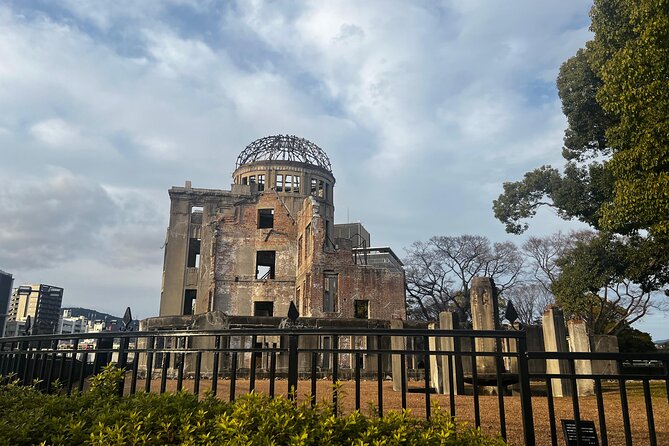
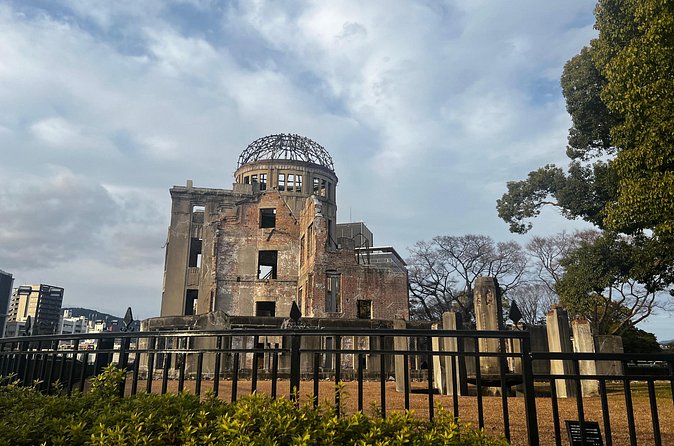
The Atomic Bomb Dome is the natural first stop. Its damaged frame is difficult to look at casually. Unlike a museum display, it is the actual remains of a building affected by the atomic bombing, preserved in the middle of a modern city.
You get about 20 minutes here, enough for the guide to explain what happened on August 6, 1945, and why the structure was preserved. The building is a UNESCO World Heritage Site and one of Hiroshima’s clearest symbols of survival and peace.
This is a good place to begin because it gives the rest of the walk a physical reference point. You are not hearing about the bombing in an abstract way. You are looking at the surviving shell of a building beside the river.
The stop is outdoors and free, so you can take photographs. Still, this is not a quick photo opportunity. Give yourself space to listen, and remember that the tone of the whole walk is serious.
Peace Bell and Korean Victims Monument: widening the story
The Peace Bell receives about 10 minutes. Its sound represents harmony and a world without nuclear weapons, and the guide explains why the bell matters within Hiroshima’s wider message.
The next stop, the Monument to Korean Victims and Survivors, is especially important because it adds a perspective that visitors can miss when they focus only on Hiroshima’s Japanese victims. The monument recognizes Koreans who suffered in the bombing and their place in the city’s wartime story.
I value this stop because it pushes the walk beyond a single national story. Hiroshima was part of the Japanese Empire, and many Koreans were living and working in the city at the time. The monument points toward remembrance, reconciliation, and a fuller account of who was affected.
The tour does have one point that deserves careful attention. One person found that the discussion did not give enough weight to Japan’s own aggression and its attempt to expand alongside Germany. I would treat that as a useful prompt, not a reason to dismiss the walk. If you want a more balanced wartime account, ask your guide directly about Japan’s actions before the bombing and the experiences of people under Japanese rule.
Children’s Peace Monument: Sadako and the paper cranes
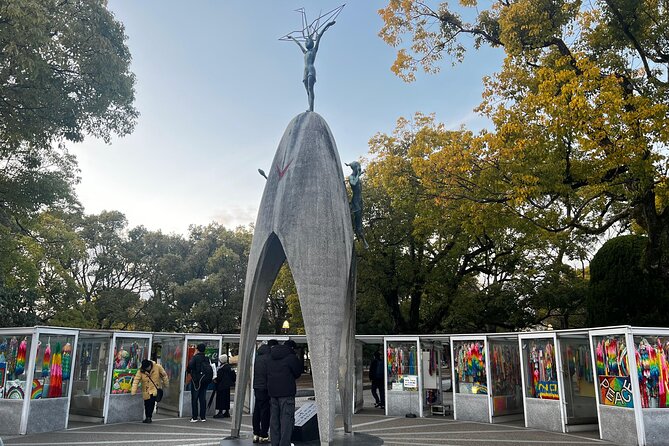
The Children’s Peace Monument is one of the park’s most moving stops. It recalls children who died because of the atomic bombing and is linked to Sadako Sasaki, a young girl who folded paper cranes while hoping to survive.
The monument is surrounded by colorful paper cranes, which give the site a gentler appearance than the Dome or the museum. That visual contrast can make the stop even more affecting. You have about 10 minutes here, enough to hear Sadako’s story and understand why the cranes became connected with peace.
This is also a point where a good guide matters. A quick visit may leave you with only a photograph. A guide can explain how the monument connects children, memory, and the continuing wish to abolish nuclear weapons.
The tour is not designed to rush you from one marker to the next. Guides have adjusted the pace for people with knee trouble, allowed time for photographs, and stopped in the shade during very hot weather. That practical care matters in a park where the emotional weight can be tiring as well as the walking.
Same city, a completely different kind of day:
- Peaceful Hiroshima & Miyajima UNESCO 1 Day Bus Tour
★ 5.0 · 5,309 reviews - Hiroshima: Hiroshima and Miyajima UNESCO Sites 1-Day Tour
★ 4.9 · 2,330 reviews - Hiroshima / Miyajima Full-day Private Tour with Government Licensed Guide
★ 5.0 · 1,298 reviews - Hiroshima in a Nutshell: Morning Bike Adventure
★ 5.0 · 524 reviews
Peace Flame and the National Peace Memorial Hall
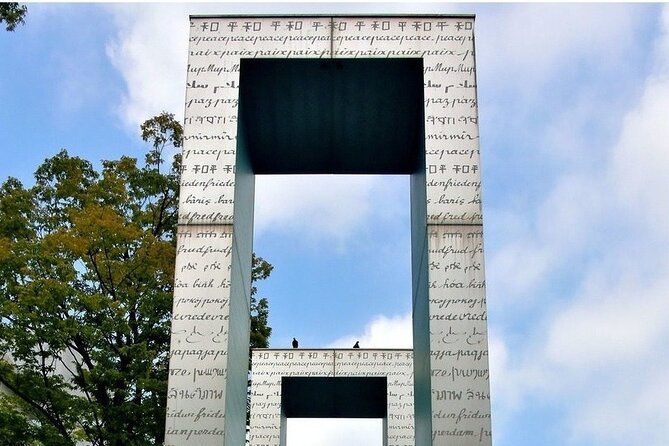
The Peace Flame has burned continuously since 1964. Its stated purpose is clear: it will remain lit until all nuclear weapons are abolished. You spend about 10 minutes here, considering the park’s central message of peace and disarmament.
From there, the route reaches the Hiroshima National Peace Memorial Hall for the Atomic Bomb Victims. This is a quieter place, built for reflection through photographs, personal accounts, and survivor testimonies. You get about 20 minutes, the longest scheduled indoor stop apart from the museum portion.
I like the change in mood here. The outdoor monuments are public symbols, while the hall brings attention back to individual lives. You are encouraged to think about people rather than only dates, statistics, and political events.
Twenty minutes is enough for an introduction, but not enough for every story. If a particular testimony catches your attention, note the name or subject and return later. The walk gives you a framework, but you control how much time you ultimately give to the material.
The Cenotaph: the heart of the Peace Memorial Park
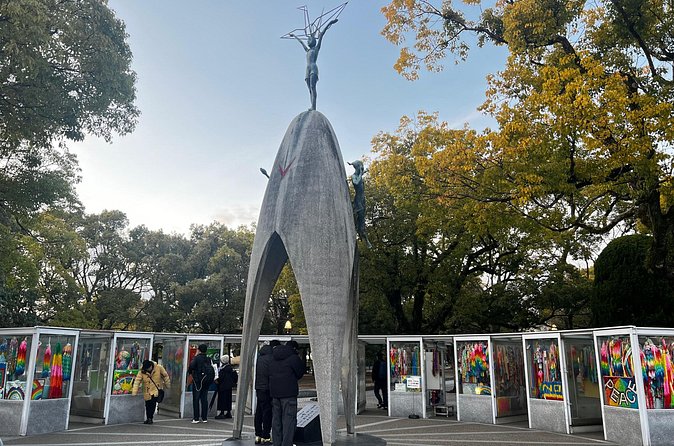
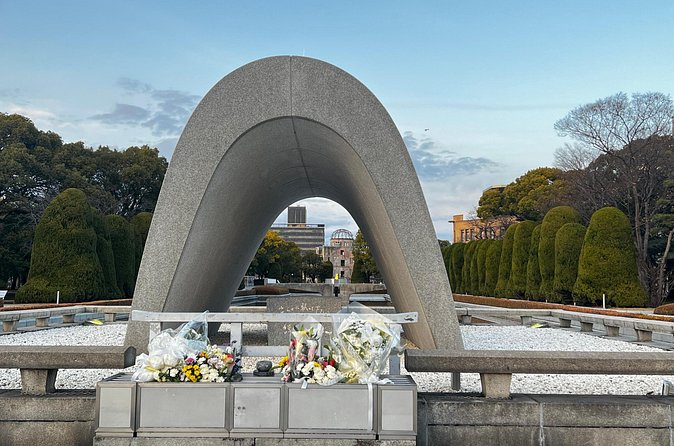
The Hiroshima Peace City Monument, also called the Cenotaph for the Atomic Bomb Victims, is one of the park’s central memorials. Its arched form shelters the record of known victims, and the inscription expresses a promise that the evil should not be repeated.
The monument aligns with the Peace Flame and the Atomic Bomb Dome, creating one of the park’s most meaningful visual lines. Your guide can help you understand that arrangement rather than leaving you to notice it by chance.
You get about 10 minutes here. That may sound short, but the stop works best as a quiet pause. The value comes less from a long lecture and more from knowing what you are looking at and why the placement matters.
This is also a good point to ask questions about Hiroshima’s peace message. The tour presents the city’s commitment to remembrance and nuclear disarmament, while an engaged conversation can help you place that message within the larger events of the Second World War.
Hiroshima Peace Memorial Museum: useful access, limited guided time
The Peace Memorial Museum is the emotional center of most Hiroshima visits, and the tour includes an entrance ticket. The ticket is purchased ahead of time, so you can skip the long entry line.
There is an important limitation: guides are not allowed to speak inside the museum, and you visit the exhibits on your own. The scheduled time is about 10 minutes, which is enough to enter and begin, but far too short for a careful visit to the full museum.
I see the included ticket as a convenience rather than a complete museum tour. The guide prepares you for what you will encounter, and you then have the freedom to take in the displays privately. For many people, that quiet time is appropriate.
If your schedule allows, plan to stay longer after the guided portion ends. The museum contains personal stories, photographs, and survivor accounts, and rushing through them would weaken the experience. The tour’s two-hour format is best understood as a guided park walk with museum access, not as a two-hour guided museum tour.
Gates of Peace: ending with a universal message
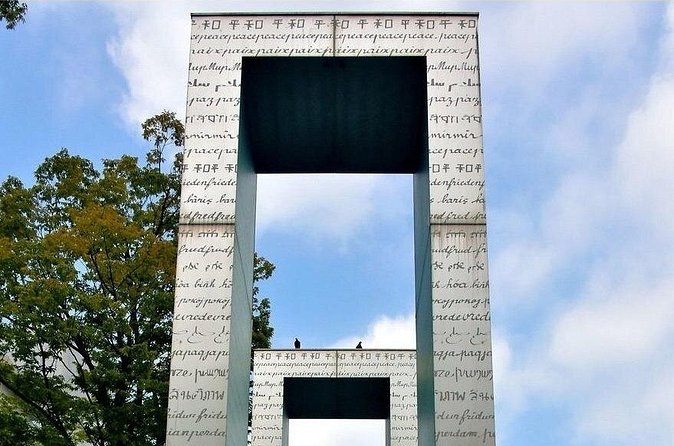
The walk finishes at the Gates of Peace, a row of ten glass gates inscribed with the word peace in different languages. The gates turn Hiroshima’s message outward, beyond Japan and beyond the people directly connected with the bombing.
You spend about 20 minutes here, giving the walk a calmer ending after the museum and memorials. The setting encourages you to think about how Hiroshima wants to be remembered and what kind of future its monuments ask you to imagine.
Ending here is practical, too. You are not left at an obscure point in the park. The final location is clearly identified as the Gates of Peace, and you can continue your own sightseeing from there.
Guide style, group size, and walking comfort
The guide is a major part of the value. Different departures have been led by Ghani, Cva, Sheraz, Shiraz, or Sharain. The strongest pattern is a guide who explains clearly, welcomes questions, and uses questions of his own to keep the group involved.
Sheraz, in particular, has been praised for asking the group to guess answers before explaining them. That approach turns the walk into a conversation rather than a speech. Ghani has been described as patient, thoughtful, and attentive to pace, including for someone recovering from a knee injury.
The group limit is eight people. That is small enough for direct conversation without making the tour feel like a private booking. It also lets the guide slow down, stop in the shade, or give you time for photographs without losing control of the schedule.
The route is an easy walk on flat ground, but do not confuse flat with effortless. There is lots of walking, and summer heat can be intense. Wear comfortable shoes, carry water, and dress for the weather. Service animals are allowed, and the activity is near public transportation. Most people can take part, though anyone with limited stamina should tell the guide early.
Who will get the most from this experience
I would recommend this walk to first-time visitors who want an organized introduction to Hiroshima’s Peace Memorial Park. It is also a strong choice for anyone making a day trip from Kyoto by train and trying to use limited time well.
It suits you if you like history explained through places, personal accounts, and questions. The small group and flexible pace are useful if you want to ask about the monuments rather than simply photograph them.
Families with older children may also find the structure helpful, especially at the Children’s Peace Monument. The subject is painful, so parents should decide how much detail is suitable for their children.
I would be more cautious if you want a long, deeply researched discussion of Japanese wartime responsibility, the decision to use the atomic bomb, or the political history of the Pacific War. The walk gives you important context, but it is centered on Hiroshima’s peace memorials. Ask direct questions if you want the guide to spend more time on competing historical viewpoints.
Practical value at $31.63 per person
At $31.63, the tour sits in the reasonable range for a two-hour guided experience, especially since the Peace Memorial Museum admission is included. You are paying for structure, interpretation, a small group, and the convenience of a prepaid museum ticket.
The value is strongest when your time is tight. Instead of finding the monuments one by one, you get a logical route and explanations at each stop. That can make a day in Hiroshima feel far more purposeful.
The value is weaker if you already know the park well or plan to spend several hours reading every museum display alone. In that case, you may prefer to walk independently and devote your money to other activities.
Free cancellation is available if you cancel at least 24 hours before the start time. Changes or cancellations inside that window are not accepted for a refund, so keep your schedule firm once the deadline passes.
Should you book Walking Through History?
Book this tour if you want a short, serious, well-organized introduction to Hiroshima’s central peace sites. The combination of a small group, a flat route, several memorials, and a prepaid museum ticket makes it especially useful for first-time visitors and day trippers.
I would book it early, wear good shoes, and reserve extra time for the museum after the walk. Go in ready for a thoughtful account, but ask about Japan’s wartime aggression if a fully balanced historical discussion matters to you.
If you want Hiroshima to make sense rather than merely appear on a map, this is a sensible place to begin.
FAQ
How long does the Hiroshima peace walk last?
The experience lasts approximately two hours and visits nine locations, ending at the Gates of Peace.
What is included in the price?
The $31.63 price includes the guided walking tour and entrance to the Hiroshima Peace Memorial Museum.
Is the museum visit guided?
No. The guide purchases your museum ticket in advance, but guides are not allowed to speak inside. You visit the museum on your own.
Where does the tour start and finish?
The meeting point is 1-chōme-10-1 Ōtemachi, Naka Ward, Hiroshima. The tour finishes at the Gates of Peace, 4-15 Nakajimachō, Naka Ward.
How large is the group?
The activity has a maximum of eight participants.
Can I cancel for a full refund?
Yes. You can cancel at least 24 hours before the experience start time for a full refund. Cancellations or changes made less than 24 hours beforehand are not accepted.
Just added around Hiroshima
- The Peace Memorial to Miyajima : Icons of Peace and Beauty★ 4.5 · 31 reviews
- Hiroshima & Miyajima All-Inclusive Tour w/Licensed guide Pancho★ 5.0 · 54 reviews
- Private Full Day Hiroshima Tour★ 4.5 · 29 reviews
- Okunoshima Rabbit Island Cycling Tour with Local Guide★ 4.5 · 17 reviews
- Shore Excursion from Hiroshima Port : Private Tour in Hiroshima★ 5.0 · 17 reviews
- Hiroshima Saijo Sake Tasting Tour with visit to 7 Breweries★ 5.0 · 104 reviews
- Miyajima Guided Tour and Fresh Oyster Farm Tour★ 5.0 · 20 reviews
- Hiroshima Country Cycling: Explore Rural Life 1 HR from City★ 5.0 · 22 reviews
Historical Tours, compared.
World Heritage Shirakawa-go and Experience Tours from Kanazawa
Read our review →
Imperial Palace and Shogun Historical Walking Tour
Read our review →
World Heritage Kyoto & Nara Uji Authentic Matcha Experience
Read our review →
Kyoto Gion: 2-Hour Geisha Culture & History Walking Tour
Read our review →
World Heritage Shirakawa-go Morning Guided Tour
Read our review →
Hiroshima Historical Walking Tour – Why A-Bomb was Dropped
Read our review →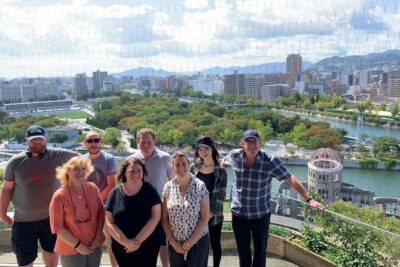
Hiroshima Peace (Heiwa) Walking Tour at World Heritage Sites
Read our review →Browse the lists this tour appears in