
REVIEW · EVENING EXPERIENCES
Tokyo: Night Foodie Tour in Shinjuku
The best part of this Shinjuku evening is the food itself: a sushi chef prepares seasonal nigiri in front of you, then you grill Wagyu beef at your own table. I like that the tour gets you into places you could easily miss on your own, and I like the steady mix of eating and walking through Kabukicho. The one catch is that the portions are high quality rather than huge, and the $127 price is a serious bite.
I also appreciate the human touch. Guides including Fuji, Yuki, Max, Amy, Hiro, and Ken have helped visitors understand customs, drinks, neighborhood landmarks, and the food at each stop. Bring cash, wear comfortable shoes, and expect narrow or stair-filled places that do not suit wheelchair users or strollers.
In This Review
- Five things to know before you book
- Why this three-stop night works in Shinjuku
- First stop: omakase sushi with the itamae
- Walking through Kabukicho after dark
- Second stop: Wagyu yakiniku at your own grill
- The final stop: Japanese sweets, snacks, or a drink
- The guides make the difference
- Price, timing, and practical details
- Who should book this Shinjuku food tour?
- Should you book it?
- FAQ
- How long does the Tokyo Shinjuku night food tour last?
- What food is included?
- Is vegetarian food available?
- Is alcohol included?
- Where does the tour meet?
- How do I find the guide?
- Is the tour suitable for children?
- Is the tour wheelchair accessible?
- Can I cancel the booking?
Five things to know before you book
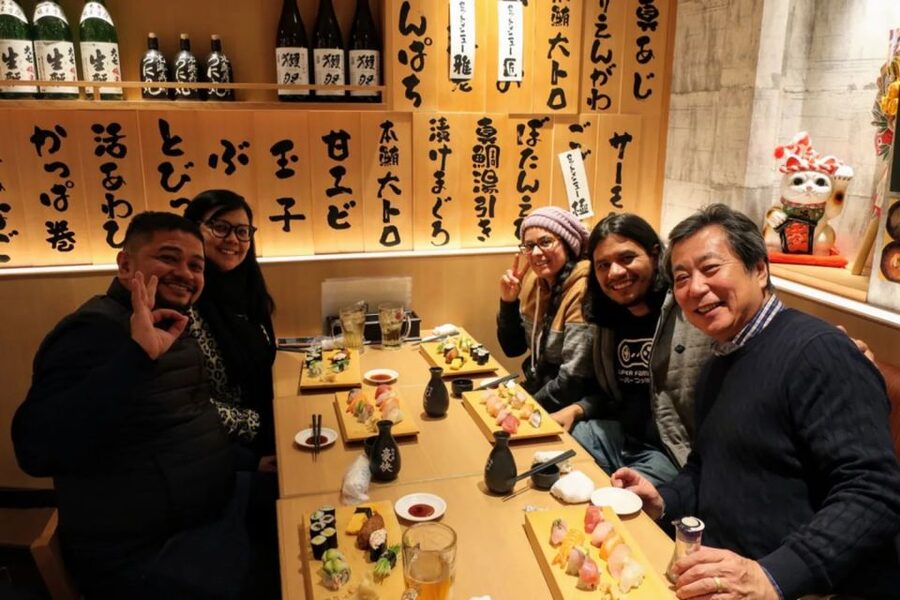
- Chef-prepared sushi starts the meal: You may choose the omakase option, letting the itamae select seasonal pieces.
- Wagyu is cooked at your table: Thin slices go over traditional yakiniku grills, so you control the cooking.
- Kabukicho is part of the experience: The walk adds neon streets, nightlife context, and a look at Shinjuku’s red-light district.
- The final stop changes by group: Adults may receive dessert or an alcoholic drink, while families with children go to a Japanese snack restaurant.
- The tour favors quality over quantity: Expect modest servings of premium food, not an all-you-can-eat dinner.
Why this three-stop night works in Shinjuku
Shinjuku can feel like a city-sized puzzle after dark. Stations, department stores, restaurants, hotels, shrines, tiny lanes, and nightlife streets all crowd together. A map helps, but it will not tell you which doorway leads to a good sushi counter or where a Yakiniku restaurant is tucked away.
This tour gives you a useful frame for the area. You meet at the black pillar of the old Kyu-Ome-kaido, next to the Uniqlo Shinjuku Nishiguchi shop, about a seven to eight minute walk from the JR Shinjuku Station West Exit. Look for the guide holding an orange MagicalTrip sign.
From there, the evening follows a sensible rhythm. You eat at the first restaurant, walk through Kabukicho, sit down for Wagyu yakiniku, then finish with snacks, dessert, or a drink. The planned stops add up to about three and a half hours, although the main activity description lists three hours, so check the exact departure details when you reserve.
I think that pacing is one of the tour’s strengths. You are not trapped at one table for the whole night, and you are not rushing from one bite to the next. The walking also gives your stomach a break and helps you see how quickly Shinjuku changes from office district to late-night entertainment center.
A few more Japan trips to weigh up
- Tokyo: Shinjuku Food Tour (13 Dishes at 4 Local Eateries)
★ 5.0 · 6,603 reviews - Tokyo Tsukiji Fish Market Food and Culture Walking Tour
★ 5.0 · 3,184 reviews - Osaka: Shinsekai Food Tour with 13-15 Dishes at 5 Eateries
★ 4.8 · 2,204 reviews
First stop: omakase sushi with the itamae
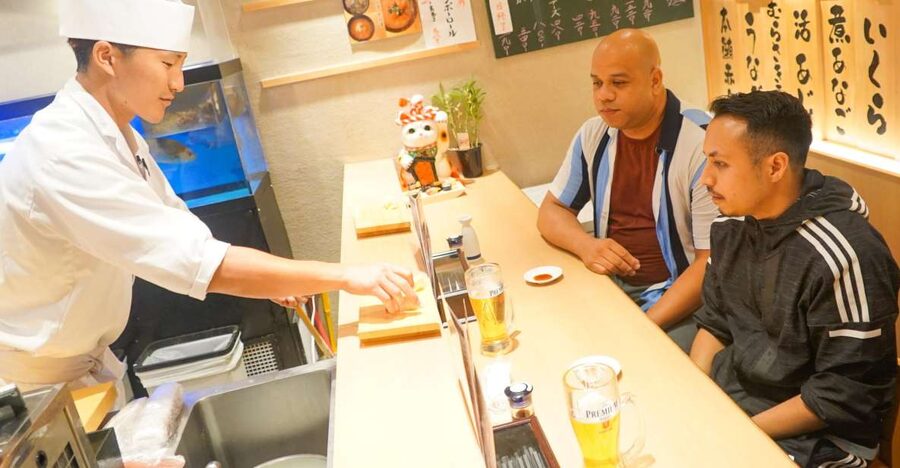
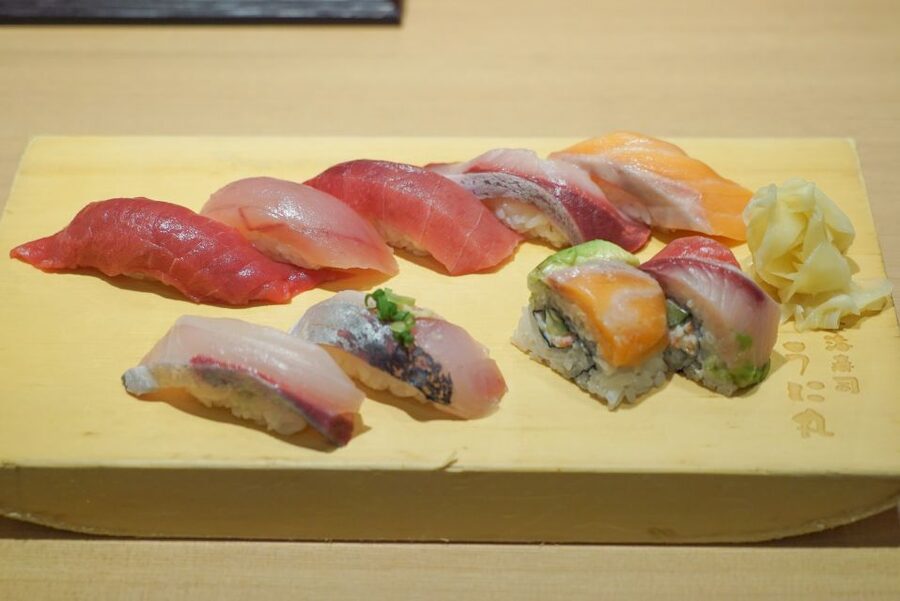
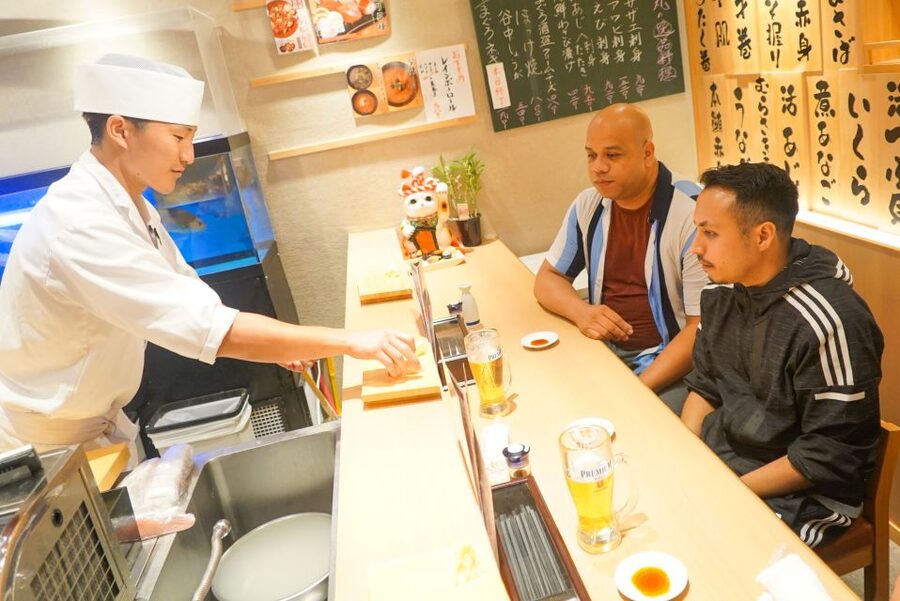
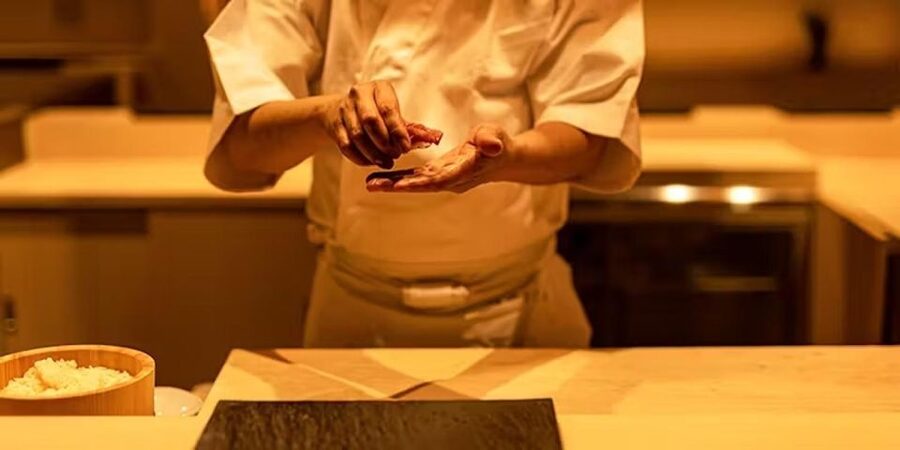
The evening begins at a local sushi restaurant, where the chef prepares fresh nigiri in front of you. This is more than a plate arriving from a kitchen. You get to watch the itamae shape rice, handle the fish, and present each piece as part of a seasonal course.
The omakase format means the chef chooses the dishes. That can be exciting if you want to try something beyond the usual salmon and tuna. It also removes the stress of pointing at an unfamiliar menu, which is especially helpful when you are new to Japanese food.
Your guide explains how to eat the sushi and can help with ordering or questions. That support matters because sushi etiquette can seem fussy when you first encounter it, even though the basics are simple. You can focus on the flavor instead of worrying about doing something wrong.
One useful detail is that a vegetarian menu is available. Still, you should not assume every dietary need can be handled. Food is prepared in kitchens operated by the restaurants, not by MagicalTrip, and allergy-free meals cannot be guaranteed. Substitutions may not be possible at every stop.
The sushi course is a highlight for many people, but it may not suit someone who wants a large dinner right away. One visitor described the portions as modest but high-end, which is a fair way to think about the meal. You are paying for careful preparation and quality, not a mountain of food.
If you are traveling with a child who only eats a few kinds of sushi, tell the guide early. Amy once arranged a plate focused on an 11-year-old’s preference for salmon, showing the kind of adjustment a good guide may be able to make. It is not a guarantee, but it is worth asking.
Walking through Kabukicho after dark
After sushi, the group walks through Kabukicho for around ten minutes. This is not a long sightseeing tour, but it adds important context to the meal.
Kabukicho is one of Tokyo’s best-known nightlife districts. Neon signs, restaurants, bars, entertainment venues, and dense foot traffic create a very different mood from the orderly calm of a sushi counter. A guide can point out how the streets fit together and explain the area’s role in Shinjuku.
The walk is also practical. Shinjuku is easy to misunderstand, especially at night, when familiar landmarks can look different under bright signs. Guides such as Fuji and Chihiro have included explanations of local landmarks, nearby shrines, and the district’s past, turning a simple transfer into a short orientation.
Do not expect a long historical walking tour. The route is mainly there to connect the restaurants and give you a taste of the neighborhood. If you want extensive sightseeing, you may find the ten-minute guided portion brief. If you want food with a little local background, it is just enough to make the evening feel like more than a restaurant crawl.
Keep an eye on the group while crossing busy streets. Rain can make the walk slower, and umbrellas fill the narrow sidewalks. Comfortable shoes are a must, especially if you have already spent the day exploring Tokyo.
Second stop: Wagyu yakiniku at your own grill
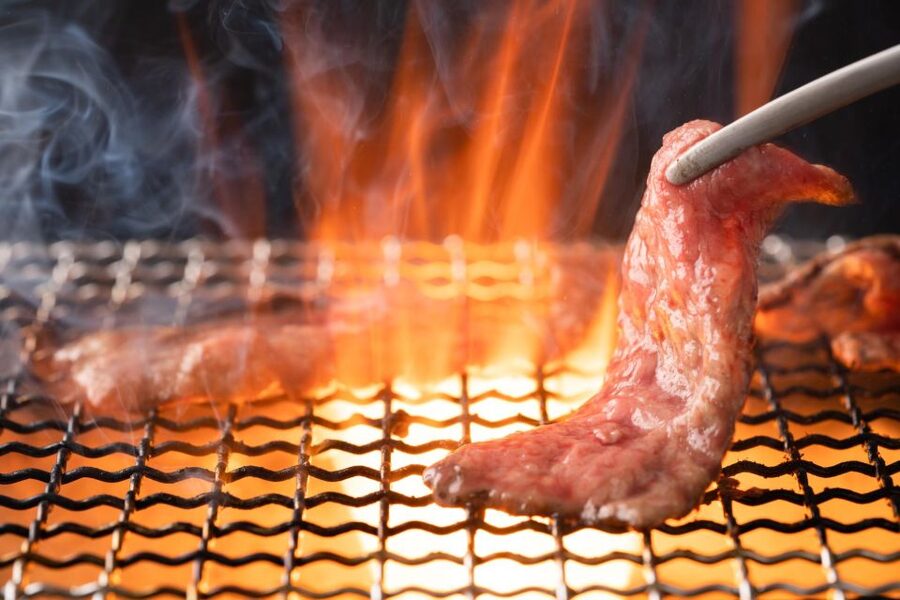
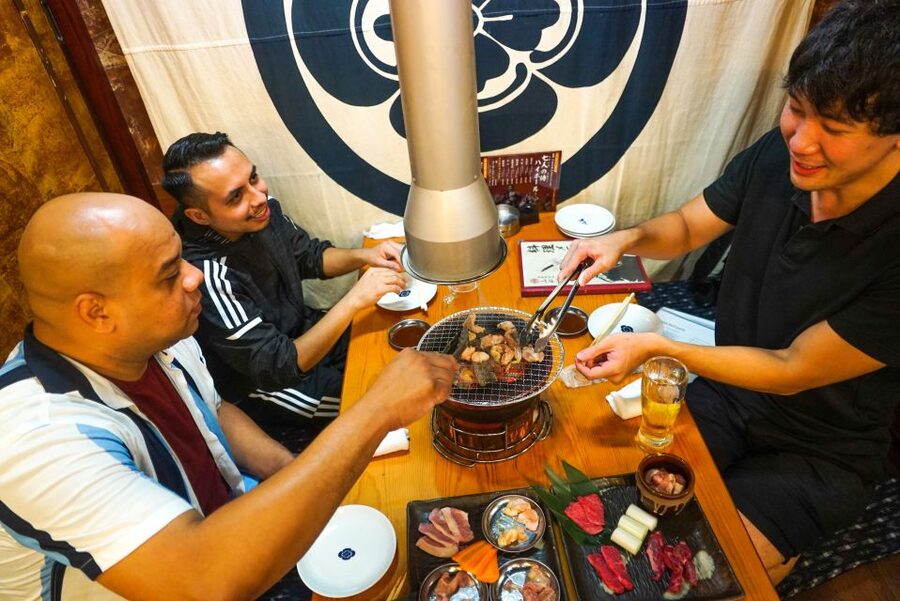
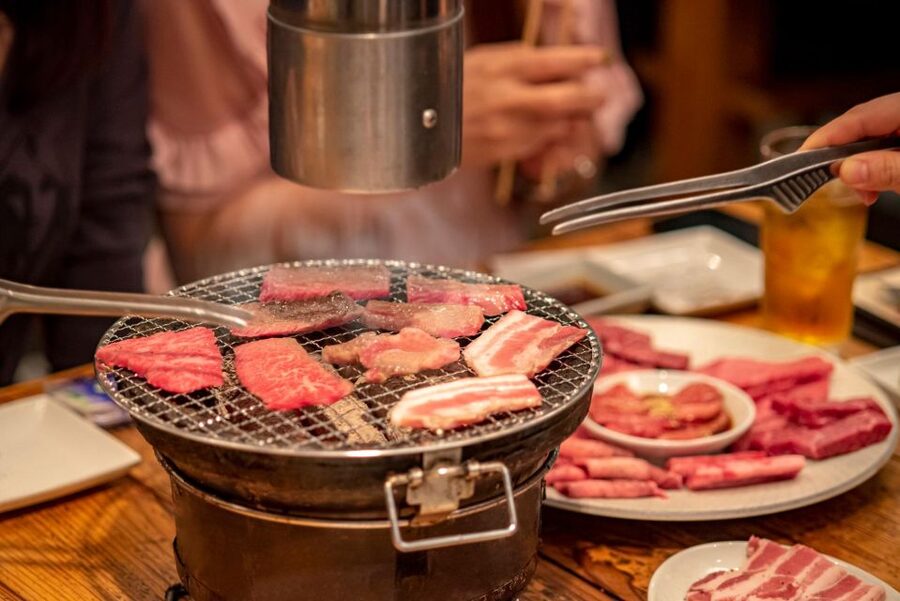
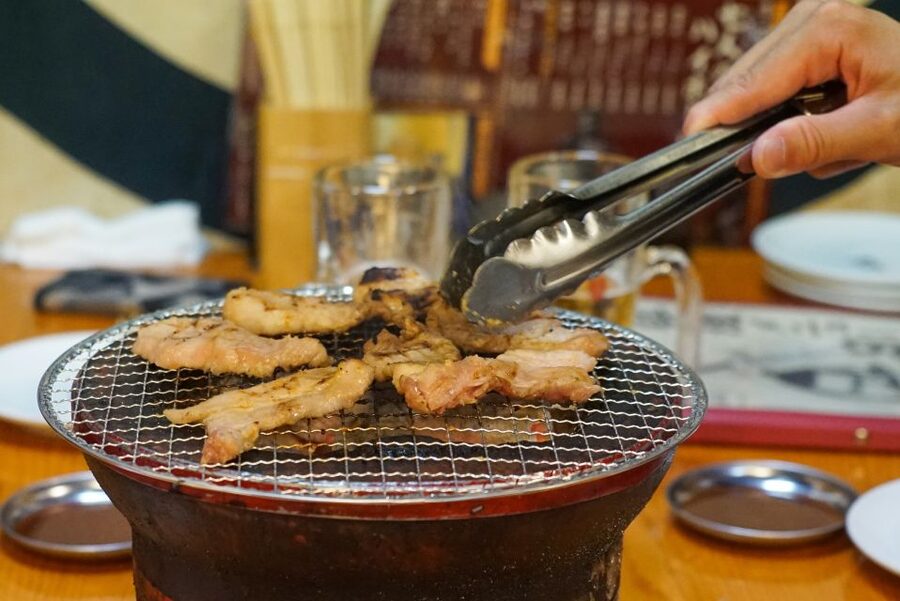
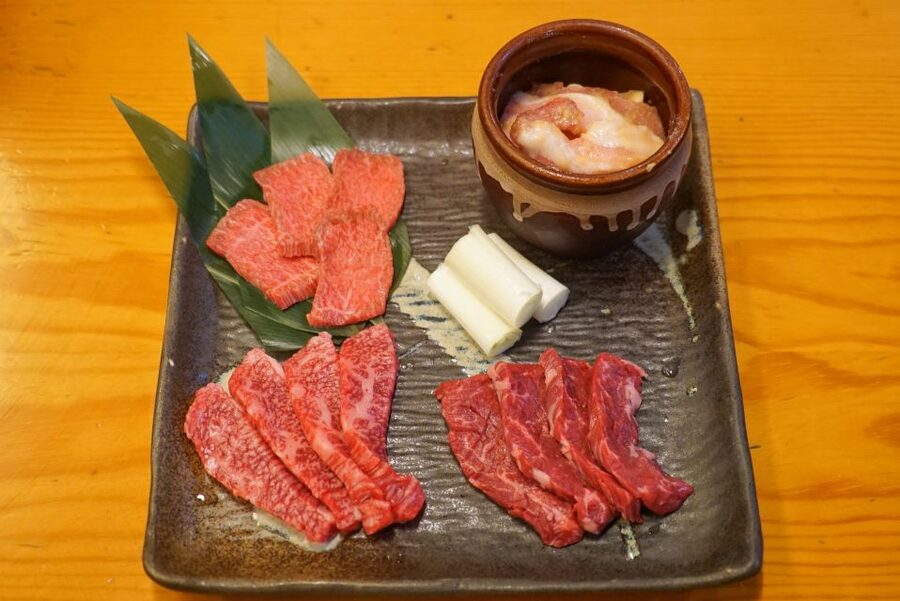
The second meal is Wagyu yakiniku, the Japanese style of tabletop barbecue. Thin slices of beef arrive raw, and you grill them yourself over a traditional Japanese BBQ stove.
This is the most hands-on part of the evening. Your guide shows you how long to cook the meat and how to enjoy it. The beef is served in manageable pieces, so you can pay attention to the texture rather than simply eating as fast as possible.
Some versions of the experience may include a salt block, where the beef is briefly rubbed after cooking. That small ritual makes the meal memorable and gives you something to talk about besides the price of the meat.
The restaurant may be near Shinjuku West or in Kabuki-cho, depending on the arrangement for your group. Either way, this is not the sort of place you need to find, inspect, and navigate alone. Your guide handles the setting and helps explain what is in front of you.
Wagyu is a major reason the tour costs $127 per person. You are getting a full Wagyu dinner, a sushi course, two drinks, a final dessert or alcoholic drink, and several hours of guiding. That is not cheap, but it becomes easier to justify if you value premium ingredients and would otherwise feel unsure about choosing a restaurant.
The value is weaker if your main goal is simply to eat as much as possible. The portions are described as modest by one participant, with the emphasis on high-end food. I would book this for a special evening or a first night in Tokyo, not as the cheapest way to fill your stomach.
Vegetarian diners can request a vegetarian menu, but the same limits apply as at the sushi stop. Ask before booking if you have allergies or strict dietary rules. The operator will try to help, but it cannot promise a full substitute at every restaurant.
Same city, a completely different kind of day:
- Mt Fuji and Hakone 1-Day Bus Tour Return by Bullet Train
★ 5.0 · 26,383 reviews - 1-Day Tokyo Bus Tour
★ 5.0 · 14,250 reviews - PERFECT KYOTO 1-Day Bus Tour
★ 5.0 · 13,518 reviews - Tokyo: TOKYO SKYTREE® Admission ticket
★ 4.5 · 11,192 reviews
The final stop: Japanese sweets, snacks, or a drink
The evening ends at a local snack bar or cozy bar for dessert, a drink, or both. This is the least predictable part of the tour, and that is not necessarily a bad thing.
Some groups finish with a Japanese dessert. Others visit a snack restaurant with nostalgic sweets, chocolate, crackers, and savory treats. One participant especially enjoyed a help-yourself snack stop, while another found the final dessert less impressive than the sushi and Wagyu. That difference tells you what to expect: the last stop is more about atmosphere and fun than a carefully staged final course.
Adults may receive an alcoholic drink, and the package includes two drinks overall. Japan’s legal drinking age is 20. Families with children are directed to a Japanese snack restaurant instead, so this tour can work for mixed-age groups, provided everyone is comfortable walking through Kabukicho.
The final stop also gives you time to talk with your guide. This is where guides often offer practical advice about Japanese drinks, customs, nearby food, and other places to visit. Guides such as Rachel and Rai have helped people understand sake, shochu, and the best way to order more of a dish they enjoyed.
Golden Gai appears near the end of the route, with about ten minutes of guided walking. The lanes are famous for tiny bars and a packed, old-fashioned nightlife feel. You may not spend a long time inside one of those small bars, but seeing the area helps complete the picture of Shinjuku after dark.
The guides make the difference
Food is the reason to book, but the guide can determine how smooth the night feels. The company uses English-speaking MagicalTrip Certified Guides, and the strongest part of the experience is the personal help at each stop.
Names attached to especially strong evenings include Fuji, Yuki, Max, Amy, Hiro, Ken, Taka, Saki, Rai, Chihiro, and Yosh Aida. Their roles go beyond leading the group from one restaurant to another. They explain dishes, help with drinks, answer cultural questions, take photos, and keep conversation moving.
That matters most for solo visitors and small groups. One solo participant found that Max kept the evening flowing and stayed engaged at every opportunity. Groups of two have also had especially personal conversations when they were the only people booked.
Group size can vary. Private or small-group options are available, but you should check the selection and price for your date. A small group usually gives you more time to ask questions and makes restaurant seating easier. A larger group may feel more social, but individual attention can be limited.
English ability also varies by guide, though many names have been praised for clear communication. If food details, allergies, or cultural questions are important to you, state that when booking and speak up at the first stop.
Price, timing, and practical details
At $127 per person, this is a premium food walk. The package includes the seasonal sushi course, a full Wagyu dinner, two drinks, dessert or another alcoholic drink, a certified guide for roughly three to three and a half hours, and tour photos. Extra food and drinks cost more.
I see the price as fair for someone who wants a planned introduction to upscale Japanese food. You are not only buying dinner. You are also paying to avoid menu confusion, find restaurants that are difficult to locate, and get explanations while eating.
The value is less convincing if you already know Shinjuku well or are comfortable choosing restaurants independently. You could spend less by eating at casual places, but you would give up the guide, the structured progression, and the chance to learn how to handle sushi and yakiniku.
The tour allows free cancellation up to 24 hours before departure and offers reserve-now, pay-later booking. Cash is listed as something to bring, so carry some yen even though the main food and drink costs are covered.
Tokyo’s weather can be extreme. Summer temperatures may reach 40°C, while winter can fall to -5°C. You will spend time walking outdoors, so dress for the season and do not underestimate the effect of heat, cold, or rain on a three-hour evening.
Some locations are not suitable for wheelchairs or strollers. The experience is not recommended for wheelchair users. Smoking rules may also vary by venue, and the restaurants cannot always be changed if smoking is prohibited at a particular location.
Who should book this Shinjuku food tour?
I would recommend it to first-time visitors who want an easy first taste of Tokyo’s food culture. It is also a good fit for solo visitors, couples, and small groups who prefer conversation and guidance to wandering through menus alone.
Food lovers will appreciate the contrast between chef-prepared sushi and self-cooked Wagyu. You also get a third stop with a lighter, more playful mood, plus a short look at Kabukicho and Golden Gai.
Families can join because all ages are welcome, and the final stop can be changed to a snack restaurant for children. Still, young children may find the late-night setting, walking, and restaurant atmosphere tiring.
I would skip it if you want a long sightseeing tour, a very large meal, or guaranteed allergy-free substitutions. I would also think twice if $127 feels uncomfortable, since the experience is designed around premium food rather than bargain dining.
Should you book it?
Book this tour if you want a polished introduction to Shinjuku that combines food, nightlife, and local guidance in one evening. The sushi and Wagyu stops are the clear stars, while the final snack or drink adds a relaxed finish.
The smartest timing is early in your Tokyo stay. You will learn where Kabukicho and Golden Gai sit, pick up ideas for later meals, and gain confidence ordering Japanese food. Just arrive hungry but not ravenous, bring cash, wear good walking shoes, and treat the evening as a tasting tour rather than an all-you-can-eat dinner.
FAQ
How long does the Tokyo Shinjuku night food tour last?
The activity is advertised as three hours, while the detailed schedule describes about three and a half hours with the guide. Check the exact timing available for your chosen date.
What food is included?
You receive a seasonal sushi course chosen by the chef, a full Wagyu yakiniku dinner, two drinks, and dessert or an alcoholic drink at the final stop.
Is vegetarian food available?
Vegetarian menus are available at the sushi and Wagyu stops. Allergy-free meals and every dietary substitution cannot be guaranteed because the food is prepared in outside restaurant kitchens.
Is alcohol included?
Two drinks are included, and alcohol is available for adults. Japan’s legal drinking age is 20.
Where does the tour meet?
The meeting point is in front of the black pillar of the old Kyu-Ome-kaido, next to the Uniqlo Shinjuku Nishiguchi shop. It is about a seven to eight minute walk from the JR Shinjuku Station West Exit.
How do I find the guide?
Look for a guide holding an orange sign marked Magical Trip.
Is the tour suitable for children?
Yes. The tour is open to all ages. For families with children, the final stop is a Japanese snack restaurant rather than an alcohol-focused venue.
Is the tour wheelchair accessible?
No. Some locations are not accessible by wheelchair or stroller, and the activity is not suitable for wheelchair users.
Can I cancel the booking?
You can cancel up to 24 hours in advance for a full refund. Reserve-now, pay-later booking is also available.
Just added around Japan
- Tokyo: Customizable Private Guided Walking Tour★ 4.5 · 129 reviews
- Private Harajuku Omotesando Architecture Tour★ 4.9 · 18 reviews
- Tokyo: Guided Helicopter Ride★ 4.9 · 24 reviews
- Tokyo: Guided Walking Tour of Tsukiji Market with Lunch★ 4.4 · 24 reviews
- Tokyo: Private Personalized Local Food Tour★ 4.5 · 101 reviews
- Tokyo GINZA: KONPARU Japanese Cabaret Show with Drink★ 4.8 · 38 reviews
- Tokyo: Guided Walking Tour of Tsukiji Market with Breakfast★ 4.4 · 134 reviews
- Tokyo: Gotokuji Cat Temple, Shinjuku Cat Cafe & 3D Cat Tour★ 4.9 · 38 reviews
Evening Experiences, compared.
Gion Magical Night Walking Tour with Geisha Trivia
Read our review →
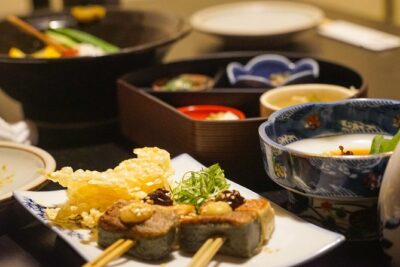
Kyoto Night Foodie Tour in Gion (9+ dishes + 6 Sake tastings)
Read our review →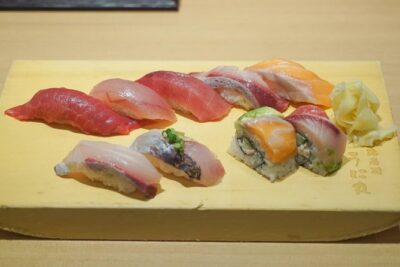
Tokyo Night Foodie Tour in Shinjuku – Seasonal Sushi, Wagyu Beef
Read our review →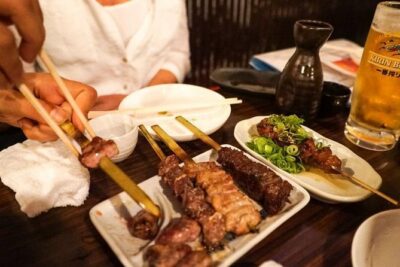
Osaka Bar Hopping Night Walking Tour in Namba (3 bars, 6 tastes)
Read our review →
Kyoto Gion Night Walk & Geisha District Guided Tour
Read our review →
Kyoto Ghost Tour: Dark Tales, Urban Legends, Bamboo Forest Night
Read our review →Browse the lists this tour appears in