
REVIEW · TEMPLE & SHRINE TOURS
Tokyo: Meiji Jingu Shrine and Shinto Culture Walking Tour
Meiji Shrine gives you a rare pause from Tokyo’s noise. Within minutes of Harajuku, you are walking beneath a canopy of about 100,000 trees, following a broad path toward one of Japan’s best-known Shinto shrines. The setting is calm, but the tour keeps it from becoming a silent photo stop. Your guide explains what you are seeing and how to behave there.
I like two things especially: the small-group format, which makes it easy to ask questions, and the practical teaching about shrine etiquette. Guides including Maya, Yota, Andres, Minori, Ryota, and Haydn have been praised for clear English, warm personalities, and useful Tokyo tips. The main consideration is pace: two hours is enough for an introduction, not a leisurely survey of every corner.
In This Review
- Key points at a glance
- Starting near Harajuku and entering Meiji Jingu Gyoen
- The Big Torii and the meaning of the forest
- Sake barrels and wine barrels: two useful visual lessons
- Meiji Shrine and a clear introduction to Shinto
- What the guides add to the visit
- Why the $19 price can make sense
- Timing, access, and what to bring
- Who will get the most from this walk
- Should you book the Meiji Shrine tour?
- FAQ
- How long does the Meiji Shrine walking tour last?
- Where is the meeting point?
- Where does the tour finish?
- What language is the tour offered in?
- What is included in the price?
- How much does the tour cost?
- How large is the group?
- Is the tour wheelchair accessible?
- Can I cancel for a full refund?
Key points at a glance
- A forest walk in central Tokyo: The route passes through a planted sacred forest of roughly 100,000 trees.
- Hands-on Shinto guidance: You learn how to approach, purify yourself, pray, and understand common shrine customs.
- More than the main shrine hall: The route includes Meiji Jingu Gyoen, the Big Torii, sake barrels, wine barrels, and Meiji Shrine.
- Small groups matter: Groups can reach 12 people, but many departures are smaller, with some turning into private walks.
- Strong guide feedback: Maya, Yota, Andres, Minori, Ryota, Haydn, and others are noted for friendly, clear explanations and thoughtful answers.
- Good first-day choice: Guides also offer suggestions for food, sights, and ways to get around Tokyo.
Starting near Harajuku and entering Meiji Jingu Gyoen
You meet in front of the Starbucks closest to Meiji Shrine, at approximately 35.6705208, 139.7031067. This is a sensible meeting point in an area with many cafés and shops, but pay attention to the exact Starbucks location. Harajuku has more than one branch, and the tour instructions specify the one nearest the shrine.
The first scheduled stop is Meiji Jingu Gyoen, the Imperial Garden connected with the shrine. You spend about 30 minutes here with the guide, combining a photo stop with an explanation of the grounds. This opening section helps you notice the change from Harajuku’s commercial streets to a quieter, more formal setting.
I like beginning here because you are not rushed straight to the shrine buildings. The garden gives your guide time to explain the link between nature, imperial history, and Shinto practice. It also lets you settle into the walking pace before reaching the more recognizable features farther along the route.
The tour description calls this a serene garden, but keep your expectations practical. This is still a guided city walk, and the garden portion is only about half an hour. If you want to stop for long photography sessions, browse every path, or sit quietly for an extended time, you may need to return on your own.
More Temple & Shrine Tours in Tokyo
- Tokyo: Meiji Shrine, Asakusa, Skytree Bus Tour and Cruise
★ 4.7 · 1,986 reviews - Tokyo: Asakusa Walking Tour with Sensoji Temple Visit
★ 4.8 · 1,583 reviews - Nikko: Kegon Falls, Lake Chuzenji & Toshogu Temple
★ 4.6 · 1,577 reviews
The Big Torii and the meaning of the forest
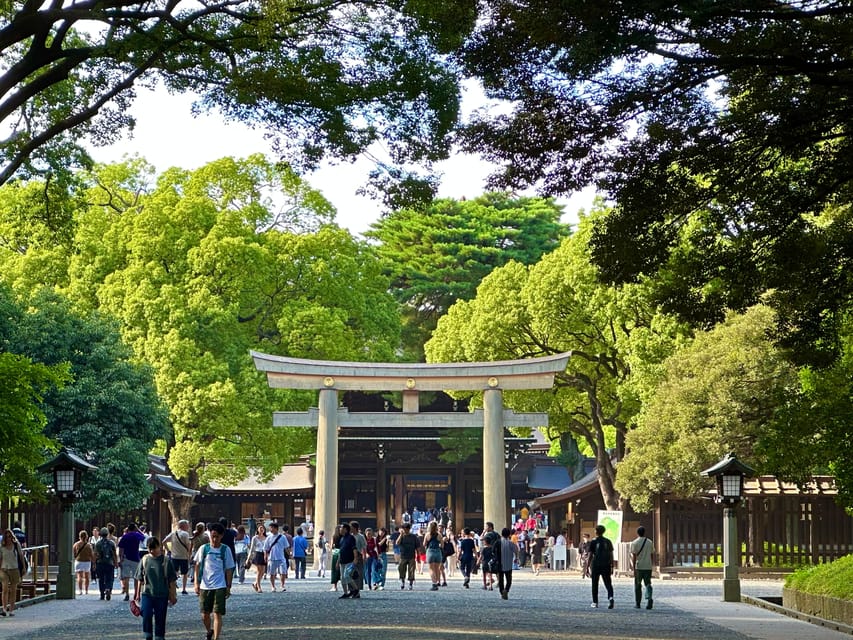
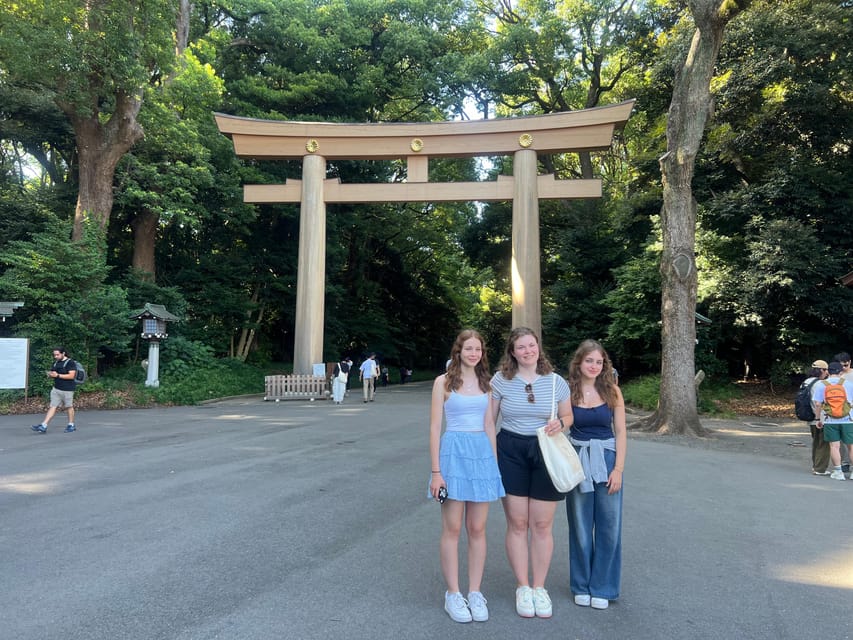
The Big Torii is scheduled for about 10 minutes of guided explanation. It marks a clear change in atmosphere and scale. Your guide can use this point to explain how shrine entrances work, what crossing a torii represents, and why the approach matters rather than functioning as a simple gateway.
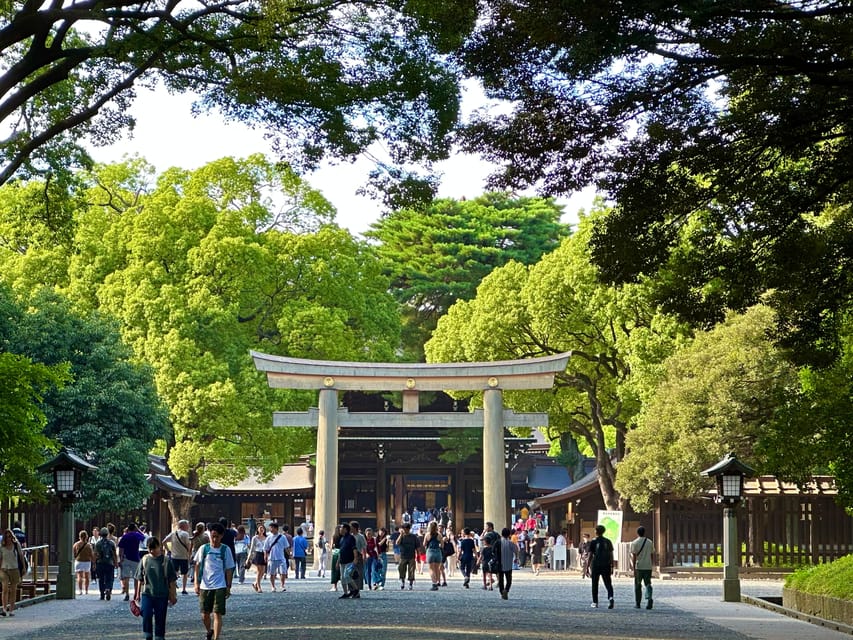
From here, the path leads through the shrine forest. The approximately 100,000 trees are one of the experience’s best features. You are still in one of the world’s largest cities, yet the tree cover softens the traffic and crowds around Harajuku. The walk offers a physical sense of how Shinto practice connects sacred places with the natural world.
This is where the tour earns its modest price. You could walk the approach yourself, but a guide helps you understand why the route feels ordered and respectful. Instead of collecting only the usual entrance photo, you get a framework for reading the space.
Wear comfortable shoes. The tour lasts two hours and includes steady walking between several points. The activity is listed as wheelchair accessible, which is useful for planning, but anyone who needs a slower pace should still tell the operator when booking.
Sake barrels and wine barrels: two useful visual lessons
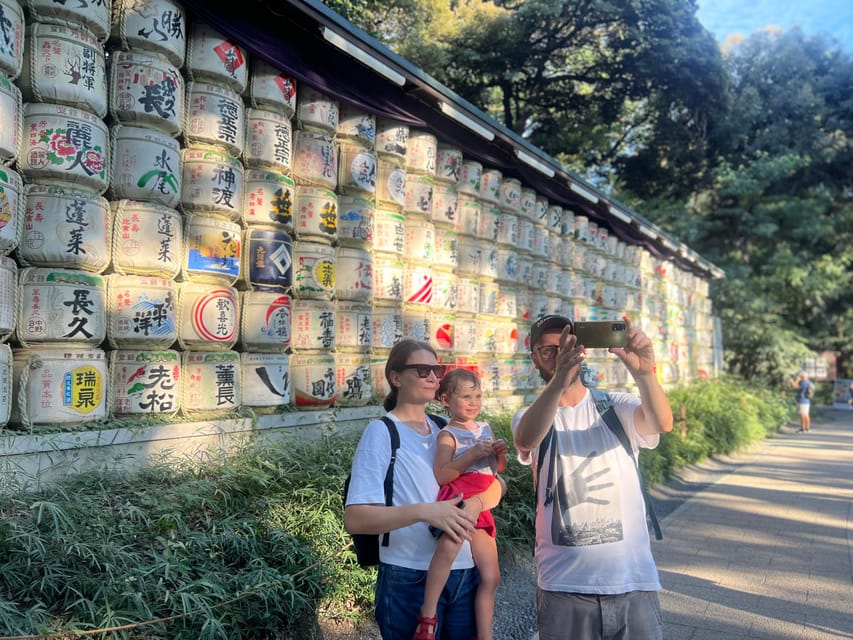
The next two stops are the consecrated sake barrels and the Meiji Jingu consecrated wine barrels. Each receives roughly 10 minutes of guided attention. They are easy to overlook if you visit alone, yet they provide some of the most memorable visual details along the approach.
The sake barrels show the connection between the shrine and traditional Japanese producers. The wine barrels add an international angle and give your guide a chance to explain how offerings can reflect different parts of Japan’s modern identity. Together, these stops prevent the tour from treating Shinto as a set of isolated rituals frozen in the past.
The barrel displays are not long activities. You will not taste the sake or wine, and the value comes from the explanation rather than from an extended stop. Still, I like this part because it gives you something concrete to remember. After the tour, you are more likely to notice similar offerings at other shrines instead of walking past them.
The guides also make this section useful for photographs. Several guides, including Ryota, have been praised for offering to take pictures at different stops. That can be helpful for solo visitors and families who want a group photo without handing a phone to a stranger.
Meiji Shrine and a clear introduction to Shinto
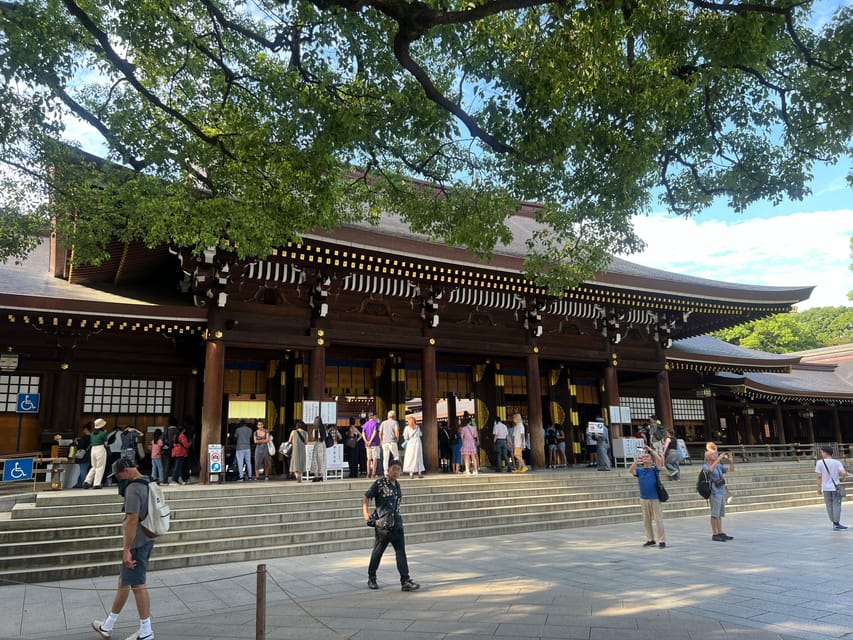
The main Meiji Shrine section takes about one hour, making it the heart of the walk. Here you learn about the shrine’s origins, the Meiji period, and the customs that shape a visit. The tour is not simply about naming buildings. It explains how to act in the grounds and how to read the gestures you see around you.
A good guide will show you the basic sequence for shrine etiquette, including purification and prayer. The point is not to perform perfectly. It is to approach the ritual with awareness and respect. This practical instruction is especially valuable if Meiji Shrine is your first Shinto site in Japan.
The distinction between Shinto and Buddhism is another strong part of the experience. Several guides have been praised for explaining the two traditions in straightforward terms and for answering questions about their different teachings and practices. That background helps you make sense of later visits to Buddhist temples and other Shinto shrines.
Meiji Shrine is dedicated to Emperor Meiji and Empress Shoken, so the Meiji period is central to the story. Guides such as Minori, Andres, Haydn, and Yota have been singled out for explaining the shrine’s establishment and placing it within Japanese history. The result is a better sense of why this site matters beyond its impressive trees and large wooden structures.
You may also encounter ema, the wooden plaques used for written wishes, and omikuji or other shrine souvenirs, depending on the tour’s flow and what you choose to explore. One family described writing on an ema and having books stamped, but those activities are personal additions rather than guaranteed parts of the guided program. Treat them as optional possibilities, not included promises.
More Walking Tours in Tokyo
- Tokyo Tsukiji Fish Market Food and Culture Walking Tour
★ 5.0 · 3,184 reviews - Tokyo: Imperial Palace and Shogun Historical Walking Tour
★ 5.0 · 2,251 reviews - Tokyo: Shinjuku Local Bar and Izakaya Guided Walking Tour
★ 4.9 · 1,794 reviews - Tokyo: Tsukiji Fish Market Food and Walking tour
★ 5.0 · 1,724 reviews
What the guides add to the visit
The guide is the main reason to choose this experience instead of walking through Meiji Shrine on your own. The tour is offered in English, and the guide names appearing most often in the supplied feedback include Maya, Yota, Andres, Minori, Ryota, Haydn, Hoshi, Naruto, Matt, Sara, and others.
The most consistent strengths are clear explanations, friendly conversation, and patience with questions. Yota is described as personable and flexible, while Maya is praised for friendly, thorough explanations. Minori is noted for making the differences between Shinto and Buddhism easy to follow. Haydn is particularly useful for visitors who want an introduction to Japanese religion and culture but are also ready to ask more detailed questions.
Guide quality can vary from one departure to another because you do not select a particular person at booking. Still, the repeated praise for different guides is encouraging. The tour seems to depend less on a single star host and more on a team that knows how to make the walk conversational.
Small groups improve the experience. The usual maximum is stated as 12 people, but several departures had only two to four participants, and at least one became a private tour when another person did not attend. A small group means you can hear better, ask more questions, and pause briefly for photos without holding up a large crowd.
Why the $19 price can make sense
At $19 per person, this is an inexpensive guided introduction to one of Tokyo’s major cultural sites. Admission to Meiji Shrine and the Imperial Garden is included, as are an English-speaking professional guide, historical explanations, and photos taken during the walk.
The value is strongest if you are new to Japan. You learn basic shrine manners, get context for the Meiji period, and receive a useful first lesson in the relationship between Shinto and Buddhism. Several guides also give suggestions for restaurants and other Tokyo sights, which can make the tour more useful at the beginning of your trip.
The price is less compelling if you already know shrine etiquette and prefer to explore at your own speed. You will spend a set amount of time at each stop, and the tour cannot cover every part of the grounds in detail. You are paying for interpretation, company, and a planned route, not for a full-day historical seminar.
Photos are included, but the information provided does not specify how many images you receive or how they are delivered. Think of this as a helpful extra rather than the main reason to book.
Timing, access, and what to bring
The advertised duration is two hours. Starting times vary, so you need to check availability for your date. An early departure is a smart choice if you want a quieter feel, since one guide specifically recommends visiting the shrine in the morning for greater peace and stillness.
Tokyo weather can change the tone of the walk. One group completed the tour during heavy rain and still found it enjoyable, but rain will make the forest paths and photo stops less comfortable. Bring suitable footwear and weather protection, since this is an outdoor walking experience.
The tour is listed as wheelchair accessible. That is an important advantage, though the supplied information does not describe the exact route conditions, rest points, or accessibility of every garden path. If you have specific mobility needs, contact the operator before booking so the route can be confirmed.
The meeting point is near Harajuku, making the activity easy to pair with the neighborhood’s shops and cafés. The tour returns to the same Starbucks, so you do not need to arrange a second pickup point.
Who will get the most from this walk
I would choose this tour for a first or second day in Tokyo. The shrine offers an immediate introduction to Japanese customs, and the guides can help with practical questions that arise during the rest of your trip. Food suggestions, neighborhood ideas, and basic etiquette can be useful long after the two-hour walk ends.
Families can also benefit. One guide kept children engaged while explaining the shrine’s background, and the route has enough visual variety to avoid feeling like a lecture. The forest, large torii, barrels, and shrine buildings give younger visitors clear things to look at while adults absorb the cultural explanation.
Solo visitors are another good match. A small group gives you company without the feel of a large organized excursion, and the photo help is a thoughtful bonus. Couples and friends who want a calm cultural break from shopping in Harajuku should enjoy the change of pace.
I would be more cautious about booking if you want extensive free time, advanced religious study, or a tour devoted only to architecture. The experience is broad and accessible. Its goal is to help you understand the place, not to examine every artistic or historical detail.
Should you book the Meiji Shrine tour?
Book it if you want a friendly, affordable introduction to Shinto, shrine etiquette, and the Meiji period, especially early in your Tokyo stay. The forest walk, clear explanations, small groups, and practical local advice give this short experience more value than a self-guided entrance visit.
Skip it if you already feel comfortable at Japanese shrines and would rather wander without a schedule. For most first-time visitors, though, $19 is a fair price for two hours of context at one of Tokyo’s most important sacred sites. Choose a morning time if available, meet at the correct Harajuku Starbucks, and arrive ready to walk and ask questions.
FAQ
How long does the Meiji Shrine walking tour last?
The tour lasts two hours, including the garden, torii, barrel displays, forest approach, and main shrine visit.
Where is the meeting point?
You meet in front of the Starbucks closest to Meiji Shrine, near Harajuku. The stated coordinates are 35.6705208, 139.7031067.
Where does the tour finish?
The walk returns to the same Starbucks near Meiji Shrine.
What language is the tour offered in?
The tour is conducted in English by a live English-speaking guide.
What is included in the price?
The price includes a professional English-speaking guide, photos taken during the tour, historical information about the districts, and admission to Meiji Shrine and the Meiji Shrine Imperial Garden.
How much does the tour cost?
The listed price is $19 per person.
How large is the group?
The group can include up to 12 people. Some departures are smaller, and some may become private if other participants do not attend.
Is the tour wheelchair accessible?
Yes. The activity is listed as wheelchair accessible.
Can I cancel for a full refund?
Yes. You can cancel up to 24 hours in advance for a full refund. You can also reserve now and pay later, keeping your plans flexible.
Just added around Tokyo
- Tokyo: Customizable Private Guided Walking Tour★ 4.5 · 129 reviews
- Private Harajuku Omotesando Architecture Tour★ 4.9 · 18 reviews
- Tokyo: Guided Helicopter Ride★ 4.9 · 24 reviews
- Tokyo: Guided Walking Tour of Tsukiji Market with Lunch★ 4.4 · 24 reviews
- Tokyo: Private Personalized Local Food Tour★ 4.5 · 101 reviews
- Tokyo GINZA: KONPARU Japanese Cabaret Show with Drink★ 4.8 · 38 reviews
- Tokyo: Guided Walking Tour of Tsukiji Market with Breakfast★ 4.4 · 134 reviews
- Tokyo: Gotokuji Cat Temple, Shinjuku Cat Cafe & 3D Cat Tour★ 4.9 · 38 reviews
Temple & Shrine Tours, compared.
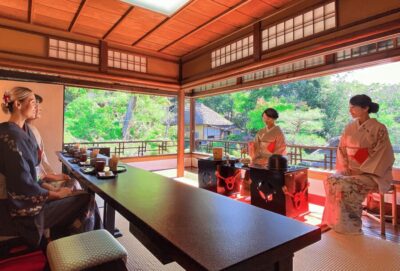
Tea Ceremony in a Traditional Tea House in Kiyomizu
Read our review →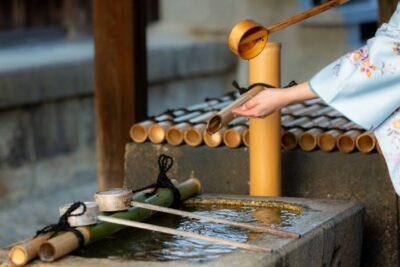
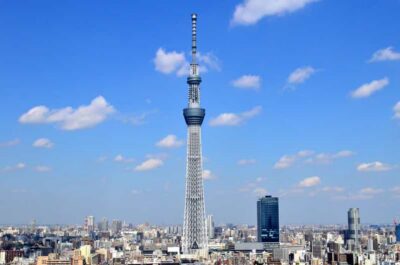
Meiji Shrine, Asakusa, Skytree Bus Tour and Cruise
Read our review →
Asakusa Walking Tour with Sensoji Temple Visit
Read our review →
Kamakura & Enoshima Day Trip including Temple Tickets
Read our review →
Kyoto/Osaka: Nara, Fushimi Inari Taisha, Arashiyama Bus Tour
Read our review →
Nikko Toshogu Shrine and Kegon Waterfall Tour
Read our review →
Tokyo Panoramic 1 Day: Meiji Shrine, Asakusa, Odaiba and SKYTREE®
Read our review →Browse the lists this tour appears in