
REVIEW · SUMO EXPERIENCES
Tokyo: Challenge Sumo Wrestlers and Enjoy Meal
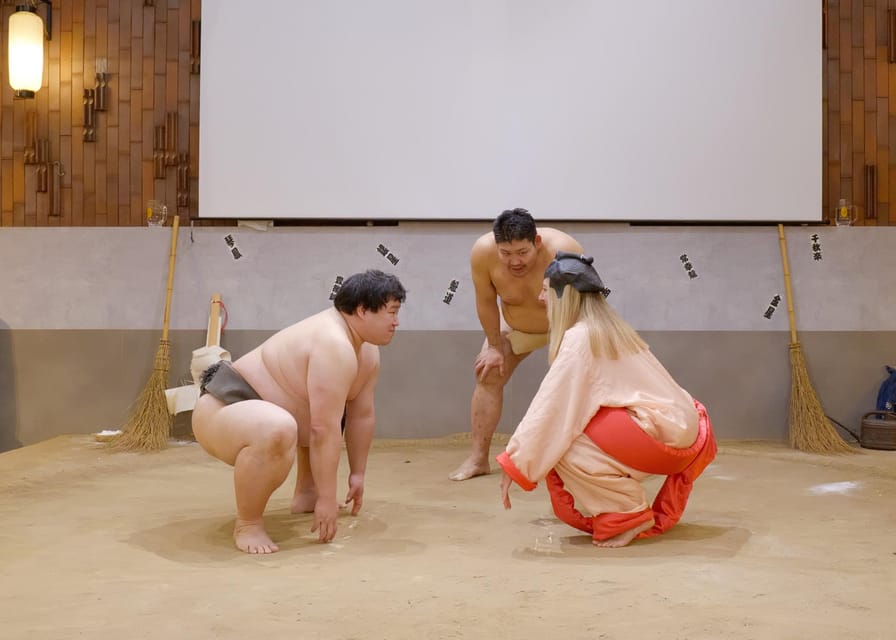
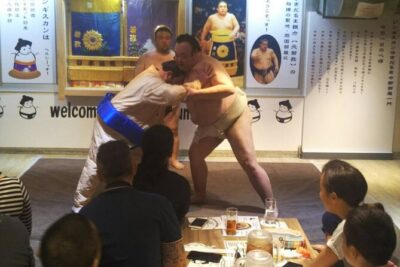
The most entertaining part of this Tokyo experience is not simply watching sumo. It is seeing retired wrestlers perform at close range, then putting on a padded sumo costume and trying to push one of them out of the ring. You get a meal, a lesson in sumo terms, and a photo to prove you took part.
I like the clear English explanations, which make the rituals and match easier to follow. I also like the family-friendly setup: children can watch, ask questions, and join the playful challenge rather than sitting through a formal lecture.
The main drawback is sound and seating. The venue is appropriate, but loud conversation can make the commentary and question period hard to hear. Book early for better seating, and plan on the session taking closer to two hours even though the stated duration is 1.5 hours.
In This Review
- Key points to know before booking
- A close-up introduction to Japan’s national sport
- Finding the restaurant near Kikukawa Station
- Watching the former wrestlers in the dohyo
- Trying the sumo costume yourself
- Tonkatsu lunch or sukiyaki dinner
- Seating, sound, and the best view
- What the $117 price really covers
- Best for families, first-time visitors, and curious eaters
- Getting the most from your session
- Should you book this Tokyo sumo experience?
- FAQ
- Where does the sumo experience meet?
- How long does the activity last?
- What meal is included?
- Is the explanation available in English?
- Can children take part?
- Is hotel transportation included?
Key points to know before booking
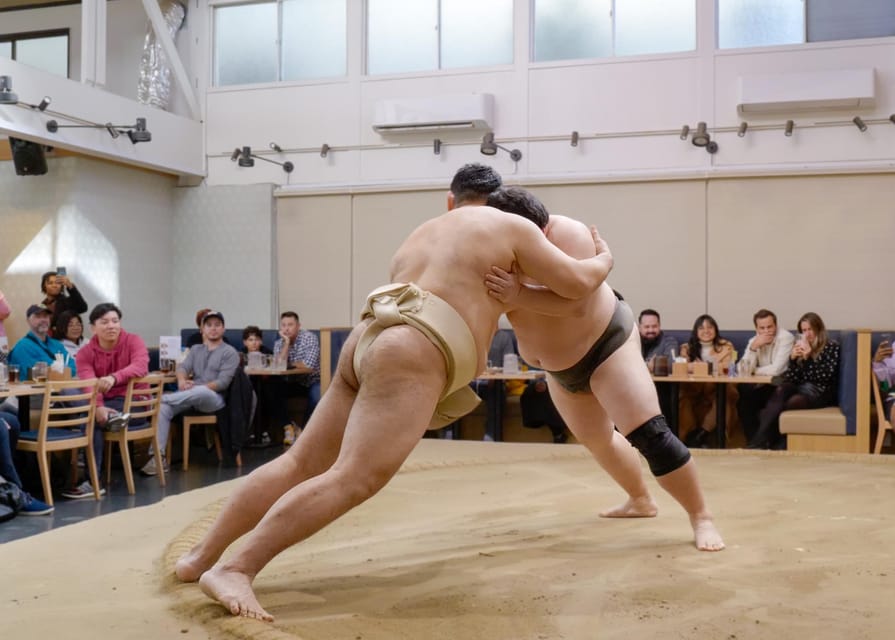
- Former professional wrestlers lead the show: You watch retired sumo athletes demonstrate real techniques and answer questions.
- You can enter the ring: A sumo costume lets you try a friendly bout without taking the full physical risk of a real match.
- English commentary is included: You learn common sumo terms, customs, and the role of the dohyo, or sacred ring.
- Your meal depends on the booking option: Choose tonkatsu for lunch or sukiyaki for dinner, with some sessions offering different meal variations.
- Kikukawa Station is the meeting point: The restaurant is about a five-to-eight-minute walk from Exit A1.
- Book early for the best seats: Seating is arranged by booking order, and large groups may be split between tables.
A close-up introduction to Japan’s national sport
Sumo can look simple from a distance: two large men collide, and one steps outside the ring. In person, the sport is full of ritual, balance, timing, and discipline. This session gives you enough background to understand what you are seeing without asking you to commit half a day to a formal sumo event.
You meet former wrestlers who demonstrate the sport and explain what is happening in English. They introduce commonly used terminology and show how a bout works inside the dohyo. The tone is light, but the athletes are still impressive, and the humor keeps the presentation moving.
That combination is the heart of the experience. You get a real connection to people who trained and competed in sumo, but you are not expected to know Japanese or understand every custom before you arrive.
This is especially useful when Tokyo’s grand sumo tournament is not taking place. A tournament offers the full professional spectacle, but tickets can be difficult to arrange and the schedule is limited. Here, you get a shorter and more personal look at the sport, with a chance to speak to the wrestlers afterward.
More Sumo Experiences in Tokyo
- Tokyo: Sumo Show and Dining Experience
★ 4.8 · 2,742 reviews - the SUMO show
★ 5.0 · 1,960 reviews - Tokyo Shinjuku Sumo Show & Experience with Photo
★ 5.0 · 1,750 reviews
Finding the restaurant near Kikukawa Station
The meeting point is near Kikukawa Station on the Toei Shinjuku Line. Get off at Exit A1 and allow about five to eight minutes to walk to the restaurant.
There is no hotel pickup or transportation included, so you need to make your own way there. I would allow extra time if you are unfamiliar with Tokyo’s train exits. The short walk is manageable, but arriving late could mean missing the opening explanation.
The activity ends at the same meeting point. That makes it easy to continue exploring eastern Tokyo afterward, though the experience itself does not include sightseeing or transport around the city.
Your start time depends on availability, so check the schedule before arranging dinner, another tour, or a train connection. The official duration is 1.5 hours, while the full flow can run nearer two hours when the question period, photographs, food, and audience participation take their natural course.
Watching the former wrestlers in the dohyo
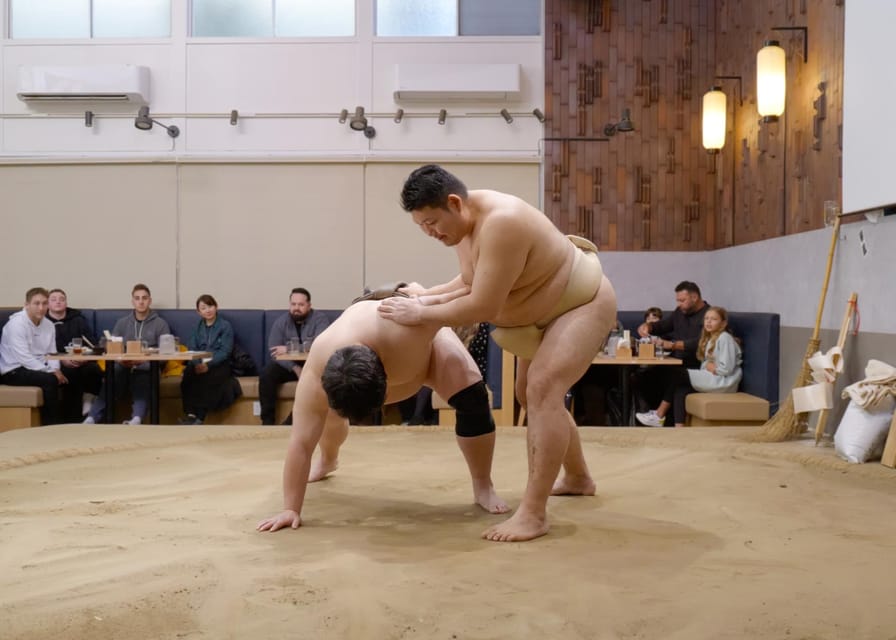
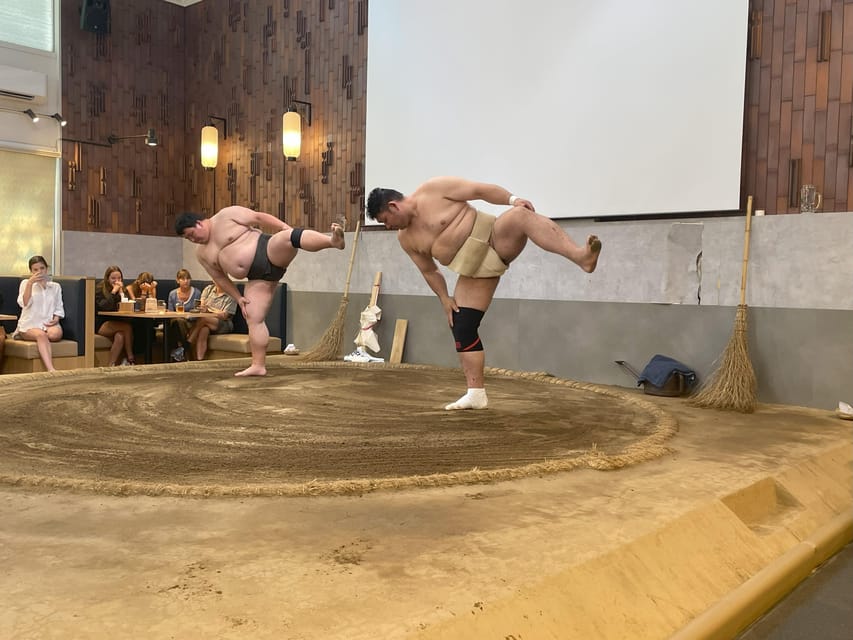
The session begins with an explanation of sumo and its connection to Japanese culture. You learn basic terms and get a clearer sense of why the ring matters, rather than watching a demonstration with no context.
The retired wrestlers then perform an exhibition bout. This is the part that gives the experience its physical punch. Even as a demonstration, the match shows the force, speed, and balance required to control an opponent who may be heavier than you.
The presentation is designed for an international audience. English is used for the explanations, and the host or greeter may also speak Japanese. One particularly useful feature is the chance to ask questions directly, including questions about the wrestlers’ daily lives and training.
You should not expect a full professional tournament. There is no large arena, long parade of matches, or formal competition schedule. Instead, you get an accessible demonstration that puts the wrestlers close to your table and keeps the focus on explanation and interaction.
Trying the sumo costume yourself
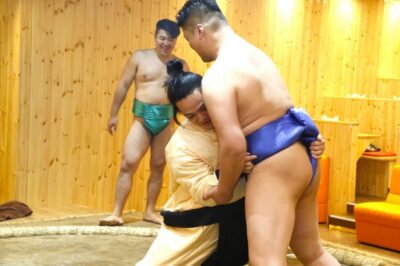
After watching the experts, you can put on a sumo costume and test your technique in the ring. This is meant as friendly entertainment, not a serious athletic contest, but it gives you an amusing sense of how difficult it is to move someone with a low center of gravity.
The costume helps make the activity suitable for people who would never enter a real sumo match. You can join the fun without needing prior knowledge or special training. The wrestlers guide the challenge, and the atmosphere is playful rather than intimidating.
Children can be a strong match for this format. A family with young children described the experience as especially enjoyable because the children could take part rather than simply watch. Infant rates are available when an infant does not occupy a seat, but infant meals are not included.
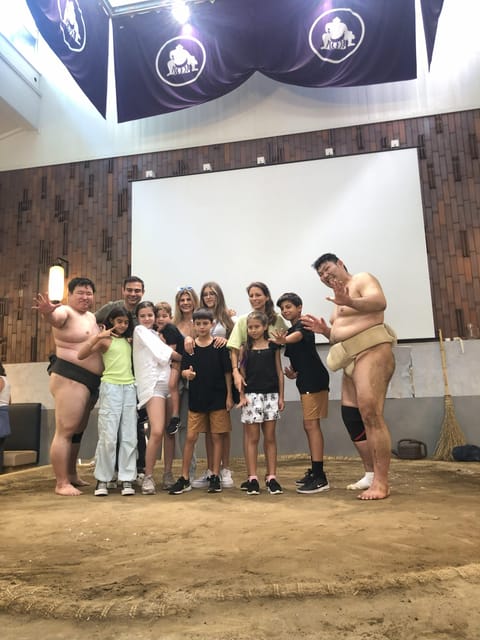
You do not have to wrestle to enjoy the session. The photo opportunity is available at the end for everyone, so you can skip the costume challenge and still get a picture alongside the former wrestlers. This is a useful point for anyone who wants the cultural lesson and meal but not the physical part.
Same city, a completely different kind of day:
- Mt Fuji and Hakone 1-Day Bus Tour Return by Bullet Train
★ 5.0 · 26,383 reviews - 1-Day Tokyo Bus Tour
★ 5.0 · 14,250 reviews - Tokyo: TOKYO SKYTREE® Admission ticket
★ 4.5 · 11,192 reviews - Tokyo: teamLab Planets TOKYO Digital Art Museum Entry Ticket
★ 4.6 · 9,779 reviews
Tonkatsu lunch or sukiyaki dinner
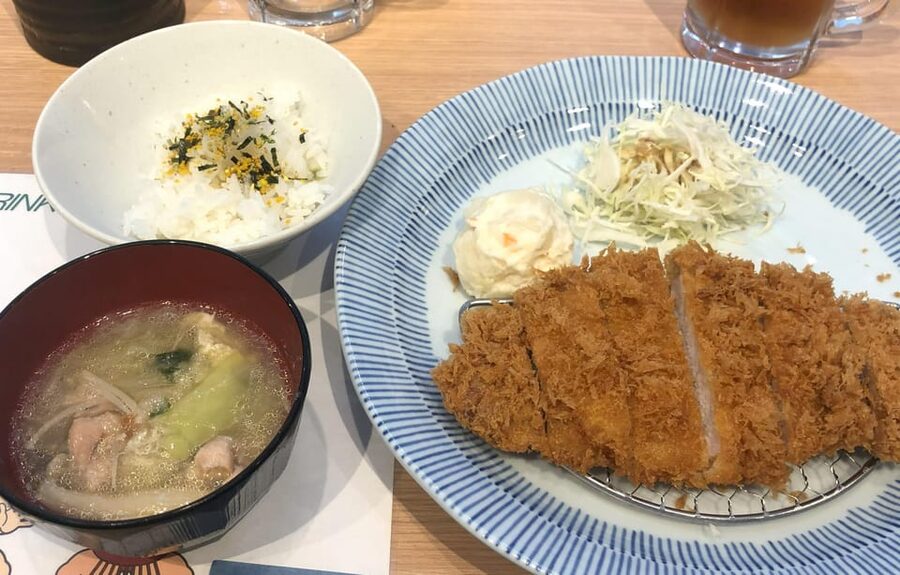
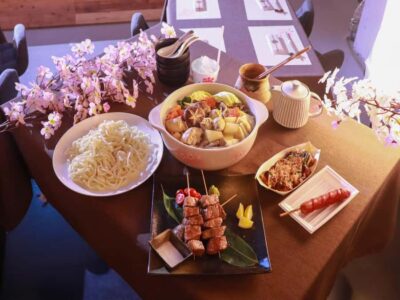
Food is included, and the standard choice depends on the time and option you select when booking. Lunch is listed as tonkatsu, a deep-fried pork cutlet, while dinner is sukiyaki, beef and vegetables cooked in a sweetened soy-based broth.
The meal adds practical value because you are not paying separately for lunch or dinner during the session. It also keeps the experience from feeling like a short stage show that ends as soon as the demonstration is over.
The food descriptions are not entirely uniform across the available session details. Some accounts refer to a lunchbox or chanko-style food, so if the exact menu matters to you, state dietary needs when booking and confirm the meal attached to your selected option.
The food is part of the social side of sumo. You eat while learning, asking questions, and watching the activity unfold. Additional food and drinks are not included, though bringing your own food and drink is allowed.
Tell the provider about dietary requirements in advance. The supplied information does not promise specific substitutions, so do not assume that every request can be handled on the spot.
Seating, sound, and the best view
The best available seats are arranged in booking order. That makes early booking worthwhile, especially if hearing the commentary is important to you.
The issue is not necessarily sightlines. The venue is set up for the demonstration, and the wrestlers are close to the audience. The bigger concern is sound when people at nearby tables talk through the explanations or question period.
If you are choosing between dates, earlier booking is the safest way to improve your seat position. If you are traveling in a large group, be ready for the provider to place you at separate tables. That is a minor nuisance, but it matters if your group expects to sit together throughout the meal.
The setting is informal and social. It does not have the polished scale of a major theater production, and that is part of the appeal. You are close enough to notice the wrestlers’ reactions, ask questions, and join the group activity.
What the $117 price really covers
At $117 per person, this is not a cheap meal with a short performance attached. You are paying for a 1.5-hour cultural program led by retired sumo wrestlers, English explanation, audience participation, a meal, and a personal photo opportunity.
The price makes more sense if you value access and interaction. A standard sumo broadcast or a tournament seat lets you see more matches, but it does not give you the same chance to ask questions or try the sport yourself.
The value is also stronger for families and first-time visitors. Children can join the costume challenge, adults can learn the basics without studying beforehand, and everyone has a built-in meal. A group that only wants to watch high-level sumo may find the price less attractive.
I would compare this with the cost and difficulty of arranging a visit to a sumo stable. Stable access can have age restrictions, and younger children may not be allowed in training areas. This experience offers a more controlled alternative, especially for families with children under 12.
Keep the non-refundable policy in mind before you pay. Confirmation is sent within 24 hours of booking, subject to availability, so do not treat the reservation as flexible until it is confirmed.
Best for families, first-time visitors, and curious eaters
This experience suits you if sumo is new to you and you want more than a photograph outside a stadium. The explanations give you enough context to recognize basic techniques and terminology, while the demonstration supplies the drama.
Families are likely to appreciate the pace and hands-on element. The session is short enough for younger attention spans, and children can watch the match, try the costume, and pose with the wrestlers.
It also works well for adults who want an easy cultural activity between sightseeing stops. You do not need special clothing, previous sumo knowledge, or physical training. You only need to follow staff instructions and use good judgment in the ring.
It may be less suitable if you want a quiet, formal presentation. The room can be lively, and the audience participation is central to the format. It is also not the right choice if you are looking for a full day of sumo matches or an official tournament atmosphere.
The staff expect respectful behavior. If someone acts in a troublesome way or ignores instructions, they may be required to leave without a refund. That rule is sensible in a small venue where the demonstration depends on cooperation.
Getting the most from your session
Book as early as your schedule allows, since seating is based on booking order. Arrive at Kikukawa Station with enough time to find Exit A1 and walk to the restaurant without rushing.
Read the meal option carefully when you book. The listed choices are tonkatsu lunch and sukiyaki dinner, but meal details can vary by session. Send dietary information in advance rather than waiting until you sit down.
If you want the clearest commentary, aim for a front area seat if possible. Encourage your group to keep conversations for the meal or question period, since the English explanation is one of the most useful parts of the session.
Bring a camera or keep your phone ready for the final photo. You will have the chance to stand with the wrestlers, and you do not need to wrestle to take part in that moment.
Allow a little more time than the stated 1.5 hours. Some sessions include the introduction, exhibition match, costume challenge, photographs, meal, and questions in a sequence that takes closer to two hours.
Should you book this Tokyo sumo experience?
Book it if you want a friendly, compact introduction to sumo with real former wrestlers, English commentary, a meal, and a chance to enter the ring. The strongest parts are the close contact with the athletes and the fact that children and first-time visitors can take part.
Think twice if your priority is a formal tournament, a silent viewing environment, or complete control over your meal. Seating can be less ideal for late bookers, large groups may be separated, and the non-refundable policy requires a firm plan.
For most people, the $117 price is justified by the combination of demonstration, explanation, food, and personal interaction. It is a smart substitute when tournament tickets or stable visits do not fit your dates, age group, or budget.
FAQ
Where does the sumo experience meet?
Meet near Kikukawa Station on the Toei Shinjuku Line. From Exit A1, the restaurant is about a five to eight-minute walk.
How long does the activity last?
The stated duration is 1.5 hours. Some sessions can run closer to two hours when the meal, photographs, and question period are included.
What meal is included?
The lunch option includes tonkatsu, a deep-fried pork cutlet. The dinner option includes sukiyaki, beef and vegetables cooked in a sweetened soy broth.
Is the explanation available in English?
Yes. English explanation is included, and the host or greeter can speak English and Japanese.
Can children take part?
Yes. Children can watch the demonstration and try the sumo costume challenge. Infant rates apply when an infant does not occupy a seat, but infant meals are not included.
Is hotel transportation included?
No. Hotel pickup, hotel drop-off, and transportation to and from the restaurant are not included. The activity begins and ends at the meeting point near Kikukawa Station.
Just added around Tokyo
- Tokyo: Customizable Private Guided Walking Tour★ 4.5 · 129 reviews
- Private Harajuku Omotesando Architecture Tour★ 4.9 · 18 reviews
- Tokyo: Guided Helicopter Ride★ 4.9 · 24 reviews
- Tokyo: Guided Walking Tour of Tsukiji Market with Lunch★ 4.4 · 24 reviews
- Tokyo: Private Personalized Local Food Tour★ 4.5 · 101 reviews
- Tokyo GINZA: KONPARU Japanese Cabaret Show with Drink★ 4.8 · 38 reviews
- Tokyo: Guided Walking Tour of Tsukiji Market with Breakfast★ 4.4 · 134 reviews
- Tokyo: Gotokuji Cat Temple, Shinjuku Cat Cafe & 3D Cat Tour★ 4.9 · 38 reviews
Sumo Experiences, compared.
Sumo Show Experience with Chicken Hot Pot and a Photo
Read our review →
Tokyo Shinjuku Sumo Show & Experience with Photo
Read our review →
Sumo Show & Experience w/ Optional Kimono & Hot Pot
Read our review →
Authentic Sumo Experience in Tokyo: Enter the Sanctuary
Read our review →Browse the lists this tour appears in