
REVIEW · TEMPLE & SHRINE TOURS
Tokyo: Asakusa & Tokyo’s Oldest Temple Senso-ji Walking Tour
Asakusa gives you old Tokyo in a compact, walkable package. You pass beneath the giant Kaminarimon Gate, follow Nakamise Street toward Senso-ji, and hear how this temple district changed from Edo-era entertainment quarter to a favorite stop in modern Tokyo. For $11, that is a useful way to get your bearings without spending half a day on a large bus tour.
I like the small group of up to 10 and the chance to hear local stories instead of simply checking off gates and photo stops. I also like the flexible booking terms and the guides who have earned especially warm praise, including Lax and Shoma. The main consideration is that the tour stays around one compact area, so a guide needs to keep the storytelling lively. One piece of feedback suggests that a newer guide sometimes followed the route more than a flowing story.
In This Review
- Key points to know before you book
- Why Asakusa makes a good first Tokyo walk
- Meeting at Kaminarimon Police Station
- Passing through Kaminarimon and onto Nakamise Street
- Senso-ji, Tokyo’s oldest temple
- The wider Asakusa walk and its stories
- What the $11 price really buys you
- Small groups, English, and guide style
- Timing, comfort, and useful planning
- Who should choose this Asakusa walk
- Should you book this $11 Senso-ji tour?
- FAQ
- How long does the Asakusa and Senso-ji walking tour last?
- Where does the tour meet?
- What language is the tour conducted in?
- How large is the group?
- Is admission to Senso-ji included?
- Can I cancel or pay later?
Key points to know before you book
- Senso-ji is the star: Visit Tokyo’s oldest and best-known temple, with time for photos, sightseeing, and nearby shopping.
- Kaminarimon Police Station is the meeting point: You meet at the police station near the famous gate, not at your hotel.
- Nakamise Street fills the approach: Traditional shops, lanterns, sweets, and snacks make the walk toward the temple part of the experience.
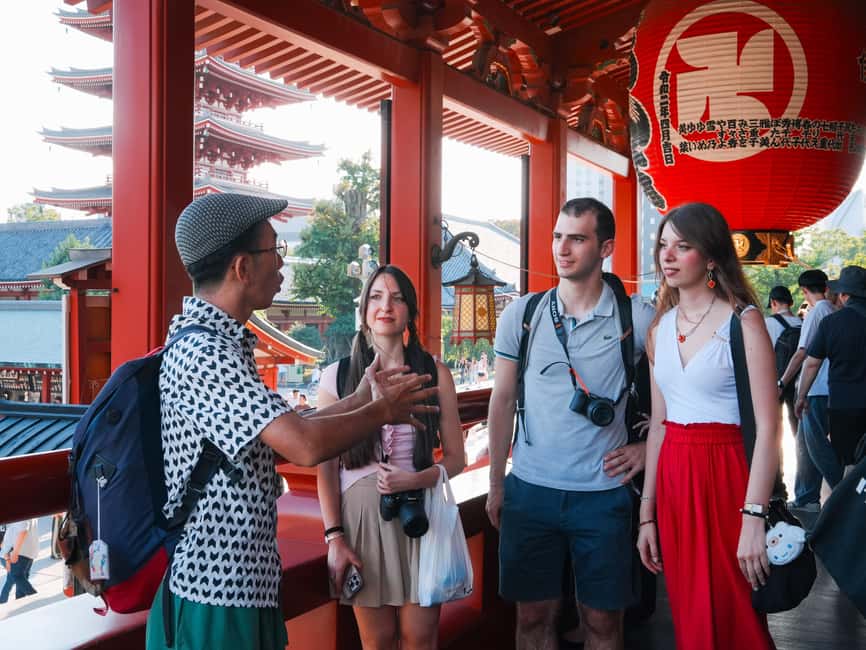
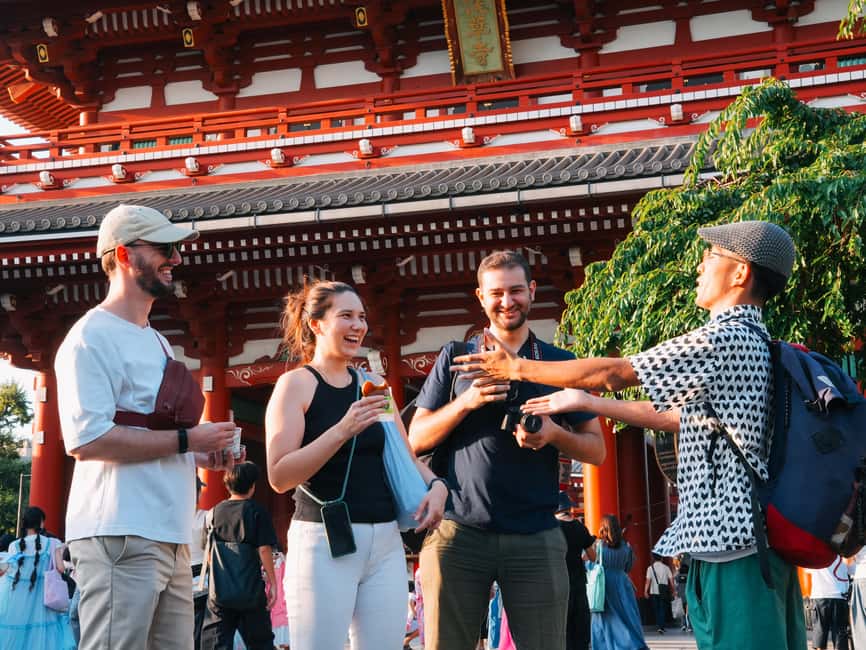
- The guide adds the value: Lax and Shoma received especially strong praise for clear English, humor, cultural insight, and a friendly manner.
- Two hours keeps it easy: You get a focused introduction to Asakusa without committing to a long city tour.
- $11 is low-cost sightseeing: The price works well if you want orientation and context, but do not expect a full-day food or temple excursion.
Why Asakusa makes a good first Tokyo walk
Tokyo can feel enormous. Neighborhoods change character quickly, train lines crisscross the city, and the most interesting places are not always easy to understand from a quick photograph. Asakusa helps solve that problem because its main sights sit close together and its older character is easy to see on foot.
This district was once the cultural heart of Edo-era Tokyo. The area carried links to entertainment quarters, geisha life, shrines, temples, and popular street culture. The walk uses those subjects to explain more than just architecture. You get a sense of how a neighborhood can change through samurai-era power, wartime damage, post-war rebuilding, and the pressure of a modern capital.
I would choose this tour early in a Tokyo visit if you want a simple introduction to Japanese religious customs and local history. You will not cover several far-flung districts, but you will gain a useful base for returning to Asakusa on your own.
The experience is also a good match for anyone who prefers walking to a formal museum visit. You see gates, shopfronts, lanterns, temple grounds, and street life as you move through the neighborhood. The guide can connect those sights as you go, which gives the area more meaning than a quick solo circuit.
More Temple & Shrine Tours in Tokyo
- Tokyo: Meiji Shrine, Asakusa, Skytree Bus Tour and Cruise
★ 4.7 · 1,986 reviews - Tokyo: Asakusa Walking Tour with Sensoji Temple Visit
★ 4.8 · 1,583 reviews - Nikko: Kegon Falls, Lake Chuzenji & Toshogu Temple
★ 4.6 · 1,577 reviews
Meeting at Kaminarimon Police Station
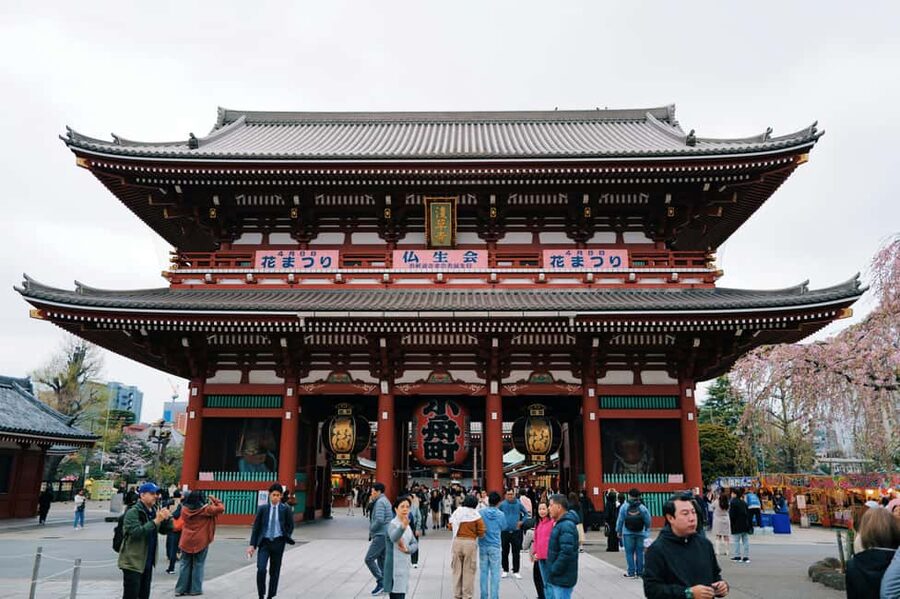
The tour begins at 雷門交番, identified in English as Kaminarimon Police Station. This location puts you beside the main approach to Asakusa’s most famous landmark, so the meeting point is tied directly to the place you came to see.
You should give yourself enough time to find the station and gather before the walk begins. Hotel pickup and drop-off are not included, so you make your own way to the meeting point. The information provided does not specify a particular train exit or a required arrival time, so check the confirmed booking details for the exact start time and local directions.
Starting near Kaminarimon is practical. You do not waste the opening part of the tour walking from a distant transport stop. Instead, the first major sight is close at hand, and the guide can begin with the gate’s role in the approach to Senso-ji.
Passing through Kaminarimon and onto Nakamise Street
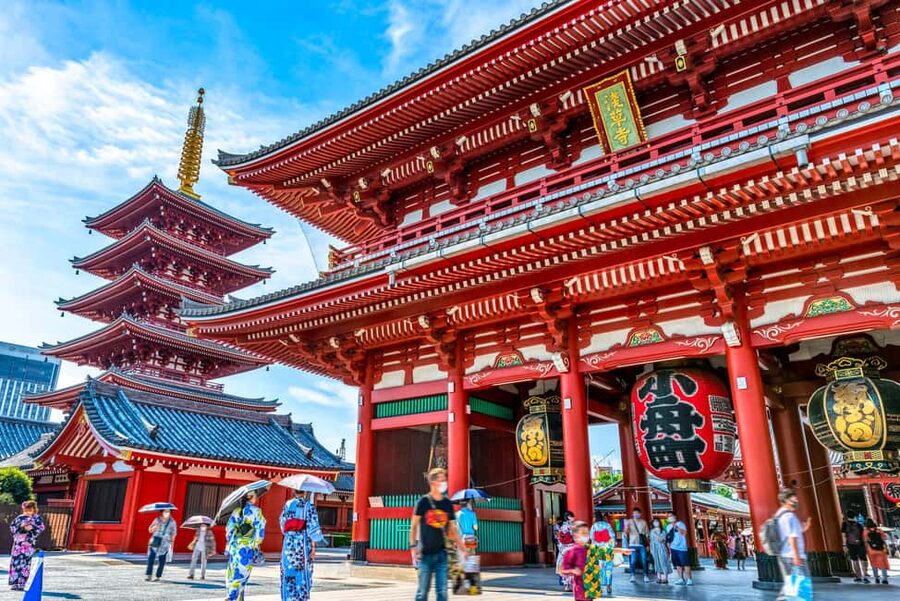
Kaminarimon means Thunder Gate, and it is one of the most recognizable entrances in Asakusa. Its scale, lanterns, and strong visual design make it an obvious first photo stop. The gate also sets the tone for the walk: this is a working religious approach, a shopping street, and a major sightseeing route all at once.
From there, you head along Nakamise Shopping Street, the traditional lane leading toward Senso-ji. The itinerary allows about an hour for this part of the visit, although the full activity is advertised as two hours and the listed timing for the Asakusa portion is approximate. In practical terms, expect the guide to combine walking, explanations, photos, and time to look at the shops.
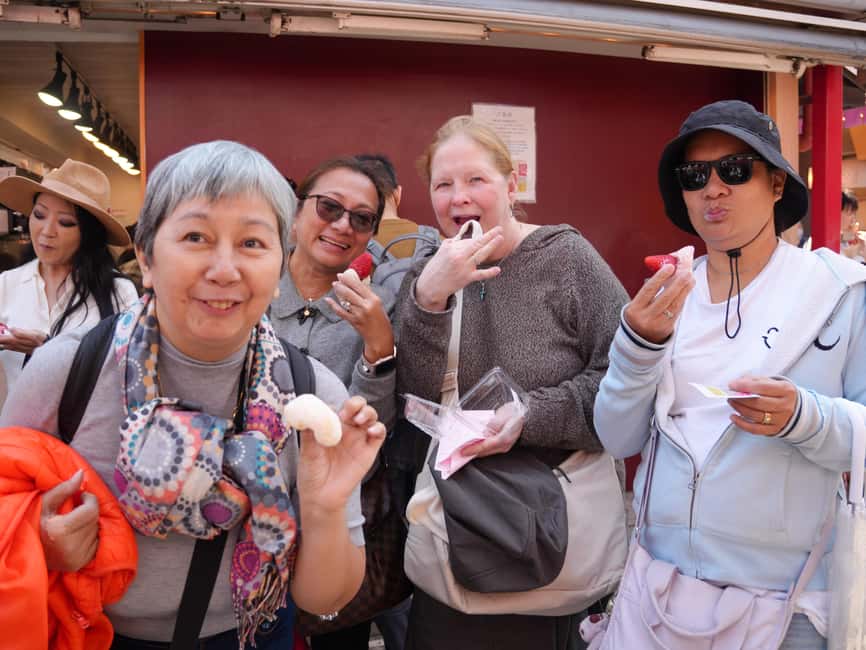
Nakamise is not just a corridor between two gates. Rows of traditional-style stores sell sweets, snacks, souvenirs, and other items associated with Japanese culture. The aromas and displays make this one of the most sensory parts of the route. You can look closely at the shopfronts, note the lanterns, and see how commerce has grown around a sacred site.
The tradeoff is easy to understand. Nakamise can feel busy and commercial because it is one of Asakusa’s best-known lanes. That does not make it worthless, but it means you should not expect a quiet old street throughout. The guide’s job is to explain how the shopping approach fits into the temple district, not to pretend the area is untouched by modern tourism.
If you want snacks or small gifts, this is the point where you may be tempted to stop. The tour includes shopping time, but the $11 price does not cover food or purchases. Keep the group schedule in mind before buying something that requires a long wait.
Senso-ji, Tokyo’s oldest temple
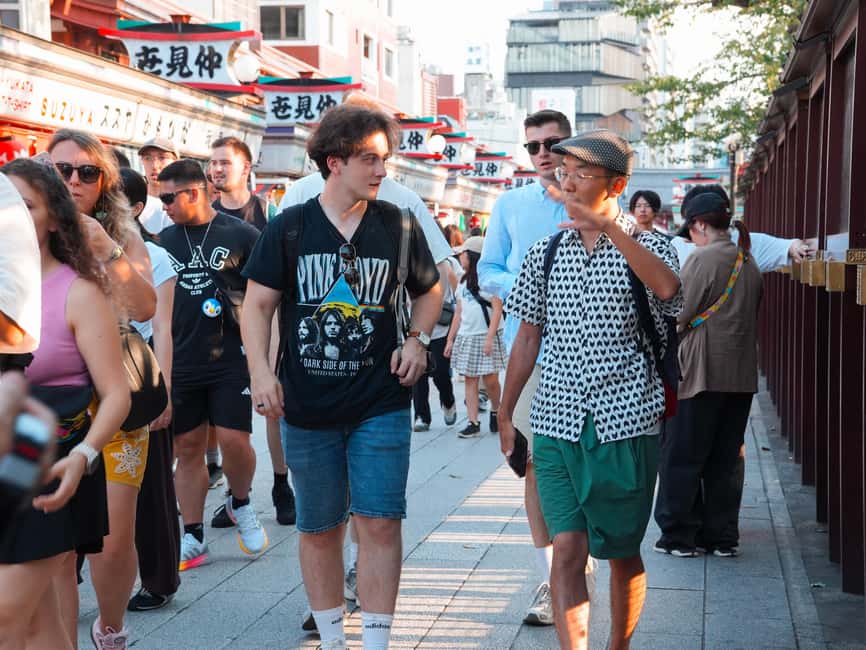
Senso-ji is the central reason to book the walk. Founded in the 7th century, it is described as Tokyo’s oldest temple and remains the city’s most celebrated Buddhist temple. You enter through the famous approach, then spend time around the temple for photos, sightseeing, and shopping.
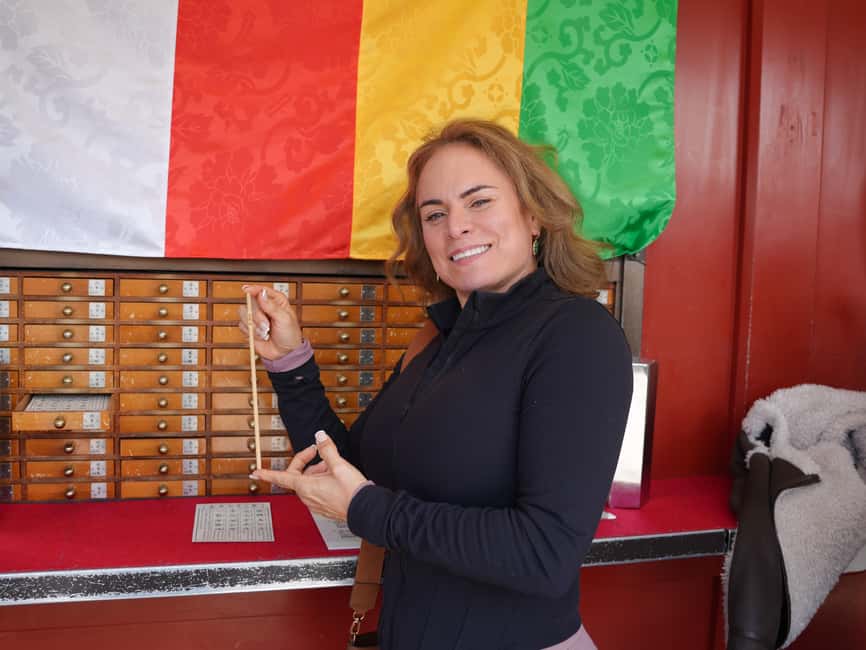
The temple is valuable as both a religious place and a historical anchor. Your guide can explain why the approach is arranged as it is, how Buddhist practice fits into the site, and how legends helped shape the temple’s identity. The supplied tour details promise stories about Senso-ji, nearby shrines, geisha quarters, and the district’s changing role over time.
You should expect an active public setting rather than a private or secluded temple visit. The route includes photography and shopping, and Senso-ji is one of Tokyo’s major sights. That creates energy and variety, but it also means the experience depends on staying with the group and listening when the guide gathers everyone.
The itinerary gives roughly an hour to Senso-ji, with additional time assigned to the wider Asakusa visit. That is enough for an introduction and a proper look at the central sights. It is not enough for a slow study of every building, every side street, and every religious detail. If you like temples and want more time for quiet observation, plan to return after the tour.
This is where a good guide matters most. Facts about gates and dates can be read elsewhere. A guide can explain why the temple remains important, connect the site to daily life, and help you understand the difference between a photo opportunity and a place of worship. Shoma received particularly strong praise for explaining Japanese culture and religion in clear English, including differences between Japanese and Anglo ways of thinking.
More Walking Tours in Tokyo
- Tokyo Tsukiji Fish Market Food and Culture Walking Tour
★ 5.0 · 3,184 reviews - Tokyo: Imperial Palace and Shogun Historical Walking Tour
★ 5.0 · 2,251 reviews - Tokyo: Shinjuku Local Bar and Izakaya Guided Walking Tour
★ 4.9 · 1,794 reviews - Tokyo: Tsukiji Fish Market Food and Walking tour
★ 5.0 · 1,724 reviews
The wider Asakusa walk and its stories
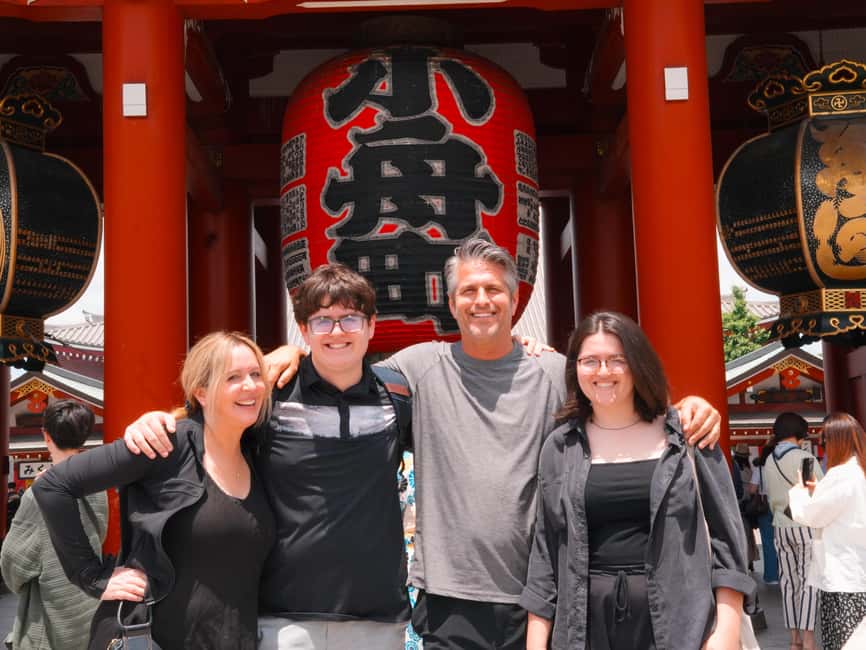
After the main temple visit, the walk continues through Asakusa before returning to the starting point. The listed schedule assigns 80 minutes to Asakusa, though the total activity remains two hours. Treat this as the neighborhood portion of the route, not as a separate long excursion.
This part gives the guide room to add context. You may hear about old entertainment areas, geisha quarters, tucked-away shrines, and the way Asakusa recovered after the war. These subjects help you see that the neighborhood is not simply a temple with souvenir stalls attached. It has been a place of worship, work, entertainment, and local life for centuries.
I find this broader view more useful than a route that stays at the main gate and hall. A first-time visitor can easily photograph Senso-ji without understanding why Asakusa feels different from other Tokyo districts. The neighborhood stories provide that missing frame.
Still, the quality of this section depends strongly on the guide. One early guide was described as pleasant but still developing, with a need to connect facts into a stronger story and engage the group more actively. That is a fair concern for a two-hour walk in one area. When the narration is good, familiar sights gain meaning. When it is not, the route can feel like a series of stops.
The good news is that other guide feedback is notably strong. Lax is praised for making the walk fun, sharing his love of the city, and giving a personal visit when the group happened to be very small. Shoma is praised for being clear, kind, punctual, helpful, and strong in English. Those comments suggest that guide assignment can shape the experience, but they also show the tour has people capable of making Asakusa engaging.
What the $11 price really buys you
At $11 per person, this is a low-cost guided introduction to one of Tokyo’s key districts. Admission to Asakusa, Senso-ji, and Nakamise Street is included, along with the walking tour and an English-speaking guide. There is no hotel transfer, and food and personal shopping are not listed as included expenses.
The main value is not entry access. These public areas are the kind of places you could visit independently. The value comes from orientation and explanation: knowing what you are looking at, hearing the legends and history, and getting a planned route through a district that can otherwise feel crowded and confusing.
That makes the tour good value for a first visit, especially if you are traveling on a budget or want to keep your first Tokyo activities short. It is also a sensible add-on to a day that already includes Asakusa. You can use the tour to learn the area, then stay on for your own shopping, food, or photographs.
The price is less compelling if you already know Asakusa well or prefer to move at your own pace. A solo visit lets you linger wherever you like and return to the temple when the light suits your camera. The tour earns its modest fee through the guide, so your decision should depend on how much context you want, not on admission savings.
Small groups, English, and guide style
The group is limited to 10 participants, which is a useful middle ground. You are not paying for a private tour, but the guide should have a reasonable chance to answer questions and keep the group together. A very small group can make the visit more personal, as happened for one participant who had Lax almost to themselves.
The tour operates in English. Shoma’s strong command of the language was singled out, including his ability to explain cultural differences with a wide vocabulary. Lax was also praised for being friendly, interesting, and passionate about Tokyo.
You should keep one practical point in mind: guide quality is not perfectly uniform. A newer guide may still be learning how to pace the walk, draw people into the conversation, and turn individual facts into a clear narrative. If you want a polished lecture from a senior historian, this inexpensive tour may not be the right fit. If you want a friendly local introduction, the format is more suitable.
The overall rating is 4.6 from 21 ratings, with several recent top scores. That points to a generally successful experience, while the lower score gives you a useful warning: the route itself is strong, but the storytelling needs to stay active for the full two hours.
Timing, comfort, and useful planning
The activity lasts two hours. That is short enough to fit before lunch, after a morning arrival in Tokyo, or alongside another Asakusa plan. It is also long enough to cover the gate, shopping street, temple, and wider neighborhood without turning into an exhausting half-day walk.
Wear comfortable shoes. The route is on foot and includes shopping streets, temple grounds, and neighborhood streets. The supplied information does not give a detailed accessibility description, so ask the operator directly if you have mobility needs or need a precise account of surfaces and walking distance.
You can cancel up to 24 hours before the activity for a full refund. A reserve-now, pay-later option is also offered, which helps if your Tokyo schedule is still changing. Starting times vary, so check availability rather than assuming a fixed departure.
Because the meeting point is near the main sights, you do not need hotel transport. That keeps the price down, but it also means you are responsible for reaching Kaminarimon Police Station on time. Have the meeting details ready on your phone and allow a little margin for Tokyo’s busy streets.
Who should choose this Asakusa walk
I would recommend it most strongly to first-time Tokyo visitors, history fans, and anyone who wants a short cultural activity with a clear focus. Families and mixed-interest groups may also like it because the route combines architecture, stories, shopping, food smells, and photo stops rather than asking you to sit quietly in one place.
It suits you if you want to understand Senso-ji before exploring it alone. It suits you if you enjoy asking questions and prefer a small group to a large guided procession. It also suits you if $11 feels like a sensible amount to spend on local orientation.
I would think twice if you want a quiet spiritual visit, a serious specialist lecture, or a broad tour of Tokyo. The experience stays in Asakusa and does not include hotel pickup, extra neighborhoods, a meal, or a long temple study. The guide’s delivery matters, so your enjoyment will be highest if you approach it as an accessible neighborhood introduction.
Should you book this $11 Senso-ji tour?
Book it if you want an affordable first look at Asakusa, clear English guidance, and the stories behind Kaminarimon, Nakamise Street, and Senso-ji. The small group format, two-hour length, flexible payment, and praise for Lax and Shoma make it an attractive choice for a compact Tokyo activity.
Skip it if you already know the district or would rather explore without a schedule. Also consider your expectations: this is a guided walk, not a private temple expert or food tour. For most first-time visitors, though, the price is modest enough and the setting important enough to make this a practical way to begin with old Tokyo.
FAQ
How long does the Asakusa and Senso-ji walking tour last?
The tour lasts two hours. It covers Nakamise Shopping Street, Senso-ji Temple, and the wider Asakusa area before returning to Kaminarimon Police Station.
Where does the tour meet?
The meeting point is Kaminarimon Police Station, shown in Japanese as 雷門交番. Hotel pickup and drop-off are not included.
What language is the tour conducted in?
The live tour guide speaks English. The activity information lists English as the available language.
How large is the group?
The tour is limited to 10 participants, making it a small-group walking experience.
Is admission to Senso-ji included?
Yes. The activity includes the walking tour and admission to Asakusa, Senso-ji Temple, and Nakamise Shopping Street.
Can I cancel or pay later?
You can cancel up to 24 hours in advance for a full refund. The reserve-now, pay-later option lets you book without paying immediately.
Just added around Tokyo
- Tokyo: Customizable Private Guided Walking Tour★ 4.5 · 129 reviews
- Private Harajuku Omotesando Architecture Tour★ 4.9 · 18 reviews
- Tokyo: Private Personalized Local Food Tour★ 4.5 · 101 reviews
- Tokyo: Guided Helicopter Ride★ 4.9 · 24 reviews
- Tokyo: Guided Walking Tour of Tsukiji Market with Lunch★ 4.4 · 24 reviews
- Tokyo GINZA: KONPARU Japanese Cabaret Show with Drink★ 4.8 · 38 reviews
- Tokyo: Guided Walking Tour of Tsukiji Market with Breakfast★ 4.4 · 134 reviews
- Tokyo: Gotokuji Cat Temple, Shinjuku Cat Cafe & 3D Cat Tour★ 4.9 · 38 reviews
Temple & Shrine Tours, compared.
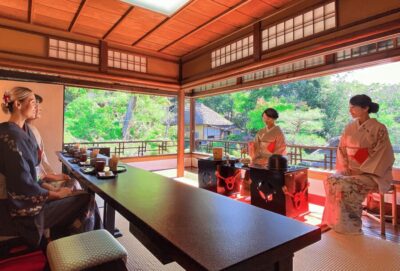
Tea Ceremony in a Traditional Tea House in Kiyomizu
Read our review →
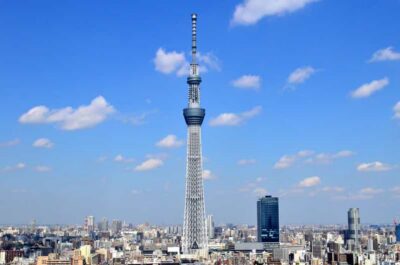
Meiji Shrine, Asakusa, Skytree Bus Tour and Cruise
Read our review →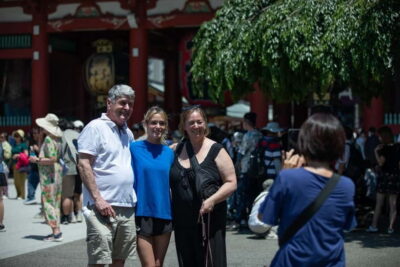
Asakusa Walking Tour with Sensoji Temple Visit
Read our review →
Kamakura & Enoshima Day Trip including Temple Tickets
Read our review →
Kyoto/Osaka: Nara, Fushimi Inari Taisha, Arashiyama Bus Tour
Read our review →
Nikko Toshogu Shrine and Kegon Waterfall Tour
Read our review →
Tokyo Panoramic 1 Day: Meiji Shrine, Asakusa, Odaiba and SKYTREE®
Read our review →Browse the lists this tour appears in