
REVIEW · TEMPLE & SHRINE TOURS
Tokyo: Asakusa Temple & Shrine Walking Tour with Local Guide
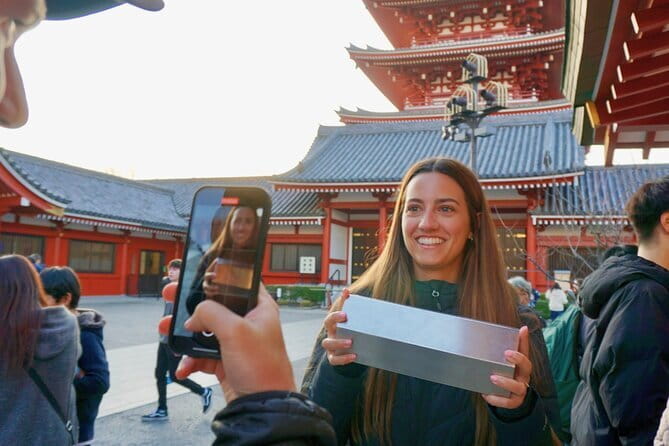
Asakusa’s most useful lesson is not just how old Sensoji Temple is. It’s learning how Buddhism and Shinto share the same neighborhood, and sometimes the same visitor. This small-group walk shows you how to wash your hands, use incense, read an omikuji fortune, bow, and pray without guessing your way through the rituals.
I like the high viewpoint over the temple grounds and the opening walk along the Sumida River, where Tokyo Skytree and the famous golden sculpture come into view. I also like the relaxed pace and small groups, which make it easy to ask questions. The catch is that you’ll be on your feet for two hours, often among crowds, and the tour is not suitable for wheelchair users or people with limited mobility.
In This Review
- Key points at a glance
- Why this Asakusa walk is more than a temple photo stop
- Starting beside the Sumida River and Tokyo Skytree
- The high view from Asakusa Culture Tourist Information Center
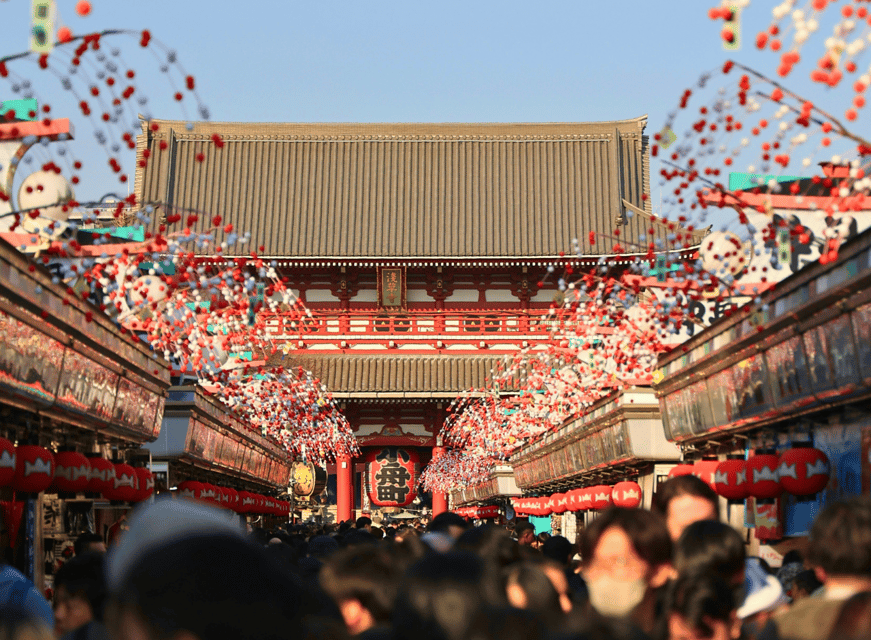
- Entering through the 700-kilogram Thunder Gate
- Nakamise Street, snacks, and useful shopping advice
- Hozomon Gate and the quieter religious corners
- Learning temizu, incense, and omikuji
- Sensoji Temple and two different ways to pray
- Asakusa Shrine and the neighborhood’s mixed traditions
- Is two hours enough for Asakusa?
- What $30 gets you
- Who will enjoy this walk most?
- Should you book it?
- FAQ
- How long is the Asakusa Temple and Shrine Walking Tour?
- How much does the tour cost?
- How many people can join the tour?
- Which languages are available?
- Where does the tour meet?
- Is there a dress code?
- What should I bring?
- Is the tour suitable for wheelchair users?
- Can I cancel the booking?
Key points at a glance
- A clear introduction to Japanese religious customs: Learn the different approaches used at Sensoji Temple and Asakusa Shrine.
- A useful start at the Sumida River: See Tokyo Skytree and the golden sculpture locals nickname the golden poop before entering the temple district.
- A viewpoint many people miss: The Asakusa Culture Tourist Information Center offers a high look across the temple grounds.
- Hands-on traditions: Try temizu hand washing, incense rituals, omikuji fortune telling, and Buddhist prayer with guidance.
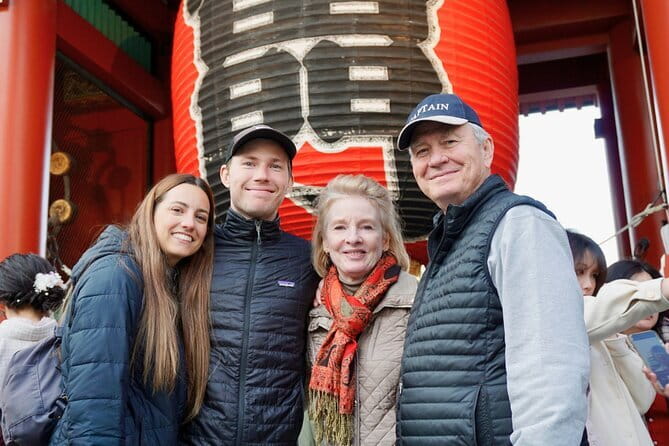
- Small groups capped at eight: Guides such as Nicolas, Erik, Nana, and Lino can answer personal questions and adjust the pace.
- Good value at $30: You get two hours of guiding, cultural context, photo help, and practical advice for exploring Asakusa afterward.
Why this Asakusa walk is more than a temple photo stop
Sensoji is one of Tokyo’s most recognizable sights, but it can be hard to understand on your own. You see a huge red gate, a long shopping street, incense smoke, and worshippers moving with purpose. Without context, it is easy to treat the place like a grand backdrop.
This tour gives those details a job. You learn why the main gate is called Kaminarimon, or Thunder Gate, what the enormous red lantern represents, and how the temple grounds developed. You also move beyond the obvious sights to smaller religious sites, where the area’s spiritual life feels less staged for photographs.
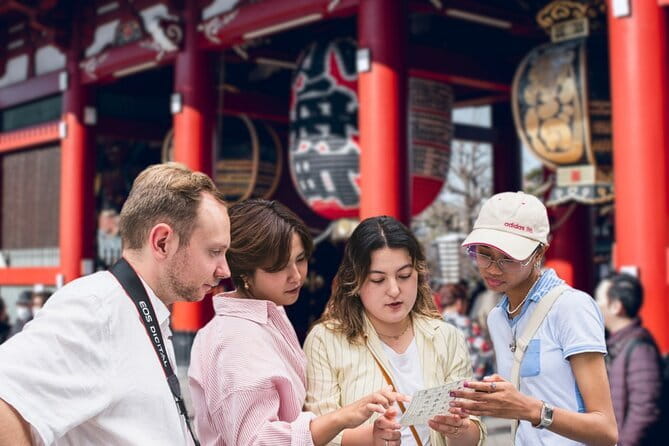
The experience is led in English or French and is limited to eight people. That number matters in Asakusa. The lanes near Sensoji can become crowded, and a guide who can pause, gather the group, or answer a question is much more useful than someone giving a speech to a large crowd.
The guides named in the feedback include Nicolas, Erik, Nana, Lino, Diane, Arief, Ayaka, Somi, and Joe. The strongest pattern is personal attention. Nicolas is especially praised for explaining Shinto and Buddhism in plain language, while Nana worked patiently with children aged five and eight. Erik helped with temple etiquette and even provided small coins for an offering when a participant had none.
More Temple & Shrine Tours in Tokyo
- Tokyo: Meiji Shrine, Asakusa, Skytree Bus Tour and Cruise
★ 4.7 · 1,986 reviews - Tokyo: Asakusa Walking Tour with Sensoji Temple Visit
★ 4.8 · 1,583 reviews - Nikko: Kegon Falls, Lake Chuzenji & Toshogu Temple
★ 4.6 · 1,577 reviews
Starting beside the Sumida River and Tokyo Skytree
The stated meeting point is Burger King Asakusa Azumabashi, though you should check the exact option you booked. From there, the walk begins at Azuma Bridge, a smart choice because it lets you see Asakusa before entering its busiest streets.
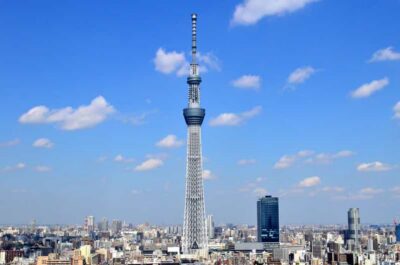
The riverside stop lasts about 10 minutes. You’ll have a view toward Tokyo Skytree, along with the distinctive golden sculpture on the nearby Asahi building. Its nickname is crude but common: locals call it the golden poop. It is a quick laugh, but it also helps you get oriented. You can see the modern Tokyo skyline, the river, and the older temple district in one frame.
This first stop is mainly for photos and a short introduction. Don’t expect a long riverside stroll. The value is the guide’s explanation of how the riverfront connects to Asakusa and the chance to begin with a broad view before dealing with the temple crowds.
The high view from Asakusa Culture Tourist Information Center
Next comes the Asakusa Culture Tourist Information Center, where the guide takes you to a high viewpoint overlooking the temple area. The stop lasts around 15 minutes and gives you a better sense of the layout than you can get from ground level.
From above, Sensoji’s gates, roofs, approach, and surrounding streets fit together. This makes the later walk easier to follow. You’ll understand that the temple is not one isolated building but part of a larger district filled with shrines, shops, lanes, and smaller sites.
I particularly like this stop for first-time visitors. It offers a pause before the visual overload of Kaminarimon and Nakamise Street. It is also one of the tour’s better photo opportunities, so ask the guide for help if you want a group picture or a less obvious angle.
Entering through the 700-kilogram Thunder Gate
Kaminarimon is the grand entrance to Sensoji. Its massive red lantern weighs about 700 kilograms, and the guide explains both its construction and the meaning behind its name.
The gate is one of Tokyo’s most photographed sights, so the practical help matters. Your guide can point out photo spots and help you get a clear view when people are constantly passing through. You’ll also learn what to look for in the gate rather than simply taking a picture and moving on.
The 10-minute stop is brief, but that is sensible. Kaminarimon is a gateway, not a place where you need half an hour. The larger lesson is how entrances prepare you for a sacred area and how visual symbols carry meaning in Japanese religious spaces.
More Walking Tours in Tokyo
- Tokyo Tsukiji Fish Market Food and Culture Walking Tour
★ 5.0 · 3,184 reviews - Tokyo: Imperial Palace and Shogun Historical Walking Tour
★ 5.0 · 2,251 reviews - Tokyo: Shinjuku Local Bar and Izakaya Guided Walking Tour
★ 4.9 · 1,794 reviews - Tokyo: Tsukiji Fish Market Food and Walking tour
★ 5.0 · 1,724 reviews
Nakamise Street, snacks, and useful shopping advice
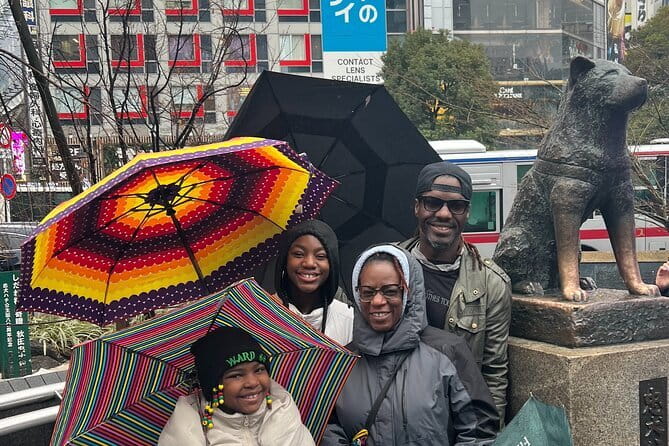
Beyond Kaminarimon, you walk along Nakamise Shopping Street for about 15 minutes. This is the approach to Sensoji, lined with food stalls, small gifts, and traditional-style souvenirs.
The guide explains the cultural background of the treats and points out where to look for worthwhile purchases. That can save you from buying the first souvenir you see. You can also ask for translation help, which is useful if you want to understand a label or ask a shopkeeper a question.
Nakamise is also the tour’s busiest section. It may feel crowded, especially in hot weather, during holidays, or when a festival is taking place. The group size helps, but you should stay alert and keep close to the guide.
The shopping stop is not a dedicated food tour. Personal purchases are not included, so bring money if you want snacks or souvenirs. I would treat this part as a cultural introduction and a chance to make notes about what to buy later, rather than rushing to shop during the walk.
Hozomon Gate and the quieter religious corners
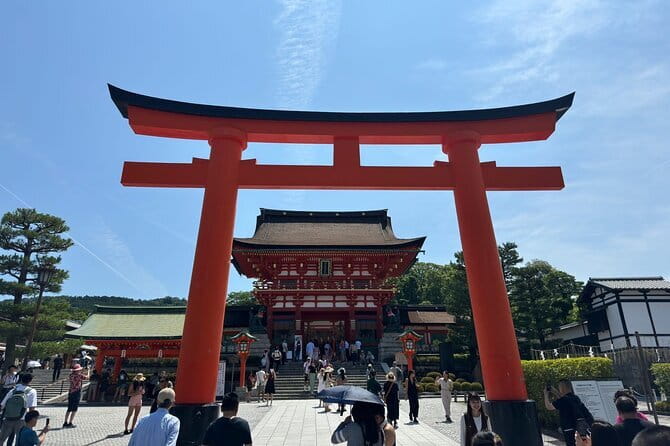
Hozomon Gate marks another major entrance toward the inner temple grounds. The group spends about 10 minutes here for photos, sightseeing, and explanation.
After the major gates and shopping street, the walk turns toward smaller temples and shrines. The exact names of two itinerary stops are not specified, but the experience includes lesser-known religious sites around Asakusa. This is where the tour earns its price. A map can take you to Sensoji, but it will not necessarily explain which nearby spaces are Buddhist, which are Shinto, or how local people use them.
The smaller sites also offer breathing room from the main approach. You may find quieter corners, different architectural details, and a better sense of Asakusa as a lived-in old district rather than a single attraction.
Your guide explains how Shinto and Buddhism coexist in Japan. The point is not to force a strict division between the two. In Asakusa, the traditions have developed beside one another for centuries, and daily practice can include customs from both.
Learning temizu, incense, and omikuji
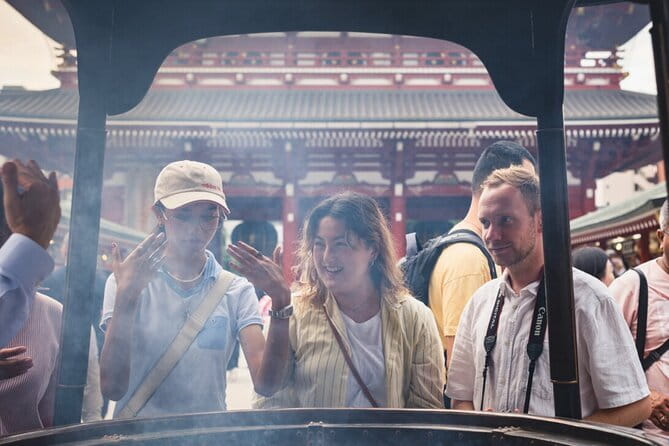
The interactive rituals are the heart of the tour. At a purification basin, you learn temizu, the hand-washing practice used before entering many sacred places. The guide shows you the proper sequence and explains why purification comes first.
You’ll also have the chance to try omikuji, a form of fortune telling. If you receive an unfavorable fortune, the guide explains what to do with it. This makes the ritual less awkward and gives you a way to participate respectfully rather than copying the person in front of you.
Incense is another stop. You’ll learn why people bring the smoke toward themselves, including the belief that it can support physical and mental healing. It is a small action, but the explanation helps you see the scene as worship rather than a decorative display.
These activities are presented as cultural experiences. You are not required to take part, and the guide aims to make everyone comfortable. Still, you should follow the instructions and avoid treating sacred practices as a joke or performance for the camera.
Sensoji Temple and two different ways to pray
The group spends about 30 minutes at Sensoji Temple, the longest stop on the walk. That gives the guide time to discuss the temple’s story, architecture, rituals, and role in Asakusa.
You learn how to pray in the Buddhist style. The guide also explains how to bow correctly, where to walk, and how to conduct yourself inside the grounds. These details are practical for the rest of your Japan trip because the same basic etiquette can help at other temples and shrines.
A key lesson is that Buddhist prayer and Shinto prayer are not identical. At the nearby Asakusa Shrine, you’ll learn the Shinto process as well. The guide explains the differences in a way that is easy to remember, rather than loading you down with religious vocabulary.
This is where Nicolas received repeated praise for making spiritual ideas understandable. Other guides, including Ayaka, Joe, and Ariel, were also described as patient and helpful in difficult conditions such as heavy rain or festival crowds. The experience is intended to continue in bad weather, so bring water on hot days and dress for rain when needed.
Asakusa Shrine and the neighborhood’s mixed traditions
Asakusa Shrine follows Sensoji in the itinerary and receives about 15 minutes. Its closeness to the temple makes the contrast especially useful. You do not need to travel across Tokyo to compare Buddhist and Shinto customs.
The guide shows you how to approach a torii gate, including which side to walk on, and how to bow. You’ll also learn what many Japanese people may not stop to explain: the two traditions can share the same wider religious district while retaining different symbols and practices.
This is not a theology lecture. The best part is the direct connection between what you see and what you do. You learn a custom, perform it with guidance, and then understand why the custom belongs to that particular type of site.
The tour ends back near the original meeting point. Since lunch and shopping are not part of the experience, you can continue exploring afterward. One guide showed a participant the way to Kappabashi Street, and another helped with a restaurant recommendation. Extra assistance depends on the guide and the available time, so do not treat it as a guaranteed extension.
Is two hours enough for Asakusa?
Two hours is enough for an introduction, not a complete exploration of Asakusa. You will cover the river view, tourist center viewpoint, two major gates, Nakamise Street, Sensoji, Asakusa Shrine, and smaller sites at a steady walking pace.
The schedule includes roughly 10 minutes at Azuma Bridge, 15 minutes at the tourist center, 10 minutes at Kaminarimon, 15 minutes at Nakamise, 10 minutes at Hozomon, several short visits to smaller sites, 30 minutes at Sensoji, and 15 minutes at Asakusa Shrine. Crowds, photos, questions, and weather can affect the exact timing.
I think the length works well on your first day in Tokyo. You get the cultural basics and can return later for shopping, food, museums, or a slower look at the temple grounds. If you want a long historical tour or extensive time inside each building, this walk will feel short.
What $30 gets you
At $30 per person, this is a reasonable purchase if you value explanation and personal help. Sensoji itself does not require a tour to enter, and you can walk through Nakamise Street for free. The money pays for the guide’s time, the high viewpoint, cultural instruction, photo assistance, and the chance to ask questions in a group of no more than eight.
The strongest value comes from learning what to do. Many people pass through Japanese temples and shrines without knowing the correct prayer sequence or the purpose of purification and incense. After this tour, you can visit other sites with more confidence.
The price is less compelling if you only want photographs. You can see Kaminarimon, Nakamise, and Sensoji independently. It is also worth noting that snacks, souvenirs, and personal expenses are extra.
Flexible booking helps: you can reserve and pay later, and cancellation is allowed up to 24 hours before the tour for a full refund. Starting times depend on availability.
Who will enjoy this walk most?
I would recommend it to first-time visitors who want a clear cultural foundation. It also suits solo travelers because a small group gives you company without the feel of a large coach tour.
Families can do well here, especially with an attentive guide. Nana’s work with children aged five and eight shows how the explanations can be adjusted for younger participants. Still, children need to manage two hours of walking and crowded streets.
Couples will appreciate the photo stops and the chance to ask for a more personal pace. The tour also works for anyone curious about religion, etiquette, architecture, or local shopping.
You should reconsider it if you have a low fitness level, mobility limitations, or need wheelchair access. Comfortable shoes are essential. There is no dress code, and tattoos are welcome, but you should still dress for the weather because the tour runs in rain or shine.
Should you book it?
Book this tour if you want more than the standard Sensoji photograph. The best reasons are the small group, the practical rituals, the viewpoint from the tourist center, and the guides’ ability to explain Buddhism and Shinto in simple terms.
Skip it if you prefer exploring silently at your own speed or if you already understand Japanese temple and shrine etiquette. For most first-time visitors, though, $30 buys a useful two-hour orientation that can improve every later visit to a sacred site in Japan.
FAQ
How long is the Asakusa Temple and Shrine Walking Tour?
The tour lasts two hours and includes guided visits to the main gates, Nakamise Shopping Street, Sensoji Temple, Asakusa Shrine, and smaller religious sites.
How much does the tour cost?
The listed price is $30 per person. Personal expenses, including snacks and souvenirs, are not included.
How many people can join the tour?
The tour is limited to eight participants, making it a small-group experience.
Which languages are available?
Live guiding is available in English and French.
Where does the tour meet?
The stated starting location is Burger King Asakusa Azumabashi. The meeting point may vary depending on the option booked, so confirm it when making your reservation.
Is there a dress code?
No. The tour has no dress code, and tattoos are welcome. You should still dress appropriately for the weather.
What should I bring?
Bring comfortable walking shoes and water. Vending machines are available during the tour, especially useful on hot days.
Is the tour suitable for wheelchair users?
No. The activity is not suitable for wheelchair users, people with mobility impairments, or people with a low level of fitness.
Can I cancel the booking?
Yes. You can cancel up to 24 hours in advance for a full refund. You can also reserve now and pay later to keep your plans flexible.
Just added around Tokyo
- Tokyo: Customizable Private Guided Walking Tour★ 4.5 · 129 reviews
- Private Harajuku Omotesando Architecture Tour★ 4.9 · 18 reviews
- Tokyo: Guided Helicopter Ride★ 4.9 · 24 reviews
- Tokyo: Guided Walking Tour of Tsukiji Market with Lunch★ 4.4 · 24 reviews
- Tokyo: Private Personalized Local Food Tour★ 4.5 · 101 reviews
- Tokyo GINZA: KONPARU Japanese Cabaret Show with Drink★ 4.8 · 38 reviews
- Tokyo: Guided Walking Tour of Tsukiji Market with Breakfast★ 4.4 · 134 reviews
- Tokyo: Gotokuji Cat Temple, Shinjuku Cat Cafe & 3D Cat Tour★ 4.9 · 38 reviews
Temple & Shrine Tours, compared.
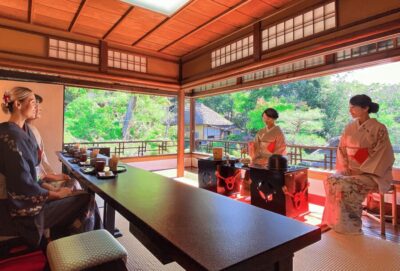
Tea Ceremony in a Traditional Tea House in Kiyomizu
Read our review →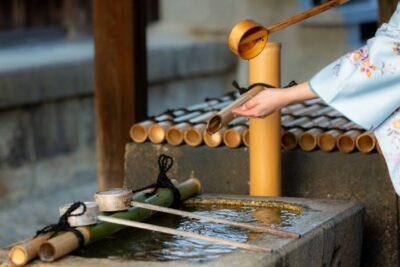
Meiji Shrine, Asakusa, Skytree Bus Tour and Cruise
Read our review →
Asakusa Walking Tour with Sensoji Temple Visit
Read our review →
Kamakura & Enoshima Day Trip including Temple Tickets
Read our review →
Kyoto/Osaka: Nara, Fushimi Inari Taisha, Arashiyama Bus Tour
Read our review →
Nikko Toshogu Shrine and Kegon Waterfall Tour
Read our review →
Tokyo Panoramic 1 Day: Meiji Shrine, Asakusa, Odaiba and SKYTREE®
Read our review →Browse the lists this tour appears in