
REVIEW · TEMPLE & SHRINE TOURS
Tokyo Asakusa Temple & Shrine Walking Tour with Local Guide
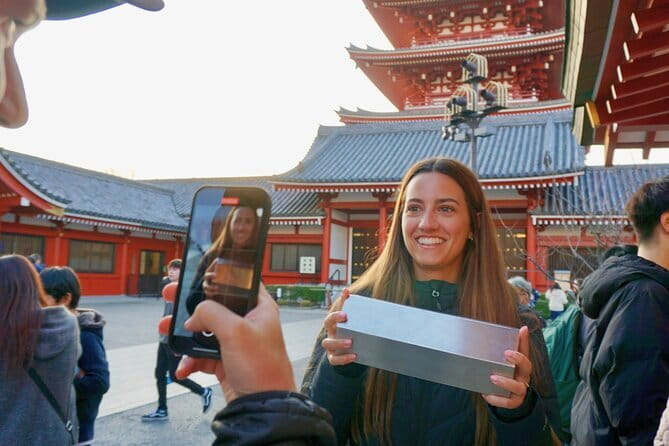
The best part of this Asakusa walking tour is that it turns a famous temple visit into a lesson in how to behave there. You do not just point a camera at Kaminarimon or Sensoji. Your guide shows you the hand-cleansing ritual, prayer steps, and omikuji fortune slips that can be easy to miss when you walk alone.
I like the small group of no more than eight and the sensible route from Azumabashi Bridge through the main Asakusa sights. I also like the price: at $19.82, you are paying for context and navigation rather than an admission ticket, since the main religious sites are free to enter.
The main consideration is pace. Two hours gives you a useful introduction, not a leisurely study of every corner. The guide’s background may vary, too. One outing was led by a young guide from the UK on a gap year in Japan, so do not assume your guide will be Japanese, even though the tour focuses on local customs.
In This Review
- Key points at a glance
- Why a guided walk helps in Asakusa
- Starting at Azumabashi Bridge and the Sumida River
- Kaminarimon, the Thunder Gate, and its giant lantern
- Nakamise Shopping Street, snacks, and souvenirs
- Hozomon Gate and the approach to Sensoji
- Sensoji Temple and the Buddhist side of Asakusa
- Asakusa Shrine and the meeting of two traditions
- What the guide adds, and what can vary
- Price, timing, and practical value
- Who should book this Asakusa walk?
- Should you book it?
- FAQ
- How long does the Tokyo Asakusa Temple and Shrine Walking Tour last?
- How much does the tour cost?
- What is the maximum group size?
- Where does the tour begin?
- Where does the tour finish?
- Are Sensoji Temple and Asakusa Shrine admission fees included?
- Are food, snacks, and souvenirs included?
- Can I cancel for a full refund?
Key points at a glance
- Learn the rituals, not just the names: Practice temizu cleansing, prayer, and omikuji fortune-telling with guidance.
- Follow a clear two-hour route: Begin at Azumabashi Bridge, then move through Kaminarimon, Nakamise, Sensoji, and Asakusa Shrine.
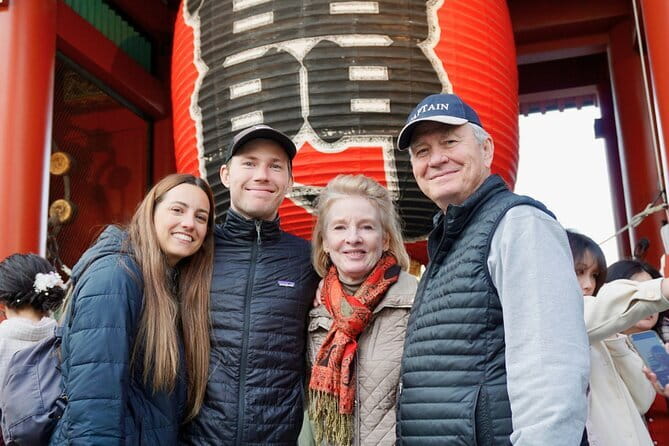
- Keep the group personal: The maximum group size is eight, which makes questions and demonstrations easier.
- Pay mainly for interpretation: Entry to the temples and shrine is free, so the value comes from the guide’s explanations and route planning.
- Meet beside Asakusa’s river gateway: The starting point is Burger King Asakusa Azumabashi, near Kaminarimon in Taito City.
- Plan for shopping separately: Snacks, souvenirs, and crafts along Nakamise are not included.
Why a guided walk helps in Asakusa
Asakusa is easy to reach but not always easy to read. The grand gates, incense, bells, lanterns, stalls, and crowds can blur together when you do not know what belongs to Buddhism, what belongs to Shinto, and what is simply part of modern Tokyo.
This tour gives you a short, orderly introduction. Rather than spending your first hour checking maps, you follow a guide who explains what you are seeing and where to go next.
That matters most at Sensoji and Asakusa Shrine. They sit close together, but they represent different religious traditions. Sensoji is Buddhist, while Asakusa Shrine is Shinto. A guide can point out the difference without turning the visit into a lecture.
I also see value in the hands-on parts. You learn how to use the water at a temizuya, how to approach prayer, and what to do with an omikuji fortune. These small actions help you feel less like an observer passing through a set of photogenic buildings.
The tour is capped at eight people. That is a useful limit in a busy district, especially near Kaminarimon and Nakamise Shopping Street. A large group can clog a narrow approach or make it hard to hear. With eight or fewer, you have a better chance to ask a quick question and stay close to the guide.
More Temple & Shrine Tours in Tokyo
- Tokyo: Meiji Shrine, Asakusa, Skytree Bus Tour and Cruise
★ 4.7 · 1,986 reviews - Tokyo: Asakusa Walking Tour with Sensoji Temple Visit
★ 4.8 · 1,583 reviews - Nikko: Kegon Falls, Lake Chuzenji & Toshogu Temple
★ 4.6 · 1,577 reviews
Starting at Azumabashi Bridge and the Sumida River
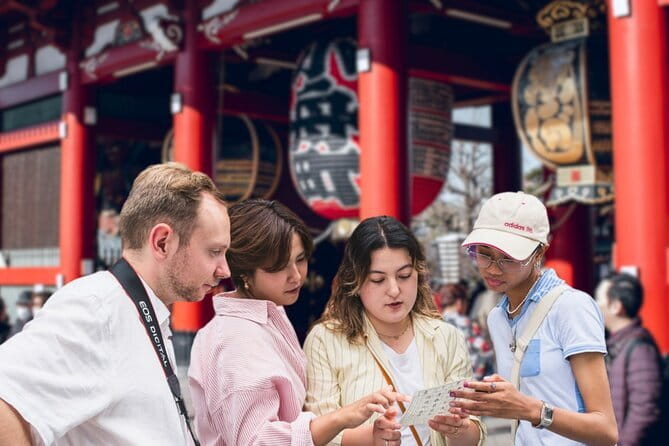
The walk begins at Burger King Asakusa Azumabashi, at Kaminarimon 2-chome in Taito City. The meeting place is near public transportation, and the first stop is Azumabashi Bridge.
This is a smart opening point. The bridge gives you views along the Sumida River and toward the Tokyo skyline before you enter the older temple district. It helps you understand Asakusa as more than a shrine and shopping street. The neighborhood connects the river, old Tokyo, entertainment areas, and major places of worship.
Your guide introduces the bridge’s role as a gateway to old Tokyo. That short explanation gives the rest of the walk a useful frame. You begin with the wider setting, then move toward the concentrated religious heart of Asakusa.
Do not expect a long photo stop here. The full experience lasts about two hours, and the route has several major points to cover. Treat Azumabashi as an orientation stop rather than a separate sightseeing visit.
The tour returns to the same meeting point at the end. That makes the walk simple to fit into a day of sightseeing, though you should avoid booking another activity immediately afterward if you want room for delays.
Kaminarimon, the Thunder Gate, and its giant lantern
The route continues toward Kaminarimon, or Thunder Gate, one of Asakusa’s best-known entrances. Its giant red lantern weighs about 700 kilograms, a detail that makes the gate more than a standard photo stop.
You learn why the gate has its name and why it has been rebuilt several times after fires. Tokyo’s older wooden religious structures have not had an easy life, and repeated reconstruction is part of the story here.
I like this part because the guide can turn a familiar image into a place with a past. Without explanation, you may see only a red gate and a huge lantern. With context, you notice the relationship between fire, rebuilding, religious devotion, and the way Asakusa keeps renewing itself.
Kaminarimon can be crowded. You may need to pause at the edge of the flow rather than stop directly under the lantern for as long as you wish. If you want carefully composed photographs, return on your own after the walk.
The guide’s role here is especially practical. You do not need to work out which approach leads to Sensoji or how the gate connects with Nakamise. You simply follow the route and listen.
Nakamise Shopping Street, snacks, and souvenirs
Beyond Kaminarimon, you stroll along Nakamise Shopping Street. This is the commercial approach to Sensoji, lined with traditional shops selling local snacks, souvenirs, and crafts.
Nakamise is part of the cultural experience, but it is also a shopping street. That distinction is useful. You may see items tied to temple visits and Japanese craft traditions, but you should not expect the tour price to cover food or purchases.
Personal expenses are excluded. If you see a snack or souvenir you want, you pay separately. The advantage of visiting with a guide is not a discount. It is the background: you hear about the street’s origins and its role in visits to the temple.
This is also where the small group helps. Shops and pedestrians create a busy passage, and a group of eight is easier to keep together than a large coach party. Still, stay alert and do not wander off for a purchase without telling the guide.
I would use this section to notice rather than shop heavily. You can always return to Nakamise later with more time and less pressure. On the guided walk, listen for the connection between commerce and worship. The shops serve people coming to the temple, but the street has also become a destination in its own right.
More Walking Tours in Tokyo
- Tokyo Tsukiji Fish Market Food and Culture Walking Tour
★ 5.0 · 3,184 reviews - Tokyo: Imperial Palace and Shogun Historical Walking Tour
★ 5.0 · 2,251 reviews - Tokyo: Shinjuku Local Bar and Izakaya Guided Walking Tour
★ 4.9 · 1,794 reviews - Tokyo: Tsukiji Fish Market Food and Walking tour
★ 5.0 · 1,724 reviews
Hozomon Gate and the approach to Sensoji
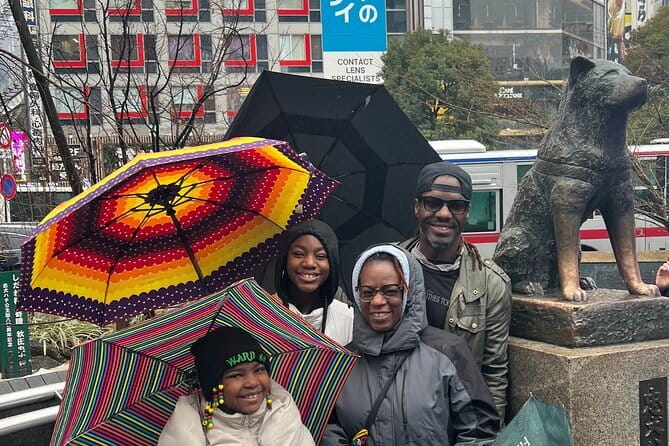
The next major landmark is Hozomon Gate. This impressive gate protects the temple grounds and is recognized as an important cultural property.
Here, the guide explains architectural details and symbolism before leading you farther into Sensoji. That sequence matters. Hozomon is not just another gate after Kaminarimon. It marks a deeper movement into the temple complex.
The approach can feel grand, but the route is not designed as a quiet architectural study. You get an introduction to the gate and its role, then continue toward the main temple area. If you are fascinated by construction details, ask questions while the group is gathered.
Sensoji is Tokyo’s oldest and most famous Buddhist temple. Its importance can make a first visit feel intimidating, especially if you are trying to understand the buildings, rituals, and flow of people at the same time.
A guide gives you a basic map for what you are seeing. You learn the temple’s place in Asakusa and hear about the cultural meaning behind its famous features. The result is more useful than simply arriving, taking a picture, and leaving.
Sensoji Temple and the Buddhist side of Asakusa
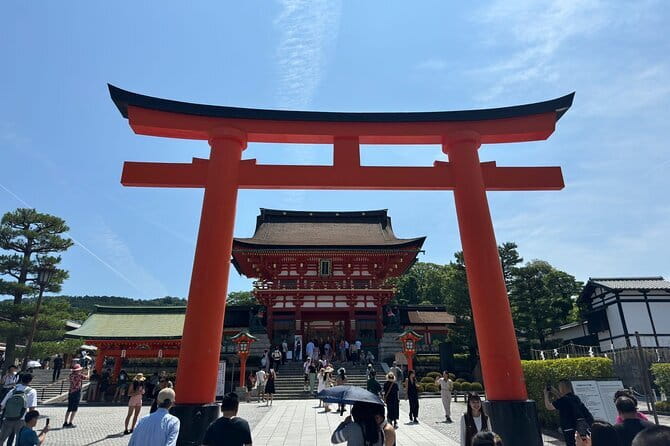
Sensoji is the main focus of the walk. The guide leads you through the temple grounds and explains its history, architecture, and cultural importance.
Admission is free, so this is not a ticketed skip-the-line tour. You are paying for the guided experience, not entry. At $19.82 per person, that is a reasonable trade if you want a short explanation of the site and help moving through it.
The tour also addresses the way Buddhism and Shinto exist side by side in Asakusa. That is one of its strongest features. Japan’s religious sites can look familiar to a first-time visitor, but the customs are not always obvious. A guide helps you avoid treating every gate, basin, and offering area as the same thing.
You also get help with the etiquette. The tour includes temizu cleansing, prayer, and omikuji fortune-telling. These are not theatrical add-ons. They are simple practices that show you how people interact with the site.
At the cleansing basin, you learn the proper hand-cleansing ritual. At the prayer area, the guide explains the basic approach. With omikuji, you can try your fortune and learn what the slips mean. If you receive an unfavorable fortune, the ritual includes a way to leave it behind at the temple.
The exact amount of time spent at each ritual is not specified, so expect an introduction rather than a long private ceremony. The experience is best for people who want enough instruction to participate respectfully.
Asakusa Shrine and the meeting of two traditions
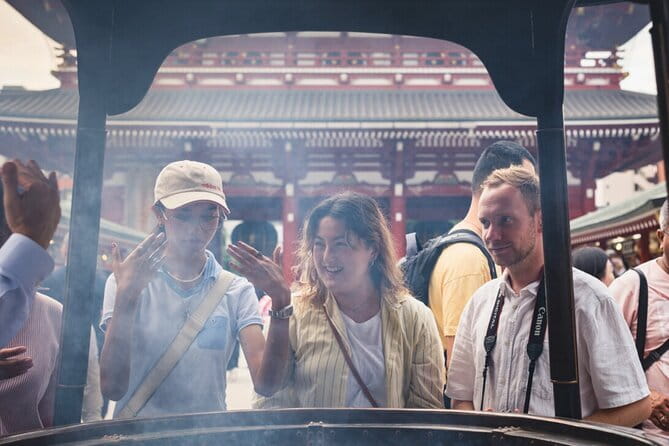
Asakusa Shrine adds the Shinto side of the neighborhood. Its presence near Sensoji gives the tour a chance to explain the difference between a Buddhist temple and a Shinto shrine without sending you across Tokyo to compare them.
That makes the pairing efficient. In a short walk, you can see how two religious traditions occupy the same historic district and how their customs differ. You will not become an expert in Japanese religion in two hours, but you will leave with a clearer set of basic distinctions.
The included visit is especially useful if you are unsure about shrine etiquette. The guide can explain the ritual actions as you approach and pray. This is the kind of information that improves the rest of your time in Japan because you can use it at other shrines and temples.
Asakusa Shrine is also a reminder that the neighborhood is not only about its biggest landmark. Sensoji draws the most attention, but the nearby shrine helps complete the picture of local worship.
What the guide adds, and what can vary
The experience promises an expert local guide, but no guide name is provided in the tour details. You should therefore book for the route and format, not for a named personality.
The guide’s nationality may vary. One outing was led by a young man from the UK who was spending a gap year in Japan. He was reported as extremely well informed and handled the crowded setting effectively. That detail suggests the important question is not simply where your guide was born, but how well the person explains the place and manages the walk.
You should expect explanations in English, since the tour is designed to remove language barriers. The guide leads the way, explains customs, and keeps the route moving. The level of historical detail may depend on the guide assigned that day.
I would use the small group to your advantage. Ask about the difference between shrine and temple rituals, the rebuilding of Kaminarimon, or the meaning of an omikuji fortune. Short tours become much more useful when you ask focused questions.
Price, timing, and practical value
The price is $19.82 per person for about two hours. Since admission is free, the value depends on how much you want interpretation, ritual guidance, and navigation.
For a first visit to Tokyo, I think the price is fair. You get several major Asakusa landmarks in one compact route, plus practical instruction that you can carry to other religious sites. You also avoid spending time planning the order of stops.
For an experienced Japan visitor, the value is less certain. You can visit Sensoji, Asakusa Shrine, Kaminarimon, and Nakamise without paying an entrance fee, and the area is accessible on your own. If you already understand shrine and temple etiquette, the tour may feel more like a refresher.
The two-hour length suits a morning or afternoon gap. It is long enough to cover the core sights but short enough to combine with independent shopping, food, or another Asakusa visit. I would keep extra time afterward for Nakamise, since buying snacks and crafts is not part of the tour price.
The mobile ticket is convenient, and confirmation arrives when you book. Free cancellation is available if you cancel at least 24 hours before the start time. Cancellations or changes inside that window are not refunded or accepted, and the cut-off follows Tokyo local time.
Most people can take part. You should still expect a walking experience through busy public areas, with time on your feet and no included purchases.
Who should book this Asakusa walk?
I would recommend it to a first-time Tokyo visitor who wants a clear introduction without spending half a day on a formal guided excursion. It is also a good fit if you are nervous about shrine and temple etiquette or prefer a guide to handle directions.
Families and couples may appreciate the short duration and small group. The eight-person limit gives you a more personal setting than a large bus tour, though the tour is still in public spaces and may feel busy around the main gate.
Photography fans should see this as an orientation walk. You will reach excellent photo subjects, including Azumabashi Bridge, the Sumida River, Kaminarimon, Nakamise, and Sensoji. But the group must keep moving, so return later if you want uninterrupted shooting time.
Independent visitors should book only if explanation is your priority. The sites are free and easy to revisit. The main benefit here is having rituals, architecture, and local history explained in a compact sequence.
Should you book it?
Book this tour if you want to get your bearings fast in Asakusa and learn how to take part in basic Japanese temple and shrine customs. The low price, free site entry, two-hour route, and eight-person limit make it a practical first-day activity.
Skip it if you already know the difference between Buddhist temples and Shinto shrines, have visited Sensoji before, or prefer setting your own photography and shopping pace.
For most first-time visitors, I would book it early in the Tokyo schedule. You will see the headline sights, learn the etiquette, and still have the rest of the day to explore Asakusa on your own.
FAQ
How long does the Tokyo Asakusa Temple and Shrine Walking Tour last?
The tour lasts approximately two hours.
How much does the tour cost?
The listed price is $19.82 per person.
What is the maximum group size?
The tour has a maximum of eight participants.
Where does the tour begin?
It begins at Burger King Asakusa Azumabashi, Japan, 111-0034 Tokyo, Taito City, Kaminarimon, 2-chome 20-6, Cross Building Royal Palace.
Where does the tour finish?
The activity ends back at the meeting point.
Are Sensoji Temple and Asakusa Shrine admission fees included?
Admission is free for the included temple and shrine visits. The tour price covers the guided walk rather than an entrance ticket.
Are food, snacks, and souvenirs included?
No. Personal expenses, including snacks and souvenirs purchased during the walk, are not included.
Can I cancel for a full refund?
Yes, if you cancel at least 24 hours before the experience start time. Cancellations or changes made less than 24 hours before the start time are not accepted, and the amount paid is not refunded.
Just added around Tokyo
- Private Memorable Tokyo Tour with English Speaking Driver★ 5.0 · 30 reviews
- Private Tokyo Custom Full-Day Tour by Chartered Vehicle★ 5.0 · 16 reviews
- Private Sightseeing to Mt Fuji and Hakone with English Driver★ 5.0 · 51 reviews
- Tokyo Photography Masterclass – Private Photography Lesson★ 5.0 · 25 reviews
- Private Mt. Fuji Day Trip from Tokyo with English-Speaking Driver★ 5.0 · 33 reviews
- 4 Day Tour – Mount. Fuji, Tokyo, Hakone, Kamakura and Yokohama★ 5.0 · 19 reviews
- Private Unforgettable Mt Fuji Tour with English Speaking Driver★ 5.0 · 142 reviews
- Private Tokyo Food Tour – A Journey Through Time Through Food★ 5.0 · 36 reviews
Temple & Shrine Tours, compared.
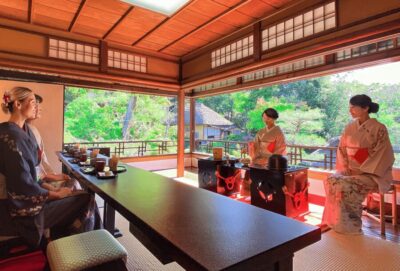
Tea Ceremony in a Traditional Tea House in Kiyomizu
Read our review →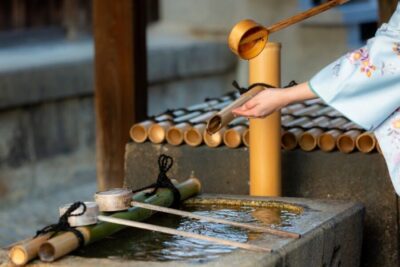
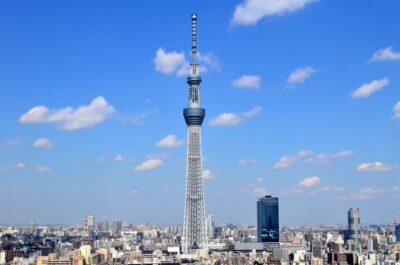
Meiji Shrine, Asakusa, Skytree Bus Tour and Cruise
Read our review →
Asakusa Walking Tour with Sensoji Temple Visit
Read our review →
Kamakura & Enoshima Day Trip including Temple Tickets
Read our review →
Kyoto/Osaka: Nara, Fushimi Inari Taisha, Arashiyama Bus Tour
Read our review →
Nikko Toshogu Shrine and Kegon Waterfall Tour
Read our review →
Tokyo Panoramic 1 Day: Meiji Shrine, Asakusa, Odaiba and SKYTREE®
Read our review →Browse the lists this tour appears in