
REVIEW · SHIRAKAWA-GO VILLAGE TOURS
SHIRAKAWA Japanese Culture Experiences with private English staff
The most interesting part of this Kyoto experience is its setting: Furukawacho Shopping Arcade, a local shopping street where lanterns hang beneath the roof and neighborhood food shops serve as part of daily life. Instead of touring a polished cultural center, you work inside the arcade’s living community.
I like the choice of two workshops, and I like the private English-speaking staff assigned to your group. You can pair a practical skill, such as knife sharpening, with a keepsake activity like calligraphy. The main drawback is that you must choose from only two of the three options, and your preferred workshop depends on availability.
In This Review
- Key points to know
- Why Furukawacho Shopping Arcade matters
- Choosing two workshops
- Knife sharpening with a veteran artisan
- Cooking Kyoto-style obanzai
- Learning calligraphy and making a name scroll
- What the private format changes
- Time, meeting point, and planning
- Is $98.53 per person a fair price?
- Who should book this experience?
- How I would choose the two activities
- Final decision: book it for local contact, not sightseeing speed
- FAQ
- Where does the experience take place?
- What is the meeting point?
- Where does the experience end?
- How long does the experience last?
- How many workshops can I take?
- What workshops are available?
- Is English assistance provided?
- How many people can book together?
- Is transportation included?
- Can I cancel or change the booking?
Key points to know
- Three local skills: Choose two workshops from knife sharpening, Kyoto obanzai cooking, and calligraphy.
- A real neighborhood setting: The arcade is described as the kitchen and daily base of local residents, not simply a stage for tourists.
- Private English support: An English-speaking staff member attends every workshop and assists only your group.
- Small group rule: Bookings are accepted for groups of two to six people.
- Strong value for hands-on time: The price is $98.53 per person for about three hours and two workshops.
- Plan ahead: This experience is often booked 39 days in advance, and workshop choice is subject to availability.
Why Furukawacho Shopping Arcade matters
Kyoto has no shortage of temples, gardens, and formal cultural attractions. This experience gives you something different: a close look at the food and craft habits tied to an ordinary shopping arcade.
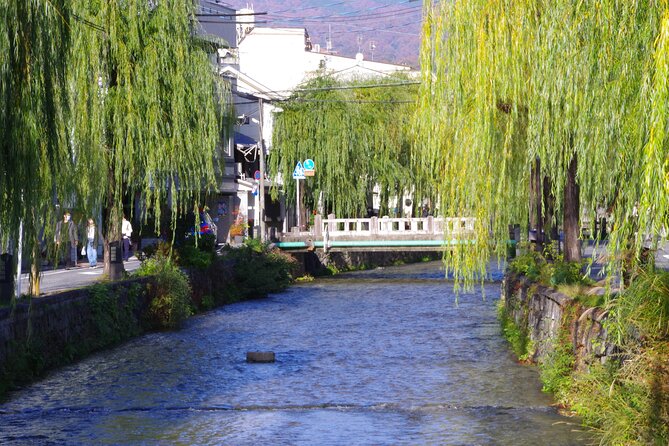
Furukawacho Shopping Arcade sits in the Shirakawa area of Kyoto. Its theme is Retro and Modern, with lanterns under the arcade roof creating a distinctly old-fashioned atmosphere. That setting matters because the workshops are linked to businesses and people working in the neighborhood.
You are not simply shown a finished object and sent on your way. You can sharpen a knife on a whetstone, shop for ingredients before making obanzai, or learn the tools and strokes used in Japanese calligraphy. Each choice gives you a different view of Japanese life.
The experience is private, so your group does not share the activity with other participants. That can make a real difference during practical lessons. You can ask for clarification, take your time with instructions, and work at a pace that suits your group.
The English-speaking staff member stays with you at all workshops. This is especially useful for lessons involving technical terms, cooking instructions, or the details of brush and ink handling.
More shirakawa-go village tours in Kyoto:
- World Heritage Shirakawa-go and Experience Tours from Kanazawa
★ 5.0 · 4,049 reviews - Kanazawa: World Heritage Shirakawa-go Morning Guided Tour
★ 4.9 · 988 reviews - From Nagoya: Gujo, Hida Takayama, and Shirakawa-go Day Tour
★ 4.4 · 398 reviews
Choosing two workshops
The three activities are not interchangeable. Your best pair depends on what you want to take home from the afternoon.
Knife sharpening is the practical choice. Obanzai cooking gives you food culture and a market-style shopping experience. Calligraphy offers the clearest souvenir, since you create a hanging scroll with a kanji version of your name.
You should tell the operator your preferred choices by message. Availability is not guaranteed, and you may be offered another combination if your first choice cannot be arranged. If your selected workshop is unavailable, the prepaid fee is refunded to the original credit card, according to the supplied booking information.
Because you receive two workshops, the schedule is built around a useful mix of shorter and longer sessions. Knife sharpening lasts 90 minutes, calligraphy lasts 90 minutes, and obanzai cooking lasts 70 minutes. The full experience takes about three hours.
Knife sharpening with a veteran artisan
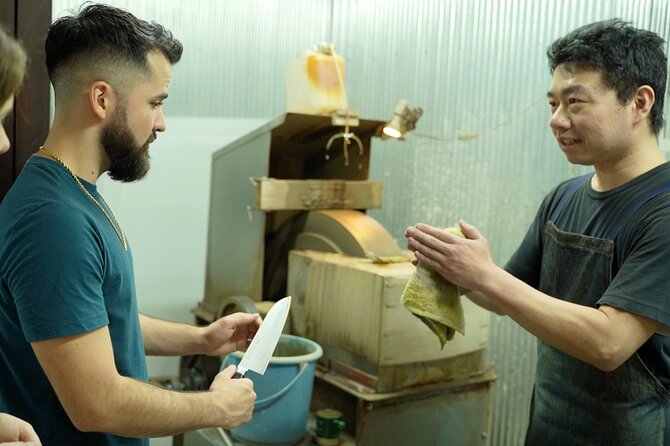
The knife sharpening lesson lasts 90 minutes and takes place at a shop specializing in sharpening cutting tools. You learn to use a whetstone under the instruction of an artisan with 26 years of experience.
That detail gives this workshop real weight. Knife sharpening is not just a quick demonstration. You are learning a household skill that can change how you use a kitchen knife after you return home.
The lesson is likely to appeal most to cooks, food lovers, and anyone who enjoys practical crafts. It also offers a useful counterpoint to more decorative cultural activities. Instead of making an item for display, you work on a skill meant for repeated use.
The main consideration is that the workshop requires attention and patience. The point is to learn proper technique, not rush through a novelty activity. If your group wants something relaxed and artistic, calligraphy may be a better fit.
Still, knife sharpening gives you one of the most unusual choices in Kyoto’s cultural activity menu. It connects directly to the kitchen culture found throughout Japan, and the arcade setting keeps the lesson tied to local daily life.
Cooking Kyoto-style obanzai
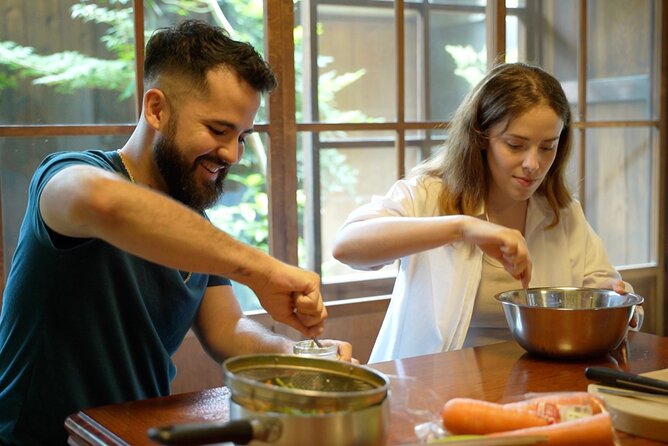
Obanzai refers to home-cooked dishes associated specifically with Kyoto. These recipes are traditionally passed down through families, so this workshop gives you a closer look at everyday food than a formal banquet or restaurant meal.
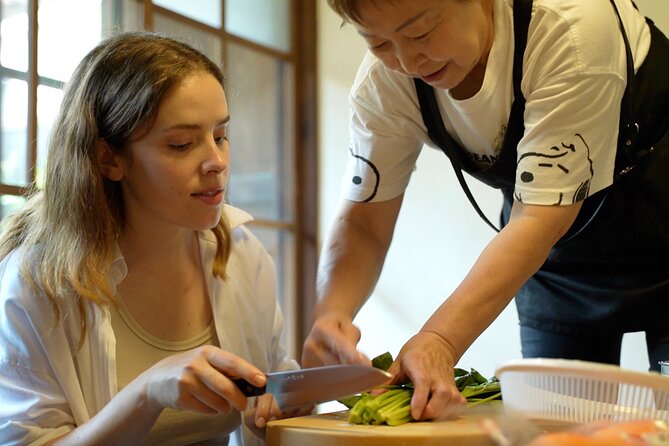
The cooking lesson lasts 70 minutes. You first buy ingredients from stores in the shopping arcade, then prepare obanzai dishes with the chef-owner of Kyo-gohan Nishimura, whose name is Nishimura.
That shopping step is important. You are not handed a fixed basket of ingredients in a classroom. You use the arcade itself as part of the lesson, connecting the finished dishes with the local shops around you.
This is the best option for anyone who wants food to be the center of the experience. It can also work well for families and groups with mixed interests, since shopping and cooking create a natural shared task.
The shorter session means you should not expect a long cooking course with a large menu. The value is in the direct contact with a Kyoto food tradition and the chance to cook with the chef-owner’s family recipe.
If you choose obanzai, pairing it with calligraphy gives you a balanced afternoon: one activity based on local food and one based on writing. Pairing it with knife sharpening makes the experience more kitchen-focused.
A few more Kyoto trips to weigh up
- Fushimi Inari Hidden Hiking Tour (Private Option Available)
★ 5.0 · 1,750 reviews - Private Kyoto Tour with a Local, Highlights & Hidden Gems, Personalised
★ 5.0 · 1,543 reviews - Kyoto 6hr Private Tour with Government-Licensed Guide
★ 5.0 · 1,369 reviews - 10 Must-see Spots in Kyoto One Day Private Tour (up to 7 people)
★ 5.0 · 1,108 reviews
Learning calligraphy and making a name scroll
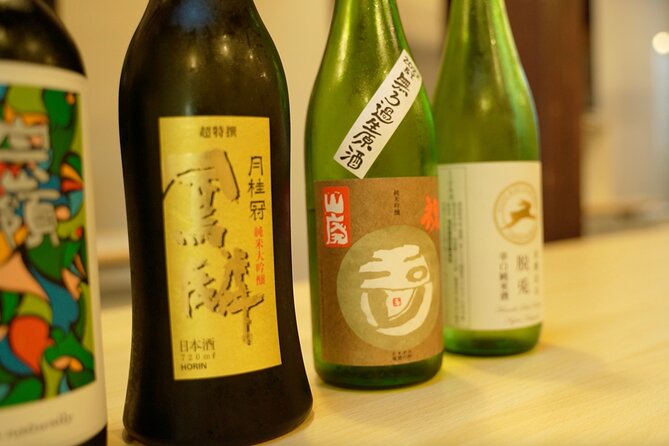
The 90-minute calligraphy session introduces the shape of kanji and the use of the brush, ink, and suzuri, the traditional inkstone used in Japanese writing.
You then practice writing with a brush. The instructor can explain how to write the kanji for your name, and you complete a one-of-a-kind hanging scroll.
This is the clearest choice if you want a personal memento. A purchased souvenir can remind you of Kyoto, but a scroll made during a lesson carries the marks of your own hand. It may not look perfect, and that is part of its value.
Calligraphy also suits visitors who want a quieter workshop. The activity is centered on form, brush control, and concentration rather than shopping or food preparation.
The wording of your name and the finished scroll depend on the instruction available during your session. The supplied details confirm that you can ask about the kanji for your name and complete the scroll, but they do not specify how many characters or what style will be used.
For a first visit to Kyoto, calligraphy paired with obanzai gives you two very different sides of local culture. You eat and cook, then work with a traditional writing system.
What the private format changes
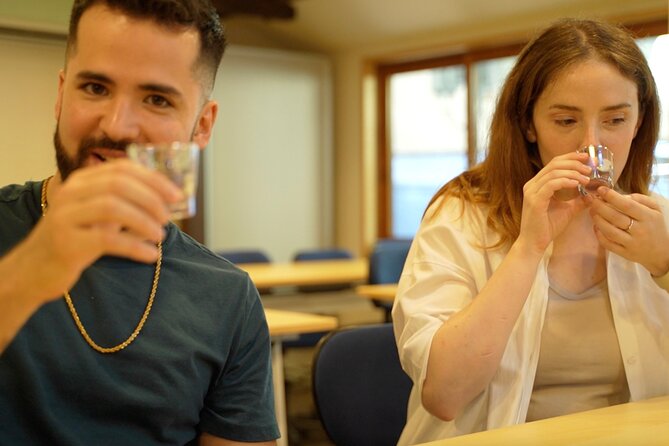
The group size is limited to two to six people. This is not a large public class, and only your group participates in the private activity.
That format is useful when people in your party have different questions or comfort levels. Your English-speaking staff member can help explain instructions throughout the workshops, rather than leaving you to follow a general presentation.
It also makes the experience a better fit for couples, families, or a small group of friends. Solo visitors cannot book this course because the stated group requirement is two to six people.
The private setup does not mean private transportation. You make your own way to the meeting point, and the activity ends back there. The location is near public transportation, which helps you connect it with the rest of a Kyoto day.
Time, meeting point, and planning
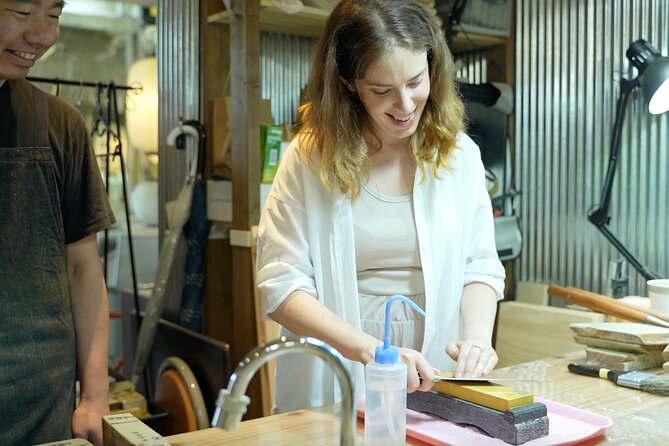
The meeting point is 古川趣蔵 Furukawashuzo at 546-1 Furukawachō, Higashiyama Ward, Kyoto, 605-0026. The experience begins and ends at this location.
Plan on about three hours at the arcade. Since the workshops last between 70 and 90 minutes each, allow enough time before the start to find the meeting point without rushing.
A mobile ticket is provided. Confirmation is subject to availability and is listed as arriving within 48 hours of booking. The operator also says it will contact you by email or message within three business days after application and payment.
Those two timing notes mean you should not leave this booking until the last minute. The experience is commonly booked about 39 days ahead, and your choice of workshops may depend on the reservation schedule.
The activity is non-refundable and cannot be changed after booking. That makes it important to confirm your group size, preferred workshops, and Kyoto plans before paying.
Is $98.53 per person a fair price?
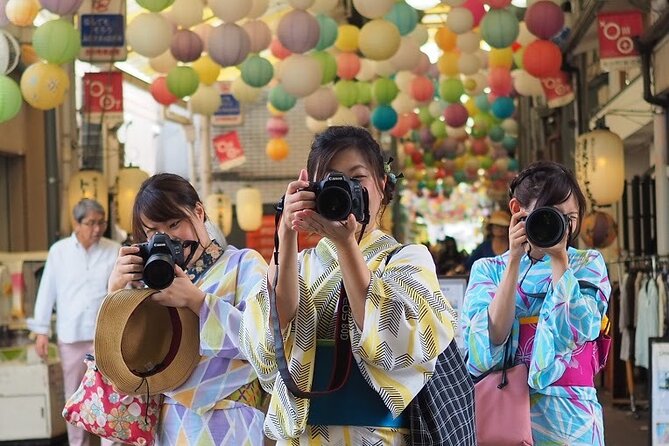
At $98.53 per person, this is not a low-cost shopping arcade visit. You are paying for two guided workshops, English support, and a private format for a small group.
The price looks more reasonable when you consider the hands-on time. A three-hour activity with two workshops gives you a fuller cultural session than a short demonstration. The private staff member also removes much of the language strain that can affect craft and cooking lessons.
Value depends on what you want. If your priority is seeing famous Kyoto sights at the lowest possible cost, this is not the right use of your budget. If you want a personal activity connected to local food, tools, and writing, the price buys something that is difficult to recreate on your own.
The obanzai option adds another point of value because you shop for ingredients in the arcade before cooking. The knife lesson has a practical benefit you can use later. Calligraphy gives you a finished scroll. Each workshop offers a clear result, though the result is different.
There is no private transportation included. That keeps the package from being an all-inclusive tour, but the meeting point is near public transportation, so getting there should fit easily into a Kyoto itinerary.
Who should book this experience?
I would recommend it most to visitors who have already seen several major Kyoto sights and want a more direct activity. The arcade setting gives you a break from temple visits and formal sightseeing.
It also suits people who prefer doing over watching. You handle the tools, ingredients, or brush instead of simply listening to a talk.
Choose this experience if:
- You want a small private activity rather than a large class.
- You need English assistance during a hands-on lesson.
- You are interested in Kyoto food traditions.
- You want a useful kitchen skill or a personal calligraphy keepsake.
- Your group has two to six people.
- You can book ahead and accept that workshop choices depend on availability.
It may not suit you if you want flexible cancellation, private transportation, or a single fixed itinerary with every activity guaranteed. The non-refundable terms and workshop availability require a little planning.
How I would choose the two activities
For the best food connection, choose knife sharpening and obanzai cooking. Both relate to the kitchen, but one teaches care of a tool while the other shows how ingredients become home-style dishes.
For the most memorable keepsake, choose calligraphy and obanzai. You get a handmade scroll along with a meal experience tied to Kyoto’s household cooking.
For a craft-focused afternoon, choose knife sharpening and calligraphy. This pair gives you one practical skill and one artistic lesson, with no cooking schedule to manage.
If your group cannot agree, ask each person what they want to remember. The workshop choices are different enough that picking by interest is better than choosing based only on length. All three sessions are substantial, with the shortest lasting 70 minutes.
Final decision: book it for local contact, not sightseeing speed
You should book this experience if you want to spend part of your Kyoto visit inside a working neighborhood arcade, learning from people connected to its shops. The private English staff, small group size, and choice of two workshops make it easy to shape the afternoon around your interests.
I especially like the combination of a local setting and useful activity. Knife sharpening can change how you cook, obanzai connects you with Kyoto home food, and calligraphy leaves you with a personal scroll.
Skip it if your schedule is tight, your group has fewer than two or more than six people, or you need a refundable booking. For everyone else, this is a thoughtful way to trade a few hours of standard sightseeing for food, craft, and conversation in the Shirakawa area.
FAQ
Where does the experience take place?
It takes place at Furukawacho Shopping Arcade in the Shirakawa area of Kyoto.
What is the meeting point?
The meeting point is 古川趣蔵 Furukawashuzo at 546-1 Furukawachō, Higashiyama Ward, Kyoto, 605-0026, Japan.
Where does the experience end?
The activity ends back at the meeting point.
How long does the experience last?
The experience lasts approximately three hours.
How many workshops can I take?
You can choose two workshops from the three available options.
What workshops are available?
The options are knife sharpening, obanzai cooking, and calligraphy.
Is English assistance provided?
Yes. A private English-speaking staff member attends all workshops for your group.
How many people can book together?
This course accepts groups of two to six people.
Is transportation included?
No. Private transportation is not included. The meeting point is near public transportation.
Can I cancel or change the booking?
The experience is non-refundable and cannot be changed for any reason. If your chosen workshop is unavailable, the prepaid fee is refunded to the original credit card according to the supplied booking information.
Just added around Kyoto
- Private Guided Traditional Buddhist Cooking in Japan★ 5.0 · 16 reviews
- Kyoto: Gion Geisha District & Sake-in-Hand Walking Tour★ 5.0 · 37 reviews
- Your Private Vacation Photography Session In Kyoto★ 5.0 · 110 reviews
- Kyoto: Zen Meditation at a Private Temple with a Monk★ 5.0 · 25 reviews
- Kyoto Wagashi(Japanese sweets) Cooking Class near Fushimiinari★ 5.0 · 60 reviews
- Private Pewter Sake Cup Experience with a Kyoto Artisan★ 5.0 · 31 reviews
- Traditional Japanese Washi Papermaking- Kyoto morning★ 5.0 · 77 reviews
- Kyoto Private 6 hour Tour: English Speaking Driver Only, No Guide★ 5.0 · 88 reviews
Shirakawa-go Village Tours, compared.
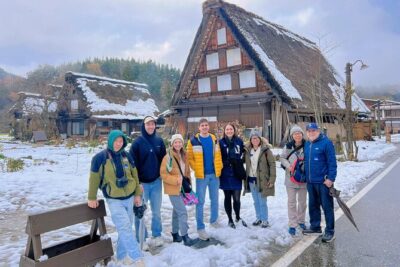
World Heritage Shirakawa-go and Experience Tours from Kanazawa
Read our review →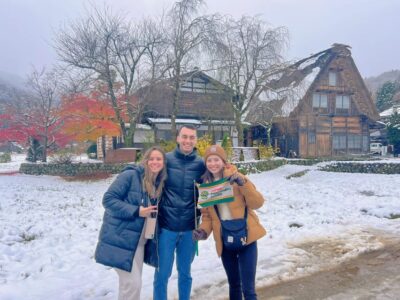
World Heritage Shirakawa-go Morning Guided Tour
Read our review →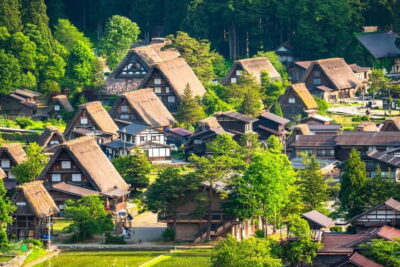
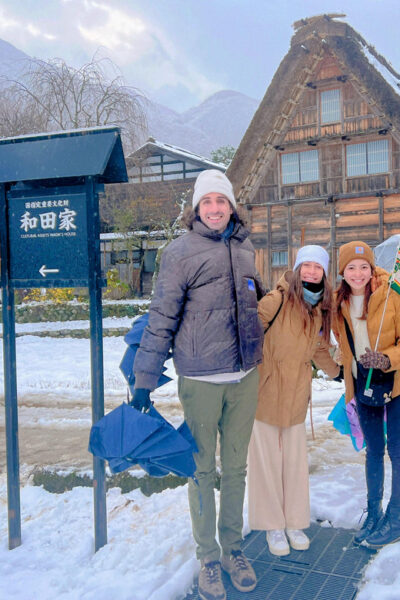
World Heritage Shirakawa-go & Two Local Experience
Read our review →
[One-day bus tour departing from Kanazawa Station] Shirakawa-go and Gokayama – Two World Heritage Villages Enjoyable Bus Tour
Read our review →
World Heritage Shirakawa-go Perfect Guided Tour from Kanazawa
Read our review →Browse the lists this tour appears in